
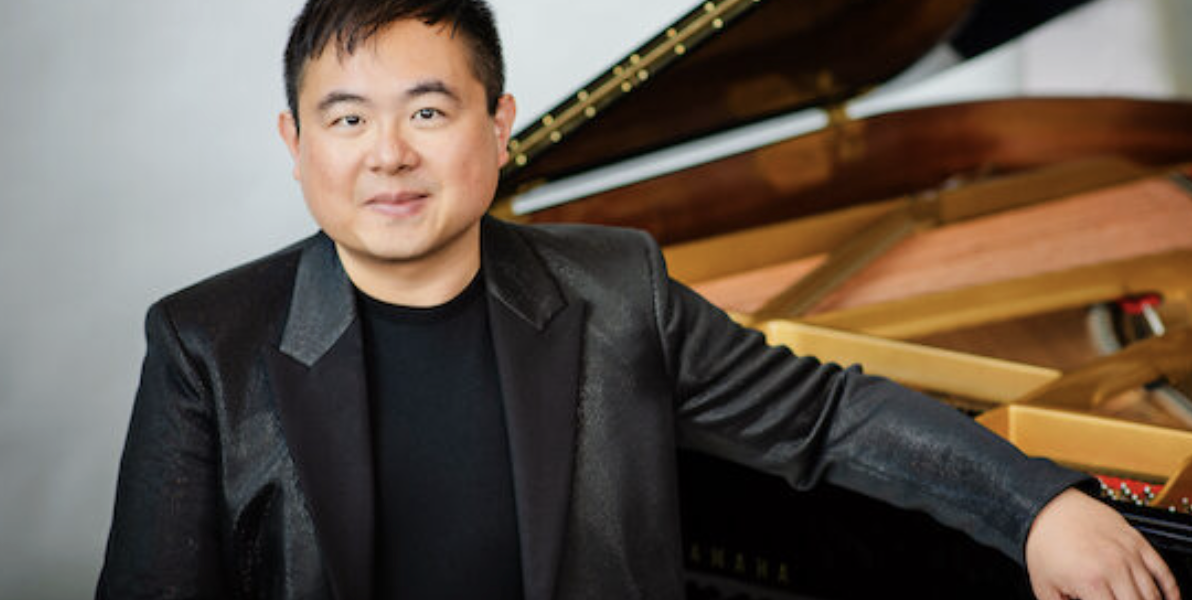
Forte International Group presents Chengcheng Ma in Review
Chengcheng Ma, piano
Merkin Hall, Kaufman Music Center, New York, NY
January 8, 2026
Forte International Group is, according to its own mission statement, a global cultural enterprise dedicated to bridging the musical worlds of China and the US, specifically through providing promising musicians with premier performance opportunities and resources that help their career development. On January 8, at Merkin Hall in Manhattan, the organization presented a piano recital featuring Chengcheng Ma, as part of their “Signed Artist Series.” This was the first concert of the group’s 2026 season. Mr. Ma presented an eclectic program composed by some war-horses of the piano repertoire combined with new works (some receiving their New York premiere) by contemporary composers who have a strong professional connection with this young pianist.
Personally, I don’t think that today, as we enter the second quarter of the 21st century, and especially in a cultural haven such as New York City, there is a true necessity to “bridge” the musical worlds of China and America. I think that we are all fully aware of Chinese musicians’ extraordinary gifts, both on technical and artistic levels, as proved for many years and through many generations of outstanding performers. Therefore, I would imagine that, when an organization such as Forte International Group decides to present a new artist to a New York audience, the artist would be quite extraordinary indeed. I am sorry to say that I did not find Mr. Ma to meet that expectation, in spite of his obvious technical prowess and openness to a diverse and challenging repertoire (for which I fully commend him).
The program started with a piece by Kitty Nez, suite française (no caps), which was described in the program notes as a “free meditation on the richly flourished keyboard music of Couperin.” The piece has five distinct movements, all borrowing titles from the classic Baroque dances: Allemande, Courante, Sarabande, Gavotte and Rondeau. The music switches between quoting actual Couperin pieces and trying to develop an updated neo-Baroque language. Unfortunately, it goes on for far too long and soon wears out its welcome. Only in the last movement – a Rondo entitled “The Bees” – did I find the juxtaposition between Couperin’s passages and the stream of consciousness employed by the original interludes quite effective, and I kept wishing that we’d arrived at this earlier, and with less meandering. Mr. Ma displayed impressive clarity in all the ornaments and very crisp articulation, but his performance needed greater charm and imagination, both of which I tend to believe are essential to Ms. Nez’s vision of this musical bridge between two very different periods.
Next on the program was a puzzling choice: the complete set of Chopin’s Op. 10 Etudes. I really couldn’t see the connection between this monumental cycle and the suite we’d heard right before, so my guess is that Mr. Ma (not unlike most young and ambitious pianists) is simply in love with these works and wanted to include them in his recital. While I partly understand such reasons, I think this particular cycle should only be performed if the pianist has something truly original and remarkable to say and also if they are capable to fully transcend the onerous technical difficulties and reveal the great emotional diversity of each of these miniatures.
Chengcheng Ma started the cycle with a capable but perfunctory rendition of the majestic No. 1, lacking spirituality and finesse. In the tricky No. 2, he lost his place and struggled with the material. The intimate and poetic No. 3 lacked its most essential ingredient: a singing tone, and the rubato felt rather gauche. No. 4 was played at what I call “Richter speed” (I invite you to watch the famous video clip on YouTube), but without the clarity and tension of that unforgettable version. No. 5 continued the speed journey, and in the highly chromatic No. 6 the pianist made use of the same pattern of push and pull to emphasize new harmonies and colors. No. 7 was a big blur of sound, and in No. 8 the pianist again had some memory troubles – unfortunately every music lover knows this one note by note, and every accident becomes even more noticeable. In the sigh-inducing and expressive No. 9, I wish Mr. Ma had shown more awareness of the emotional possibilities offered by the key of F minor. No. 10 went by too fast (quite literally!), and No. 11 suffered from lots of missed notes. The famous Revolutionary Etude was given an impressive technical reading, with a truly precise and light-speed left hand, but it lacked nobility and turned into an exercise rather than the heartfelt statement which Chopin intended.
After intermission, Mr. Ma was back with a new work, Many’s the Time I’ve Seen Her Nude at the Piano, by Rodney Lister. The title is much more exciting than the actual work (a Prokofiev-like Toccata), in spite of Mr. Ma’s efforts to render it with precision and accuracy.
He followed this with Liszt’s Dante Sonata, performed with the score. I am a great advocate of playing with music, but I wondered why Mr. Ma used the score for this piece and not for the Chopin Etudes. Aside from obvious reasons to use the score when performing new music, I think the decision should reflect a certain philosophy of the performer and therefore be consistent throughout a recital. Still, with or without the music, Mr. Ma charged again at supersonic speed through most of the difficult passages, with different degrees of success. This caused, quite frequently, a lack of tension and purpose. Listening to his otherwise impressive playing I kept wondering why so many young pianists seem to think that this work is an unabashed display of pyrotechnics and brush off almost entirely the philosophical and deeply conflictual side of it. Chengcheng Ma is a musician undoubtedly capable of conquering most technical challenges and has ability to unleash the expressive treasures of such music, so one wonders why he seemed content to just accelerate the tempo at the cost of missing the emotional twists and turns which give meaning to the piece.
The evening concluded with a short piece for four hands by Zhao Zhang (Hua Yi Dance), which Mr. Ma played together with Yimiao Fang. The two pianists seem to have a lovely rapport, and they navigated with charisma and assurance through this very short musical sketch. The audience (an almost packed Merkin Hall) responded with enthusiasm.
