
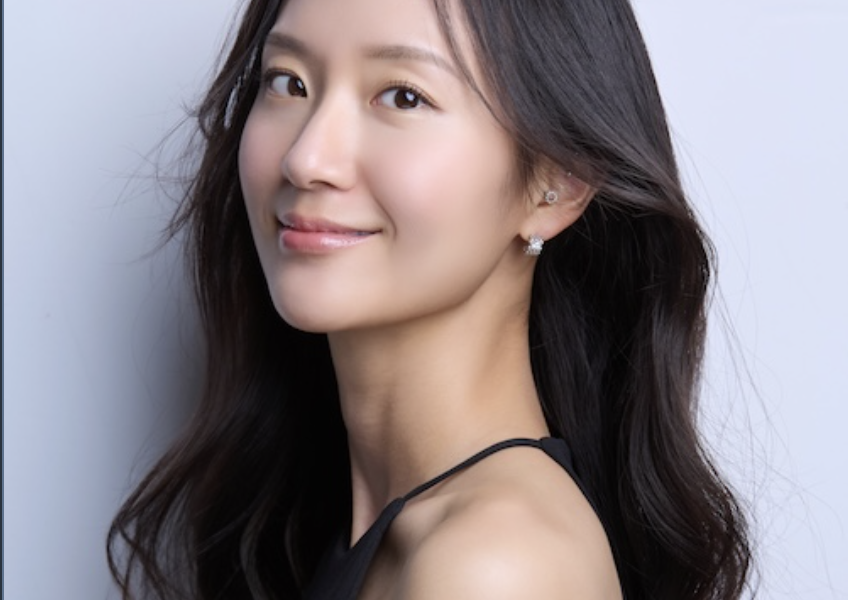
Hemsing Associates presents Miyoung Rho in Review
Minyoung Rho, piano
Weill Recital Hall at Carnegie Hall, New York, NY
March 2, 2026
I was interested to hear pianist Minyoung Rho after seeing the intriguing repertoire on her recital program. Although it has become more common to program works of living composers alongside classic repertoire, it takes a certain tenacity and belief in the music to make the program truly work. This is what was heard tonight at Weill Recital Hall; pairings of works with meaningful connections that were communicated with nuance and pianistic integrity.
Commissioned in 2007 for the Second International Beethoven Competition, Ludwig’s Alptraum (Ludwig’s Nightmare) by Lera Auerbach (b. 1973) opened the program. The work begins with a quote from the Sonata in E-flat major, Op. 27, No. 1, but quickly goes off into new territory ending in a shambles after a section of brutal turbulence. Ms. Rho might have been more captivating in her sound as she established the opening “dream state,” more fully drawing the listener into this new realm. The more violent sections felt somewhat casual and would have benefited from greater intention, urgency, and a more extreme sense of the sonority, however, the playing demonstrated clarity and command and even sparked a genuine interest in this reviewer to explore this work and others by Auerbach.
The standard repertoire pairing in the first half of the program was Kreisleriana, Op. 16, by Robert Schumann. This emblematic work reflects the unsettled and extreme nature of the Auerbach piece through a musical language uniquely realized in the hands of Robert Schumann. Ms. Rho is clearly comfortable in this style, playing with full control of the many complex lines and voices appearing and disappearing throughout the work – not an easy feat! In some moments, this reviewer wishes that Ms. Rho would have played with more abandon, even if sacrificing a note or two. At the same time, the slower sections could have been more flexible, living and breathing to create a natural unfolding of the phrases, highlighting the ambiguity Schumann creates in phrase length, harmony and pulse. This would have made the second movement, II. Sehr innig und nicht zu rasch, more successful. Similarly, III. Sehr aufgeregt was played with great elegance but could have opened with a more sinister character. The last movement, VIII. Schnell und spielend, was particularly moving, encompassing the emotional depth of the set as a whole.
The second half began with another unknown work to this reviewer. Clifton Callender (b. 1969) wrote à la manière de…. (in the style of) in 2018 as a musical homage to six composers, from Bach to Art Tatum. He writes about the work, “In each prelude some aspect of the composer’s style, technique, or even specific fragments form the basis for my own take. The preludes were not intended to be stylistic exercises or parodies, but rather opportunities to explore without inhibition elements (latently) present in my own voice.”
The first movement, Chopin, clearly takes inspiration from the fourth movement of the Sonata in B-flat minor, Op. 35. Though a recognizable sound world, Callender manages to veer off into a prelude that communicates a more extroverted, intense and intentional character that Ms. Rho performed brilliantly. The second movement, Bach, transforms almost seamlessly into a two-part invention. Though the sonic landscape was appropriate, this reviewer was missing more interaction between all the lines and figures, especially the canonical material. Langetiessen (a name mash-up of the composers David Lang, György Ligeti and Louis Andriessen) was fantastically complex in its rhythm and organization but could have had more rhythmic inflection from Ms. Rho. Tatum stood out a favorite for its swinging rhythm and natural improvisatory quality but with its own unique language, still integrated and related to the work as a whole. Liszt was also an interesting study in repeated notes, concluding with virtuosity displayed expertly by Ms. Rho.
The second pairing on the program featured Piano Sonata No. 2 in B-flat minor, Op. 36 (1931 version) by Sergei Rachmaninoff (1873–1943). In this work, Ms. Rho demonstrated complete mastery of her artistry and pianistic authority. Her performance of this work stood out as the most compelling of the evening, showcasing not only her astounding technique, but also deep interpretive insight. While this pairing might initially appear incongruous, careful listening reveals subtle threads of connection between the works, creating a cohesive narrative across the program.
Ms. Rho’s interpretation of the Rachmaninoff Sonata was filled with exciting climaxes and a clear sense of overall structure. She shaped phrases beautifully and with care allowing them to develop organically. This reviewer was particularly struck with how Ms. Rho worked out the layered sonorities so clearly and how each line was handled with supple nuance. The work concluded with an exhilarating final movement, communicating a bombastic conclusion to the thoughtful program. I look forward to hearing Ms. Rho again in the future!
