
Mayflower Art Center (MFAC) presents MusicON – In Bloom: Spotlight on Aspiring Young Composersfrom MFAC in Review
Artistic director: Yiming Wu; Music Director: Yu-ting Cheng; 3rd MusicON Competition Judges: Wang Lu and Felipe Lara; Tech Director Haibei Wang
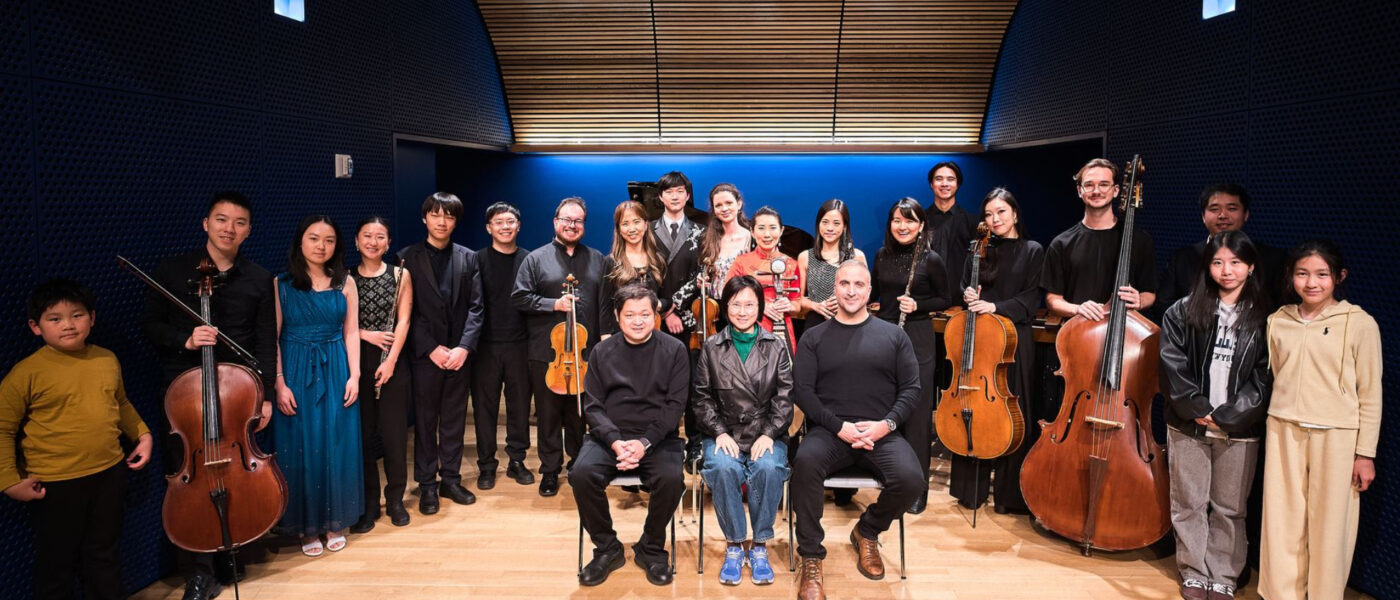
Performers & composers from the MusicON International Composition Competition:
KaiChen Cheng (flute), Yu-Ting Cheng (clarinet), Clara Cho (cello), Yoon Sang Timothy Cho (conductor), Eva Ding (flute), Sunmi Han (piano), Daniel Lamas (viola), Yeji Pyun (violin), Makana Medeiros (percussion), Sara Salomon (violin), Tsung-Yu Tsai (cello), Tyler Vittoroia (double bass), Taige Wang (piano), Foo Jeng Wong (piano),Jin Yang (pipa)
Opera America National Opera Center, Marc A. Scorca Hall, New York, NY
October 26, 2025
Sunday’s performance marked the third evening of the MusicOn International Composition Competition showcase of Aspiring Young Composers. A varied program of ten unknown works was presented, all by participants and finalists in this unique competition – one that celebrates the craft of composition from an early age, an admirable endeavor to continue a tradition with centuries of history.
First on the program was Exhalation by composer Lucy Chen – this piece was a duo for piano and cello performed by Foo Jeng Wong (piano) and Clara Cho (cello). This piece, commissioned by the 2025 MusicOn Festival was inspired by Ted Chiang’s Exhalation, a story about a futuristic world where air powers life and thought. The work was performed with sensitivity by the duo and many of the extended techniques for cello were handled with care by Cho, communicating the character of these “exhales” with clarity. The work as a whole could have had a bit more direction, but its moodiness kept this reviewer attentive until the very captivating ending.
A contrasting work, Periphery for small ensemble and conductor by Emily Bai followed the program. The performers were Sara Salomon (violin), Tsung-Yu Tsai (cello), KaiChen Cheng (flute), Yu-Ting Cheng (clarinet) and led by Yoon Sang Timothy Cho. The fragmented opening was angular and Webern-like. The ensemble was tight a with the quiet and subdued moments – this was when it was most effective. Although the ensemble handled the work well, the promise of the opening figures didn’t completely materialize with no obvious or clear climax but it was still a great effort from Bai.
Reverie for piano and violin by Andy Yiheng Li was next, performed by Sumi Han (piano) and Sara Salomon (violin). This Debussyesque work (even in its title) was also a commission by the 2025 MusicOn Festival. Han conveyed the piano’s delicate textures with sensitivity and color, creating a supple harmonic fabric over which the violin could sing. The work unfolded with clear structural intention and sustained the audience’s attention throughout. While moments of greater intimacy from the violin might have enhanced the overall effect, the duo captured the work’s lyrical and dramatic essence with poise and expressivity.
In the next small ensemble piece, Echoes of Silver Rain by Xinyuan Deng, the marimba part played by Makana Medeiros was a standout. The other members of the ensemble were Yeji Pyun (violin), Tsung-Yu Tsai (cello), Eva Ding (flute), and conductor Yoon Sang Timothy Cho. This piece began with seductive figures between the instruments in the ensemble. This cohesive group was able to communicate a clear concept, and all the important musical gestures were beautifully crafted. Choosing this instrumentation was a great decision by Deng and his adept use of the strength of each one was skillfully done. The ending was particularly effective.
Zihan Wu’s Memoir of the Bamboo Sea, a finalist work in the 2025 MusicON Composition Competition, was performed by Eva Ding (flute) and Makana Madeiros (marimba). This evocative piece stood out as a highlight of the program to this reviewer. The opening flute solo was haunting, with bending tones that seemed to wail from a distance, immediately setting an introspective tone. Wu’s writing demonstrates a thoughtful understanding of both instruments, achieving a remarkable balance and clarity in their interaction.
Rather than depicting a physical landscape, Memoir of the Bamboo Sea captures the emotional resonance of remembering a place, in this case, the composer’s hometown. Ding delivered a commanding performance, conveying the work’s deep emotional layers with expressive nuance, while Madeiros brought sensitivity, precision, and a subtle allure to the marimba part. Their collaboration was deeply engaging, leaving this reviewer hopeful that the duo will continue performing together. Bravo to both performers and to the imaginative young composer!
Unfolding Memory by Angela Jin was performed by Foo Jeng Wong (piano), Sara Salomon (violin), Daniel Lamas (viola), Clara Cho (cello), KaiChen Cheng (flute) and led by Yoon Sang Timothy Cho. According to the composer this work “explores how memories resurface – sometimes vivid, sometimes blurred.” This sense of gradual revelation was apparent from the opening, suggesting a journey toward transformation or resolution. However, the work ultimately felt somewhat disjunct and lacking in direction. While moments of intriguing texture and color emerged, the piece struggled to maintain a coherent throughline, even within its intended dialogue between clarity and obscurity.
The next work, Fluctuations on a bed of blue by Emily Cheng was written for string quintet. The ensemble was comprised of Yeji Pyun and Sara Salomon (violins), Daniel Lamas (viola), Clara Cho (cello) and Tyler Vittoria (double bass). Cheng’s writing explored rhythm with a playful sensitivity, allowing the music to sway and breathe with each syncopation. The inclusion of the double bass lent the texture a satisfying depth, while the ensemble’s cohesive interplay brought out the work’s colorful sonorities. The result was a piece imbued with a mellow character that unfolded with charm and fluidity.
A duo for piano and clarinet by composer Tony Li titled The Mystical followed. This work was commissioned by the 2025 MusicON festival. It was performed by Foo Jeng Wong (piano) and Yu-Ting Cheng (clarinet). The work opened with colorful, impressionistic motifs from both instruments, evoking the harmonic language of early twentieth-century French composers. As the second section unfolded, however, the piano writing at times lacked the harmonic support needed to fully complement the clarinet line. Despite this, the piece maintained an appealing sense of mystery, and the performers conveyed its atmospheric qualities with sensitivity. With further refinement, The Mystical could more clearly articulate its expressive intent and structural cohesion.
The work with the most intriguing instrumentation was Variations on a Theme from Bizet’s Carmen by Taige Wang with the composer at the piano and Jin Yang on pipa, a Chinese traditional instrument. This instrument, not known for playing works in a Western harmonic language was beautifully colorful and expertly played by Yang. The piece opened with a bold flourish before introducing the familiar Habanera theme, famously sung by Bizet’s protagonist. Wang’s imaginative treatment of the melody created moments of lively dialogue between the two instruments, blending Eastern and Western idioms with flair. Although the balance occasionally favored the piano, at times overshadowing the pipa, the performance overall was engaging and full of spirited energy. The work stood out for its inventive approach and playful reimagining of a well-known classic.
Congratulations to all of those involved in creating this three-day festival of presenting new works to the public. The event was well organized and thoughtfully curated, showcasing an impressive range of creative performances. However, the noticeably sparse audience was disappointing. With greater outreach and engagement, the festival could draw a larger and more involved community presence, matching the high quality of the performances themselves.
