
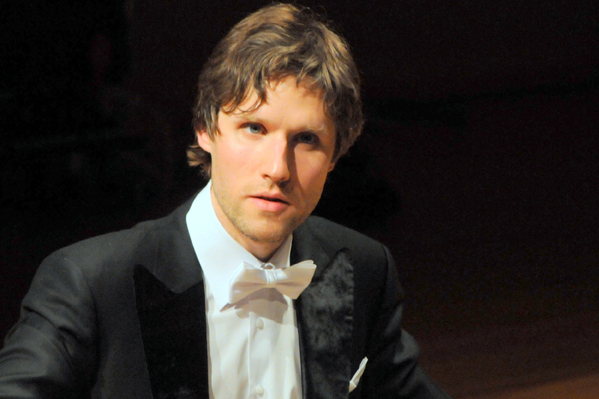
Gabrielius Alekna
The New Amsterdam Symphony Orchestra’s April 7th concert at Symphony Space had a fine guest soloist, Lithuanian pianist Gabrielius Alekna and a solid guest conductor, Bulgarian Guerguan Tsenov, who led this semi-professional ensemble in works by Beethoven and Brahms.
Mr. Alekna, according to the biography in the printed program, is the only Lithuanian to hold a D.M.A. from the Juilliard School, where he studied with Jerome Lowenthal. Alekna, who has garnered several impressive honors, won more than a dozen top prizes in competitions–both stateside and in Europe: Second Prize in the 2005 International Beethoven Piano Competition; Hilton Head (USA); Maria Canals (Spain); Guirlionis (Lithuania); and has soloed with the Vienna Radio Symphony Orchestra (Bertrand de Billy); the Juilliard Orchestra (James de Priest); and also the Belarus State Symphony, the Lithuanian Chamber Orchestra and the Christopher Chamber Orchestra. A devoted chamber musician, Mr. Alekna performed the Bartok Sonata for Two Pianos and Percussion with Ursula Oppens and New York Philharmonic timpanist Joe Periera. He has also collaborated with the cellist Zvi Harel, and with both the Vilnius and Cuirlianus String Quartets. Daniel Barenboim recently cited him as “a highly gifted pianist and musician.” He brought sterling virtuosity and comprehension to Beethoven’s “Emperor” Concerto, Op. 73. His assured but refined pianism had clarity, bravura authority, and easily held its own amidst Beethoven’s busy orchestration. He obliged his enthusiastic admirers with a lovely, flexible singing acount of “Bruyeres” from Debussy’s second book of Preludes.
Earlier, the orchestra played conscientious, traditional versions of the “Egmont” Overture and the Brahms Variations on a Theme by Haydn, Op. 56a. Maestro Tsenov has studied with Kurt Masur, and has also participated in seminars with David Zinman, George Manahan, and Michael Tilson Thomas. In company with his piano soloist, Tsenov (who is a pianist himself) is a knowing, well- grounded musician.

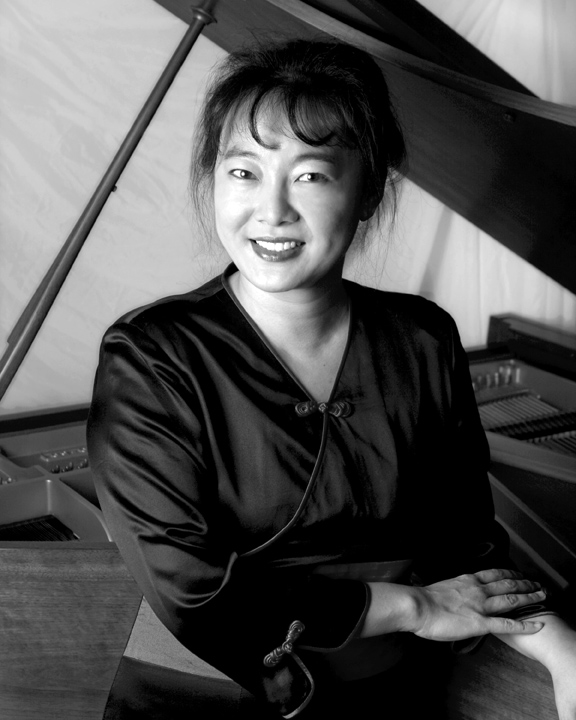
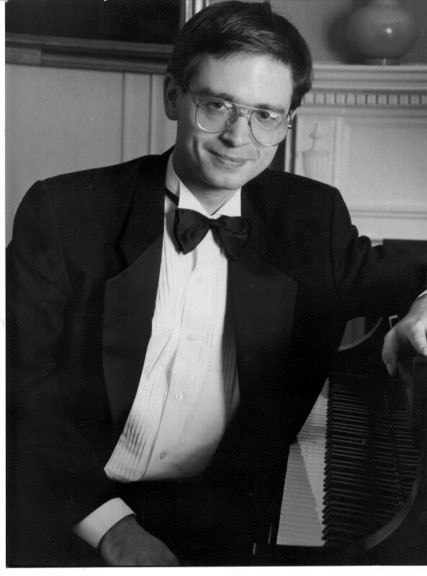
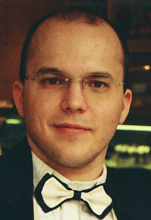 This unusual and, ultimately, compelling new recording of Bach’s transcendental Aria Mit Verschiedenen Verandergungen introduces us yet to another outstanding Hungarian pianist, Sebastyen NyirÖ, who was born in 1979. This may well be the broadest and longest performance of the Goldberg Variations ever. NyirÖ favors taking all the repeats (even those in the Aria da Capo which even the near-fanatical purist Claudio Arrau was even willing to forgo in his early 1940s RCA recording released posthumously on two CDs. Rosalyn Tureck, another famous (or notorious) advocate of repeats and slow tempos, likewise ran over onto two CDs in the Philips Great Pianists of the 20th Century reissue. Simone Dinnerstein, another champion of slow tempos, played all the repeats in her in-concert performance at Weill Recital Hall, but reluctantly condoned omitting a few of them in order to limit her commercial recording (a labor-of-love, later taken over by Telarc) to a single CD. Nyirö’s rendition runs to 85 minutes and fourteen seconds: CD no. 1, with the Aria and Variations 1 through 15 taking 40 minutes and 12 seconds; CD no. 2 beginning with the French Ouverture Variation 16 and ending with the Aria da capo runs 42 minutes; 14 seconds for the work’s conclusion.
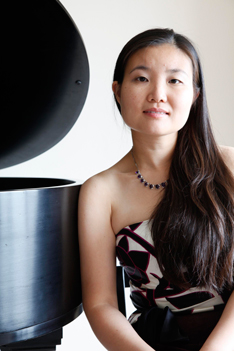 Mana Takuno’s excellent performance of an early, rarely heard 1901 work by George Enescu, his Suite No.2 in D Major, Op. 10, delighted me at a May 8, 2008 concert—(see review in Volume 15, No.3 of this journal) , and it made me want to hear more of her playing. I wrote that her exciting interpretation, with its “drive, virtuosity, textual and coloristic diversity”, stole the show from three other young pianists who shared the same concert with her. Ms. Takuno and her program of Poulenc, Thomas Oboe Lee, Beethoven and Schumann afforded me a more comprehensive “fix” on her achievement and pianistic capabilities.