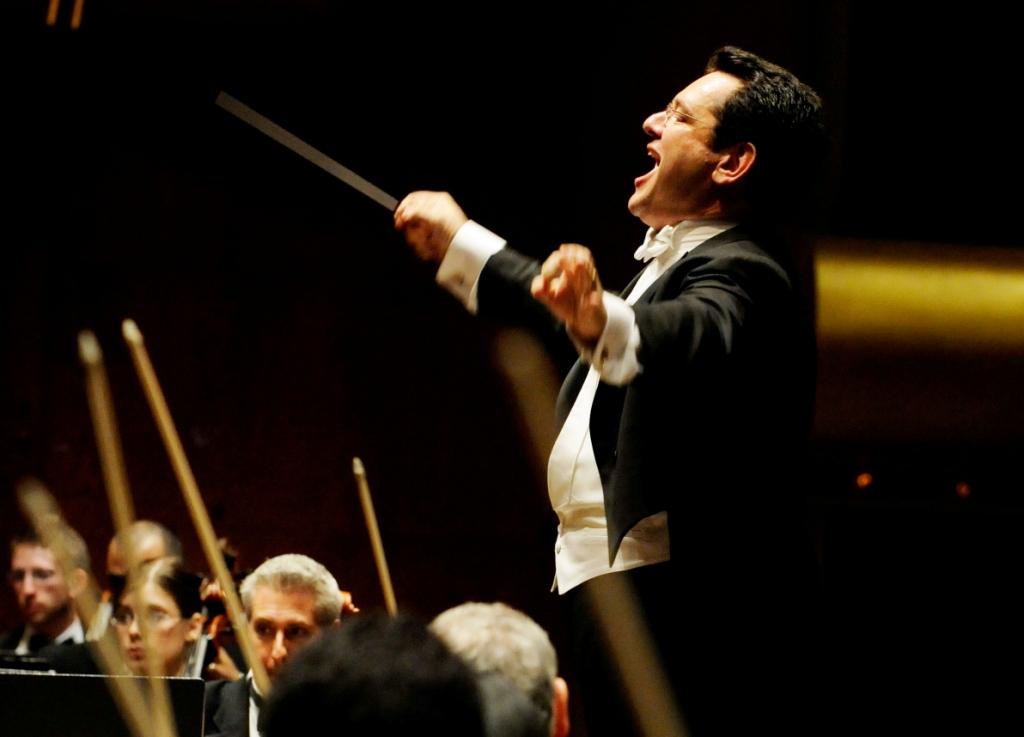
Sometimes certain works are absent from concert programs for several years and then re-discovered by everybody simultaneously. This season may have set a record in duplications of cello sonatas: within a few weeks, Debussy’s was performed three times, and Schubert’s, Faure’s, Poulenc’s, and Prokofiev’s twice each. They were played by two audience favorites – Steven Isserlis and Timothy Eddy (whose recital was reviewed earlier) – and two strikingly talented newcomers and multiple prize winners who were making their New York debuts: Jean-Guihen Queyras and Andreas Brantelid. Moreover, Eddy’s and Brantelid’s programs were almost identical.
For many young performers, nothing seems to be more difficult than to be simple. The “Arpeggione” was the weakest part of both debut recitals; sinking under the weight of fussy tempo changes, overdone phrasing and dynamics, it lost its continuity and pensive introspection. Queyras’ playing, though technically excellent, was rather fussy altogether; his constantly delayed vibrato, fluctuating tempi and other external effects were especially distracting in a Bach Sonata and three Schubert songs not well chosen for transcription. However, in the Debussy and Poulenc Sonatas, his tonal variety and rhythmic flexibility brought out the manifold colors and character changes beautifully. He was greatly abetted by his long-time pianist Alexandre Tharaud.
Brantelid also benefited from playing with a frequent partner, the esteemed veteran pianist Bengt Forsberg. Though generally wonderfully supportive, he sometimes got carried away and played as loudly as if he were alone on the stage. Brantelid is an extraordinary cellist: his technical command, without being flashy, is so natural and secure that one forgets about it; he draws the listener into the music by the sheer power of his own identification with it. He projected Fauré’s elusiveness, Debussy’s quirky rhythms, character changes, and Prokofiev’s melting lyricism and robust earthiness, all with complete authority.
Isserlis played the Poulenc Sonata as part of a very interesting program he shared with violinist Anthony Marwood and composer/pianist Thomas Adès, whose cello and piano piece, Lieux retrouvés (Rediscovered Places) was receiving its U.S. premiere. Isserlis says he has never played anything so difficult, though the rest of the program was no less challenging. It is indeed very demanding; its figurations, diverse rhythms and sound effects, evoking water, mountains, fields and the city, require utmost virtuosity and imagination of the players. Adès, who played throughout the concert, joined Marwood in Janácek’s Violin Sonata; their affinity for his idiosyncratic, prosodic idiom, his fluid tempi and shifting emotions was remarkable. For his own work, Adès had a most persuasive advocate in Isserlis, a splendid cellist and a compelling, versatile, adventurous musician. Their performance of the Poulenc, preceded by arrangements of two sad, slow pieces by Liszt, was brilliant, full of character and contrasts, with natural, poised transitions between lyricism, assertiveness, exuberance, and irony. Finally, the three players gave a fabulous performance of Ravel’s notoriously difficult Piano Trio. Surmounting its instrumental and rhythmic hurdles with incredible ease, they captured its poetic atmosphere, changing moods and kaleidoscopic colors with total identification and unanimity.

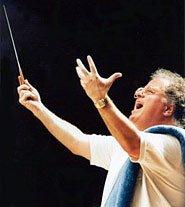 James Levine, who just recovered from spinal surgery, has returned to the Metropolitan Opera pit and the concert stage in fine fettle. At his January 24th Carnegie Hall appearance with the MET Orchestra – their second this season – his high-voltage energy, fiery temperament, exuberance, and emotional—as well as mental—concentration were totally unimpaired. However, his conducting technique seemed to have undergone a startling change. Since the musicians, after many years of collaboration, are so attuned to him that they respond to the merest lift of his eyebrows, his motions used to be “close to the vest” and so small as to be invisible to the audience. His rapport with the orchestra is still palpable, but his gestures have now become big and sweeping: he waves his arms in all directions, turning and swaying from side to side. It was very exciting. The program was framed by two of the repertoire’s most popular symphonies: Schubert’s “Unfinished” and Beethoven’s Fifth. Levine seems to have succumbed to the current penchant for extreme dynamic contrasts, from the softest murmur of whispering strings to the most thunderous use of timpani. The opening of the Schubert was nearly inaudible, but otherwise, it was beautifully lyrical and introspective. The Beethoven was extremely dramatic, and the orchestra played splendidly, as always. Levine, in addition to conducting four operas at the Met, is returning to Carnegie Hall for two concerts with the Boston Symphony, plus directing Met Chamber Ensemble Concerts and master classes. The audience gave this intrepid musical superman a hero’s welcome and rewarded him with standing ovations.
 If any orchestra should tour with Holst’s “The Planets”, the Houston Symphony should—due to its relationship with NASA and the Johnson Space Center. But a film experiment directed by Duncan Copp called “The Planets: an HD Odyssey” didn’t work: the space images and video, though extraordinarily clear and beautiful, were too generic for Holst’s mythical descriptions of the planets and our own imaginations that inevitably follow. It was like experiencing an orchestra play James Horner’s riveting music to the film
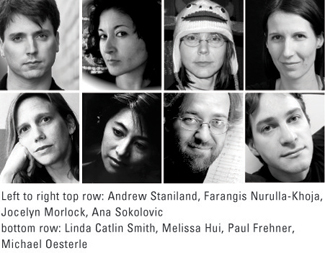 In the first concert of its 44th New York season, Continuum did one of the things it does best: explore important, talented composers who are relatively unknown in this country. Music of Canada was presented in a program entitled “Northern Exposures: Canadian Music—The New Individualists.” I came away from this program thinking that Canadian composers are indeed unique and tend to go their separate ways.