
SolAria Music Foundation Presents On Wings of Song in Review
Fang Tao Jiang, Soprano; Jonathan C. Kelly, Piano
Special Guest: Le Bu, Bass-Baritone
Guest Artists: Reed Gnepper, Yushan Guo, Miaoyan Hou, Tiffany Zhao, Haishan Lai, Ruochen Liu, Lirong Liu, Ruocheng Yang, Jingyi Du, Yuyao Chen, and Zhongjiancheng Deng
The New York Youth Vocal Ensemble
Weill Recital Hall at Carnegie Hall, New York, NY
October 5, 2025
A festive atmosphere filled Weill Recital Hall this weekend, as soprano Fang Tao Jiang and several dozen others performed a variety-filled concert of vocal music entitled “On Wings of Song.” The music ranged from famous operatic selections and lieder to Chinese and American folk songs, plus what was billed as “Musical Theater Medley: Let the World be Filled with Love” (arr. Guo Feng). Though Ms. Jiang sustained the demanding first half as soloist with the sensitive collaboration of pianist Jonathan Cameron Kelly, she was joined after intermission by special guest bass-baritone Le Bu, eleven SolAria Emerging Young Artists, and the twenty-four-member New York Youth Vocal Ensemble (with some overlap of personnel). Ms. Jiang’s excellent credentials may be found at her website (www.fangtaosings.com), but suffice it to say here that she is a force of nature, combining her philanthropic, musical, and personal gifts into one impressive package.
The concert started off with only a hint of the extravaganza that would come, via a steady stream of excited audience members entering between works, some of whom were evidently there to hear “their own” friends and children, including Ms. Fang. After a measured opening performance of Il fervido desiderio by Bellini, Ms. Jiang halted the piano introduction of the next work, Donizetti’s Me voglio fa’ na casa, in orderto graciously welcome more latecomers. After recommencing, Ms. Fang showed more and more comfort with each note. She sang with a playful spirit that found her pianist Mr. Kelly accommodating each whimsical fluctuation with aplomb and a keen sensitivity to her every impulse. She projected a sound of considerable power and range (albeit one with a more widely oscillating vibrato than this listener favors, though that is certainly a matter of personal preference).
After the Donizetti, another stream of latecomers found Ms. Jiang saying sweetly “I’ll wait” before she sang Sposa son disprezzata (Vivaldi/G. Giacomelli). She sang this aria with sincere dedication, navigating its high notes and long melismas with overall success, and projecting a pathos that had the audience settling down a bit. The next stream of latecomers was addressed by her request for “a few words” – and surprisingly these were not words of thanks this time but the words, “Please be on time,” as she exploited the teachable moment. Did we mention that she is an educator?
Next, she launched into Mendelssohn’s famous Auf Flügeln des Gesanges (“On Wings of Song”), and it was fitting that the song for which the program was named showed some of her finest singing, as she soared through its phrases with a clear feeling for its purity. It was followed by Richard Strauss’s Ständchen, given especially pearly piano figuration by Mr. Kelly.
The Liszt song that followed, Oh! Quand je dors, has been one of this listener’s “desert island” favorites for several decades, which makes it hard to hear outside of a few interpretations (with Frederika von Stade’s eliciting the greatest swoons – and this is apart from the fact that Liszt transcribed it for piano solo as well). The song is, in a sense, a musical sigh of resignation to the fact that the object of love in Victor Hugo’s text is found only in sleep and dreams: it is at once heavenly and heartbreaking. Perhaps it was the edgy excitement of Ms. Jiang’s evening (or possibly her occasionally distracting vibrato) that lent the piece a certain frenetic energy, but it felt hard to sink into the dream. Her performance of Debussy’s Apparition, on the other hand, suited Mallarmé’s restlessness wandering to a tee.
Ms. Jiang also seemed to savor the Chinese pieces. First came two folk songs, the evocative Swallow Song and then When Will the Sophora Bloom, the latter illuminated by her rather humorous preface about a girl feigning interest in a Sophora tree while waiting for the object of her love. Ms. Jiang moved and emoted while singing, to convey its humor further, and it was a joy. The very touching I Live by the Yangtze River by Qing Zhu closed the set movingly before ending the first half with Long Time Ago, the Aaron Copland arrangement of an American ballad he discovered in a library. Ms. Jiang listed it as “In memory of my mother and loved ones” in what was a touching tribute.
After intermission, the variety expanded greatly starting with All Dharmas are Equal, from the opera Monkey King by Huang Ruo, a composer whose work Ms. Jiang has performed with critical accolades. As with most other works, she prefaced it with an introduction from the stage and sang it with strong commitment.
The introduction of bass-baritone Le Bu brought a stunningly new sound to add to Ms. Jiang’s in the famous duet, Là ci darem la mano from Mozart’s Don Giovanni. They blended well in it, reminding us why this selection is so popular. Le Bu followed it with the solo aria from Massenet’s Don Quixote, Riez! Allez! Riez du pauvre idéologue and blew the audience away. His is a voice already being welcomed at the Metropolitan Opera and sought after widely (as can be learned from this website: https://minerva-artists.com/roster/le-bu/), but it was a first for this listener. His precision, deep resonance, and natural musicality are bound to keep him front and center on many a world stage.
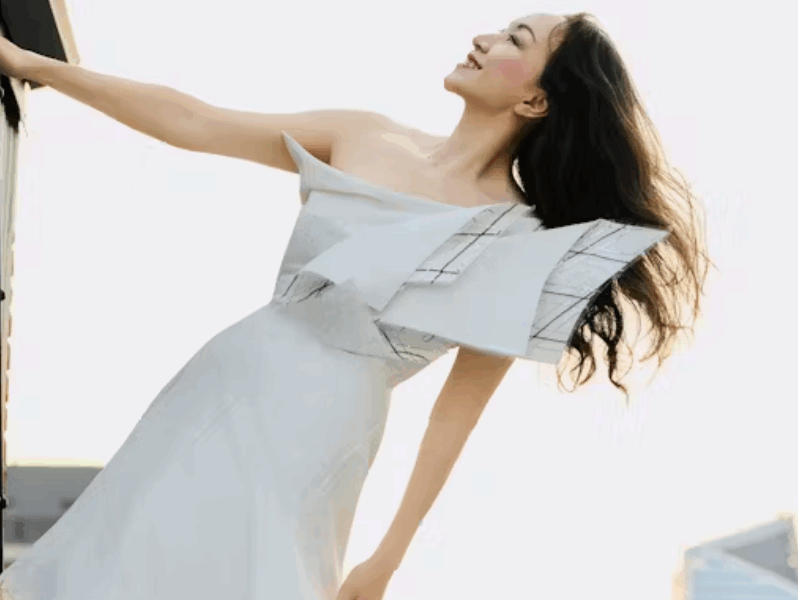
The average performer’s age seemed to lower a bit, after this point, though the favorites kept coming, starting with the Flower Duet From Delibes’ Lakmé, joiningvoices of Ms. Jiang and Yushan Guo. It was a lovely blend overall, though there seemed occasional intonation glitches. One needn’t dwell on nit-picking, though, as this was in many ways one of those concerts that goes beyond the “norm” to defy description, from the elements of “outreach” (to present and guide those in their early musical lives) to the addition of “extras” such as Ms. Jiang’s wardrobe selections. She wore no fewer than four outfits over the course of the evening, all created by designer Grace Chen (and all eye-catching on the lovely Ms. Jiang, from blue to black to pink and then red).
After one more solo from Ms. Jiang, the iconic O Mio Babbino Caro from Puccini’s Gianni Schicchi, the concert was dominated by guest artists, starting with Tiffany Zhao and Miaoyan Hou who sang Summertime from Gershwin’s Porgy and Bess with young jazz pianist Haishan Lai. They gave it a new spin with their alternating solos and improvisatory accompaniment. It is hard, with such a classic, to fiddle with it in ways that don’t disrupt the piece’s inherent phrase rhythms and breathing (and a few ensemble junctures left one wondering whether all were intentional), but it was certainly novel.
Twelve young singers filed onstage next to sing the American folk song, Shenandoah. It had a stirring sincerity and featured several promising young voices as soloists. They were then joined by rest of the singers, members of New York Youth Vocal Ensemble, to sing what was called “Music Theater Medley: Let the World be Filled with Love” by Guo Feng. The program listed Fang Tao Jiang as choir director and Jonathan C. Kelly as coach, and it was a remarkable experience to travel on this blitz tour of some of film and theater’s most beloved tunes. More compressed than a typical medley here, there were only several seconds of many of the selections in order to showcase tidbits from Annie, The Sound of Music, The Phantom of the Opera, Les Misérables, The Greatest Showman, Moana, Matilda, and even a snippet from the intro of Singin’ in the Rain. It was heartwarming to hear these dear young voices.
Some “heavy hitters” – Reed Gnepper, Ruochen Liu, and Zhongjiancheng Deng – came onstage next to sing the Neapolitan song O Sole Mio (E. di Capua), and it was a tour-de-force of humorous and virtuosic one-upmanship. This trio was then joined by Fang Tao Jiang, Lirong Liu, Yushan Guo, Ruochen Yang, Miaoyan Hou, Jingyi Du, and Yuyao Chen in a rip-roaring closer of Brindisi, the famous drinking song from Verdi’s La Traviata. It was celebratory, to say the least, and was greeted with a large and well-deserved standing ovation.
