ANNOUNCEMENT

ANNOUNCEMENT

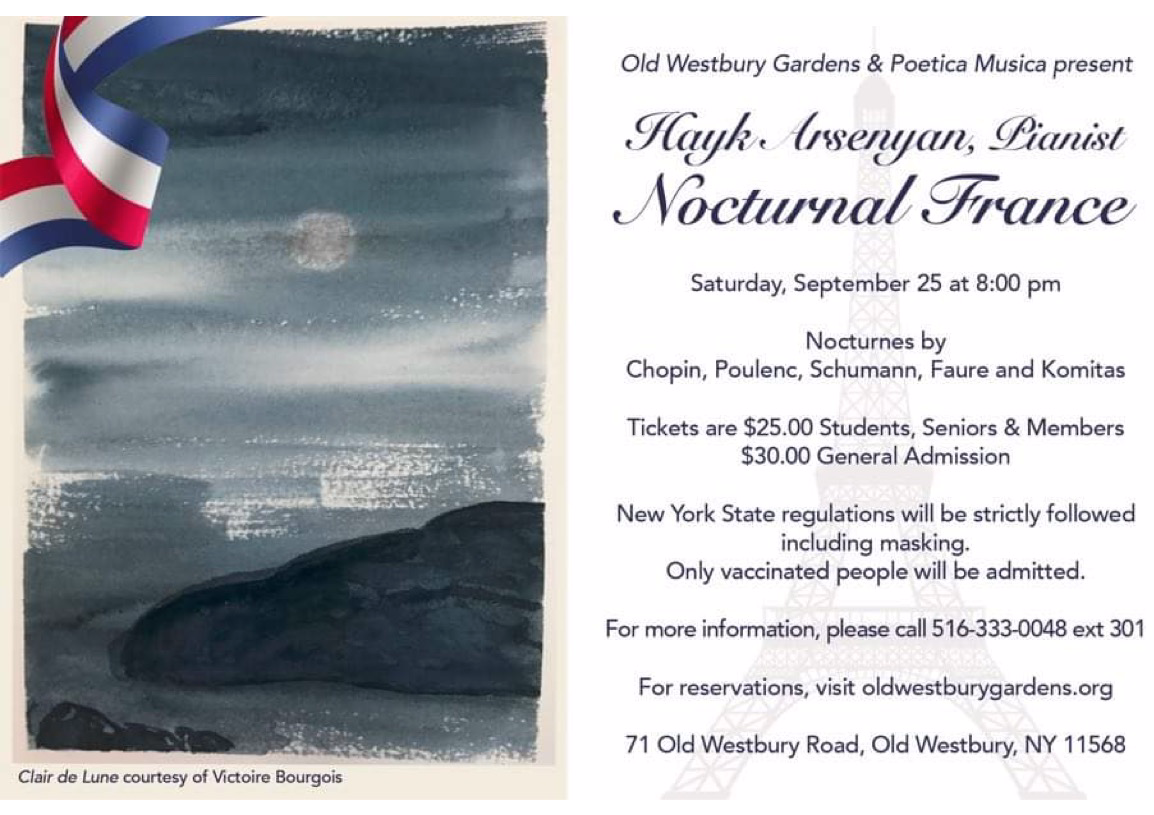
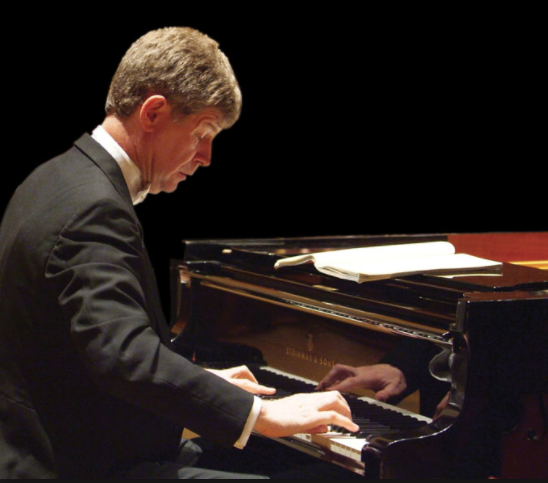
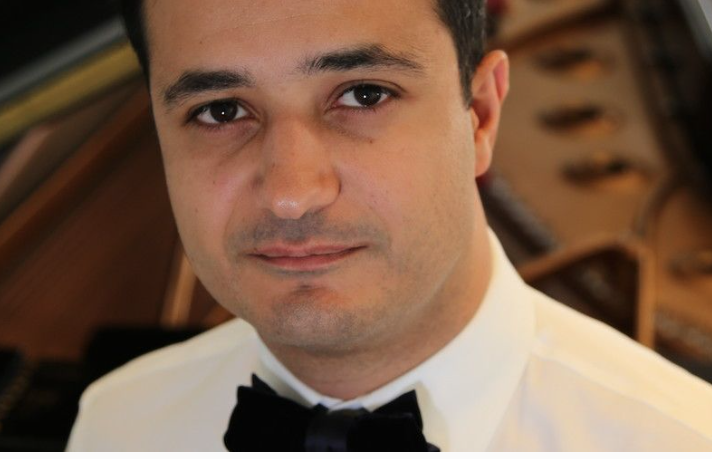
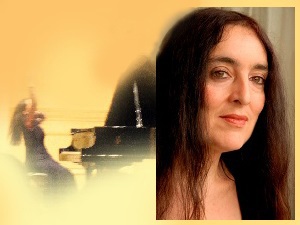
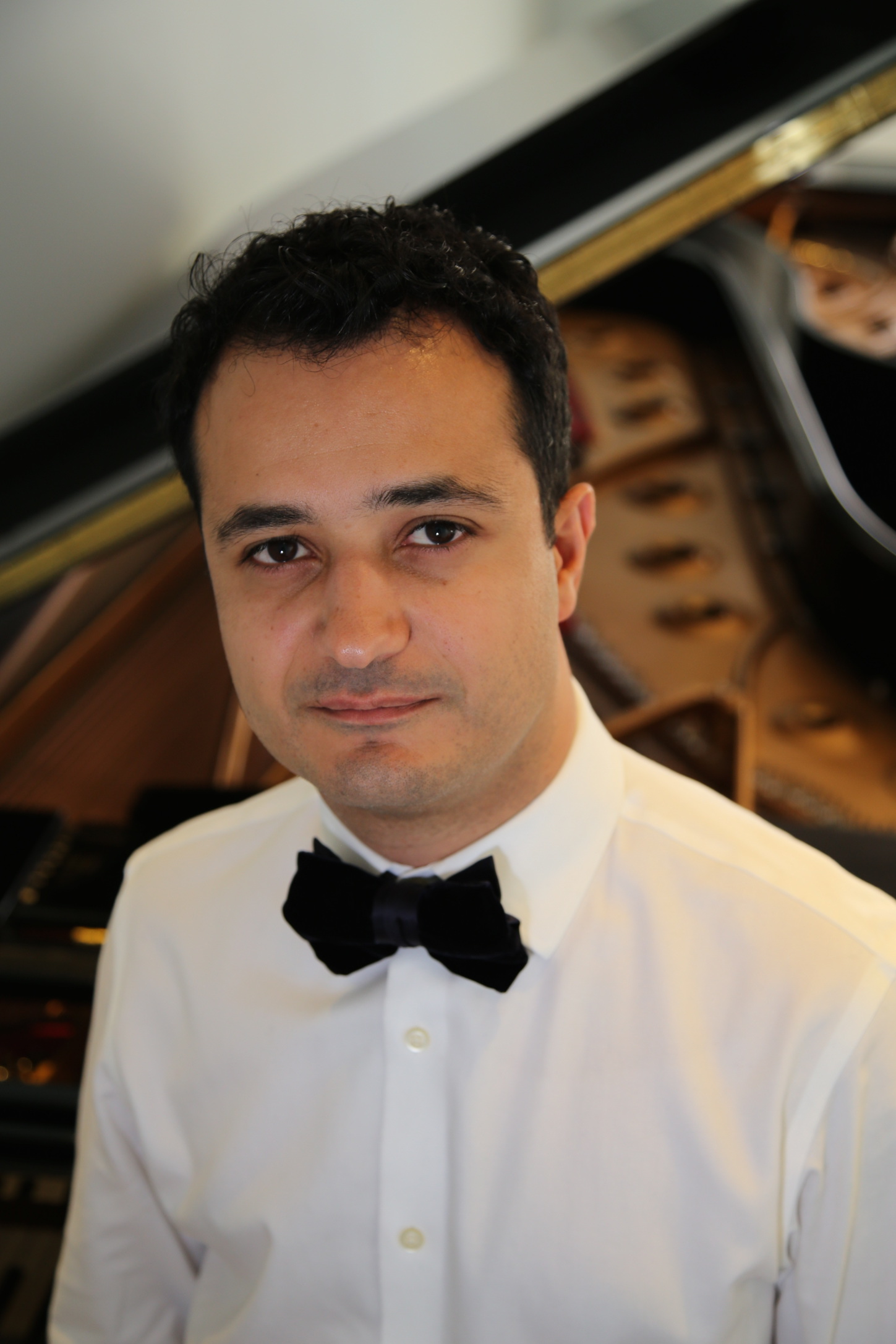
Critically acclaimed pianist and composer, Hayk Arsenyan presents “Nocturnal France”, a program of some beloved and some unknown sets of nocturnes by Chopin, Fauré, Poulenc, and Schumann’s recently published variations on Chopin’s Nocturne Op. 15 no 3. This program also includes Armenian composer Komitas’s rarely performed Msho Shoror Suite for the Piano and his newly discovered Nocturne, which was given a world premiere by Arsenyan in February of 2021 after more than 100 years since its creation. The concert will take place at the beautiful Mansion of Old Westbury Gardens in Long Island on September 25th at 8 pm. For reservations please visit oldwestburygardens.org or call 516.333.0048 ext. 301.

Hayk Arsenyan published a performance guide to Antonio Soler’s sonatas in 2009, and has performed in Europe, Asia and Americas, at venues such as Carnegie Hall (New York), Palais d’UNESCO, Salle Cortot (Paris), Tchaikovsky Hall, the Kremlin (Moscow), Petranka Mozarteum (Prague), Kumin Hall (Tokyo), Assad Opera House (Damascus), Sala Cervantes (Havana), Myra Hess Series (Chicago), Phillips Collection (Washington DC), and Shanghai Concert Hall, among others.

At the age of 11, Arsenyan performed his own requiem with the Armenian National Philharmonic Orchestra, and at 17, debuted as a soloist with the Radio France National Philharmonic Orchestra, where he was also awarded a platinum medal by the City of Paris.

Share

Distinguished Concerts International New York (DCINY) presents Messiah…Refreshed! in Review

Distinguished Concerts International New York (DCINY) presents Messiah…Refreshed! in Review

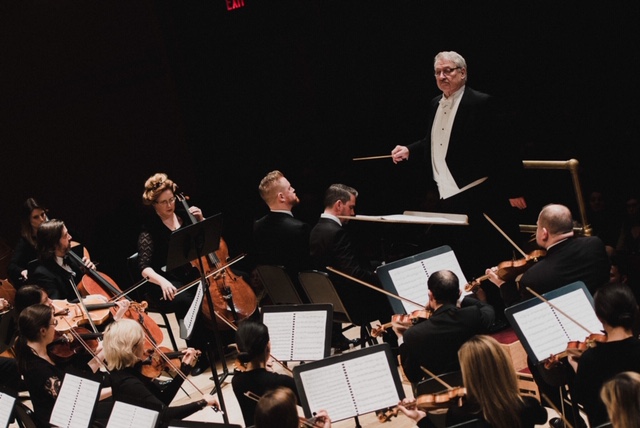
Jonathan Griffith, DCINY Artistic Director and Principal Conductor
Penelope Shumate, soprano; Teresa Buchholz, mezzo-soprano;John McVeigh, tenor; Christopher Job, Bass-Baritone
Distinguished Concerts Singers International; Distinguished Concerts Orchestra
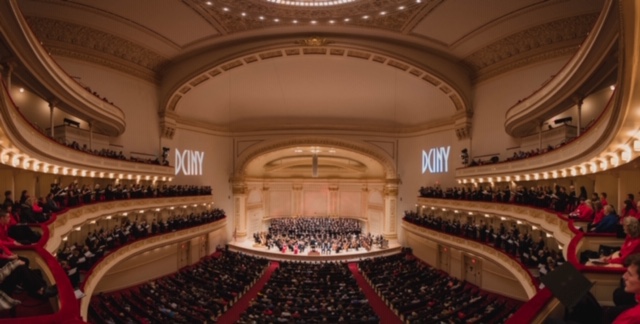
Stern Auditorium at Carnegie Hall, New York, NY
December 1, 2019

On Sunday afternoon, Maestro Jonathan Griffith led his enormous army of choristers and orchestra as Distinguished Concerts International New York (DCINY) presented their annual New York presentation of Sir Eugene Goossens’ arrangement of Handel’s eternal Messiah—a version I like to call “refurbished,” not necessarily “refreshed.” This is not a Messiah for the persnickety purist (which I’m not!). Griffith has an international reputation with this particular version; he just recorded it this past summer with the Royal Philharmonic Orchestra, the same group that occasioned this version.

I have reviewed this production several times previously in these pages, always with pleasure, so I will spare the reader a lengthy discussion of the work’s origins, issues, and musical analyses. There were superb program notes by Andrew Stewart that really plumbed the depths of the sometimes quite wild story of how this arrangement was made. It turns out that Goossens was prosecuted, convicted in absentia, and fined for possession of pornographic materials in his luggage, by Australian authorities, causing his resignation from the Sydney Symphony and a precipitous career decline. Thus, Beecham’s commission of the arrangement for purposes of a recording was practically a relief effort! Furthermore, the arrangement has a complicated provenance leading to its rediscovery about 20 years ago.

DCINY sure knows how to gild a lily, however. Despite the two hour, twenty-two minute length of Messiah (only seven numbers cut, four from Part 3, three from Part 2), the concert was preceded by a half-hour of handbell music, traditional Christmas carols and hymns, arranged by Phillip Wayne and conducted by Kevin McChesney. Nothing says “holiday” like bell-ringing, and it was cheery. However, I may have preferred silence in order to contemplate the enormous work that lie ahead.

Messiah….Refreshed! Photo Credit Dan Wright Photography/DCINY Productions

On this date, the rendition was not as fine-tuned as I have come to expect from this conductor and his group. Perhaps there was insufficient rehearsal time; logistics for these events must be a nightmare. There were choirs from all over the United States, and even United Arab Emirates, Kuwait,  Canada, Australia, Sweden, Hong Kong, and India, as well as individual singers from around the globe. Griffith’s conducting is beyond reproach, but with hundreds of singers, the choral coloratura and diction both became quite fuzzy. Three of the four reliable soloists nearly came to grief with ensemble discrepancies—they seemed to want to take extra time, while Griffith pressed ahead.

In fact, the predominant issue for me was Griffith’s almost “apologizing” for the inflation of the work—his tempi really were pushed too fast, which would have been all right with a “historically informed performance” sized choir. I often found myself wishing for him to really go “grand” and broaden tempi, even more than the grand effects called for by Goossens. The several hundred singers were swapped out for several hundred others for the second half of the performance; and the balcony choirs were grand, thrilling the unsuspecting audience in Hallelujah and Worthy is the lamb that was slain. In Griffith’s recent recording, the choir is substantially smaller. Also, when performed in the United States, can we please dispense with the custom of standing for Hallelujah? We have no king, and besides, who knows why the original king stood up—perhaps his gout was bothering him during an exceptionally long afternoon of oratorio.

The orchestra, composed of the best New York area freelancers, helmed by concertmaster Jorge Ávila, was excellent. There were two annoying factors, neither of which was their fault, but rather Goossens’. One: the cymbal crashes—they’ve got to go. Two: I was able to hear many superfluous extra contrapuntal lines in continuo arias, presumably Goossens’ creation, filling in what should have been ensemble rests—it was if he didn’t trust the power of silence. The Pifa (“pastoral symphony”) was radiantly beautiful.

Tenor John McVeigh was often sharp on this occasion, though his sound is sweetly lyrical. Griffith conducted all the tenor arias at quite a clip. Bass-baritone Christopher Job has the bright sonority that makes Thus saith the Lord work well, but I wished for more attention to the word “darkness” in For behold, darkness shall cover the earth and The people that walked in darkness, both of which lacked mystery. Everything was the same color. I’ve always wondered why there can’t be more than one low male voice soloist in Messiah. Why do the nations so furiously rage together? and The trumpet shall sound suited him very well. The clarino trumpet solo was excellent there as well. Mezzo-soprano Teresa Buchholz poured her honeyed sonority over her solos, with great sincerity, though with this arrangement she was often hard to hear. I don’t know if the omission of the middle section of the gorgeous He was despised is due to Goossens, but it robs the aria of proportion and drama. Only soprano Penelope Shumate escaped most of these pitfalls, with bright, clear sound, excellent diction, real emotional involvement, and spot-on coloratura, though again there could have been more variety of color and attention to soft dynamics.

The choir’s finest moments were in the monumental series of three choruses: Surely he hath borne our griefs, And with his stripes we are healed, and All we like sheep have gone astray. Griffith also drew out delectable nuance on the word “light,” with his forces observing the diminuendo in His yoke is easy, and his burthen is light.

Handel really knew how to write a show-stopper, and Hallelujah had its thrilling impact, as did Worthy is the lamb, both of which showed finely detailed contrasts in dynamics.

So, the holidays really are upon us, and we must be grateful for the dedication shown not only by Griffith, but by his numerous participants who come from all over the world to create beauty, and to DCINY for continuing to provide quality music of all types.

Share

The Gurdjieff Ensemble, Leading Group Specializing in Ancient and Medieval Music, set to Make Debut American Tour

The Gurdjieff Ensemble, Leading Group Specializing in Ancient and Medieval Music, set to Make Debut American Tour

Gurdjieff Ensemble to Perform in New York, Chicago and Los Angeles, Presented by AGBU

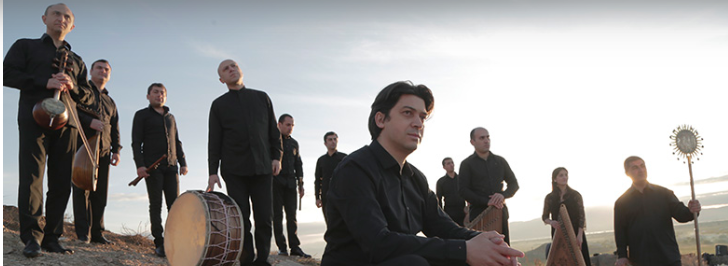
The Gurdjieff Ensemble, one of the leading groups in the world specializing in ancient and medieval music from the East, will be making their first American Tour to three major cities this September sponsored by the Armenian General Benevolent Union (AGBU)

The internationally acclaimed Gurdjieff Ensemble was founded by Armenian musician Levon Eskenian in 2008 with the intention of bringing the music of the Armenian philosopher, author and composer Georges I. Gurdjieff back to its ethnic inspirational sources.

The Ensemble consists of Armenia’s leading musicians playing traditional instruments. Their debut album on ECM Records, “Music of Georges I. Gurdjieff,” was widely acclaimed, and won prestigious awards including the Edison Award in the Netherlands.

They have been touring the world with sold out appearances at major festivals and concert halls in Europe, Australia, the Middle East, Russia and South America, and will bring their music to American audiences for the first time in September with concerts in New York, Chicago and Los Angeles.

G.I. Gurdjieff, born in Armenia, is known to many in the West as one of the major spiritual figures of the 20th century.  He was a musician, philosopher, choreographer, and writer, and his extensive musical repertoire was based on the music he heard while traveling in Armenia, the Caucasus, the Middle East, and many parts of Central Asia, India and North Africa, where he witnessed a myriad of folk and spiritual music, rituals and dance traditions.

With their second album, “Komitas,” also on ECM Records, the Ensemble turned their attention to the music of Komitas Vardapet (1869-1935). Composer, ethnomusicologist, arranger, singer and priest, Komitas is popularly held to be the founder of contemporary music in Armenia, and in his work as a collector he explored the connections that uniquely bind together Armenian sacred and secular music.

“This year we mark the 150th anniversary of Komitas and the AGBU Performing Arts is presenting the Gurdjieff Ensemble from Armenia for a debut tour in the biggest cities of America.  We are extremely excited for the chance to share this special music with the US audiences,” said Eskenian.

Eskenian collected piano and vocal works and arranged them for traditional instruments, thereby enhancing and preserving their authenticity. The resulting music allows the Gurdjieff Ensemble, performing on more than 16 traditional Armenian and Eastern instruments, to illuminate the deep roots of Komitas’s and Gurdjieff’s works.

Tickets can be purchased at https://agbu.org/events/.

Share

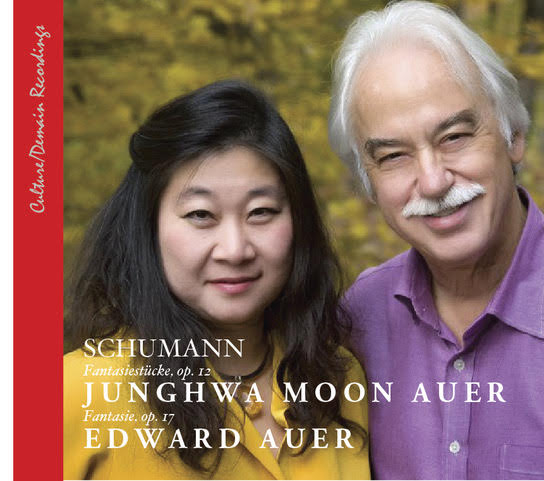
Edward Auer and Junghwa Moon Auer: Schumann CD in Review

Edward Auer and Junghwa Moon Auer: Schumann CD in Review

Edward Auer and Junghwa Moon Auer: Schumann CD in Review
Schumann: Fantasiestücke, Op. 12 – Junghwa Moon Auer, Piano
Schumann: Fantasie, Op. 17 – Edward Auer, Piano
Producers: Edward Auer and Junghwa Moon Auer
Culture/Demain Recordings (no catalog mumber)
Total timing: 59:27

Edward Auer is a Juilliard graduate who serves on the faculty of the Jacobs School of Music at Indiana University. Junghwa Moon Auer, his wife, a graduate of Yeonsei University in Korea and the New England Conservatory, is coordinator of the Edward Auer Piano Workshop at the Jacobs School, and a member of the artist faculty at Roosevelt University.

This new CD shows the Auers to be pianists of polish and refinement who both understand the idiom of Schumann’s music. The piano sound is good, and both pianists play with marvelous tone throughout.

Junghwa Moon Auer’s performance of Des Abends, the first piece in the Fantasiestücke, has a lovely calm, and subtle use of rubato. In Aufschwung, she brings out the contrasting moods of the different sections, such as the stately part in B-flat major, as opposed to the threatening buildup which leads to the return of the dramatic first  theme.

Warum? is, perhaps, a bit slow, but has some beautiful soft playing, and an intriguing interplay of the voices. Grillen is slightly understated, yet jocular. (The marking does say Mit Humor!)

The night can be scary, and Ms. Auer shows this in In der Nacht, though, with her sensitivity to different colors, the F major middle section is a wonderful  “escape” from the tension and tumult of the rest of the movement. Fabel, another piece of contrasts, is very effectively played. Traumes Wirren, which in some performances throws sparks all around, strikes this listener as light-hearted, but a bit sedate. The last movement, Ende vom Lied, is very fine, with a strong beginning, an energetic middle section in B-flat major, and a peaceful end.

After the loud, swirling beginning of the first movement of the Fantasie, Edward Auer plays a bit slower than one might expect, but everything “works.” The F major theme is eloquent, and the syncopated section which follows sounds appropriately improvisatory. There is a natural sounding emotional underpinning to everything he does in this movement. The last section, in C major, is slow, expressive, and deep.

The second movement is played at a strong, moderate tempo. Parts of the middle do seem a bit slow. The coda is certainly well-played, though some pianists take a more daring tempo.

Mr. Auer’s playing of the last movement is a spacious and calm unfolding of the material. In addition to the dynamic contrasts, which are effectively brought out, there is a sensitivity to coloristic possibilities as the work modulates. There is a very fine buildup in the last section, and then Mr. Auer goes “back down the other side of the mountain” to a beautiful, soft conclusion.

Donald Isler for New York Concert Review; New York, NY

Share

Adrienne Haan’s Voluptuous Weimar – A Tribute To Berlin’s Golden Age in Review

Adrienne Haan’s Voluptuous Weimar – A Tribute To Berlin’s Golden Age in Review

Adrienne Haan, Cabaret Singer
Richard Danley, Musical Director
Vince Giordano & The Nighthawks
Joe’s Pub, New York, NY
October 17, 2018


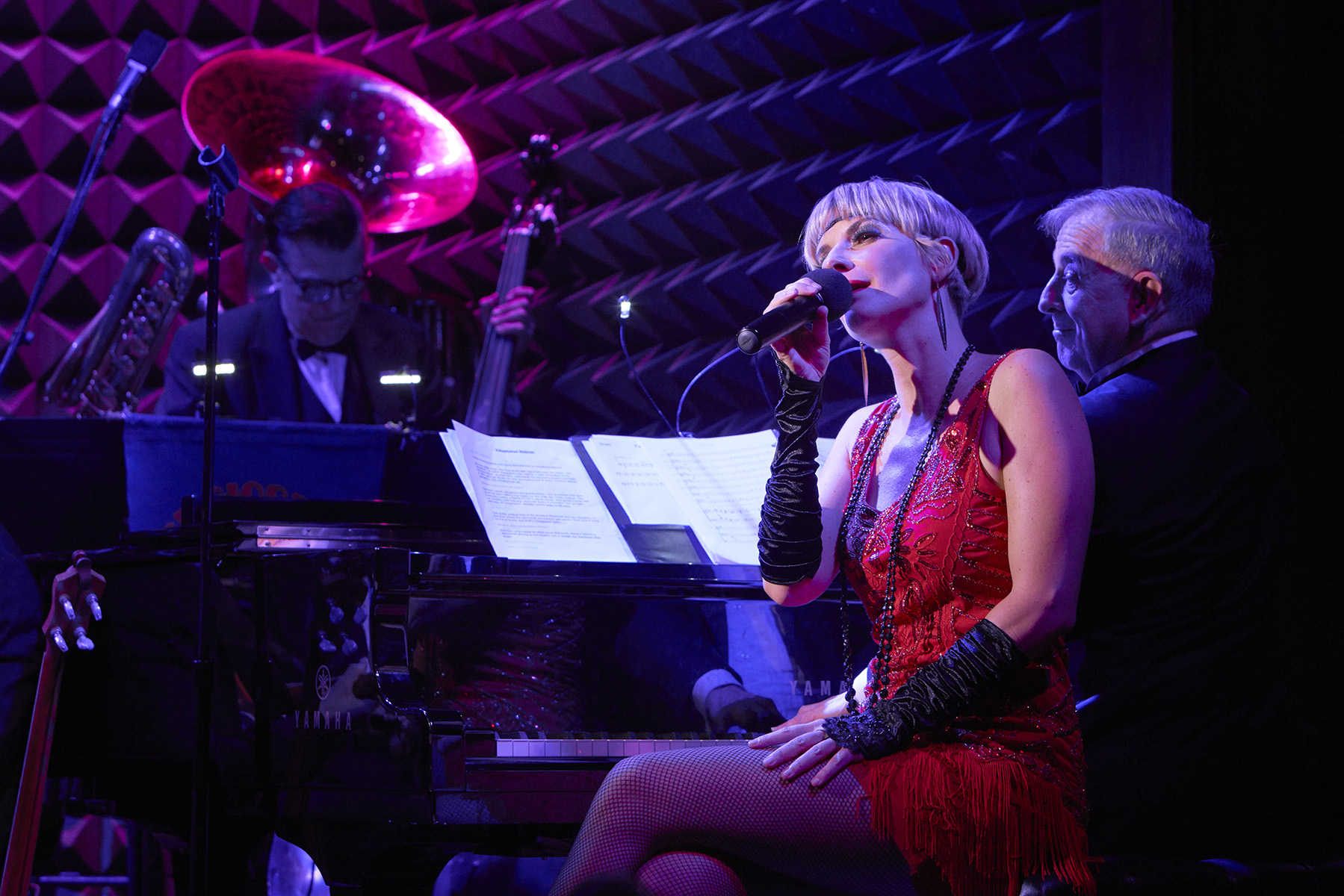
Cosmopolitan actress and singer Adrienne Haan presented her exciting, stimulating, and inspiring show, Voluptuous Weimar – A Tribute To Berlin’s Golden Age at Joe’s Pub in Manhattan for a one night engagement on Wednesday, October 17 to an enthusiastic packed house. Accompanying Ms. Haan was not only her superb musical director/ pianist Richard Danley, but the astounding Vince Giordano & The Nighthawks. Ms. Haan made her entrance onstage to thunderous applause. In true Weimar fashion, she wore a sleeveless, shimmering short red dress. In addition, she sported a very short hair style with a headband complete with a beauty mark and accentuated eye makeup. Ms. Haan began her program with the very bouncy yet topical song Alles Schwindel (It’s All a Swindle). In that opening number, Ms. Haan quickly ingratiated herself with the audience not only with her beauty and charm and her wide, diverse vocal range, but also with her complete knowledge and understanding of the material she was interpreting. In that opening song, one heard her lovely soprano voice, but she also proved that she could project that well-known guttural sound so associated with legendary artists as Marlene Dietrich and Edith Piaf. Immediately after finishing the song, Ms. Haan smoothly segued into her next number, Sex Appeal , by giving a brief description as to what the theme of her show was about – Berlin’s Golden Age beginning directly after the first World War in 1918 when Germany’s economy collapsed. By 1923 the situation became so desperate that decadence became more prominent in Berlin. Social and sexual values were changing and, in Ms. Haan’s words, “millionaires had become paupers”.

Then by the mid-1920’s, the women’s movement and the gay movement had made their presence well-known in Berlin, especially in the artistic world where creative geniuses like Kurt Weill, Fritz Lang, and Josef Von Sternberg were flourishing. She then sang Ich bin die fesch Lola (They call me naughty Lola), the Friedrich Hollaender song made famous by Marlene Dietrich in the classic 1930 Von Sternberg film The Blue Angel. In her version, Ms. Haan began the song with a slow tempo and then gradually drifted into the more rowdy way audiences were used to hearing Dietrich sing it. Ms. Haan then sang what later became Dietrich’s most famous song, Ich bin von Kopf bis Fuss auf Liebe eingestellt (Falling in Love Again), also from The Blue Angel, while seductively sidling up to her pianist Richard Danley on the piano bench. She began the song in sprechgesang (spoken singing) form, and then when she reached the chorus she sang it full-out in German and English. Saxophonist Dan Levinson and violinist Andy Stein were featured very effectively in this number. The next song, Jonny, wenn du Geburtstag hast was also written by Hollaender for Dietrich. In setting up the song, Ms. Haan said that by the early thirties, Berliners loved anything American – Jazz, Josephine Baker, and Hollywood, particularly Johnny Weismuller. As a result, at that time, all Berlin girls called their lovers “Jonny”. In her interpretation of the song, Ms. Haan blithely walked through the audience like a charming free spirit and playfully flirted with a few men by kissing them or playfully tousling their hair. She also sang the song in both German and English.

Before singing Irving Berlin’s Blue Skies, Ms. Haan mentioned that Josephine Baker’s recording of that song was so popular that it resonated throughout France and Germany, and was played in all of the dance halls in both countries. It was a lovely upbeat version with Vince Giordano, himself beautifully soloing on bass saxophone. She followed up with another Irving Berlin song, Cheek to Cheek. In both songs, Ms. Haan’s lovely soprano voice was beautifully showcased. Note: Even though Ms. Haan saluted both Dietrich and Baker by singing their songs or songs they made popular, she wisely made no attempt at imitation, but made each selection her very own. She then mentioned that in 1932, when Cole Porter’s song Night and Day reached Germany, it became very popular in Berlin. Her rendition evoked not only the lovely lush melody that was so representative of the early thirties, but also the impending shadow of Nazism that was just about to take over Germany and, later, most of Europe. For the novelty song, Ich bin ein Vamp (I am a Vamp) , Ms. Haan referred to the big cabaret club in Berlin in the 1930’s, El Dorado. It was there she said that one looked for the pleasures of “one night”. Another Friedrich Hollaender number written for Dietrich, Ich Weiss nicht zu wem ich gehore (I don’t know who I belong to), was a lovely torch song in which Ms. Haan again showed off her fine range and dramatic talents.

Then in a complete change of pace, Ms. Haan, Mr. Danley, and Vince Giordano & The Nighthawks pulled out all the stops with a dynamite version of the classic Big Band number Sing, Sing, Sing. Before presenting this song, Ms. Haan revealed that the German youths admired anything American and British, and this number proved to be so popular that when the song reached Berlin in 1939, the Swing Youth Group was formed in Hamburg, however the group had to be circumspect and kept “underground,” because any swing music was considered Entartete Musik (degenerate music) in Nazi Germany. In her interpretation of this number, Ms. Haan sparkled, bubbled, shimmied, and percolated all over the stage with sex appeal and sensual abandon looking like she was ready to explode with excitement. The number also showcased Vince Giordano & The Nighthawks especially the marvelous Paul Wells doing masterful work on percussion. It was electrifying. Ms. Haan and the musicians followed that volcanic excitement with a delightful treatment of the 1932 song Bei mir bistu shein with Ms. Haan singing in both German and English. This was another song that was embraced by the Swing Youth Group, who were captivated by the Andrews Sisters’s recording. In Ms. Haan’s hands, the number was not only of one of the many highlights of the evening, but was also a wonderful showcase for trumpeter Mike Ponella.

In singing These Foolish Things, Ms. Haan said the song was also very much a favorite of the Swing Youth Group. She sang it very soulfully, digging deep into its lyrics and showing the tenderness, longing, and beauty in the song. It was very moving and touching – and thankfully, quite original!!

Puttin’ On The Ritz proved to be the perfect ending to an enchanting, enlightening, and overall, a most enjoyable and entertaining evening of cabaret. It was a fun version with Ms. Haan and her musicians obviously enjoying themselves and each other. For her encore, Ms. Haan sang another song strongly associated with Marlene Dietrich, Lili Marleen (later Lili Marlene). However it was not originally written for Dietrich. The music was actually composed during World War I and the lyrics were not written until 1938 on the eve of World War II. In her many appearances entertaining the troops during World War II and later in her concerts, it became Dietrich’s second most popular song next to Ich bin von Kopf bis Fuss auf Liebe eingestellt (Falling in Love Again). Again, Ms. Haan made her version of this song her very own and sang it with the right amount of love sentiment, sadness, and hope.

Kudos to Richard Danley and Vince Giordano & The Nighthawks for their brilliant accompaniment and musicianship. And most of all, huge kudos to Adrienne Haan for giving us so much pleasure and joy in the wonderful songs she sang and for her superb artistry as a sterling and riveting cabaret performer. I do hope that Joe’s Pub brings this inspired and innovative show back again. More!! More!! Bravo!!

Richard Holbrook for New York Concert Review; New York, NY
 

Share

SubCulture presents Ian Hobson: Sound Impressions: The Piano Music of Claude Debussy & Maurice Ravel in Review

SubCulture presents Ian Hobson: Sound Impressions: The Piano Music of Claude Debussy & Maurice Ravel in Review

Ian Hobson, piano
SubCulture, New York, NY
February 7, 2018


Ian Hobson continued with the third of his six-concert complete presentation of Debussy and Ravel works for solo piano, and on this occasion it struck me that his spirit was much more aligned with the material than it had been back in November. He created many ravishing moments, mainly due to his excellent fleet technique. My “wish list” for him would be that he explore the pianissimo (and lower) dynamics more—I didn’t feel like I really heard enough utterly soft sounds; and that he take more time, don’t push every tempo (this I had said previously). Where this need for speed succeeded brilliantly however, was in the final piece of the Images triptych: Mouvement (which is French for tempo, after all!). This was given a wonderful clear reading, and the whole-tone “disappearance” at the end was stunning.

The hall was full, so word is getting around what an achievement this cycle is, and the average age of the audience was substantially lower than one customarily sees at “classical concerts.”

The recital opened with two (of the six) pieces commissioned by the Revue musicale to be composed on the musical spelling of the name HAYDN: 1909 was the Haydn death centenary year. A fine rendition of Ravel’s poignant Menuet, with all its clever permutations of the name (upside down and backward), preceded Debussy’s Hommage, a wistful melancholy waltz followed by a scherzo-like dash, all using the name theme. Mr. Hobson followed this with Ravel’s groundbreaking Jeux d’eau, which when performed by the composer for his fellow-Apache artist group was described as “iridescent fire.” The title is often mistranslated as The Fountain, but really means Water Games, or The Play of Water. The manuscript bears an epigram by one of Ravel’s favorite authors, Henri de Régnier: “Dieu fluvial riant de l’eau qui le chatouille…” (River god laughing as the water tickles him), and Ravel was very strict with his few piano students about the piece sounding happy and playful, never sad. Mr. Hobson dispatched it very well in all its glory.

Then came one of the beloved “early” Debussy works, the famous Rêverie, which wasn’t quite dreamy enough for my taste.

A major work of Ravel was next: the Valses nobles et sentimentales, a suite of seven waltzes and an epilogue, inspired by certain sets of Schubert dances. It was premiered at a notorious “anonymous” concert in 1911, at which all the names of the composers were blacked out on the program, and the audience had to guess whose work was whose. Even Ravel’s previously ardent supporters had a hard time recognizing the author of the Valses, so obsessively was the work focused on strong dissonances. Ravel himself, when describing the piece, always analyzed it in straightforward harmonic terms with “passing notes.” The brash opening (which must have seemed really radical, with Sacre du printemps still two years off) was beautifully conveyed by Mr. Hobson. I wish the “sentimentales” had been more leisurely. The seventh waltz, described by Ravel as the “most characteristic,” lacked lift and lilt. There seemed to be quite a few errors or memory lapses- audiences really need to know what a high-wire act being a pianist is!

The evening closed with the two major Debussy groups: Images (first book) and Suite bergamasque. Reflets dans l’eau craved more pianissimi, but the fluidity was perfect. Hommage à Rameau was appropriately regal and somber, and as I mentioned above, Mouvement was perfection. Three of the four movements of the Verlaine-inspired Suite have been overshadowed by the once-ubiquitous Clair de lune, which is a shame, since they are excellent. The Prélude was a bit hectoring, lacking delicacy, but the Menuet was beautifully crisp, if too loud, in Mr. Hobson’s hands. He avoided the trap of over-sentimentalizing the Clair de lune, and his Passepied was very good.

This cornucopia of French variety passed by in a too-quick hour, and we look forward to his next installment on February 28, 2018.


Share

Hayk Arsenyan at Steinway Hall, Save the Date

Hayk Arsenyan at Steinway Hall, Save the Date

Pianist Hayk Arsenian plays rarely performed sonatas and fandango from 18th-century Catalan composer Antonio Soler.

Hayk Arsenyan published a performance guide to Soler’s sonatas in 2009, and has performed in Europe, Asia and America, at venues such as Carnegie Hall (New York), Palais d’UNESCO, Salle Cortot (Paris), Tchaikovsky Hall, the Kremlin (Moscow), Petranka Mozarteum (Prague), Auditorio Delibes (Valladolid), Assad Opera House (Damascus), Sala Cervantes (Havana), Myra Hess Series (Chicago), Phillips Collection (Washington DC) among others.

At the age of 11, Arsenyan performed his own requiem with the Armenian National Philharmonic Orchestra, and at 17, debuted as a soloist with the Radio France National Philharmonic Orchestra, where he was also awarded a platinum medal by the City of Paris.

ABOUT ANTONIO SOLER

The works of Spanish composer Antonio Soler span the late Baroque and early Classical music eras. He is best known for his keyboard sonatas, an important contribution to the harpsichord, fortepiano and organ repertoire. He is probably the most significant Spanish musician of the eighteenth century, both for the rich and varied of his compositions, for his contributions to musical theory and for the innovative character of his genius.

Sunday, April 02, 2017 at 2:30 pm @ Steinway Hall, New York, NY

VENUE

Venue map

Steinway Hall, 1133 6th Ave, New York, NY 10036
212-246-1100

ADMISSION

Buy tickets ($25)


Share

Unlocking Beauty: A conversation with pianist Terry Eder, founder of “Key Pianists”

Unlocking Beauty: A conversation with pianist Terry Eder, founder of “Key Pianists”

A remarkable act of musical and financial philanthropy is taking place in one of New York City’s loveliest jewel-box concert halls, the intimate Weill Recital Hall at Carnegie Hall. The series is known as Key Pianists, and 2016/2017 marks the second season of its existence.

Detroit-born pianist Terry Eder had the idea that there were certain pianists of merit who were being passed over, as it were, by the musical system. They play with “wisdom, insight, and sensitivity” and they deserve an opportunity to be heard to their best advantage, and audiences deserve to hear them, in an intimate, small hall with clear acoustics and good sight lines.

Ms. Eder, whose own musical accomplishments make her “key,” taught herself Hungarian, a notoriously difficult language, and studied the composers with whom she is closely identified: Bartók, Kodály, and Dohnányi, at the famed Franz Liszt Academy in Budapest.

Last year, to begin her enterprise, she presented the renowned Beethoven interpreter Peter Takács, a former teacher of hers, in a three-concert overview of Beethoven’s music (including chamber music): early, middle, and late. The concerts were very well-attended and received. Interested readers can access my reviews by clicking on the following links: Early Beethoven/ Middle Beethoven/ Late Beethoven.

Encouraged to continue, this season will have three concerts as well, each with its own pianist, the legendary Chopin specialist Ann Schein, Ms. Eder herself, and Sara Davis Buechner in a Japanese/French “fusion” recital.

Ms. Eder and I conversed over lunch recently. She is a petite, vivacious woman, with great passion for the piano and the experience of live music. After some years following a different career path (lawyer), she has returned to her first love. Her energy radiates; she practices four hours a day (quality instead of quantity); and she is now studying Mandarin Chinese.

To put it as succinctly as possible- Ms. Eder believes in the immediacy of the live concert experience, coupled with performers who possess not just great ability, but who also have charisma—the ability to create the chemistry of rapt attention among the audience. For this to happen, a small hall is ideal, thus Weill is the perfect location.

Ms. Eder wishes to change a general perception of the “third” hall in the Carnegie complex as merely a venue for debutant artists by presenting a high-quality, important series of events: Key Pianists. She stresses the importance of the live concerts as a communal activity of utmost value, especially in a technologically driven era like ours (the ubiquitous cell phone, social media, etc.).

A frequent attendee of the major piano series in New York series, Ms. Eder became troubled by the sameness of many of the presentations in the big halls—as well as the too-trendy avant-garde locations that are sprouting at a great rate. She is constantly searching for pianists who would fit the “key” quality. She stated that this is, by nature, quite subjective. She is looking for what she calls “sincerity with every note.” When I asked her about a “dream list” for the future, she ventured Janina Fialkowska, not often heard in the United States, let alone New York.

I mentioned philanthropy in paragraph one. These events are entirely financed by Ms. Eder herself, an immense tribute to those invited to perform, and a true commitment to bringing beauty to New York. For more information, follow this link: Key Pianists Series 2016/2017

Come hear what makes a Key Pianist, and unlock some beauty for yourself!


Share

Sayat Nova International Composition Competition – 2016

Sayat Nova International Composition Competition – 2016

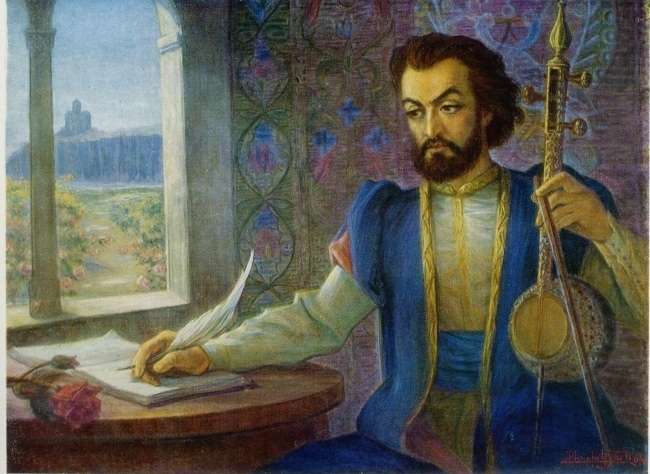
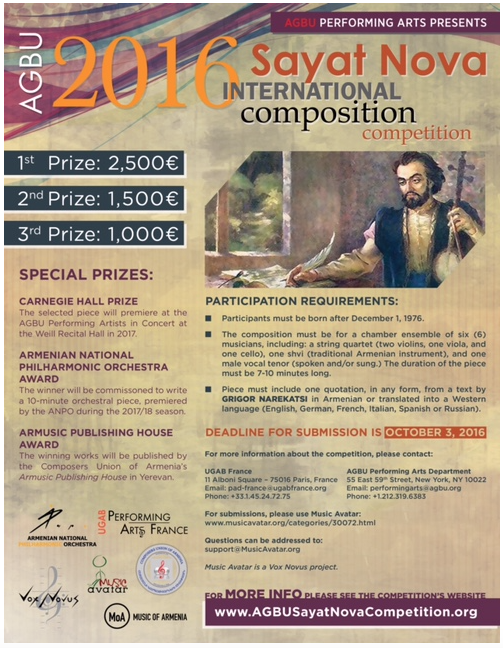
In 2006, AGBU France launched the Sayat Nova International Composition Competition, a biennial contest open to composers of all backgrounds. Requiring contestants to submit compositions for an ensemble combining traditional Armenian and Western instruments, and integrating the works of the Armenian poets Sayat Nova and Daniel Varoujan, the competition is designed to introduce Armenian traditions to a wider audience. Since the start of the competition in 2006, submissions have arrived from over 30 countries, including Ghana, Mexico, Russia and Korea in addition to Armenia and the United States. This year, composers will be utilizing the work of 10th-century poet Grigor Narekatsi, a canonized saint who in 2015 was declared by the Vatican as a Doctor of the Church.


screen-shot-2016-09-07-at-8-50-19-pm

In addition to cash prizes, the top three winners will get their winning works published by Composers Union of Armenia’s Armusic Publishing House. The first place winner of the Sayat Nova International Composition Competition will receive two special awards: the Carnegie Hall Award and the Armenian National Philharmonic Orchestra (ANPO) Award. The Carnegie Hall Award gives the winning composer the honor of having his or her piece premiere at the AGBU Performing Artists in Concert at the Weill Recital Hall in December 2017. As the recipient of the Armenian National Philharmonic Orchestra’s (ANPO) Award, the first place winner will also be commissioned to write a 10-minute piece that will premiere by the ANPO during the 2017/18 season.


Share