Distinguished Concerts International New York (DCINY) presents Misatango: A Tango Mass from Argentina in Review

Distinguished Concerts International New York (DCINY) presents Misatango: A Tango Mass from Argentina in Review

Distinguished Concerts International New York (DCINY) presents Misatango: A Tango Mass from Argentina
Flutopia Wind Ensemble; Jennifer Lapple, Director
Tierra Adentro De Nuevo Mexico Dance Ensemble; Joaquin Encinias, Director/Vocalist
Pablo Christian Di Mario, Director; Martín Palmeri, Visiting Composer/Pianist; Kristy Swann, mezzo-soprano
Distinguished Concerts Orchestra, Distinguished Concerts Singers International
Stern Auditorium, Carnegie Hall, New York, NY
January 18, 2015


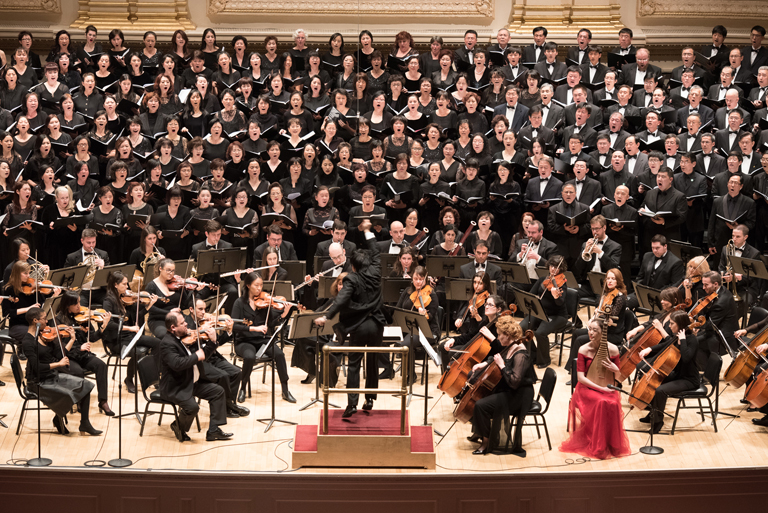
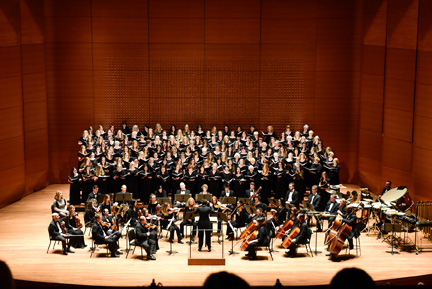
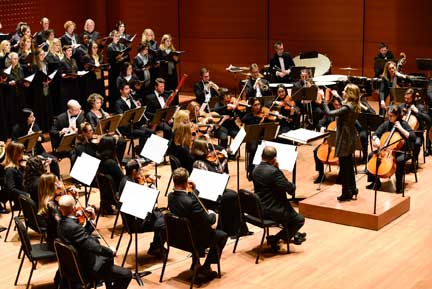
On a cold, rainy afternoon in New York, Distinguished Concerts International New York (DCINY) presented a concert entitled Misatango: A Tango Mass from Argentina. What better way to way to escape the weather than with the vibrant, lively sounds of far away Argentina, courtesy of performers from France, Brazil, Denmark, Germany, Switzerland, and of course, Argentina. Also featuring the Flutopia Wind Ensemble and the Tierra Adentro De Nuevo Mexico Dance Ensemble, the stage was set for a performance that proved to be a treat for the ears and eyes alike.

Distinguished Concerts International New York (DCINY) presents Misatango

Distinguished Concerts International New York (DCINY) presents Misatango

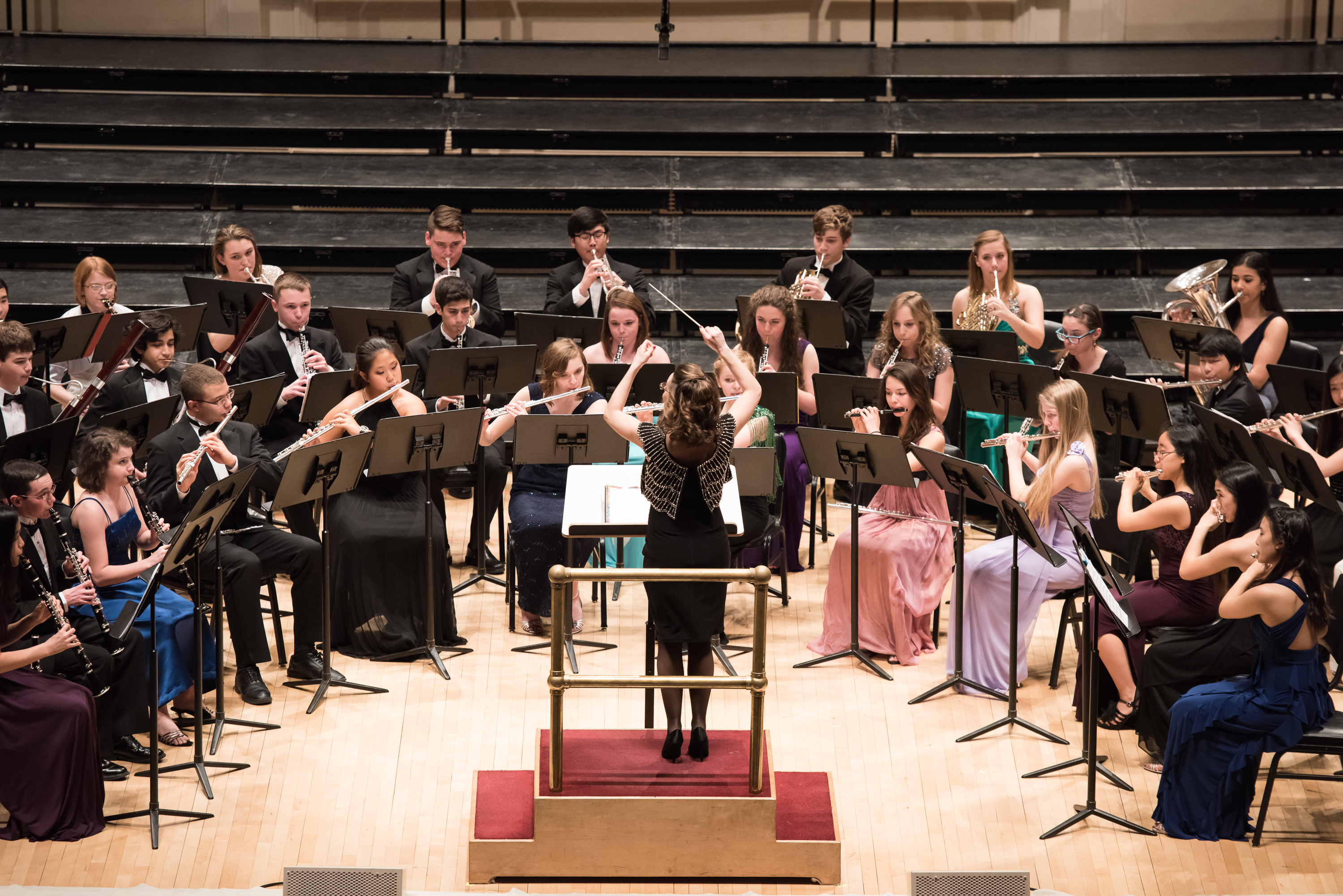
The Flutopia Wind Ensemble took to the stage for the first half. Led by Jennifer Lapple, Flutopia is comprised of high school wind players from the Washington, D.C., and Northern Virginia areas. As one might guess from the name, the group is heavily weighted with flutists (with nineteen flutists among the forty-nine total players listed in the program). Opening with Beyond the Horizon, by Rossano Galante (a work that bears more than a passing resemblance to Frank Erickson’s Toccata for Band) the young players of Flutopia got off to a nervous start, with intonation issues and cracked notes in the brass section. One might chalk this up to jitters, but there was also a rather timid, “play-it-safe” approach that any experienced brass player will tell you is almost a guarantee for these problems to occur. Happily, the second piece, Zoltán Kodály’s Dances of Galanta was played with precision and charm. If anything (and this was a recurring theme throughout), one wanted a lot less restraint and more extroverted, ebullient playing. The ever-popular Eric Whitacre’s October was nicely played, and David Shaffer’s Costa del Sol was just pure fun. Ending with an energetically played Danse Bacchanale (from Camille Saint-Saëns’s Samson et Dalila), Flutopia brought their many supporters to their feet in a loud ovation. No matter what reservations I might have about a performance, it is always a delight to see the beaming smiles of the young performers from the stage.


A Tango Mass from Argentina

A Tango Mass from Argentina

There were many individual soloists who played with great skill and polish. I would like to make special mention of the excellent (un-credited) clarinet soloist, as her playing was a cut above her talented band mates. Ms. Lapple led with a clear baton technique and demonstrative gestures to her players. Even between pieces, she took the time to step off the podium and communicate with the group. This is a well considered, nurturing approach, which can only benefit the developing young musicians. As a final thought from an eternal band geek, I would very much like to see Flutopia “go for it”, to take risks and really let loose.

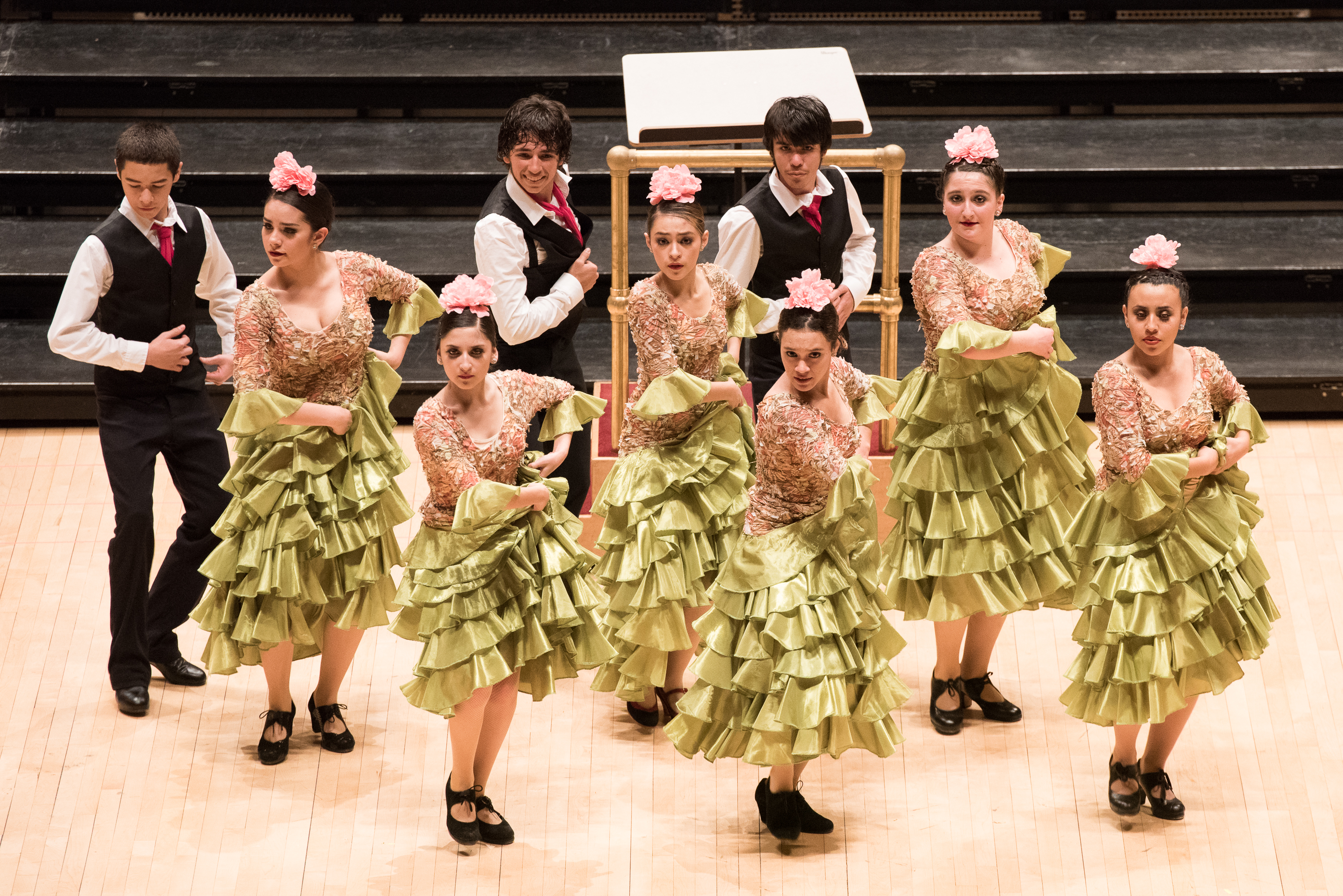
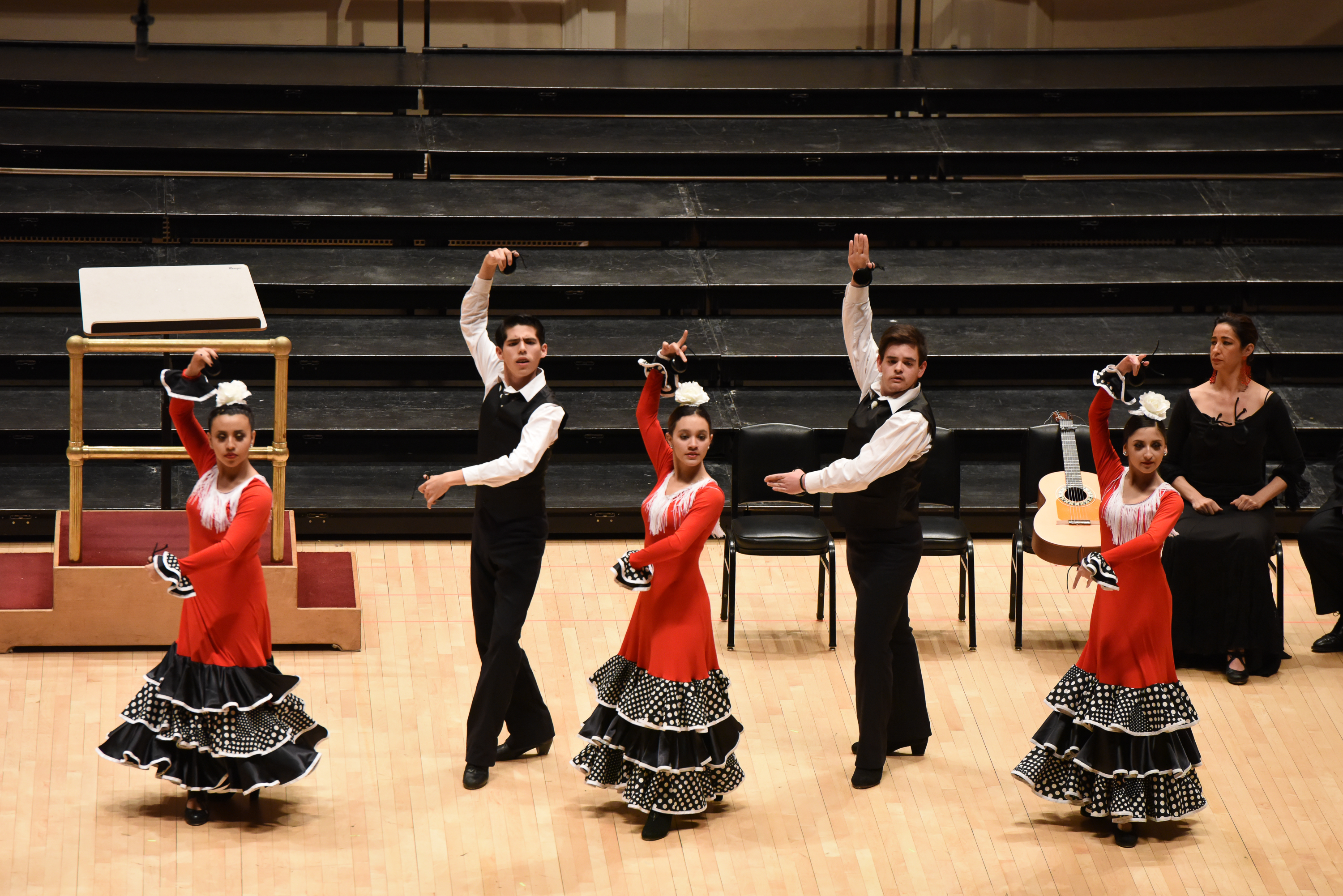
After intermission, the Tierra Adentro De Nuevo Mexico Dance Ensemble, a group of young men and ladies, gave a wonderful performance of the art of flamenco. I will leave any specific commentary about the dancing to those who know better. That said, I will channel my inner Bruno Tonioli (the extremely passionate and animated judge of Dancing With the Stars), grab my score paddle, and thrust it up while shouting “TEN!”

Misatango: A Tango Mass from Argentina

Misatango: A Tango Mass from Argentina

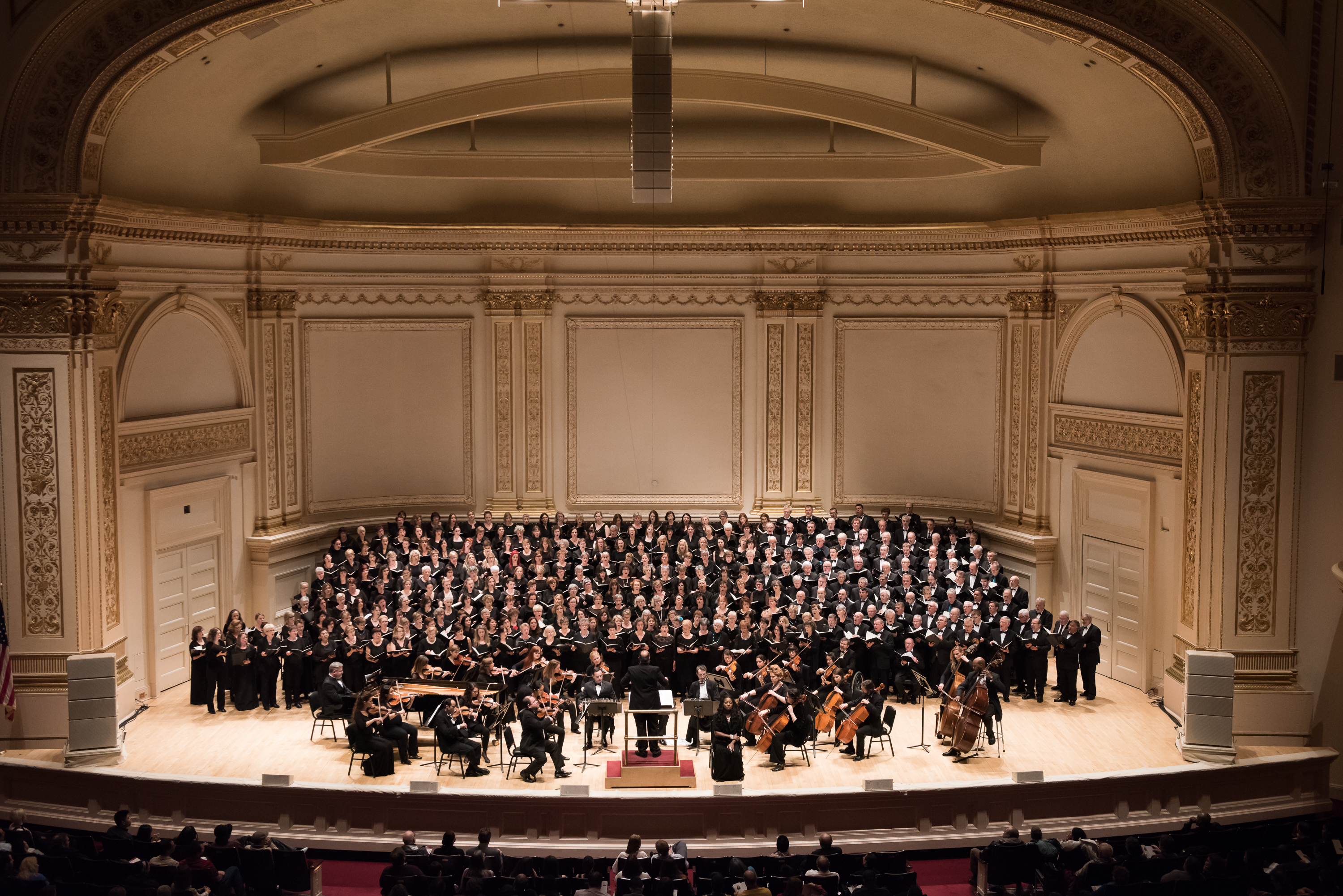
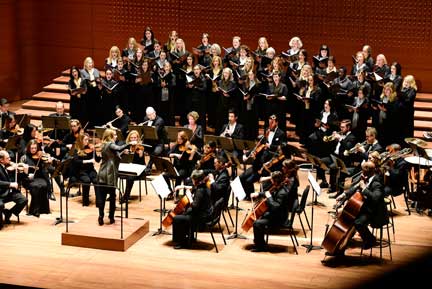
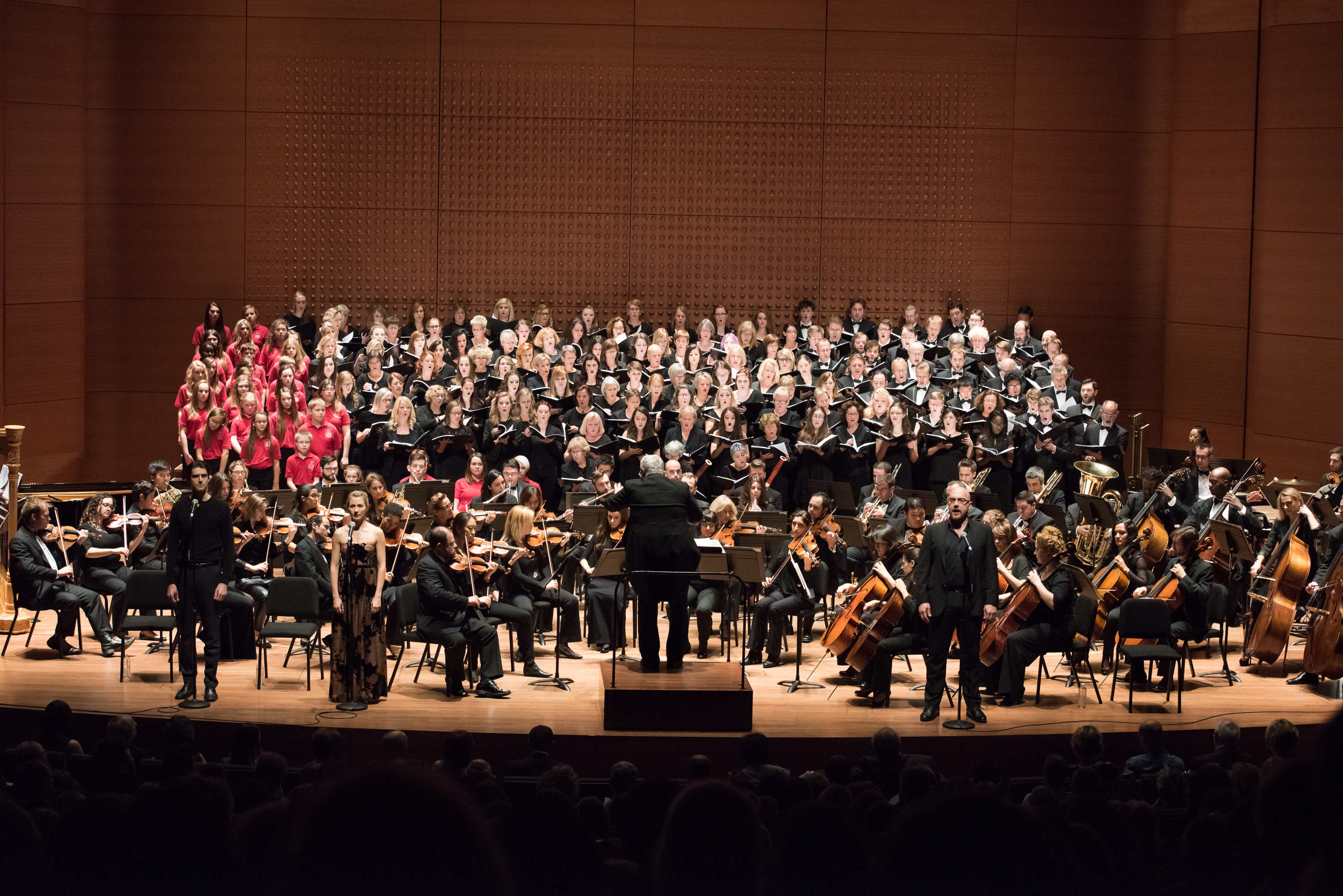
The last work of the evening, Misa A Buenos Aires (Misatango), is a pairing of the traditional mass with the sounds of the tango. I admit that I had my doubts about this concept, but was still intrigued about it all as I watched the three-hundred-plus singers take the stage. Misatango is a six-movement work scored for chorus, string orchestra, bandoneón, and mezzo-soprano soloist. Quoting the composer, Martín Palmeri, “…my objective in this composition was to maintain the harmonic language, rhythms, melodic designs, and all the characteristics of the tango within the orchestra score, thus allowing the chorus to have the full liberty to ‘just sing the mass.'” One can say with certainty that Mr. Palmeri succeeded brilliantly in his objective. Misatango captures the simmering tension of the tango without any kitsch in the vocal writing. Indeed, one can sense the influences of Mozart throughout with a distinctive Argentinean flavor. Of the six movements, the Credo was the most compelling to this listener, but each movement commands interest.

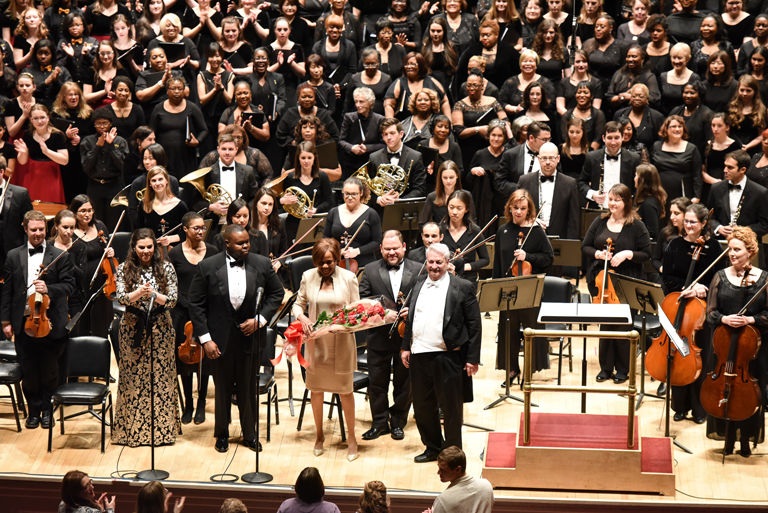
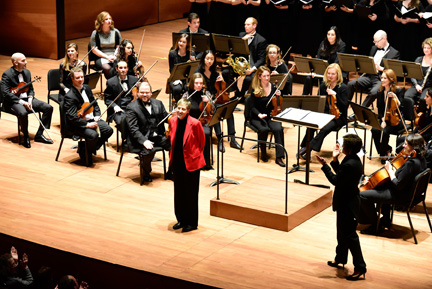
Special praise must go to Kristy Swann, whose voice was simply ethereal, a beacon of light that would pierce any darkness. Conductor Pablo Christian Di Mario led the chorus and orchestra with skill, keeping the huge vocal forces from covering the orchestra while allowing them equal prominence. The Distinguished Concerts Orchestra was particularly outstanding in one of the better performances I have heard from these players. The audience rewarded all the performers a loud and prolonged ovation, giving Mr. Palmeri the lion’s share of the applause.


Share

Distinguished Concerts International New York (DCINY) presents With Grace: The Music of Gwyneth Walker in Review

Distinguished Concerts International New York (DCINY) presents With Grace: The Music of Gwyneth Walker in Review

Distinguished Concerts International New York (DCINY) presents With Grace: The Music of Gwyneth Walker
SoHarmoniums , Elizabeth McKinney Núñez, director
Nancy Menk, guest conductor
Gwyneth Walker, composer-in-residence
Distinguished Concerts Orchestra, Distinguished Concerts Singers International
Alice Tully Hall, Lincoln Center, New York, NY
November 29, 2014


SoHarmoniums

SoHarmoniums

On November 29, Distinguished Concerts International New York (DCINY) presented a concert entitled With Grace: The Music of Gwyneth Walker. There was a festive mood in the air as the audience members happily saluted their favorites. I was seated next to a group of very enthusiastic alumnae from Saint Mary’s Women’s College in Indiana, each of whom had a sleigh bell to ring with delight when the members of that school’s choir took to the stage. “The Bells of Saint Mary’s, you know,” one of these ladies quipped to me. It was yet another reminder about the DCINY experience – joy abounding for performers and audience members. One might think that this listener, a veteran DCINY concert attendee, would be jaded about this, but it still delights me, and I suspect it always will.

The first half showcased the talents of New York’s own SoHarmoniums, and the second featured the music of the well-loved Gwyneth Walker, with chorus members from Colorado, Indiana, Michigan, Pennsylvania, Virginia, and Canberra, Australia. It was a wonderful way to kick off the holiday season.

 With Grace: The Music of Gwyneth Walker

With Grace: The Music of Gwyneth Walker

SoHo based group SoHarmoniums took to the stage for the first half. Led by Elizabeth McKinney Núñez, this fifty- member women’s ensemble joined with the Distinguished Concerts Orchestra, and proved to be a well-prepared ensemble that delivered excellent performances. Opening with The Tree of Peace, adapted from the poem “O Brother Man” by John Greenleaf Whittier, the tone was set- this was not to be a “glee club” performance. It was full of import, well-controlled harmonies, and tight balance. This song was followed by a polished rendering of “O Lovely Peace” from George Frideric Handel’s Judas Maccabeus. The next work, Garland, featuring four poems of Emily Dickinson (Is Heaven a physician?, Crumbling is not an instant’s act, We cover thee, and The life we have is very great), was an orchestration by Jim Papoulis of an original composition by Mark Adamo. The essence of Dickinson’s poetry was captured in many ways – there is at times an otherworldly feel, at other times hectic and harried, and often just morose; I believe, however, that this large-scale idea is less well-suited to her poetry than the original scoring. The sparseness of the poetry cries out for a similar approach. The performance, though, was truly exceptional.


After this, we heard the song South Sámi People (Åarjel Saemieh), by Frode Fjellheim (b. 1959), whose work has gained interest largely based on his work “Vuelie”, which is the title song for Frozen, the Disney mega-blockbuster. This piece is based on the Sámi style of yoik, an ancient chanting tradition. It is thought that there are fewer than two hundred people who still speak South Sámi today. The music has a primitive, tribal feeling, with an infectious rhythmic quality. It was an effective and clever antidote to the Dickinson work. To end the half, the SoHarmoniums let loose in an unabashedly fun-filled Joy to the World/Joyful, Joyful, which can be simply described as a “Joy to the World” and “Ode to Joy” mash-up. It was a sure-fire crowd pleaser and a happy ending that won the hearts of the audience.


 With Grace: The Music of Gwyneth Walker

With Grace: The Music of Gwyneth Walker

After intermission, conductor Nancy Menk took to the podium to lead in a selection of works by American composer Gwyneth Walker (b. 1947). She reinforced my already favorable opinion of her work by her strongly focused approach. Ms. Menk runs a tight ship, and the results bear this out in fine performances.

Opening the half was I Thank You God, using text from E.E, Cummings. It was surprisingly weighty to me, perhaps based on my over-exposure to Cummings’s lighter works. At any rate, I was completely won over by the end. It was a great start to the half, and it gave this listener a healthy appreciation for Ms. Walker the composer.

Songs for Women’s Voices No. 1-6, from the 1992 choral cycle of the same name, followed. The texts for these songs comes from the poetry of May Swenson (1913-1989). Before each song, each poem was recited from the stage. The narrator was DCINY’s own Andrea Macy, who projected the various qualities of the poems, some sassy, some serene, others searching for meaning, with a strong dramatic sense, strong and confident, but never resorting to over-emoting or “hamming it up”. These are the works of a skilled composer, rich in melodic invention, without being trite or derivative. It is easy to understand Ms. Walker’s popularity when one hears a cycle like this. Highlights for this listener were the second song “Mornings Innocent” with its “natural”, pastoral qualities, the interweaving of voices in “The Name is Changeless [God]”, and the resigned feeling that remained unresolved on “In Autumn” [I Will Lie Down].

It was a good programming to follow with the light, happy feelings in This Train. Crossing the Bar was a simple, poignant, “heart-on-sleeve” piece that was magical. Ms. Walker came to the stage at the end of the piece to the cheers of the audience.

SoHarmoniums

SoHarmoniums

SoHarmomiums joined with the Distinguished Concerts Singers International in a spirited performance of How Can I Keep From Singing? to end the night with a bang. The audience loved it and jumped to their feet to salute the performers, and Ms. Walker, who returned to the stage once more to collect her richly deserved accolades from the appreciative audience. It was a fitting close to a most enjoyable evening.


Share

Distinguished Concerts International New York (DCINY) presents Carmina amoris: Songs of Love in Review

Distinguished Concerts International New York (DCINY) presents Carmina amoris: Songs of Love in Review

Distinguished Concerts International New York (DCINY) presents Carmina amoris: Songs of Love
Lehigh University Department of Music; Lehigh University Choral Arts
Steven Sametz, Artistic Director/Conductor/composer; Sun Min Lee, Associate Director
Distinguished Concerts Orchestra
Carmen Pelton, soprano; Tami Petty, soprano (off-stage); William Burden, tenor
Stern Auditorium, Carnegie Hall, New York, NY
November 21, 2014


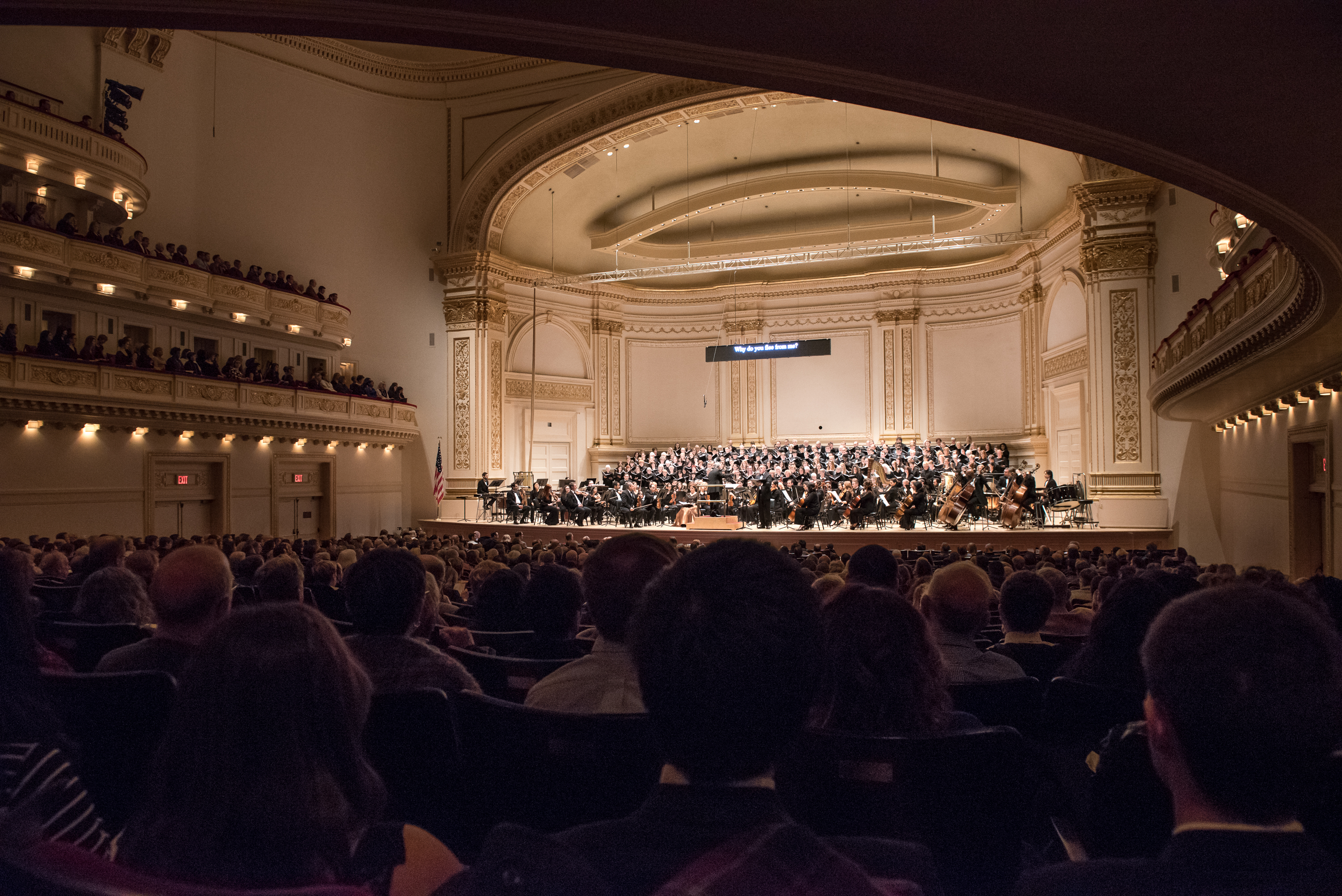
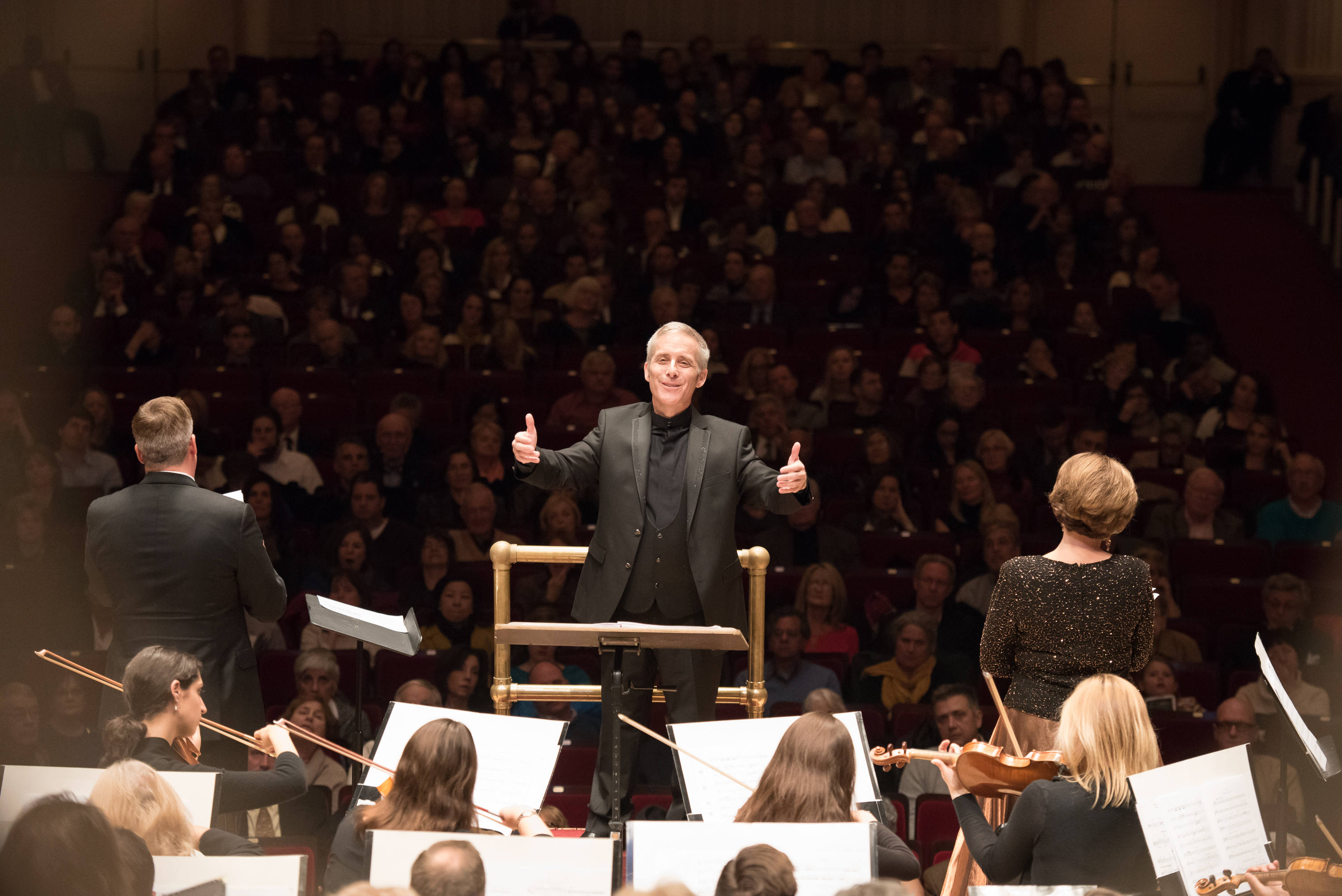
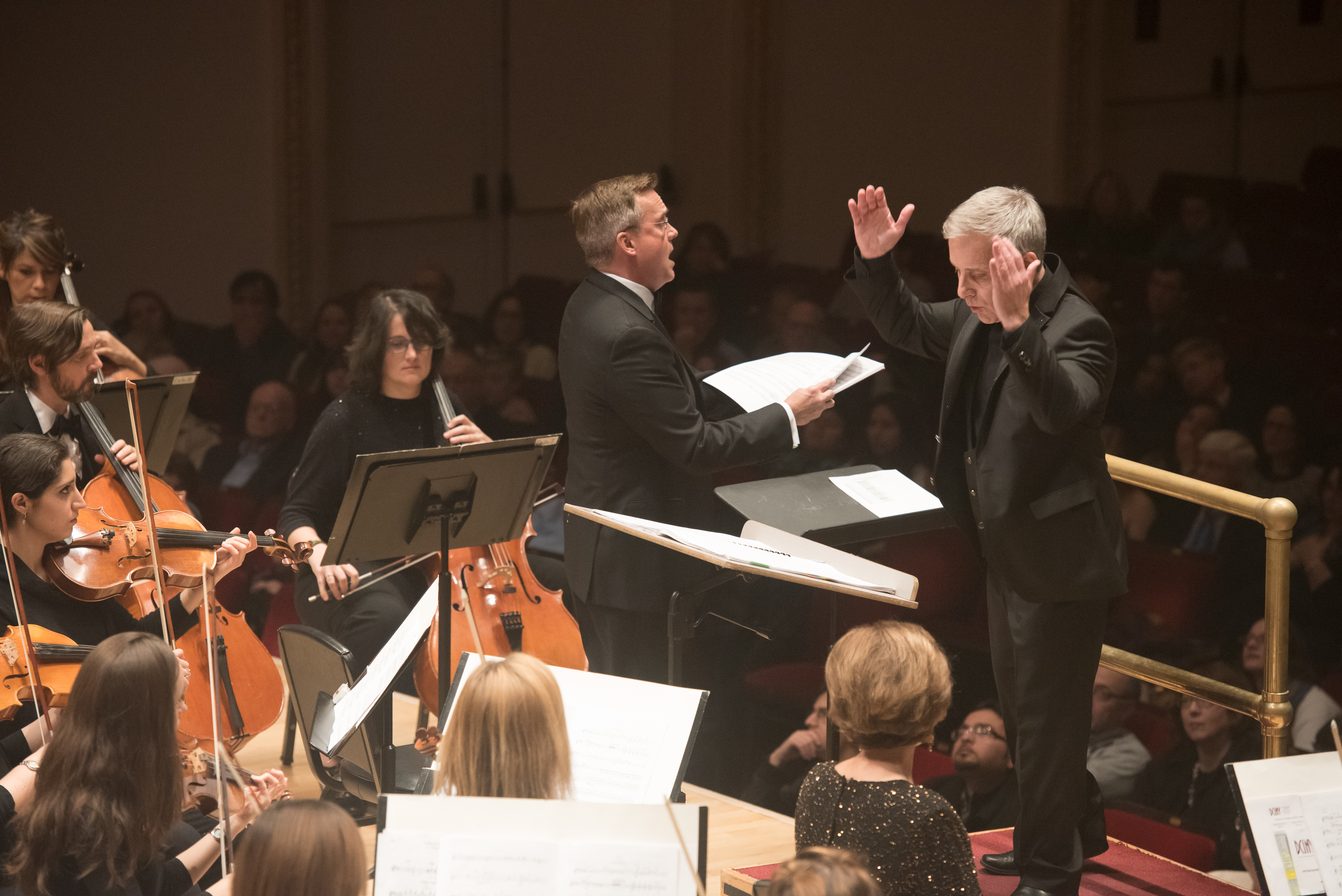
Distinguished Concerts International New York (DCINY) is well-known for bringing talented groups from around the globe to New York to appear on the stages of venues such as Alice Tully Hall, Avery Fisher Hall, and of course, Carnegie Hall. On November 21, 2014, DCINY presented a program entitled Carmina amoris: Songs of Love. Featuring the music of Steven Sametz and the vocal talents of Lehigh University, from Bethlehem, Pennsylvania, it proved to be a richly rewarding experience for performer and listener alike. On the program were two works: I Have Had Singing, and Carmina amoris (Songs of Love), in its New York premiere. Mr. Sametz conducted his own works.

Carmina Amoris: Songs of Love

Carmina Amoris: Songs of Love

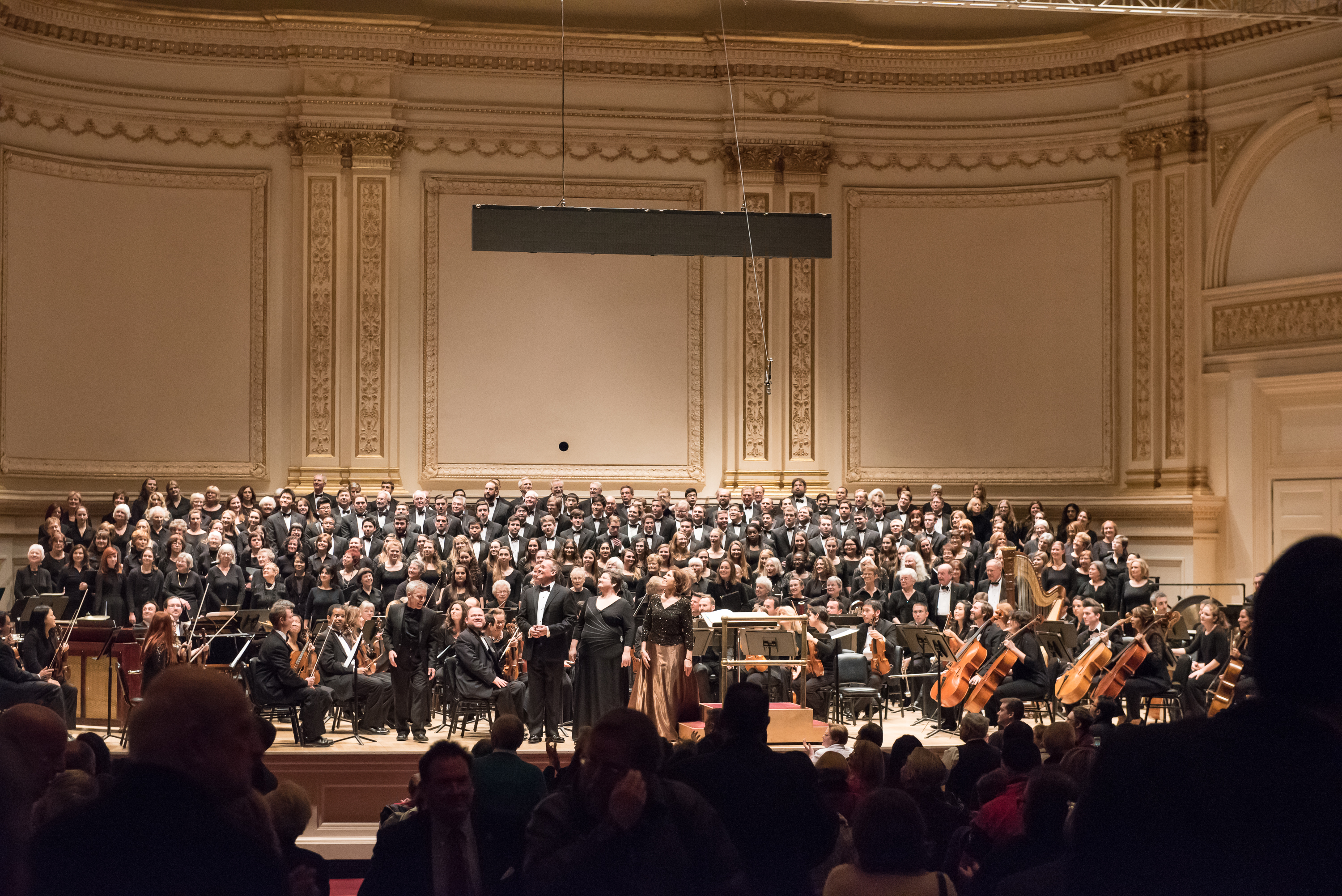
As the chorus members filed onto the stage, my eyes were drawn to something I had not previously experienced at a DCINY concert. Suspended above the stage was a very large LED device on from which the audience could read the lyrics to the works displayed in letters at least a foot high. Not only did this display help draw the eyes from the printed program to the stage, but also had the added benefit of completeness, as the printed program could not reasonably have included all material in a cost-effective way.

The program opened with I Have Had Singing, a short work that takes it lines from the words, quoted by writer Ronald Blythe, of an aged horseman from Suffolk, England, who in the middle of telling the story of his rather hardscrabble life, stopped to say, “but there was always singing; the boys in the fields, the chapels were full of singing. I have sad pleasure enough; I have had singing.” Mr. Sametz’s work captured the essence of these words with fitting musical simplicity and poignancy. Bolstered by the voices of singers who sang from within the audience (a large number only a few feet from me), this music was an enchanting start to the night.

Carmina Amoris: Songs of Love

Carmina Amoris: Songs of Love

Carmina amoris (Songs of Love) is an hour-long, six-movement Choral Symphony, which could be subtitled “Do those who love create dreams for themselves?” – a recurring line in the work. Mr. Sametz carefully selected writings from epigrams, marginalia, and letters from clerics and nuns from the fourth to thirteenth centuries. These medieval texts prove that while we live in an age of technological wonders, in matters of love we are no more advanced than our so-called “dark ages” ancestors. One could even say that we could learn much from the reading of these beautifully written texts, in our age of 140-character missives and acronym-laden sentences.

The opening movement, Quo fugis amabo? (Where do you flee?), is the longest of the works six movements, at twenty minutes. It tells story of lovers separated by the sea, with the sounds of the waves landing on the shore expressing the longing for each other across the distance. Introduced in the first movement is Ausonius’s fourth -century text: “But do we believe that those who love create dreams for themselves?” Tenor soloist William Burden projected the emotions with great feeling and a powerful voice, although he was at times overwhelmed by the large forces behind him. Soprano Carmen Pelton handled the demands of her part, with its frequent forays into the stratospheric range, with the polished technique and confidence of the excellent artist that she most assuredly is. The second movement, Tarantella- Veni, dilectissime (Come, dearest love) is a three-minute outburst of adolescent ardor in the style of the frenzied dance. Mr. Burden delivered his words in a rapid-fire manner, but the diction and clarity were razor sharp- no small achievement! The third movement, Planctus (Lament) is a largely wordless song for an off-stage soprano. The distant sounds and the sparse text are strongly suggestive of the idea that one without love is like a voice without sound. Soprano Tami Petty sang from the very top balcony, hidden in the corner, stage left. She delivered a performance of great beauty, conveying heartbreak as she navigated the extremes of register with brilliance. The movement ends in a nightmarish way, as the chorus ends with the words “a voice without sound.”

Carmina Amoris: Songs of Love

Carmina Amoris: Songs of Love

The fourth and fifth movements take the form of letters and prominently feature Ausonius’s motto at the end of each movement. The fourth movement, entitled Philomele (To Philomela), is filled with the songs of birds and once again featured Ms. Pelton’s amazing coloratura voice, while the fifth movement, entitled Ego per te (I for you), begins as a duet between lovers before the oft-asked question appears again. Ms. Pelton and Mr. Burden were sublime in duet.


Carmina Amoris: Songs of Love

Carmina Amoris: Songs of Love

The sixth and final movement, Invehar in Venerem (Venus be damned!) was a turn in a completely different direction! Gone is the lamenting, the longing, the romantic- this is a ten-minute romp filled with displays of temper, vase-breaking, chair-throwing, and hot-blooded passion. The percussion section of the Distinguished Concerts Orchestra set the mood with a fortissimo rhythmic display on a full battery of drums, punctuated by frequent explosive outbursts of sound. The chorus hissed the text in a most sinister fashion, only to be temporarily interrupted by Ausonius’s motto. This interruption was short-lived, though, and the mood shifted back to the angry ranting, building into a wild cacophony with the chorus, orchestra, and soloists building to a fever pitch until all finally exploded. It seemed counter-intuitive to end with such a fiery movement after the others, but after giving it some thought, it seems to me perfectly placed, and in any case, it was a great crowd pleaser, as evidenced by the reaction of a long and raucous standing ovation. Camina amoris is a work that I highly recommend that the reader hear if he ever has the opportunity to do so.

Congratulations to Mr. Sametz, who not only proved to be a gifted composer, but an excellent and animated conductor. The Lehigh Chorus was well prepared and it showed in a fine performance. Kudos go as well to the fine playing of the Distinguished Concerts Orchestra.

Share

Distinguished Concerts International New York (DCINY) presents “I Believe… Remembering the Holocaust” in Review

Distinguished Concerts International New York (DCINY) presents “I Believe… Remembering the Holocaust” in Review

Distinguished Concerts International New York (DCINY) presents “I Believe… Remembering the Holocaust”
Distinguished Concerts Orchestra, Distinguished Concerts Singers International
Jonathan Griffith, conductor
Donald McCullough, conductor/composer, Zane Zalis, visiting composer
Sara Jean Ford, soprano/”Tova”; Rachel Arky, mezzo-soprano; Peter Kendall Clark, baritone, Alexander Gemignani, “Reinhardt”; Drew Gehling, “Aaron”
Alice Tully Hall, Lincoln Center, New York, NY
November 9, 2014

As one who has been to many concerts given by Distinguished Concerts International New York (DCINY), I am very familiar with the “formula” employed; a joyful and/or uplifting theme presented on a large-scale, with world-class guest artists and exciting new compositions with singers of all ages from around the globe. The concert entitled “I Believe…Remembering the Holocaust” captured some of those ideals, but to call a performance in remembrance of what was arguably the most horrific example of cruelty in mankind’s history “joyous” would be inconceivable; it was, however, a thought-provoking and emotionally charged evening that would have been moving even to the hardest heart. A portion of the ticket sales went to benefit the Holocaust Resource Center of Temple Judea, in Manhasset, New York.

Singers from Connecticut, Washington DC, Florida, Virginia, California, Austria, Germany, Canada, and “individuals from around the globe” joined together with the Distinguished Concerts Orchestra in the United States premieres of two works- In the Shadow of the Holocaust and I Believe.

In the Shadow of the Holocaust is a thirteen-movement work featuring music from the archives of Holocaust survivor Aleksander Kulisiewicz (1918-1992), an amateur singer and songwriter, and compiler of songs from his five years of imprisonment. Donald McCullough selected and arranged music from this archive, but also decided to include articles and letters as well to be read before each section. Opening with a sorrow-filled lament played by a cello soloist, the tone was set for a work of sadness, strength, dignity in the face of unspeakable horror, and undying hope. Mr. McCullough proved himself to be not only a capable arranger, but also an effective and sensitive conductor. In my opinion, the selected readings gave the work the foundation of its power. The readers were all excellent, but I must single out Janet Snell in her reading of Letter to Mom. Her reading was so convincing that I am still emotionally devastated – it was absolutely one of the most heartbreaking things I have ever heard. The cello soloist was Caitlin Sullivan, who played with the skill of a first-rate performer and the understanding and emotional projection of a true artist throughout the work. Vocal soloists Sara Jean Ford, Rachel Arky, and Peter Kendall Clark were not to be overshadowed in their featured roles. After the end of the last movement, the silence hung in the air for what seemed an eternity. Mr. McCullough silently closed the score, set his baton down on the podium and turned to face the audience. It almost seemed that to applaud would have been inappropriate after this emotionally draining journey, but at last the silence was broken, and a justly deserved ovation was given to the performers.

I Believe, composed by Zane Zalis, was the second half. This twelve-movement work is well over an hour in length (the program listing it as sixty-five minutes) and has been called a “Holocaust Oratorio”. This designation is apt, but not in the conventional sense of the word. I consider I Believe to have much more in common with Broadway songs then the operatic styles of a conventional oratorio. Far from being a criticism, this quality is in my opinion the strength of this piece, the element that makes it “work.” It is accessible and has appeal to a wide range of listeners. I Believe follows the timeline of the genesis of the Holocaust through the aftermath. It would be beyond the scope of this review to detail each movement, but I highly recommend the reader to visit http://www.ibelieveproject.org/about-excerpts-chapter01.php to explore the story behind each movement.

Broadway singing sensation Sara Jean Ford was an ideal choice for the role of Tova. The child-like innocence of Tova was captured with the added dimension of a soaring, beautiful voice for songs that demanded a singer with her qualities. Alexander Gemignani, as the vile Reinhardt, was a revelation. He was so effective in his role that I found myself despising him with a vengeance each time he spoke, especially when he spewed out the hate-filled rants of Adolf Hitler. Drew Gehling, as Aaron, projected dignity and hope with a voice that reminded me very much of Josh Groban, a singer I enjoy hearing.

Conductor Jonathan Griffith led the large forces with a steady hand in yet another excellent performance I have come to expect as par for the course from this excellent musician. The complexities of the vocal polyphony went without a hitch from the well-prepared chorus members, including a very talented children’s chorus. Barely had the last note died away when the audience leapt up in an ovation. When Mr. Zalis took to the stage, the ovation went from a thunder to a roar. It was a well-earned reaction for an amazing performance of a power-packed work.


Share

O’ Fallon Township High School, O’Fallon, Illinois, and Bob Rogers Travel present An American Musical Tapestry in Review

O’ Fallon Township High School, O’Fallon, Illinois, and Bob Rogers Travel present An American Musical Tapestry in Review

O’ Fallon Township High School, O’Fallon, Illinois, and Bob Rogers Travel present An American Musical Tapestry
O’Fallon Township High School Combined Choir. O’Fallon Township High School Select Choir; Cristina Nordin, conductor; Phillip Wilhelm, accompanist
O’ Fallon Township High School Symphonic Band, O’ Fallon Township High School Wind Ensemble; Melissa Gustafson-Hinds, Mark Donahue, Sean Michael Harris, conductors
Stern Auditorium, Carnegie Hall; New York, NY
May 27, 2014


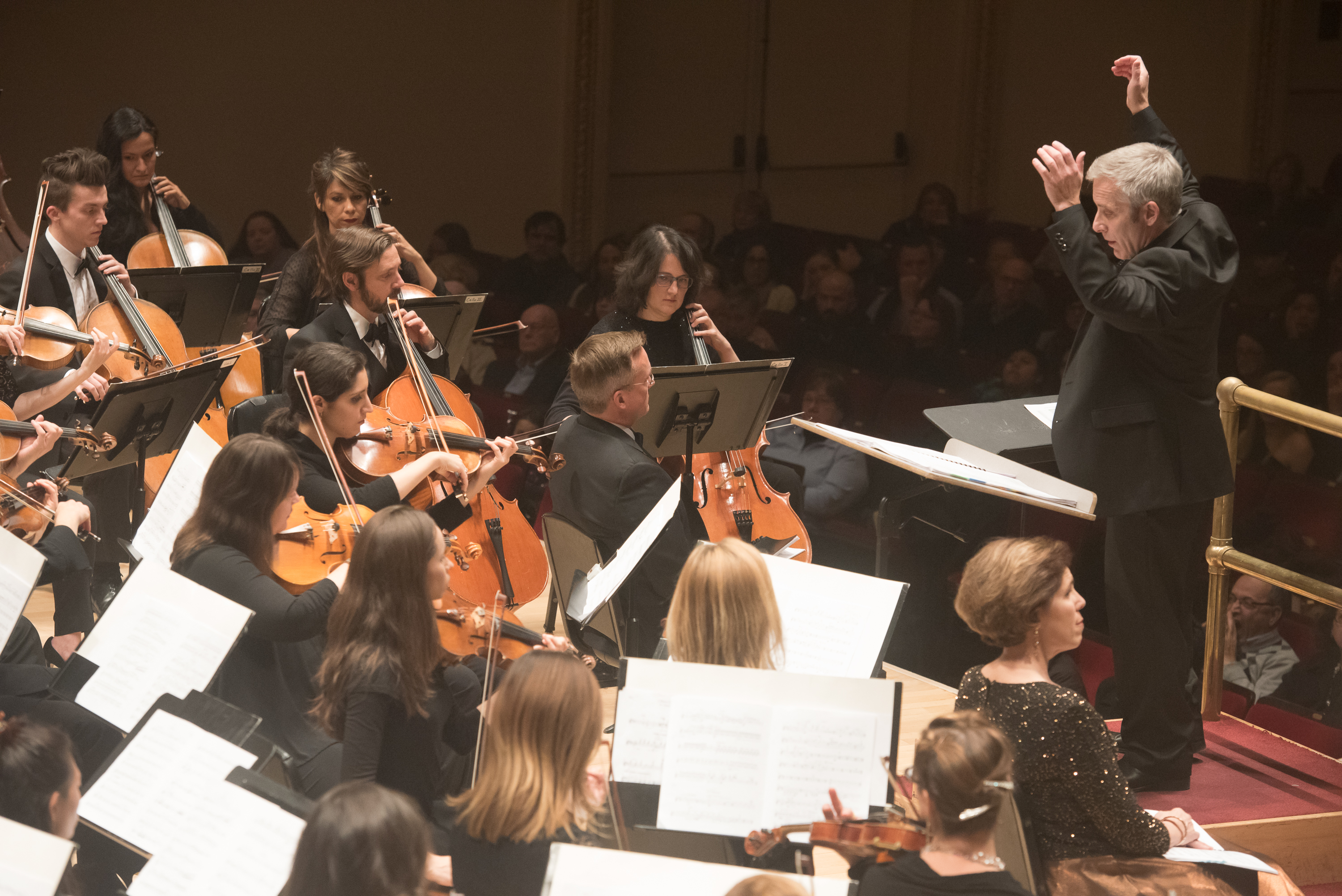
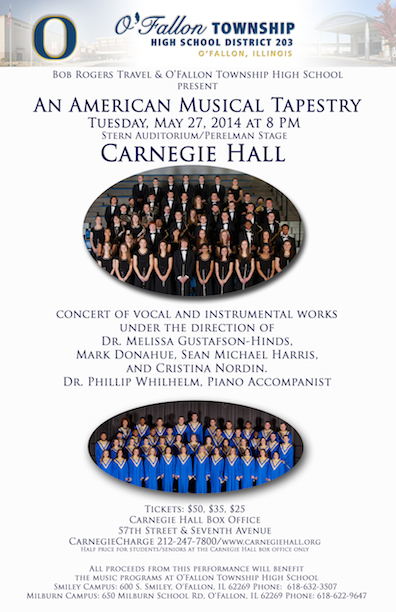
On May 27, 2014, the O’Fallon Township High School music program, consisting of two choirs and two bands, took the stage in Stern Auditorium in Carnegie Hall with a program entitled “An American Musical Tapestry.” With selections of folk favorites, gospel, popular songs, and Americana, it was a program designed to be crowd-pleasing. For the sake of full disclosure, this reviewer was not present for the concert, but was sent a live, unedited recording of the performance. In the spirit of the live performance, I only listened to the recording a single time, which I believe is the most objective way to review this performance.

The first thing that struck me was the rather large number of selections offered. It is usually my goal to mention every work, but as there were twenty-three works performed, I will focus on the highlights for each of the groups. A second observation, after reading through the printed program, was the very clear concept of the status of the groups – one could liken it to junior varsity/varsity squads in sports. The main difference as I can tell, is that there is no limit on the numbers of players/singers at the “junior varsity” level, while the elite “varsity” numbers were much smaller.

The Combined Choir opened the performance with “Simple Gifts”, in what was a charming start to their program. They exuded energy in “Seize the Day” from the hit musical Newsies,in what the highlight of their selections to this listener. They ended with a lovely rendition of “America.” To be sure, there were issues with the intonation, mainly with the sopranos whenever the music went above the staff, and ensemble-wise in loud sections, both which are not to be unexpected for younger singers. Praise must be given to conductor Cristina Nordin for her musical selections, which were designed both to be entertaining and to showcase the emerging talents of her young singers.

The Select Choir was up next and showed their quality in another excellently chosen group of works. One could feel the languor in Gershwin’s “Summertime” and the jubilation of “Saints Bound for Heaven”, but this listener was especially taken with Billy Joel’s “And So It Goes”, in an excellent arrangement by Bob Chilcott. The intonation was mostly precise throughout, and the ensemble balance was excellent in what was a most enjoyable performance.

After intermission, it was time for the bands to take to the stage. This leads me back to an observation I made in a previous review in this journal about High School bands, specifically the challenges in regards to instrumentation. With nineteen flutes, eleven clarinets and alto saxophones, and twelve trumpets listed on the roster, it would seem the Symphonic Band is rather top-heavy, but one is also a bit surprised there are more tuba players than trombones. Normally, I would have serious reservations about this, but as I am sure it is an “everyone plays regardless of instrument” situation, I will try to refrain from making any more of this issue. Opening with Vaughan Williams’s Flourish for Wind Band, the Symphonic band showed signs of their potential intertwined with some moments of what might have been nervousness. I was pleased that William Latham’s Brighton Beach was much tighter and more focused in performance, bringing back some happy memories for this listener, who played the piece in his own band days long, long ago. The highlight of their commendable performance was the Emperata Overture, by one of the greats of band composition, Claude T. Smith. I am sure many of these talented youngsters will fill the roster of the Wind Ensemble in the near future.

The Wind Ensemble took the stage and immediately affirmed their “varsity” status in a polished performance of Bernstein’s Overture to Candide, one of the staples of the advanced band repertoire. It had the right touch of irony without ever crossing into mockery. However, their performance of David Maslanka’s Requiem was not only the highlight of their selections, but far and away the highlight of the entire concert for this listener. Regular readers of this journal are aware of my admiration for Maslanka’s works, but with that admiration come high expectations in performance. It truly was exceptional – a performance that was profoundly moving from start to finish.

To conclude the concert, the combined forces of all four groups gave a stirring performance of United We Stand, a medley of patriotic songs.

Music is alive and well in the O’Fallon Township, and all the young performers can feel justly proud. One must also acknowledge the fine work of Cristina Nordin, Mark Donahue, Sean Michael Harris, and Melissa Gustafson-Hinds in their leadership and development of a fine music program.


Share

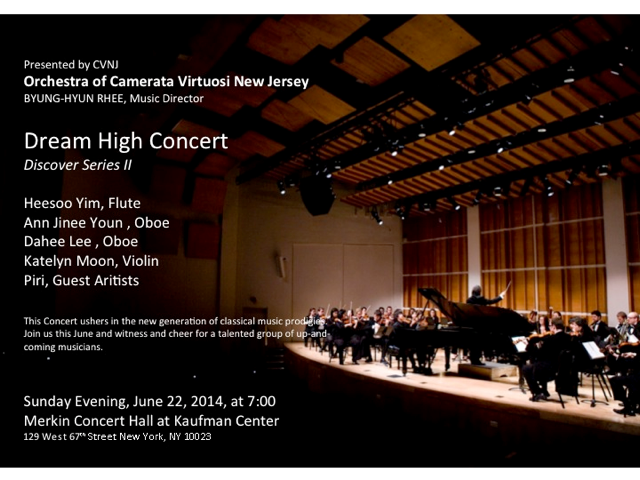
Camerata Virtuosi New Jersey presents “Dream High” Discovery Series II in Review

Camerata Virtuosi New Jersey presents “Dream High” Discovery Series II in Review

Camerata Virtuosi New Jersey presents “Dream High” Discovery Series II
Orchestra of Camerata Virtuosi; Byung-Hyun Rhee, music director and conductor
Special Guest: Quartet PIRI
Merkin Concert Hall. Kaufman Center; New York, NY
June 22, 2014


In a program entitled “Dream High,” the Camerata Virtuosi New Jersey presented four young soloists in selections of works by Mozart, Haydn, and Accolay. As preludes to each half, the Camerata and special guest Quartet PIRI, a clarinet quartet, contributed their own selections in addition.

Opening with a spirited reading of the Allegro of Mozart’s Divertimento in D major, K. 136, the Camerata Virtuosi got the night off to a good start. The playing was precise and well articulated, with balance that was excellent throughout. These qualities would serve well in the subsequent works.

Nine-year-old violinist Katelyn Moon (yes, nine-year-old!) took to the stage. It appeared that she was using a three-quarter-size violin. She played the Violin Concerto No.1 in A minor (written in 1868), by Jean- Baptiste Accolay (1833-1900). A one-movement work commonly referred to as a “student concerto,” it is a showpiece without extreme technical demands. Before one gets the impression that this piece is not worthy of performance, let one be reminded that many famous violinists have played it long after their student days were over, most notably Itzhak Perlman. One is naturally hesitant to pass judgment on such a young player, but certainly one can say that Ms. Moon is remarkable for her age; she tackled the work without difficulties and projected well in a steady performance. I should like to hear her again in three or four years playing a more challenging work, with a full-sized instrument.

Ann Jinee Youn followed with the Allegro spiritoso of Haydn’s Concerto for Oboe in C major, Hob. VIIg:C1, the only concerto Haydn composed for the oboe. Ms. Youn played with confidence, nimbly navigating the demanding passagework, and with a rich tone and solid intonation. Not only were the technical demands met, but subtler aspects of artistry are clearly emerging. Ms. Youn has a musicality beyond her years, and it was a most enjoyable performance.

Conductor Byung-Hyun Rhee was effective as a conductor and very attentive to the needs of his young soloists. From the basics, such as occasionally instructing when to bow (something easily forgotten by a nervous young performer), to the more critical points, keeping the orchestra in balance and synch with the soloists, he was an ideal collaborator.

After intermission, Quartet PIRI offered selections of Bizet, Piazzolla, and Luis Bonfa (1922-2001). Led by the personable Hana Kim, this clarinet quartet displayed style, commitment, and charm. Highlights were Piazzolla’s Oblivion, and the Manha do Carnaval from Bonfa, which got the audience into the act with finger snaps, as prompted by Mr. Kim.

The final soloist of the evening, Heesoo Yim, had the honor of playing the entire Concerto for Flute in G Major, K. 313 by Mozart. Ms. Yim is a complete player, combining technical facility, careful attention to matters of musicality, and clear projection. Her playing has a light, butterfly-like touch in the rapid passages, but without any of the “breathiness” of tone that so many young players have. Her playing in the Adagio was expressive without being affected, avoiding another pitfall of many lesser players. The Rondo was just the finishing touch on a top-notch performance. Ms. Yim was rewarded with an enthusiastic ovation from the audience.

These young performers should all have bright futures and I look forward to following their progress.


Share

Distinguished Concerts International New York (DCINY) presents Celebration and Reflection, Part 2 in Review

Distinguished Concerts International New York (DCINY) presents Celebration and Reflection, Part 2 in Review

Distinguished Concerts International New York (DCINY) presents Celebration and Reflection, Part 2
Distinguished Concerts Orchestra, Distinguished Concerts Singers International
Bob Chilcott, conductor; Danielle Talamantes, soprano, Christian Reinert, tenor
René Clausen, conductor
Alice Tully Hall, Lincoln Center; New York, NY
May 26, 2014


The Distinguished Concerts International New York (DCINY) presentation of the two-part concert series “Celebration and Reflection” continued with Part 2 on May 26, 2014 at Alice Tully Hall. Headlining this concert was the Requiem by Bob Chilcott, and the World Premiere of Festival Te Deum from René Clausen, with the added dimension of having both composers conducting their own works. The afterglow of Part 1 was still very much with me, and I was hopeful that the high standards would continue in Part 2. With chorus members from California, Georgia, Minnesota, New Jersey, New York, Ohio, Virginia, Italy, Korea, The Netherlands, Spain, and “individuals from around the globe,” there to lend their collective talents, it had the makings of an enjoyable evening.

The first half consisted of the Requiem by Bob Chilcott (b. 1955). Requiem was commissioned for performance in concert with Beethoven’s Mass in C major, and Mr. Chilcott followed Beethoven’s example in using the same orchestration of double woodwinds, trumpet, timpani, and strings. The traditional Latin Mass text was used, but the Dies Irae and Libera me were omitted and in their place, Mr. Chilcott used text from the Book of Common Prayer, “Thou knowest, Lord, the secrets of our hearts.” It was Mr. Chilcott’s stated goal to write a piece that “could be sung by singers of all abilities.” Drawing upon his own extensive experience as a singer and conductor, Mr. Chilcott has succeeded in the realization of his goal. Requiem is gentle and reflective, with accessible harmonic language and effective vocal writing that allows lesser-skilled singers to shine. There are moments of breathtaking beauty, most notably the Lux aeterna, but the entire work is uniformly excellent, in what this listener is now adding to his list of “finds.”

Mr. Chilcott proved himself to be an able conductor, who was completely immersed in the work. One could sense that he was performing the choral parts in tandem with the chorus. Soprano Danielle Talamantes and tenor Christian Reinert were revelations as well in their refined and emotionally powerful performances. The last measures of the Lux aeterna, featuring a soft ascending figure in the upper register, were sung by soprano Danielle Talamantes with a perfect diminuendo al niente, or to complete silence, and a child-like innocence that was exquisitely controlled and crystalline in its clarity. It was as if an angel were ascending into the heavens – a simple, but stunning effect. The audience immediately leapt to their feet to reward the composer with a justly earned ovation.

After a brief intermission, Grammy award-winning composer René Clausen (b. 1953), a DCINY favorite, took the podium. His work, On This Shining Night, using the poem of the same name by James Agee as text, opened the second half in a new arrangement for chorus and orchestra. Colorful and rich in melodic ideas, the scoring of the orchestra with the chorus enhanced the already expansive work, which was given an artistically satisfying performance.

Of his Festival Te Deum, Dr. Clausen writes, “The compositional style of the work can be rather easily classified as neo-Romantic, with straightforward rhythms, harmonic language that does not significantly move beyond traditional tension/resolution, and vocal and instrumental writing that is idiomatic, yet takes full advantage of instrumental and vocal capabilities.” These qualities are a hallmark of Dr. Clausen’s works and the reason why he is a great favorite of choral ensembles of all levels. As the title implies, this is a festive work full of vitality, optimism, and celebration. This listener, already an admirer of Dr. Clausen’s work, was impressed by both the piece and the first-rate performance. Festival Te Deum is yet another example of the gifts Dr. Clausen possesses as a composer, and is a work that is sure to enjoy extensive performances, as it will surely enter the standard repertoire.

As a final reminder of the occasion, An American Hymn by Cecil Effinger, with orchestration by René Clausen, closed the evening. This setting of America, The Beautiful was given a stirring reading, which ended the concert with a splash.


Share

Distinguished Concerts International New York (DCINY) presents Celebration and Reflection, Part 1 in Review

Distinguished Concerts International New York (DCINY) presents Celebration and Reflection, Part 1 in Review

Distinguished Concerts International New York (DCINY) presents Celebration and Reflection, Part 1
Distinguished Concerts Orchestra, Distinguished Concerts Singers International
Aimee Beckmann-Collier, DCINY Debut conductor; Rachel E. Copeland, soprano; Rachel Arky, mezzo-soprano; Shawn Mlynek, tenor; Jeremy Galyon, bass
Bradley Ellingboe, guest conductor; Dann Coakwell, tenor
Avery Fisher Hall, Lincoln Center; New York, NY
May 25, 2014

Memorial Day is a time for reflection and to give our thanks to all the men and women who gave their lives so we can enjoy the liberty that their sacrifices made possible. Distinguished Concerts International New York (DCINY) presented a two- part concert series entitled “Celebration and Reflection” to commemorate those heroes.  Avery Fisher Hall was the venue for Part One, the first half of the program being Mozart’s “Coronation“ Mass, and second half, the World Premiere of Star Song, by Bradley Ellingboe.

The Patriot Brass ensemble returned again this year and entertained the audience members as they entered the hall with a pre-concert selection of marches, popular tunes, and Americana.  As the chorus members from Iowa and Kansas (and “individuals around the globe”) filled onto the stage, the mood was set for a festive evening.

Mozart’s Mass in C major is called “Coronation” because it is believed that this work was performed at a coronation in Prague. Some claim it was used for the coronation of Leopold II in 1791, while others state it was used for Franz II in 1792. In any case, written in 1779, the Coronation Mass remains fresh and vital 225 years later, another testament to Mozart’s genius.

Conductor Aimee-Beckmann-Collier took to the podium, and it was apparent from the start that the chorus, soloists, and orchestra were all well prepared.  Attacks were precise and crisp, and the chorus sang with clear diction and good ensemble balance. Maestra Beckmann-Collier was a superb leader in her no-nonsense approach – passionate, but never out of control. It was also notable that she “kept it all together” during the Credo, when a stampede of approximately forty late comers made for their seats in a manner better suited for the Running of the Bulls at Pamplona! One must also commend the soloists, soprano Rachel E. Copeland, mezzo-soprano Rachel Arky, tenor Shawn Mlynek, tenor, and bass Jeremy Galyon in their standout performances as individuals, and in duet and quartet settings. Each voice was clear and projected with power to overcome the large forces behind them, without one overshadowing the others.  This was truly a winning performance on all accounts.

Star Song is a work built on a fascinating idea. The idea that “everything vibrates” and the implications of that idea all the way to the atomic level captured Mr. Ellingboe’s imagination. He writes, “The stars -and the atoms we share – were my muse. This is the central premise of Star Song. It is a big concept, and something I have pondered for a long time and probably always will, until the atoms that comprise me are off being something else.” The twelve-movement work features poems from Juhan Liv, John Milton, Saint Hildegard, Rainer Maria Rilke, Siegfried Sassoon, Billy Collins, Walt Whitman, thoughts from Vincent Van Gogh, and texts from traditional Hebrew and Algonquin. On paper this is very impressive, but how would it all translate to actual performance? In some instances, it was realized with excellence, but I was less taken with some sections.  The music is eclectic, but the more whimsical selections (most notably the Questions About Angels from Billy Collins) projected glib, Broadway-tinged writing, which in itself is not necessarily a bad thing, but a style that undercut the import of other sections. Mr. Ellingboe is a skilful composer with a wealth of ideas, so I was hoping for more. I do believe that he will continue to refine Star Song, and it will be interesting to hear a later performance.  The star of Star Song was tenor Dann Coakwell, who handled all the various styles with remarkable ability. It did not matter whether the style was a recitative, an arioso, or just slapstick, the end result was one of excellence. Mr. Ellingboe is also an engaging conductor as he led his composition with the enthusiasm he projects in abundance. Congratulations to the chorus members from New Mexico, Arizona, Illinois, and Virginia who gave their all as well in a committed performance. The large audience responded to Star Song with a heartfelt ovation.

Share

Distinguished Concerts International New York (DCINY) presents A Breath of Fresh Air in Review

Distinguished Concerts International New York (DCINY) presents A Breath of Fresh Air in Review

Distinguished Concerts International New York (DCINY) presents A Breath of Fresh Air
Alice High School Honors Band, Arnold Garza, director; Del Mar Master Chorus and Concert Choir, Corpus Christi Chorale
Dennis S. Richardson, Ross C. Bernhardt, directors
Special Guest: Khorikos, Jesse Mark Peckham, director
Stern Auditorium at Carnegie Hall; New York, NY
May 23, 2014
 

A program entitled A Breath of Fresh Air, featuring both band and choral ensembles, was presented by Distinguished Concerts International New York (DCINY) at Stern Auditorium at Carnegie Hall on May 23, 2014. As one who is quite familiar with the DCINY experience, I was looking forward to an evening of music from talented groups from all parts of the country.

As any regular reader of this journal would already know, the wind ensemble (‘band”) is a great favorite of this listener. I admit, though, to a large amount of skepticism in the quality of a prospective performance featuring High School players. The typical High School band usually has the following issues to deal with: An overabundance of core instruments ( i.e. trumpets, flutes, clarinets) with a corresponding shortage of other instruments ( i.e. tuba, bassoon, French horns, etc.), a wide variance in playing abilities within and between sections, and difficulties with ensemble intonation-YouTube is littered with countless examples of “intonation optional” performances. As the Alice High School Honors Band filed onto the stage, I could not help but smile as I watched a young lady stride confidently to her seat carrying her contrabass clarinet. My inner “band geek” was reawakened and I found myself eagerly anticipating the first notes.

Led by Arnold Garza, himself an alumnus, the Alice High School Honors Band boasts an impressive number of contest wins. Much like a successful sports program, an exceptional band program is one that feeds from earlier successes and attracts the most talented students. It was immediately obvious that my concerns above were unfounded as the young players launched into The Circus Bee, by Henry Fillmore (1881-1956) – it was delightful. This work, written in 1908, was a well-chosen opener – a crowd pleaser and hyper-energetic piece, which allows a young group to put the adrenaline rush of performing to good use.

Angels in the Architecture followed,by concert band composer par excellence Frank Ticheli (b. 1958). This highly complex work (The Texas Band State List rates this work as level 5, the most difficult) is a challenge usually beyond the abilities of a High School ensemble. It is a struggle between the forces of light and dark throughout and quotes some well-known melodies, most noticeably the traditional Hebrew melody “Hevenu Shalom Aleichem.” The work begins with an off-stage soprano singing the Shaker song “Angel of Light,” while members of the percussion section wave what are called “whirlies,” which are flexible, corrugated tubes of rubber or plastic that produce a tuned pitch depending on the velocity at which it is rotated. It was a visually interesting touch and paired with the far away voice singing from the highest balcony, it produced an effect that was quite haunting. The young players were up to the challenge in an outstanding performance that greatly impressed this listener. I would not have guessed this was a high school ensemble by the high standard of playing, both from the various soloists, and the ensemble as a whole. The final measures ended with the return of the soprano and the whirlies fading into silence, until one could have heard a pin drop. Credit is due to the soloists (Elizabeth Elizondo, Zachary Villareal, Michael Torres, Ruben Najera, Lauren Rodriguez, and Alexandra Chapa) and the fine work of Maestro Garza.

Salvation is Created, by Pavel Tschesnokoff (1877-1944) followed. Subtitled A Chorale Prelude, this work is not technically demanding, but it does require a delicately precise ensemble balance, or else the chorale effect is destroyed. A lesser group could play all the notes with little trouble but still deliver a substandard reading. There was no danger of that here in a performance that was a virtual clinic on the art of playing a chorale. Special mention goes to French horn soloist Jordan Gonzalez. To end their program, the Finale from the Tchaikovsky 4th Symphony was played with pure joy from start to finish. Oboist Courtney Schmidt played her solo with polish. The audience responded with a well-deserved ovation.

After a short break, the Del Mar Chorus and Concert Choir and the Corpus Christi Chorale joined sixteen players from the Alice High School band in performance of Canticles of Light, by Bob Chillcott (b. 1955). It is a three-movement work using ancient Latin hymns for the text. Drawing on his extensive singing experience, Mr. Chillcott has written a work that can be performed by all levels of singers while not sounding overly simplistic. Dennis S. Richardson led the combined forces with sensitivity. The close harmonies were sung with precision, and the band provided an extra dimension of weight in what was a fine performance.

After intermission, the Del Mar Chorus and Concert Choir and the Corpus Christi Chorale returned to the stage to give the World Premiere of In Memoriam by Ross C. Bernhardt, which Mr. Bernhardt also conducted. This three-movement work was originally a single movement work written by Mr. Bernhardt using a selected text from a winning bidder at a silent auction. The text was a poem titled Póstuma Ofrenda (Final Offering), the style of which reminds one of Pablo Neruda. Mr. Bernhardt then conceived the idea of a larger work and added two movements, In Paradisum, from the Latin Requiem Mass, and The Choir Invisible, using George Eliot’s verses of the same name. In Memoriam is a quietly powerful and moving work. Mezzo-soprano soloist Hope Fairchild Thacker’s voice was sublime throughout, but her singing in the second movement Póstuma Ofrenda was heartbreakingly poignant. The chorus behind her provided excellent balance, tight harmonies, and a fade to silence that was a perfect end to the movement. It was a fine performance of a fine work.

Khorikos, led by founder Jesse Mark Peckham, took the stage to close the night. Khorikos is an a cappella group that is one of New York’s elite choral ensembles. Indeed, to judge by the performance tonight, that reputation should include anywhere! This listener has heard many excellent a cappella groups, but Khorikos was truly a cut above in a performance that was stunning from start to finish. For the record, the works performed were No llores, paloma mía (Do Not Weep, My Dove), by Guillermo Martinez, Where Flames a Word, by Kile Smith, Miserere, by Frank La Rocca, and A Song of Joys, by Nick Omiccili. Mr. Smith and Mr. La Rocca were in attendance and took well-deserved bows for their fine works.

Congratulations to all for a great night of music.

Share

Ana Maria Trenchi Bottazzi in Review

Ana Maria Trenchi Bottazzi in Review

“Yes I Can”: A Musical Soirée; Ana Maria Trenchi Bottazzi, piano
Stanley H. Kaplan Penthouse, Lincoln Center, New York, NY
May 17, 2014


Yes I Can. These three simple words are a declaration by the renowned pianist Ana Maria Trenchi Bottazzi, who has been physically debilitated for the last three years, that she would be the one to decide that she could play and would not give in to her conditions. The May 17, 2014 performance at the Stanley H. Kaplan Penthouse at Lincoln Center was dedicated to Ana Siero de Trenchi, Germaine Pinault, Martin Canin, Drs. Patrick O’Leary, Robert Cooper, Anne Moore, C. Ronald MacKenzie, Edward Rachlin, and the entire Bottazzi family, all of whom helped her to be able to perform again. It proved to be an inspiring evening.

Ms. Bottazzi is no stranger to adversity. I remember when I was twelve years old reading an article in Reader’s Digest (“You Won’t Play The Piano Anymore,” by Robert T. Jones, November 1977) about her car accident, the horrific injuries, and the thirteen year struggle to return to the concert stage. There have also been countless surgeries and other challenges. Ms. Bottazzi was wearing a special back support brace and using a cane as she was carefully escorted to the stage. “It is easier to play the piano than it is to walk,” she quipped. She spoke at length, thanking the audience of her friends, family, students, teachers and colleagues, and doctors for their support. The message of the evening was clear- Ms. Bottazzi is a person who believes that anything she truly wants to do is possible, and she will not suffer any naysayers. Some would say that at this point in her life that retirement would be appropriate, but Ms. Bottazzi will have none of that. Doing what others say is not possible has been the leitmotif of her artistic life.

Ms. Bottazzi performed what was part concert and part spoken autobiography, with sprinklings of anecdotes and wisdom for students, musicians, and non-musicians alike. My personal favorite was advice for the student- “I cannot abide when a student hits the piano in anger. Never, ever strike the piano in anger when you make a mistake. The piano did not make the mistake!”

The first half of the concert featured two works and the life stories that were so strongly associated with these works. It would fill many pages if I were to recount the details of these stories, so I will limit myself to brief summaries. The first story, “Yes, I Can”- Paris Conservatory of Music, told of the young artist in bloom in Paris, and her great reverence for her first teacher Germaine Pinault. TheSonata in C major by Baldassare Galuppi (1706-1785) was the piece selected and it played with a delicate touch and close attention to voicing. It was simple, yet heartfelt. Next, First Encounter with my New Teacher, St. Louis, Missouri, told of a new teacher that she hated prior to meeting Martin Canin on February 13, 1970, and becoming his student. The esteemed Mr. Canin was in attendance and smiled as Ms. Bottazzi shared reminiscences about those days. Beethoven’s Sonata No. 23 in F minor, Op. 57 (the “Appassionata”) was the work that followed. It was played with a great understanding of the dramatic pacing. The Andante was especially moving. One must note that there was something lacking in power, and there were moments of struggle, but considering that it must have been extremely difficult to play while wearing a heavy back brace, one should not be overly critical. As Ms. Bottazzi herself said after finishing, “It was not as good as I can do, but under the circumstances it was quite good.”

After a long intermission, Ms. Bottazzi opened the second half with a premier of Variations from the First Sonata by a composer called “Fuchs”, the first name missing from the program. It was neither Kenneth Fuchs nor Robert Fuchs, and it was certainly not Johann, but he was a Fux, not a Fuchs anyway! After some investigation, I learned it was Helmuth Fuchs. This piece was a good parallel to the Galuppi opening, and was played by Ms. Bottazzi with a similar grace. After this, with the story Going to Miami or Haiti, Ms. Bottazzi regaled the audience about her adventures in an airport that had planes leaving and returning to the terminal in a manner worthy of an “I Love Lucy” episode. Ms. Bottazzi then played Chopin’s Nocturne in E-Flat Major, Op 9. No. 2, in a deliberate manner, slowly savoring each phase and with a delicate touch. My First Encounter With and Welcome to Juilliard told the story of Ms. Bottazzi’s struggle and success as she attempted for three years to gain admittance to the doctoral studies program at Juilliard. The Andante Spianato and Grande Polonaise Brilliante from Chopin followed. Ms. Bottazzi bravely summoned her last reserves, projecting flashes of brilliance despite evident fatigue. The musical shape and feeling were well-conceived, and I am certain that if Ms. Bottazzi were to play this again, it would more accurately reflect her artistry.

As an encore, Ms. Bottazzi dedicated Anatoly Liadov’s Music Box, Op. 32 (also commonly known as Musical Snuff Box) to her mother, in what was one of the more unusual dedications I have encountered. Suffice it to say it was a story of rebellion in keeping with Ms. Bottazzi’s feisty spirit. After the Liadov, Ms. Bottazzi was showered with flowers by a procession of students, family, and friends.


Share