WA Sinfonietta presents American Icons in Review

WA Sinfonietta presents American Icons in Review

WA Sinfonietta

Charles Neidich, Music Director/Conductor

Carol Wincenc, flute

Good Shepherd-Faith Presbyterian Church, New York, NY

May 10, 2026

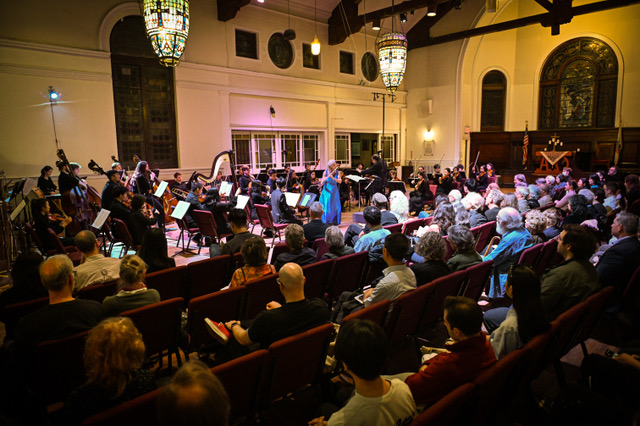
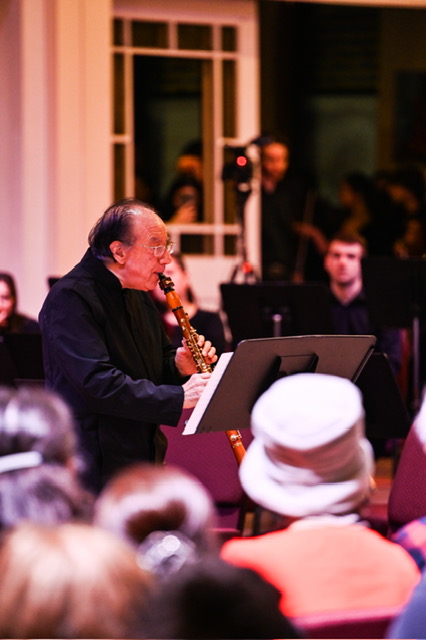
The WA Sinfonietta, under the baton of the world-renowned clarinetist Charles Neidich, gave its second 2026 performance on May 10th at the Good Shepherd-Faith Presbyterian Church, with works by Charles Ives, Lukas Foss, and Elliott Carter. The previous three concerts of this ensemble (the inaugural concert on March 23, 2025, May 13, 2025, and March 15, 2026) have been covered in these pages. (Interested readers can click on the following links to read about those concerts: WA Sinfonietta in Review March 23, 2025 , WA Sinfonietta in Review May 15, 2025, and WA Sinfonietta in Review March 15, 2026 .) Programming seems to follow a plan of alternating between concerts of “historically mainstream” pieces and then concerts of “modern/contemporary/20th century” works. Both formats feature the idea of a unifying theme and/or a lesser-played alternative version of an established work . Sunday’s concert was also livestreamed (Wa Sinfonietta – “American Icons” Livestream) for those persons who chose Mother’s Day over attending this excellent performance.

Mr. Neidich spoke about the program, and happily he has taken the advice to use a microphone to be heard clearly by all in the audience. The prior complaints were never intended to offend –  Mr. Neidich simply has many interesting things to say, and it is a shame for his wealth of knowledge to be lost in inaudibility. As always, there were excellent program notes, with a QR code included for extra points of interest about the composers and their works.

Three Places in New England by Charles Ives opened the concert. For those unfamiliar with the piece or without access to the QR notes, the three movements are I. The “St. Gaudens” in Boston Common (Col. Shaw and his Colored Regiment), II. Putnam’s Camp, Redding, Connecticut, and III. The Housatonic at Stockbridge. Each piece is intended to evoke its respective place for the listener.  It is one of the most frequently performed of all of Ives’s works, probably because of the use of folk tunes and Americana giving the listener reference points within the highly chromatic writing. Mr. Neidich mentioned Civil War songs, however, the list of actual quotations could easily fill this page.

Mr. Neidich is a musician with a deep, probing intellectual bent, so one would think that Ives’s complexity would be right up his (Neidich’s) street, and would expect a highly polished and well-thought-out approach. It almost goes without saying that this was the case this evening. Mr. Neidich had everything under control (which is no easy task in Ives), and his strong sense of conception was brilliantly brought to life by the WA Sinfonietta. I have something of an uneasy relationship with Ives’s music, but this made me sit up and take notice. The following were highlights – TheSt. Gaudens” in Boston Common (Col. Shaw and his Colored Regiment) had a truly atmospheric feel, as if apparitions of soldiers were slowly marching across the South in a haze of memories. It was incredibly effective in its eeriness. Putnam’s Camp, with the dual marching bands had the right amount of amateur clumsiness without exaggerating the parody. If this was one’s first exposure to Ives, then they were treated to a first-class performance.

Lukas Foss’s Renaissance Concerto for flute and orchestra was the final work on the first half, with flute soloist Carol Wincenc (who premiered the work, which was written for her). While many of the names of early music make “guest appearances” (viz. Byrd, Rameau, Monteverdi, and Gesualdo), modern devices abound, such as extended techniques from the soloist. The work is looking forward and backwards simultaneously – vintage Foss. The composer himself described this work as “ an homage to something I love, a handshake across the centuries.”

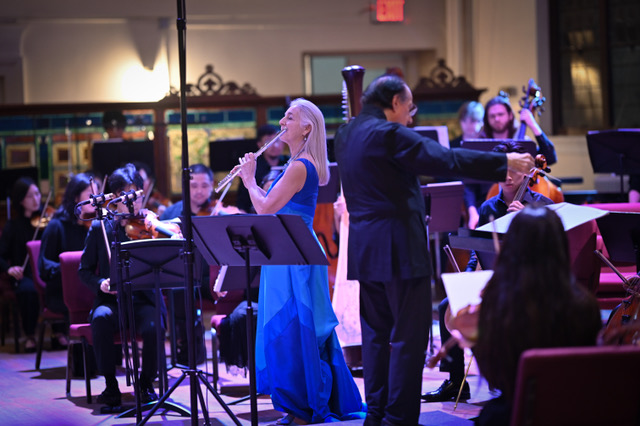
Carol Wincenc, Queen of the Flute. Photo Credit: Seungho Choi

Ms. Wincenc spoke briefly about the work, mentioning that the acoustic of the venue was ideal (making special mention of the third movement Recitative) and telling the audience that Foss himself conducted the premiere forty years ago. Ms. Wincenc is not called the “Queen of the Flute” without reason – her tone is pristine in its beauty, and she has technique to burn, making the most intricate passages sound effortless. She was also spot-on about the acoustic – the smaller venue lent an immediacy that was missing for me in larger halls.

The Jouissance finale was the showstopper, with brilliant passagework, a courtly duet between the flute and percussion, some tapping on keys, and aggressive blowing, culminating in Ms. Wincenc’s slow exit from the stage while still tapping keys and making a “click” sound as she got farther from the stage. The audience reacted enthusiastically, calling Ms. Wincenc back to the stage three times.

After intermission, Symphony No.1 (1942, revised 1954) by Elliot Carter was to be the sole piece on the second half. Mr. Neidich spoke of Carter’s intent to write something optimistic and uplifting to buoy the nation’s mood in the midst of World War II.  One might say it was “Carter before Carter became Carter”- it bears no resemblance to his highly complex later works. The program notes hint that the seeds of his later “complex greatness” are to be found in this work, which is open to debate (I disagree). This work has hints of Aaron Copland, Roy Harris, David Diamond, Samuel Barber, and William Schuman (amongst others), which are all terrific influences. As a side note, this listener could not help thinking what an amazing time for the American Symphony the late thirties and forties were!

This three-movement, thirty-minute work deserves more attention, not just the occasional playing merely as a curiosity. The WA Sinfonietta played with a robust sense of optimism and steady resolve. There were a few instances where the balance between the upper winds and the strings were problematic, probably due to the hall acoustics, but also some overexuberance.

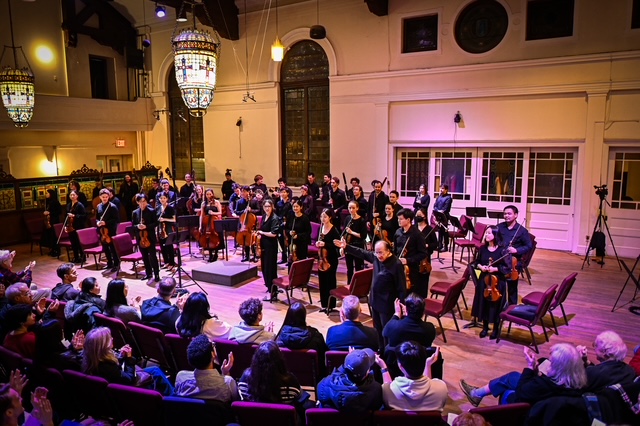
The audience responded with an extended standing ovation, long enough to allow Mr. Neidich to wend his way through the entire ensemble and shake hands with every musician.  It is something I never tire of seeing, a world-class musician who truly loves what he is doing, sharing his gratitude with not only the audience, but his very talented ensemble. It was another triumph for the WA Sinfonietta, and one looks forward to future performances.

Share

Zhaoxuan Song Percussion Recital in Review

Zhaoxuan Song Percussion Recital in Review

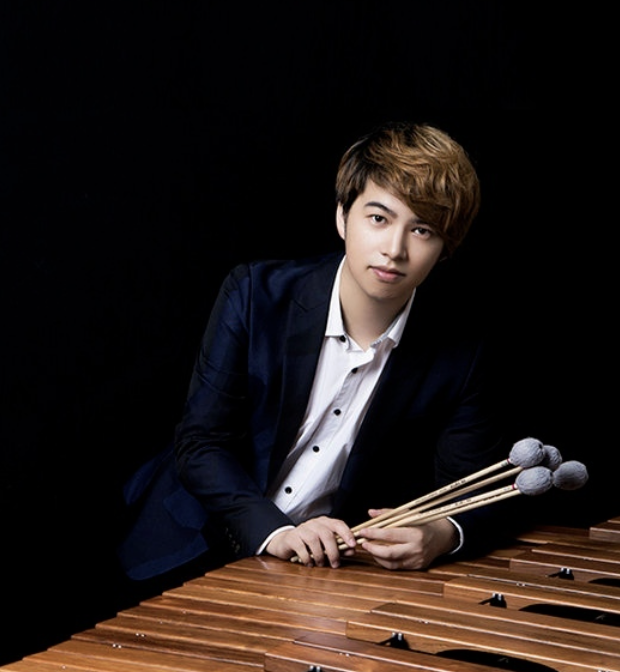
Zhaoxuan Song, Percussion

Bowen Zheng, vocalist; Natalie North, percussion; Vio C, Electronics & Audio Support; T. C. Kincer, piano

New York University, John H. Paulson Center, New York, NY

May 8, 2025

On May 8, 2025, Zhaoxuan Song gave a recital towards the completion of a DMA degree in percussion at New York University. Mr. Song is the second DMA candidate in the newly created doctoral program for percussionists to be reviewed in these pages. Mr. Song is completing his studies under the guidance of the internationally renowned timpanist and percussionist Jonathan Haas.

The program notes state that Mr. Song’s performance and research focus on innovative collaborations between percussion and voice, with particular emphasis on the expressive and theatrical dimensions of contemporary music. The program reflected this focus, as all three works on this program were by contemporary composers (two living) and had highly theatrical content. Mr. Song was joined by vocalist Bowen Zheng, percussionist Natalie North, pianist T.C. Kincer, and had electronic and audio support from Vio C.

For full disclosure, this reviewer was not present at the actual recital but was provided an (unedited) video for review. It is inevitable, given such circumstances, that the impact of the performance was somewhat diminished, as there is no real substitute for the live experience.

Before talking about the music, I would like to mention logistical matters. Set-up is an art in itself – placing the battery of percussion instruments to allow quick access without disaster (and within the confines of the space, which in this case was rather limited) requires careful planning. It was notable how gracefully and unhurriedly Mr. Song navigated this maze throughout the recital.

Silk Road (1989) by Tan Dun (1957), with vocalist Bowen Zheng joining Mr. Song (text by Arthur Sze), opened the recital. About this work Tan Dun writes, ”the rhythms of English verse are combined with the tonal qualities of Peking Opera, in a linear structure like the connected brush-strokes of calligraphy.” Tan Dun is an expert at mixing Eastern and Western elements, and this work is no exception. With evocative vocals by Ms. Zheng, and the seamless mixing of Chinese and Western percussion instruments by Mr. Song, it was not only a demonstration of Mr. Song’s expertise with the percussion battery, but also his highly developed dramatic sense that was apparent throughout the recital.

Animus II (1967/1968) by Jacob Druckman (1928-1996) followed the Tan Dun. Scored for mezzo-soprano (Bowen Zheng), two percussionists (Mr. Song and Natalie North), and electronic tape, the work transforms the concert experience into what the composer called “an orgiastic ritual.” The ritual aspect was clear (a solemn processional to open and an equally solemn recessional to close), but I will leave it to others to decide to what degree Mr. Druckman’s assessment is accurate. The recorded sounds added a layer of mysticism. There was a definite theatrical build-up, as each performer’s role became more urgent and frenzied. At one point, all three performers were striking a gong with different materials (metallic stick, mallet, and tubular bell hammer) as tension reached its peak. Kudos to Mr. Song, Ms. Zheng, and Ms. North for both their dramatic and musical excellence.

The Percussion Concerto (1998) by Chen Yi (1953) closed the recital. Commissioned by Evelyn Glennie and the Singapore Symphony Orchestra, this work blends Western orchestral forces with the spirit of Beijing Opera in three movements (I. The Night Deepens II. Prelude to Water Tune III. Speedy Wind). This arrangement for piano and percussionist was made by Mr. Song. T.C. Kincer was the pianist. For more detailed information about this work, one can read Chen Yi’s own notes by clicking on the following link: Chen Yi Percussion Concerto. This work is a tour-de-force for the soloist, and like the previous two works, it has a strong theatrical element. Mr. Song displayed his considerable talents with gusto throughout. The opening movement, The Night Deepens, had a nervous energy that reminded me of Prokofiev with an Eastern flavor. The middle movement, Prelude to Water, requires the soloist to recite poetry while making his way around the battery, which is probably a lot more difficult that then average listener could imagine. Mr. Song did make it look very easy! The finale, Speedy Wind, has a knockout cadenza that Mr. Song dispatched brilliantly. Credit is also due to pianist T.C. Kincer for his role. The audience gave Mr. Song a very enthusiastic ovation that was well-deserved.

I wish Mr. Song good luck and continued success as he works towards his degree.

Share

The Elsewhere Ensemble presents Icarus Quartet in Review

The Elsewhere Ensemble presents Icarus Quartet in Review

Elsewhere Ensemble: Colin Pip Dixon, violin; Alwyn Wright, violin; Arnaud Ghillebaert, viola; Kathryn Brunhaver, cello

Camille Ortiz, soprano; MacIntyre Dixon, narrator

All Angels Church, New York, NY

March 24, 2026

On March 24th, the Elsewhere Ensemble presented a program entitled Icarus Quartet, “music, stories, and poetry brought to life,” featuring two works by Elsewhere Ensemble co-director and violinist Colin Pip Dixon, Hear My Prayer (from a larger work,  Invocation) for soprano and string trio, and the Icarus Quartet, for string quartet and narrator. Between these works was On Poetry and the Earth, two short pieces for actor and string trio inspired by John Keats, composed by Samuel Lord Kalcheim. A sizable crowd of enthusiastic supporters filled the All Angels Church to enjoy what proved to be a thought-provoking program.

Elsewhere Ensemble. Photo credit: Cynthia Carris Alonso 

Colin Pip Dixon welcomed the audience and spoke at length, some about his personal experiences in music in Poland, and some about the current state of the world (with the implication that all knew to what he was referring) and the anxiety that accompanies it. This eventually segued into the introduction of the first work on the program, Hear My Prayer. The text for Hear My Prayer was inspired by a quote from Albert Einstein (from the Russell-Einstein Manifesto), “We implore, as human beings to human beings, remember your humanity and forget the rest.” Mr. Dixon stated the “prayer” is not one of a religious nature.

This six-minute work is strongly reminiscent of Henryk Górecki’s 3rd Symphony (“Symphony of Sorrowful Songs”). Perhaps Mr. Dixon’s time in Poland influenced his writing. It opens with an extended viola/cello duet that builds in intensity as the violin joins. The soprano enters with a plaintive “Hear my prayer”-  there are no vocal gymnastics, just simple passages which were delivered with bell-like clarity. Soprano Camille Ortiz was compelling as she brought the text to life with her radiant voice – the emotional impact was undeniable. The trio of Mr. Dixon,  violist Arnaud Ghillebaert, and cellist Kathryn Brunhaver was excellent, never overshadowing Ms. Ortiz, but rather heightening the impact with their ensemble.

Poetry by, and inspired by, John Keats formed the texts of On Poetry and the Earth, by Samuel Lord Kalcheim. The two poems were Keats’s On the Grasshopper and the Cricket, and To John Keats, at Springtime, by the Harlem Renaissance poet Countee Cullen. Mr. Dixon told the audience that Mr. Kalcheim is a great admirer of Keats’s poetry, and that the concept of adding music to these texts resembled a “dialogue across time and space” – an idea I found fascinating. MacIntyre Dixon (who is Colin Pip Dixon’s father) brought the poems to life with the practiced skill one would expect from an experienced actor. Mr. Kalcheim was most successful in his music to Keats’s poem, which had the underpinnings of the Romantics (Schumann came to mind). One might have hoped for a slightly “jazzier” Cullen, but it was still quite effective. Mr. Kalcheim was in attendance, and stood to acknowledge the warm applause of the audience.

After a short break, the final work of the program, the Icarus Quartet, was played. This nearly fifty-minute work (in ten sections) tells the story of well-known story of Icarus, recited by narrator, accompanied by string quartet. Violinist Alwyn Wright joined Colin Pip Dixon, Arnaud Ghillebaert, and Kathryn Brunhaver. The story presented here was not the familiar cautionary tale of the consequences of hubris, but a call not to impede the dreams and passion of the young. One can draw one’s own conclusions about this revisionist take. MacIntyre Dixon was the narrator, and while one might quibble with the story, there could be no doubt that he was a powerhouse. It’s no easy feat to keep a large audience spellbound for nearly an hour, but he did just that.

How much the text depended upon the music would be debatable – to this listener, it seemed to be the opposite, that the music depended upon the text. To clarify, there were many examples of the music being a “description” of the words, which accentuated the text’s effect (in film music a quality called “Mickey Mousing”), yet without the text, the music would have not evoked any thought of the myth. This last point is moot, however,  as one could hardly expect a performance without the text. All credit to the quartet members, as it would have been quite easy to have been overshadowed by such a dynamic force as MacIntyre Dixon, but  they were quite heroic in an understated way. The audience responded with a well-earned standing ovation. As an encore, the quartet and Camille Ortiz (with the addition of pianist Miriam Leskis), offered Song to the Moon, from Antonin Dvořák’s opera Rusalka, which was the highlight of the evening for this listener. The already happy audience responded with another standing ovation. Congratulations to all!

Share

WA Sinfonietta presents The Craft of Perfection: Mendelssohn and Brahms in Review

WA Sinfonietta presents The Craft of Perfection: Mendelssohn and Brahms in Review

WA Sinfonietta

Charles Neidich, Music Director/Conductor

Good Shepherd-Faith Presbyterian Church, New York, NY

March 15, 2026

The WA Sinfonietta, under the baton of the world-renowned clarinetist Charles Neidich, gave its first 2026 performance on March 15th at the Good Shepherd-Faith Presbyterian Church, with works by Mendelssohn and Brahms. The first two concerts ever of this ensemble (the inaugural concert on March 23, 2025, and May 13, 2025) had already shown the great potential and promise of this ensemble. (Interested readers can click on the following links to read about those concerts: WA Sinfonietta in Review March 23, 2025 and WA Sinfonietta in Review May 15, 2025.) As one has come to expect from the intellectually curious Mr. Neidich, this was a concert program of both historical interest and scholarly investigations combined with highly energized performances. The Sinfonietta has already built up a devoted fan base – the hall was filled, and extra chairs were added to accommodate to overflow. This is something that makes any lover of the arts very happy (are you listening, Timothée Chalamet?), and it bodes well for the future. 

As has become standard for these concerts, Mr. Neidich spoke about the program and various points of interest, but (again) was all but completely inaudible to anyone who was not in the first or second rows. The audience members next to me were visibly frustrated by this. Thankfully, the excellent program notes (which I am assuming were written by Mr. Neidich) were both interesting and informative. 

Mendelssohn’s Overture for Winds in C major, Op. 24, opened the program. Originally written in 1824 for eleven instruments with the title Nocturno, the updated version was in response to a call for improved military music in Prussia (amongst other countries). Mendelssohn added a few measures and expanded it for a large band of twenty-five instruments and gave it the new title. The program notes called this work a model for future large wind works, and one can hear how Sousa (an intelligent and skilled composer too often marginalized) must have drawn inspiration for his own works. The winds of the WA (all players who no doubt have had extensive band experience) played with great energy. The one reservation I had was it did seem that there was an exaggerated effort to bring melodic lines to the fore in the first section at the expense of overall ensemble balance. A quick glance at the score does not suggest that this was intended, so perhaps it was an interpretive choice. The second section was what I would expect from players of quality and experience – crisp, with martial precision and precise balance. 

The 1834 revision of Mendelssohn’s 4th Symphony (“Italian”) followed the Overture. The program notes tell us that Moscheles, who conducted the second (unauthorized) performance in London, wrote Mendelssohn “…its shortcomings might only be evident to you and me.” Mendelssohn took this as the call to make revisions. The end result was that the second, third, and final movements underwent revisions; the first movement was left as it was. History seems to have landed firmly on the side of the original, which is the overwhelming choice for performance. About the revised version the noted English music critic Edward Greenfield wrote “Surprisingly for so perceptive a composer he (Mendelssohn) undermined the original’s freshness, smoothing over melodic lines (as in the Pilgrim’s March) and extending linking passages. A fascinating comment on the danger of second thoughts after white-hot inspiration.” Even Mendelssohn’s beloved sister Fanny was critical of the changes. 

Mr. Neidich is very fond of exploring such non-standard versions, such as in his WA Sinfonietta inaugural concert, which had a similarly non-standard addition to the Brahms 4th symphony. His presentation of this 1834 version is a welcome attempt at introducing listeners to new ideas of works that they might already have known well in their original forms. Whether or not one prefers this version or the original, it is indisputable that the WA Sinfonietta gave an excellent performance, and likely one of the very best of this version. Mr. Neidich is a meticulous musician, and he brings that quality to the podium, which in turn he imparts to his ensemble. The opening Allegro vivace had a lively freshness that was notable, with an exuberance that always remained controlled. The Andante was brooding, but in a thoughtful fashion, and not self-indulgent. The Menuetto had charm, but it also had heft, with some exceptional brass playing. The stormy Saltarello finale was played with gusto. The audience responded with an enthusiasm that one usually hears at the end of a concert. Mr. Neidich shook hands with many of the ensemble members; indeed, one senses that he is truly overwhelmed with gratitude for both the audience and his ensemble. 

After intermission, Mr. Neidich offered a short solo clarinet work of his own, the title of which I was not able to hear when he announced it in an even softer voice than his opening remarks (and it was not listed on the program). It was hauntingly evocative and filled with passages that highlight Mr. Neidich’s considerable virtuosity. There were also some interesting extended techniques, such as blowing into the mouthpiece without forming notes, but producing a swirling wind sound. 

The ensemble then returned for their sole work of the second half, Brahms’s Symphony No. 3 in F major, Op. 90. For some background, Mr. Neidich has spoken about the connection between Brahms and the Meiningen Court Orchestra (A conversation with Charles Neidich), and how the WA Sinfonietta is modeled after the Meiningen. Brahms was well known for his penchant for revision and refinement, and the 3rd symphony is no exception. 

If the earlier Mendelssohn works were evidence of playing at a high level, the Brahms raised the bar even higher. It might be premature to state this, but based on this and the earlier Brahms 4th, it seems that the WA Sinfonietta has a special affinity for Brahms. I was reminded of an earlier performance of the 3rd by another ensemble that had been workman-like, with notes all there but an overall lack of differentiation. In contrast to this, the Sinfonietta offered a powerful reading, filled with urgency and a robust quality that one not only wants, but requires for this symphony. The lovely clarinet in the second movement must have gladdened Mr. Neidich’s heart. It was one of the better Brahms 3rd that this listener can recall hearing, which is no small achievement, especially for an ensemble still in its early stage. The audience loved it, and the ovation was loud and long for Mr. Neidich and the Sinfonietta. It is my hope that this fine ensemble continues its upward trajectory and that Mr. Neidich’s obvious passion keeps rubbing off on his talented players. The WA Sinfonietta is well worth any music lover’s attention, so if one has the opportunity to hear them they should not hesitate. They might have to get there early for a good seat! 

Share

Barum Music Foundation presents Rising Stars Showcase in Review

Barum Music Foundation presents Rising Stars Showcase in Review

Dr. Kookhee Hong, Executive Director; Dr. Minji Noh, Artistic Director

Weill Hall at Carnegie Hall, New York, NY

January 19, 2026

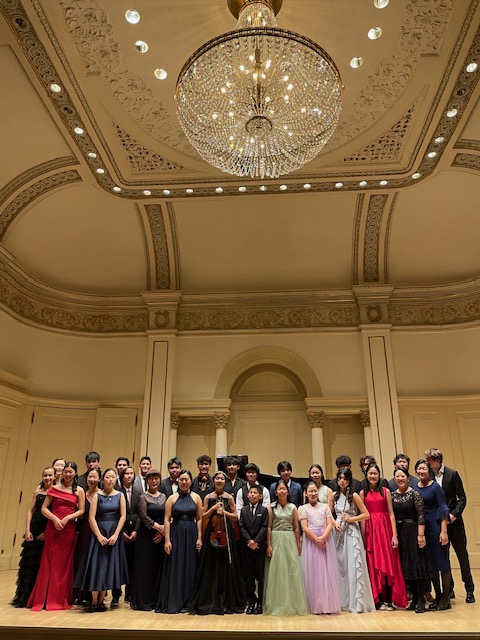
On January 19, 2026, the Barum Music Foundation (www.barummusic.org) presented a program entitled “Rising Stars Showcase.” Featuring twenty-seven(!) young musicians in twenty-six(!) works (Mozart, Mendelssohn, Schumann, Liszt, Moszkowski, Tchaikovsky, Arensky, Sarasate, Rachmaninoff, Ravel, Bartók, and Rebecca Clarke) this mammoth program was three hours and ten minutes long- without intermission!

While I understand the desire to maximize the quantity of both performers and selections (playing at Carnegie Hall is most likely going to be a once-in-a-lifetime experience for some of the young musicians), this was simply way too much for a single session. As time went on, the audience was coming and going en masse, which penalized the later performers in a way that was completely avoidable. At least those audience members had that freedom- a reviewer does not.

The performers were aged (in my estimation) from early pre-teen to late teens – the printed program and the website had no information about the ages of the performers. While it was not completely necessary information, it would have been good to know the ages of the performers from the standpoint of assessment- obviously a conscientious listener would not judge a twelve-year old with the same expectations that would be appropriate for an eighteen-year old.

Any regular reader of these pages will already know this listener has a great interest in hearing young artists. This evening (the length notwithstanding) was no exception. However, the reality of these types of showcases is a wide range of levels, from very promising youngsters ready  to those displaying both superb technique and a highly-polished artistry that places them at the cusp of possibly reaching the highest levels. Accordingly, to comment on each and every performer would turn this into an adjudication, which would not only be tedious, but beyond the scope of this review.

Every one of these youngsters can be proud- they all showed poise and maturity in addition to demonstrating excellent technique and budding artistry. I do want to list all the performers- they are truly Rising Stars. They are Katherine Oh (Flute), Dora Yu (Viola),  Iris Yan, Matthew Margolis (Violin), Joseph Margolis, Matthew Mak  (Cello),  Alexis Lee, Allison Bang, Arin Choi, Ayun Kim, Brian Anesi, Caleb Eshagpoor, Derrick Lin, Erik Chen, Ethan Sun, Fredrik Wong, Isaac Lee, Janice Son, Jina Ju, Justina Cha, Alexander Kai Hilty, Kensy Cuellar, Knox Reid, Ricky Zhou, Sophie Lin, Takako Isobe, and Zachary Eshagpoor (Piano).

Without taking anything away from anyone, I am going to mention the musicians that I felt were standouts. The Eshagpoor brothers, Zachary and Caleb (the former played Bartók’s Op.14, No.3, the latter Mendelssohn’s Variations sérieuses – after waiting three hours!) are both not only technical wizards, but they possess a true artistry far beyond their years. They are definitely going to be on my to-watch list. Alexis Lee played Liszt’s La Leggierezza with a deft lightness (as per the title) that so many young players struggle with in Liszt, due to their focus on the technical demands at all costs. Ms. Lee displayed the technique and the touch. Cellist Joseph Margolis played Tchaikovsky’s Variations on a Rococo Theme, Op. 33, with a fine sense of insouciant playfulness and humor that is prominent in this masterpiece. I’ve heard older and more experienced players “swagger” excessively through this piece, where Mr. Margolis let every detail speak. Even after nearly three hours (he was the second-to-last), one was fully engaged in his outstanding performance. The trio of Matthew Margolis (violin), Matthew Mak (cello), and Fredrik Wong (piano) played the first movement of Arensky’s D minor Piano Trio, Op. 32 with a rapport one would have thought was a product of years of playing together. The balance and intonation were outstanding. This ensemble has great potential for the future, and I do hope they will continue to play together. Finally, the standout amongst the standouts was pianist Erik Chen, who dazzled all with Ravel’s La Valse. It was fortunate that Mr. Chen was at the midpoint of the program, so the hall was still full to experience a spectacular performance of one of the most fiendishly difficult works in the repertoire. I’m quite familiar with this work, so I was not going to be fooled by its inherent brilliance. I was initially skeptical when I saw it on the program, but suffice it to say that Mr. Chen obliterated that skepticism in record time. It easily held its own against any number of performances I have heard. The audience gave Mr. Chen a well-deserved standing ovation. Predictions are always an inexact science, but I expect to hear much more from Mr. Chen in the future and would not at all be surprised if I see him appearing at one of the premier piano competitions as a contestant. Good luck, Mr. Chen!

Congratulations to all, with wishes for future successes.

Share

Shiqi Zhong Percussion Recital in Review

Shiqi Zhong Percussion Recital in Review

Shiqi Zhong, percussion

YoonJung Hwang, violin; Qianci Liu, cello; Jiacheng Xiong, piano; Jonathan Haas, timpani/percussion; Kelsey Choi, percussion

New York University, John H. Paulson Center, New York, NY

December 18, 2025

On December 18th, Shiqi Zhong gave what was his third recital towards the completion of a DMA degree in percussion at New York University. Mr. Zhong is the first DMA candidate in the newly created doctoral program for percussionists. The sole work on his program was the Viktor Derevianko/Mark Pekarsky arrangement of Dmitri Shostakovich’s 15th Symphony for piano trio, percussion, and celeste, which is obviously not a percussion-centric work, so one assumes that this recital is to meet a chamber/ensemble requirement. Mr. Zhong was joined by violinist YoonJung Hwang , cellist Qianci Liu, pianist Jiacheng Xiong, and percussionists Jonathan Haas and Kelsey Choi .

Mr. Zhong welcomed the audience and thanked them for attending. Before the recital proper, there was some pre-recital “bonus” content – a pipa/piano piece and a presentation of handpan drumming, featuring Mr. Zhong with some of his young students. The Handpan is a steel drum that resembles a large tortoise shell. It has both melodic and rhythmic qualities, which Mr. Zhong demonstrated. He is currently writing a method book for handpan, and two studies that he wrote were offered – the first highlighting the melodic possibilities, and the second, the rhythmic with a focus on hand independence. It was nice to see how much pride Mr. Zhong has in his young students. Of course he is an outstanding musician, but one has the sense that he is also an outstanding teacher who wants to share his love and enthusiasm for music and percussion with his students, regardless of their level of prowess.

After this demonstration,  Mr. Zhong invited his advisor/mentor Jonathan Haas to speak as the other musicians took their places in preparation for the Shostakovich. Professor Haas spoke about Shostakovich and this arrangement of the 15th Symphony in a manner intended to be a very quick overview of his life and trials. (He had written some informative notes that were included in some pre-concert publicity, but unfortunately those notes were not distributed at the recital.) He did take a few liberties – for example stating that Shostakovich’s first three symphonies had aroused Stalin’s ire, though in fact it had been the composer’s opera Lady Macbeth of the Mtsensk District that had caused such trouble. Also, Professor Haas suggested that a fear of Stalin figured into Shostakovich’s compositional mindset, whereas Stalin had been dead for nearly two decades when Shostakovich wrote this symphony, so such fear was unlikely.

Like many of Shostakovich’s works, the 15th Symphony has definite autobiographical underpinnings, but what exactly they are in this work have been, and continue to be, debated by experts. A plausible explanation suggests that the composer knew that this was going to be his final symphony, and that he shared memories of his life, from childhood to his final days, when the end was imminent. There are quotes from other composers, the most obvious being Rossini’s William Tell overture, which appear throughout the work.

In an earlier review in these pages ( Shiqi Zhong  in Review), Mr. Zhong was the focal point, showcasing his “seemingly limitless technical abilities.” Tonight, he was tasked with a supporting rather than starring role. In this context, it is not easy to offer any specific praise, other than he was an attentive and sensitive team player, moving seamlessly between the components of the percussion battery. His collaborators were all top-notch musicians as well, and the combination of their skill and the very effective arrangement of this symphony resulted in one of the more memorable concerts this reviewer has experienced in some time. There were of course some individual highlights. Violinist YoonJung Hwang captured the gallop-like motifs with a jaunty insouciance that was perfect. Cellist Qianci Liu’s purity of tone brought out the emotional impact of the simple but profoundly beautiful solos from the second movement. Pianist Jiacheng Xiong was a force as he served as the de facto “orchestra”.  Last, but certainly not least, percussionists Kelsey Choi and Jonathan Haas joined Mr. Zhong as the “heart” of the work.  The forty-five minute performance time seemed to pass in a few moments – this is how spellbinding it was. And yes, the audience members were all smiles when the William Tell quotes appeared in the opening movement. Kudos to all, and best of luck to the soon-to-be Dr. Zhong in all his future endeavors.

Share

Dinu Mihăilescu: ROMerican Avant-Garde in Review

Dinu Mihăilescu: ROMerican Avant-Garde in Review

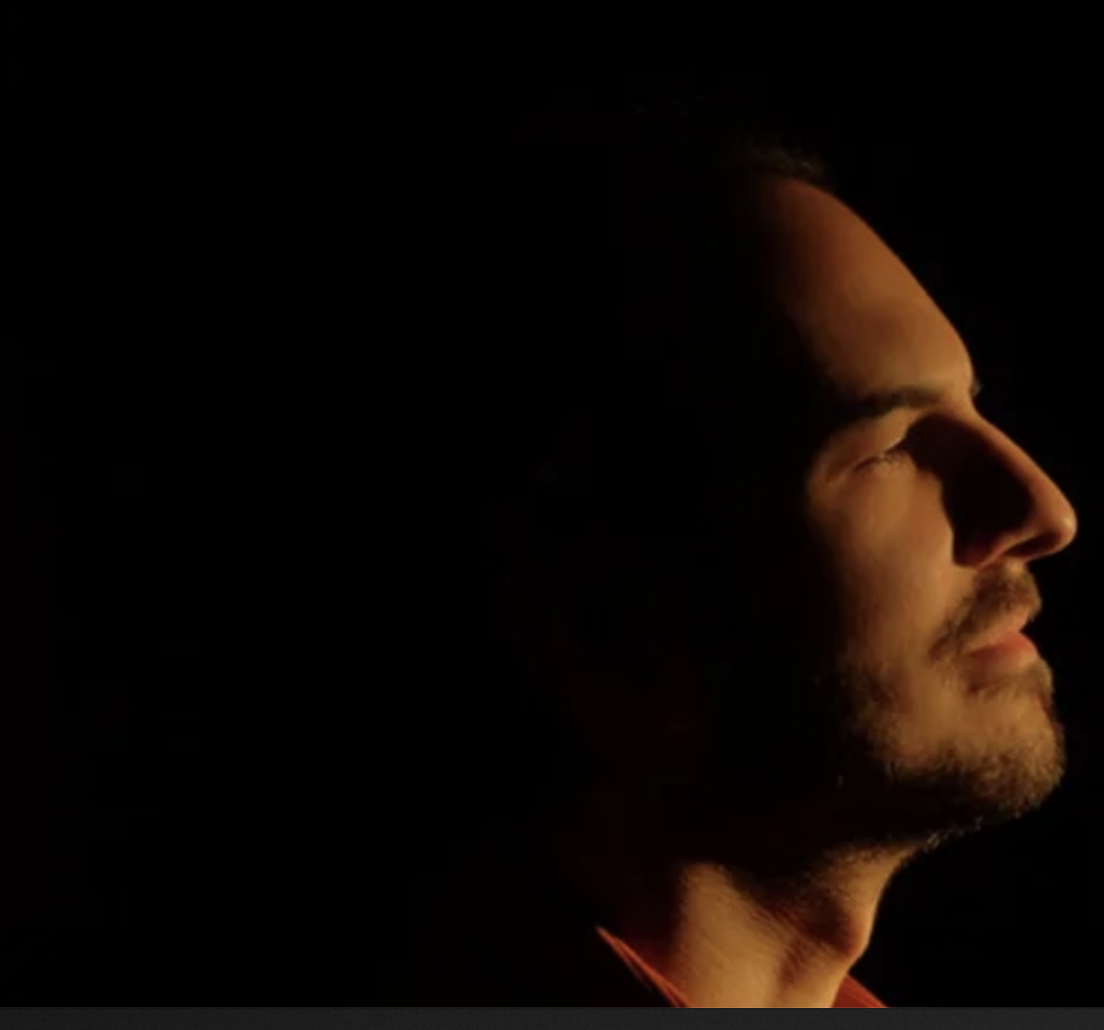
Dinu Mihăilescu, piano

Weill Hall at Carnegie Hall, New York, NY

October 31, 2025

On a windy Halloween night, Romanian pianist Dinu Mihăilescu blew into town to present a program he titled “ROMerican Avant-Garde” – the “RO” being works from Romanian composers Remus Georgescu and George Ensescu, the “Merican” being works by Americans John Cage, Jacob Druckman, Leonard Bernstein, Aaron Copland, and a “surprise addition” of Philip Glass, and the “Avant-Garde” to seemingly indicate the “modernity” of the works when they were written. The program was centered around Druckman’s The Seven Deadly Sins. Mr. Mihăilescu wrote the notes for the program, and one can learn more about him by visiting his webpage – Dinu Mihailescu | Pianist.

About the program, Mr. Mihăilescu writes  that ROMerican is “a concert-experience lasting about 50 minutes without applause, and almost without interruption between the works,” further writing that post COVID-19 “in view of the habits that have radically changed since the beginning of the pandemic, I see here an opportunity to change the way I give classical piano recitals in order to make them accessible to a new audience beyond the habitual traditional music lovers.” This is a lofty goal, but one that Mr. Mihăilescu only partially succeeded in realizing, for reasons that will be given later.

There were some introductory remarks from the presenter and Mr. Mihăilescu – including the pianist’s announcement of a program “surprise” to be inserted, with the almost casual “you will be able to guess who it is” without mention of the composer or where in the program it was to appear. This already belied the words in the previous paragraph -“accessible” is not making your audience guess! Not to mention that this was in addition to the 50 minutes already on the program without break, which is stretching the stamina of the audience beyond reasonable limits.

Opening with John Cage’s In a Landscape, an early work that is rather tame for Cage,  Mr. Mihăilescu displayed sensitivity in phrasing and color – the main challenges, as the piece itself is quite simple. One must say that this work is much too long for the ideas it presents.  It sort of meanders about, repeating itself, and even the most able player is hard-pressed to keep the listener engaged. Happily, the Remus Georgescu Three Miniatures for Piano which followed brought energy and spirit to the forefront. The nightmares of the Berceuse, the romanticism of the Sicilienne, and the biting sarcasm of the Marche were rendered by Mr. Mihăilescu with great skill. These are fun pieces, and Mr. Mihăilescu reveled in them.

Then it was time for the program centerpiece, Jacob Druckman’s The Seven Deadly Sins. Curiously, the notes did not mention the “sins” or the structure of the work. Was one supposed to know that Pride, Envy and Anger were the first section, Sloth the second section, and Avarice, Gluttony, and Carnality the third? Of course not! A sin of omission! As for the playing itself, it was truly outstanding. Mr. Mihăilescu has more than enough technique and intelligence to deal with the challenges that abound in this work. The fact that he did this (and every other work in his program) from memory was particularly impressive. There were no slips, lapses, or hesitations- and that is not easily accomplished in a work as thorny as this. The Druckman was far and away  the highlight of the evening.

Leonard Bernstein’s For Aaron Copland from Seven Anniversaries followed as something of a palate cleanser – it is so brief that it was already over when one was just starting to settle in. Now, was the “surprise”- Philip Glass’s Etude No. 2. Why Mr. Mihăilescu felt this was necessary to add is anyone’s guess. While he did play it well (evenly played without being robotic and with a good balance of touch in the repetitions), it mainly served to add another seven minutes to the program without adding anything notable. The Four Piano Blues by Aaron Copland followed the Glass, and I particularly enjoyed them, as there are many reminders of the composer’s 1926 Piano Concerto, of which I am very fond.

Mr. Mihăilescu ended the program with an enchanting Carillon Nocturne from George Enescu’s Suite No.3, Op. 18. The audience gave Mr. Mihăilescu a standing ovation.

Did I say end? Ah, but no – it was now time for the four (!) “encores” – all so clearly planned in advance. Two involved a second pianist, Philippe Boaron. The first,  Night, by Fazil Say, which started as good Halloween fun, wore out its welcome long before its ten minutes were completed. Since we are still in the 150th anniversary of Ravel’s birth, Vallée des cloches from Miroirs, and Jardin Féerique from Ma mère l’oye (with Mr. Boaron) were offered, and finally a work by Elgar (Mr. Mihăilescu called the title from the stage as almost an afterthought while the noises of shuffling about of both piano benches and the audience made it impossible to hear clearly). One can understand the impulse to want to maximize the opportunity to play on this stage, but to add another twenty minutes after already going over an hour without any break for the audience is remarkably tone-deaf. The applause had already completely stopped before Mr. Mihăilescu reappeared to foist his next encore on the audience, and this scenario repeated itself three times, with each repeat shedding more and more of the audience. Mr. Mihăilescu is an excellent musician, but these are serious issues that could have served to obliterate his outstanding work, which would be a real shame.


Share

Vocal Artists Management Services (VAMS) presents Seventeenth Season Artist Showcase in Review

Vocal Artists Management Services (VAMS) presents Seventeenth Season Artist Showcase in Review

Vocal Artists Management Services

James Greening-Valenzuela, manager; Gretchen Greenfield, artistic consultant

Opera America National Opera Center, Marc A. Scorca Hall, New York, NY

October 16, 2025

Vocal Artists Management Services (VAMS) presented their Seventeenth Season Artist Showcase on October 16, 2025, in the Marc A. Scorca Hall at the Opera America National Opera Center. Sacred music from Bach (St. Matthew Passion and Mass in B minor) and Mozart (Mass in C minor), and arias from Gounod, Puccini, Donizetti, Weill, Lehar, and Verdi were the thirteen selections performed by eight artists. A brief synopsis of each selection was included in the program notes. The eight artists in order of appearance were Sarah Benzinger, Michael González, Andrew Egbuchiem, Tom Sitzler, Ann Folger, Stacey Stofferahn, Alexandria Crichlow, and Nelson Ebo. Eric Malson once again was the pianist tasked with accompanying these singers, which he did with his customary excellence as one has come to expect. VAMS founder and manager James Greening-Valenzuela greeted the audience and also lent his talents as a violinist in the Bach selections.

Six artists had multiple selections, while the remaining two had a single selection as a duet. In the interest of fairness, I will select a highlight for each artist. This is not to say that all selections were not worthy of attention, as they of course were.

Let’s start with the duet first, “O terra addio” from Aida, with tenor Nelson Ebo and soprano Alexandria Crichlow singing the tomb scene. As I have written previously about Mr. Ebo, he is a passionate performer who offers the maximum in both his singing and acting. Tonight was no exception. While it might have been a bit too much for the small confines of the hall, it brought much needed energy to the evening. Ms. Crichlow was much less animated, but still brought forth the emotions of Aida with a dignified expressiveness.

Soprano Sarah Benzinger is listed as an “Emerging Artist” on the VAMS roster. Her offering of “Regnava nel silenzio” from Lucia di Lammermoor convincingly captured the spooked/unsettled quality of Lucia. Ms. Benzinger particularly excelled in the extreme high register, with exquisite control and pure tone without a hint of strain. She is a fine addition to the VAMS roster and has great potential. Soprano Stacy Stofferahn’s “Meine Lippen, sie küssen so heiß,” from Lehár’s operetta Giuditta, had the right amount of saucy naughtiness, dancing on the edges of burlesque without ever truly crossing over. It was delightful fun. Mezzo-soprano Ann Folger was playfully taunting in both voice and acting, in “Que fais-tu, blanche tourterelle?” in Gounod’s Romeo et Juliette.

 I have been witness in past performances to the vocal gymnastics of countertenor Andrew Egbuchiem, but tonight he offered  J.S. Bach’s “Erbarme dich” from the St. Matthew Passion with a child-like purity of tone that was simply angelic.

Tenor Michael González’s selection of  “Where is the One Who Will Mourn Me When I’m Gone?” from Kurt Weill’s Down in the Valley was – surprisingly to me – my favorite of the evening. I’m not always fond of what I find to be the cynical underpinnings of Weill’s music, but this was something different! With the bluesy accompaniment and the heartbreaking despair projected by Mr. González, the emotional impact was undeniable. Last, but not least, baritone Tom Sitzler “brought the power” as the enraged Ford in “È sogno? O realtà?” from Falstaff. His is a strong voice, perfect for the fury this aria demands.

Congratulations to all the artists.

Share

Modus Operandi Orchestra (MOO): Modus plays Mozart @ Merkin in Review

Modus Operandi Orchestra (MOO): Modus plays Mozart @ Merkin in Review

Modus Operandi Orchestra

Justin Bischof, conductor

Chloé Kiffer, violin

Merkin Hall, Kaufman Music Center, New York, NY

October 15, 2025

The Modus Operandi Orchestra (MOO), under the direction of Justin Bischof, presented a concert entitled “Modus plays Mozart @ Merkin”- an all-Mozart program at Merkin Hall on October 15, 2025. Violinist Chloé Kiffer was the featured soloist in the Violin Concerto No. 5 in  A major (“Turkish”), K. 219. Opening the program was the Symphony No. 40 in G minor, K. 550, and closing it was the Symphony No. 41 in C major (“Jupiter”), K. 551.

The program included extensive biographies of the conductor, soloist, concertmaster, guest conductor (not even appearing on this program), and the orchestra itself. As for the music itself, not a single word. Why is the 41st symphony called “Jupiter”? Why is the violin concerto called “Turkish”? What cadenza(s) did Ms. Kiffer play? Joachim? Her own? Yes, Mr. Bischof does talk about the works in a light, accessible manner, and this is always a nice touch, but by necessity it is always short. This is not the first time I have said this – not everyone is an expert, nor do they wish to do post-concert research, so some written notes about the program would enrich the concert experience.

Even though the Symphonies were not played consecutively, for this review I will pair them together, but will start with the Violin Concerto. Violin soloist Chloé Kiffer took the stage with Maestro Bischof. This was not their first collaboration, as Ms. Kiffer had previously played the Coleridge-Taylor Violin Concerto, as reviewed in these pages. The first thing that caught my attention was that Ms. Kiffer was using an iPad, with a foot pedal for page turns. This seems to be a growing trend.

This concerto is not a demonic display of pyrotechnics a la Paganini, but that does not mean it is without virtuosic demands. One must “sing” but also dance around the intricacies with an almost off-handed elegance. Failure to meet these requirements results in what could be described as lumbering or heavy. The orchestra must join in kind. Ms. Kiffer played with a rich, singing tone that she projected with a natural ease – there was nothing forced or contrived about it. The small confines of Merkin Hall make any tonal imperfections manifest, but when an artist of Ms. Kiffer’s caliber plays, the listener is rewarded with a true sense of immediacy that would not be possible in a larger concert hall. Her stage manner is notable – engaging without any excesses or histrionics, etc. The passagework was crisp, light, and accurate, making it look simple when it is anything but (the occupational hazard of a highly skilled player)! The cadenzas had the right amount of “fire” that showcased her virtuosity while keeping in character of the work. Incidentally, to answer one earlier question, her cadenzas were by Joseph Joachim. (As for the other question, the “Turkish” name comes from the use of so-called Turkish music, and the same A major-minor shift that appears in the “Rondo alla Turca” in K. 331.)

The rapport with the orchestra was excellent, and both MOO and Maestro Bischof were as deserving of praise for their outstanding work as Ms. Kiffer. The audience gave them a well-deserved standing ovation.

As Maestro Bischof related, the last three Mozart Symphonies were written in 1788 in the space of three months (!). To just get the notes on the paper for three symphonies in that time would be challenging enough, but to complete three fully-formed masterpieces is simply mind-blowing. Maestro Bischof also related that Nikolaus Harnoncourt was of the opinion that these three symphonies were conceived as one grand work (I disagree). There Is also debate on whether or not Mozart heard these symphonies performed in his lifetime. (Answer to earlier question: According to Mozart’s son Franz Xaver, the impresario Salomon gave the 41st symphony the nickname “Jupiter.”)

The 40th symphony exists in two versions (the second has the addition of clarinets). The autograph scores of both versions were acquired by Johannes Brahms (who later donated the manuscripts to the Gesellschaft der Musikfreunde in Vienna). The version sans clarinets was played.

The 40th symphony is one of the most frequently performed and recorded works of Mozart. With its tragic underpinnings and passionate nature, it foreshadows the Romantic era by several decades. From the reading of Maestro Bischof and MOO, it was clear that they understood that Mozart provided everything and a successful performance is one that honors the score. One might have wished for a bit more simmering mystery in the opening movement, but it was still very effective. The lyrical second movement was played with grace. The angular, defiant minuet of the third movement had the right amount of “growl” that gave way to a gentle and elegant trio, played with suitable charm. The finale, launched with a Mannheim rocket, was played with vigor. Other than a few isolated instances of imbalance between the strings and the winds, this was a fine performance.

The 41st Symphony was the final work on the program, and the dictum “save the best for the last” was certainly in play here. One might wonder if Mozart was aware this would be his final symphony, as he unleashed the full power of his unmatched genius (complete with a quintuple fugue in the final movement!). It could be argued not only is this work the greatest “classical” symphony, but the greatest symphony of any era. Maestro Bischof and MOO came fully prepared. There were no half-measures – the playing was polished, involved, and highly energetic, almost at times to the point of overexuberance. This latter point is only a minor criticism, as seeing and hearing passionate playing is always preferable to the workaday playing one often sees. If this was the first time for an audience member hearing this work, then they were given an outstanding “introduction.” To this listener, it more than held its own with any number of performances and recordings he has enjoyed. The audience reacted with an enthusiastic standing ovation. Bravo Maestro Bischof and MOO!

Share

JH Arts & IC Artists Series presents Whispers of Fall in Review

JH Arts & IC Artists Series presents Whispers of Fall in Review

Hyunjung Choi, Heesoo Shin, sopranos; Boosung Park, tenor; Seoyong Lee, bass/baritone

Dohyun Lee, piano

Opera America National Opera Center, Marc A. Scorca Hall, New York, NY

October 4, 2025

On October 4th, JH Arts & IC Artists presented Whispers of Fall, the third in their 2025 series of concerts, in the Marc A. Scorca Hall at the Opera America National Opera Center. Arias and songs from Poulenc, Verdi, Clara Schumann, Rachmaninoff, Puccini, Tosti, and Rossini were performed by the four vocalists: Sopranos Hyunjung Choi and Heesoo Shin, tenor Boosung Park, and bass/baritone Seoyong Lee.  Each half concluded with a selection featuring all four singers. In addition to these vocal selections, two solo piano works, Mélancolie, FP 105, by Poulenc, and two of the four Skazki (Fairy Tales), Op. 26, by Medtner, played by Dohyun Lee, rounded out the program. Dohyun Lee was also the accompanist for the evening.  The hall was filled with friends and supporters of these artists, which is always a pleasure to see.

As I have noted in previous reviews at this venue, the Marc A. Scorca Hall has the intimacy of a salon, with very live acoustics that give the listener a sense of immediacy not felt in larger (or less acoustically live) venues. Texts for the selections were provided, with English translations – which is always appreciated. I would advise the presenter in the future not to use a microscopic font on the program flyer – it was impossible to read without resorting to a magnifying glass.

Instead of commenting on the program in a strictly linear fashion, I will comment on each artist separately. As pianist Dohyun Lee opened the program, I will start with him. His performance of Poulenc’s  Mélancolie (written in 1940) conveyed much of the emotional impact without becoming overwrought. There were opportunities to project the obvious allusions Poulenc was making to war-torn France more deeply, but the overall effect was excellent. The Medtner Skazki were well-played, and not without charm, if somewhat undifferentiated. Dohyun Lee does deserve major kudos for his superb work as an accompanist – he was rock-solid all evening.

Let’s move now to the sopranos, Heesoo Shin and Hyunjung Choi. Ms. Shin’s offerings were a Poulenc song set  and a Puccini aria. Tu, che di gel sei cinta(Turandot), issung by Liù as she is being tortured, just prior to her suicide. Puccini himself wrote the words for this aria, and the librettists decided they could not improve on his text. Ms. Shin’s projection of Liù’s resolve to maintain the secrecy of the Prince’s identity and her defiance even while being tortured was heartbreakingly poignant. Of the three of Poulenc’s Métamorphoses, FP 121, “Paganini,” stood out – Ms. Shin has a sense of play, and she brought to the quirky text an almost whimsical approach that this listener found irresistible.

Hyunjung Choi’s selections were three of the Sechs Lieder, Op. 13,  by Clara Schumann (with texts by Heinrich Heine), and “Caro nome che il mio cor” from Verdi’s Rigoletto. The second of the lieder, Sie leibten sich beide, was the most compelling to this listener. The tragedy of lost love and missed opportunities that are simultaneously heartbreaking and infuriating in this song are challenging to capture, yet Ms. Choi did so in impressive fashion. It would be easy to overdo either the sadness or the frustration, which would completely spoil the effect. The singing was compelling, but the artistry was what made it exceptional. In the Verdi, her vocal agility, clarity of diction, and range (especially in the extreme upper register) without strain, stridency or loss of intonation, were notable. It all seemed easy, which of course, it is not. This went beyond what one might expect, and it made a strong impression on this listener.

Tenor Boosung Park performed “Quando le sere al placido”  from Luisa Miller (Verdi) and two Tosti songs, L’ultima canzone and Ideale.  The overriding theme in Mr. Park’s selections was sorrow, and that can present its own complications. In the Verdi, the dramatic impact is everything. Emotions abound, and one must be nearly overwrought without being a caricature. Thankfully, Mr. Park showed mastery in pushing the emotional limits to the edges while maintaining a body language of complete composure. If anything, he could have “loosened” up a touch, which would have only enhanced the effect of his strong, confident voice. The Tosti songs were light fare after the emotional wallop of the Verdi. Well done!

Bass-baritone Seoyong Lee gave us arias from Rachmaninoff’s Aleko and Rossini’s Il barbiere di Siviglia. He has a powerful voice that would easily fill any hall, but he also was sensitive enough to make the adjustment to the acoustics of this venue. “La Calumnia” was a delight, as he dealt with the rapid-fire parts with a smile. He is certainly not lacking in charisma, which he projects with a natural ease. All the charisma in the world means nothing without vocal ability, which he has in spades.  The “Aleko cavatina” proved that he is not just about acting – this cavatina is formidable music that requires a formidable singer. The Verdi was great fun, but the Rachmaninoff showed Seoyong Lee is the “real deal” as an artist.

Finally, the  entire group numbers – “Dunque e propio finite” from La Bohéme ended the first half. Without wishing to take anything away from “Mimi” (Ms. Choi) or “Rodolfo” (Mr. Park), the sassy “Musette” (Ms. Shin) and the vexed “Marcello” (Seoyong Lee) stole the show with their antics. “Libiamo ne’ lieti calici from La Traviata, one of the most popular and well-known opera melodies, was the final selection of the evening. Seoyong Lee offered a champagne flute to each audience member as he made his way to the stage to join the others, who all had their own glasses. Several audience members happily waved their glasses to the music – some even quietly singing along, in what was a delightful end to the evening. All four performers took a bow together to the applause of the appreciative audience.

Share