
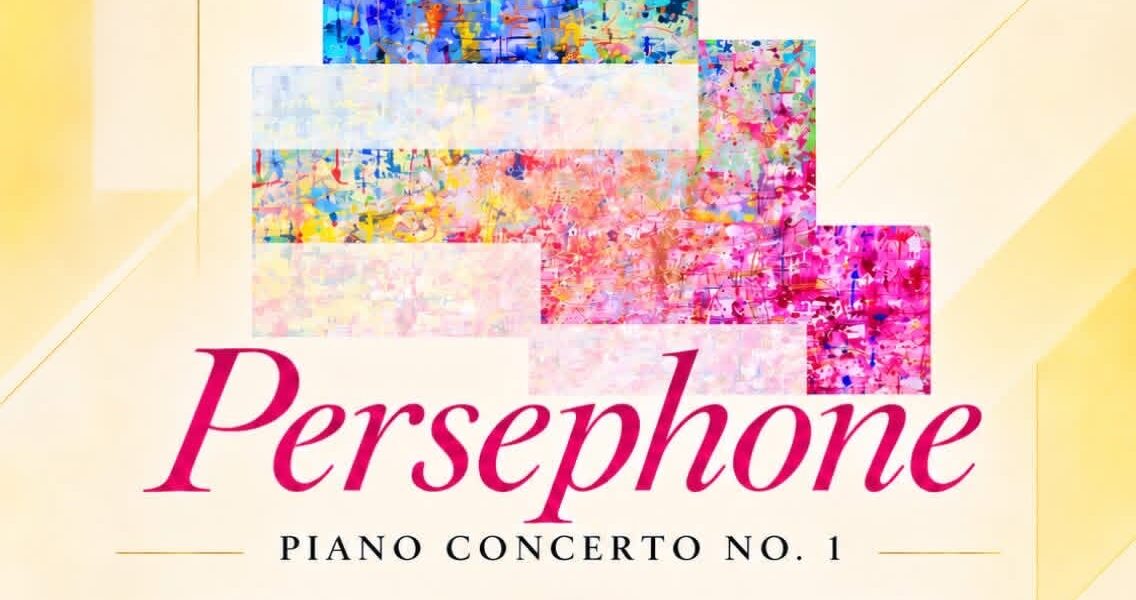
Vicente Álamo: Persephone, Piano Concerto No. 1 Recording in Review
Isabel Dobarro, piano
Royal Philharmonic Orchestra
Alberto G. López, conductor
Recorded July 19, 2026 at Abbey Road Studio 2
Recording Engineer: John Barrett
Mixing, Mastering and Editing: Javier Monteverde
Sonnen Music 8447721881198
The Greek myth of Persephone, whose abduction into the underworld and eventual return symbolize the cycles of darkness and light, loss and renewal, serves as the inspiration for Spanish composer Vicente Álamo’s Persephone, Piano Concerto No. 1. In four movements, the concerto follows a journey from descent and uncertainty to reflection and eventual return. It is a work that draws on the grand tradition of the piano concerto while incorporating a distinctly cinematic approach to orchestration and musical storytelling.
Recorded at Abbey Road Studios with the Royal Philharmonic Orchestra under Alberto G. López and pianist Isabel Dobarro, the concerto showcases Mr. Álamo’s imagination as an orchestrator and his ability to create vivid musical landscapes. His language is predominantly tonal, with minimalist and cinematic influences, but it is the emotional narrative that gives the work its direction. To learn more about the work, the performers, and to listen, click the following link: Persephone: Piano Concerto No. 1
The opening movement, Descensus (Descent), begins with a poignant statement from the piano alone. This recalls the tradition of piano concertos such as the Beethoven 4th and Rachmaninoff 2nd, where the soloist introduces the musical material before the orchestra enters. Mr. Álamo, however, quickly takes the music in a different direction. His colorful, almost magical orchestration creates a world of wonder, while Ms. Dobarro’s opening establishes an intimate and searching character. There seems to be an existential struggle between the soloist and the surrounding orchestral forces. The piano repeatedly reaches upward, as though attempting to rise from the darkness, only to be pulled back down. By the end, the struggle remains unresolved, an effective beginning to the narrative.
The second movement, Inter Mundos (Between Worlds), explores the tension between reason, memory, hope, and uncertainty. It begins with suspended sonorities before a lyrical melody emerges in the piano, taking its cue from the solo flute. The melody blends beautifully into the orchestral fabric, weaving in and out of the surrounding textures. Midway through, the piano emerges with both delicacy and assurance, although the harmonic undercurrent remains unsettled and nostalgic.
Eventually, the music erupts into a moment of grandeur and elation, and what follows is particularly effective. The textures become sparse again, and the principal melody returns with a different accompaniment, now seemingly ready to take flight. This transformation is cathartic and provides a genuine sense of release. Just when one begins to wonder whether the music is becoming too concerned with spaciousness and orchestral effect, the narrative takes over. The movement develops a convincing emotional arc, and what initially seemed atmospheric becomes something much more substantial.
The third movement, Ad Astra (To the Stars), introduces a more hopeful and reflective perspective. Beautifully orchestrated, it allows the piano to act almost as a narrator, guiding us through different soundscapes and textures. Ms. Dobarro brings sensitivity and clarity to these passages, never forcing the pianistic line. The recurring use of chimes is particularly striking, suggesting a distant memory or perhaps a reminder of where the journey began. The sudden ending is equally effective. Just as a sense of hope begins to emerge, it is interrupted, as though reality has abruptly intruded. The bubble bursts.
The final movement, Reditus (The Return), brings the narrative to its conclusion. The harp has an important role here, playing calming yet ascending figures that establish a sense of peace and resolution. Mr. Álamo’s choice of instrumental colors is especially successful here, creating an atmosphere that feels genuinely mystical.
One of the more unusual aspects of this movement is the extended orchestral passage before the piano returns. In a piano concerto, such a prolonged absence of the soloist is somewhat unexpected, but here it creates a wonderful sense of anticipation. When the piano finally reenters, it feels transformed. No longer struggling against the orchestra, as in the opening movement, it becomes part of the luminous texture. Ms. Dobarro communicates this musical soliloquy with a deeply expressive honesty.
The closing passages convey catharsis, calm, and acceptance. Persephone returns to the world she left, transformed by her journey. The piano’s final statements likewise express understanding and reconciliation rather than victory over darkness. The ending feels transcendent yet restrained.
Throughout the recording, Alberto G. López achieves a refined orchestral sound from the Royal Philharmonic Orchestra, allowing Mr. Álamo’s imaginative orchestration to emerge with clarity. Ms. Dobarro is a convincing soloist, combining technical command with a sensitivity that gives the piano a dramatic arc. Instead of treating the concerto as a display of virtuosity, she approaches the musical narrative with a sense of understanding of its place within the larger work.
Persephone is a deeply affecting concerto. Its cinematic influences are unmistakable, and at times the orchestral writing risks becoming more about atmosphere than musical substance. Yet Mr. Álamo succeeds in creating a compelling narrative that unfolds naturally across the four movements. The work’s greatest strength is its ability to communicate something profoundly human through its orchestral colors, pianistic writing, and evolving relationship between soloist and orchestra.
Ultimately, this is music full of soul, kindness, and empathy. Its journey through darkness, uncertainty, hope, and eventual illumination feels both personal and universal. Vicente Álamo has created a work that leaves an indelible impression, with a transcendent conclusion that lingers long after the final notes.
