Texas Tech University School of Music and Manhattan Concert Productions in Review

Texas Tech University School of Music and Manhattan Concert Productions
Present From Lubbock to Carnegie Hall
Featuring the winners
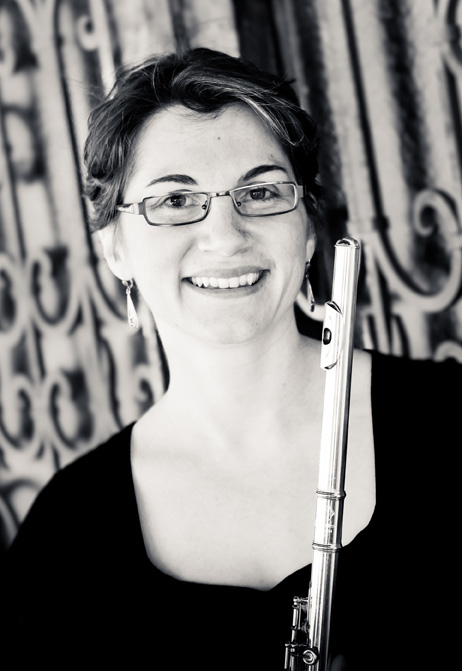
Elizabeth Hott, soprano, Meg Griffith, flute
Bill Waterman, tuba, Ji Yang, piano
Weill Recital Hall at Carnegie Hall
April 16, 2011

Meg Griffith

If these four young musicians, selected by audition from the 500 music majors of Texas Tech University, are representative of its graduate students, the University can be proud of its Music School and the talent it attracts. Each performer presented a group of contrasting works, and all were daring enough to begin with a dazzling bravura piece.  

Meg Griffith is an excellent flutist, winner of numerous honors and awards for her performances of Baroque and contemporary music, including first prize of the Chicago Flute Club National Chamber Competition and the Concerto Competition at Texas Tech. She is coordinator and assistant program chair of the National Flute Association’s 2011 Convention, and is currently a doctoral student as teaching assistant under Dr. Lisa Garner Santa at Texas Tech; her former teachers include Dr. Mary Karen Clardy, Prof. John Heiss, and Dr. Lee Lattimore. Partnered by pianist Lora Deahl (a faculty member), Ms. Griffith performed three works by composers from different countries and generations, all characteristic of their creators’ styles. The Scherzo for flute and piano by the Czech composer Bohuslav Martinu (1890-1959) was fleet and brilliant; written mostly in Martinu’s favorite stratospheric register, it sparkled with sunlit cheer. Playing at breakneck speed, Ms. Griffith combined  easy facility with total control. Morceau de Concours by Gabriel Fauré (1845-1924) radiated calm serenity and impressionist colors, giving Ms. Griffith a fine opportunity to exhibit her    beautiful, singing tone. In the Sonata Op. 23 by Lowell Liebermann (b.1961), she captured and brought out the contrasts between the slow, flexible first and the fast, vigorous second movements.  

Elizabeth Hott, with pianist Regina Shea, displayed a powerful coloratura soprano and much charm in a brilliant aria from a Rossini opera, and the “Jewel Song” from Gounod’s “Faust.” They flanked “The Wind,” by Samuel Adler (b. 1928), and two mournful, lyrical Schumann songs on Goethe poems (better known in Schubert’s settings). Ms. Hott sang all these works in the original languages.   

Playing with a pure, mellow tone and astonishing agility, Bill Waterman made a strong case for the tuba as a solo instrument. In Encounters II for solo tuba by William Kraft (b. 1923), the tuba’s lowest and highest registers engaged in a spirited exchange. Pianist Susan Wass joined Mr. Waterman for the bleak, gloomy slow movement of the Tuba Concerto “War and the Rumors of War” by Barbara York (b. 1949), and Walter Hilgers’ arrangement of that popular violin showpiece, Monti’s Czardas.  Ill-suited to the tuba, it inevitably lacked the lightness of the original, despite Mr. Waterman’s virtuosity.  

 Pianist Ji Yang, a teaching assistant at the University, performed Lowell Liebermann’s Gargoyles Op. 29, and the Toccata Op. 155 by York Bowen (1884-1961). Played to the hilt for bravura and powerful sonorities, they made an enormously  effective ending.  

Today, it is quite customary to play from the score, especially in new music, but performers should be aware that, if they place their music stands directly in front of them, the audience cannot see them and some of their sound is cut off.  

The printed program gave no information about the accompanists, who were excellent and deserved more credit.

Share

New Amsterdam Symphony Orchestra in Review

New Amsterdam Symphony Orchestra Guerguan Tsenov, conductor
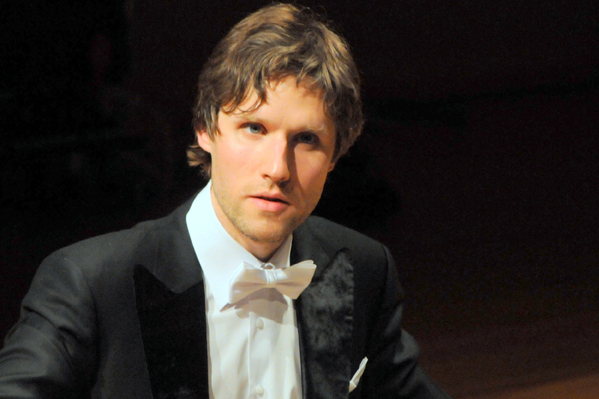
Gabrielius Alekna, piano
Symphony Space; New York, NY
April 11, 2011

Gabrielius Alekna

The New Amsterdam Symphony Orchestra’s April 7th concert at Symphony Space had a fine guest soloist, Lithuanian pianist Gabrielius Alekna and a solid guest conductor, Bulgarian Guerguan Tsenov, who led this semi-professional ensemble in works by Beethoven and Brahms.

Mr. Alekna, according to the biography in the printed program, is the only Lithuanian to hold a D.M.A. from the Juilliard School, where he studied with Jerome Lowenthal. Alekna, who has garnered several impressive honors, won more than a dozen top prizes in competitions–both stateside and in Europe: Second Prize in the 2005 International Beethoven Piano Competition; Hilton Head (USA); Maria Canals (Spain); Guirlionis (Lithuania); and has soloed with the Vienna Radio Symphony Orchestra (Bertrand de Billy); the Juilliard Orchestra (James de Priest); and also the Belarus State Symphony, the Lithuanian Chamber Orchestra and the Christopher Chamber Orchestra. A devoted chamber musician, Mr. Alekna  performed the Bartok Sonata for Two Pianos and Percussion with Ursula Oppens and New York Philharmonic timpanist Joe Periera. He has also collaborated with the cellist Zvi Harel, and with both the Vilnius and Cuirlianus String Quartets. Daniel Barenboim recently cited him as “a highly gifted pianist and musician.” He brought sterling virtuosity and comprehension to Beethoven’s “Emperor” Concerto, Op. 73. His assured but refined pianism had clarity, bravura authority, and easily held its own amidst Beethoven’s busy orchestration. He obliged his enthusiastic admirers with a lovely, flexible singing  acount  of “Bruyeres” from Debussy’s second book of Preludes.  

Earlier, the orchestra played conscientious, traditional versions of the “Egmont” Overture and the Brahms Variations on a Theme by Haydn, Op. 56a.  Maestro Tsenov has studied with Kurt Masur, and has also participated in seminars with David Zinman, George Manahan, and Michael Tilson Thomas. In company with his piano soloist, Tsenov (who is a pianist himself) is a knowing, well- grounded musician.

Share

Musica De Camara String Ensemble in Review

Musica De Camara String Ensemble in Review
Roselin Pabon, Conductor
A Celebration of Hispanic Music
St. Patrick’s Cathedral; New York, NY
April 7, 2011

The all-encompassing acoustical blur of Saint Patrick’s Cathedral and the spectacularly intricate dance music performed by the Musica De Camara String Ensemble did not mesh together particularly well, but quality program choices and the excellent ensemble-playing led by conductor Roselin Pabon greatly compensated for the cacophony. When audible—and this was during softer or less densely scored sections of music–the ensemble’s precision was occasionally first-rate. St. Patrick’s is a beautiful and venerable place to play, but the drawback is a big one: a resonance so strong and lasting (due to the high ceilings) that the music is often sacrificed. Still, one could see–if not hear–what almost every composer on this program did with regards to harmony and rhythm: make it fresh and thickly layered.

All the composers were quite inventive, and each one represented a different Spanish-speaking part of the world. This was, after all, a program entitled: “A Celebration of Hispanic Music.” Even though the composers’ birth dates ranged from 1892 to 1972, and they were from different geographical areas, there was surprisingly little variety of style among them; almost every piece contained syncopated, tonal, flavorful dance music for strings. (With strings alone, one can miss the diversity of orchestration—particularly percussion—that one hears in Hispanic music.) Yet, I’m happy to say that each work was well crafted, with each composer striving to be daring and complex. Venezuelan Aldemaro Romero’s “Fuga Con Pajarillo” was an impressive start, with all its meticulous counterpoint, and Spanish composer Xavier Montsalvatge’s “Danzas Concertantes” was a nice contrast of tempo and articulation, with thick blues chords. Cuban Chico O’Farrill’s Symphony for Strings was a more serious, sectional work, with lovely melodic writing that could be delineated due to the music’s textural clarity.

Puerto Rican composer, Jack Delano, wrote his Sinfonietta with an innate sense for lilting violin melody. The music was reminiscent of the Habanera—especially in pizzicato sections, and the rich chordal writing was fascinating. Mexican composer Eduardo Gamboa’s “Canambu” was Tango-like, but it also brought to mind Copland’s punchy “El Salon Mexico”. The treacherous off-beats (the first violins got slightly off track) had a welcome repetition. Columbian Hector Martignon’s “Abre, Sierra Tus Ojos” is a very difficult work that also caught the first violins off guard for a moment. Concertmaster Francisco Salazar, however, was absolutely terrific with his demanding solo part. Minimalistic, highly syncopated, and richly harmonized with 7th and 9th chords, “Sierra…” is a marvelous work, and the composer was present to receive the audience’s enthusiastic gratitude.

Unfortunately, Cuban Aruan Ortiz’s “Perla Caribena” was so silky smooth in its phrasing, that it was nearly impossible to hear its melodic strands in this church. Dominican Republic’s Samuel Herrera Baez’s “Merengue”, which was added to the program, was overall a welcome contrast with its simpler, traditional harmony. The conventional chordal writing and cadences of “Rhapsodia: Themes of Rafael Hernandez” by Puerto Rican Guillermo Figueroa (born in 1892) was also a pleasant look back to an earlier style. Some of the first violin entrances were unclear, and the concertmaster’s stand partner seemed lax here and in other highly syncopated pieces, playing behind the beat. I don’t understand why she didn’t try harder to mirror the rhythmical energy and leadership of the concertmaster sitting next to her; perhaps just an off-day.

The written program appropriately concluded with the great Argentinean master, Astor Piazzolla. His innovative “Michelangelo 70”, which was authentically orchestrated by Carlos Rengifo, is laced with a hypnotic repetition and composed with an amazing ear for varying, yet subtle change. The principal second violinist, Luis Casal, played his solo admirably. The encore, an arrangement of the Puerto Rican Danza “Sara”, was nice to hear, but that perfect Piazzolla piece, among others, was still ringing in my ears.

Share

Katarzyna Musial, Pianist in Review

Katarzyna Musial, Pianist in Review
The Kosciuszko Foundation; New York, NY
April 3, 2011
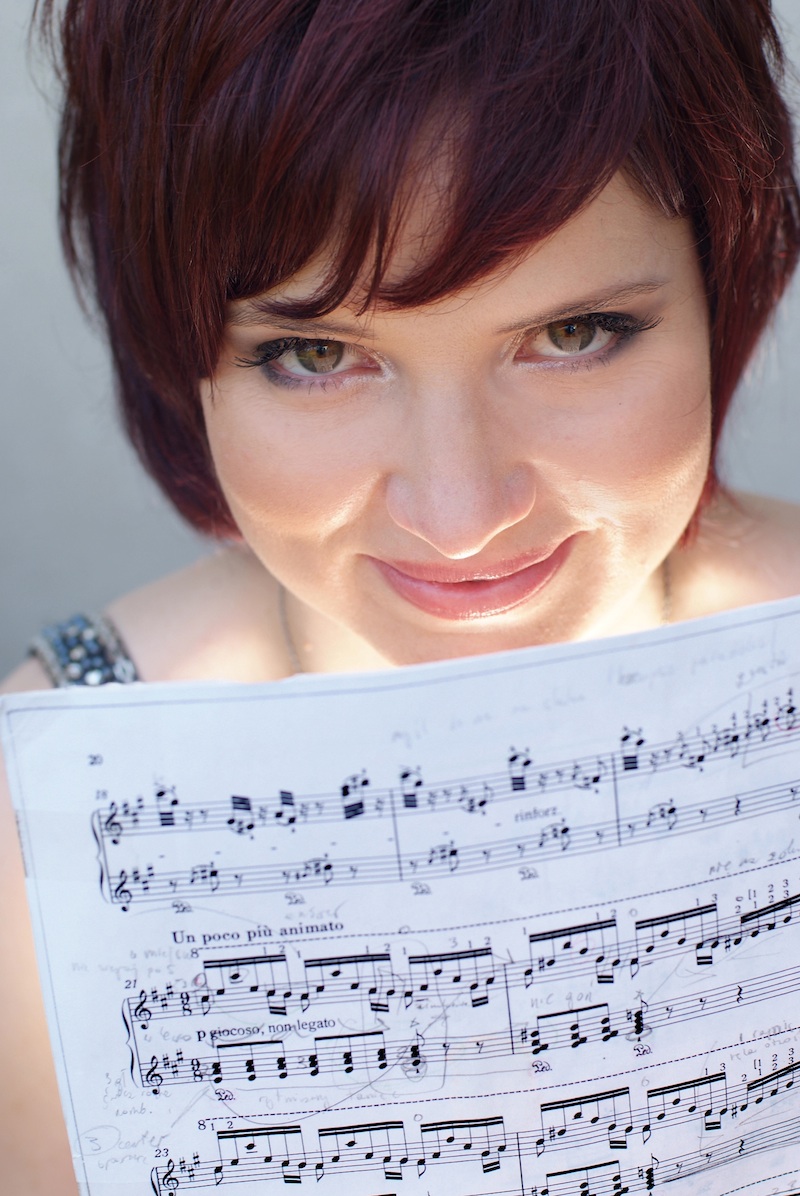
Katarzyna Musial

Katarzyna Musial

Under the auspices of the Kosciuszko Foundation, Polish-Canadian pianist Katarzyna Musial gave a colorful and varied Sunday afternoon program that included Messiaen, Chopin, Lutoslawski, and Mussorgsky. Possessing a lovely stage presence , Ms. Musial also chose well for her opening works: two Messiaen Preludes, “La colombe” and “Un reflet dans le vent.” The pianist entered with fluency and ease into the ethereal harmonic colors of the French master, and although she encountered a somewhat bright and inconsistent instrument—in a hall with bright acoustics to boot—she achieved  good results.  The second Prelude was shimmering and brilliant; I would love to hear Ms. Musial perform all the Messiaen Preludes, as she has a natural affinity for this music.

The next selections by her fellow Polish musician Lutoslawski were equally impressive. Bukoliki, five folk-inspired pieces totaling about five minutes, are in a similar vein to some of Bartok’s miniatures and are sometimes treated condescendingly as folk trifles. What I liked about Ms. Musial’s interpretations, though, was that she plumbed the Bukoliki’s emotional depths, imbuing them with warmth. It is good to remind listeners that small pieces can carry large emotions and she did just that.

The Chopin Sonata that followed, Op. 35 in B-flat minor, was a bit disappointing after such a promising beginning. It is difficult to plunge into what is nicknamed the “Funeral March Sonata” (for obvious reasons) on one of the first beautiful spring days of the year. Perhaps concentration was a challenge, but there seemed a lack of involvement, a somewhat lackluster approach to the stunning drama of the work, plus there was a memory lapse or two that must have rattled Ms. Musial further. It also may not have helped that the piano in the Kosciuszko Foundation auditorium is quite different from register to register. The left hand seemed to overwhelm the right and some of the transcendent treble lines were not sustained with the necessary cantabile sound. One knows that Ms. Musial can sustain emotional interest in singing lines, as she had shown in some of the slower parts of Lutoslawski and Messiaen, but one hoped for more in the Chopin. The last movement, likened to “wind over the graveyard”, resembled a heavily pedaled etude, needing more of the atmosphere that the Messiaen had.

If one started wondering whether Ms. Musial’s strongest niche might be in the more programmatic, impressionistic, or coloristic repertoire such as her Messiaen, her second half of Mussorgsky’s “Pictures at an Exhibition” reinforced that idea. The movement from “Il Vecchio Castello” was wonderfully evocative; “Tuileries” was vividly detailed; and “Ballet of the Unhatched Chicks” was a pure delight, fleet-fingered and energetic. The Promenade sections were in general solid and, with the exception of some messiness in “The Hut on Fowl’s Legs” by Baba-Yagá, the work was a good close to what was all in all a fine and promising recital.

Share

Quentin Kim in Review

Quentin Kim in Review
Weill Hall at Carnegie Hall, New York, NY
April 1, 2011

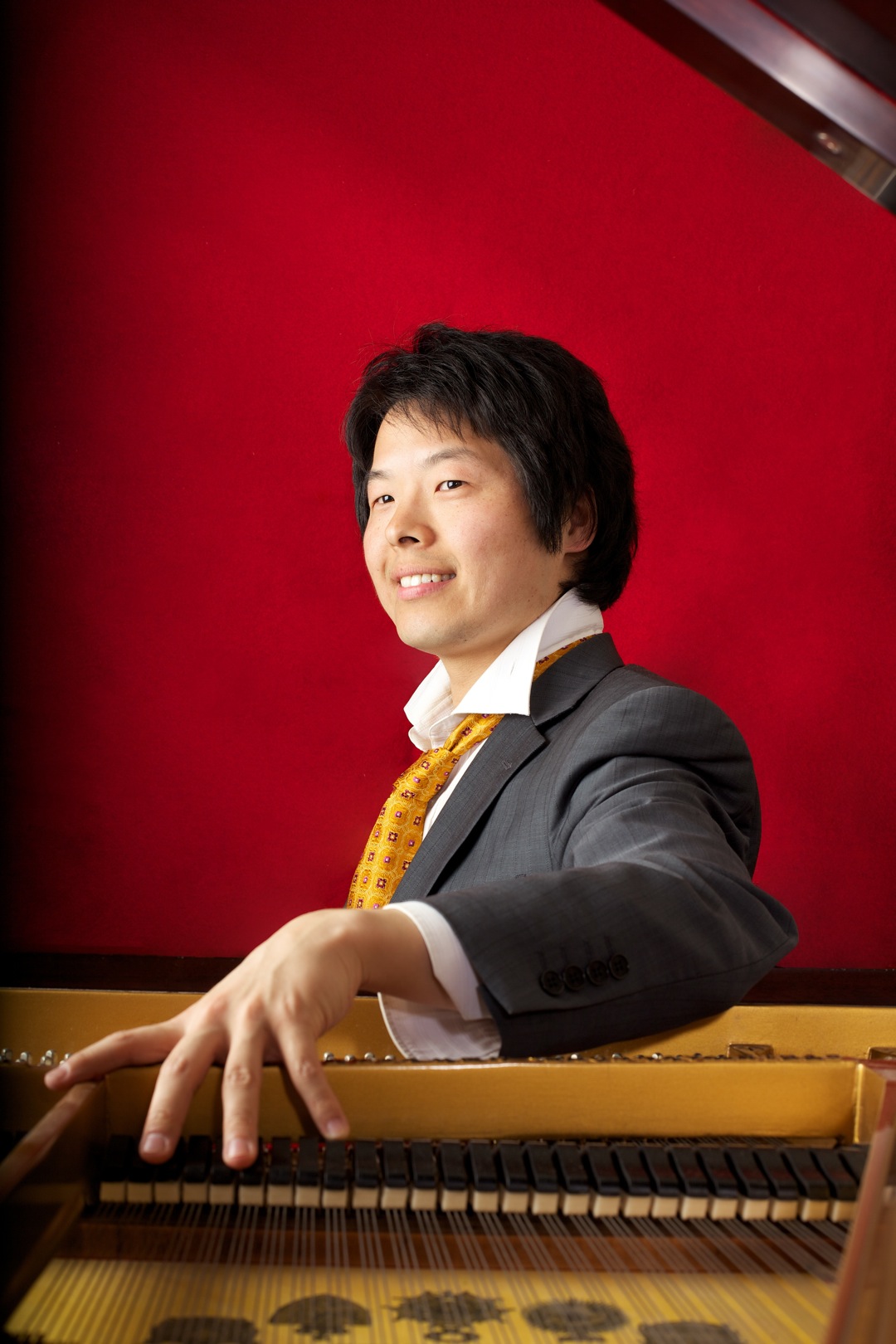
Virtuoso pianists who perform their own works are part of a time-honored tradition, and in this bicentennial year of Liszt (not long after anniversaries of Schumann and Chopin) we are reminded of this fact. Among the new generation in this category, Quentin Kim (b. 1976) is undoubtedly among the standouts. A recital of works by Beethoven, Schumann, and Mr. Kim himself was a memorable and inspiring occasion. In reading Mr. Kim’s program notes, I was struck by his boldness in describing his own musical views in such a way that many colleagues might easily be offended. Starting with a quote by Joseph Cardinal Ratzinger, currently Pope Benedict XVI, describing “modern so-called ‘classical’ music” as becoming “an elitist ghetto”, Mr. Kim ended his notes with a paean to “beautiful forms, beautiful sounds, beautiful colours” as a connection to Alfred Douglas’ “Supreme Beauty”. One needn’t agree with Mr. Kim’s philosophy to sense how he expresses in words a passion that translates into communicative compositions and committed performances of all that he plays. Whether or not one can embrace the 19th century-inspired tonal and stylistic aesthetic that permeates Mr. Kim’s own Sonata in G-sharp Minor—which bears strong kinship to Schumann—his sincerity is palpable. Amid the obfuscation one often finds in descriptions of new works (and sometimes in the works themselves), Mr. Kim’s writing, like his playing, is refreshingly direct. The listener was invited into the music every step of the way.

Along with elements of Schumann (inevitable, perhaps, for a pianist who has been so immersed in that composer), Mr. Kim’s Sonata showed hints of Scriabin, underscored by some colorful titles of movements such as “Resigning Sun” and “Shooting Star.” One expects that a thoughtful musician such as Mr. Kim will be led by his own words and excellent imagination into an even wider harmonic and textural range over time.

If it can be said that Mr. Kim composes like a pianist, it is certain that he performs like a composer—one with unusually fine pianistic gifts.  His complete grasp of the inner workings made the opening half, Schumann’s Sonata, Op. 11 in F-sharp minor, a marvel of shape, phrasing, and articulation, each harmonic nuance being expressed as if he himself had composed the work. Matching the intellectual, emotional, and digital range was a stunning conception of sound, especially in the slow movement, but also evident in the fourth. If the Aria had had a tone any headier or more sensuous, it would need to be treated as a controlled substance. Strangely this work has never been one of my favorites of Schumann’s, but I’ll need to rethink it. In this performance, it sounded completely new, modern in the best sense of the word, as if freshly created.

Closing the program was Beethoven’s Sonata Op. 57, in F minor (“Appassionata”). It was an excellent performance as well, though I’m perhaps partial to greater abandon in it and a bit more fullness of sound at times. After the rest of the demanding program, however, it was a feat for Mr. Kim to convey so much power.

The audience expressed their thanks and awe with an enthusiastic ovation, and was rewarded with a quiet encore of Bach’s beautiful Largo (Arioso) from BWV 1056. I will definitely look forward to hearing Mr. Kim again in both his compositions and performances.

Share

Stavanger Symphony Orchestra in Review

Stavanger Symphony Orchestra in Review
Fabio Biondi, Conductor and Soloist
Stern Hall at Carnegie Hall
March 23, 2011


The first movement allegro of Vivaldi’s Concerto in G minor for violin, two oboes, two flutes, bassoon and strings, RV 577, which began this evening’s concert by the Stavanger Symphony Orchestra, was preceded by an allegro entrance on to the stage by the orchestra’s Artistic Director for baroque and classical repertoire, the violinist and early music conductor Fabio Biondi. Here you sensed someone in complete control who was very eager to get to the work at hand. And his work was both as violinist and, using his bow and body, conductor. After hearing the Vivaldi, it was clear that the orchestra, although playing modern instruments, had mastered the elements of baroque style and had presented a performance of which any early-music band would be proud. There was, however, a problem of balance which continued throughout the evening, and it wasn’t the fault of an instrumentalist or his instrument. In the vastness of Carnegie Hall, one just couldn’t hear the harpsichord when anything else was going on, even when sitting in the parquet. (I had experienced the same problem the night before while sitting in the balcony during the Bach Collegium Japan’s performance of Bach’s Mass in B minor.)

Bach’s Orchestral Suite No. 4 in D Major, BWV 1069 followed. I especially enjoyed the middle three movements. These baroque dances are a special test for the conductor, in that one has very little leeway as to tempo and mood. The performances were perfect. And in a smaller hall, the two outer movements would have been perfect also. But in Carnegie Hall, the tempo of the 9/8 section of the first movement was just too fast, and many details, even when played by such a superb orchestra, often sounded blurred. By the way, the stratospheric trumpets were flawless!

The first half ended with excerpts from Johan Helmich Roman’s “Music for a Royal Wedding at Drottningholm 1744.” Roman (1694-1758) is considered to be the first important Scandinavian composer, thus I can understand including his music on this concert. It received the same beautifully wrought and stylistically correct performance as did all the other works, but it’s just not in the same league with the music of Vivaldi, Bach, Haydn and Mozart. That not withstanding, I think it might have made a stronger impression if it had been programmed before and not after the Bach 

After the intermission we heard Haydn’s Violin Concerto No.2 in G Major, and in this early Haydn work Maestro Biondi shone in his other role as soloist.  This is not the place for a long discussion of the use of a lute or harpsichord continuo in works of the classical era, but let it be said that the lute, beautifully played by Giangiacomo Pinardi, was audible and very effective during the slow second movement. But during other movement’s forte passages, no sound reached the audience. While Mr. Pinardi left the stage before the Mozart Symphony No. 36 in C Major, K.424, the harpsichordist stayed and remained, as before, inaudible. This performance of Mozart’s “Linz” Symphony was for me the high point of the concert, especially the elegantly played second movement. What a perfect tempo!

So often, today’s symphony orchestras pay lip service to stylistically correct performances of baroque and classical music by just playing these works with reduced forces. Kudos to the Stavanger Symphony Orchestra for realizing that this is just not enough. It would be a shame, with all we have recently learned about the proper way to perform this music, if more symphony orchestras did not follow the Stavanger model.

Share

So-Ock Kim, Violinist in Review

So-Ock Kim, Violinist in Review
Weill Recital Hall at Carnegie Hall
Presented by the Korea Music Foundaton
March 17, 2011

So-Ock-Kim

Any violinist who chooses a program of unaccompanied music for a New York debut must be not only a consummate player and musician, but also possess extraordinary courage and self-confidence. So-Ock Kim has all these qualities in abundance; this recital was one of the most remarkable in recent memory.

Born in Korea in 1982, Ms. Kim moved to London at the age of  three. She became the youngest Gold Medalist of the Shell/LSO Competition at 15, and at 19 was selected for the Young Artists Concert Trust. Her worldwide performances in recital, with major orchestras and at important festivals were often broadcast on radio and television. Keenly interested in contemporary music, Ms. Kim has presented and recorded several world premieres of new works.

Ms. Kim’s program featured some of the most difficult unaccompanied works in the literature: the Chaconne from Bach’s D minor Partita, Bartók’s formidable Sonata, and Nos. 2, 3 and 4 of Ysaÿe’s six sonatas Op. 27, written by the greatest virtuoso of his time and dedicated to his violinist friends. Ms. Kim, a slender, delicate-looking young woman, performed these powerful, dramatic works (all in minor keys) triumphantly and without a hint of fatigue. She even had enough stamina for a brilliant encore: Francisco Tarrega’s “Recuerdo de la Alhambra.”

In the Bartók, she not only handled the instrumental challenges – double stops, chords, jumps, harmonics – with ease and security; she gave each movement its own character and also brought out both the work’s baroque and folk elements with admirable feeling for the Hungarian idiom. The Ysaye Sonatas pay homage to their dedicatees by emulating their own styles: Jacques Thibaud in No.2, Fritz Kreisler in No.3, and Mathieu Crickboom in No 4. They exploit but also expand the technical and tonal resources of the violin, and demand the kind of virtuosity that combines reckless abandon with total control. Ms. Kim took all their hurdles in stride and displayed remarkable stylistic versatility.

No program of unaccompanied violin music would be complete without Bach, but Ms. Kim’s performance of the Chaconne seemed dutiful rather than spontaneous, indicating that the baroque is not her most natural habitat. She tried to recreate the style solely by playing without vibrato; she made little attempt to bring out the voice leading, either in the chords or the melodic lines; she tended to change tempo arbitrarily and overemphasized the phrasing. However, her technical playing was no less excellent than it was throughout the rest of the recital: in perfect command of fingers and bow, flawless in intonation, pure and beautiful in sound.

Share

Joanne Chang, Pianist in Review

Joanne Chang, Pianist in Review
Sally Shorrock, flute and Tienni Chen, piano
Multicultural Asian and Italian Concert Series
Tenri Cultural Institute of New York; New York, NY
March 12, 2011

Joanne Chang

While all eyes were on the news of the earthquake in Japan last weekend, it was a particularly meaningful experience to visit the Japanese Tenri Cultural Institute of New York, where, along with an art exhibit (Jinwon Chang’s “Releasing the Wounded Soul”), there was a concert by excellent Taiwanese pianist, Joanne Chang. Thanks to a Diversity Grant from the City University of New York, Ms. Chang performed a mostly modern recital centering on Asian (especially Taiwanese) and Italian compositions, both as soloist and in collaboration with musical colleagues. While the musical reasoning behind the Italian-Taiwanese theme remains a bit of a mystery (aside from certain elements common throughout the world’s music), it was a program one would be hard pressed to find elsewhere, delivered with interesting spoken introductions and plenty of polish.

Ms. Chang opened with “Lantern Festival” from “Taiwan Suite” by Shui-Long Ma (b. 1939), a work closely tied to the folk bases of much Chinese music. Alternately celebratory and dreamy with glissandi and sparkling pianism, it brought the listener into the world of Taiwanese music in a most accessible way. Representing a younger generation of composers, Hsin-Jung Tsai (b. 1970) next introduced the world premiere of her own composition, “Precipitation.” Preceding the music was a short film about Chinese art, which I could barely see behind a giant paper globe that was hung as part of the art installation. Despite this frustration, and that of not being able to fully understand the very quiet verbal introduction, one could appreciate the many interesting evocations of water in the music (as the title suggests). One was tempted to liken this and some of the other Asian works to Debussy and other Impressionists, but it might be putting the cart before the horse, given the influence of Asian music on Debussy and his followers; suffice it to say that this work was sensitively colored in the manner of the Impressionists, and that thanks to the skills and imagination of the pianist, it captured its listeners.

“Due Canzoni Popolari Italiane” by Alfredo Cascella (1883-1947) brought the program to its Italian component in lyrical and expressive melodies, followed by the younger representative of Italy, Davide Zannoni (b. 1958) whose work “Flexible Desires” was given its world premiere. The piece focuses on the interaction and struggle between tonal centers and chromaticism, along with other corresponding dualities. Some warmly romantic harmonies resulted from this interaction (at times surprisingly reminiscent of Piazzolla), and the pianist expertly brought out the contrasts and cohesiveness.

In something of an anomaly, Lowell Liebermann’s Sonata for Flute and Piano, Op. 23 came next. Though the highly admired composer, Liebermann, is neither Italian nor Taiwanese, his Flute Sonata seems to have gained honorary citizenship on this themed program and was welcome in a brilliant performance by Sally Shorrock with Ms. Chang.

“Chinese Festival” by Young Chen (b. 1954) arranged by Lina Yeh (b. 1955) showed an eclectic style combining the Mozartean (in Alberti basses), the Schubertian (in some of its harmonies), some Gershwinesque touches, and more, all with the melodies and spirit of a Chinese celebration. Ms. Chang navigated the range of styles effortlessly, with the help of Tienni Chen playing Secondo. The pair concluded with the N.Y. premiere of “Encore Oublie” a short, jazzy spirited romp by Rolf-Peter Wille (b. 1954), currently living in Taiwan. The pianists made the most of some antics here (popping up and down from the piano bench), much to the amusement of the audience. All in all, it was an intriguing sampling, and Ms. Chang is to be congratulated for devoting her considerable gifts to this interesting endeavor.

Share

Camerata Ireland in Review

Camerata Ireland in Review
Barry Douglas, music director and piano
Celine Byrne, soprano
Zankel Hall at Carnegie Hall, New York, NY
March 5, 2011
 

Camerata Ireland

Every now and then, amid the hectic New York concert season, there is an evening that reminds me how much I love my reviewing job; the chamber orchestra Camerata Ireland, on a US tour through March, provided just such an occasion last weekend in a perfectly magical concert that coupled Irish music with works by Mozart (a surprisingly winning combination). At the center of it all was pianist, arranger, and conductor, Barry Douglas, a musical titan whose energy is transmitted in life-affirming performances.

In a rather unassuming opening, Mr. Douglas and the orchestra played his own arrangements of two Nocturnes of John Field (1782-1837), Nos. 1 and 5, originally for solo piano. The orchestrations were tasteful and spare. Though my preference is still for the more intimate originals, it was a natural to give the orchestra some music of Field, as he was one of the first important composers from Ireland, welcomed in Russia for decades with perhaps the same fervor as was Barry Douglas himself as victor in the 1986 Tchaikovsky Competition in Moscow. It would be interesting to hear Mr. Douglas with the Camerata Ireland in one of Field’s Piano Concerti (or even just a movement, say, the Larghetto of the Sixth Concerto).

Rising star Celine Byrne joined the orchestra to sing “Porgi Amor” from Mozart’s “Le Nozze di Figaro.”  Composed when John Field would have been around four years old, it enjoyed a fresh hearing from this listener, because of both the fascinating program sequence and Ms. Byrne’s excellent performance. Her full, pure sound and lovely presence will make her one to follow.

Mr. Douglas moved from the role of operatic conductor to that of piano soloist (conducting from the bench) in Mozart’s Piano Concerto in A Major, K. 488 (also composed in 1786). One of the best pianists I’ve seen in this dual role, Douglas drew perfect responsiveness from his orchestra. One marveled in the first movement at how clearly he projected his conception physically and musically so that there were no seams in the ensemble; one marveled perhaps more, though, at how he could create (while multi-tasking) a realm of utter introspection in the breathtaking Adagio. The final movement had just the right edge-of-the seat energy to leave the audience clamoring for more.

After intermission came two traditional Irish folk songs (again arranged by Mr. Douglas), “I Wish I Was in Carrickfergus” and “Last Rose of Summer” sung by soprano Celine Byrne (who had changed from a black dress into a brilliant emerald green). These were skillfully arranged and expressively sung, but the best Douglas arrangements of the evening were “Druid Dances” by Edward Bunting (1773-1843). Perhaps not having to incorporate piano filigree or to accommodate a vocal part was liberating, but whatever the case, Douglas arranged this set with unfettered orchestral imagination, alternating sentimental song with freewheeling fun.

Returning to Mozart (who shared a good 18 years on this earth with Bunting) the orchestra then gave a knockout performance of the Symphony No. 40 in G Minor to close the evening. Starting the work more briskly than one usually hears it (with Douglas barely arriving onstage before the opening upbeat), they gave a performance that was nonetheless well articulated, cohesive, and commanding all the way through to the exciting end. Audience members jumped to their feet in passionate ovation. Some of this reaction may have been to the conductor’s “rock star” charisma, and some of it may have been gratitude for a great performance, but either way, everyone won.

Douglas and the orchestra gave an encore of Phil Coulter’s touching “Home Away from Home,” which I heard last when I reviewed them in March, 2008 (NY Concert Review Volume 15, No. 2). This time was even more beautiful. Can they possibly outdo themselves next time? I for one won’t miss finding out.

Share

John Hersey High School Symphonic Band and William Mason High School Wind Symphony in Review

John Hersey High School Symphonic Band in Review
Scott Casagrande, Director
William Mason High School Wind Symphony in Review
Robert C. Bass Jr., Director
Stern Hall at Carnegie Hall; New York, NY
March 4, 2011

John Hersey High School Symphonic Band


The highlight of this shared high school band concert on March 4th was a memorable performance of Leonard Bernstein’s “Slava!” performed by the John Hersey High School Symphonic Band conducted by director Scott Casagrande. The music’s difficult mixed meters were played with confidence and polish, and the style and charm of the piece came through with flying colors. I have heard this piece played by professional symphony orchestras, but this band arrangement played by this particular symphonic band made the case that this witty, exuberant work should be performed more often. 

Scott Casagrande also conducted “Kingfishers Catch Fire” by the excellent composer John Mackey; Casagrande brought out the work’s colors and balances, effectively bringing to mind the beautiful but rare bird for which the title is named after. These kids were clearly well-prepared, as they were always solidly together with tight rhythm, unusually good intonation and sparkling percussion. Balances were in place, and nuances of tempo were conducted and executed with expertise. Casagrande opened with a bold, yet refined presentation of Scott Boerma’s “Cityscape”. 

Then, guest conductor James F. Keene led a tender, sentimental reading of “Ballad for Band” by Morton Gould. “Sparkle”, a brilliantly scored piece by Shafer Mahoney was conducted by Thomas Beckwith; the performance was evocative and consistently captivating. Still, “Slava!” a work dedicated to the cellist Rostropovich, lingers in the memory and touchingly proves that the spirit and greatness of two legendary musicians, Leonard Bernstein and Rostropovich, live on through the committed performances of future generations such as students in the John Hersey High School Symphonic Band. 


William Mason High School Wind Symphony


Regarding their Carnegie Hall performance on March 4th, Mason High School (Ohio) Band Director Robert Bass recently said: “It’s always been a dream to give our kids this opportunity.”  Well, I’m happy to report that the William Mason High School Wind Symphony did not disappoint those who dreamed for them. The goal of performing at their highest level became a reality, as the students played with vigor, commitment, and–despite any nerves they must have had–utmost confidence. 

Their program consisted of Ron Nelson’s Rocky Point Holiday and Eric Whitacre’s The Seal Lullaby–both instantly enjoyable; an appealing arrangement of Verdi’s La Forza Del Destino Overture; H. Owen Reed’s catchy La Fiesta Mexicana and Carnival; and John Astacio’s marvelous Frenergy. The selections were nicely varied and well-prepared. The excellent conductors included Micah Ewing, Avious Jackson, and Mason High School Band Director Robert Bass, plus world-renowned clinician, conductor, and adjudicator James F. Keene, who also guest conducted the John Hersey Band. 

The band members and conductors have been preparing for this concert during class and after school rehearsals over the past few months. In January, the school organized a concert band camp, where professional musicians–many of whom are members of the Dayton Philharmonic Orchestra–worked with students individually and by section. It is hard to imagine the Dayton Philharmonic winds and brass sounding much better than the Mason Wind Symphony students did on this particular night; the kids truly rose to the occasion. Except for some intonation lapses, the ensemble, blend and solidity of tone came off as professional-sounding here, so kudos to the conductors and the Dayton Philharmonic musicians for their obvious inspiration. 

Share