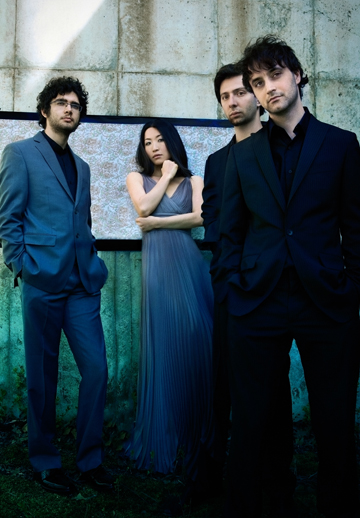
Mostly Mozart Festival

Mostly Mozart Festival
Mostly Mozart Festival Orchestra
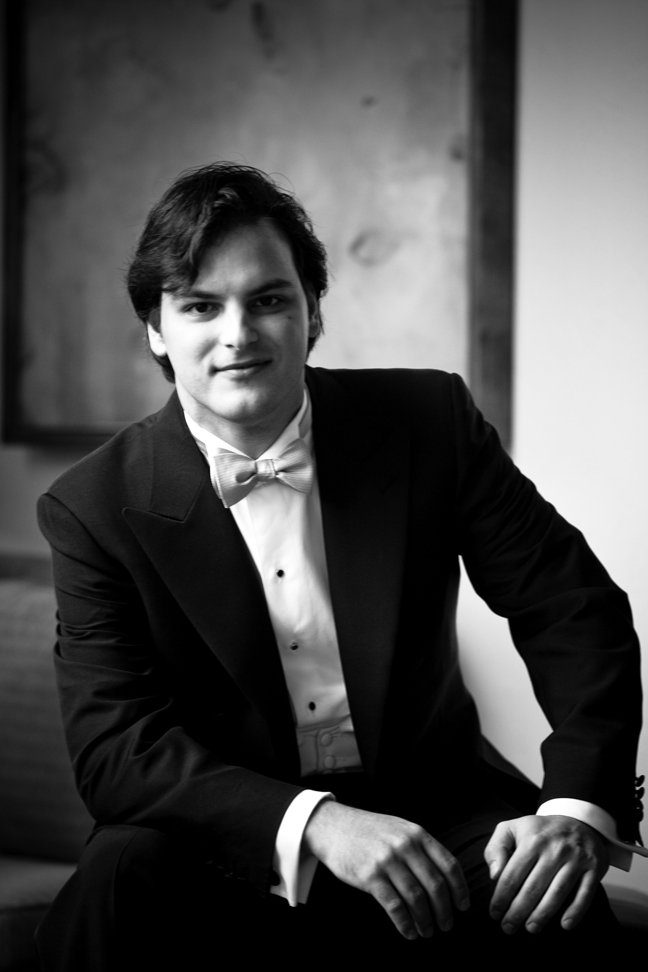
Osmo Vänskä, conductor
Antti Siirala, pianist
Avery Fisher Hall, New York, NY
August 14, 2010

Osmo Vanska-Photo Credit: Greg Helgeson

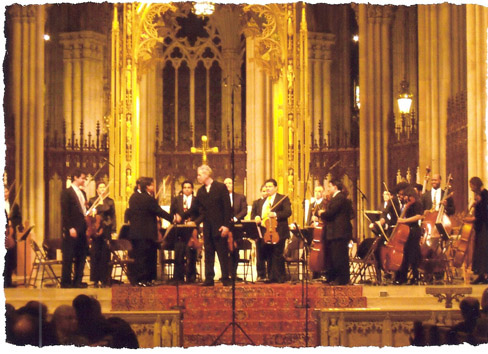
This concert was not only all-Mozart, but all dramatic, minor mode Mozart. It featured two guests from Finland: conductor Osmo Vänskä, a familiar presence at the Festival, and the young pianist Antti Siirala in his New York orchestral debut.

The program presented two symphonies rarely performed together: the “little” G minor Symphony, No. 25 K.183, written in 1773, and the “big” G minor Symphony, No. 40 K.550, the second of his three great final symphonies, all written in the summer of 1788. Mozart reserved the key of G minor for some of his most dramatic and most moving works, such as the String Quintet K.516. These two Symphonies share both characteristics, but, composed 15 years apart, are also very different.

The disparities are apparent from the beginning. The first movement of No. 25 is all energy and impetuosity, and while the second theme, in major, is playful and gracious, its return in minor is dark and ominous. The first movement of No. 40 has a pensive resignation, occasionally pierced by a surge of defiance or a ray of hope. The slow movements of both symphonies are in major modes. The early one, based on a single theme, is calm and simple; the later one is contrapuntal and complex; its initial repose is disrupted by wrenching dissonances. The Minuet of No. 25 is a rustic dance, that of No. 40 is weighed down with heavy cross-rhythms; both have genial Trios in G major. The Finales are fast, with avalanches of relentlessly rushing passages.

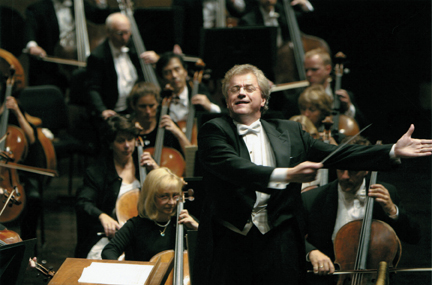
These symphonies were well suited to Vänskä’s active, emphatic conducting style. Visually, he was in perpetual motion, bowing, twisting and turning, stabbing the air with his baton; musically, it was reflected in dramatic overkill, slashing accents and extreme dynamic contrasts, which made the early Symphony seem anything but little. For the late Symphony, all conductors – and Mozart lovers – have their own interpretation. Väskä took a surging approach to the opening theme, with sea-sickness-inducing swells, not indicated in the score, in every pair of bars. His tempi were generally moderate compared to the hectic speeds often favored today; only the Finale of No. 40 was a headlong rush.

Mozart wrote only two piano concertos in minor keys; the program included the first, K.466, written in 1785, in D minor, another tonality associated with high drama (think of Don Giovanni and the Requiem). The Concerto is characterized by strong contrasts of dynamics, mood, texture, and confrontations rather than interplay between soloist and orchestra. The unusually extensive orchestral exposition begins with mysterious, syncopated murmurings in the low strings, terminated by a thunderous eruption by the full orchestra. The pianist enters, like a lone wanderer, with a new, gentle, pleading theme followed by rippling scale-passages, and continues to go his own way. The slow movement begins as a serene song in major, but the peacefulness is shattered by an outburst of running piano triplets in minor, driven by shrilling woodwinds. Calm is restored at the end, but turbulence runs high in the Finale, until the Coda turns to D major for what might seem a happy ending, but in fact feels like an attempt to ward off deep sadness.   

Siirala, winner of many European prizes, is an excellent, admirably self-effacing but communicative pianist. Putting his consummate technique entirely at the service of the music, he played with inward expressiveness, refinement and restraint; though careful not to exaggerate, he rose to the dramatic climaxes, including the long, elaborate, stormy cadenzas by Beethoven (who also wrote cadenzas for Mozart’s other dramatic Piano Concerto in C minor). The orchestra provided strong, empathetic support.

Share

Distinguished Concerts International New York (DCINY)

Distinguished Concerts International New York (DCINY)
Paradise Lost: Shadows and Wings
Music by Eric Whitacre
Stern Auditorium at Carnegie Hall, New York, NY
June 15, 2010
Paradise Lost: Shadows and Wings

Paradise Lost: Shadows and Wings


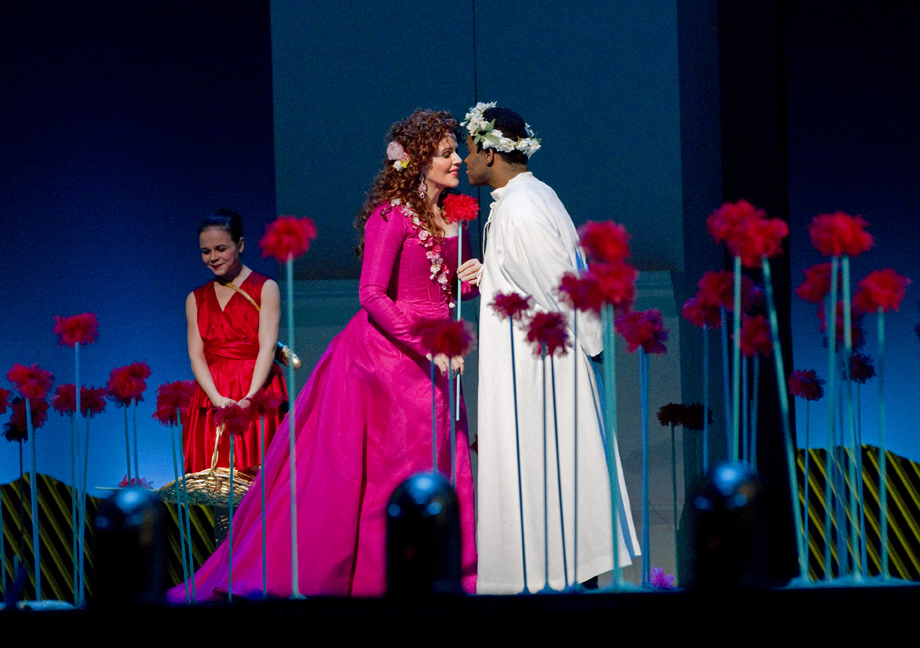
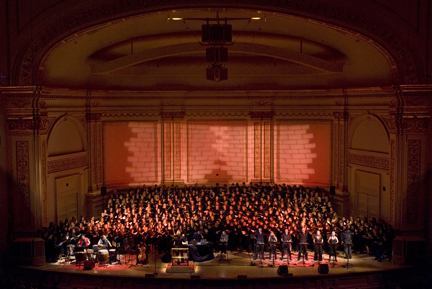
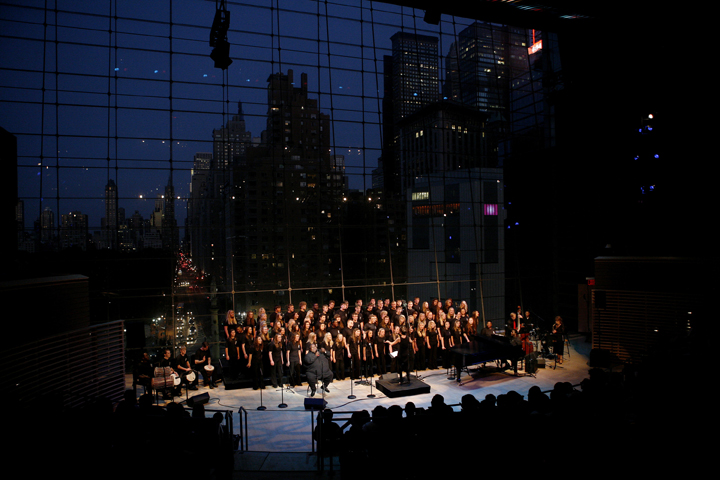
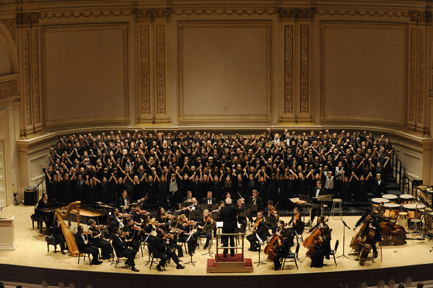
At the New York premiere of the musical “Paradise Lost: Shadows and Wings” by Eric Whitacre and David Norona, and presented by Distinguished Concerts International New York (DCINY), a chorus of 425 people conducted by Whitacre gathered on stage to replace the typical staging and action.  Aged 14 to 73-years-old, the chorus produced glorious, powerful sounds, and they were well-blended, singing with excellent intonation and diction. They stood proudly the entire 80 minutes without intermission—which was astounding since they didn’t sing all that much—and the full-house audience also stood proudly after the performance, cheering loudly. To accompany the singers, there were synthesizers, the two talented Taiko drummers from the On Ensemble, and the fabulous cellist Fang Fang Xu.

The music of “Paradise Lost: Shadows and Wings” is comprised of some familiar melodies—two moments were seemingly inspired by Valjean’s “Bring Him Home” from “Les Miserables” and the eerie part of “Johanna” from “Sweeney Todd”—ritualistic, electrifying  percussion (although the wind chimes were overused), and some fascinating use of harmony. The choral and vocal ensemble-writing was fairly straight-forward, except that there was very skilled use of counterpoint in an Act II trio and in an Act I Quintet, which brought to mind the intricacies of Bizet’s Quintet in Act II of “Carmen”. The acting, obviously limited to the space in front of the microphones, was nevertheless very convincing. And the solo singing, particularly that of soprano Hila Plitmann, was stellar.

This Edward Esch story, which contains scenes of martial arts combat, is timely; the remake of the Karate Kid is doing well at the box office, and the second Kung Fu Panda film is due next summer—sure to be another hit. Seeing this tease of a production did make me dream about what a fully staged production would be like. The characters and their conversational interplay were interesting, and seeing them move on stage with that playful dialogue—as well as watching the combat scenes—would be a lot of fun. The narration here was crucial, but sometimes it was too obvious, such as: “(they) embrace”, followed by a hug. Seeing a concert version of “Paradise Lost: Shadows and Wings” was about as frustrating as seeing a concert version of “West Side Story”, but it was a prelude to a potentially fantastic evening at the theater.

Share

Distinguished Concerts International New York (DCINY)

DCINY Spirit Journey: The Journey from Africa to America
The Lincoln Gospel Choir; Swingsations Jazz Choir
Darcy Reese, Conductor
Robert Robinson and the Twin Cities Gospel Choir
Patricia Brown, Choreographer; Ahanti Young, Drummer
The Allen Room, Frederick P. Rose Hall; Jazz at Lincoln Center; New York, NY
June 18, 2010
Spirit Journey

The Spirit Journey

In a concert presented by Distinguished Concerts International New York (DCINY) and dedicated to the memory of the great Gospel scholar Dr. Horace Clarence Boyer (1935-2009), the excellent choral conductor, Darcy Reese, led the Lincoln Gospel Choir and Swingsations Jazz Choir, along with the Twin Cities Gospel Choir and their amazing vocalist, Robert Robinson, in engaging, moving and beautifully prepared performances of stylistically versatile works that told the evolution of Africans during the last 400 years. Normally, this type of evening might be held on Martin Luther King Day, but this story of wrong-doing, struggle and freedom could be told any time of year—and often. And normally, a choir of African-American descent might present this program, but here, the choruses were from Minnesota, an all-Caucasian group that took on the responsibility of the historical significance of this event and the demands of singing in authentic African, Jazz, Blues and Gospel styles. To say they were successful would be an understatement. And they brought down the packed house at Lincoln Center. The students in the choir, who sang from memory, are high school-age, yet their collective voices, commitment and choreography (Patricia Brown, director) were presented at a high, professional level. All the professional instrumentalists, mostly comprised of drummers led by Ahanti Young, were terrific as well.

In Otieno’s arrangement of “Sigalagala” and Marsh’s arrangement of “Ain’t Too Proud to Beg”, Zach Bauer, a young singer in the chorus, was excellent, singing first in authentic African dialect and later in a convincing Soul/R&B style. The Choreography of five dancers at the beginning of the evening was interesting, but the dancing talent among the students was not the concert’s sure-fire strength. In “Denko”, Hailey Bayne sang with a lovely voice. In Barnwell’s Spirituals, Robert Robinson was the epitome of heartfelt emotion. David Stenson’s tone was a bit shaky in his portrayal of Dell’s “Nobody Knows the Trouble I See”, but singing after Robinson is a very tough act to follow. Becca Kruta and Brenna Skallet (from the chorus) sang “Way Beyond the Blue” with great confidence and spirit, although the harmonizations were slightly off pitch. “Hold On” was sung with a unified sense of diction, swing and phrasing, especially with the word ‘everything’ in “everything will be all right”, which had snazzy zip in the fast-rising crescendo on the first two syllables and the punchy staccato on the third syllable. “I Wanna Die Easy When I Die” was sung absolutely gloriously by Robinson and the choir, which swayed with deep devotion. The Twin Cities Gospel Choir is a force to be reckoned with. The Saxophonist Kathy Jensen was excellent throughout.

“Great Day” and “If I had a Hammer”, performed back-to-back, were tied in to the Civil War of the 1860’s and the Civil Rights Movement of the 1950s, incorporating Jazz and Blues. A characterization of Rosa Parks was fitting but a bit jarring after mention of the 1860s. “I’ll be Alright” and “We Shall Overcome” were sung with great Gospel feeling. Gershwin’s Piano Prelude, which followed the bit of narration: “…but they had their jazz” doesn’t work because Gershwin wasn’t exactly African American;  for the sake of the program, it would have been better to have talented young pianist Brianna Drevlow (from the chorus) learn some Art Tatum or a Duke Ellington arrangement instead. The Gershwin, in any case, was played with impressive flair— albeit too much hurry. Ahanti Young was the marvelous vocal percussionist (a la Bobby McFerrin) in Marsh’s arrangement of “Don’t You Worry ‘bout a Thing” against a cappella chorus that was only off pitch a few times.

In the final section, in which the presence of Gospel scholar, Dr. Boyer, was truly felt, and in which the audience was invited to participate, every successive number—complete with clapping and choreographed choral movement– sounded like it couldn’t be topped, but it was. “Do You Know the Light”, with its rapid-fire, layered entrances were infectious and intoxicating, drawing to mind some of the dizzying scenes in the film “The Blues Brothers.” But this was more than spectacle; these young kids from Minnesota somehow had an innate, profound understanding of the history of Africans and African Americans, and that devotion always transmitted to the audience with great poignancy. This chorus and these soloists sang with chemistry and conviction all the way through this marathon program of two and a half hours (without intermission). That of course is the least they could do, considering how much Africans and African Americans have had to endure throughout history. This presentation, which should be repeated as much as possible, has the ability to be as timeless or important as the novel “To Kill a Mockingbird” or the Spielberg film “Amistad.” Everyone on stage seemed very proud of non-existing prejudice, a prejudice that seems to have finally disappeared during this time of the first African-American presidency, four hundred years after slavery began.

Share

Benjamin Britten: Noye’s Fludde

The Church of the Transfiguration, New York, NY
June 6, 2010

Benjamin Britten (1913-1976) composed his chamber opera “Noye’s Fludde” in 1957 specifically for church performance. Writing for musicians and actor/singers, all a mix of professionals and amateurs, and a large group of children, he deliberately kept his music simple, accessible, tonal, and only mildly dissonant. The text is based on W.H. Auden’s adaptation of a Chester mystery play, and tells the story of how God commanded Noah to build the Ark and save himself, his family, and assorted animals from the impending storm and flood. Noah’s wife is depicted as a shrew; she refuses to leave, but is overpowered by her husband and their children, and, once on the Ark, gives up her resistance. The audience is invited to join in the singing of three hymns, and given a chance to learn the tunes during the first of several verses.

The lovely Church of the Transfiguration (affectionately known as “The Little Church Around the Corner”) was an ideal setting for this endearing, intimate work. Judging from the performers’ names, the production was a community effort, with entire families participating in various capacities. Conducted by the Church’s Music Director, Claudia Dumschat, the performance was a delight.

The work begins with the percussion erupting in a frightening imitation of the coming storm; then God’s voice is heard through a loudspeaker. The trumpets go into glorious action to announce and celebrate good news; two pianists at one piano provide a harmonic framework; the organ adds sonority in the climaxes; the orchestration – for strings, recorders, percussion and handbells – is so discreet and the playing at this performance was so fine and sensitive that the instruments never covered the voices.

The staging used the Church’s layout to good advantage. The cast entered through the aisles, affording the audience a close-up view. The singing, acting and dancing were excellent; Andrew Martens’ Noah, Leslie Middlebrook’s Mrs. Noah, the Gossips, and several of the older children stood out. Some of the younger children were at times unsure of the pitches and their voices were a bit shrill. However, all the children’s performances were admirable, natural and spontaneous, carefully coached but not drilled. Their animal costumes were simple but imaginative; one hopes they will wear them again at Halloween.

The Church’s Boys’ Choir got its turn in the spotlight in the program’s opening works. The oldest such choir in New York, it is the only one not affiliated with a school. Coming from various backgrounds, its 16 members are selected by audition and rehearse several times a week. Their seriousness and hard work showed in their performance of Vivaldi’s Laudamus Te, Parry’s Jerusalem, and especially Franck’s Panis Angelicus, which featured an impressively talented boy soprano, Ajonte Anderson. The arrangement was by bassist/composer Victor Kioulaphides, who also contributed an original work called Purcelliana; a slow prelude and a lively canon, it was played beautifully by the strings.

The audience displayed as much involvement and enthusiasm as the performers; a record number of flashing cell phones preserved this enjoyable, successful event.

Share

Sing for the Cure

Sing for the Cure
A Concert for Healing & Hope
Distinguished Concerts Orchestra International
Distinguished Concerts Singers International

Carnegie Hall: Stern Auditorium, New York, NY
June 6, 2010

DCINY

DCINY – Heartsongs- “Photo by Stefan Cohen/DCINY Production.”

This unusual concert was less a musical than an emotional event. The first of its two parts (each of which could have filled an entire program), was called “Heartsongs” and celebrated the life and poetry of Mattie Stepanek, who died just before his 14th birthday of a rare neuromuscular disease; his words were set to music by Joseph Martin. Pamela Martin Tomlinson provided the text for the second part, called “Sing for the Cure”: ten poems, linked by a narration, based on stories told by breast cancer survivors and the families of those who died. The musical settings were by ten composers: Michael Cox, Alice Gomez, Rosephanye Powell, Robert Seeley, Jill Gallina, Patti Drennan, Stefania de Kennessey, David Friedman, W.T Greer III, and Joseph Martin.

Receiving its world premiere, “Heartsongs” was performed by six children’s choruses from Texas, Mississippi and Tennesee, conducted competently but a bit phlegmatically by Stephen Roddy; “Sing for the Cure” featured four adult choruses from Ohio, Florida, Georgia, and Texas, conducted with enormous verve, authority and involvement by Timothy Seelig. Getting all these choruses from so many places together must have been a formidable undertaking. With their parts thoroughly learned, they congregated two days before the performance in New York, where the children’s and adults’ choirs each rehearsed for eight hours.

The children, singing from memory, were accompanied by a small orchestra, the adults by a huge one; its percussion section, manned by four players, contained not only five timpani of different sizes, but seemed to include every percussion instrument known to mankind. The stage was full to bursting, producing an impressive visual effect that was further enhanced by the singers’ clothes: the children’s were black, but, for reasons unexplained, a few boys wore silver vests; the adults’ were multi-colored; all wore long pink scarves.

The music, with its simple, semi-popular tunes usually doubled by voices and instruments would have been more at home in a Hollywood studio than a New York concert hall. Martin’s “Heartsongs” included adaptations of spirituals and a conflation of “Simple Gifts” with the famous theme from Dvorák’s “New World” Symphony. The vocal writing was almost entirely in unison; the majority of the songs were slow. In the second part, the unison was partly replaced by thirds and sixths, and there was more variety of tempo and character. The most successful songs were those derived from waltzes, blues, gospel shouts and jazz, with the singers swaying lustily to the rhythms. Numerous impressive soloists stepped out from the chorus, singly and in groups.

The orchestra was a tower of strength, offering solid, sensitive, but unobtrusive support. In addition to the percussionists, special praise is due to concertmaster Jorge Avila, who played many demanding, stratospheric solos brilliantly, and to pianist Russ Rieger, who provided what sounded like an improvised background to the second part’s narration, subtly modulating from one song to the next.

But there was no doubt that the evening’s primary impact came from its literary and human components. Mattie Stepanek’s “Heartsongs” were introduced by his mother, who is herself suffering from the same disease and came on stage in a wheelchair, with a ventilator, accompanied by her service dog. Mattie reportedly started writing poems at the age of three and never stopped. Expressing hope, faith, and a deep appreciation of nature and beauty, they were described as “inspirational” and were clearly “inspired” by what he heard from the people around him, who must have been extraordinary themselves. In addition to being sung, the poems were read and narrated by two famous rock stars, Nile Rodgers and Billy Gilman.

Pamela Tomlinson’s words were narrated by Rene Syler, a cancer survivor. They described the reactions of cancer patients to the various stages of their illness, and also the responses of their families to the roller-coaster of hope, despair and loss. Perhaps most wrenching were several sections focusing on mothers and children. In one, an adult daughter recounted a recurrent dream of being visited by the mother she lost as a child; it must have broken the hearts of everyone present, not only those who have lost a mother.

Share

Bronx Arts Ensemble Orchestra

Bronx Arts Ensemble Orchestra
David Gilbert, conductor
Orlay Alonso, piano;
Halley Gilbert, soprano;
Papo Vásquez, trombone;
Rafael de Jesus, vocalist
Van Cortlandt Park; Bronx, N.Y.May 30, 2010
Orlay Alonso

Orlay Alonso

The Bronx Arts Ensemble, under the direction of William Scribner, with David Gilbert conducting, is fast becoming a mainstay of Bronx cultural life. As part of their Memorial Day weekend concert, Assemblyman Jeffrey Dinowitz spoke of the joy of being able to hear good concerts in one’s own borough; at the rate they are going, these concerts will become a magnet for other boroughs as well. They regularly feature rising young stars, and this concert was no exception. Opening with a rip-roaring account of the Star-Spangled Banner, the orchestra stayed in high gear for Leonard Bernstein’s Overture to Candide, always a crowd pleaser. Maestro Gilbert was in great form, and the ensemble projected the spirit better than many full-time orchestras.

It is much harder for an ad hoc group to refine the textures and lines of Mozart, even paired with a flexible soloist such as Orlay Alonso performing the Concerto in A Major, K. 488. This 23rd Piano Concerto is certainly among the great beauties of the piano literature, but its needs a painstakingly blended ensemble and optimal performing conditions to be all that it can be. The alfresco setting, including babies, dogs and the occasional overhead plane, didn’t help, charming as it was. Especially in the profound second movement, where one needs to hear and feel each heart-wrenching suspension wrung to the maximum, there were imbalances (possibly exacerbated by positions of microphones), leaving one with the glossy “gist” of it. Mr. Alonso was rock solid in any case. I have enjoyed reviewing his excellent performances in the past, but this one was exceptional for its elegance and polish. Highlights included a beautifully delivered cadenza (Mozart’s own) in the first movement and some delightfully playful articulations throughout. In the last movement, Mr. Alonso seemed truly to relish the playful exchange between piano and orchestra, and the joy was contagious. His Andante breathed naturally, though one wondered whether a more operatic approach to treble melodic contours might have enhanced it. Alonso also should be lauded for handling a Kawai grand piano with a bass that seemed inordinately resonant compared to the treble, even with his deft left hand. This soloist is clearly unflappable and deserves many more opportunities to unleash his musicality to its fullest extent. As a bonus, his charismatic stage presence is a pleasure to behold. I’ll look forward to his next concert.

After the Mozart, we heard a free jazz transcription of Greensleeves by Papo Vásquez, who also played the solo trombone part with panache. His arrangement of Henry Mancini’s Charade followed, with Rafael de Jesus ably singing the solo part. The first half closed with soprano Halley Gilbert’s rendition of “Ain’t it a Pretty Night” from the opera “Susannah” by Carlisle Floyd. It was simply stunning, a performance of unfailing pitch, remarkable ease, and consistent beauty of sound. There was more of her singing in the second half, where she showed a flair for Broadway show tunes as well in “If I were a Bell” (from “Guys and Dolls”) by Frank Loesser and “Blow, Gabriel, Blow” (from “Anything Goes”) by Cole Porter, with fine trumpeter Jerry Bryant. The second half included a highly effective transcription by Papo Vásquez of “Poquita Fe,” by Bobby Capo, with Rafael de Jesus singing, plus medleys from “Oklahoma!” and “The Phantom of the Opera.” A rousing rendition of Sousa’s “Stars and Stripes Forever” capped off the afternoon, with the audience clapping in rhythm and dancing on the lawn.

Share

Chopin and Schumann 200th Anniversary Celebration

Chopin and Schumann 200th Anniversary Celebration
Musicians from the Mason Gross School of the Arts, Rutgers University
Min Kwon, Director
Weill Recital Hall at Carnegie Hall, New York, NY
May 27, 2010

Chopin and Schumann 200th Anniversary Celebration

There has certainly been no shortage of Chopin and Schumann celebrations this year, but a gala concert by Min Kwon and musicians from the Mason Gross School of the Arts showed that there is always room for another. Sixteen musicians of various ages (both faculty and students) assembled in a large and varied recital of well-loved works by the two masters. The program’s first half was a bit long (well over an hour), but the programming was a delight (alternating the two composers instead of placing them in large blocs), and the dovetailed entries and exits kept the flow.

The first offering was Chopin’s Scherzo in B minor, played by undergraduate Lachlan Glen. A bold opening by a young pianist with promise, the piece enjoyed increased confidence and accuracy as it proceeded. Recent freshman Michelle Rofrano followed with Chopin’s Waltzes in F Minor, Op. 70, No. 2 and C-sharp minor, Op. 64, No. 2. Graceful and earnest, her readings caught much of the works’ beauties. Moving to Schumann songs, we heard “Er Ist’s” (“It is Spring”) and “Stille Tränen” (“Silent Tears”) sung by soprano Catherine Spadora Stebbins with Barbara González-Palmer at the piano.  An M.M. candidate, Ms. Stebbins has an appealing voice and projected the contrasting moods well.

Returning to the piano, the program continued with Chopin’s Etudes, the C Major, Op. 10, No. 1 and C Minor, Op. 10, No. 12 (“Revolutionary”) played by doctoral student Zin Bang. These were unusually solid and confident performances, showing admirable technical control. When doctoral student Kelly Yu-Chieh Lin followed with Chopin’s Nocturne in C minor, Op. 48, No. 1, one was ready for something meditative and received just that. Ms. Lin sustained her melodic lines beautifully in the opening’s profound simplicity and over surging left hand octaves. Having once had the pleasure of reviewing doctoral student, Alexander Beridze, I was eagerly anticipating his Chopin Ballade in F Major (the Ballade dedicated to Schumann). At first, the contrasts between the lyrical and tempestuous sections seemed a bit restrained; upon reflection, though, the avoidance of what some pianists turn into excess would likely have pleased its most elegant composer. Mr. Beridze did not disappoint. The infamous coda lacked nothing in speed and excitement.

A highlight of the evening was the playing of doctoral student Junko Ichikawa, who performed Chopin’s Mazurka in A-flat Major, Op. 24, No. 3 and Waltz in A-flat major, Op. 42 with ease and maturity. Especially impressive was her imaginative use of contrasting articulations and pedaling to enliven the various restatements.

More Schumann songs followed, “Der Nussbaum” (“The Nut Tree”) and “Widmung” (“Dedication”) both from the composer’s Op. 25. Hong Kyung Kim was the expressive soprano with Ms. González-Palmer providing important support. Two Chopin Mazurkas, with melodies that Schumann called “cannons hidden in fields of flowers” came next. The A-flat major and F-sharp minor Mazurkas from Op. 59, were given thoughtful, understated interpretations by doctoral student DiYi Tang.  Finishing the half was Miao Hou (soon to enter the DMA program at Mason Gross) in a rousing, dynamic performance of Chopin’s Scherzo No. 2 in B-flat minor.

The second half consummated the celebration with some of the more seasoned performers and faculty, including violinists Todd Phillips and Leo Ching-Hung Lo, violist Audrey Ching-Yuan Chen, cellist Jonathan Spitz, and pianist Min Kwon in Schumann’s Piano Quintet in E-flat. Ms. Kwon, who had supervised and greeted earlier that evening, proved to be the tireless center of a vibrant performance. Some highlights included singing cello melodies in the first movement and a Scherzo that absolutely pulsated with life.  Happy 200th indeed!

Share

An Evening of American Song: “And If the Song Be Worth a Smile”

An Evening of American Song:
“And If the Song Be Worth a Smile”
Lisa Delan, soprano
Kristin Pankonin, piano
Matt Haimovitz, cello
The Allen Room, Frederick P. Rose Hall, Jazz at Lincoln Center
May 21, 2010, New York, NY

This concert of songs by six living American composers was presented by PentaTone Classics to celebrate its release of Lisa Delan’s recording of the program, also entitled “And if the Song be Worth a Smile.” Three of the composers – Gordon Getty, David Garner, and Luna Pearl Woolf – were present; Woolf’s cycle was written for Ms. Delan and her pianist, Kristin Pankonin, whose empathetic support contributed greatly to the evening’s success.

Lisa Delan

Lisa Delan

Of the Three Folk Songs arranged by Jake Heggie (b. 1961), two were plaintive, one was cheeky and chattering. The accompaniments underlined the melodies’ mood and character, but were often too elaborate. “Cabaret Songs” by William Bolcom (b. 1938), on texts by Arnold Weinstein, evoked sensuousness, inebriation, and yearning.

“Odas de Todo Mundo” (“Odes for Everyone”) by Luna Pearl Woolf (1973), to poems by Pablo Neruda and sung in Spanish, were commissioned by Ms. Delan. The music mirrored the mercurial changes of the poetry – Latin dance rhythms, descriptions of nature and the human condition – and ended in a blaze of exuberance. The performers were joined by the composer’s husband, cellist Matt Haimovitz, renowned for his masterful playing and his multi-faceted career. Once a famously talented prodigy, he is now a versatile, communicative artist; in a demanding part tailored to his virtuosity and beautiful tone, he added intense, compelling power to the performance.

Three Cabaret Songs by Corigliano (b. 1938) to poems by Mark Adamo poked fun at various aspects of the musical experience, punning on the atonalists’ tone-rows, parodying the latest electronic recording device, lampooning the transformation of the friendly neighborhood record store into an impersonal coffee-bar. The songs sounded less “cabaret”-influenced than Bolcom’s, but, like much of Corigliano’s music, bore traces of many other styles. Though Mss. Delan and Pankonin had performed the songs separately, this was the complete set’s premiere.

Getty (b. 1933) wrote his own poetry for his three-song cycle, “Poor Peter:” a pensive love song, a rollicking dance with surprising, quirky rhythms, and a mournful, pleading ballad sung by an old beggar (recalling the blind “Harpist” of Goethe and Schubert). Words and music mimicked the style of Merrie Olde England, with words like “easterly” and “southerly.” The program’s title is taken from the third song.

The seven-song cycle “Phenomenal Woman” by Garner (1954) incorporated jazz, blues, rock and cabaret styles. The proudly feminist poems by Maya Angelou ranged from defiance, protest, and tongue-in-cheek self-promotion to religious fervor and resignation.

Lisa Delan has made these songs entirely her own, textually and musically. Her voice encompasses a wide range and she can color and inflect it for mood and expression. Her excellent diction was especially important in the humorous songs. She used “light” amplification to reflect the sound back to the performers; this made it difficult to fully judge the quality of her voice, and probably caused some shrillness in the topmost register and some imbalance with the instruments. She was most persuasive in the slow, lyrical, pensive songs; the fast, skittish ones seemed least suited to her voice and stage presence.

The audience’s warm response proved that all the songs were worth a smile, so Mr. Haimovitz returned for an encore: Ms. Woolf’s trio arrangement of Getty’s “The Going from a World We Know.”

Makers, dealers, and experts in violins, violas, 'cellos, and their bows

Share

New York Concert Artists, Winners’ Evening II

New York Concert Artists Winners’ Evening II
Yoojin Oh, piano;
Raymond H. T. Wong, piano;
Yumi Sato, piano;
Anastasia Dedik, piano

Manhattan Chamber Orchestra
Eduard Zilberkant, conductor
Good Shepherd Church, New York, NY
May 15, 2010

Word must be spreading about the musical feasts presented by New York Concert Artists & Associates, as their audiences seem to be growing from concert to concert. Under the artistic direction of Klara Min, the musical fare seems to be growing in scope as well. A recent evening featuring four big piano concerti included a work that is rarely performed live, the Vaughan Williams Piano Concerto in C (1926, first two movements, and finished in 1931). Having heard the excellent new recording of it played by Ashley Wass (also recorded twice by Howard Shelley), I had recently been wondering why the piece is so overlooked; granted, it is fiercely difficult and sprawling, with a quiet ending that elicits a hush rather than an explosive ovation, but its treasures are many. Excellent pianist Yoojin Oh found these treasures, and they were stunning. Ravelian swirls of color, expressive cadenzas, bold percussive statements, and a well-controlled fugue all sounded as if the pianist had performed this piece for years (though she was using the score). Ms. Oh has considerable credentials, so hopefully she will parlay them into further performances of this unfairly neglected gem. I for one would want to hear it again.

Many in the audience seemed at least as excited to hear what followed, Rachmaninoff’s much beloved Piano Concerto No. 2 played by Raymond H. T. Wong. A student at the Manhattan School of Music, Mr. Wong gave his New York debut in 2009 and has a good number of awards, performances, and scholarships to his credit. His playing showed considerable youthful fire and moments of real artistry. Occasionally his impulsiveness got the better of him, and the second movement could have felt freer, but a piece with such a rich performance history presents a very high bar. All in all, it was a commendable performance that brought Mr. Wong’s very enthusiastic audience to its feet.

After intermission, came more Rachmaninoff: this time, his Piano Concerto No. 1 played by Yumi Sato. Ms. Sato, currently studying in Europe, has also won numerous prizes, and understandably so. She gave a highly polished performance. Precision, clarity, and thoughtful pacing characterized her playing. Occasionally one wanted less of a sense of “dispatch” and perhaps more breathing at phrase ends, but adrenaline runs high on such occasions. In any case, her fingers never failed her. Her collaboration with the orchestra was also to be admired.

The evening’s finale was Tchaikovsky’s Piano Concerto No. 1 played by Anastasia Dedik, the winner of NYCA’s first International Concerto Competition (2010). Ms. Dedik’s biography lists numerous concerts and competition prizes, including the one that resulted in this performance. She delivered a strong, muscular account of the work, nearly flawless in the octaves and difficult passages. Occasionally her sound may have been a shade too big, such as where she outweighed the cello a bit (second movement), but she is clearly ready to take this piece “on the road.” The last movement should be a notch slower so the Cossack dance does not become a blur, but all in all it was a rousing finish to a memorable evening. Eduard Zilberkant conducted superbly throughout, his experience as a pianist undoubtedly lending him extra sensitivity to the soloists. The orchestral personnel were not listed; a shame considering some fine individual performances.

Share

Alexander White, trumpet

Alexander White, trumpet
2009 Olga Koussevitzky Young Artists Winner
Steinway Hall, New York City
May 13, 2010

In a concert sponsored by the Musicians Club of New York, the 2009 first place winner of the prestigious Olga Koussevitzky Young Artists Awards, trumpeter Alexander White, performed at beautiful Steinway Hall in New York City. This was the first time a trumpet player was awarded a prize in the competition’s winds and brass division, where flutists or clarinetists usually get the honor.

Mr. White is not new to placing in competitions, as he was a two-time finalist in the National Trumpet Competition and won the International Trumpet Guild Solo Competition, Metropolitan Washington Philharmonic’s Winds Competition and the City of Fairfax Band Competition. He has performed as soloist with the American Youth Philharmonic, the Metropolitan Washington Philharmonic and the Brooklyn Symphony Orchestra. He is finishing his Masters Degree at Juilliard as a student of Mark Gould.

There was a good balance of styles in his program, and he also brought variety via distinguished performers, including another trumpet player, Caleb Hudson, and cellist Joe Lee for a performance of Handel’s Ode from Eternal Source of Light Divine. Hudson made an impressive partner in his brief appearance, almost stealing the show with a pure, golden high register. Here and in other works, White showed why he won such a high honor from the Olga Koussevitzky, but also showed why trumpet players don’t often tackle long programs: their lips simply give out after extensive playing. But even at the program’s outset (Bartok’s Romanian Folk Dances), he displayed a fair amount of cracks or the occasional wrong note—perhaps due to some nerves or having an off-day, which brass players tend to have.

In general, Alexander White showed the type of technical brilliance that would warrant any brass and wind jury’s special attention. In both Bellstedt’s Napoli and in Arban’s Fantasie Brillante, his double-tonguing and rapid finger-work were very impressive, and in Handel/Fitzgerald’s Aria con Variazioni from the 5th Harpsichord Suite, scales and flourishes were played with both ease and elegance. Accomplished pianist Stephanie Wu, (also a Juilliard Masters student), was a solid accompanist throughout, as the ensemble-playing was consistently unified.

Share