An Evening of American Song: “And If the Song Be Worth a Smile”

An Evening of American Song:
“And If the Song Be Worth a Smile”
Lisa Delan, soprano
Kristin Pankonin, piano
Matt Haimovitz, cello
The Allen Room, Frederick P. Rose Hall, Jazz at Lincoln Center
May 21, 2010, New York, NY

This concert of songs by six living American composers was presented by PentaTone Classics to celebrate its release of Lisa Delan’s recording of the program, also entitled “And if the Song be Worth a Smile.” Three of the composers – Gordon Getty, David Garner, and Luna Pearl Woolf – were present; Woolf’s cycle was written for Ms. Delan and her pianist, Kristin Pankonin, whose empathetic support contributed greatly to the evening’s success.
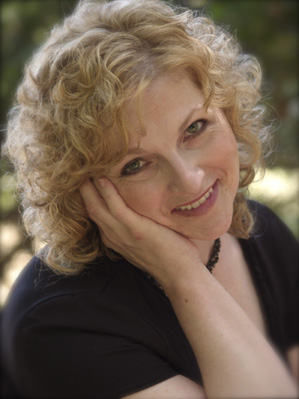
Lisa Delan

Lisa Delan

Of the Three Folk Songs arranged by Jake Heggie (b. 1961), two were plaintive, one was cheeky and chattering. The accompaniments underlined the melodies’ mood and character, but were often too elaborate. “Cabaret Songs” by William Bolcom (b. 1938), on texts by Arnold Weinstein, evoked sensuousness, inebriation, and yearning.

“Odas de Todo Mundo” (“Odes for Everyone”) by Luna Pearl Woolf (1973), to poems by Pablo Neruda and sung in Spanish, were commissioned by Ms. Delan. The music mirrored the mercurial changes of the poetry – Latin dance rhythms, descriptions of nature and the human condition – and ended in a blaze of exuberance. The performers were joined by the composer’s husband, cellist Matt Haimovitz, renowned for his masterful playing and his multi-faceted career. Once a famously talented prodigy, he is now a versatile, communicative artist; in a demanding part tailored to his virtuosity and beautiful tone, he added intense, compelling power to the performance.

Three Cabaret Songs by Corigliano (b. 1938) to poems by Mark Adamo poked fun at various aspects of the musical experience, punning on the atonalists’ tone-rows, parodying the latest electronic recording device, lampooning the transformation of the friendly neighborhood record store into an impersonal coffee-bar. The songs sounded less “cabaret”-influenced than Bolcom’s, but, like much of Corigliano’s music, bore traces of many other styles. Though Mss. Delan and Pankonin had performed the songs separately, this was the complete set’s premiere.

Getty (b. 1933) wrote his own poetry for his three-song cycle, “Poor Peter:” a pensive love song, a rollicking dance with surprising, quirky rhythms, and a mournful, pleading ballad sung by an old beggar (recalling the blind “Harpist” of Goethe and Schubert). Words and music mimicked the style of Merrie Olde England, with words like “easterly” and “southerly.” The program’s title is taken from the third song.

The seven-song cycle “Phenomenal Woman” by Garner (1954) incorporated jazz, blues, rock and cabaret styles. The proudly feminist poems by Maya Angelou ranged from defiance, protest, and tongue-in-cheek self-promotion to religious fervor and resignation.

Lisa Delan has made these songs entirely her own, textually and musically. Her voice encompasses a wide range and she can color and inflect it for mood and expression. Her excellent diction was especially important in the humorous songs. She used “light” amplification to reflect the sound back to the performers; this made it difficult to fully judge the quality of her voice, and probably caused some shrillness in the topmost register and some imbalance with the instruments. She was most persuasive in the slow, lyrical, pensive songs; the fast, skittish ones seemed least suited to her voice and stage presence.

The audience’s warm response proved that all the songs were worth a smile, so Mr. Haimovitz returned for an encore: Ms. Woolf’s trio arrangement of Getty’s “The Going from a World We Know.”
Makers, dealers, and experts in violins, violas, 'cellos, and their bows

Share

New York Concert Artists, Winners’ Evening II

New York Concert Artists Winners’ Evening II
Yoojin Oh, piano;
Raymond H. T. Wong, piano;
Yumi Sato, piano;
Anastasia Dedik, piano

Manhattan Chamber Orchestra
Eduard Zilberkant, conductor
Good Shepherd Church, New York, NY
May 15, 2010

Word must be spreading about the musical feasts presented by New York Concert Artists & Associates, as their audiences seem to be growing from concert to concert. Under the artistic direction of Klara Min, the musical fare seems to be growing in scope as well. A recent evening featuring four big piano concerti included a work that is rarely performed live, the Vaughan Williams Piano Concerto in C (1926, first two movements, and finished in 1931). Having heard the excellent new recording of it played by Ashley Wass (also recorded twice by Howard Shelley), I had recently been wondering why the piece is so overlooked; granted, it is fiercely difficult and sprawling, with a quiet ending that elicits a hush rather than an explosive ovation, but its treasures are many. Excellent pianist Yoojin Oh found these treasures, and they were stunning. Ravelian swirls of color, expressive cadenzas, bold percussive statements, and a well-controlled fugue all sounded as if the pianist had performed this piece for years (though she was using the score). Ms. Oh has considerable credentials, so hopefully she will parlay them into further performances of this unfairly neglected gem. I for one would want to hear it again.

Many in the audience seemed at least as excited to hear what followed, Rachmaninoff’s much beloved Piano Concerto No. 2 played by Raymond H. T. Wong. A student at the Manhattan School of Music, Mr. Wong gave his New York debut in 2009 and has a good number of awards, performances, and scholarships to his credit. His playing showed considerable youthful fire and moments of real artistry. Occasionally his impulsiveness got the better of him, and the second movement could have felt freer, but a piece with such a rich performance history presents a very high bar. All in all, it was a commendable performance that brought Mr. Wong’s very enthusiastic audience to its feet.

After intermission, came more Rachmaninoff: this time, his Piano Concerto No. 1 played by Yumi Sato. Ms. Sato, currently studying in Europe, has also won numerous prizes, and understandably so. She gave a highly polished performance. Precision, clarity, and thoughtful pacing characterized her playing. Occasionally one wanted less of a sense of “dispatch” and perhaps more breathing at phrase ends, but adrenaline runs high on such occasions. In any case, her fingers never failed her. Her collaboration with the orchestra was also to be admired.

The evening’s finale was Tchaikovsky’s Piano Concerto No. 1 played by Anastasia Dedik, the winner of NYCA’s first International Concerto Competition (2010). Ms. Dedik’s biography lists numerous concerts and competition prizes, including the one that resulted in this performance. She delivered a strong, muscular account of the work, nearly flawless in the octaves and difficult passages. Occasionally her sound may have been a shade too big, such as where she outweighed the cello a bit (second movement), but she is clearly ready to take this piece “on the road.” The last movement should be a notch slower so the Cossack dance does not become a blur, but all in all it was a rousing finish to a memorable evening. Eduard Zilberkant conducted superbly throughout, his experience as a pianist undoubtedly lending him extra sensitivity to the soloists. The orchestral personnel were not listed; a shame considering some fine individual performances.

Share

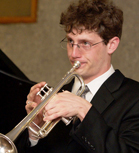
Alexander White, trumpet

Alexander White, trumpet
2009 Olga Koussevitzky Young Artists Winner
Steinway Hall, New York City
May 13, 2010

In a concert sponsored by the Musicians Club of New York, the 2009 first place winner of the prestigious Olga Koussevitzky Young Artists Awards, trumpeter Alexander White, performed at beautiful Steinway Hall in New York City. This was the first time a trumpet player was awarded a prize in the competition’s winds and brass division, where flutists or clarinetists usually get the honor.
Mr. White is not new to placing in competitions, as he was a two-time finalist in the National Trumpet Competition and won the International Trumpet Guild Solo Competition, Metropolitan Washington Philharmonic’s Winds Competition and the City of Fairfax Band Competition. He has performed as soloist with the American Youth Philharmonic, the Metropolitan Washington Philharmonic and the Brooklyn Symphony Orchestra. He is finishing his Masters Degree at Juilliard as a student of Mark Gould.

There was a good balance of styles in his program, and he also brought variety via distinguished performers, including another trumpet player, Caleb Hudson, and cellist Joe Lee for a performance of Handel’s Ode from Eternal Source of Light Divine. Hudson made an impressive partner in his brief appearance, almost stealing the show with a pure, golden high register. Here and in other works, White showed why he won such a high honor from the Olga Koussevitzky, but also showed why trumpet players don’t often tackle long programs: their lips simply give out after extensive playing. But even at the program’s outset (Bartok’s Romanian Folk Dances), he displayed a fair amount of cracks or the occasional wrong note—perhaps due to some nerves or having an off-day, which brass players tend to have.

In general, Alexander White showed the type of technical brilliance that would warrant any brass and wind jury’s special attention. In both Bellstedt’s Napoli and in Arban’s Fantasie Brillante, his double-tonguing and rapid finger-work were very impressive, and in Handel/Fitzgerald’s Aria con Variazioni from the 5th Harpsichord Suite, scales and flourishes were played with both ease and elegance. Accomplished pianist Stephanie Wu, (also a Juilliard Masters student), was a solid accompanist throughout, as the ensemble-playing was consistently unified.

Share

The University of Notre Dame Concert Band

The University of Notre Dame Concert Band
Kenneth Dye, conductor
Carnegie Hall: Stern Auditorium, New York, NY
May 11, 2010

To the great pleasure of the joyous audience attending this Carnegie Hall concert, the ninety-three members of The University of Notre Dame Concert Band made a mighty sound. And the word concert alone does not fully describe this event, as it assumed, at different times, aspects of a concert, a college reunion, a pep rally. Let it be said at the outset that The University of Notre Dame Concert Band is a virtuoso ensemble. The technical skill and ensemble cohesiveness of these young players is mind boggling. The thirteen flutes in unison play as one, as do the fourteen clarinets. The forty-one member brass choir sounds great at all dynamic levels, when playing both solemn chorale-like passages and wild jazzy riffs. It was an evening of sonic splendor.

We began with the world premier of Joseph Turinn’s “Fanfare and Prelude.” Director of Bands Kenneth Dye conducted this and three other works on the concert. Five assistant conductors, Larry Dwyer, Sam Sanchez, Matt Merten, Emmett O’Leary and Alison Thigpen shared the remaining nine works. “Fanfare and Prelude,” the following work, Clifton Williams’ “Dramatic Essay,” and “Fandango,” another work by Mr. Turrin, all seemed to have similar sonic structures. All had a fast brassy beginning, a softer lyric middle section with prominent woodwinds, a loud and fast ending. Both of Mr. Turinn’s works also had an uplifting brass choral-like passage towards the end, one which would not have been out of place in a movie score. They also shared a similar harmonic and rhythmic vocabulary. The dissonances were fairly painless, the lyric melodies pop-tune-like, the beginnings and endings jazzy.

“Dramatic Essay” featured fine playing by guest artist, trumpeter Philip Smith. But with all the excellent trumpeters in the band, I’m not sure why they had to go out and get a star. (Mr. Smith is principal trumpet of the New York Philharmonic.) In “Fandango,” Mr. Smith was joined by the Notre Dame Concert Band’s principal trombone, Anthony Parish. Mr. Parish more than held his own. In fact, his was the most impressive solo playing of the evening – warm, expressive, beautifully phrased. I loved his judicious use of vibrato.

On the first half we heard both arrangements and easy listening works written in the twenty and twenty-first centuries. There was a sameness about much of this music. For me, the concert came to life three works into the second half, with the Notre Dame New Orleans Brass Band’s electrifying performance of conductor Matt Merton’s arrangements of What a Friend We Have in Jesus and I’ll Fly Away. The band entered from the rear of the hall and marched down the aisle. What visceral excitement, what authenticity! I did feel there was no reason for the members of the concert band to join in after the marchers reached the stage, for it only watered down the unique sound we had been hearing.

The concert band morphed into a very good and very large “big band” with stylistically impeccable performances of Larry Dwyer’s transcription of Harold Arlen’s “When the Sun Comes Out” and Kenneth Dyes tribute to Benny Goodman’s 1938 Carnegie Hall Concert, “Benny Goodman in Concert.”

The entire audience then rose to their feet for the Notre Dame Alma Mater. And how else could this concert end, but with a rip-roaring rendition of the great “Notre Dame Victory March”? It was conducted by TV personality and Notre Dame Alumnus Regis Philbin.

Share

Continuum: Spotlight on Georgia

Continuum: Spotlight on Georgia
Merkin Concert Hall, New York, NY
May 9, 2010

Continuum, now in its 44th season under the direction of founders Cheryl Seltzer and Joel Sachs, appears to be more vital than ever. A recent program focusing on new works by composers from the Republic of Georgia underscored this impression. We heard four U.S Premieres and a World Premiere by composers we might otherwise encounter only in piecemeal fashion, if at all (with Giya Kancheli being the possible exception), all tied together in memorable and meaningful ways, including informative notes and the opportunity to hear two of the composers speak. Incidentally the only work that was not a premiere was Kancheli’s Psalm 23 from “Exile,” a work that Continuum premiered in the 1990’s.

The program opened with Four Quartet Miniatures (1947-1978) by Sulkhan Tsintsadze (1925-1991), the only deceased composer of the five presented. Including “Lale” (1947), “Shepherd’s Dance” (1951), “Didavoi Nana” (1978) and “Khorumi” (1978), the folk-like string quartet selections reminded one of Bartok, but with a lyricism that is perhaps uniquely Georgian. They established beautifully the “roots” of the Georgian program, and Renée Jolles, Airi Yoshioka, Stephanie Griffin, and Kristina Reiko Cooper played with both polish and affection.

Ms. Griffin returned to the stage to play “Cadenza” (2007), a study in duality for solo viola by Zurab Nadareishvili (b.1957). The work juxtaposes shades of Berg’s “Wozzeck” in the upper register against an earthy folk bass, sometimes in rapid alternation – quite a tour de force. Griffin was more than up to the challenges, technically and emotionally.

Psalm 23 from “Exile” (1994) by Giya Kancheli (b. 1935) closed the first half with expanded forces including Mary Mackenzie (soprano), Ulla Suokko (flute), and Paul Sharp (double bass), along with Griffin, Cooper, Seltzer (synthesizer and tape), and Sachs conducting. A haunting setting of the famous Biblical text “The Lord is my shepherd”, it uses tonality in what the program notes aptly describe as “a fresh expression of timeless values.” Otherworldly combinations of taped and live music created a mystical feeling, such that one hardly paid attention to the fine playing of individual performers, who served the music as one.

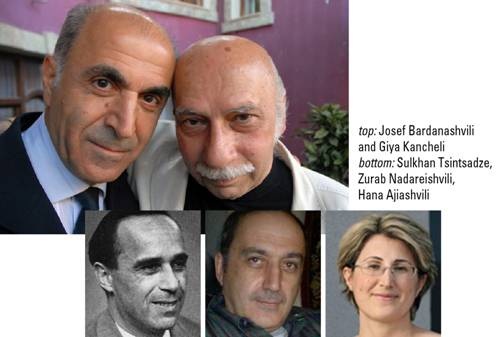
Josef Bardanashvili (b. 1948), who had traveled from Israel to hear his pieces and speak after intermission, was as exuberant in his speaking personality as he emerged in his music. His “Sola” for guitar (2006), a fascinating work, ran the gamut from Bachian beginnings to a range of contemporary outpourings that never felt incongruous within the improvisatory flow of it all. Oren Fader was the excellent guitarist. Hana Ajiashvili, the other composer who had flown in from Israel, suggested connections between Georgian improvisation and polyphony and her own music (with its indeterminate elements and complex textures), but reflected an international style in “My God, the Soul You Placed Within Me” (2007). Perhaps the thorniest work of the evening, it employed difficult atonal writing and strident clusters suggesting the texts of three very dark poems by Yehuda Amichai. The effect, captured well by Mackenzie, Jolles, Bryant, Seltzer, and clarinetist Moran Katz, was wildly expressive.

The evening closed with one more work by Bardanashvili, the World Premiere of his “Farewell Song – In Memory of My Parents” (2008) for solo clarinet (Katz, playing the part written for Giora Feidman) and solo cello (Cooper), with strings conducted by Joel Sachs. Ms. Katz, a force of nature (who also translated from Hebrew for Mr. Bardanashvili), played three clarinets brilliantly: standard, piccolo, and bass clarinets. Her dynamic and timbral ranges, complemented wonderfully by Ms. Cooper’s luscious cello sound, brought intense expressivity to this profoundly sad work. All in all, it was an enlightening evening that whetted the appetite to know more Georgian music.

Share

Richard Strauss Duo Recital

Richard Strauss Duo Recital
Sharon Cheng, soprano and Michael Fennelly, piano
Jennifer Grimaldi, soprano and Max Midoit, piano
Bechstein Piano Centre, New York City
May 4, 2010

What a pleasure it was to hear two fine sopranos, accompanied by two sensitive pianists, skillfully performing the glorious songs of Richard Strauss in a well-lit intimate setting. This year, I have attended many vocal recitals in dimly-lit major concert halls where established artists sang numerous sets of obscure and forgettable songs by great composers. But tonight, we heard fourteen Strauss songs, and there wasn’t a weak one amongst them. And our pleasure hearing these songs was enhanced by the fact that there was enough light to comfortably read the written program, with its fine notes and the original German poems written along side their English translations.

To get to the performing space of the Bechstein Centre, one enters through the piano showroom. Walking among these storied instruments is a wonderful way of transitioning between the hurly-burly of midtown Manhattan and the anticipated vocal recital to follow. A left turn takes one to the performance space. Against the right wall are many upright pianos, in the front a raised stage with a large Bechstein Grand. It was sad that there were so few people in the audience to hear this fine recital.

The recital began with a performance by soprano Sharon Cheng, who sang four of the five Brentano Lieder, Opus 68. Ms. Cheng, whose vivid red dress appropriately reflected the vocal fireworks she produced, possesses an exciting and securely produced voice which grows more and more thrilling as she moves into the stratospheric parts of a soprano’s range.The high point of the set was her performance of the last song, Amor. Ms. Cheng nailed this show stopper’s very, very high notes with ease.


Sharon Cheng, soprano

Jennifer Grimaldi, soprano

Michael Fennelly, pianist

We then heard Jennifer Grimaldi, whose more somber black dress reflected her beautifully phrased and emotionally intense performance of three of Strauss’s most famous songs, Allerseelen, Morgen, and Cäcilie. Many singers seem to be afraid of singing the “hit tunes,” perhaps feeling that they will have “nothing new to say.” But performances such as Ms. Grimaldi’s, deeply felt and expressed through beautiful sounds, thrill us even though we have heard these songs so many times before. Michael Fennelly and Max Midoit were the sensitive and supportive accompanists. That they were sometimes a bit too loud was a function of the very lively performance space and the powerful Bechstein Grand upon which they were playing.

After intermission, Ms. Cheng performed the Brentano Lied she omitted on the first half. She concluded her set with wonderful performances of Ständchen and Kling, showing that she too was not afraid to sing the “hit tunes.” Many young singers often don’t program the “hit tunes” because they are afraid that their performances will be compared to those of established stars living or dead. But both Cheng and Grimaldi were up to the task. I urge all singers to forget about how someone else has performed a song. The great ones stand up to repeated performances. It’s the mediocre ones that one should be wary of. The recital ended with a most moving performance of the Vier letzte Lieder, sung by Jennifer Grimaldi.

Share

Enhake Quartet

Enhake Quartet
Weill Recital Hall at Carnegie Hall, New York, NY
May 3, 2010

An evening of works by five living composers was presented by the Enhake Quartet from Florida State University on May 3rd. The members of this foursome, all impressive soloists and adept chamber musicians, made strong cases for each of the compositions on this program. One of the defining characteristics of the Enhake is rock-solid rhythmic integrity which was evident from the start of “Breakdown Tango” by the composer John Mackey. Propelled by the violinist M. Brent Williams’ driving sixteenth note ostinato, each of the other players added a layer of complexity until the grand climax gives way to a lonely habanera solo on cello. Throughout the tango, clarinetist Wonkak Kim wove his sultry, stylized melodies into the fabric. Much of this piece feels as though it has quotation marks around it, yet in spite of that, it is well crafted and benefited from precise ensemble.

Two movements of Kris Maloy’s “Quartet in Four Actions” entitled “Slink” and “Float” further proved the quartet’s strengths in balance, intonation, and musicality. The simple arc of “Slink”, with its slowly blossoming minor third motive, was beautifully paced and modulated. At the outset of “Float”, cellist Jayoung Kim spun a legato line of great elegance, the initial voice in an expansively lyrical canon. As the music spiraled downward in dynamic and pulse, the players handled their challenges with poise.

Libby Larsen’s “Rodeo Queen of Heaven” proved to be the most harmonically adventurous composition in a decidedly conservative program. It commenced with a burst of activity. As the pianist Eun Hee Park held a tenacious pedal note, her colleagues embarked upon an almost improvisational extended fantasia. Ms. Larsen asks the performers of this piece to extend the boundaries of traditional technique, and Enhake is ideally suited to the task. This was a polished, yet spontaneous performance.

Peter Lieuwen’s “Gulfstream”, which opened the second half, was quite obviously programmatic in its deft evocation of the swirling waters of that grand body of water. Again, Eun Hee Park provided a solid foundation of fluent pianism, at times industrious, and then gently undulating. Along the way, Mr. Kim showed his impressive range in a quasi cadenza-like solo for clarinet. This was not an ambitious work, but well structured and idiomatic in its writing.

For sheer enjoyment, it would be hard to beat Peter Schickele’s “Quartet in A” as a program finale. In four clearly defined movements, the composer employs elements of French salon music, American jazz, and Eastern European folk dance, complete with off-kilter meter changes. Mr. Schickele knows how to feature his musicians, providing them with meaty, virtuosic rifts, and intuitively musical passages which just seem fun to play.

I look forward to hearing Enhake again soon, and by then I hope they will have been able to commission an even greater range of works for their growing repertory. They are excellent artists and technicians who present thoroughly prepared performances.

Share

Dan Franklin Smith, piano

Dan Franklin Smith, piano
Musica de Camara
Museum of the City of New York
May 2, 2010

Dan Franklin Smith is a pianist that any composer should feel lucky to have as an advocate. In “A Musical Tapestry for the Beginning of the 21st Century,” a program featuring eight composers ranging in age from their twenties to mid-eighties, Mr. Smith drew the best from each work. His artistry and versatility seemed to know no bounds.

Opening the program were two premieres starting with Three Dances for Piano (1995) by Susan Riley-Caldini (b. 1952). From the gently lyrical “Dusk” and “Dawn” to the syncopated center, “Dancing Hard in the Moonlight,” Smith’s interpretations had immediate appeal. Promising student David Robert Johnson (b. 1988) was represented next in his “Rhapsody and Postlude” (from Suite for Piano, 2006). An improvisatory work that could have seemed facile in lesser hands, it explored some romantic and impressionistic-sounding colors, which Smith brought out beautifully.

The famous “Blue Rondo a la Turk” (1960) by Dave Brubeck (b. 1920) might be thought of as an “old chestnut,” but it sprang to life, fresh as ever, partly due to a careful program order. Following in a jazz vein were three movements from “Portraits in Jazz” (2001) by Valerie Capers (b.1935). “Bossa Brasilia” and “Waltz for Miles” evoked jazz greats with a touch of nostalgia, but it was “Billie’s Song” that showed Capers to be something of a magician in evoking the singer’s pianistic timbres – with Smith as her able assistant.

Alison Nowak (b.1948) broke from the program’s predominant tonality with her Three Inventions for Piano (2008). Carefully crafted, sometimes approaching pointillism, the work was given a committed performance that seemed to delight the composer.

The “find” of the afternoon for this listener was a work entitled “The Star to Every Wandering Bark” (2003), by Richard Pearson Thomas (b. 1957). Inspired by Shakespeare’s Sonnet 116, the work showed such ravishing lyricism and meaningful development, that I left the concert determined to obtain the score and anything else by this composer. Moments could be described as Coplandesque, but Mr. Thomas writes from an undeniably individual voice. Kudos to Mr. Smith for this excellent introduction!

Intermezzo (2006) by Francesco Lecce-Chong introduced another promising young artist in a work of considerable range and virtuosity. Smith handled it with polish and drama, capping it off with the marvelous set “Three South American Sketches” by Andre Previn (b. 1929). It was a brilliant close to an outstanding recital.

Share

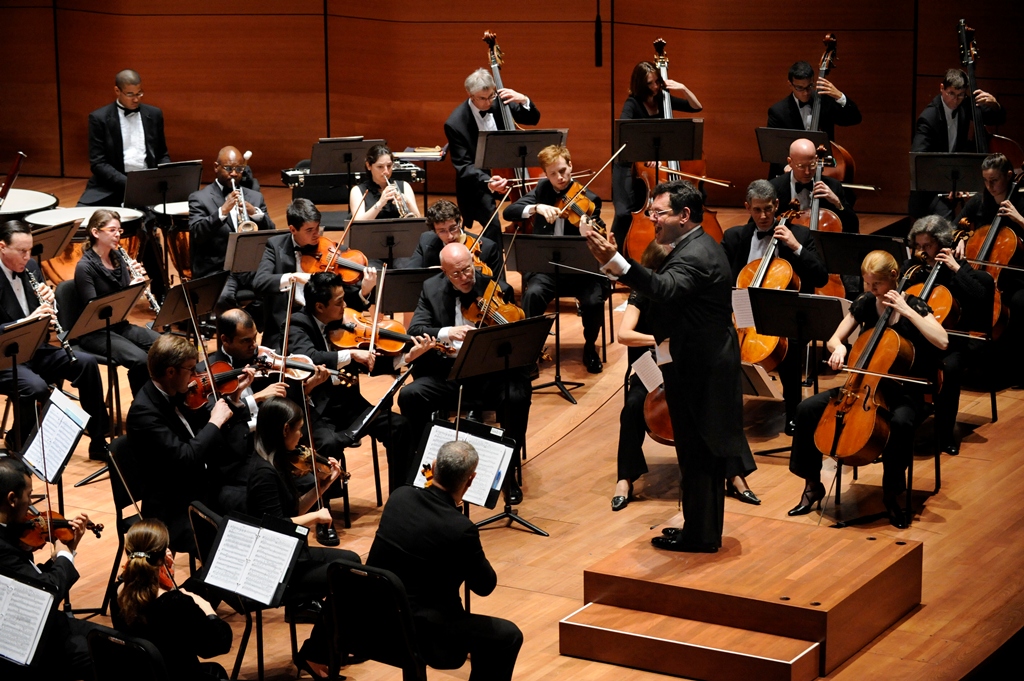
The Park Avenue Chamber Symphony

The Park Avenue Chamber Symphony
All Saints Church, New York, NY
May 2, 2010 

The Park Avenue Chamber Symphony

The program was perfect: it had a central idea, which was music from or inspired by France. But even though the works were nicely tied together, they were also satisfyingly well-contrasted from one another. Bizet’s Symphony in C was composed by a Frenchman, who at 17 years of age was hardly a man or hardly French; his music, after all, was greatly inspired by the classical structures of Beethoven’s fourth, Schumann’s second and Mendelssohn’s third symphonies. Yet expansive French melody and chromaticism shine through, and this work is worthy of frequent performances. The Park Avenue Chamber Symphony played it marvelously well; David Bernard’s tempo choices were safe and fittingly musical at the same time—the last movement Allegro vivace, for example, wasn’t hurried or flashed for effect, but played so details could be heard. Only occasionally were trumpet and timpani eighth notes late or behind after a tied note. And only a few oboe and flute unison E’s were slightly off in the Adagio. In general, this was indeed a polished performance. 

Debussy’s Nocturnes are associated with French Impressionism, yet they were an inspirational source for Stravinsky’s rhythmical Sacre du Printemps. The dreamy mood in Nuages (clouds) was captured exquisitely, and the orchestra was in sync with all of Fete’s syncopations and fly-by-night articulations. The stopped horns and trumpets were solidly in tune—though trumpet ensemble was a bit off in the March. The Premiere Rhapsodie for Clarinet and Orchestra was written later and shows a different, even less predictable side to Debussy—one with constantly shifting harmonies and irregular phrases and rhythms. It was given a sweetly seductive, technically masterful performance by the always excellent Jon Manasse. 

Gershwin’s An American in Paris made a great impression all around: ensemble playing was in control—except in one syncopated brass section toward the end—balances were kept in check, intonation was excellent, tone quality beautiful, and the solo trumpet and trombone playing was very solid and evocative. Bernard added some nice touches, like a longer-than-usual bassoon grace note at the beginning of one of the slower parts. The swing section—featuring trumpet solos, trills and numerous syncopations was too slow for my taste, but every other tempo sounded completely natural. Bernard, who conducted the entire program from memory, should be very proud of what he has accomplished with this difficult program; the orchestra was confident and musical, technically impressive and extremely well-prepared.

Share

Hiroko Sasaki, piano

Hiroko Sasaki, piano
Weill Recital Hall at Carnegie Hall, New York, NY
April 28, 2010 

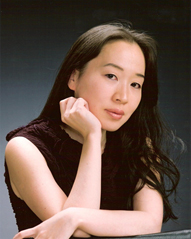
Hiroko Sasaki

One of this writer’s fondest memories was the distinguished debut of a young Japanese-born pianist, Hiroko Sasaki, on May 8, 2003 (my review of that Weill Hall concert appeared in volume 10, No. 3 of this journal). Ms. Sasaki has continued to confirm my initial impression that she was “a true artist at work.” She sounded as splendid as ever at one of her return appearances under the auspices of the Abby Whiteside Foundation’s series on April 20th in the same venue. Indeed, the pianist’s program of both books of Debussy’s Preludes consolidated that same concert of seven years ago that had included works of Haydn, Chopin and the first volume of the Debussy (even the encore, Le Petit Berger, that I had called a perfect ending the first time, was repeated).

Ms. Sasaki, who left her native Japan at age 13 to join the Yehudi Menuhin School, and subsequently earned her degree at The Curtis Institute (at 16), made her orchestral debut with the Philharmonia Orchestra and has concertized extensively in the US and Canada as recitalist and chamber musician. She is still residing in New York City and is on the faculty of the Bard College Conservatory of Music.

As I vividly recall, Ms. Sasaki’s distinctive interpretative persona successfully fuses Classical understatement with Romantic freedom. Her elegance has exquisite proportion but always (as I previously wrote) “sprint, gravitas and repose.” Danseuses de Delphes, which can often sound square and blocky, had a tart mobility which the pianist skillfully achieved by playing the answering response phrases a trifle faster and more impetuously than the forgoing ones. Her tempos, most of them on the brisk side, brought to the fore countless other felicities (I especially liked her ongoing, Gieseking-like treatment of THE eponymous interruption in Le Serenade Interrompue; and the way she managed the buildup in La Cathedrale engloutie (in accordance with Debussy’s own piano roll performance. As I remember, the two final Book I Preludes, La danse de Puck and Minstrels, were as fleet and invigorating as ever.

Book II, written a few years after Book I (1909-1910), has many similarities, but there are subtle differences, too. Ms. Sasaki, as one would have expected from such a discriminating musician, seized upon many opportunities. I loved her magnificently robust account of La Puerta de vino, and of course the Hommage a S. Pickwick, Esq. PPMPC had full, requisite Dickensian pomposity. Les Fees danced exquisitely, and Ondine was perceptively more dangerous. The culminating Feux d’artifice, with its final echo of the Marseillaise sizzled brilliantly.

All in all, a wonderful concert from beginning to end.

Share