
Pro Musicis
Weill Recital Hall at Carnegie Hall, New York, NY
April 21, 2010
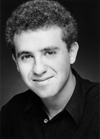 Victor Goldberg is an excellent pianist with a formidable technique, a powerful tone, and a romantic soul (and a distracting habit of tossing his hands way up). Russian-born, he has studied, performed and won competitions in Europe, Israel and America, and is the recipient of the 2008 Pro Musicis International Award.
His Weill Recital Hall concert, rather enigmatically entitled “From the Depths of the Creative Spirit,” showed his pianistic strengths, emotional projection, and stylistic versatility. Except for Domenico Scarlatti’s famous E major Sonata – played with filigree delicacy, crystal-clear runs and elegant leaps – the program featured music of the 19th and 20th centuries. The beginning of Chopin’s B-flat minor Scherzo immediately demonstrated that Goldberg subscribes to a key element of today’s performing style: utmost dynamic contrast. The opening figure’s ominous whisper and the crashing chords following it seemed to skirt the outer limits of the instrument’s sound, a tendency toward extremes that continued throughout the concert. But within these parameters, Mr. Goldberg has a wide range of nuances and colors, which he used with great skill and imagination.
Shostakovich wrote his second Sonata in 1942 during Hitler’s infamous siege of Leningrad that claimed 632,000 lives. One of the victims was Shostakovich’s teacher Leonid Nikolaev, to whose memory the sonata is dedicated. The Shostakovich family had been evacuated from the besieged city, but, though composed in the comparative safety of the countryside, the sonata has an eerie, unsettled quality and a desolate ending; Mr. Goldberg’s intensely expressive performance had a powerful emotional impact.
The program’s highlight was Brahms’ Variations on a Theme by Handel, one of the most daunting masterpieces of the repertoire. Goldberg met its instrumental and musical challenges with masterful technical and tonal command. Combining careful planning with spontaneity, austerity with romantic passion, he made the variations building blocks in an overarching structure, yet he also brought out their individual characters, using the repeats to underline different voices. With the final fugue as a true culmination, it was a most impressive performance. Responding to the audience’s enthusiasm, he played encores by Debussy, Rachmaninov and Tchaikovsky.

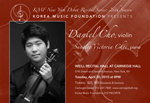
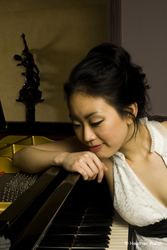 Gold medalist at the 2008 World Piano Competition in Cincinnati, South Korean pianist Yoonjung Han recently presented her debut recital at Lincoln Center’s Alice Tully Hall. A feeling of celebration and anticipation of the moment filled the auditorium. Having made her debut at the age of thirteen, Han is no stranger to the concert stage. She got right to business with a colorful and joyfully performed Haydn Sonata in E-flat Major, Hob. 52. After the light and giddy first movement, the audience erupted into applause. The Adagio was carefully planned out and balanced, though one might have wished for more spontaneity and abandon. The Presto Finale floated gracefully above ground and was received with a warm ovation.
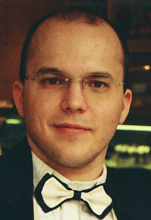 This unusual and, ultimately, compelling new recording of Bach’s transcendental Aria Mit Verschiedenen Verandergungen introduces us yet to another outstanding Hungarian pianist, Sebastyen NyirÖ, who was born in 1979. This may well be the broadest and longest performance of the Goldberg Variations ever. NyirÖ favors taking all the repeats (even those in the Aria da Capo which even the near-fanatical purist Claudio Arrau was even willing to forgo in his early 1940s RCA recording released posthumously on two CDs. Rosalyn Tureck, another famous (or notorious) advocate of repeats and slow tempos, likewise ran over onto two CDs in the Philips Great Pianists of the 20th Century reissue. Simone Dinnerstein, another champion of slow tempos, played all the repeats in her in-concert performance at Weill Recital Hall, but reluctantly condoned omitting a few of them in order to limit her commercial recording (a labor-of-love, later taken over by Telarc) to a single CD. Nyirö’s rendition runs to 85 minutes and fourteen seconds: CD no. 1, with the Aria and Variations 1 through 15 taking 40 minutes and 12 seconds; CD no. 2 beginning with the French Ouverture Variation 16 and ending with the Aria da capo runs 42 minutes; 14 seconds for the work’s conclusion.
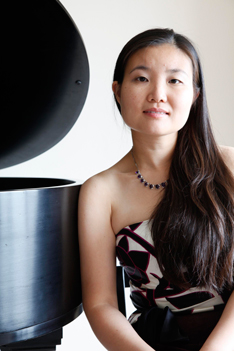 Mana Takuno’s excellent performance of an early, rarely heard 1901 work by George Enescu, his Suite No.2 in D Major, Op. 10, delighted me at a May 8, 2008 concert—(see review in Volume 15, No.3 of this journal) , and it made me want to hear more of her playing. I wrote that her exciting interpretation, with its “drive, virtuosity, textual and coloristic diversity”, stole the show from three other young pianists who shared the same concert with her. Ms. Takuno and her program of Poulenc, Thomas Oboe Lee, Beethoven and Schumann afforded me a more comprehensive “fix” on her achievement and pianistic capabilities.
 This concert “celebrated the American creative spirit” by combining photography and music. The program featured the “three B’s” American style – Barber, Bernstein, and Brubeck (Dave and his son Chris) – and included two New York premieres: the Brubecks’ “Ansel Adams: America,” and Bill Cunliffe’s fourth stream… La Banda (The Band). Composers Dave Brubeck and Bill Cunliffe were present, as were several members of Adams’ family.