Distinguished Concerts International New York – Concert For Peace

Distinguished Concerts International New York
Concert for Peace
Celebrating the Spirit of Martin Luther King, Jr.
Avery Fisher Hall, Lincoln Center
January 18, 2010

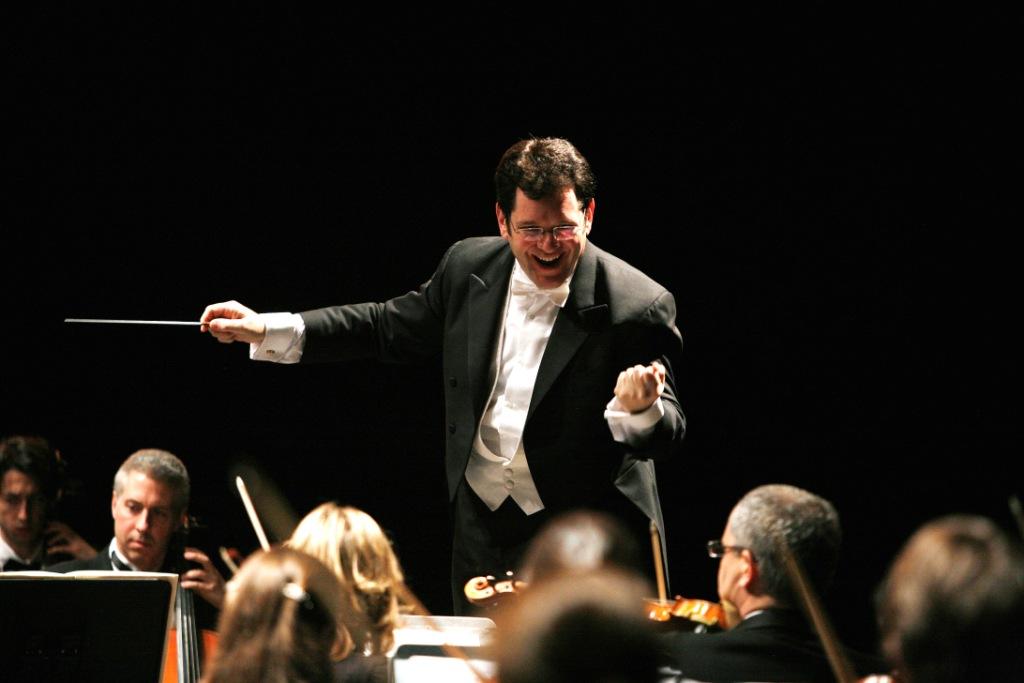
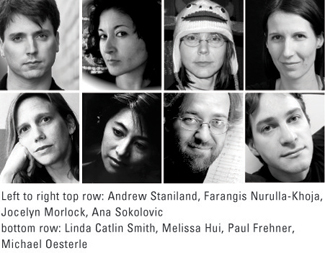
This Martin Luther King, Jr. Day concert was presented by Distinguished Concerts International of New York (DCINY) and featured choirs from the United States and Canada, six vocal soloists, a large orchestra, all under the expert direction of DCINY’s artistic director and principal conductor, Jonathan Griffith. In bringing church, college and community musical organizations to New York to perform in major concert halls, DCINY is doing a valuable service. The performers participate in a musical experience which they could never have had at home, and their parents, relatives and friends, who appeared to make up a large part of this afternoon’s enthusiast audience, have a good reason to become tourists in New York City. Also benefiting are New York concert halls, who gain another source of rentals. And let’s not forget the tax dollars which these new tourists bring to the City of New York. It’s a win-win-win-win situation.

And if this “Concert for Peace” was a good example of the quality of a DCINY performance, New York concertgoers are also winners. From beginning to end the music making was of a very high quality, and both of the major works by the Welsh composer Karl Jenkins were performed with skill and fervor. Pride of place goes to the choristers, members of fourteen different choirs (four for Mr. Jenkins’ “Requiem.” and ten (!) for his “The Armed Man: A Mass for Peace.”) They made a glorious sound, and sang with precision and fine intonation. The vocal soloists had a lesser role, but fulfilled it admirably. Maestro Griffith exhibited total control over this huge ensemble and presented well paced performances of these two long works.

Would that the music was worthy of the many performers’ talent and hard work. But, for this listener, both pieces were banal, derivative, and musically uninteresting. And what is there to say about the films which, as the program stated, “accompanied” each piece? Here are the images which went with the opening movement of “Requiem” – sunset, birds, bell tower, a cross, sunset, water, wind, sunset, tower, cross, sunset, birds…We weren’t hearing movie-music, nor were we seeing music-images. The connection between music and film was stronger during “The Armed Man,” but the images were still trite and obvious. However, at the close of this “Mass for Peace,” the audience appeared to be deeply moved. My musical reservations not withstanding, DCINY should consider this concert a resounding success.

Share

Continuum: Celebrating Ursula Mamlok

Merkin Concert Hall, New York, NY
January 13, 2010

Ursula Mamlok Photo Credit Simon Pauly

 Continuum’s commemoration of Ursula Mamlok’s 87th birthday spanned the 50 years of her journey as a composer. And this revealing concert showed us that this important composer was steadfastly devoted to her unique style, which for the most part follows serialism. Due to inclement weather and the hardship of travel, Ms. Mamlok was unfortunately unable to attend this concert and tribute. She would have been greatly touched by the numerous reflections and anecdotes of her friends and acquaintances. Though she is an urbanite, her connections to the natural world are a continual thread that permeates her oeuvre. That thread was beautifully interwoven by Continuum’s directors, Cheryl Seltzer and Joel Sachs. From the first note of Ulla Suokko’s poignant, impassioned presentation of the demanding solo pieces “Arabesque for Flute” (1960) and “Variations for Solo Flute” (1961) to the intricate ensemble-piece “Girasol” (1990), the performers and audience remained captivated in the microcosms of sound that enveloped them. Whether the subject matter was a bird or a flower, the performers were able to reach inside the material and extract Mamlok’s experience. Fragility and humor were included in each inward journey.

The “Rhapsody” (1989), cohesively and serenely presented by pianist Cheryl Seltzer, clarinetist Moran Katz, and violist Stephanie Griffin, revealed a world of light hidden within the dark palette of the viola and clarinet. Joel Sachs’ presentation of “Sculpture” (1964) captured the suspended stillness embedded in this work; though the opening was colored in dark, sinister tones rife with anxiety, the work slowly calms to a quiet curiosity. An irregular yet delicate dance came across in the “The Love Song of Two Pigeons” (1991), another world premiere; Mr. Sachs created a stunning web of sound to support the challenging demands. Stephanie Griffin’s quiet energy captured the beauty of “From My Garden” (1983). With the skill and insight acquired over a lifetime of artistry, Mamlok produces a sublime rendering of biological wonders, without cliché.

In “Confluences” (2001), a Continuum commission performed by clarinetist Moran Katz, violinist  Renee Jolles, cellist Joanne Lin and pianist Cheryl Seltzer, the poignancy of the music was captured with expression and outstanding clarity. The String Quartet No.2 (1998), with its contrasting themes and colors passed among the performers in continuous conversation, was carefully rendered by Renee Jolles and Airi Yoshioka, violinists; violist Stephanie Griffin and cellist Joanne Lin.  This extraordinary program closed with a witty and enjoyable performance by clarinetists Charles Neidich and Ayako Oshima in the world premiere of the latest Ursula Mamlok composition: “Aphorisms II” for Clarinet Duo (2009). Their playful interchanges fashioned a delightful coda to this significant celebration of Ursula Mamlok.

Share

Nadejda Vlaeva, piano

Nadejda Vlaeva, piano
Merkin Concert Hall, New York, NY
December 10, 2009

The odds of hearing Prokofiev’s Sonata No. 1 in recital are rather slim (compared to the seventh, eighth, and others), but when a pianist combines it with the Piano Sonata No. 2 of Ukrainian-born Sergei Bortkiewicz (1877-1952), a composer whose works are seldom recorded or performed, one knows that an unusual musical mind is at work. Add the Variations on “Dilmano, Dilbero” Op. 2 by Alexander Vladigerov (1933-1993) and the World Premiere of Lowell Liebermann’s Variations on a Theme of Schubert, Op. 100, and one has a unique evening to remember. That was what it was when Nadejda Vlaeva took the stage recently, offering also some of Liadov’s most beautiful Preludes (the D-flat, Op. 57, No. 1 and the B minor, Op. 11, No. 1) and the much more familiar Sonata “Après une Lecture du Dante” by Liszt.

Ms. Vlaeva showed throughout the evening that she has the intellectual and digital power to play anything she chooses. It was a joy to hear such effortless mastery, though at times things seemed a trifle too easy (revealing less of the involvement that sometimes redeems players of lesser gifts). Such facility may be what pushes Ms. Vlaeva towards the challenges of uncharted territory, but whatever the case may be, her forays are a refreshing break from the standard fare. Her Prokofiev illuminated phrases this listener had forgotten were there. Her sensitive interpretations of Liadov gently bridged Prokofiev and Bortkiewicz (both Liadov students).

This listener was not completely sold on the Bortkiewicz Sonata, which seemed a pastiche of other Romantics without a completely convincing cohesiveness; nonetheless, one has trouble imagining it played much better and will look forward to a second hearing. Ms. Vlaeva has recorded the work and given it its North American premiere.

Vladigerov’s syncopated Variations were a good antidote to this lush romanticism, and Liebermann’s excellent set of variations (commissioned for Ms. Vlaeva) brought Schubert’s “Heidenröslein” brilliantly and expressively into the twenty-first century.

After the Dante Sonata, as polished as expected, Ms. Vlaeva played three encores, Rebikov’s “Christmas Waltz,” Rebikov’s Musical Snuff Box, and Liszt’s “Les Cloches de Geneve.” Brava!

Share

Continuum

Continuum
Canadian Music – The New Individualists
Americas Society, New York, NY
December 8, 2009

In the first concert of its 44th New York season, Continuum did one of the things it does best: explore important, talented composers who are relatively unknown in this country. Music of Canada was presented in a program entitled “Northern Exposures: Canadian Music—The New Individualists.”  I came away from this program thinking that Canadian composers are indeed unique and tend to go their separate ways.
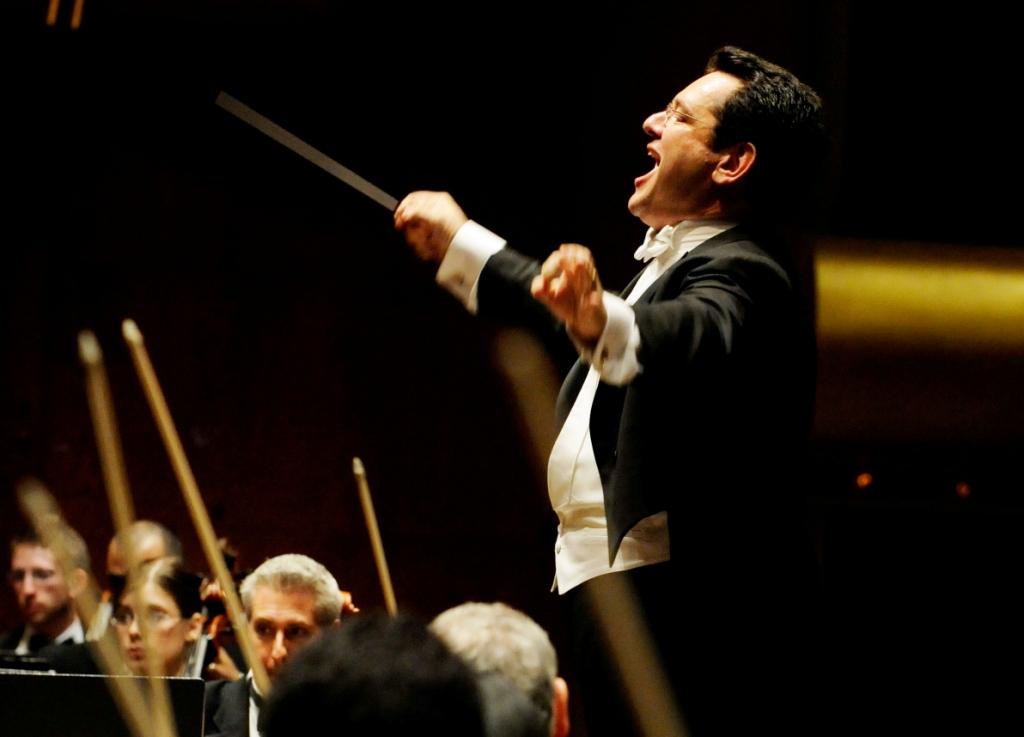
This concept of originality was exemplified by the U.S. Premiere of Paul Frehner’s deceivingly-titled work, Slowdown, from 2004. It’s a brilliantly-written, frenzied trio for not just one pianist, not two, but yes, three pianists at one keyboard. The idea of three pianists sitting together is pretty inventive, but the way he slows the momentum of the piece into a kind of improvisatory state is where the real imagination lies. The Other recently composed U.S. premieres that backed-up the Canadian individualist theory were Ana Sokolovic’s portrait parle for piano trio, an original and inspired work depicting the physiognomy of the face; Jocelyn Morlock’s Curvilinear  uniquely scored piece for solo accordion, inspired by ancient folk music; and Michael Oesterle’s Sunspot Letters, a first-rate work that evokes Galileo’s writings.

New York Premieres included Linda Catlin Smith’s Mois qui tremblais from 1999, a hypnotic, profound work for violin, bass drum, and piano in which the musicians perform from an annotated text of Rimbaud. Andrew Staniland’s Blue (2008), is a poignant work based on a poem by Walt Whitman; Tajikistan-born Farangis Nurulla-Khoja’s Blind Flower, written for Continuum in 2008, draws up highly original musical tone colors; and Melissa Hui’s Wish You Were Here (2003), is an Asian-inspired meditation for flute, cello, percussion, and piano that was beautifully exotic and memorable.

The perennial top-of-the-line artists included the pianists and co-directors Cheryl Seltzer and Joel Sachs, violinist Renee Jolles, clarinetist Moran Katz, the flutist Ulla Suokko, mezzo-soprano Abigail Fischer, William Schimmel on accordion, oboist Toni Marie Marchioni, violist Stephanie Griffin, cellist Karen Ouzounian, percussionist Jared Soldiviero, and pianist Shahan Arzruni.

This free concert is without a doubt one of the greatest musical holiday gifts to New Yorkers. We learned more about Canadian composers and Canada itself, but also were enchanted and enlightened by the beauty, excitement and great diversity of Canadian music.

Share

The Park Avenue Chamber Symphony

The Park Avenue Chamber Symphony
David Bernard, conductor
Drew Petersen, piano
All Saints Church, New York, NY
December 6, 2009

The Park Avenue Chamber Symphony

In a program called “Cinematic Genius”, the conductor David Bernard explored concert pieces that were later incorporated into film. Johann Strauss’s “On the Beautiful Blue Danube” seems far-fetched for a film about outer space, but Stanley Kubrick pulled off wonders with it in “2001, A Space Odyssey”  when he used dreamier Strauss moments to represent timelessness in space. Bernard left excerpts of the film run on screen during a complete performance of the Strauss, and it didn’t always mesh in mood–exciting dance music as a backdrop for a person walking down a spaceship corridor, for example–but you’ve got to give Bernard credit for a charming, well-prepared performance of this concert staple. I also applaud him for choosing a stylistically well- balanced program, one that presented music from three different centuries.

Drew Petersen, who performed Mozart’s Piano Concerto No. 20 in D Minor, K.466, is a 16-year-old student at the Manhattan school of Music Pre-College division. He has considerable technique—his notes were in place, the cadenza playing was imaginative, and he has done a lot of wonderful charitable work for communities who need young artists like him. Unfortunately, he had to perform on a small Kawai piano, and there was little resonance and warmth of sound. Regarding a cinematic decision, I didn’t understand the need to roll the entire closing credits of the film “Amadeus” to the concerto’s slow movement. It’s a lovely choice for the movie, but here it was a distraction.

The performance of Shostakovich’s challenging Fifth Symphony was very impressive.

Bernard has chosen players wisely; the orchestra seems to have affection for each other, and their enthusiasm for the music was undeniable. The mysterious third movement of the Fifth was incorporated into a scene of the Harrison Ford film “Patriot Games,” and it was interesting to see when it was used. Unless Mr. Bernard chooses music that was written specifically for film, I do think that excerpts of concert works used in film should be heard with the movie only before performing the work as a whole. This way, you educate the audience about a film director or film composer’s approach to a classic score and also preserve the intention of the composer. In any case, David Bernard and the orchestra should be very proud of what they’ve accomplished; I look forward to hearing them again.

Share

Piano Concertos with the Manhattan Chamber Orchestra

Piano Concertos with the Manhattan Chamber Orchestra
Peter Jay Sharp Theater at Symphony Space, New York, NY
December 1, 2009

The young presenting organization, New York Concert Artists and Associates (est. 2008), continued its work in an ambitious evening that included the Brahms Piano Trio in C Major, Op. 87, Mozart’s Piano Concerto in B-flat Major, K. 595, and Beethoven’s Fourth Piano Concerto.

The Brahms Trio, though a seeming anomaly in a program billed as Piano Concertos, held its own quite well, almost outweighing the concerti in range and texture.  Pianist Yoojin Oh joined forces with Olivier Fluchaire, violin, and Peter Sanders, cello, in a performance of exceptional blending and dovetailing. Well polished (except for one or two rough moments, such as the second movement double-stops), the interpretation was striking for its unity and will undoubtedly gain more breathing room with further performing. The trio section of the Scherzo was a high point, finding the three musicians at their most impassioned.

In the Mozart Concerto, the excellent soloist was Jihye Synn, a DMA candidate at Rutgers (with degrees also from the Manhattan School of Music). Her playing was characterized by clear, fluid runs, and carefully shaped melodies. She collaborated well with the conductor, David Leibowitz, maintaining intense focus despite some patchy playing in the strings. Occasionally she seemed to shrink excessively from the crests and forte moments, but her delicacy was admirable. Her embellishment of the second movement lines helped sustain them without being obtrusive, and the final Allegro saw an extemporized (or unintended?) addition to Mozart’s own cadenza.

Beethoven’s Fourth Concerto, with Gyehwa Kim as the accomplished soloist, concluded the program. Ms. Kim is a commendable pianist with credentials to support that fact, including degrees from Peabody and the University of Montreal (DMA), and, as one might expect, she showed a good technique, memory, and general grasp; for unknown reasons, however, there seemed not to be quite the meeting of minds that there needs to be in such a substantial and magnificent work. Soloist and orchestra interacted almost incidentally at times, with some glibness and scrambles ensuing.

All in all, though, one has to doff one’s hat to such a program, outside the bailiwick of the more prominent halls.

Share

Michail Lifits, piano

Michail Lifits, piano
Weill Recital Hall at Carnegie Hall, New York, NY
November 23, 2009

Pianist Mikhail Lifits is on quite a winning streak. At his recent solo recital as First Prize winner of the Hilton Head International Piano Competition, his impressive biography did not even list his top prize in the Busoni Competition, which he had won too recently to list!

Hearing his Schumann Arabesque, Op. 18, one could easily imagine how Mr. Lifits charmed several juries in one season: he has strong musical imagination, highly personal phrasing and dynamics, and none of the noisy hokum that abounds in contests. That said, it should be interesting to see how he develops and controls (or doesn’t) some rather eccentric tendencies apparent throughout the evening. Rubato was stretched at points to excess, and phrases were frequently what one might call “front-loaded” with lines starting richly and fading to perilously fine threads (occasionally disappearing or needing to be revived, as with a string player running out of bow). While the latter characteristic enhanced moments of the Arabesque, it can seem formulaic if one is not careful. In any case, there was in each work a compelling individuality that kept one listening intently, and Schumann’s Fantasy Op. 17 was given an especially sensitive and poetic reading, closing the first half quite well.

Four “Moments Musicaux” Op. 16, by Rachmaninoff opened the second half with brilliance and a wonderful flexibility in shifts of mood. Occasional reverse dynamics baffled here, as elsewhere, but the overall performance was potent.

The Suite for Piano by Daron Hagen was brought to life by more of this pianist’s expert changes of mood, from the jazzy and conversational to the haunting and lyrical. The work itself (a commissioned piece at the Van Cliburn Competition, given its NY premiere here) came as an effective buffer between two Russian giants, particularly before Prokofiev’s Seventh Sonata, which concluded the program. Lifits lit into the Prokofiev with no holds barred and some stunningly powerful contrasts.

An encore of Chopin’s posthumous Nocturne in C-sharp minor (of debatable provenance) closed the evening, offering more of this pianist’s sensitive inflections. The magical close left one looking forward to much more.

Share

Yoko Suzuki, piano

Yoko Suzuki, piano
Frank and Camille’s Piano Salon, New York, NY
November 20, 2009

Appearing in the United States for the first time, pianist Yoko Suzuki played an excellent recital of Spanish music. Tokyo-born, Ms. Suzuki received her Masters degree at the Marshall Academy in Barcelona (where she currently resides) and has performed regularly in both Europe and Japan. She lists among her teachers the recently deceased Alicia de Larrocha.

Opening with an emotive Evocacion from Iberia Book I by Albeniz, Ms. Suzuki showed remarkable suppleness of phrasing, though occasionally her tempo felt a bit slow and lacking in the dreamy flow that one admired in her teacher’s playing. El Puerto, which followed, was spirited and polished. Next came a work of the underrated Mompou, his Canción y danza No. 6. Ms. Suzuki brought out the poignant harmonies just right, conveying a strong identification with this style.

The Maiden and the Nightingale (from Goyescas) and Allegro Concierto, both by Granados, followed. In each case the Lisztian element was dominant, the trills and passagework perhaps intensified by the bright Yamaha and live room.

After a brief intermission, Ms. Suzuki was joined by Yukiko Tanaka (primo) in four-hand pieces, starting with three of Mompou’s playful Comptines. Also for four hands (Ms. Suzuki now Primo) were Montsalvatge’s Tres Divertimentos, again lighter fare. Josep Garcia Gago, a relatively novel name here in the U.S., was the composer of the next solo, Triptico Romantica, which was anything but novel in the styles of its three movements, Schumanniana, Berceuse, and Impaciencia, the latter played with wonderful restless surges.

Ms. Suzuki concluded her recital with De Falla’s Fantasia Baetica; while lilting in the lyrical spots and well mastered in the demanding passages, it was not quite as fiery as this reviewer would like.

The first encore, the Ritual Fire Dance from El Amor Brujo, was effective, especially with Suzuki’s introduction, using music from the preceding “A Media Noche.”  Danza del Molinero from The Three-Cornered Hat of Falla closed the fine recital. Incidentally several of the works on this program can be heard on her 2007 recording entitled “Spanish Piano” and released on the Columna Musica label.

Share

Orlay Alonso, piano

Orlay Alonso, piano
The Church of the Heavenly Rest, New York, NY
November 8, 2009

In an exciting and varied program, Orlay Alonso captivated his audience with a solo recital that showed his communicative gifts, both in his personable style in addressing the audience and his projective performances. It was a joy to be in the audience.

Satie’s Sports et Divertissements (for Piano and Narrator) opened, with Mr. Alonso’s wife capably narrating. Satie’s twenty short movements suggest a delightfully random series of images and emotions, including mock solemnity, flirtation, confetti, a tennis match, water, hunting, tangos, golf, and more; the text-painting ranges from the obvious to the tenuous, but in Mr. Alonso’s projective, quasi- choreographic presentation, the listener’s imagination was always stimulated. Bravo!

On a more serious note Ravel’s Sonatine followed. Sensitively phrased, with some especially beautiful left hand voicing, the work showed the pianist to be capable of fine gradations and subtleties. Tonally the piece benefited from some of the space’s ample reverberation, though occasionally one wanted more of the sparkling top notes in the finale (and the piano sound did seem generally stronger in the bass).

With hardly a two-minute “intermission” Mr. Alonso returned to give Beethoven’s Sonata Op. 110 an excellent performance. He played with considerable intelligence and the intense feeling that the piece inspires (and requires!). One wished for drier acoustics for this work, but the pianist adapted; in only a few spots did one think that a bit less pedal might have helped.

Book I of Iberia by Albeniz brought the afternoon to a successful close. Clearly, this pianist has a strong feeling for these works, Evocacion, El Puerto, and El Corpus en Sevilla, and he shared it well.

Mr. Alonso announced at the recital that his new teacher was present, Juana Zayas; having had an already impressive array of teachers, from Lillian Kallir and Claude Frank to fellow Cuban-American Horacio Gutierrez, Mr. Alonso’s wealth of gifts seems destined simply to increase.

Share

Aglaia Koras, piano

Aglaia Koras, piano
Weill Recital Hall at Carnegie Hall, New York, NY
November 5, 2009

Pianist Aglaia Koras suffered through a car accident on her way to her concert on November 5th, so it wouldn’t be fair to go into detail about technicality, memory or specifics of her program. It must be said, however, that her sold-out, full-house crowd was happy to hear her, and I felt that she gave some of the most thoughtful, touching playing of Beethoven and Chopin I have heard her play. She was the come-back kid, and she should be proud to have had the courage to put on a program that many others would have canceled.  

This is her fifth consecutive season sponsored by Mid-America Productions. On March 1st, 2010, Ms. Koras will perform an All-Chopin 200th Birthday Tribute recital at Weill Recital Hall.

Ms. Koras loves Chopin, and it shows; she received a top prize in the International Chopin Young Pianists Competition, and in recent seasons, she was invited to perform an All-Chopin recital in Mexico City.  

Ms. Koras has been a frequent performer at Carnegie Hall’s Weill Recital Hall, but she has also performed in a special program for the United States Ambassadors in Washington, DC; in recitals at the Kennedy Center; in programs in Spain, Greece, and Brazil; on the Smithsonian website; and in concerts sponsored by the Curtis Alumni and Leschetizky Associations.

As a prize-winner, she also won the International American Music Scholarship Association Piano Competition; the International Concert Artists Guild Competition’s “Fine Artistry and Musical Excellence Award”; and first prize at the National Young Musicians Foundation and Koszciusko Foundation Competitions, among others.

Resilience and courage were the words of the day, and her show-must-go-on-mentality was very much appreciated by all in attendance. Her tradition of Chopin also goes on at Weill Hall on March 1st, and I look forward to it.  

Share