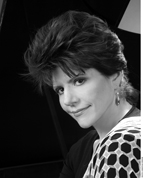
La Follia Barocca

La Follia Barocca
St. Bartholomew’s Church, New York, NY
November 4, 2009

Without a doubt, La Follia Barocca is one of the finest Baroque ensembles to ever play in New York. Boundless energy, first-rate precision and an authentic sound are just some of the trademarks of this conductorless orchestra. The leader, Enrico Cassaza, plays with a virtuoso technique and was marvelous in Vivaldi’s Violin Concerto in E Minor “Il Favorito”, playing all the difficult high notes with assured brilliance. The ensemble shows that it is capable of handling the treacherous virtuosity of Tchaikovsky’s Serenade for Strings, for example, yet they are also clearly able to play with subtlety of vibrato, bow speed and dynamics. And they were always together.

The cello soloist, Marcello Scandelli, performed Fiorenza’s Cello Concerto in D Major with the kind of passion typical of the Romantic Era, plus a rich tone, big vibrato and heavy use of portamento. He also brought intensity to the dynamics. His playing of the cadenza even included more common modernistic touches such as over-the-bridge playing (sul ponticello), which produced a slightly rough sound. Geminiani’s Concerto Grosso No. 12 in D minor: Variations on La Follia was played with elegance and intensity. The ensemble playing was highly coordinated.  

The orchestra stood throughout the program, looking—as well as sounding—like soloists. The acoustics of St. Bartholomew’s Church are perfect for a group of strings: it can produce a full-bodied sound with warm resonance, yet clarity for harmony and rhythm. And with its look of European antiquity, the space has the perfect atmosphere for the Baroque.

La Follia Barocca was created by a group of talented musicians from Milan with extensive experience in the repertoire of the 17th and 18th centuries. And the series Midtown Concerts is a community outreach program of ARTEK (The Art of The Early Keyboard, Inc.). Free concerts are given each Wednesday at 1:15 by professional early music ensembles and distinguished soloists. I very much hope La Follia Barocca returns to this series and to New York in general. This is the quintessential early-music orchestra: authenticity plus electricity.

Share

Rira Lim, pianist

Rira Lim, piano
Weill Recital Hall at Carnegie Hall, New York, New York
October 25, 2009

Born in South Korea, Rira Lim began playing the piano at age four, and at age 14 made her orchestral debut in her native Gwangju. After graduating from Yonsei University in Seoul, she continued her studies at the University of Texas, earning Master and Doctor degrees. She has performed in solo and chamber music in Asia and Europe, and won prizes in several international competitions.
For this recital. Ms. Lim chose an ambitious, unusual program. Even the apparently conventional opening selection was presented in an unfamiliar form: three Scarlatti Sonatas in a “transcription” for piano by Granados, with octaves, thirds, sixths, and “modern” harmonies added to make them more effective and appealing to pianists. More Granados than Scarlatti, they immediately heralded Ms. Lim’s virtuosity and wide dynamic range. Her tone was flawed only by some harshness at full volume, and a tendency to underplay her left hand; she seemed more comfortable with big chords than singing legato lines.

Barber called his Nocturne “Homage to John Fields,” but, as if reflected in a distorting mirror, its romanticism is obscured by atonal and chromatic dissonances. In Barber’s last piano piece, Ballade, written for the Van Cliburn Competition, Ms. Lim moved easily between the different moods, tempos and dynamics.

Malipiero’s four Preludi autumnali, written in 1914, are impressionistic pieces tinged with the somberness of the onset of war. The first two are all florid embellishment, the third is mournful, the fourth is sardonic and agitated. Ms. Lim brought out all these contrasting characteristics admirably.

The program’s piéce de resistance was Liszt’s Sonata, one of the repertoire’s most formidable works. In four continuous movements, it demands not only utmost virtuosity, but utmost physical and mental endurance. The slender young pianist negotiated its crashing chords, fortissimo double octave passages, cascading runs and arpeggios with untiring energy, and still had enough strength left to reward a standing ovation with a hefty encore by William Bolcom.

Share

Proteus Ensemble and Hai-Ting Chinn, mezzo-soprano

Proteus Ensemble and Hai-Ting Chinn, mezzo-soprano
Le Poisson Rouge, New York, NY
October 25, 2009

This was my first visit to Le Poisson Rouge, a multimedia art cabaret which has become the hip and trendy place to hear classical music in New York. The audience sat at tables and could eat and drink before, during and after the performance. Fortunately one heard very little table noise, and the wait-staff was quite discrete. I might add that the mac and cheese was delicious.
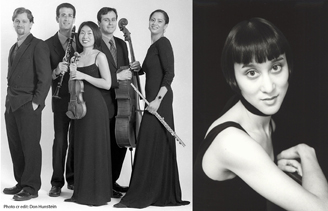
Soon after the piped-in-classical-background-music stopped, the five members of the Proteus Ensemble entered and flutist Jennifer Grim played “Syrinx,” Debussy’s work for solo flute. This segued into a performance of pianist James Johnston’s fine arrangement of Debussy’s “Prélude à l’apres-midi d’un faune.” Both pieces were beautifully done, and while pride of place goes to the flutist in both of these works, I was very impressed by the perfect intonation and beautiful balance one heard in the octave doublings played by Ms. Grim, clarinetist Gilad Harel, violinist Yuko Naito, and cellist Alberto Parrini. But, as we were not given programs, no one in the audience was informed as to what was being played or by whom.

Next, appearing hip and trendy in high boots and a mini-dress, mezzo-soprano Hai-Ting Chinn performed Poulenc’s song cycle “La courte paille.” These seven songs, settings of nonsense verses for children, were initially written for the soprano Denise Duval to sing to her son. For me, a little French whimsy goes a long way. But the audience delighted in Ms. Chinn expertly poised performance, for which James Johnston provided the sensitive accompaniment. Computer keystrokes by Ms. Chinn activated text translations which were projected on a screen behind the players.

Alban Berg’s “Four Pieces for Clarinet and Piano” followed. Here one experienced some of this evening most memorable playing. The almost inaudible pianissimo phrases spun out by Mr. Harel were ravishingly beautiful, perfectly shaped and controlled.

Then came the evening’s major work, Arnold Schoenberg’s “Pierrot Lunaire.” The Proteus Ensemble’s makeup exactly matches the instrumentation of this 1912 expressionistic work. They performed the complex score masterfully, playing with such ease and assurance that it belied the fact that this was atonal Schoenberg, not Mozart. The same could be said for Ms. Chinn’s performance of the Sprechstimme (speech-voice) narration. There are many ways to perform “Pierrot’s” Sprechstimme, some more sung, some more spoken. Ms. Chinn “more sung” rendition was quite convincing.

Immediately after the performers left the stage, the piped-in-classical-background-music began again.

Share

Mareda Gaither-Graves, soprano / Warren George Wilson, piano

Mareda Gaither-Graves, soprano / Warren George Wilson, piano
Merkin Concert Hall, New York, NY
October 24, 2009
 

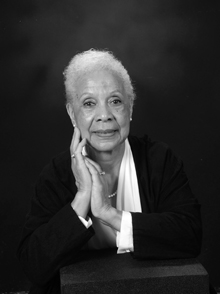
An adoring audience braved a very heavy rain to attend this concert by soprano Mareda Gaither-Graves. They were amply rewarded. The recital began with a thrilling performance of Beethoven’s concert aria “Ah! perfido.” This is a very demanding work, one in which the soloist is asked to exhibit many aspects of the singers art. And Ms. Gaither-Graves was more than up to the task. She is secure in all part of her range and her voice is well supported at all dynamic levels, from floating pianissimos to spine-tingling fortissimos.
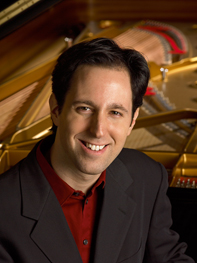
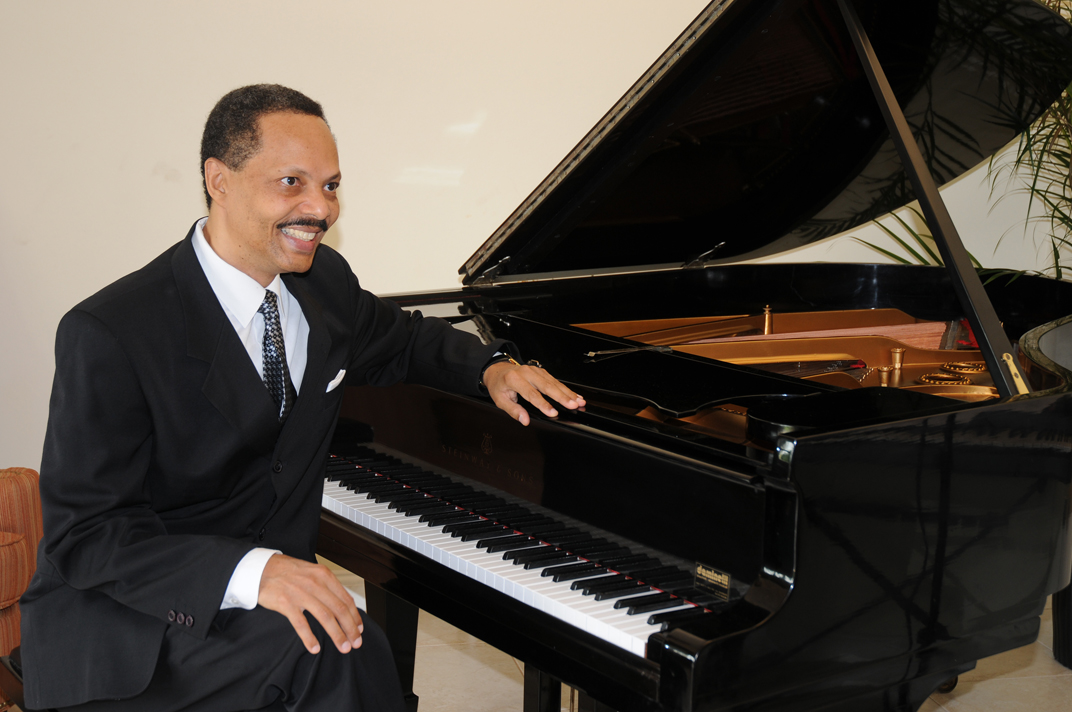
The Beethoven was followed by three songs, one each by William Grant Still, Howard Swanson and Margaret Bonds. Ms. Gaither-Graves performed these works with deep feeling and perfect diction. The set was entitled “People of Color Speak,” and, in the written program, the audience was told that the songs were “to be sung without pause.” And no applause interrupted the set. But since “to be sung without pause” never appeared again, an unintended consequence was that the audience felt free to applaud after every subsequent song. This applause, although deserved and heartfelt, interrupted the flow of the concert.

The rest of the first half was devoted to German Lieder, three by Joseph Marx and three by Richard Strauss.  Again we heard beautiful sounds, clear diction and total commitment to expressing the meaning of the poetry. Memorable moments during the Marx set were the ringing high notes during “Hat dich die Liebe berührt,” and the beautiful soft singing in “Selige Nacht.” Warren George Wilson was a fine accompanist, but he sometimes played a bit too loudly. His page turner, Mrs. Marjorie Landsmark-DeLewis, was graciously acknowledged on the program – a first in my many years of concert-going.

The works on the second half, although sung as well as what was performed before intermission, were just not as interesting musically. And all of the four songs by Ernest Chausson were alike in mood and tempo. Yet Ms. Gaither-Graves’ beautiful phrasing at the end of the second song, “Le Colibri” (The Humming-Bird), was for me one of the evening’s high points. The slow tempi continued during the first three of the four songs by the Russian composer Yuri Falik (b.1936.) But then a fast song, “A Ringing Day,” brought the concert to a rousing conclusion,

After prolonged standing ovations, Ms. Gaither-Graves presented two encores, Miguel Sandoval’s “Lament (Vocalise)” and Samuel Coleridge-Taylor’s “Life and Death.”

Share

Thomas Schultz, Piano

Thomas Schultz, piano
Weill Hall at Carnegie Hall, New York, NY
October 23, 2009

The announcement of pianist Thomas Schultz’s October New York recital stirred high hopes, as his outstanding 2006 performance had this reviewer waxing rhapsodic. Those hopes were met in some regards, but less so in others.

The first surprise came in the programming itself. Known for his adventurous mix of old and new and a keen sense of musical chemistry between works, on this occasion Mr. Schultz presented only two works, both in the mainstream literature and neither lacking a distinguished performance history; Schubert’s Sonata in B-flat, D.960,
was the first half, and the Brahms Variations and Fugue on a Theme of Handel, Op. 24, was the second. While there is a fine line between a specialty and a pigeonhole, Mr. Schultz’s less well-known 20th century works had been a huge plus in the prior program; Brahms and Schubert, on the other hand, set the recital up for comparison with numerous of the world’s greatest performances, and, on this particular evening he did not fare as well as one had hoped.

In his favor, Mr. Schultz exhibited in the Schubert the same genuine feeling and penchant for subtle, soft playing that this listener admired several years ago; unfortunately, though, the balance between registers was not quite controlled, and the melody, even in the beginning, was overwhelmed by accompaniment (lovely though it was). What seemed a style of intimacy a few years ago here seemed more a lack of projection. What had impressed as a patient, long-breathed style seemed here to need more differentiation (e.g., the left hand G octaves that punctuate the last movement, which were almost lackluster).

The Brahms Op. 24 faced similar issues, with the additional technical challenges that sometimes seemed to slow things down. One especially missed the surges in the twenty-third variation, building to the climax in the twenty-fifth that unleashes the Fugue.

Through it all, there were great moments and many glimmers of insight, but to bring the music to the audience Mr. Schultz might need to step outside the tonal world he seems to have internalized so well and project more.

Share

Spencer Myer, Piano

Spencer Myer, piano
Merkin Concert Hall, New York, NY
October 21, 2009

Spencer Myer’s biography lists numerous competitions and awards, but he may be bringing more credit to those competitions than they to him. He is a thoughtful, sincerely committed performer who goes beyond mere display, putting the music first. One is sad thinking that any artist has to endure the competitive circuit (or circus), but perhaps it has acted as a crucible for his gifts, for he is also exceptionally polished.

To open his recent recital (presented by Astral Artists), he offered a superb interpretation of Handel’s Suite No. 2 in F Major, treating the opening Adagio movement’s vocal lines with fluidity, sensitive shaping, and excellent balance. The work continued with marvelous transparency of texture, dynamic contrast without excess, and excellent control of the imitative voices in the sparkling final Allegro.

Quite a drastic change of time and mood was effected with Janacek’s Sonata 1. X. 1905, “From the Street.” It was impassioned and convincingly conceived, though some left hand accents were too fast and exaggerated for this listener. Suggesting the outcry of the work’s tragic origins, these articulations can sound hectic, rather than tormented; one cannot doubt, however, that Mr. Myer had his reasons, as the sense of intense feeling and communication was always present.

Schubert Four Impromptus, Op. 90, followed. On paper, this seemed like an unusual juxtaposition, but the solemn narrative quality of the Schubert’s opening was in keeping with the Janacek’s sorrowful “Death” movement, and each ensuing Impromptu was thoughtfully developed. One’s only reservation again was a penchant for highlighting inner lines and lower voices to an exaggerated degree.

Myer’s performance of Copland’s Piano Variations was one of the best in memory, with consummate clarity and projection of its inner workings. “El Amor y la muerte” and “Los requiebros” of Granados (from Goyescas) closed the recital with considerable color. A few slightly labored moments in the latter did little to dull one’s favorable overall impression that Spencer Myer is an artist to watch. A standing ovation led to encores of Debussy’s “Poissons d’or” and Earl Wild’s transcription of Gershwin’s “Embraceable You.”

Share

Orrett Rhoden, Piano

Orrett Rhoden, piano
Zankel Hall at Carnegie Hall, New York, NY
October 15, 2009

Sometimes an encore can leave a more marked impression on an audience than the program itself, and such was the case with Jamaican pianist Orrett Rhoden’s transcription of the Bob Marley song, “One Love.” A reggae-meets-Liszt fusion of his homeland’s music with his own Romantic pianism, it exemplified Mr. Rhoden’s charismatic and communicative gifts. Indeed, these gifts were present throughout the recital, but there were some issues that detracted.

While some of the liberties Mr. Rhoden took may be chalked up to interpretive license, many of them were too much for this listener. Especially in the Sonata, Op. 53 of Beethoven (“Waldstein”) and Schumann’s Etudes Symphoniques, Op. 13, there were myriad grand ritardandi, puzzling tempo changes, dramatic bursts (where more measured dynamics were called for), and changed or added notes that did not enhance the score. While these “personal touches” may be preferable to having no reactions to the score whatsoever (an all too common occurrence), too many of them can distort the music. As just a few examples, in Schumann’s Etude II, grace notes were added in the wrong places and a gratuitous final C-sharp spoiled its character; moreover, the first and second endings of Variation XI had a different bass line than what is written (accentuated, to boot). One could be impressed at times that Mr. Rhoden simply follows his own drummer, as in Etude X, where his added left hand octaves hearkened back to some Romantic piano greats; unfortunately, though, some of these “liberties” must be considered errors, such as in the Finale where the last sixteenths of many measures were changed to eighths, completely changing the rhythmic energy.

The balance of the program included two Scarlatti Sonatas in A Major (L. 483 and 345),

Granados “Allegro de Concierto,” and Chopin’s Scherzo No. 2 in B-flat minor. While in the Granados, one missed the serene mastery of the recently departed Alicia de Larrocha, Rhoden’s characteristic freedom and cantabile phrasing brought some great moments to the Chopin. An encore, the Allemande from Bach’s French Suite in G Major, was followed by the Marley, which brought the house down.

Share

Stanislav Khristenko, Piano

Stanislav Khristenko, piano
October 15, 2009
Weill Recital Hall at Carnegie Hall, New York, NY

Stanislav Khristenko, a Ukrainian pianist and first prize winner of the Virginia Waring international piano competition, made his New York recital debut recently in a thoughtful, focused, and ultimately successful concert at Weill Recital Hall.  The pianist revealed deep reserves of artistry and professionalism as the evening progressed, saving his most incisive and colorful playing for the program-ender, five short pieces by Prokofiev.

There was an unusual sense of risk in the pianist’s choice of the Shostakovich first sonata, op. 12 to begin the program. As Mr. Khristenko was acclimatizing himself to his instrument and the hall during this sonata, he did not make a thoroughly convincing argument for this work’s value.  His talent and technique were in evidence immediately, but he pushed the tempo and over pedaled in scale passages where more clarity would have been appreciated.  While I respect the challenge, this composition would be easier to play and hear in a later spot on the program.

In Schubert’s Sonata, d. 958, the pianist again took time to find the right approach to this work, both technically and interpretively.  The Steinway at Weill hall is weak in the middle register, and I could hear Mr. Khristenko struggling to produce a singing tone in the first movement without forcing the sound.  His voicing was bass heavy initially and his rubato a little stiff until he hit his stride in the final two movements.  Most especially, the tarantella was a delight–alive rhythmically, yet relaxed, sounding simultaneously Schubertian and Italianate.

By the second movement of the Schumann C Major Fantasy, which began the second half, Mr. Khristenko was in full control of all his resources and played with a maturity that belied his young age.  The performance was organic from beginning to end, and one of the best I have heard of this difficult work.  With the briefest of pauses, the pianist then launched headlong into the Prokofiev.

In these five excerpts from ten pieces, op. 12, Mr. Khristenko was completely in his métier.  Each selection sparkled like a gem, honed to perfection.  These would have been impressive performances from any artist, but they were all the more joyful from a pianist at the outset of his career.

Mr. Khristenko has the poise and intellect of a seasoned performer.  Despite the fact that all his programming choices were not ideally suited to his temperament, I applaud his appetite for adventure and discovery.

Share

Cornerstone Chorale and Brass

Cornerstone Chorale and Brass
“The Courage to Care”
Created by Bruce Vantine
Zankel Hall at Carnegie Hall, New York, NY
October 11, 2009

I’ve never encountered anything quite like “The Courage to Care,” the program presented by Bruce Vantine’s Cornerstone Chorale and Brass.  Part church service, part passion play, part concert, this program assumes a unique form in which Mr. Vantine attempts to carry out his stated mission “to use our time, talents and resources to minister to our brothers and sisters in need.” 

On hand were a brass quintet, a pianist, a percussionist, two narrators, a chorus of twenty one and the conductor-composer-creator, Dr. Bruce Vantine.  The performance ran without intermission and the audience was instructed to withhold applause until the end. The program was divided into five large sections entitled “By your will created,” “Called to serve all people,” “The courage to care,” “God so loved the world that he gave his only begotten Son,” and “Be not afraid.” We were provided with an eleven page program which contained the words of the narrators and of the choral selections, and I am happy to report that the lights in the audience were sufficiently bright that one could read the program with ease. This was especially helpful during the two hymns, which were audience sing-alongs.  At other times it was hardly necessary, as the diction of the narrators and singers was exemplary.

Their fine diction was not the only way in which the Chorale excelled.  Throughout the program they sang with beautiful sound, excellent intonation, and sincerity of intention. The several solos performed by chorus members were all well executed.  Standing front and center, attractively clad in red, black and white, and singing everything by memory, they were the stars of the show.  Equally skilled, however, was the brass quintet. During one of the most poignant moments of the “God so loved, etc.” section we were treated to a performance of one of music’s most beautiful pieces; the Adagio from Beethoven’s Sonata No. 8 (“Pathetique.”)  Here Mr. Vantine’s message seemed to be that during times of greatest emotion, when words fail, music speaks.

This listener would have enjoyed the program more had there been fewer Christological exhortations throughout. To those of us who are not of the Christian faith, a program such as this can seem presumptuous and even distasteful.  However, I was probably the only non-believer in the hall, and I can report that the rest of the audience loved it, as they demonstrated with a standing ovation at the end.

Share

Minsoo Sohn, Piano

Minsoo Sohn, pianist
Weill Recital Hall at Carnegie Hall, New York, NY
October 8, 2009

Minsoo Sohn is a pianistic phenomenon and a musical enigma. Born in Korea, he studied with Russell Sherman at the New England Conservatory, and established a brilliant career after winning an astounding number of international competitions, including Canada’s 2006 Honen Competition, which sponsored this New York debut.

Sohn’s program presaged his musical seriousness and stunning technique: Beethoven’s “Diabelli” Variations, considered one of his greatest but most intractable masterpieces, and four “Fantasies” by Liszt on vocal works of Beethoven, Schubert and Mozart. And as though there were not enough original piano music to choose from, the encores  were transcriptions of orchestral pieces by Bizet, Gluck and Mendelssohn.

As might be expected of a spectacular young virtuoso, Sohn was most impressive in the Liszt “Fantasies.” Bravura showpieces loosely based on popular themes by classical composers, they bristle with every imaginable – and some unimaginable – instrumental challenges, all of which Sohn surmounted with breath-taking ease. His fingers flew across the keyboard; he shook long octave passages out of his sleeve; his tone went from whispers to rafter-shaking, though sometimes steely power. His affinity for the style – its phrasing, melodic contours, confident virtuosity – was complete. Yet, despite its expressiveness, his playing had a curiously detached quality; he seemed to be presenting rather than experiencing the music. This was even more apparent in the Beethoven Variations, which range from sublime serenity to parodistic humor. Though every tempo, phrasing and dynamic marking was meticulously observed, indeed often considerably exaggerated, the playing lacked what the great violinist/teacher Carl Flesch called “the inner impulse” that lets the performer enter the composer’s emotional world. Moreover, unlike most interpreters, Sohn inserted long pauses between variations; this may have facilitated bringing out their mood and character changes, but broke their continuity and cumulative impact.

The sell-out audience responded with concentrated attention and enthusiastic ovations.

Share