The Italian Academy and Carnegie Hall present David Witten in Review

The Italian Academy and Carnegie Hall present David Witten in Review

David Witten, pianist;

Grace Renée Pfleger, mezzo-soprano;

Italian Academy, Columbia University, New York, NY

April 16, 2026

Among the exciting celebrations of America’s musical heritage this year so far (the Semiquincentennial of the USA, as some call it), was an April recital entitled “From Sea to Shining Sea: Music to Celebrate America’s 250th Birthday,” given by respected pianist and professor David Witten. Listed under the aegis of Carnegie Hall as part of their festival “United in Sound: America at 250,” the concert took place at the Italian Academy for Advanced Studies in America at Columbia University (also listed as presenter). For the record, this listener was not at the live concert itself, but an excellent video of the complete event (by Asaf Blasberg) was provided for review.

It has been fascinating to see how many kaleidoscopic programs have already been built this year on American music – many with completely different repertoire, reflecting the nation’s great musical diversity. Several works on Mr. Witten’s program were in fact unfamiliar to this reviewer. Rather than simply featuring traditional favorites, his selections included some by composers whose births preceded the nation’s founding and on through the twentieth century. The program moved from works of Francis Hopkinson (1737-1791), Alexander Reinagle (1756-1809), and Louis Moreau Gottschalk (1829-1869) up to Charles Ives (1874-1954), Mario Castelnuovo-Tedesco (1895-1968), and Judith Lang Zaimont (b. 1945). The result was historically illuminating, as well as moving and entertaining.

The entertainment aspect appears to be a special gift of this pianist, who excels as a curator and raconteur, radiating warmth and humor as he invites us into the musical equivalent of a curiosity shop. Not to understate his credentials as a pianist, which are substantial (see his website- David Witten), his gifts beyond the piano are what made the occasion especially memorable.

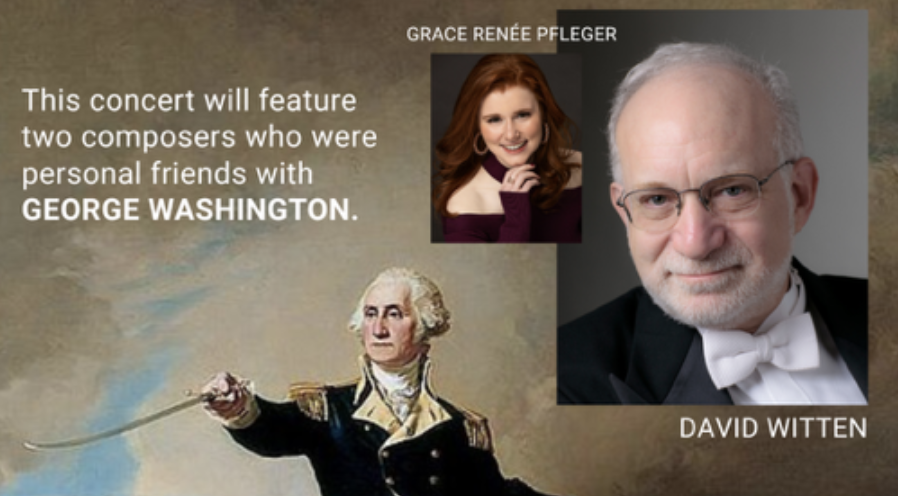
The concert opened with the Sonata No. 2 in E major (1790) (from The Philadelphia Sonatas) by Alexander Reinagle. Mr. Witten introduced the work with some background about Reinagle’s life in Philadelphia (where George Washington and his family lived), and set the scene for the piece, speculating that Washington may have attended one of the many concerts at which such pieces were presented.

While Reinagle certainly is interesting from a historical perspective, filling in some blanks for those early American years when most masterpieces were coming from Europe, the Sonata No. 2 is hard to embrace. Bearing signs of the influence of C. P. E. Bach, it blends the latter’s mercurial, improvisatory keyboard style with more rigid formulaic elements, so that moments of high drama move to facile resolutions in puzzling ways – as if heated disagreements are being followed by the words “have a nice day” and the like. The first movement in particular is not easy to pull off convincingly and seems in some ways to be in search of itself, just as America was in its formative years. Some have handled the structure of it by facing its capriciousness head-on, with strong dynamic differentiation and very decisive and deliberate transitions between otherwise strict tempi. This was not so much the case here, but overall Mr. Witten handled it well, leaving out repeats to good effect and omitting some ornaments that would have weighed things down. In particular, he handled the second movement Adagio well, with strong conviction. The lively final Allegro benefited from his brisk tempo, crisp articulation, and what one guesses was his own tasteful extemporizing where needed.

Mr. Witten then introduced several works by Mario Castelnuovo-Tedesco, a composer known for having written scores for some 200 films among his many works. It seems only fitting to have included the work of an Italian-American composer, given the Italian venue and presenting organization, but Castelnuovo-Tedesco was an especially welcome choice, as his work is still relatively underplayed compared to that of some of his contemporaries. It is highly evocative, as we might expect from a prolific film composer, and it deserves to be heard. We were fortunate here to hear his Autunno (Autumn) from Le Stagioni (The Seasons), Op. 33 composed in 1924, Two Film Studies, Op. 67 composed in 1931, and a selection entitled Deanna Durbin from a set entitled Stars: Four Sketches for Piano, Op. 104 composed in 1940.

The Autunno selection was a discovery for this reviewer, and Mr. Witten’s performance of it was enchanting, with gentleness in the right hand’s fluid streams and remarkable sensitivity to its harmonic colors. The Two Film Studies brought a welcome note of lightness. The first one, Charlie, was named after Charlie Chaplin, and its dissonant repeating patterns evoked the title character’s famous walk, along with his trademark mixture of the serious with the comedic. The second of the Film Studies, entitled Mickey Mouse (Topolino), needs little explanation – Mr. Witten captured the antics with a mischievous elasticity of tempo and delivered (with a perfect poker face) the composer’s playful references to the Toreador Song from Bizet’s Carmen and bits of Vissi d’arte of Puccini. The sketch Deanna Durbin from Op. 104 capped off the set with easy ebullience (though it certainly would not be called “easy” as a piece) and a flair worthy of its Hollywood honoree. One could hear audience members’ delight in response.

Moving the program back in time to 1788, Mr. Witten introduced mezzo-soprano Grace Renée Pfleger, with whom he would collaborate on selections from Songs for Harpsichord or Fortepiano by Francis Hopkinson. Additionally, he offered some of the history of Hopkinson, whom he described as not only a composer but an artist (who designed one of the first flags of the US), poet, and lawyer. Most remarkably, he was one of the founding fathers who signed the Declaration of Independence. Frankly, simply knowing the very history of this composer made hearing these pieces an engaging experience, though purely musically they all seemed to owe a heavy debt to Handel and other earlier masters. We heard the first, Come, Fair Rosina,  the second, My Love is Gone to Sea, and the sixth, Over the Hills. It was a refreshing choice to throw some vocal music into the mix.

Ms. Pfleger – described in her promotional materials as “an opera singer, music therapist, and community advocate” – brought a charming stage presence and sincere expressiveness to these songs. Particularly winsome was the innocence and sorrow she conveyed in My Love is Gone to Sea. She is currently pursuing her Artist Diploma on full scholarship at the Cali School of Music at Montclair State University. Mr. Witten accompanied her ably, as one would expect, reclaiming his solo role afterwards for the program’s final offerings, selections from A Calendar Set (1972-78) by Judith Lang Zaimont, Variations on ‘America’ (1891) for Organ by Charles Ives, and The Banjo (1853) by Louis Moreau Gottschalk.

There were just two selections chosen from Ms. Zaimont’s twelve-month set – November and July in that order. As Mr. Witten explained, he included July – “of course” – as, even with all its dissonance, there are three patriotic songs in it. As for the rationale behind November, Mr. Witten shared that, when pianists play only selections from the set Ms. Zaimont requests that they include the month of their birth, and Mr. Witten was born in November. At any rate, both were fine additions to the program, November for its austere beauty (prefaced by the quotation “November’s sky is chill and drear” of Sir Walter Scott) and July (“The Glorious Fourth!”) for its references to The Stars and Stripes Forever along with snippets of Columbia, the Gem of the Ocean and Yankee Doodle. Well done!

The penultimate work of the program was Variations on ‘America’ for Organ (1891), composed by Charles Ives at age seventeen and arranged for piano by Mr. Witten. Based on the anthem that is also called My Country ‘Tis of Thee, it was a good choice to project a mixture of national spirit and Ives’s own brand of individualism and trademark cacophony. Mr. Witten played it with panache.

The program closed with a spirited rendition of The Banjo (1853), Gottschalk’s once ubiquitous showstopper. It was great to hear again after years of not encountering it on recitals, and Mr. Witten conveyed well its carefree innocence and joyous spirit. Kudos go to him for including it, and for the whole memorable recital. I’ll just conclude by saying, “Encore!”

Share

WA Sinfonietta presents The Craft of Perfection: Mendelssohn and Brahms in Review

WA Sinfonietta presents The Craft of Perfection: Mendelssohn and Brahms in Review

WA Sinfonietta

Charles Neidich, Music Director/Conductor

Good Shepherd-Faith Presbyterian Church, New York, NY

March 15, 2026

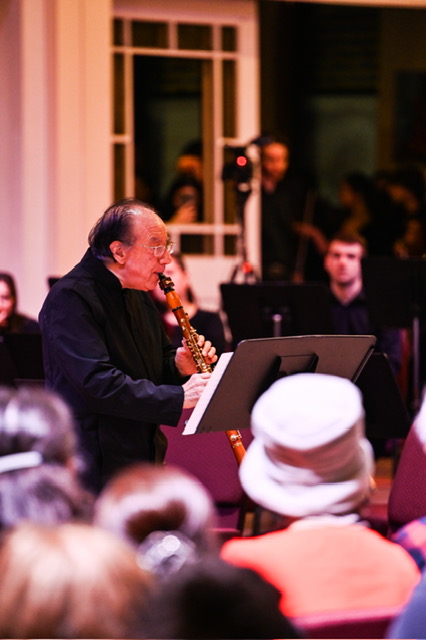
The WA Sinfonietta, under the baton of the world-renowned clarinetist Charles Neidich, gave its first 2026 performance on March 15th at the Good Shepherd-Faith Presbyterian Church, with works by Mendelssohn and Brahms. The first two concerts ever of this ensemble (the inaugural concert on March 23, 2025, and May 13, 2025) had already shown the great potential and promise of this ensemble. (Interested readers can click on the following links to read about those concerts: WA Sinfonietta in Review March 23, 2025 and WA Sinfonietta in Review May 15, 2025.) As one has come to expect from the intellectually curious Mr. Neidich, this was a concert program of both historical interest and scholarly investigations combined with highly energized performances. The Sinfonietta has already built up a devoted fan base – the hall was filled, and extra chairs were added to accommodate to overflow. This is something that makes any lover of the arts very happy (are you listening, Timothée Chalamet?), and it bodes well for the future. 

As has become standard for these concerts, Mr. Neidich spoke about the program and various points of interest, but (again) was all but completely inaudible to anyone who was not in the first or second rows. The audience members next to me were visibly frustrated by this. Thankfully, the excellent program notes (which I am assuming were written by Mr. Neidich) were both interesting and informative. 

Mendelssohn’s Overture for Winds in C major, Op. 24, opened the program. Originally written in 1824 for eleven instruments with the title Nocturno, the updated version was in response to a call for improved military music in Prussia (amongst other countries). Mendelssohn added a few measures and expanded it for a large band of twenty-five instruments and gave it the new title. The program notes called this work a model for future large wind works, and one can hear how Sousa (an intelligent and skilled composer too often marginalized) must have drawn inspiration for his own works. The winds of the WA (all players who no doubt have had extensive band experience) played with great energy. The one reservation I had was it did seem that there was an exaggerated effort to bring melodic lines to the fore in the first section at the expense of overall ensemble balance. A quick glance at the score does not suggest that this was intended, so perhaps it was an interpretive choice. The second section was what I would expect from players of quality and experience – crisp, with martial precision and precise balance. 

The 1834 revision of Mendelssohn’s 4th Symphony (“Italian”) followed the Overture. The program notes tell us that Moscheles, who conducted the second (unauthorized) performance in London, wrote Mendelssohn “…its shortcomings might only be evident to you and me.” Mendelssohn took this as the call to make revisions. The end result was that the second, third, and final movements underwent revisions; the first movement was left as it was. History seems to have landed firmly on the side of the original, which is the overwhelming choice for performance. About the revised version the noted English music critic Edward Greenfield wrote “Surprisingly for so perceptive a composer he (Mendelssohn) undermined the original’s freshness, smoothing over melodic lines (as in the Pilgrim’s March) and extending linking passages. A fascinating comment on the danger of second thoughts after white-hot inspiration.” Even Mendelssohn’s beloved sister Fanny was critical of the changes. 

Mr. Neidich is very fond of exploring such non-standard versions, such as in his WA Sinfonietta inaugural concert, which had a similarly non-standard addition to the Brahms 4th symphony. His presentation of this 1834 version is a welcome attempt at introducing listeners to new ideas of works that they might already have known well in their original forms. Whether or not one prefers this version or the original, it is indisputable that the WA Sinfonietta gave an excellent performance, and likely one of the very best of this version. Mr. Neidich is a meticulous musician, and he brings that quality to the podium, which in turn he imparts to his ensemble. The opening Allegro vivace had a lively freshness that was notable, with an exuberance that always remained controlled. The Andante was brooding, but in a thoughtful fashion, and not self-indulgent. The Menuetto had charm, but it also had heft, with some exceptional brass playing. The stormy Saltarello finale was played with gusto. The audience responded with an enthusiasm that one usually hears at the end of a concert. Mr. Neidich shook hands with many of the ensemble members; indeed, one senses that he is truly overwhelmed with gratitude for both the audience and his ensemble. 

After intermission, Mr. Neidich offered a short solo clarinet work of his own, the title of which I was not able to hear when he announced it in an even softer voice than his opening remarks (and it was not listed on the program). It was hauntingly evocative and filled with passages that highlight Mr. Neidich’s considerable virtuosity. There were also some interesting extended techniques, such as blowing into the mouthpiece without forming notes, but producing a swirling wind sound. 

The ensemble then returned for their sole work of the second half, Brahms’s Symphony No. 3 in F major, Op. 90. For some background, Mr. Neidich has spoken about the connection between Brahms and the Meiningen Court Orchestra (A conversation with Charles Neidich), and how the WA Sinfonietta is modeled after the Meiningen. Brahms was well known for his penchant for revision and refinement, and the 3rd symphony is no exception. 

If the earlier Mendelssohn works were evidence of playing at a high level, the Brahms raised the bar even higher. It might be premature to state this, but based on this and the earlier Brahms 4th, it seems that the WA Sinfonietta has a special affinity for Brahms. I was reminded of an earlier performance of the 3rd by another ensemble that had been workman-like, with notes all there but an overall lack of differentiation. In contrast to this, the Sinfonietta offered a powerful reading, filled with urgency and a robust quality that one not only wants, but requires for this symphony. The lovely clarinet in the second movement must have gladdened Mr. Neidich’s heart. It was one of the better Brahms 3rd that this listener can recall hearing, which is no small achievement, especially for an ensemble still in its early stage. The audience loved it, and the ovation was loud and long for Mr. Neidich and the Sinfonietta. It is my hope that this fine ensemble continues its upward trajectory and that Mr. Neidich’s obvious passion keeps rubbing off on his talented players. The WA Sinfonietta is well worth any music lover’s attention, so if one has the opportunity to hear them they should not hesitate. They might have to get there early for a good seat! 

Share

Modus Performs Brahms & Burckardt @ Merkin Concert in Review

Modus Performs Brahms & Burckardt @ Merkin Concert in Review

Modus Operandi Orchestra

Justin Bischof, Music Director & Conductor

Eiko Kano, concertmaster

Merkin Hall at Kaufman Music Center, New York, NY

March 3, 2026

The Modus Operandi Orchestra (MOO), under the direction of Justin Bischof, presented a concert entitled “Brahms & Burckardt @ Merkin,” featuring three world premieres by composer Rachel J. Burckardt, tastefully sandwiched between masterworks by Johannes Brahms, at Merkin Hall on March 3, 2026.

As noted in the orchestra’s biography, MOO consists of “65 of New York’s finest orchestral musicians,” and it was immediately evident that the group is made up of players of the highest caliber. Among the musicians were familiar faces from leading orchestras such as the New York Philharmonic, the Metropolitan Opera Orchestra, and the Cleveland Orchestra, as well as chamber and contemporary ensembles including the Attacca Quartet, The Knights, and NOVUS NY of Trinity Church Wall Street.

The program began with Brahms’s Tragic Overture, Op. 81 (1880). The orchestra produced a rich timbre and warmth well suited to Brahms. Observing such a large-scale work from close proximity felt almost indulgent. The experience differs greatly from hearing an orchestra on Stern Auditorium’s Perelman Stage at Carnegie Hall. While the overall orchestral blend may be less unified at such proximity, one instead hears the intricate details of the orchestration, articulation, and the subtle colors Brahms sought to convey. It offered a unique listening experience that the audience appeared to enjoy as much as I did.

A native New Yorker, award-winning composer, and multi-instrumentalist, Rachel J. Burckardt (b. 1954) has spent more than 45 years as both a church musician and a civil engineer. The program featured four of her works, including three orchestral world premieres. October Fanfare (1984/2025), heard here in its orchestral world premiere, was originally composed as a choral recessional for Ms. Burckardt’s wedding more than 41 years ago. The work pairs the main theme from her Fanfare in E-flat with verses from her setting of Psalm 150. Psalm 150—often favored by composers—has also inspired works such as Symphony of Psalms by Igor Stravinsky, Psalm 150 (1892) by Anton Bruckner, and Psalm 150, Op. 67 (1962) by Benjamin Britten. In Ms. Burckardt’s work, the brass writing effectively conveyed the grandeur of the text (NIV): “Praise the Lord, Praise God in his sanctuary; praise him in his mighty heavens.”

Aire Mount Auburn (2020) began with a solo harp, beautifully played by Kristi Shade. One could clearly hear the influence of traditional Irish music. Ms. Burckardt notes that her mother’s side of the family has Irish roots stretching back generations. The melody, drawn from the traditional Irish tune “Shane”—also associated with the hymns Be Thou My Vision and Lord of All Hopefulness—was later taken up by solo flute (Anna Urrey) and violin (Eiko Kano), the latter performed in a fiddle-like style. The result was both stylistically convincing and one of the most memorable moments of the evening.

The second world premiere, Variations on Afternoon Light (2025) further revealed Ms. Burckardt’s distinctive orchestral voice. The work takes as its starting point Afternoon Light, a composition by her close friend and collaborator Bill Desmond, originally written for electric guitars and percussion. Ms. Burckardt herself performed in Mr. Desmond’s ensemble Tone Poem, an unusual group that included hammered dulcimer, psaltery, guitars, piano, pan pipes, and charango. Perhaps influenced by this experience, the orchestration here felt especially imaginative. A solo harp reimagined the opening guitar theme, later punctuated by pizzicato strings. A particularly striking moment came in the form of a lyrical cadenza by oboist Hsuan-Fong Chen.

The final world premiere, Shloshah Tehillim (Three Psalms- 2025) emerged as the highlight of Ms. Burckardt’s contributions to the program. Given her decades of experience as a church musician, her deep understanding of sacred music was evident throughout. The work powerfully conveyed the devotional spirit of the texts. The first movement, Al Yedei Nechalei Bavel (By the Streams of Babylon), sets the well-known Psalm 137. Ms. Burckardt notes in the program that the original version used a complex layering of synthesizers, soloists, and choir, followed later by an “unplugged” arrangement featuring fingerpicked guitar arpeggios and solo tenor voice. Both versions evoke the melancholy and longing of the captive Israelites. In this orchestral adaptation, the layered textures of the earlier versions were effectively translated into orchestral color. The second movement, Rachamim (Mercy), merges Ms. Burckardt’s settings of Psalms 51, 103, and 106, while the third movement, Yerushah (Inheritance), sets Psalm 16.

Conductor Justin Bischof introduced the program by discussing the distinction between “radical” and “traditional” orchestral composition, citing figures such as Hector Berlioz and Arnold Schoenberg as examples of the former, and composers like Brahms and Antonín Dvořák as representatives of the latter. The evening’s program leaned toward the traditional side. Ms. Burckardt’s works largely avoided extended techniques, electronics, or improvisation, remaining grounded in Western classical tonality.

In an era when orchestral writing often incorporates a wide range of experimental techniques and multimedia elements, Ms. Burckardt chose a more traditional framework. Yet within those boundaries she expressed an authentic and personal voice, drawing on sacred and liturgical traditions, elements of jazz, and the lilting character of Irish melody.

This raises an intriguing point. One might also argue that Brahms himself was radical in his own way. Although his formal structures and orchestration were deeply rooted in the tradition of Beethoven, his harmonic language and rhythmic innovations—particularly his masterful use of hemiola—pushed the boundaries of what symphonic writing could be within that inherited framework. In doing so, he reshaped the course of orchestral music for generations that followed.

Erika Dohi

Share

Dinu Mihăilescu: ROMerican Avant-Garde in Review

Dinu Mihăilescu: ROMerican Avant-Garde in Review

Dinu Mihăilescu, piano

Weill Hall at Carnegie Hall, New York, NY

October 31, 2025

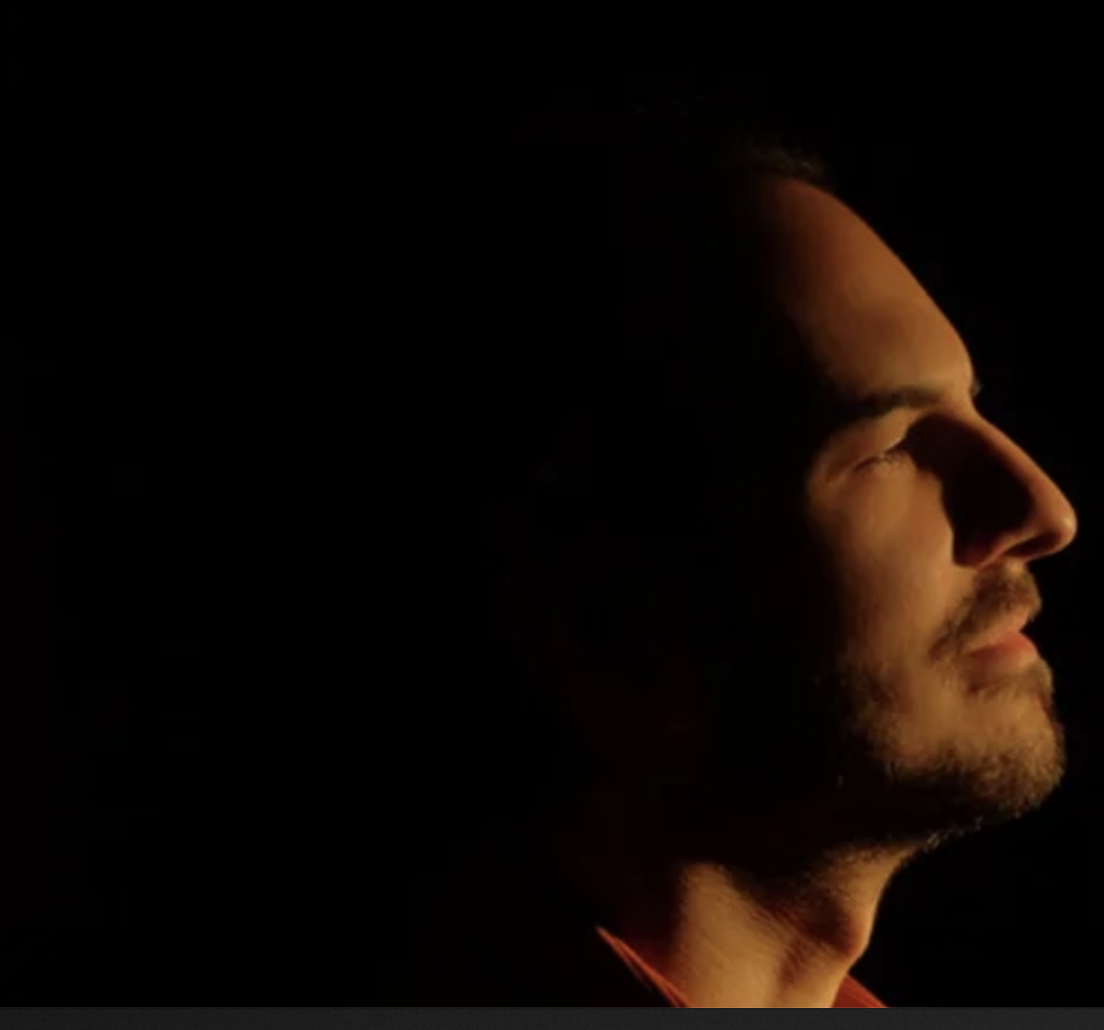
On a windy Halloween night, Romanian pianist Dinu Mihăilescu blew into town to present a program he titled “ROMerican Avant-Garde” – the “RO” being works from Romanian composers Remus Georgescu and George Ensescu, the “Merican” being works by Americans John Cage, Jacob Druckman, Leonard Bernstein, Aaron Copland, and a “surprise addition” of Philip Glass, and the “Avant-Garde” to seemingly indicate the “modernity” of the works when they were written. The program was centered around Druckman’s The Seven Deadly Sins. Mr. Mihăilescu wrote the notes for the program, and one can learn more about him by visiting his webpage – Dinu Mihailescu | Pianist.

About the program, Mr. Mihăilescu writes  that ROMerican is “a concert-experience lasting about 50 minutes without applause, and almost without interruption between the works,” further writing that post COVID-19 “in view of the habits that have radically changed since the beginning of the pandemic, I see here an opportunity to change the way I give classical piano recitals in order to make them accessible to a new audience beyond the habitual traditional music lovers.” This is a lofty goal, but one that Mr. Mihăilescu only partially succeeded in realizing, for reasons that will be given later.

There were some introductory remarks from the presenter and Mr. Mihăilescu – including the pianist’s announcement of a program “surprise” to be inserted, with the almost casual “you will be able to guess who it is” without mention of the composer or where in the program it was to appear. This already belied the words in the previous paragraph -“accessible” is not making your audience guess! Not to mention that this was in addition to the 50 minutes already on the program without break, which is stretching the stamina of the audience beyond reasonable limits.

Opening with John Cage’s In a Landscape, an early work that is rather tame for Cage,  Mr. Mihăilescu displayed sensitivity in phrasing and color – the main challenges, as the piece itself is quite simple. One must say that this work is much too long for the ideas it presents.  It sort of meanders about, repeating itself, and even the most able player is hard-pressed to keep the listener engaged. Happily, the Remus Georgescu Three Miniatures for Piano which followed brought energy and spirit to the forefront. The nightmares of the Berceuse, the romanticism of the Sicilienne, and the biting sarcasm of the Marche were rendered by Mr. Mihăilescu with great skill. These are fun pieces, and Mr. Mihăilescu reveled in them.

Then it was time for the program centerpiece, Jacob Druckman’s The Seven Deadly Sins. Curiously, the notes did not mention the “sins” or the structure of the work. Was one supposed to know that Pride, Envy and Anger were the first section, Sloth the second section, and Avarice, Gluttony, and Carnality the third? Of course not! A sin of omission! As for the playing itself, it was truly outstanding. Mr. Mihăilescu has more than enough technique and intelligence to deal with the challenges that abound in this work. The fact that he did this (and every other work in his program) from memory was particularly impressive. There were no slips, lapses, or hesitations- and that is not easily accomplished in a work as thorny as this. The Druckman was far and away  the highlight of the evening.

Leonard Bernstein’s For Aaron Copland from Seven Anniversaries followed as something of a palate cleanser – it is so brief that it was already over when one was just starting to settle in. Now, was the “surprise”- Philip Glass’s Etude No. 2. Why Mr. Mihăilescu felt this was necessary to add is anyone’s guess. While he did play it well (evenly played without being robotic and with a good balance of touch in the repetitions), it mainly served to add another seven minutes to the program without adding anything notable. The Four Piano Blues by Aaron Copland followed the Glass, and I particularly enjoyed them, as there are many reminders of the composer’s 1926 Piano Concerto, of which I am very fond.

Mr. Mihăilescu ended the program with an enchanting Carillon Nocturne from George Enescu’s Suite No.3, Op. 18. The audience gave Mr. Mihăilescu a standing ovation.

Did I say end? Ah, but no – it was now time for the four (!) “encores” – all so clearly planned in advance. Two involved a second pianist, Philippe Boaron. The first,  Night, by Fazil Say, which started as good Halloween fun, wore out its welcome long before its ten minutes were completed. Since we are still in the 150th anniversary of Ravel’s birth, Vallée des cloches from Miroirs, and Jardin Féerique from Ma mère l’oye (with Mr. Boaron) were offered, and finally a work by Elgar (Mr. Mihăilescu called the title from the stage as almost an afterthought while the noises of shuffling about of both piano benches and the audience made it impossible to hear clearly). One can understand the impulse to want to maximize the opportunity to play on this stage, but to add another twenty minutes after already going over an hour without any break for the audience is remarkably tone-deaf. The applause had already completely stopped before Mr. Mihăilescu reappeared to foist his next encore on the audience, and this scenario repeated itself three times, with each repeat shedding more and more of the audience. Mr. Mihăilescu is an excellent musician, but these are serious issues that could have served to obliterate his outstanding work, which would be a real shame.


Share

Mirror Visions Ensemble “Listen!” in Review

Mirror Visions Ensemble “Listen!” in Review

Daniel McGrew, tenor, Scott Murphree, tenor, Jesse Blumberg, baritone

Mischa Bouvier, baritone, Margaret Kampmeier, pianist

Merkin Hall, Kaufman Music Center

October 5, 2025

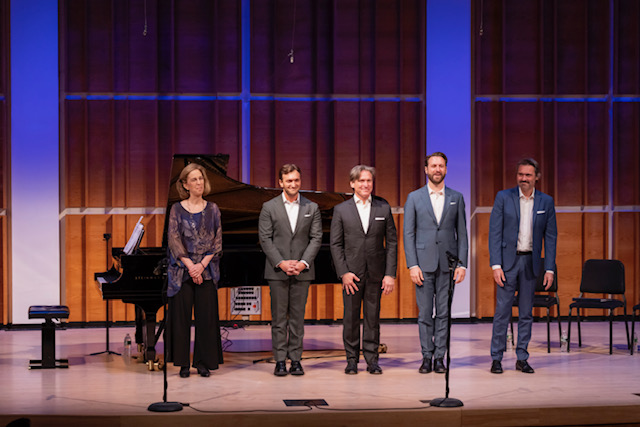
An extraordinary concert exploring the ties between text and music took place this weekend at Merkin Hall under the auspices of the Mirror Visions Ensemble (MVE). Devotees of new music may know of the organization, as it has been part of New York musical life for over thirty-two years, commissioning over 105 new works by more than 35 composers. For those unfamiliar, though, some of its performers demonstrated on Sunday just what makes it unique. As expressed on the organization’s website (mirrorvisionsensemble.org), “Mirror Visions Ensemble (MVE) was founded from a desire to explore the relationship between music and text, initially through the creation of ‘mirror visions’ — settings of the same text to music by different composers.” Sunday’s concert explored this relationship with four songs set to the same Elizabeth Bishop poem (“I am in Need of Music”) and two songs set to the same poem of Siegfried Sassoon (“Everyone Sang”). This already made for a fascinating concert, but to add to the diversity there were six songs interspersed which did not “mirror” any others. These included the world premiere of a work by Randall Eng entitled Song, set to a text by Brigit Pegeen Kelly and commissioned by the MVE.

Four excellent singers alternated as soloists, joining in one duet and a quartet for the program’s finale.  They were tenors Scott Murphree and Daniel McGrew and bass-baritones Jesse Blumberg and Mischa Bouvier. The superb pianist for the entire evening was Margaret Kampmeier, moving seamlessly from composer to composer, heard in the following order: Kamala Sankaram, Deborah Pritchard, Lori Laitman, David Sisco, Jake Heggie, Ben Moore, Jodi Goble, Chris DeBlasio, Paul Moravec, Tobias Picker, Ricky Ian Gordon, and Randall Eng.

The opening selection “Listen” by Kamala Sankaram (b. 1978) was a gently lyrical welcome to the concert, and it shared its title with the  program. billed as “LISTEN! Reflection, Resonance, and Reverence in Song.” Scott Murphree, the Director of MVE who had just eloquently introduced the program, was the soloist. What one noticed immediately about Ms. Sankaram’s music was that it clearly communicated the text by Mark Campbell. The plea to listen to children took us to an airy register, and words of pain took us through darkness and dissonance. We hardly needed printed lyrics. If this all sounds like Text-setting 101, it is quite common to encounter the opposite – with words about rhythm set to unmetered meandering and text about calm set to shrieking dissonance. It was refreshing to hear Ms. Sankaram’s unity and clarity of message. (This is not, by the way, to say that she succumbs to the old film score ways known as “Mickey Mousing” –  as she is neither obvious nor predictable.)

From this opening call to listen, the concert proceeded with the U.S. premiere of “Everyone Sang” composed by Deborah Pritchard (b. 1978) and sung by Daniel McGrew. Ms. Pritchard’s setting conveys the layers of feeling in Siegfried Sassoon’s text, reflecting shock mixed with ecstasy over the end of World War I (in which Sassoon was a soldier), along with tears, as the horrors of war are recalled. Ms. Pritchard’s music captures these mixed emotions with dizzying color, much of it coming from the piano’s repeated treble patterns and coruscating scales. It was stirring to hear.

Six songs followed before the second setting of the Sassoon text, that of Paul Moravec (b. 1957) sung by Jesse Blumberg; for clearer “mirroring” of  the two settings, though, your reviewer will skip over those six for now. In a most striking difference from Pritchard’s setting, Moravec takes Sassoon’s bird imagery as a springboard – not quite as stylized as Pritchard’s magical treble effects, but rather weaving birdsongs into a pervasive texture starting from the pianist’s introduction. Another striking difference is that when Moravec’s vocal lines do enter, they have a robustness that conveys victory beyond what is sensed in the Pritchard version, piano and voice parts projecting more strength and energy. Where the Pritchard song comes to a distinct break before shifting the focus to words of tears and horror, the Moravec song does not, instead folding those darker words into the flow of overall release. The contrasts are thought-provoking – as with beliefs about Sassoon himself, based on his life and letters. One kept thinking throughout the afternoon that these pairings deserve more than an afternoon, as they would fill a week-long seminar.

If the different takes on Siegfried Sassoon’s poem were remarkable, the settings of Elizabeth Bishop’s sonnet ranged still more widely. “I Am in Need of Music” was heard in settings by Lori Laitman, Ben Moore, Chris DeBlasio, and Tobias Picker, all separated by “non-mirroring” works as before.

The setting by Lori Laitman (b. 1955) stood out first of all for being the only duet, sung here by Jesse Blumberg and Mischa Bouvier. Having two singers allowed for restatements and echoes, underscoring the impassioned effusions. Particularly beautiful were the softer evocations and musical colors in the last six lines, or sestet, of the poem – about the “magic made by melody” and the sinking into sleep. The same poem, set by Ben Moore (b. 1960) and sung by Jesse Blumberg, stood out for its very nostalgic musical language at first, then expanding its range in an urgency that grew and flowed continuously over the ends of lines and into the sestet.

One could marvel at the differences in just the above two settings, but the same Bishop poem was heard again in the setting of Chris DeBlasio (1959-1993), the only composer on the program no longer living. It had a haunting sadness right from its dreamy piano introduction – made sadder with thoughts of how this composer left the world far too soon. This song was the only one to repeat the first eight lines of the poem, giving it an A-B-A form and a feeling of emphasis on the return of “I am in need of music” – sung with great involvement by Scott Murphree. In the last of these eight lines (both times), Mr. Murphree (or Mr. DeBlasio?) replaced the word “quivering” with “trembling” – not of huge consequence and possibly unintentional (but mentioned to show we respect the imperative to “listen!”).

The last of the Bishop settings was that of Tobias Picker (b. 1954), sung by Mischa Bouvier. The heaviest in feeling of the four, helped along by the choice of the bass-baritone register, it seemed to emphasize the feeling of “need” more than the feeling of what was needed – just demonstrating again what contrasting interpretations lie in a poem, a line, and even just a single word.

Interestingly your reviewer stumbled on one more setting of this same Elizabeth Bishop poem – a gem by Alva Henderson (b. 1940). It just goes to show that such obsessions can be contagious! Aside from the joy of such discovery, this listener had a few reservations as well. It seemed, during some of the four performances of this sonnet about music, that so much felt overwrought and angst-ridden. How much was in the compositions, and how much was due to the performances? Certainly some settings stressed the “need” versus “the music” that is needed, explaining a lot, but somewhere along the way it also struck this listener how few moments of softness there had been. All four singers may have been concerned with projecting for the sake of diction and clarity, especially given the central role of text in this concert, but all could be heard more than clearly, and some intimacy was lost in what occasionally resembled operatic auditions. One longed to feel the singers relax and let the music speak, including the music from the piano, which held much of the afternoon together.

Onward to the “non-mirroring” texts, there were six, and they added much color to the program. Scott Murphree brought out the beauty in David Sisco’s Bird Song (to poetry of Dennis Rhodes), an outstanding example of how music can illuminate meaning. Mischa Bouvier gave oceans of energy to Vachel Lindsay’s wash of words in the setting of  In Praise of Songs That Die by Jake Heggie (b. 1961). If songs that die were the focus in Heggie’s piece, the message soon after in Yone Noguchi’s poem My Song Is Sung offered the comforting antithesis, that “the real part of the song, its soul, remains after it is sung.” Noguchi’s poem came to life in the setting by  Jodi Goble (b. 1974), sung soulfully by Daniel McGrew. Mr. McGrew also gave impetus to another call to “listen!” in the song Demand by Ricky Ian Gordon (b. 1956), based on Langston Hughes. Like so much by Mr. Gordon it had a captivating vibrancy. Ms. Kampmeier added an electric energy to the piano part.

The finale of the afternoon, and the longest work at around twenty-five minutes, was the world premiere of Song by Randall Eng (b. 1972) set in six sections to a most disturbing poem of Brigit Pegeen Kelly (1951-2016). In the composer’s words: “Brigit Pegeen Kelly’s heartbreaking poem Song centers around an act of shocking violence, as a group of boys behead a girl’s beloved pet goat. The world of masculine brutality that it conjures is a natural fit for a song cycle for four men, but my setting attempts to equally focus on the responses to that violence. Kelly’s direct, precise language offers a canvas to explore not only the perspective of the knife-wielding boys, but also the girl’s joyful memories of the goat, the community that tries to shield her from seeing its carcass, and eventually the goat’s severed head itself. The head sings its sweet song to haunt the boys, it sings to bear witness to what has been done, it sings as an act of justice.”

It is difficult to say that one “enjoyed” this work, as the gruesome subject matter obliterated any alleged surrounding “sweetness.” In fact, this listener thought at first that the final word “sweetness” was intended to be ironic. Moving on (and because no one wants to hear this reviewer’s songs, “Where Were These Boys’ Parents?” or “Goats Don’t Call That Justice”), one could appreciate the tremendous virtuosity of composer Randall Eng in narrating the tale vividly through the music, artfully punctuating key moments like the word “joke” (the misguided premise for the crime), fleshing out the story with sections of jazzy dancing rhythms (often in sevens), and accentuating the pain at one point by having all four singers join the pianist in brutal, percussive clusters and extended techniques. It was certainly unforgettable, and a thought-provoking close to the concert. As Mr. Eng concluded in his notes, addressing the power of music, “you can behead a goat, but you can’t kill its song.”

Share

SolAria Music Foundation Presents On Wings of Song in Review

SolAria Music Foundation Presents On Wings of Song in Review

Fang Tao Jiang, Soprano; Jonathan C. Kelly, Piano
Special Guest: Le Bu, Bass-Baritone 
Guest Artists:  Reed Gnepper, Yushan Guo, Miaoyan Hou, Tiffany Zhao, Haishan Lai, Ruochen Liu, Lirong Liu, Ruocheng Yang, Jingyi Du, Yuyao Chen, and Zhongjiancheng Deng
The New York Youth Vocal Ensemble

Weill Recital Hall at Carnegie Hall, New York, NY

October 5, 2025

A festive atmosphere filled Weill Recital Hall this weekend, as soprano Fang Tao Jiang and several dozen others performed a variety-filled concert of vocal music entitled “On Wings of Song.” The music ranged from famous operatic selections and lieder to Chinese and American folk songs, plus what was billed as “Musical Theater Medley: Let the World be Filled with Love” (arr. Guo Feng). Though Ms. Jiang sustained the demanding first half as soloist with the sensitive collaboration of pianist Jonathan Cameron Kelly, she was joined after intermission by special guest bass-baritone Le Bu, eleven SolAria Emerging Young Artists, and the twenty-four-member New York Youth Vocal Ensemble (with some overlap of personnel). Ms. Jiang’s excellent credentials may be found at her website (www.fangtaosings.com), but suffice it to say here that she is a force of nature, combining her philanthropic, musical, and personal gifts into one impressive package.

The concert started off with only a hint of the extravaganza that would come, via a steady stream of excited audience members entering between works, some of whom were evidently there to hear “their own” friends and children, including Ms. Fang. After a measured opening performance of Il fervido desiderio by Bellini, Ms. Jiang halted the piano introduction of the next work, Donizetti’s Me voglio fa’ na casa, in orderto graciously welcome more latecomers. After recommencing, Ms. Fang showed more and more comfort with each note. She sang with a playful spirit that found her pianist Mr. Kelly accommodating each whimsical fluctuation with aplomb and a keen sensitivity to her every impulse. She projected a sound of considerable power and range (albeit one with a more widely oscillating vibrato than this listener favors, though that is certainly a matter of personal preference).

After the Donizetti, another stream of latecomers found Ms. Jiang saying sweetly “I’ll wait” before she sang Sposa son disprezzata (Vivaldi/G. Giacomelli). She sang this aria with sincere dedication, navigating its high notes and long melismas with overall success, and projecting a pathos that had the audience settling down a bit. The next stream of latecomers was addressed by her request for “a few words” – and surprisingly these were not words of thanks this time but the words, “Please be on time,” as she exploited the teachable moment. Did we mention that she is an educator?

Next, she launched into Mendelssohn’s famous Auf Flügeln des Gesanges (“On Wings of Song”), and it was fitting that the song for which the program was named showed some of her finest singing, as she soared through its phrases with a clear feeling for its purity. It was followed by Richard Strauss’s Ständchen, given especially pearly piano figuration by Mr. Kelly.

The Liszt song that followed, Oh! Quand je dors, has been one of this listener’s “desert island” favorites for several decades, which makes it hard to hear outside of a few interpretations (with Frederika von Stade’s eliciting the greatest swoons – and this is apart from the fact that Liszt transcribed it for piano solo as well). The song is, in a sense, a musical sigh of resignation to the fact that the object of love in Victor Hugo’s text is found only in sleep and dreams: it is at once heavenly and heartbreaking. Perhaps it was the edgy excitement of Ms. Jiang’s evening (or possibly her occasionally distracting vibrato) that lent the piece a certain frenetic energy, but it felt hard to sink into the dream. Her performance of Debussy’s Apparition, on the other hand, suited Mallarmé’s restlessness wandering to a tee.

Ms. Jiang also seemed to savor the Chinese pieces. First came two folk songs, the evocative Swallow Song and then When Will the Sophora Bloom, the latter illuminated by her rather humorous preface about a girl feigning interest in a Sophora tree while waiting for the object of her love. Ms. Jiang moved and emoted while singing, to convey its humor further, and it was a joy. The very touching I Live by the Yangtze River by Qing Zhu closed the set movingly before ending the first half with Long Time Ago, the Aaron Copland arrangement of an American ballad he discovered in a library. Ms. Jiang listed it as “In memory of my mother and loved ones” in what was a touching tribute.

After intermission, the variety expanded greatly starting with All Dharmas are Equal, from the opera Monkey King by Huang Ruo, a composer whose work Ms. Jiang has performed with critical accolades. As with most other works, she prefaced it with an introduction from the stage and sang it with strong commitment.

The introduction of bass-baritone Le Bu brought a stunningly new sound to add to Ms. Jiang’s in the famous duet, Là ci darem la mano from Mozart’s Don Giovanni. They blended well in it, reminding us why this selection is so popular. Le Bu followed it with the solo aria from Massenet’s Don Quixote, Riez! Allez! Riez du pauvre idéologue and blew the audience away. His is a voice already being welcomed at the Metropolitan Opera and sought after widely (as can be learned from this website: https://minerva-artists.com/roster/le-bu/), but it was a first for this listener. His precision, deep resonance, and natural musicality are bound to keep him front and center on many a world stage.

The average performer’s age seemed to lower a bit, after this point, though the favorites kept coming, starting with the Flower Duet From Delibes’ Lakmé, joiningvoices of Ms. Jiang and Yushan Guo. It was a lovely blend overall, though there seemed occasional intonation glitches. One needn’t dwell on nit-picking, though, as this was in many ways one of those concerts that goes beyond the “norm” to defy description, from the elements of “outreach” (to present and guide those in their early musical lives) to the addition of “extras” such as Ms. Jiang’s wardrobe selections. She wore no fewer than four outfits over the course of the evening, all created by designer Grace Chen (and all eye-catching on the lovely Ms. Jiang, from blue to black to pink and then red).

After one more solo from Ms. Jiang, the iconic O Mio Babbino Caro from Puccini’s Gianni Schicchi, the concert was dominated by guest artists, starting with Tiffany Zhao and Miaoyan Hou who sang Summertime from Gershwin’s Porgy and Bess with young jazz pianist Haishan Lai. They gave it a new spin with their alternating solos and improvisatory accompaniment. It is hard, with such a classic, to fiddle with it in ways that don’t disrupt the piece’s inherent phrase rhythms and breathing (and a few ensemble junctures left one wondering whether all were intentional), but it was certainly novel.

Twelve young singers filed onstage next to sing the American folk song, Shenandoah. It had a stirring sincerity and featured several promising young voices as soloists. They were then joined by rest of the singers, members of New York Youth Vocal Ensemble, to sing what was called “Music Theater Medley: Let the World be Filled with Love” by Guo Feng. The program listed Fang Tao Jiang as choir director and Jonathan C. Kelly as coach, and it was a remarkable experience to travel on this blitz tour of some of film and theater’s most beloved tunes. More compressed than a typical medley here, there were only several seconds of many of the selections in order to showcase tidbits from Annie, The Sound of Music, The Phantom of the Opera, Les Misérables, The Greatest Showman, Moana, Matilda, and even a snippet from the intro of Singin’ in the Rain. It was heartwarming to hear these dear young voices.

Some “heavy hitters” – Reed Gnepper, Ruochen Liu, and Zhongjiancheng Deng – came onstage next to sing the Neapolitan song O Sole Mio (E. di Capua), and it was a tour-de-force of humorous and virtuosic one-upmanship. This trio was then joined by Fang Tao Jiang, Lirong Liu, Yushan Guo, Ruochen Yang, Miaoyan Hou, Jingyi Du, and Yuyao Chen in a rip-roaring closer of Brindisi, the famous drinking song from Verdi’s La Traviata. It was celebratory, to say the least, and was greeted with a large and well-deserved standing ovation.

Share

WA Sinfonietta: Weinberg, Klein, Ustvolskaya  in Review

WA Sinfonietta: Weinberg, Klein, Ustvolskaya  in Review

WA Sinfonietta; Charles Neidich, conductor and soloist

Cary Hall, DiMenna Center for Classical Music, New York, NY

May 13, 2025

The newly formed WA Sinfonietta, under the baton of the world-renowned clarinetist Charles Neidich, gave its second-ever performance on May 13th at the DiMenna Center for Classical Music, with works by Gideon Klein, Galina Ustvolskaya, and Mieczysław Weinberg. The inaugural concert on March 23rd of this year had already shown the potential and polish of this ensemble. (Interested readers can click on the following link to read about that concert, and also get background information about the organization and the founding as well: WA Sinfonietta in Review March 23, 2025.) This concert was dedicated to the memory of Joel Krosnick, whom Mr. Neidich called “a musician’s musician.”

As Mr. Neidich stated, the ”common bond” of the three composers featured tonight – Weinberg, Klein, and Ustvolskaya – is that all were born in the year 1919. I almost half-expected Shostakovich’s  Suite from The Unforgettable Year 1919 to make a guest appearance, but that little joke would have been a bit out of place given the serious tone of this concert.

In contrast to the inaugural concert, there were printed program notes here. Mr. Neidich did speak about each work as well, but his is a voice that is good for close conversations, not for a hall. I did hear an audience member say that he needed a mic, and I had thought the same. He has so much to say that is informative and interesting that it is a shame for the audience members to miss even a single word.

Divertimento, by Gideon Klein (1919-1945), opened the concert. Klein, like Victor Ullmann amongst others, was another remarkable talent who was snuffed out in the Holocaust. One can only imagine what great works he would have created if he had lived – as this work, finished at age twenty, is remarkably mature for such a young composer. This four-movement work is scored for two oboes (Myles Meader, Aaron Haettenschwiller), two clarinets ( Andrei Caval, Chad Thomas), two bassoons (Christian Whitacre, Austin Wegener), and two horns (Franco Ortiz, Mychal Nishimura). Divertimento is brimming with an almost cartoon-like frenetic energy, but also has some rather pessimistic moments that almost border on despair. Mr. Neidich led this octet in a highly polished reading. That cartoon-like energy was never rendered as “cartoonish” noises, but it is rather sophisticated music that might have very well been used by Carl Stalling if he had been aware of it. The third movement Adagio, using material based on Janáček’s The Diary of One Who Disappeared, was  especially potent, and was played with an anguished urgency. As much as I enjoyed the frenzy of the other movements, this was the highlight for this listener.

I’m also going to group the two Weinberg works together, even though they were not played consecutively, so we’ll continue with the piece by Galina Ustvolskaya (1919-2006). (The Klein and Ustvolskaya pieces were chamber works and were not played by the Sinfonietta Strings but by invited winds and pianist.) Ustvolskaya is aptly described in the program notes as “one of the most original and uncompromising composers of modern times.” Considered by Shostakovich to be his most talented student, Ustvolskaya was later to reject any connection with him, and called his music “dry and lifeless.” She left only twenty-one compositions that she approved of as her legacy – the remainder were destroyed or disavowed.

Mr. Neidich spoke about the triptych of her Compositions 1, 2, and 3, and the unusual scoring for each – Composition No. 1,  Dona Nobis Pacem, for piccolo, tuba and piano,  Composition No. 2, Dies Irae, for eight double basses, piano and wooden cube, and Composition No. 3, Benedictus, Qui Venit, four flutes, four bassoons and piano. It was the last of the three that we heard this evening, with flutists Arianna Bendit, Ji Young Kim, Yidi Wang, Wen-Hsin Weng, bassoonists Trey Coudret, Austin Wegener, Chrisitan Whitacre, Nadia Ingalls, and pianist León Bersdorf. In this work one can readily see why she was called “The Lady with the Hammer.” It is insistent and acerbic, and while it seems there is just a motive repeated over and over, there is a discernible arc that forms the work. While the music itself is rather simple (mostly quarter notes and clusters in the piano) it is deceptively difficult for all nine players to mesh together well. These nine players did just that, and expertly so in a nuanced performance. It’s not a crowd-pleaser for sure, but one got the distinct impression that the audience found it thought-provoking.

Mieczysław Weinberg (1919-1996) is a composer who, after years of neglect, is starting to regain attention and favor with performers and audiences alike. Mr. Neidich informed the audience that during his time in the Soviet Union he had been completely unaware of Weinberg’s existence, which is extraordinary given Mr. Neidich’s relationships with many lesser-known Soviet composers and musicians – one would have thought that a composer as prolific as Weinberg might have come up in conversation.

The Concerto for Clarinet and String Orchestra, Op. 104, was the first of the two Weinberg works. If one had not known any better, one might have thought that this concerto was written especially for Mr. Neidich. It is packed with virtuoso passagework, soaring melodies that require exquisite tonal control, full use of the entirety of the clarinet’s extensive range, and wide-ranging mood shifts – all things that Mr. Neidich excels at in spades. The opening is unsettled and almost angry, with chattering call-and-reply between the clarinet and the orchestra, with increasing stridency. The second movement is melancholic, but the clarinet takes a lovely melody and pushes it through the clouds into a burst of sunshine. The final movement is a merry dance, but in the merriment there are hints of sorrow that hover over it. Mr. Neidich gave a superb performance of it all, turning over the conducting duties to a very able conductor whose name was unfortunately not mentioned in the program. Mr. Neidich was in top form – the cadenza work was especially notable for not only its virtuosity, but for the crystalline clarity with which Mr. Neidich delineated each note at lightning speed.

The Weinberg Chamber Symphony No. 4, Op. 153, was the final work of the evening. Mr. Neidich stated that this was the composer’s final work (there is an Op. 154, the 22nd Symphony, which was orchestrated by Kirill Umansky in 2003, so perhaps the Op. 153 was the final work solely by Weinberg). There are four movements played without pause. Four triangle strokes feature in it prominently, each as an “announcement,” but what exactly Weinberg meant by these triangle strokes is open for speculation. Mr. Neidich opined that the final triangle stroke was Weinberg’s declaration that “humanity can be wonderful,” but this listener would equate it to the last measures of Mahler’s 9th Symphony – a good-bye to life itself. While it is not called a concerto, it is a clarinet concerto in all but name, given the leading role the clarinet plays and the absence of any other wind instruments.

The opening is a chorale that uses a theme Weinberg had used three times previously (Opp. 110. 127, and 128). The clarinet soon joins and has a dialogue with the orchestra, then the mood shifts to one of terror. The first triangle stroke signals the beginning of the final section, the next two call forth a Klezmer tune, and the last signals the end. The WA Sinfonietta was outstanding in projecting the mood with crisp ensemble playing and never overshadowing the clarinet soloist. As for Mr. Neidich, what more can one say? He is so incredibly precise that any clarinet hopefuls would be well-advised to seek him out and learn from him, not only his technique, but his musicianship and his scholarly mien. It was spellbinding and the audience gave him an extended and well-deserved standing ovation. It is also wonderful to see how much joy Mr. Neidich has and how he shared that joy with all the musicians that performed with ebullient handshakes for all. I look forward to the next WA Sinfonietta concert.

Share

Distinguished Concerts International New York (DCINY) presents “Seven Last Words” in Review

Distinguished Concerts International New York (DCINY) presents “Seven Last Words” in Review

Catherine Sailer, Guest Conductor; Larry Bach, Guest Conductor

Lauren Lestage, soprano; Mark Winston, baritone; Zerek Dodson, piano; Joshua Tompkins, piano

Distinguished Concerts Singers International

Wu Tsai Theater-David Geffen Hall at Lincoln Center, New York, NY

March 26, 2023

A beautiful, sunny, mild late-March afternoon, and my first visit to the recently revamped David Geffen Hall at Lincoln Center. What could be better? Just a brief observation about the hall- it is indeed much more people-friendly in the lobby, and the auditorium seating makes one feel much more intimacy with the performers.

This DCINY concert featured music by a single composer, Michael John Trotta. The massed choirs were domestic this time, not international (California, Colorado, Florida, Kansas, Minnesota, New Jersey, and New York). A moderate-sized group was used in the Seven Last Words, then a much larger choir in the Te Deum and Gloria. Both conductors, Catherine Sailer (Seven Last Words) and Larry Bach (Te Deum and Gloria) achieved beautiful results in what must have been a short rehearsal period. An esteemed colleague informs me that Trotta’s music is much more popular with school groups (high school and college) than church choirs. I can understand the difficult logistics of one church choir rehearsal per week, versus a whole semester or even a whole year of preparation available in a school setting.

My principal reservation: the performances were better than the music itself. I shall try to explain. Trotta’s music doesn’t take long to “get” – there is an easy-to-take-in quality to it that reminds one as though there had been a “school” of Andrew Lloyd-Weber (thank goodness there isn’t). There is an over-reliance on 2-1, 7-6, and 9-8 suspensions, and lots of clichés. Even where he turned to an overtly imitative texture as in the Baroque pastiche of the Kyrie inserted into the Seven Last Words, it isn’t truly imitative, after the subject is introduced there isn’t any further fugal device. This also happened at the end of the Gloria (Cum Sancto Spiritu). All works were cyclic as well, a popular device but perhaps overused.

All three works were heard with piano accompaniment, and both pianists, Zerek Dodson and Joshua Tompkins, rendered with admirable stoicism parts that were not very pianistic. I don’t know if these were orchestral reductions, but perhaps the works would have gained from the orchestra, sounding less like Broadway cabaret extracts. (Apparently, DCINY’s labor issues with its pick-up orchestra continue, there was some protesting at the stage door.)

There were two soloists to note in the Seven Last Words, Lauren Lestage, soprano, and Mark Winston, baritone, both of whom projected beautifully with a lovely sound that is only present in the most youthful voices.

The Seven Last Words should more properly be called the Seven Last Phrases, and with Trotta’s penchant for text repetition, they became even longer. There were also numerous melismas that did nothing (for me) to heighten the expressivity of the words they were attached to: one egregious example will suffice- the soprano solo “Bee-ee-ee-hoh-old Your Son”. One of my favorite moments in Trotta’s Seven Last Words was the hushed sense of awe he brought to the It Is Finished moment. Aha! I thought, he really got that! Then he ruined it by loudly repeating it over and over. He might well have demanded more of his listeners and left us with a sense of unanswerable mystery.

When I think of Haydn’s wordless rendition of the same seven last words, for string quartet, well I suppose comparisons of that sort are not only odious but pointless. Catherine Sailer’s choir was staged in a traditional women on the left, men on the right formation; but when Larry Bach took the stage with the much larger group (after a brief pause), he had his men arrayed all across the back of the risers, with the women in front, and there was a noticeable difference to the sound.

The Te Deum and Gloria, each of whose texts have been set countless times, were well sung, but after one gets the “gist” of Trotta’s musical vocabulary, it seems that the music doesn’t “tell” us very much about the words it underlies—even when he changes to an up-tempo more energetic, motoric feel. Once one surrenders to it, however, then one can appreciate the devotion these singers and their conductors brought to it. One last observation, Mr. Trotta, after you say “Amen” (the end of the Gloria) please, please do not place any text after that word (such as another Gloria in excelsis Deo). Amen is final! I understand why he did it- to provide a more fitting sense of arrival/conclusion.

No matter, the beautiful afternoon still awaited outside, the concert (for DCINY) was not overly long, and I’m sure all the groups participating will go home with a deep sense of satisfaction, as they should.

Share

Distinguished Concerts International New York (DCINY) Presents “Mozart’s Messiah” in Review

Distinguished Concerts International New York (DCINY) Presents “Mozart’s Messiah” in Review

Jonathan Griffith, DCINY Artistic Director and Principal Conductor 

Penelope Shumate, Soprano; Veronica Pollicino, Mezzo-Soprano;

John McVeigh, Tenor; Christopher Job, Bass-Baritone

Stern Auditorium/Perelman Stage, Carnegie Hall, New York, NY

November 27, 2022

Distinguished Concerts International New York (DCINY) kicked off the holiday season in style once again Sunday with their annual presentation of Handel’s Messiah at Carnegie Hall, and it was as grand as one always hopes, a moving return to tradition after the massive disruptions of the pandemic.

For those who may have been confused by DCINY’s billing of it as “Mozart’s Messiah,” never fear that you are confused about your music history – this was indeed Handel’s Messiah – simply re-orchestrated by Mozart. It is hard to review this work without unraveling some of its history, so the less interested reader may want to skip ahead. To sum things up, there are several versions of this masterpiece that have been regularly heard since its tremendously successful premiere in Dublin in 1742 (including the various revisions Handel himself made), and DCINY has done it several of these ways, including the much later Eugene Goossens version, which they recorded in 2019.

To add to the fun, I was especially interested this year to see that DCINY had chosen Mozart’s version, reset as Der Messias (KV572) in 1789, because I assumed (incorrectly) that it would be sung in German as Mozart had set it –  which would seem quite a challenge for the many choruses that DCINY assembles from all over this country (and some other countries). After all, one of the distinguishing features of Mozart’s version (first presented in 1789) is the fact that it employs a text translated to German (by Christoph Daniel Ebeling in 1775) from Handel’s original English, the Charles Jennens collection of Bible passages. Aside from the use of German, the most remarkable changes that Mozart made include the addition of winds – pairs of clarinets, horns, flutes, oboes, and bassoons. To my surprise, given the billing as “Mozart’s Messiah,” DCINY presented this Mozart version in English. The result was arguably the best of all possible worlds – fuller in texture and color than Handel’s version,  via the orchestral genius of Mozart (yet more intimate than the full-blown Goossens version) and directly communicative in its original language of English, making it more accessible to much of the audience.

With a knack for what is accessible and assimilable, DCINY also limited the performance to what has become known as the “Christmas portions” of the work (Part I with the  “Hallelujah” chorus from Part II as its finale), even promising a special appearance by Santa Claus (who could be seen by those looking upward towards the balcony during the standing Hallelujah).

On to the performance, the orchestra and choruses were as ever in good hands under the direction of DCINY Principal Conductor and Artistic Director Jonathan Griffith. He led the orchestra in a taut opening Sinfonia and held the reins well from there through to the rockier moments of “The yoke is easy” (which ironically is not easy) and onto the triumphant closing Hallelujah, for which he gestured to the audience to stand (in the traditional homage established by the awestruck King George II of England in 1743).

Meanwhile, there were numerous highlights among Recitatives and Airs by the four outstanding soloists, some of whom this reviewer has enjoyed hearing on prior occasions. All of them were exceptional for clarity of diction, a notable achievement, as even with an English text one cannot always discern exactly what’s being said – one could in this performance. One did not need even to consult the printed program to follow, and that undoubtedly helped many to enjoy the music’s message.

Jonathan Griffith, DCINY Artistic Director and Principal Conductor 

Tenor John McVeigh was the first soloist, impressing this listener most with his emotional intensity in his “Comfort ye my people.” His “Ev’ry valley shall be exalted” was excellent as well, assured and uplifting.

Bass-baritone Christopher Job struck one immediately with his powerful resonance and true pitch in “Thus saith the Lord.” Even in rapid melismatic passages, where singing can often devolve into a kind of unfocused percussive breathing, he took the time to make each pitch truly sing. His “But who may abide the day of his coming?” was equally masterful.

The choral sopranos had some challenges, particularly with some tricky high notes, but their combined tonal quality seemed to work especially well for “And he shall purify.” It was awe-inspiring to see the convergence of all of these separately rehearsed choruses (DCINY estimates their usual combined numbers as between 100 and 500 singers, though I did not count). Kudos go to all of the individual conductors who worked with them for months, as well as to Maestro Griffith who blends them here in New York. The choruses were listed as the American International School Of Vienna High School Choir (Austria), Chesapeake Messiah Chorus (VA), L.A. Daiku Association, Inc. (CA), The Lakeshore Singers (PA),  Richmond Choral Society & The Arcadian Chorale, Shanghai Voices International Choir (China), Sing Napa Valley (CA), Treasure Coast Chamber Singers (FL), Trinity Episcopal Church Choir, St., Mary’s City (MD), Warrenton Chorale (VA), and individual singers from around the globe.

Back to soloists, mezzo-soprano Veronica Pollicino did beautifully with “Behold, a virgin shall conceive” and “O thou that tellest good tidings to Zion.” She especially impressed this listener with her refinement. Mezzos can easily emerge as overly dominant in this piece, but not so here. Her voice was ample to project through the hall, but without being overbearing.

Rare moments of darkness in this uplifting program came in “For behold, darkness shall cover the earth” and “The people that walked in darkness” – but delivered via Mr. Job’s glorious instrument over pulsing strings, one might opt for more darkness! We then enjoyed “For unto us a child is born” with its remarkable imitative choral textures – and the pastoral instrumental “Pifa.”

Following the “Pifa” came the first entrance of soprano soloist Penelope Shumate, a musician who has been favorably reviewed in New York Concert Review several times. She did not disappoint. After her three excellent recitatives, she was simply exultant in the “Rejoice greatly, O daughter of Zion.” She handled some of its seemingly endless phrases without any apparent need to breathe, showing simply supernatural ease. She also excelled in the subsequent sections (“Then shall the eyes of the blind” and “He shall feed his flock”), which she handled solo, despite the program listing these as mezzo and soprano.

The Hallelujah Chorus then worked its magic, and it is safe to say that this music never wears thin. Supplemental choristers joined from the balcony, and it was a powerful and moving finale, followed by much loud applause and cheering – a brilliant start to the holiday season!

Share

Camerata Notturna in Review

Camerata Notturna in Review

Camerata Notturna

David Chan, Music Director

Meigui Zhang, soprano; Siphokazi Molteno, mezzo-soprano; Alexander McKissick, tenor; Matthew Rose, bass-baritone

Downtown Voices: Stephen Sands, director

The Church of St. Paul and St. Andrew, New York, NY

April 30, 2022

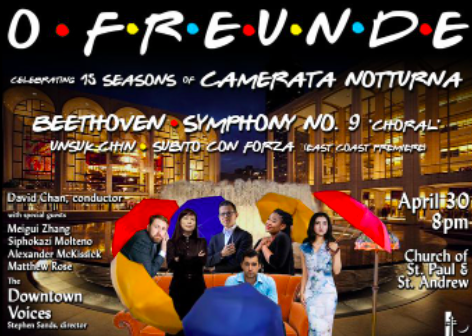
Sometimes you need a miracle. Less often do you actually get one. I got my miracle at Saturday night’s performance by Camerata Notturna. The talent pool in New York is so huge that there are numerous mostly “amateur” orchestras in virtually every neighborhood. These so-called amateurs may in fact be young conservatory graduates of professional quality. When they are helmed by one of the leading violinists in town, David Chan (concertmaster of the famed Metropolitan Opera orchestra), the results are, well, miraculous. His conducting star is rising internationally.

The Beethoven anniversary in 2020 (250 years since his birth) was seriously disrupted worldwide, as we know, and it’s not like Beethoven needs a publicist or anything. These touchstones however, have become essential nutrition for listeners everywhere and many conductors like to measure themselves against these works.

The program began with the brief subito con forza by Unsuk Chin, composed as an anniversary tribute. It is definitely not pastiche, though fragmented quotes of typical Beethoven gestures float and slash through it. Rather, as its title indicates, it portrays the sudden changes and contrasts typical of the composer’s music and spirit. The masked orchestra (except for the winds of course) played it very well, the sound mellow in the vaults of the church.

Now to the hoped-for miracle. How would a performance of the radical “Choral” symphony hold up? It is a work full of treacherous traps for any conductor, orchestra, and its punishing demands on the choral sopranos and the four soloists are legendary.

Maestro Chan rendered every part of the score with transparency and utter clarity, even in the potentially muddling acoustics of the church. The tempi were fleet when indicated, ritardandi, also when indicated, were never exaggerated. The numerous metrical modulations were handled expertly and without strain. He allowed me to hear the structure of the work clearly. Mr. Chan is not a flamboyant conductor: I almost wished he would allow his body gestures to ‘expand’ more, to indicate the arching lines. But even as I say that, I must congratulate him on the obvious details of what we as an audience don’t witness: the rehearsal process, so crucial to success.

There is no ‘weak spot’ in Camerata Notturna. With some community orchestras the strings are more developed, with some the winds are superb but the strings less confident. Everything was top-notch here. Perhaps in a different acoustic certain balances may have emerged or been more refined, but I could hear ‘beyond’ that.

Thus the first three movements passed along their emotional arc from coalescing music out of silence, to tempestuous anger, unbridled energy, even humor, in the scherzo, and a heart full of song in the adagio. After all that, what could possibly be added? The human voice of course, the ultimate instrument, the only one that resides inside the human body.

For this, the wonderful Downtown Voices provided the chorus. They had a difficult mission, since the space in the church didn’t permit them to be located behind the orchestra, but on the sides of the sanctuary, women on the left, men on the right. Somehow they overcame that and provided an unexpectedly thrilling sound, one with no strain at all, even as the soprano decrescendo on an impossibly long high G (lieber Vater wohnen). They were obviously trained well by Stephen Sands, their conductor.

None of this would have been possible without the four excellent vocal soloists, drawn from the Metropolitan Opera (soprano Meigui Zhang, bass-baritone Matthew Rose), or its Young Artist Development Program (mezzo-soprano Siphokazi Molteno), and the Washington Nation Opera (tenor Alexander McKissick).

Mr. Rose’s O Freunde, nich diese Töne! was truly terrifying, and appropriate. I thought about the audience in 1824 and how startled they must have been to hear a voice interrupting a symphony. The four soloists worked beautifully together, finding their own quartet balance at all times, the perfect ornament to this stunning finale.

Maestro Chan, bravo! And thank you for the miracle.

Share