
Jennifer Grimaldi, soprano and Max Midoit, piano
Bechstein Piano Centre, New York City May 4, 2010
What a pleasure it was to hear two fine sopranos, accompanied by two sensitive pianists, skillfully performing the glorious songs of Richard Strauss in a well-lit intimate setting. This year, I have attended many vocal recitals in dimly-lit major concert halls where established artists sang numerous sets of obscure and forgettable songs by great composers. But tonight, we heard fourteen Strauss songs, and there wasn’t a weak one amongst them. And our pleasure hearing these songs was enhanced by the fact that there was enough light to comfortably read the written program, with its fine notes and the original German poems written along side their English translations.
To get to the performing space of the Bechstein Centre, one enters through the piano showroom. Walking among these storied instruments is a wonderful way of transitioning between the hurly-burly of midtown Manhattan and the anticipated vocal recital to follow. A left turn takes one to the performance space. Against the right wall are many upright pianos, in the front a raised stage with a large Bechstein Grand. It was sad that there were so few people in the audience to hear this fine recital.
The recital began with a performance by soprano Sharon Cheng, who sang four of the five Brentano Lieder, Opus 68. Ms. Cheng, whose vivid red dress appropriately reflected the vocal fireworks she produced, possesses an exciting and securely produced voice which grows more and more thrilling as she moves into the stratospheric parts of a soprano’s range.The high point of the set was her performance of the last song, Amor. Ms. Cheng nailed this show stopper’s very, very high notes with ease.
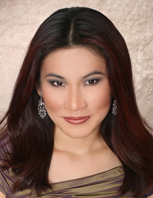 Sharon Cheng, soprano |
 Jennifer Grimaldi, soprano |
 Michael Fennelly, pianist |
We then heard Jennifer Grimaldi, whose more somber black dress reflected her beautifully phrased and emotionally intense performance of three of Strauss’s most famous songs, Allerseelen, Morgen, and Cäcilie. Many singers seem to be afraid of singing the “hit tunes,” perhaps feeling that they will have “nothing new to say.” But performances such as Ms. Grimaldi’s, deeply felt and expressed through beautiful sounds, thrill us even though we have heard these songs so many times before. Michael Fennelly and Max Midoit were the sensitive and supportive accompanists. That they were sometimes a bit too loud was a function of the very lively performance space and the powerful Bechstein Grand upon which they were playing.
After intermission, Ms. Cheng performed the Brentano Lied she omitted on the first half. She concluded her set with wonderful performances of Ständchen and Kling, showing that she too was not afraid to sing the “hit tunes.” Many young singers often don’t program the “hit tunes” because they are afraid that their performances will be compared to those of established stars living or dead. But both Cheng and Grimaldi were up to the task. I urge all singers to forget about how someone else has performed a song. The great ones stand up to repeated performances. It’s the mediocre ones that one should be wary of. The recital ended with a most moving performance of the Vier letzte Lieder, sung by Jennifer Grimaldi.

 Victor Goldberg is an excellent pianist with a formidable technique, a powerful tone, and a romantic soul (and a distracting habit of tossing his hands way up). Russian-born, he has studied, performed and won competitions in Europe, Israel and America, and is the recipient of the 2008 Pro Musicis International Award.
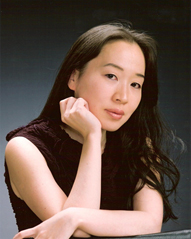
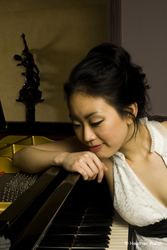 Gold medalist at the 2008 World Piano Competition in Cincinnati, South Korean pianist Yoonjung Han recently presented her debut recital at Lincoln Center’s Alice Tully Hall. A feeling of celebration and anticipation of the moment filled the auditorium. Having made her debut at the age of thirteen, Han is no stranger to the concert stage. She got right to business with a colorful and joyfully performed Haydn Sonata in E-flat Major, Hob. 52. After the light and giddy first movement, the audience erupted into applause. The Adagio was carefully planned out and balanced, though one might have wished for more spontaneity and abandon. The Presto Finale floated gracefully above ground and was received with a warm ovation.
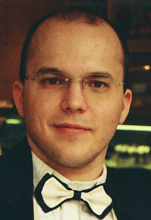 This unusual and, ultimately, compelling new recording of Bach’s transcendental Aria Mit Verschiedenen Verandergungen introduces us yet to another outstanding Hungarian pianist, Sebastyen NyirÖ, who was born in 1979. This may well be the broadest and longest performance of the Goldberg Variations ever. NyirÖ favors taking all the repeats (even those in the Aria da Capo which even the near-fanatical purist Claudio Arrau was even willing to forgo in his early 1940s RCA recording released posthumously on two CDs. Rosalyn Tureck, another famous (or notorious) advocate of repeats and slow tempos, likewise ran over onto two CDs in the Philips Great Pianists of the 20th Century reissue. Simone Dinnerstein, another champion of slow tempos, played all the repeats in her in-concert performance at Weill Recital Hall, but reluctantly condoned omitting a few of them in order to limit her commercial recording (a labor-of-love, later taken over by Telarc) to a single CD. Nyirö’s rendition runs to 85 minutes and fourteen seconds: CD no. 1, with the Aria and Variations 1 through 15 taking 40 minutes and 12 seconds; CD no. 2 beginning with the French Ouverture Variation 16 and ending with the Aria da capo runs 42 minutes; 14 seconds for the work’s conclusion.