Rising Stars Piano Series Presents Jiao Sun in Review

Rising Stars Piano Series Presents Jiao Sun in Review

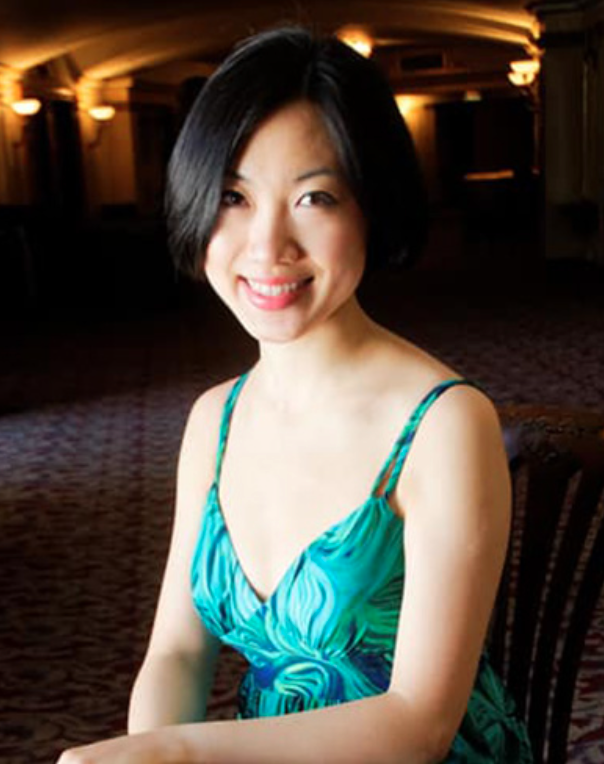
Jiao Sun, piano

Southampton Cultural Center, Southampton, NY

November 19, 2022

The pianist Jiao Sun is the perfect ambassador for classical music in an era when cultural organizations are rethinking their approach to audience building.  In what is frequently becoming the standard for recital programs, she offered a hearty tasting menu of works spanning the centuries, along with her own friendly and informative prefaces.  The concert clocked in at about one hour, a streamlined but satisfying way to spend a late Saturday afternoon.

A good deal of thought went into the structuring of this program, beginning with the choice of three Scarlatti sonatas, in contrasting keys.  Though I normally prefer not to separate technique from expression, it must be said that Ms. Sun has a secure technical foundation, which she uses in service to the composer.  The two sonatas in major keys were straightforward, brilliant examples of the kind of keyboard writing that is Scarlatti’s domain (those scales in thirds !), but it was the middle sonata in D minor that drew me in the most.  The pianist employed a beautiful singing tone to weave a pure and simple lament into an aria worthy of Handel at his best. 

I would not immediately draw a line from Scarlatti to Haydn, but this juxtaposition in Ms. Sun’s programming allowed us to see the obvious relationship between these two unconventional keyboard composers.  Her modest and contained interpretation of Haydn’s C minor Sonata, Hob XVI/20, suited this work, most especially in the tender Andante con Moto, in which the pianist created a long arching melodic line from start to finish.

Three unrelated compositions, like those socks that come out of the dryer without partners, served as a diversion between the heftier repertoire which framed them.  The pianist had plenty of opportunity here to highlight her strong left hand in Gershwin’s I Got Rhythm and, to a larger extent, in Scriabin’s Étude  Op. 42, No. 5.  I have heard Gershwin’s own recordings of his piano works, and he may not have embraced Ms. Sun’s rubato, but it was a still an infectious interpretation.  And the Scriabin was a triumph, a roiling, turbulent reading of a fiendishly difficult piece.  Ms. Sun’s friend, the Peruvian  Hwaen Ch’uqi, composed the middle work of this trio, a tragicomic short story with the curious title, Threnody of the Elephants on the Death of Their Friend. As befitting it’s subject matter,  this slow, ponderous  elegy hardly ventured above middle C.  The pianist employed subtle dynamic shadings throughout, eventually building a great mass of sound at the climactic conclusion.  This was a strong piece from a composer of promising talent.

All the stops were pulled out in the two concluding pieces of this program, Chopin’s G Minor Ballade and the Liszt Hungarian Rhapsody #6, both of which posed no challenge to Ms. Sun’s stamina.  In particular, the Liszt seemed be squarely in her comfort zone, as she dug deeper into the keys to produce a more robust, meaty sound. Her command of the octave passages in the finale was truly astonishing, and a thrilling end to the evening.

Ms. Sun has all the skills needed for a successful career as a performing artist.  Her gifts are prodigious and her preparation is rigorous.  I would only plant one thought in her head, and that is to allow for more spontaneity, more connection to her own, personal voice as a musician, to bring her to the next level of artistry.

Share

Where are they now? A Reviewer’s Reminiscence

Where are they now? A Reviewer’s Reminiscence

November 23, 2022

Last week I happened upon some great music played by pianist, Javor Bračić, one of many pianists I’ve reviewed in my sixteen-plus years of writing for New York Concert Review, and it was heartening to see how well this fine young musician has weathered recent global trials and tribulations to keep going. His performance spurred some reminiscing about the many others who have filled my evenings with music for a decade and a half – “alums” for lack of a better term – and it seemed as good a time as any to poke around and ask where some are now. When I’ve occasionally written that “I’ll look forward to following this artist’s career” I’ve meant it.

To follow are a few very short updates about a handful (well, ten – so two handfuls) of “alums” from the past decade and a half. To avoid the obvious, we’ll skip updates for musicians already very much in the public eye when reviewed, such as Barry Douglas (2005), Denis Matsuev (2007), Jon Nakamatsu (2007), Carlo Grante (2014, 2015), Ian Hobson (2016), Charles Neidich (2018, 2019), and The King’s Singers (2018).  Also, we’ll limit the scope to pianists – and just a few at that – but there should be more to come periodically.

Going back to a 2006 assignment, a striking experience was hearing Aimee Kobayashi who was around age 10 at the time, showing “the phrasing and professionalism of an adult” on the stage of Carnegie Hall. (These were in the days before NY Concert Review went online, so was print only.) Now in her twenties and on the competition circuit, Ms. Kobayashi has won 4th prize ex aequo in the most recent International Chopin Piano Competition (XVIII, in October of 2021). One can hear her impassioned performance of Chopin’s E minor Concerto on the organization’s website (as well as numerous strong performances on YouTube), and she was clearly a formidable competitor. Sixteen years ago, as a young child, she had already played with great self-assurance Beethoven’s Pathetique Sonata Op. 13, and three Chopin works (Etude in G-flat Op. 10, No 5, Impromptu No. 1 and posthumous Nocturne in C-sharp minor) – possibly with even more self-assurance then than now, as with maturity and depth can come questioning – but it is all a musician’s journey. If memory serves, most striking in 2006 had been her opening, the posthumous Chopin Nocturne – and it is touching to note that she reportedly revisited it recently as an encore in a recital. My archives invite a separate retrospective on the prodigies I’ve reviewed, but suffice it to say that Ms. Kobayashi’s early promise has continued bearing fruit.

A dynamo I first heard in 2006, Ching-Yun Hu impressed with Chopin Rondo’s in E-flat, Op. 16 playing “with elegance and flabbergasting fingerwork. Speaking in terms of sheer technical brilliance, I don’t recall being as amazed even by Horowitz’s performance of the same work.” Working now with the next generation, Ms. Hu has founded the Yun International Music Festival in Taipei and the Philadelphia Young Pianists’ Academy which presents the PYPA Piano Festival and Young Virtuosi (intensive recitals, master classes, and guest lecture series). Besides her performing, master classes, and residencies, she is currently on the piano faculty at Temple University in Philadelphia.

Francesco Piemontesi, whom I reviewed in 2008, had dazzled his audience with a stunning performance of Three Pieces from the Firebird (arr. Agosti), still a vivid memory. In addition to his pyrotechnics, I had written glowingly of his “unique and important musical voice,” and I would stick with that based on subsequent hearings. He has since embarked on too many exciting projects to name, with a highlight being his launch of a major Schubert cycle at the Wigmore Hall in London starting in October 2019. I would love to have heard this, but will just hope for more on “this side of the pond.” For the 2020-2021 season Mr. Piemontesi was engaged as artist-in-residence at the Orchestre de la Suisse Romande in Geneva.

Sara Daneshpour impressed this reviewer for the first time at age 21 in 2008, sharing “musical gifts that are simply undeniable.” She had already made her mark in numerous competitions, but since then continued to shine, including as the 3rd prizewinner of the 2017 Arthur Rubinstein International Piano Competition.  She has been featured in prominent halls and nationwide on 160 public radio stations, including WGBH in Boston. She recently played Rachmaninoff’s Rhapsody on a Theme of Paganini with the Alexandria Symphony (February of 2022), and one can only hope there were recordings made of it.

Spencer Myer struck this listener immediately in 2009 with his Handel, Copland, and Janáček,  and it hardly required an oracle to call him “an artist to watch” (though naturally I did) with his already substantial credentials including a debut CD on Harmonia Mundi USA. Since then, he has performed extensively, notably with cellist Brian Thornton, released four recordings on the Steinway & Sons label, and performed with orchestras too numerous to name. This spring (2022) he was appointed Associate Professor of Piano at Indiana University’s Jacobs School of Music.

Nataliya Medvedovskaya has flourished musically since appearing in 2011 in a program of contemporary works at Bargemusic, where “it was clear that the pianist herself felt complete commitment to each one, playing all with thoughtful involvement, projection, and polish.” Her own ballet music was just one of many compositions, and not surprisingly she has kept composing along with performing. A year ago shared her remarkable new composition, her Barcarolle for flute, harp, violin, viola and cello, which one can experience on YouTube.

One of the great pleasures of reviewing came with being assigned to Egyptian-American pianist Wael Farouk (2012), whom I described as “something of a star already, with a career that has included … the Egyptian premieres of Rachmaninoff Concerto No. 3, Brahms Piano Concerto No. 2, and Prokofiev Concertos Nos. 1, 2, and 3.”  In the spring of 2021, Dr. Farouk was one of the stalwarts performing right through the pandemic, and he performed Rachmaninoff’s concerti Nos. 1, 2, and 3 in a single evening with the New Philharmonic Orchestra under conductor Kirk Muspratt, a concert which the Chicago Tribune music critic described as a “history-making concert.” Upcoming performances include a Bach triple concerto performance in NYC (Miller Theatre) December 8 with Awadagin Pratt and Simone Dinnerstein. (Dr. Farouk is now on the faculties of Manhattan School of Music and Roosevelt University.)

On a sad note, it should be mentioned that my list of review subjects – rather the piano world – has suffered substantial losses with the passings of Natalia Strelchenko in 2015 and Lloyd Arriola in 2016. Ms. Strelchenko, gifted London-based pianist, had come to the US to conquer the colossal challenge of playing all of Liszt’s Transcendental Etudes in a row at Weill Hall in 2007 – as half of a recital (with various Norwegian works on the other half).  Those owning her CD of the Liszt Etudes may be assured, in this day of extreme editing technology,  that she navigated the same, live in concert, in a nearly Olympic musical feat. Her passing was a tragic one, but her music lives.

The conductor/pianist Lloyd Arriola,  whom I reviewed in 2011 and 2015 was not just a terrific pianist but also a huge force in NY musical life. It seems appropriate that the last time I heard him was in his “Leonard Bernstein Remembered” extravaganza for which he had served as “producer, collaborative pianist, and occasional vocal complement to twenty accomplished singers in selections from Bernstein’s operettas, musicals, and other vocal works.” Mr. Arriola had a passion and exuberance in sharing music that reminded one very much of giants such as Bernstein. With brilliance not just in his pianism but in his communication about music (exhibited in some of the most appealing program notes I’ve ever read), he would have continued to boost NY musical life tremendously, had he lived.

Now to return to the living – which is what many of us musicians feel we are trying to do each day now – I’ll return to the impetus for this retrospective, Javor Bračić, whom I reviewed in his debut solo recital in 2013 and in a subsequent chamber concert. My rediscovery began when I happened to stumble via the Internet last week on an exquisite performance that Mr. Bračić had given of  Study No. 1 (1754) by Croatian composer Luka Sorkočević, and I later learned that Mr. Bračić was in the midst of all-Croatian recitals that same week. One was at LeFrak Concert Hall at Queens College, which the college streamed and has posted, and one not very highly publicized one was at the 92nd Street Y where I was fortunate to be present last Friday. Talk about hidden gems (something New Yorkers seem great at finding), an eager crowd listened in the Warburg Lounge (in conjunction with the Himan Brown program), simply devouring Mr. Bračić’s combination of off-the-cuff lecture and high-level pianism (not an easy combination, as anyone who has tried it will attest). He played and spoke about a tantalizing array of short works by Luka Sorkočević, Ferdo Livadić, Dora  Pejačević, Božidar Kunc, Boris Papandopulo, and Ivo Josipović, all fascinating discoveries and mostly new even to this reviewer, a denizen of libraries and archives. As individual audience members approached Mr. Bračić afterwards bursting with enthusiasm (many of them students from his lectures there), he listened with genuine interest, making them feel like the active participants that listeners should be.  One can only hope that the larger series this pianist created, “The Art of Listening,” will resume in full force soon, as his approach is exactly what the classical music world needs.

Well, there is not time or room for more than this random handful of “alums” – and random it is, be assured – but there will be more to come from time to time. You’ll simply have to check back!

Share

Distinguished Concerts International New York (DCINY) presents The Holiday Music of Joseph M. Martin and Heather Sorenson in Review

Distinguished Concerts International New York (DCINY) presents The Holiday Music of Joseph M. Martin and Heather Sorenson in Review

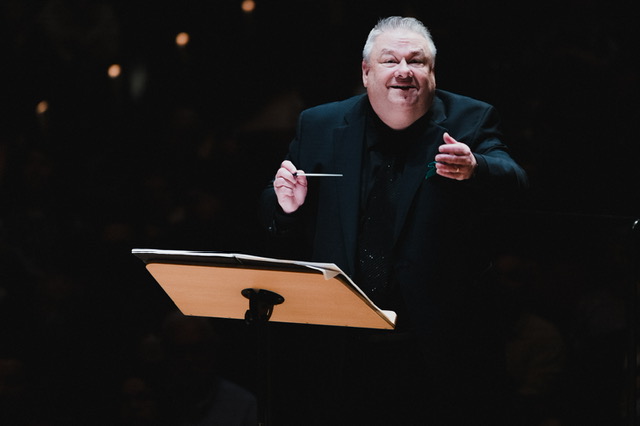
Heather Sorenson, Composer/Conductor

Joseph M. Martin, Composer/Conductor

Sarah Whittemore, Soloist; Sue Martin, Soloist; Layke Jones, Soloist

Distinguished Concerts Singers International

David Geffen Hall, Lincoln Center, New York, NY

November 20, 2022

I must admit I approached this concert with trepidation, because when it comes to holiday music, I’m a bit of a Scrooge.  So it is with surprise and delight that I found this to be a thoroughly enjoyable way to spend a chilly Sunday afternoon in New York. 

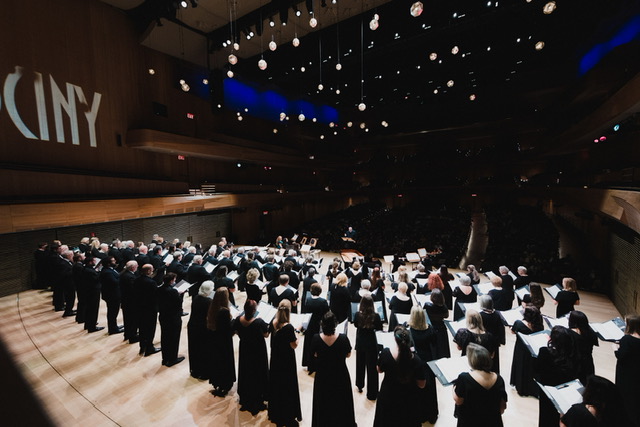
Distinguished Concerts Singers International

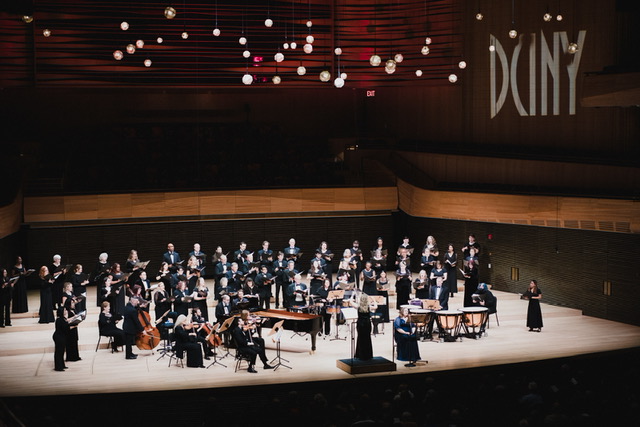
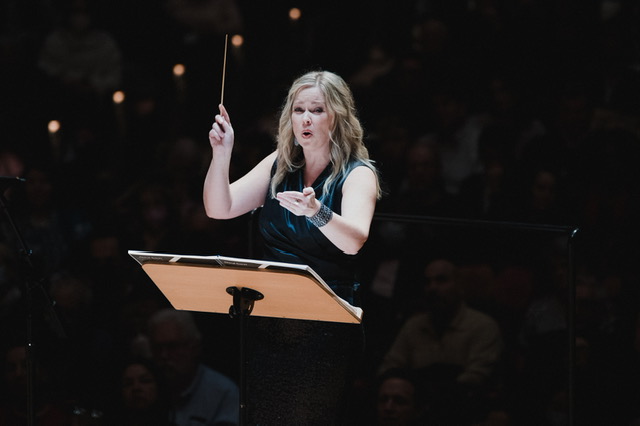
The program was divided evenly between two composer/conductors, featuring their original choral compositions and their arrangements of the most beloved Christmas carols.  The chorus, comprised of a consortium of choral groups from around the U.S. and beyond, were a well-prepared, balanced, and committed ensemble.  Heather Sorenson, whose pieces formed the first half of this program, conducted with utter clarity and precision throughout a cycle of nine contemporary liturgical works.  The current trend in this branch of the musical world freely borrows from an array of sources – Renaissance music, traditional Celtic folk tunes, Disney-style ballads – all cleverly and attractively arranged.  I was especially taken by Who’s the Little Baby? delivered with gospel-flavored gusto by the excellent Sarah Whittemore. Though I cringed at the thought of a carol inspired by the ubiquitous Canon in D, A Pachelbel Noel was in fact a creative melding of two beautiful melodies, a brilliant and moving hybrid.

Heather Sorenson, Composer/Conductor

I am familiar with the work of Joseph M. Martin, having reviewed him in a previous issue of New York Concert Review, and I am an unabashed fan.  He has a firm grasp of a variety of compositional styles, yet he infuses them with his own personal touch and wit, Tidings of Joy, his suite in ten parts, incorporates the best of our traditional Christmas fare (I Saw Three Kings, Joy To the World, The First Noel) into a joyful tribute that transcends this holiday season.  God Rest Ye Merry, Gentlemen is transformed into a sea shanty, complete with bouncing bongos, and Joy To the World, unbelievably, is pure vaudeville in his rendering. Mr. Martin’s podium demeanor is focused and motivating. 

Joseph M. Martin, Composer/Conductor

There was an unmistakable patina of professionalism over the whole endeavor, from chorus to soloists to instrumental ensemble.  In addition to the previously mentioned Sarah Whittemore, kudos must go to Sue Martin and Layke Jones for their sensitive contributions in Mr. Martin’s half of the program, and to Brad Nix,  a wonderful pianist who is a frequent collaborator with Distinguished Concerts International New York (DCINY). Since this concert took place at the newly renovated Geffen Hall, any review within six months of its opening cannot avoid an appraisal of its acoustics.  I was seated in row F, fairly close to the stage, and the sound there was a mixed bag.  The small chamber ensemble, of impeccable quality, came across with clarity and richness (I’m not sure they were all credited in the program).  However, the chorus, while audible, could have benefited from more definition and projection, especially in the first half.  This is to be expected, as the kinks in this new environment are eventually worked out.  In the meantime, DCINY continues to be an important part of the musical life of New York City.

Share

Lynn Spurgat and Jason Wirth in Review

Lynn Spurgat and Jason Wirth in Review

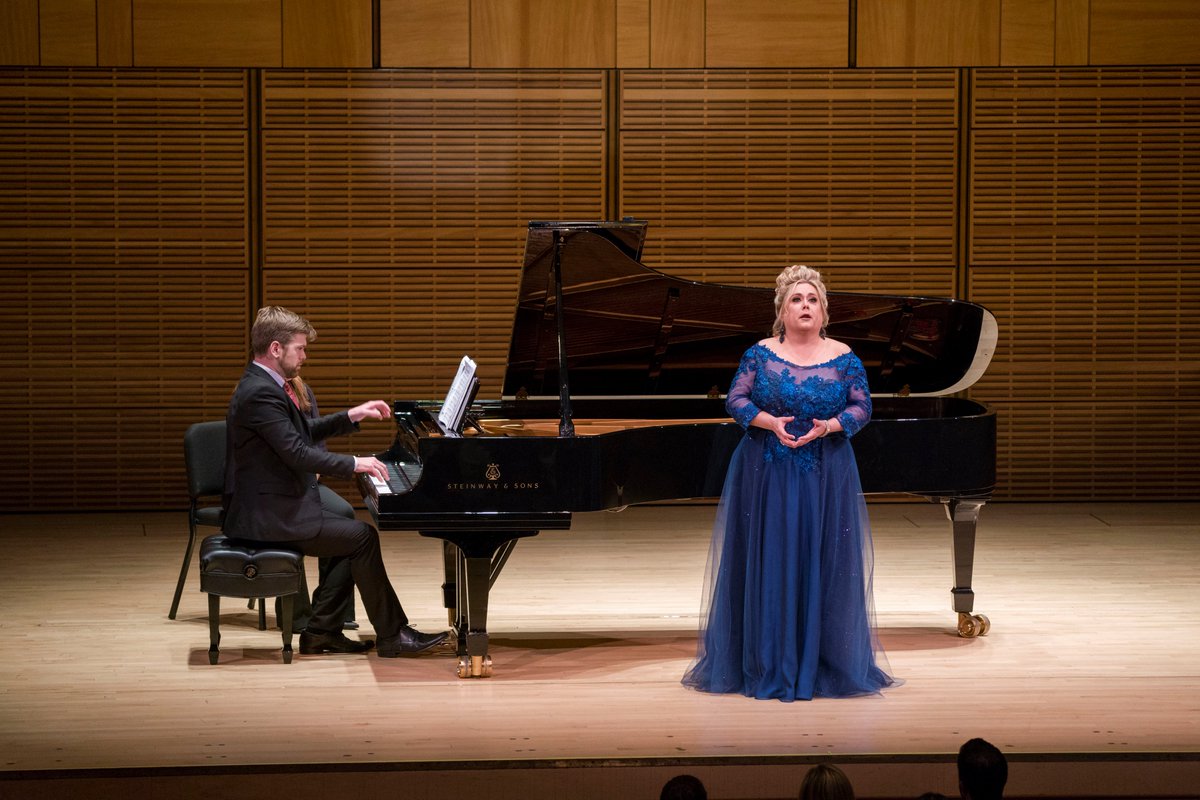
Lynn Spurgat, soprano; Jason Wirth, piano

Zankel Hall at Carnegie Hall, New York, NY

November 15, 2022

The soprano Lynn Spurgat is a storyteller, and lest we forget that singing is essentially storytelling, she reminded us of that in the most charming and affecting way in her recent recital at Zankel Hall.  Her collaborator, the gifted pianist Jason Wirth, created landscapes of color and dynamics to bring their interpretations to vivid life.

Perhaps this is not fair, but I feel that the program would have been near perfect if the opener, Mendelssohn’s concert aria Infelice, had been jettisoned in favor of something less weighty and imposing, something, in fact, more Mendelssohnian.  The back story for this work is fascinating, but the aria itself is not distinguished enough to merit its inclusion.  I give Ms. Spurgat credit for having the guts to start off firing on all cylinders.  However, it was only after this that her true talents as a singer became apparent.

Francis Poulenc’s monologue for soprano and orchestra, La Dame de Monte Carlo, was written for Denise Duval, Poulenc’s muse in the final years of his life.  By reputation, she was a superb singing actress.  In her own rendering, Ms. Spurgat, alternately comic and tragic, gave a rich account of this very special work.  Though she stopped once because of a memory slip, no one, least of all me, seemed to care.  Her voice, now relaxed and expansive, had a beautiful spin to it in the upper register, and her low notes were expressive and secure.  She has a big sound that can fill a room easily, without having to push.  This was a witty, nuanced performance from both soprano and pianist.

It was a treat to hear the Brahms Zigeunerlieder again, in an impassioned, strongly rhythmic reading that built steadily from its first song to the last, an uninhibited outpouring of ardent love, with Ms. Spurgat’s voice off the leash and in full bloom.

I’ll take a moment here to mention the excellent program notes, which managed to provide both introductory information for the uninitiated and esoterica for the seasoned concertgoer.  Speaking of esoterica, am I the only one who didn’t know that the celebrated writer Anais Nin was the daughter of the composer Joaquin Nin, the Cuban expatriate who was a contemporary of Granados and Albeniz?  In a brilliant stroke of programming, Ms. Spurgat launched the second half of her recital with the Diez Villancicos de Noel, a cycle of Christmas carols from diverse regions of Spain.  Each one was a gem, a microcosm of the rhythms and folk song traditions of those provinces, Mr. Wirth shone here in his voicing and sensitive pedaling, and the soprano held the audience in rapt attention with her melismatic, earthy singing of Jesus de Nazareth, the penultimate piece of this work.

The selection of Kurt Weill songs that brought this evening to a close confirmed for me his status as one of the great theater composers of the 20th century.  Here was a perfect meeting of artist and songwriter.  Ms. Spurgat is adept at conveying the quicksilver changes of mood and the pathos just below the surface of Weill’s creations.  Actors like to say that comedy is harder than tragedy, but what is harder than both is the juxtaposition of the two, and Ms. Spurgat excels at this. 

The enthusiastic audience demanded two encores, and Ms. Spurgat generously complied.  Once again, I can’t stress enough the contributions of Jason Wirth, one of the finest collaborative pianists I have heard, and a rock-solid support and inspiration for Lynn Spurgat.  Finally, compliments also to Laura Lutzke, the excellent violinist in the Mendelssohn concert aria.

Lynn Spurgat’s warm presence and talent for connecting with her audience made this evening a success.  My admiration for Poulenc and Weill was renewed and I discovered Joaquin Nin, all through her committed performances of their compositions.  Who could ask for anything more?

Share

Long Island Concert Orchestra in Review

Long Island Concert Orchestra in Review

Jason Tramm, conductor

Gauen Kim, cello soloist

David Winkler, Executive Director

Broadway Church, New York, NY

November 4, 2022

The Long Island Concert Orchestra (LICO), under the baton of conductor Jason Tramm, brought a highly enjoyable program to the Broadway Church in New York City on November 4th – two iconic works, the Tchaikovsky Variations on a Rococo Theme, Op. 33, with cellist Gauen Kim, Mozart’s  Symphony No. 35 in D major, K. 385 “Haffner,” and the  US premiere of  Mannheim Preludes, by composer and Executive Director of Chamber Players International, David Winkler. 

Mr. Winkler welcomed the audience and spoke about his Mannheim Preludes. This 2016 work, commissioned by the Karpfälsiches Kammerorchester of Mannheim, is written in the style of the Italian Overture (three sections: fast-slow-fast, played as single continuous whole). Mr. Winkler took a tense thematic motif and “passed” it around the ensemble throughout.  While one sensed the tension, it was not always rendered convincingly. Some attacks were tentative, and the ensemble was not always razor-sharp. One is generally reluctant to make assumptions, but perhaps there was not enough time for extra rehearsals. These issues notwithstanding, it is an effective work, and conductor Jason Tramm invested boundless energy and commitment to bring out the best in the orchestra.  The appreciative audience gave Mr. Winkler warm applause.

Cellist Gauen Kim took the stage for the Tchaikovsky Variations on a Rococo Theme. I’m not sure if Ms. Kim was a last-minute substitute, as the promotion materials listed Eunae Jin as the cello soloist. There was also no talk about the work (or any program notes), which was a bit disappointing, considering the interesting history of how the work’s dedicatee Wilhelm Fitzenhagen, played a bit “fast and loose” with Tchaikovsky’s original conception. As they say, you can look it up, but for a start the Variations on a Rococo Theme employs a theme that is not actually Rococo, but is an original theme in the Rococo style.

There is a certain insouciance required from a soloist to capture this work’s spirit, as too much “seriousness” ruins the playfulness and humor that abounds throughout.  It’s not enough however, to just swagger, one must also negotiate the considerable technical demands. Ms. Kim fit the bill perfectly. Her tone was warm and rich, her bow work excellent, and her intonation overall quite true.  Her rapid passage work was clearly articulated, and the humor was projected with an easy touch that never sounded affected.  Ms. Kim is an elegant player!

Maestro Tramm was an ideal collaborator, keeping the orchestra “in line” while sensitive to the soloist. The one or two very brief moments when the orchestra was obscuring Ms. Kim were quickly addressed.  The call-and-reply moments were charming. All of those ensemble concerns that I felt during the Winkler had disappeared. The audience gave Ms. Kim a well-deserved standing ovation.

The evening concluded after intermission with Mozart’s  Symphony No. 35 in D major, K. 385 “Haffner.” This masterpiece must be considered one of the finest of Mozart’s forty-one symphonies, and Maestro Tramm’s reading served it well. It reminded me of my last hearing of him conducting a Mozart symphony, in that he let the music speak without resorting to any needless “originality.” His an intelligent, respectful approach – after all, Mozart needs no one’s “help.”  It proved to be one of the most enjoyable twenty minutes of music that this often jaded listener has experienced in a very long time.  At one point, a violist broke into a huge grin as he was playing, which really touched me, as this exemplified what music should be, pure joy.

The opening Allegro con spirito was ebullient, with the “fire” that Mozart indicated. The woodwinds were the stars of the lovely Andante. The clever Menuetto was a musical tug-o-war between the tonic and dominant. The scintillating Presto brought the audience to their feet in an extended standing ovation.  Bravo!

The Long Island Concert Orchestra returns to the Good Shepherd Church for a program in the “Great Artist Series” on November 30. 2022.


Share

Vocal Artists Management Service presents its Fourteenth Season Artist Showcase in Review

Vocal Artists Management Service presents its Fourteenth Season Artist Showcase in Review

James Greening-Valenzuela, manager

Gretchen Greenfield, artistic consultant

Eric Malson, pianist

Scorca Recital Hall, Opera America National Opera Center, New York, NY

October 20, 2022

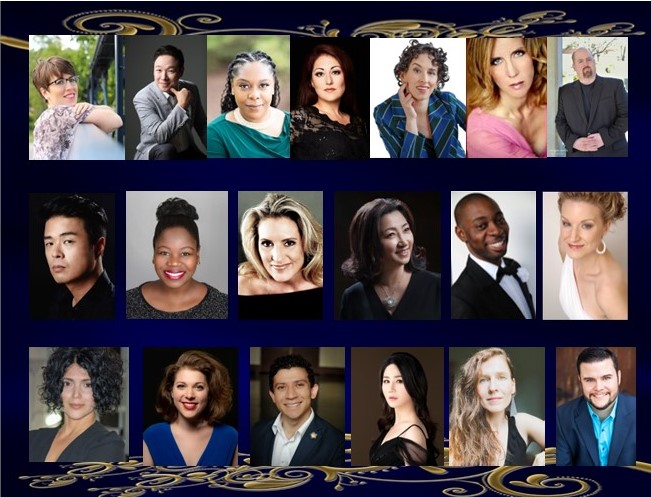
Opera is the only classical music genre that is a growing business in America. Therefore, there will always be a need for young singers trained in its demands both vocal and dramatic. James Greening-Valenzuela, a noted concert violinist with extensive vocal coaching experience, has turned his attention to maintaining a stable of such artists, at all skill levels from “emerging” to “professional,” as the manager of Vocal Artists Management Service (VAMS).

To celebrate the fourteenth anniversary of VAMS, a generous showcase concert was given at the National Opera Center. Once upon a time, such showcases served to show off one’s roster to a cohort of visiting opera and other vocal presenters. I’m not sure that was the case on Thursday, since I didn’t see any personnel fitting the bill in the small audience. Nevertheless, there were many small, and a few large, standout moments in the long program.

Remember, there is nothing quite so subjective as the way a human voice is received by other human beings. The following report is based solely on my response to this particular moment in time. Also remember, no instrument is quite so fickle as the voice, which resides within the body, and is subject to all its whims.

(Full disclosure: Mr. Greening-Valenzuela and I shared the same artist-manager for a period of years, some years ago. My review is objective, as far as a matter of opinion can be.)

The evening was partitioned into “Early Music,” “Opera Arias,” and “Verdi and Puccini Opera Scenes,” with the interesting additional “Original Songs” (a pop category featuring a classically trained singer/songwriter) fitted in just before intermission.

To say that “war horses” dominated the concert would be putting it mildly, with the exception of the aria New York Lights from William Bolcom’s A View from the Bridge (not by Samuel Barber, as erroneously printed in the program). This was given a poignant rendition, one of the evening’s best, by tenor Michael González, one of the emerging artists. He was less successful, though passionate, in Donizetti’s Una furtiva lagrima (L’Elisir d’amore). I predict he will go far, as there is always a shortage of good tenors.

Another very good tenor, with more professional experience, was Pedro Carreras, Jr., whose Dein ist mein ganzes Herz (Lehár, Das Land des lächelns) was spun out with ease and idiomatic style. However, he seemed overtaxed in the verismo style required for the famous Vesti la giubba (Leoncavallo, Pagliacci). True, the tenor voice is the one that takes the longest to mature in the performer’s body, sometimes as late as age thirty-five. Knowing how to select repertoire that is suitable to one’s voice type and ability is absolutely crucial to vocal success and longevity.

During the opera scenes portion, Kate Kyunghee Kim, soprano, and Sang Bum Cho, tenor, were beautifully trained as to their voices in their Brindisi and Parigi, o cara (Verdi, La Traviata), but lacking as to appropriate dramatic content, at least to this listener. Mr. Cho lacked the articulative “snap” that makes the phrases of the drinking song dance. May I remind the reader how very difficult it is to extract material like this from its context and present it in recital/concert form. However, one needs to be able to make a complete impression in auditions—and opera stars used to do it successfully on talk shows (now there’s a memory!). Ms. Kim has a very successful oratorio career, and Mr. Cho sings oratorio and opera.

The famous Act II duet between Violetta and Germont (also La Traviata) received a thoroughly masterful characterization from baritone Tom Sitzler, who sang this unlikeable character with mature and beautiful sonority. His partner, soprano Virginie Besson (emerging artist), had a wonderful dramatic feeling, but hers was the wrong voice type for the role. Mr. Sitzler has extensive opera experience—I think I would enjoy his Golaud (Debussy, Pelléas et Mélisande).

The duet from Puccini’s Suor Angelica, sung by Alexandria Crichlow, soprano and Caroline Tye, mezzo-soprano, was sizzling hot. Both voices were very nice, and the dramatic portrayal was successful. Ms. Crichlow, very affecting as the betrayed out-of-wedlock mother, had only one flaw- mushy diction. Clear diction is possible in opera! This concert was in a tiny recital hall, and more forward vocal placement and pronunciation would help her go even farther. Caroline Tye was fierce as the lying aunt, but I found her sonority overly-darkened, in a somewhat forced, artificial way. The extensive experience of these two artists was truly evident.

The evening’s finale, a duet excerpt, the jail visit, from Act III of Puccini’s Tosca, had good characterization from both Stacey Stofferahn, soprano, and Steven Andrew Murray, tenor. This material can easily tip over into shouting, but each artist produced detailed shadings and lyrical nuances, without forgetting to rise to the heroic heights required.

In the early-music section, the impressive countertenor Andrew Egbuchiem had a lovely voice, he was paired with emerging artist Katie Surine, soprano. Though each of them has experience in the older repertoire, they managed to seem somewhat bland in arias from Vivaldi’s Gloria, Handel’s Rodelinda, and Purcell’s Pausanias. I realize they were being accompanied by a piano, but I didn’t hear any of the vocal practices common to specialists in this repertoire, especially awareness of and enjoyment of chains of dissonances. Countertenors are a growth industry, so to speak, even though they didn’t exist in the Baroque era. Fortunately, we no longer sanction a certain mutilation, so there are no more castrati. The countertenor is a compromise, one which is accepted when the voice is as subtle as Mr. Egbuchiem’s.

Allow me to pause here and praise the evening’s tireless and excellent collaborative pianist, Eric Malson. Orchestral reductions are a thankless job- they are so unidiomatic. Mr. Malson was unflappable and completely supportive.

Two more artists sang on the arias section: mezzo-soprano Roselin Osser, in arias from Meyerbeer’s Les Huguenots and Mozart’s Le Nozze di Figaro. The adolescent angst of Cherubino was not fully characterized, though I enjoyed her flair in the Meyerbeer. Soprano Lisa Bryce sang the treacherous Ave Maria from Verdi’s Otello, with very dark vowels. What is going on with voice teaching nowadays? It seems so many young singers are over-darkening, trying to produce something rather than allowing their voices to be revealed through patient cultivation.

Also included was one artist who has switched genres, from classical to popular. The one-named Mahaley (formerly known as Rachel Eve Holmes) sang portions of four of her own original songs. Her microphone technique was shaky; she often turned back to the piano and the sound would become very soft. I suggest she work with experienced songwriters/producers to shape some of her material, which shows promise, into more “hit-ready” songs.  Good luck!

Overall, it was a very fulfilling evening. These young artists are fortunate to have a nurturing artist-management team like VAMS.

Share

Irina Moreland: Inspirational Journey to Impressionism in Review

Irina Moreland: Inspirational Journey to Impressionism in Review

Irina Moreland, Piano

Guest Artist Halida Dinova, Piano
Weill Recital Hall at Carnegie Hall, New York, NY
October 16, 2022


I often wonder why more pianists (and perhaps audiences) don’t gravitate to French piano music. It does require some specialized equipment: knowledge of how to produce infinite gradations and blends of tonal colors, often at the softest dynamic levels, precision in score-reading, and a certain temperament, one that doesn’t intrude upon the music, but allows it to speak for itself. Portions of these two qualities were found in abundance in this brief matinee on Sunday.

Pianist Irina Moreland, a double-doctorate and professor of piano in Colorado, decided to reunite with her advanced-student days friend, the equally accomplished Cleveland-based Halida Dinova for an afternoon of mainly French music, mostly Debussy with one Ravel showpiece. The pairing proved a vivid study in contrasts: Ms. Moreland being more the “wild” and Ms. Dinova the “controlled.”

Although Ms. Moreland seemed to be battling nerves, with numerous crucial memory lapses and imprecision (or misreading?), she gave a veritable master class in how to continue despite these things, and – what I was delighted to note – the essential character of each of her pieces emerged vividly.

Ms. Moreland began with four of the five scheduled Debussy Preludes from Book Two. The first three were the misty and surprisingly polytonal Brouillards (Mists), La Puerta de Vino (that evocation of the gate through which wine deliveries were made to the Alhambra), which suited her personality very well, and Les Fées sont d’exquises danseuses (Fairies are exquisite dancers), inspired by a bookplate by Arthur Rackham. Ms. Moreland really made those fairies seem airborne! The last was Feux d’Artifice (Fireworks), a Bastille Day reverie. Numerous dynamics were either reversed or ignored, nevertheless each atmosphere succeeded. The fifth Prelude would have been General Lavine-eccentric, which I thought would have also suited her temperament.

Halida Dinova then took the stage for two Debussy Preludes from Book One: La Cathédrale engloutie (The Engulfed Cathedral), from the Breton legend of the sunken city of Ys that rises only once every one hundred years then sinks back—she understood this piece totally, though I wished for more genuine pp dynamics (from both pianists, actually). Then she “tarantella-ed” her way through Les Collines d’Anacapri, an Italy replete with sun and folksong.

Ms. Moreland returned with what I found to be the only miscalculation of the afternoon: Ravel’s sarcastic, biting showpiece Alborada del gracioso. The alborada (French: aubade; English “morning song”) was traditionally sung outside the window of the illicit lovers’ bedroom just before the break of day, so the man could “self-defenestrate” and avoid being caught. Of course, Ravel has to make the whole scenario a satire, the warning sung by a clown. The musical text, as played by Ms. Moreland, simply had too many errors to be adjudicated fairly, although I will say, her flair for character redeemed it, and I’m sure many in the audience had no idea. Great glissandi, by the way!—they’re murder.

Then it was Ms. Dinova’s turn, with the gorgeous Reflets dans l’eau from the first series of Images. Despite a few odd (original) pedaling choices, she found beautiful blends suggestive of the Nymphéas (Water-lilies) by Monet in Paris’ Musée de l’Orangerie.

Ms. Moreland then returned with what I found to be a jarring shift in tone: a concert jota titled ¡Viva Navarra! by Joaquín Larregla (1865-1945). I don’t know if nerves got the better of her, but she never lost the thread of fiery passion that such a piece needs, and there were many sparkling moments of rapid treble filigree.

The two then joined forces to conclude the recital with a four-hand transcription of Khachaturian’s ubiquitous war-horse, the Sabre Dance from his ballet Gayane. It was a riot of explosive energy, as it should be, and the two of them did something I really like: a true encore, that is, after the ovation they played it again, with even more energy.

Perhaps, rather than the last two pieces, I might have liked a four-hand French selection by either Debussy or Ravel, there are plenty available and it would have preserved the theme. However, an afternoon of sharing music with each other, and with their many friends and fans, ultimately succeeded in conveying the joy of music.


Share

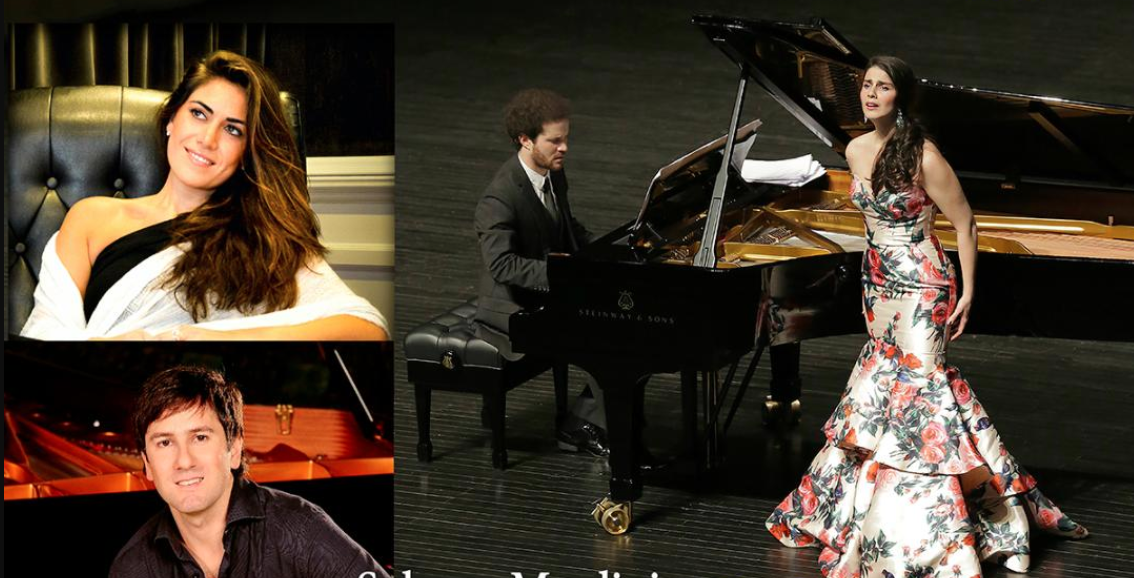
Pro Musicis presents in Review Solange Merdinian, mezzo-soprano; Laetitia Grimaldi, soprano; Ammiel Bushakevitz, piano; Ciro Fodere, piano in Review

Pro Musicis presents in Review Solange Merdinian, mezzo-soprano; Laetitia Grimaldi, soprano; Ammiel Bushakevitz, piano; Ciro Fodere, piano in Review

Weill Recital Hall at Carnegie Hall, New York, NY

October 11, 2022

Founded in 1965, the prestigious arts organization, Pro Musicis, is a Paris and New York based non-profit which stresses internationalism and diversity. Their mission, as stated in the printed program, is to “awaken the human spirit,” and their artists are chosen for both their “high level of performance and their passion for social outreach.

Tonight’s concert featured two singers and two pianists, all multi-national and multi-lingual. Mezzo-soprano Solange  Merdinian in (who won a 2019 Pro Musicis International Award) is an Armenian-Argentinian-American; soprano Laetitia Grimaldi (who won a Pro Musicis International Award in 2017) was born in France and grew up in Lisbon and London; pianist Ammeil Bushakevitz (who also won a Pro Musicis International Award in 2017)  was born in Jerusalem, raised in South Africa, and studied in Leipzig and Paris; and pianist Ciro Fodere is from Uruguay and now lives in the United States.  The performers’ multi-national backgrounds led to a most interesting and unusual selection of music.

This program of mostly unfamiliar music was bookended by two very familiar vocal duets- the Flower Duet from Lakmé, by Léo Delibes, and the Barcarolle from Les Contes d’Hoffmann, by Jacques Offenbach.  As the two women launched into the Flower Duet, I was immediately struck by how well the two voices blended and how perfectly in synch they were in terms of both dynamics and tempo.  Without looking at each other they executed the small ritards and diminuendos as if with one voice.  Their voices are well matched in terms of size and timbre, Ms. Merdinian’s strong mezzo balancing Ms. Grimaldi’s higher but equally rich soprano.  I thought they must have been singing together for years.  Not so!  I found out later that, although they were good friends, having once lived in New York at the same time, and having long nursed a desire to collaborate, this wish was unrealized until October 10, 2022, the very day before this concert!  Here is the story: Ms. Grimaldi now lives in Paris and Ms. Merdinian in Miami.  Plans were made to meet in New York City several days before this concert to rehearse.  However, Ms. Grimaldi’s air travel plans went awry, as happens so often these days, and it wasn’t until noon on October 10, one day before the concert that her plane touched down at Kennedy Airport.  They met at a studio in Manhattan and rehearsed that afternoon.  On the afternoon of the day of the concert, just a few hours before their performance, they had their dress rehearsal in the hall.  Forget about jet lag! Forget about resting the voice before a big performance!  The show must go on!

After a soothingly lovely performance of the Flower Duet, Ms. Merdinian left the stage, and Ms. Grimaldi and Mr. Bushakevitz performed three songs by Rachmaninoff: Spring Waters, How Peaceful It Is Here, and What Happiness.  Ms. Grimaldi’s exciting voice projects well throughout her registers.  In the songs of Rachmaninoff the piano writing is often virtuosic. The composer is considered to have been one of the greatest pianists of all time.  A smaller voice might have been overpowered, but Ms. Grimaldi held her own as the brilliant Mr. Bushakevitz flew through the difficult passages with panache.  There was one problem, however.  As is customary, the texts of the songs were printed in the program.  This is of the greatest importance because, without this aid, the listener doesn’t know what the song is saying; the title gives only a general idea.  But it was too dark to comfortably read in the audience area of Weill Recital Hall! This happens frequently in song recitals, and it implies a lack of appreciation for the poetry.  Singers spend a great deal of time thinking about and analyzing texts and then working to reflect their subtleties with voice and gesture.  I would recommend that the performers, who put in all this work, make a point of letting the house know that the lights should be bright enough for the texts to be read with ease.  For, although Ms. Grimaldi sang with commitment and passion, there were, no doubt, subtleties in her delivery which I, who speak no Russian, could not perceive. 

For the next set, Ms. Merdinian, accompanied by the always excellent Mr. Fodere, sang four Armenian songs: The Rose, by Romanos Melikyan, (1883-1935), The Sad Little Girl, and My Sweet Harp, by Khachatur Avedisian, (1926-1996) and Song of Merriment, by Aram Khachaturian (1903-1978).  These folk-like songs, alternately sad and joyous, are obviously dear to Ms. Merdinian’s heart, and her compelling and plangent voice was a perfect vehicle for them.

The balance of the first half of the program was given over to music by women.  Ms. Grimaldi and Mr. Bushakevitz returned to the stage and gave a fine performance of Clara Schumann’s Lorelei.  Then Ms. Grimaldi lent her lustrous soprano to Songe (Dream) by the little-known French Composer, Mélanie Bonis, commonly known as Mel Bonis. To end the set, stormy seas were evoked in After the Squall, by the English composer Ethel Smyth (1858-1944).

The concert’s first half concluded with both singers, accompanied by Mr. Bushakevitz, performing Titania’s Lullaby from A Midsummer Night’s Dream, by the Argentinian composer Lucia Caruso (b.1980).  This duet was composed for a concert in Stratford-upon-Avon honoring the 400th anniversary of Shakespeare’s death.  It is an attractive tonal piece with a few well-placed dissonances.  The fine diction of the two women was gratifying as they exhorted spotted snakes, newts, spiders, beetles and worms to “come not near our fairy queen.” 

Ms. Merdinian and Mr. Fodere began the second half with short songs by six composers: the Spaniard, Fernando Obradors (1897-1945), the Argentinians Carlos Guastavino (1912-2000), Alberto Ginastera (1916-1983), Carlos López Buchardo (1881-1948), Pablo Ziegler (b.1944) and finally, another Spaniard, Jerónimo Giménez (1854-1923).  A typically Spanish mood prevailed with frequent imitations of guitars in the piano part and sultry vocalizing and seductive gestures by the singer.  The last song of the set, La Tarantula, by Giménez, brought down the house as Ms. Merdinian ended it on a high note with her hands above her head.  Her childhood in Argentina was not wasted!

Neither was Ms. Grimaldi’s Lisbon upbringing, as was evidenced in the next set.  She was accompanied, as before by Mr. Bushakevitz in Brazil’s Heitor Villa-Lobos’s Melodia Sentimental, from Florets do Amasonas, Villa-Lobos’s foray into movie music.  Two works by Obradores followed and then, in a delightful twist, we heard the French composer Delibes’s take on Spanish music in Les Filles de Cadix.

 The well-loved Barcarolle from Offenbach’s Les Contes d’Hoffmann gently completed the program.  The happy audience, with loud applause and cries of bravo, leapt to its feet and was then rewarded with Vidila, a duet by Carlos López Buchardo. 


Share

The Hilton Head International Piano Competition presents 2022 First Prize Winner Jaeden Izik-Dzurko in Review

The Hilton Head International Piano Competition presents 2022 First Prize Winner Jaeden Izik-Dzurko in Review

Jaeden Izik-Dzurko, piano

Weill Recital Hall at Carnegie Hall, New York, NY

October 14, 2022

I must reveal a terrible secret that I imagine is not unique to this reviewer: I can tell within one or two seconds of playing (on occasion, even as the performer takes the stage!) whether a piano recital will be transcendent, very good, good, or (I always hope not) not so good. Jaeden Izik-Dzurko captivated me, with the first category, in the requisite two seconds, the first “ppp, una corda, very faded, nonchalant, uniform, and melancholy” measure of Albéniz’s El Albaicín, that pianistic impression (Albéniz’s own word) of Granada’s Gypsy quarter, revealed in all its splendor.

In doing so, he also confirmed that Hilton Head’s reputation for finding the best young piano talent is rivaled only by its beauty as a South Carolina “low country” destination.

But let us return to Mr. Izik-Dzurko: What he revealed in those two seconds, and continued to display for the next hour and a half, is one the most refined tonal palettes I have ever heard, combined with a polished close-to-the-keys technique, and a certain basic humility in the service of the music. There was not one moment of showing off, yet the wildly enthusiastic audience probably had no idea of the difficulty of what he was achieving. He even seemed shy in accepting his bows. Absolutely everything was put into the music.

He followed the Albéniz with one of his personal favorites, Scriabin’s Tenth Piano Sonata, Op. 70, in whose single movement sonata form is detectable, even rather strict, amid the welter of “powerful, radiant, luminous” trill outbursts. Mr. Izik-Dzurko guided us through the labyrinth with perfect voicing, gorgeous dynamic range, seemingly limitless colors, and let me just gush a little about those trills… Although I’ve known the piece for some decades now, it finally made sense to me!

Mr. Izik-Dzurko then turned his attention to the Classical period with a seldom played Beethoven gem, the Andante in F Major, WoO 57, known as “Favori,” originally conceived as the slow movement to the “Waldstein” sonata (thank goodness he removed it from that). Here, he showed a delightfully subtle feeling for each harmonic change, a delicious “Viennese upbeat” at the beginning of the B-flat episode (done only once, thank you), and phenomenally light octaves in both hands.

He closed the first half of the recital with two of the fiendishly difficult 12 Etudes in the Minor Keys by his fellow Canadian, Marc-André Hamelin. The first of them, No. 7, is for the left hand alone, based on the Tchaikovsky Lullaby, Op. 16 No. 1, originally for voice and piano. With a fluid, relaxed left hand he rendered every textural complexity with crystal clarity, and emotional poignancy. The second of the two Etudes played, No. 12, is titled Prelude and Fugue, and it contains a jazzy element in the prelude leading to a wild tarantella-like fugue. Apparently Hamelin apologized, in some commentary, for creating such an “agglomeration of technical nightmares,” but they held no terrors for Mr. Izik-Dzurko, or if they did, he disguised them to perfection. I will quote Mr. Hamelin, for the sentences apply perfectly to Mr. Izik-Dzurko: “I think it [virtuosity] is a heightened ability, a sort of super-ability to marshal your resources, either emotional or corporal, in order to bring music to life. I think that something like that is inborn, for the most part, but of course this sort of super-ability needs to be cultivated, sharpened, and maintained.”

After intermission, the entire second half was devoted to Rachmaninoff’s First Piano Sonata in D minor, Op. 28, the one that began life as a sort of programmatic rumination “après une lecture de Faust.” What an opportunity, I’m not sure how the universe decides these things, but my second time in two days hearing this seldom-played work! All of Mr. Izik-Dzurko’s virtues were again channeled into this demanding score. Here he appeared to apply an even hotter emotional temperature and involvement, while never once losing clarity. The fortissimo passages were lava escaping from some subterranean fissure. The trills near the close of the slow movement seemed to point the way to the Scriabin we had heard earlier. Amid all the grandeur, Mr. Izik-Dzurko made the piece seem two things: 1) “better” than it is, and 2) “shorter” than it is! An amazing accomplishment in an evening filled with them.

The ovation was long, loud, and of course, well-deserved. Mr. Izik-Dzurko favored us with two encores. First, the delicate tracery of Scriabin’s Etude Op. 42, No. 4. Then he was called back and blazed his way through the brief but rambunctious Medtner Fairy Tale, Op. 26, No. 2.

Is there something in the water in Canada that develops virtuoso pianists? Mr. Izik-Dzurko was born in the quaintly named Salmon Arm, British Columbia, and is continuing his Master’s degree studies with Corey Hamm in Vancouver, following his Bachelor’s degree from Juilliard. He certainly seems on his way to a major career if he wants one. After his victory in Hilton Head, he went on to snag three more first prizes at major competitions within a six-month period. I’m sure he would be the first to tell us that technique is but a means to an end, but without it, you can’t give free reign to your expression.

Oh, and Jaeden (pardon the familiarity), would you do me a favor? Please return to New York every year with the following: a complete Ravel cycle, a complete Debussy cycle, and anything else you would like to program.

As I was leaving the hall, I became aware of a complete stranger on the sidewalk approaching me. Naturally, as a New Yorker, I was a bit cautious, but he began to spontaneously gush about that piano recital he had just heard, and I realized we had heard the same one. We talked for a few minutes and I asked him if he knew the performer, or was from South Carolina perhaps, or Canada. No, he said, I’m just a fan of piano recitals and I saw this on the calendar. Good job, Jaeden!

Share

Piano Cleveland presents Martín García García in Review

Piano Cleveland presents Martín García García in Review

Martín García García, piano

Mixon First Prize Winner of the 2022 Cleveland International Piano Competition

Judy and Arthur Zankel Hall at Carnegie Hall, New York, NY

October 12, 2022

Competitions can be fraught affairs- for the entrants, jury, parents, audiences, and future audiences. Expectations are high and fear of the “wrong note” can encourage pianists to make safe choices. Happily, I can report that this seems to be changing, especially in the case of the Cleveland International (formerly Robert Casadesus) Competition and its current award winner, Martín García García.

There wasn’t a “safe” choice anywhere near his program of three gigantic showpieces (two well-known and often played, one less so) and a group of his own compositions. I so admire pianists who are also composers—let us not forget that prior to the twentieth century, most of them were—it was expected.

This is a pianist of giant technical ability (we assume that) in the service of what I call “seeking.” His immense musicality leads him constantly to search for one interpretive choice or other, and I believe that he “finds” them, to his satisfaction. Although I’ve only heard him once, I can believe that the same program played in two days’ time would have different textures and details, while remaining recognizable.

García plunged right in with an uncommonly poetic rendition of the gigantic Fantasie in C major by Schubert that has become known as the Wanderer, D. 760, after the lied Der Wanderer, D. 489, that provides its thematic motive and second section’s theme and variations. One of Schubert’s most assertive and consistently brilliant piano works, it is all the more unusual since he was not known to be a great virtuoso— Schubert himself said, “the devil may play it,” in reference to his own inability to do so properly. The work strains at the outer limits of what pianos of Schubert’s time were capable of, with symphonic textures and gossamer piano embroideries.

At times, Mr. García was so musical that I sensed him pulling back from many of the more massive moments, a pacing strategy that I can appreciate, but which made the piece seem smaller than I think it should. Some of the large chords seemed too dry. This was not a Wanderer for those who prefer a weightier, tragic statement, but it is a piece that allows for multiple interpretations, and Mr. García’s certainly had integrity. The entire Romantic age is summed up in the last line of the song’s poem, in which ghostly voices say to the tired wanderer: “Wherever you aren’t, there is happiness!”

Have you noticed a certain mania for audience participation? Choose your own ending for a Netflix series? Does anyone remember The Mystery of Edwin Drood on Broadway, in which the audience could choose the ending? I will let my readers choose their own ending to this sentence: Too often, Mr. García made articulative, textural, and phrasing choices that were 1) original, 2) eccentric, or 3) both. At any rate, I would much rather be stimulated by new music-making choices than bored to death. On a side note: Mr. García was battling two things: his tendency to hum loudly when playing the most lyrical material. I understand where this comes from, mainly a desire to overcome the decaying nature of piano sound, but (for me) it is a bad habit and ought to be overcome- all that energy should be going into the keys; and a recalcitrant piano that seemed to be going out of tune more than once during the recital, despite being adjusted during intermission.

Mr. García followed the Schubert with another giant, Chopin’s final sonata, the B minor, Op. 58. His poetic sense had free reign here, and he created in the moment with great originality. The Scherzo was taken at an unbelievably rapid, feather-light tempo, with perfect clarity. Gone are the days when the sanctimonius James Gibbons Huneker could refer to the Finale as “the parade ground of the virtuoso,” especially when Mr. García’s textural strategies and refinement are applied to it.

After intermission, it seemed as though a different pianist took the stage, different though recognizable. Mr. García began with nearly one-third of his pandemic-inspired cycle AbstractosAbstracto XII: Silent Postlude (dedicated to Tamana Tanaka); Abstracto VII: Mal du Pays Bleu (dedicated to Margarita Anthoine); Abstracto VI: Mal du Pays Gris” (dedicated to José María García Marina); Abstracto XI: Réminiscenses d’une Berceuse (dedicated to Sujatri Reisinger), in which he sought to channel the unbearable stillness of lockdown, the surreal quality that once-thronged big cites took on, and the equally unbearable losses people were experiencing as many of their loved ones died. Naturally, as I would expect, Mr. García “spoke” this music with total authority. The pieces themselves have delightful motivic unity, and they use the piano and its colors beautifully. Wisps of Medtner and Mompou seemed to hover over them.

Mr. García closed this monumental recital with Rachmaninoff’s first essay in the piano sonata, the D minor, Op. 28, less often played than its perhaps more glamorous sibling Op. 36. However, in the D minor (once projected as a programmatic Après une lecture de Faust), we have even more of the Rachmaninoff virtues: motivic unity among all movements, the aching lyricism, the striving, the massive concerto-like textures we will hear later in his Third Concerto (also notably in Mr. García’s repertoire). In this work, Mr. García’s command of voicing was miraculous and enjoyable. The piano fairly thundered, without there ever once being an ugly tone, then melted to express the lyrical moments. The audience went justly wild.

So wild that Mr. García favored us with two encores, both Chopin waltzes, first the C-sharp minor, Op. 64 No. 2, in which the García of the first half seemed to reappear—I wish he could have avoided repeating the same agogic on the “disappearing” final run every single time it appeared. Then, he played the A-Flat major, Op. 34 No. 1: here was perfection, flair, charm, virtuosity, the second half García.

This young man already has so much, and he has time to gather his musical philosophies into a coherent whole, for it is clear he possesses them. He has numerous concerto engagements coming, the result of his various competition wins, and I hope that the touring life will be kind to him, so that he may continue seeking, finding, and sharing with us.

Share