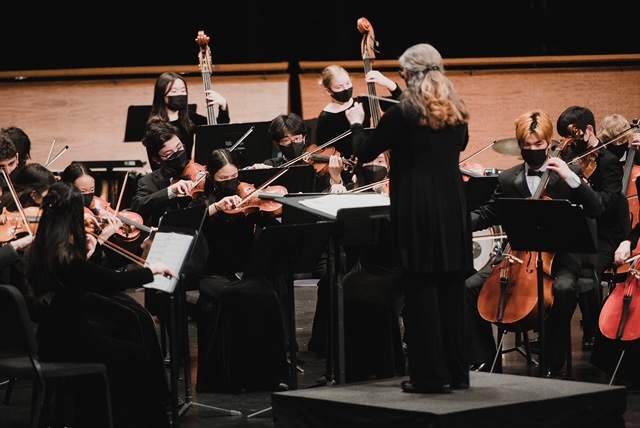
Distinguished Concerts International New York (DCINY) presents Once Upon a Morning in Review

Distinguished Concerts International New York (DCINY) presents Once Upon a Morning in Review

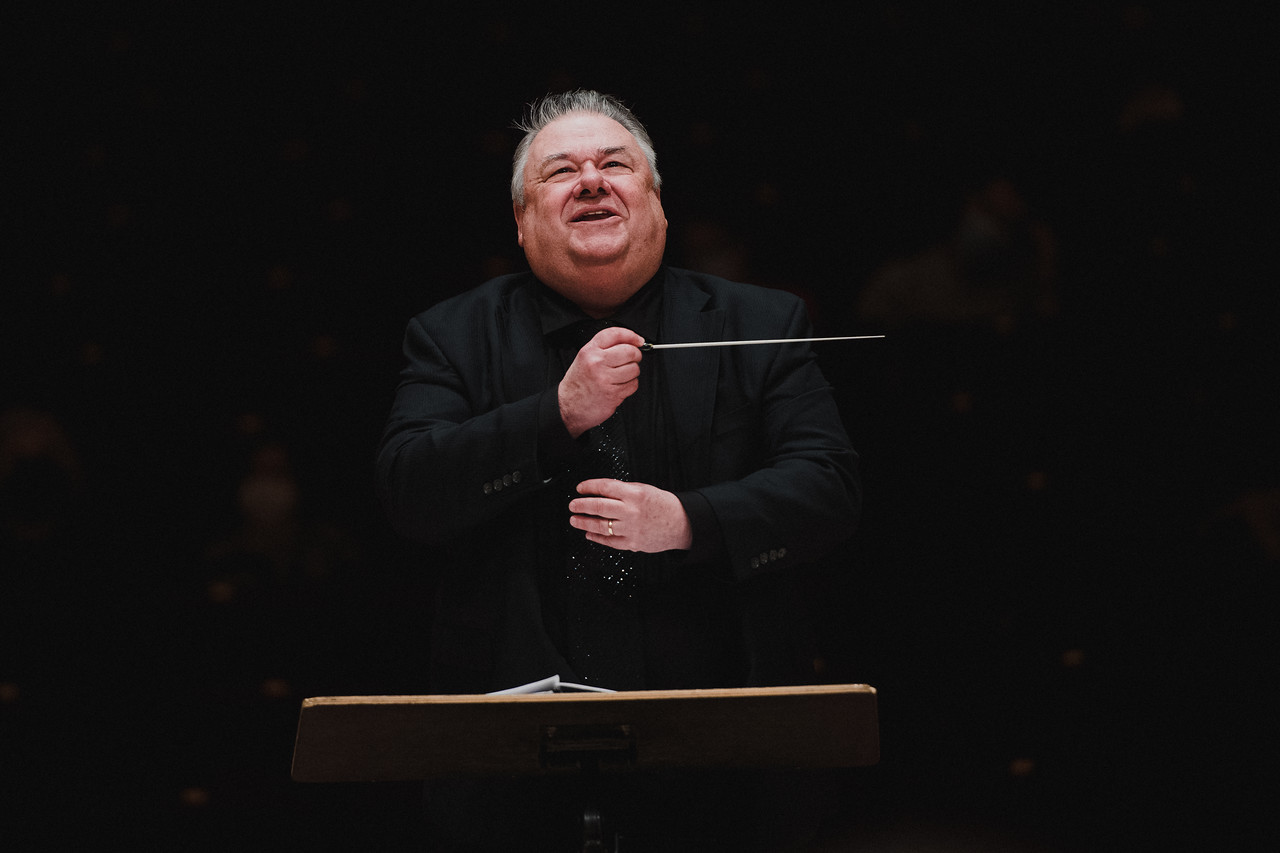
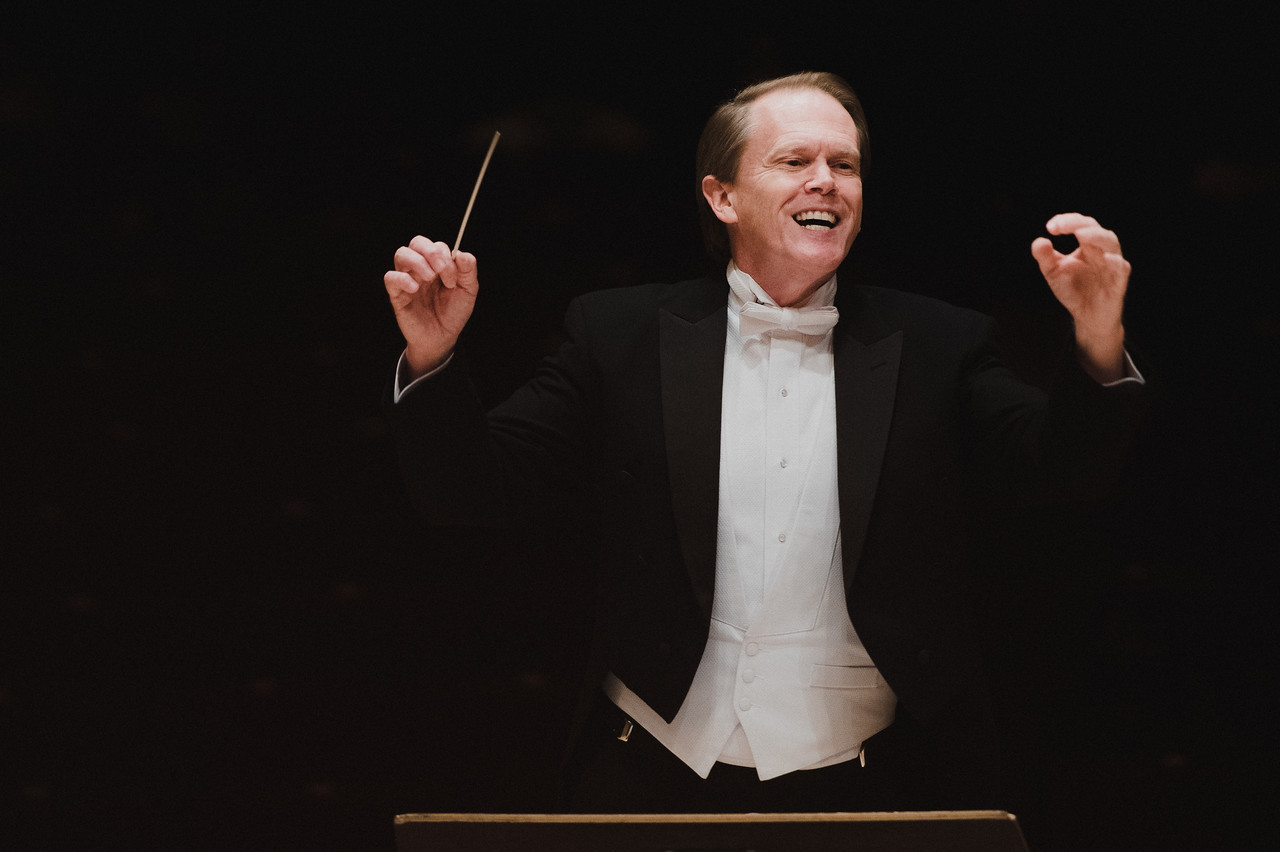
Pepper Choplin and Joseph M. Martin, composers/conductors

Anne Moody, Brad Nix, Joshua Chai, pianists

Distinguished Concerts Singers International

Isaac Stern Auditorium at Carnegie Hall, New York, NY

May 2, 2022

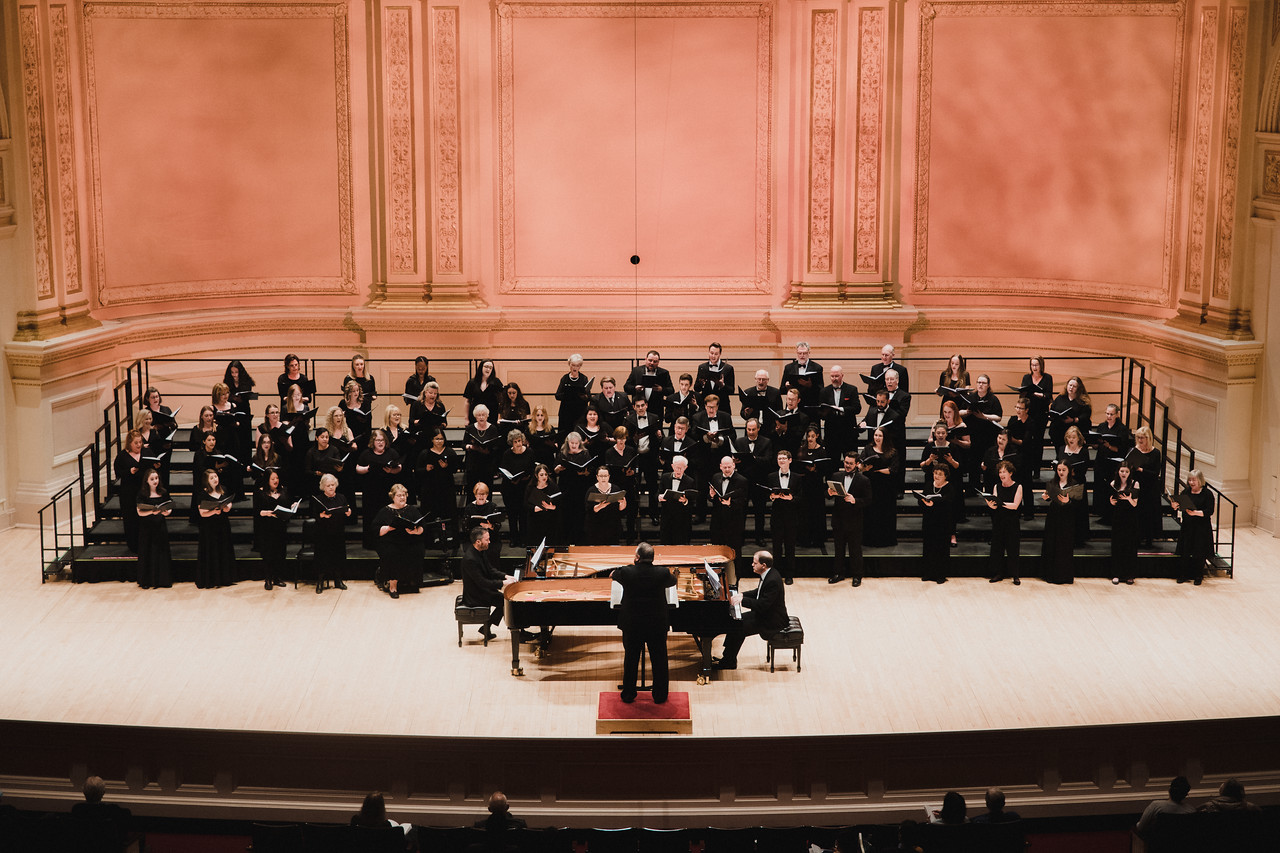
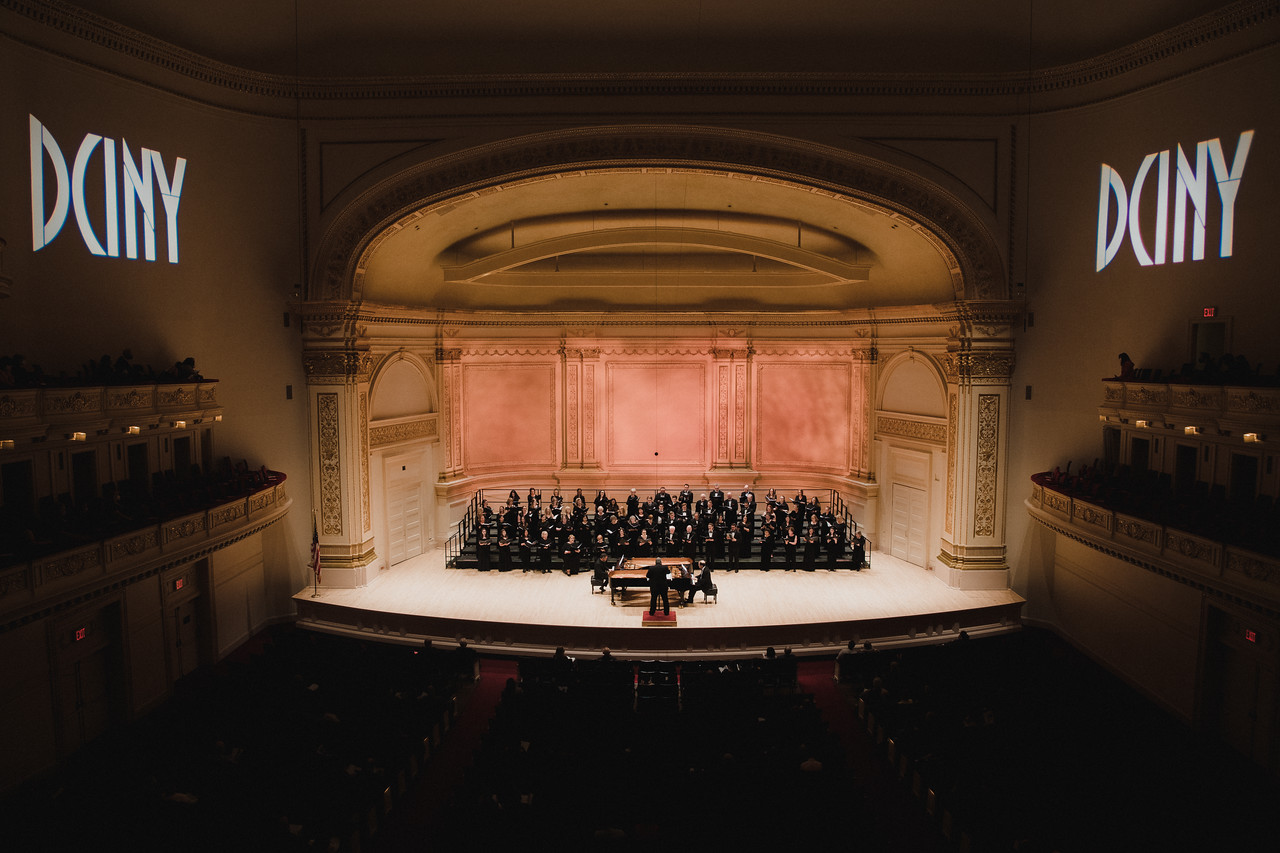
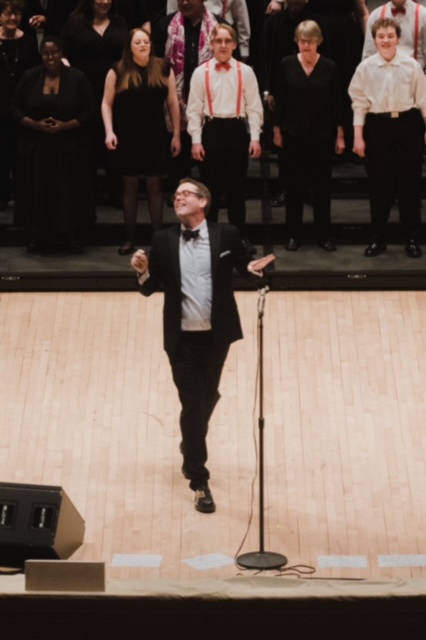
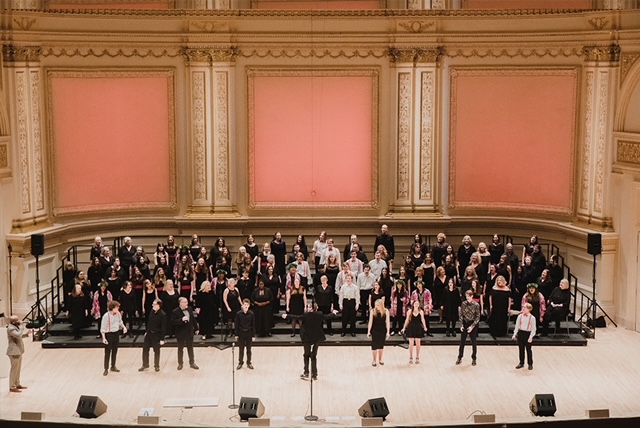
A convocation of choral groups from across the nation gathered at Carnegie Hall on May 2nd to sing the works in the field of church music of two distinguished composer/conductors and Distinguished Concerts International New York (DCINY) favorites.  In keeping with current norms of this season, the program ran with only a pause between its two halves, lasting a mere eighty minutes, but with a enough variety to serve as an engaging introduction to the world of contemporary liturgical composition.

In the first half, a cantata by composer Pepper Choplin (in his 9th appearance with DCINY) entitled Once Upon a Morning offered a refreshing alternative to the canon of existing Easter cantatas.  The events, beginning with the death of Christ, and extending to Pentecost, were explored in a series of musical portraits based on New Testament scripture.  Each section began with a narrator (noted for her clarity) and piano prelude (the excellent Anne Moody). 

Mr. Choplin’s compositional style is appealing, rooted in soft jazz harmonies and Broadway-style anthems.  He is adept at building sound through the gradual layering of canonic entrances.  In the most exhilarating  section of this nine-part work, Why Do You Seek The Living Among The Dead, syncopated accents and a propulsive rhythm illustrate the text vividly.  The classic and enduring hymn, Christ The Lord Is Risen Today by Charles Wesley, was woven into the fabric of the song, this quotation serving both as an homage, and as a unifying motif, appearing again in the final selection of the cantata. 

The overall effectiveness of the pacing was somewhat diminished by the similarity in tempo, meter and tone of the cycle.  A whole stretch of material midway through the piece had a sameness that was overly predictable.  However, Mr. Choplin’s precise leadership at the podium and the committed singing of the amassed choristers and two vocal soloists helped to make the performance a success.

After a brief pause, and a resetting of the stage, the concert continued with a new mix of singers, two pianists instead of one, and the estimable composer and conductor Joseph M. Martin (in his 10th appearance with DCINY).  Though not connected by a narrative, these eight songs were thematically of a piece, celebrating music and the human voice as a testament to faith and optimism.  The two piano arrangements, in their debut performance, added great variety and verve to the canticle, especially in the terrific hands of Brad Nix and Joshua Chai.

Standards of preparation and interpretation were remarkably high in this performance.  The chorus’ sound was balanced beautifully,  employing a broad range of finely tuned dynamics.  Credit is due to Mr. Martin, first as a gifted composer, and then as a galvanizing force for his fellow musicians.  I enjoyed the songs so much, it is difficult for me to single out my favorites, though I was particularly impressed by the finale, Sing To Me, with its exquisite piano prelude, and monumental finish.  The composer has a talent for seamlessly weaving a variety of musical genres (folk song in The Lord Is My Light and symphonic repertoire in Sing Your Way Home) into his work.  Most importantly, he is a natural musician, and a generous one, both with his colleagues and with us, the audience.

Those present were enthusiastic in their applause.  The night’s program could not have been better as an introduction to this very special branch of the musical world.

Share

Sunday Evenings at Klavierhaus presents Louis Arques and Milena Zhivotovskaya in Review

Sunday Evenings at Klavierhaus presents Louis Arques and Milena Zhivotovskaya in Review

“Treasures of Jewish Art Music: St. Petersburg School and Beyond”

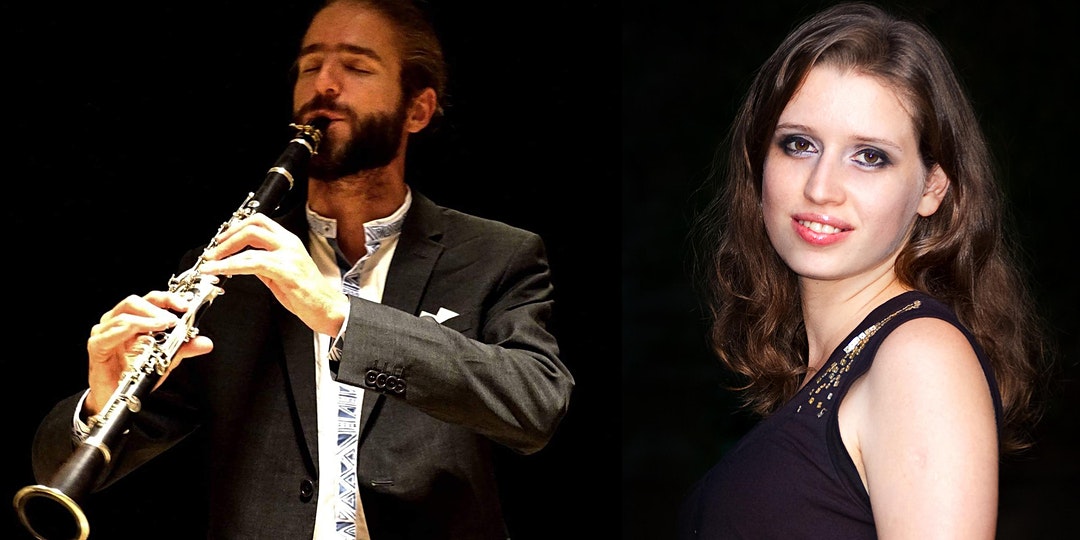
Louis Arques, clarinet, and Milena Zhivotovskaya, piano

Klavierhaus, New York, NY

April 24, 2022

It is always an exciting prospect to hear artists I’ve not heard before and always a thrill to explore lesser-known music. To do both at the same time is a double joy, and that is just what I experienced hearing Klavierhaus’s “Treasures of Jewish Art Music: St. Petersburg School and Beyond” with Louis Arques, clarinet, and Milena Zhivotovskaya, piano, neither of whom I had heard before. The recital was part of an appealing series called Sunday Evenings at Klavierhaus, and as it was live-streamed and posted on YouTube, you can enjoy it here: Treasures of Jewish Art Music

Several composers on the program have gained increasing attention in the established repertoire in recent decades, but they are all still woefully underplayed. It is thus quite refreshing to see a whole recital dedicated to Mieczyslaw Weinberg (1919-1996), Alexander Krein (1883-1951), Grzegorz Fitelberg (1879-1953), Joseph Achron (1886-1943), and Jacob Weinberg (1879-1956) – and especially with the addition of a work by the pianist herself, Milena Zhivotovskaya (b. 1986) in her Three Pieces for Clarinet and Piano (2006, revised 2020).

The program starts with Mieczyslaw Weinberg’s Sonata for Clarinet and Piano, Op. 28 (1945). It is a work with the unmistakable imprint of Shostakovich throughout, and that is no coincidence, as Shostakovich was a strong force in young Weinberg’s life (and in helping him against Soviet persecution, following Nazi atrocities). Opening with a plaintive clarinet solo, the first movement emerges from silence into what resembles a narration of uneasily shifting moods. The duo takes us through this music with polish and ease. Mr. Arques’ long-breathed phrases are ideal for this music, as is his wide dynamic range. Ms. Zhivotovskaya is an excellent collaborator, supportive and rock steady without being self-effacing, and the unity is impressive throughout this work and the entire concert.

The second movement Allegretto begins with a childlike simplicity with more than a tinge of dark irony before the clarinet breaks free into klezmer-esque outpourings. Mr. Arques’ expressiveness is a joy to behold. He is a marvelous clarinetist, and Ms. Zhivotovskaya is a great match for him. At one point where a “conversation” develops between piano and clarinet,  Ms. Zhivotovskaya manages to match the clarinet timbres perfectly. The final Adagio movement begins with a long somber introduction of piano alone before the clarinet takes a solo role – and each conveys its tragic mood well, with distant rays of light penetrating at times.

On a side note, I want to address an issue of growing concern in live (or streamed) classical music concerts, involving the need to bring the music as close as possible to audiences, as they experience it in the moment. Especially with less familiar repertoire, if there are no program notes, a bit of spoken background or even a flash of interpretive insight shared in advance can make a difference in bringing a piece closer to audiences’ hearts and minds.  While I, as a reviewer assigned to this concert, have the luxury of poking around, learning more about each piece, and hearing it twice to absorb it (and that, after conservatory training, doctorate, etc.), many can be left scratching their heads. Mr. Arques, a fine and communicative speaker, does take a moment to share some biographical information on Mieczyslaw Weinberg after his piece, but to have to hit the “rewind” button mentally to apply it retroactively is less than ideal. Also, though Mr. Arques does share thoughts on the Holocaust and Ukraine towards the end of the concert, they come just before the final work, which in a sad fluke of timing is actually a festive piece. Alas, such comments could have set the stage well for the opening work. Speaking afterwards may be preferred by many musicians (perhaps for their own musical concentration), but increasingly audiences can benefit from a bit of guidance. Now that post-pandemic audiences are clamoring for a live experience, it is our precious chance to reclaim them from years in deadening cyberspace.

For the remainder of the program works are introduced briefly prior to playing, and Mr. Arques introduces next the Three Ornaments, Op. 42 (1924-27), by Alexander Krein. Three Ornaments, originally a set of three songs without words set to syllables ah and la, is ideally suited to transcription for a wordless instrument, and it works well on the clarinet. The first is dreamy and Scriabinesque, while the second hearkens back more to Krein’s klezmer background. The final piece is rather elusive, but has something of a resemblance to Debussy, not shocking for its day. The two performers convey its mysterious brooding well, though its final surge and sudden ending still leave the listener perplexed. One would love to hear the performers’ thoughts on this enigma as well.

Next come some highlights of the program, first Grzegorz Fitelberg’s colorful pair of pieces entitled To the Wedding, as arranged for clarinet by Simeon Bellison. The first piece is inspired by preparation for a wedding, with its tones of solemn ritual, and the second is a joyful dance. The performers project the moods here well, and the dance adds a welcome note of celebration to the program. Joseph Achron’s hypnotic Hebrew Lullaby (1912) casts a spell in its arrangement from violin.

To introduce her own work, Three Pieces for Clarinet and Piano (2006, revised 2020), Milena Zhivotovskaya speaks briefly about its history, its commission by noted clarinetist Larry Guy, its premiere at the Manhattan School of Music, and its revision. “I draw my inspiration from, some of it, from music of Stravinsky and also Berg,” says Ms. Zhivotovskaya, announcing the individual pieces as Prelude, Toccata, and Romanza. This set is a fine addition to the clarinet-piano repertoire and should draw the interest of many performers. The Prelude is movingly meditative at the opening before moving to a faster pace with piano clusters – and rapid passagework and trills from the clarinet –  before its quiet close. The ensemble work is excellent as ever, and the piece fits this duo’s gifts well. The Toccata that follows is full of bravura excitement, with buoyant 3-3-2 rhythms and jazz-inflected musical language, and the Romanza is filled with hypnotic piano figures, with some extended techniques for clarinet.

To close the concert, we hear the festive Canzonetta by Jacob Weinberg (1879-1956), given a winning performance. Incidentally, the Canzonetta was arranged, like the Fitelberg, by the remarkable Simeon Bellison (first clarinetist of the New York Philharmonic, among other distinctions). It elicits a standing ovation, after which the duo offers an encore called The Maypole, also by Jacob Feinberg – a perfect lagniappe for this time of year!

Share

Distinguished Concerts International New York (DCINY) Presents “Victorious Troy!” in Review

Distinguished Concerts International New York (DCINY) Presents “Victorious Troy!” in Review

Troy High Jazz Ensemble and Troy High Symphonic Band, Brian P. Nutting, Conductor;

Troy High Percussion Ensemble, Jacob A. Greenwood, Conductor;

Troy High Freshman Orchestra, Troy High Combined Concert/Philharmonic Orchestra, and Troy High Symphony Orchestra, Wendy Stuart, Conductor;

Troy High Combined Cadet/Concert Band, Brian P. Nutting and Jacob A. Greenwood, Conductors

Rose Theater, Frederick P. Rose Hall, New York, NY

April 25, 2022

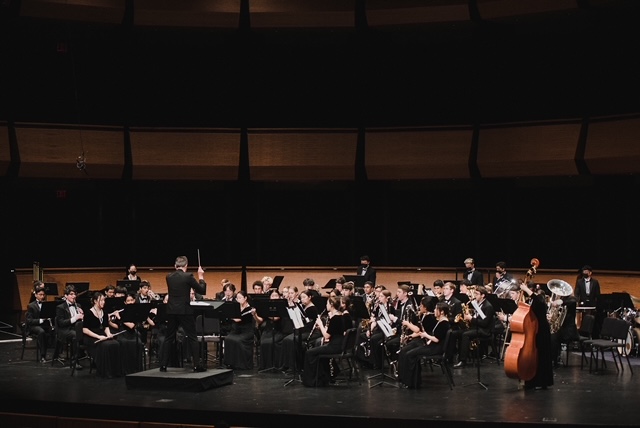
Distinguished Concerts International New York (DCINY) presented another one of its trademark musical spectaculars this Monday with no fewer than seven ensembles of orchestra and band musicians –  amazingly all from one school, Troy High in Michigan –  and the spirit was jubilant. In a three-hour-long evening of classical, jazz, Broadway/film, and popular music performances  – some quite expert – these youngsters from Troy and their music directors proved themselves a credit to their hometown and state.

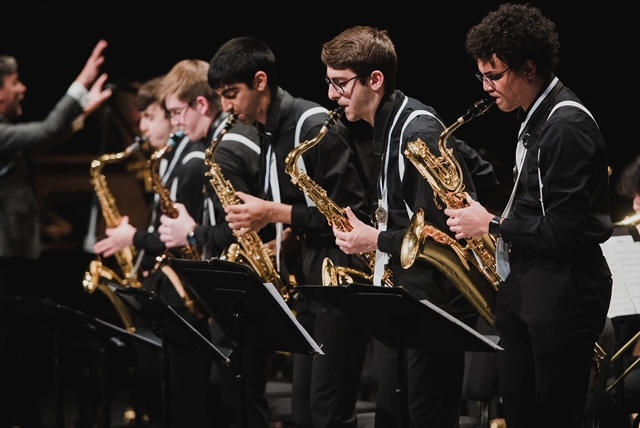
The evening kicked into high gear right away with the Troy High Jazz Ensemble (some twenty strong) playingJeff Bunnell’s Ten Brothers, led by Brian P. Nutting, who moved suavely to the side to showcase the young players. Far from micromanaging, Mr. Nutting gave a few snaps of the fingers, and the group launched their Big Band era sound with smooth sax soli, precise percussion, and high polish all around. Cole Porter’s I’ve Got You Under My Skin (arr.Dave Wolpe) followed, featuring some impressive vocal work by Mia Simone and Varun Ganapathy, both of whom fared well even against some occasionally overwhelming ensemble volume. Stevie Wonder’s Overjoyed (arr. Mark Taylor) featured excellent work by solo tenor saxophone (unfortunately uncredited as with many of the evening’s soloists), and this ensemble’s set was concluded by Rich Woolworth’s Blue Light Special, with players no longer in their chairs but sitting on the edge of stage – all in all, a blast (pun intended)!

It is not easy to go in reverse chronology after a Big Band sound to the more delicate sonorities of the eighteenth century, but the Troy High Freshman Orchestra under conductor Wendy Stuart established their separate tonal world commendably for Mozart’s Symphony No. 29 (arr.Thomas Lajoie). The transparency of this music can be rather unforgiving given the inevitable intonation issues which one knows to expect at the freshman level (particularly in the upper strings in softer sections), but as the music continued the ensemble gained in unity and focus.The contemporary selections, from Soon Hee Newbold’s adventurous Equuleus to Richard Meyer’s modally-colored Minotaur, were evocative with their colorful, mythological themes and seemed to capture the performers’ imaginations (and thus the audience’s as well). Ms. Stuart is to be congratulated on leading what I counted as forty-three string players in this challenging fare. Kudos to all!

Victorious Troy!

Also under Ms. Stuart’s direction was the Troy High Combined Concert/Philharmonic Orchestra, with thirty-one string players.The first movement (Allegro Moderato) of J. S. Bach’s Brandenburg Concerto No. 1 (arr. Lynne Latham) was given a vigorous account.Justin Hurwitz’s Music From La La Land (arr. Robert Longfield) followed the Bach remarkably well – with its sequences hearkening back to those same days (long before “La La Land” existed), and Shostakovich’s famous Waltz No. 2 (arr.Paul Lavender) concluded this group’s offerings. The latter added that mixture of bitter darkness with almost circus-like energy that the Russian master exploited often (aptly unsettling in the midst of our current events), and the players seemed swept up in its spirit. In all three selections the cello section seemed to this listener to outweigh the upper strings a bit at times, but it actually benefitted the Shostakovich somehow.

The Troy High Symphony Orchestra followed, sixty players strong (again under conductor Wendy Stuart), and they took on the fourth movement (Allegro Giocoso Ma Non Troppo Presto) of Joseph Suk’s Serenade For Strings. It seemed a somewhat surprisingly ambitious choice, but they handled it well, with energy and not too many glitches. What must have been a last-minute program change caused some disorientation to follow, as we were expecting from the printed program to hear Paint It Black (Mick Jagger & Keith Richards, arr. John Reed For The Hampton String Quartet) but instead were hearing George Walker’s Lyric For Strings. Those in the know recognized George Walker’s 1990 expansion of the second movement of his own String Quartet No. 1,  which he wrote while still a student at the Curtis Institute of Music (1946). Originally entitled Lament, it had been dedicated to his grandmother, a former enslaved person, and is profoundly moving. At any rate, the ensemble played it with appropriate reverence before proceeding with Paint it Black, also played well. The symphony offerings ended with Tribute to John Williams, crafted by arranger Paul Lavender on themes from Star Wars, Jaws, Raiders of the Lost Ark, Harry Potter, Superman, and E.T.– all good fun, and well done!

Troy High Jazz Ensemble

As the evening wore on, the hazards of such long concerts became apparent, as audience members started coming and going at will, as if in a day-long festival, checking phones in the interim as well as during the music. There is an answer to this distraction, which would be to keep each ensemble’s offering a bit shorter – and the audience would be able to focus accordingly. Additionally, if the stage set up could somehow be streamlined that would spare everyone as well. Not everyone can listen in a focused way for three solid hours without flagging (and undoubtedly there were some non-musicians present mainly to hear “their” person).

Fortunately for everyone the last groups were rousing enough to counter most fatigue.  The Troy High Combined Cadet/Concert Band under Brian P. Nutting played a light and fun (much truncated) arrangement of Gershwin’s Rhapsody In Blue (arr.Michael Story), after which conductor Jacob A. Greenwood led the same group in an energizing version of Karl L. King’s Broadway One-Step (arr. John P. Paynter). Mr. Nutting returned for Rossano Galante’s The Wishing Well, but what really brought the house down was their performance of Bob Gaudio’s Highlights From Jersey Boys (arr.Michael Brown). It was hard not to dance in the aisles to it! Songs from the group The Four Seasons were Walk Like a Man, Big Girls Don”t Cry, Ragdoll, Oh, What a Night, and Can’t Take My Eyes off of You.

The Troy High Percussion Ensemble under Jacob A. Greenwood then took the stage withEric Peel’s harrowing piece, Escaping A Nightmare, a tour de force which featured some outstanding mallet work. One can only imagine if these players are so good now, how great they will sound in several years!  

To close the evening we heard Troy High’s excellent Symphonic Band (fifty-five strong and under Brian P. Nutting again). Their playing of  Meredith Willson’s Seventy-Six Trombones (arr.Leroy Anderson, ad. Jay Bocook) was just right for their big healthy sound, and Selections from Aladdin by Alan Menken (arr.John Moss) brought new life to these familiar melodies. An excellent flute solo (again, alas, uncredited) introduced Stephen Schwartz’s Popular (From The Broadway Musical Wicked, arr. Jay Bocook) and as the icing on the cake we heard Robert Sheldon’s Metroplex: Three Postcards From Manhattan, a dramatic tribute to New York City, including a musical depiction of a wild taxi ride through the metropolis. Cheers to a great finale, with hopes that no one had quite such an “exciting” taxi ride while here! Congratulations to all!

Share

Louis Pelosi presents Louis Pelosi: New Works in Review

Louis Pelosi presents Louis Pelosi: New Works in Review

Performers: Sophia Steger, violin; Andrew Samarasekara, violin; Kayla Cabrera, viola; Jenny Bahk, cello; Dylan Reckner, bass; Sharon Chang, piano; Mateusz Borowiak

Merkin Hall at Kaufman Music Center, New York, NY

Sunday, April 24, 2022 6:30 PM

I told a friend that I was attending a concert of works by Louis Pelosi, an academically trained composer, but one who has made his living for nearly fifty years as a recognized piano technician. The friend asked: “Well, what does he sound like?” To which I replied: “Why, Pelosi of course!” And that about sums it up.

I had the great pleasure five years ago of attending a recital series by Mateusz Borowiak, one of tonight’s excellent soloists, in which he performed the six piano sonatas by Pelosi alongside the major etude groups by Chopin, Debussy, and Rachmaninoff.

In the interim, Louis Pelosi has certainly not been idle. The five works on the program were all receiving their premieres on this occasion. Mr. Pelosi, rather than playing the sometimes frustrating game of seeking prizes, commissions, etc. that contemporary composers go through, has been mostly self-produced.

The program opened with the only non-piano based work: an Elegy for String Orchestra, heard here in a string quintet version. All the hallmarks of Pelosi are present: strong imitative counterpoint, motivic unity, a recognizably personal sound. Is it ‘too soon’ for something dedicated to the ‘victims of COVID-19’? Not for me to say. Why should Barber’s famous Adagio for Strings be the only elegiac morsel trotted out for solemn occasions? Pelosi’s work may be slightly less ‘surface’ attractive in terms of melody- it is indeed more static, but it gets its message across. The composer was kind enough to send me scores to all the works on this concert, greatly appreciated in the case of new or unusual music. The string players were keenly sensitive, though I would like to hear the work in full orchestra, as they weren’t able to rise to the fff climax, thus somewhat shrinking the emotional gambit.

The evening then turned to four large piano groupings, beginning with the Adagio, dedicated to Sharon Chang, who performed it meticulously. Generally Ms. Chang’s pianism was finely attuned to harmonic color, but Mateusz Borowiak’s playing (to be discussed below) just seemed more in tune with Pelosi’s private expressive world, adding little phrasing punctuations, breathing, and refreshed colors, but never exaggerated. As Pelosi states: “What the sensitive ear can follow, so can the mind accept and the soul be moved and enlarged.”

The first half concluded with the Variations in E-flat, a set of 36 transformations of a rather concise theme that doesn’t slavishly proclaim a tonality of E-flat but behaves more like a prismatic commentary on the ‘note’ E-flat. Pelosi’s scores don’t have key signatures per se, but often the ‘topic note’ is indicated at the beginning. All the notes are marked with accidentals or naturals as needed, which makes sight-reading Pelosi a minefield.

Mateusz Borowiak was definitive here. Pelosi’s writing could become overwrought in the wrong hands, I suppose, were it not for his consummate craft, especially his use of canon and fugato textures that never break into full-fledged fugues but do suggest them. In this way, Pelosi helps ‘untutored’ listeners find their way through his rewarding maze, provided that the ear for voicing and polyphony are present in the performer.

After intermission, Sharon Chang returned in the Canti, a set of six pieces whose title indicates their more overtly songlike textures. She performed them beautifully, but in the order 1, 5, 3, 4, 2, and 6, and I imagine she had Pelosi’s permission to do so. However, that did undo a carefully considered tone structure from the composer: B-E (rising fourth)-E-flat (a half-step lower)-A-flat (rising fourth)-G (another half step lower)-and finally C (rising fourth). Nothing in Pelosi’s art is left to chance, so I found it surprising.

Finally Mr. Borowiak returned to end the recital with a commanding rendition of Pelosi’s Twelve Etudes, which take issues of sonority (primarily) as their focus, but in ways that Debussy (even Ligeti) didn’t imagine. With novel titles such as Harmony As Melody, Melody From Harmony, Intrusion—Inclusion, and the like, these challenge the pianist to hear in such sophisticated ways, all the while negotiating some of the most complex keyboard textures.

Pelosi having spent so much time working on pianos, the instrument does seem to reveal its innermost secrets to him. On the other hand, one could say that because one is a brilliant surgeon that one’s lovemaking technique ought to be superior—I’m sure that’s far from universally true.

Lucky for us, we have Louis Pelosi, who has so much to express, succeeds in doing so, and has the best young performer/advocates to share it with us.

Share

Distinguished Concerts International New York (DCINY) presents Total Vocal with Deke Sharon in Review

Distinguished Concerts International New York (DCINY) presents Total Vocal with Deke Sharon in Review

Deke Sharon, Guest Conductor, Arranger & Creative Director

Special Guests: The Barbershop Quartet from the Broadway revival of The Music Man: Phillip Boykin, Eddie Korbich, Daniel Torres, Nicholas Ward

Face Vocal Band

Chesney Snow, Beatboxer

Luke Hawkins, Tap dancer/Singer

Distinguished Concerts Singers International

Carnegie Hall, Stern Auditorium, New York, NY

April 10, 2022

To invert the finale of Deke Sharon’s peppy, long-awaited return of Total Vocal: He definitely has found what he’s looking for—a life of great meaning and inspiration at the peak of a cappella vocal art in this country, quite possibly worldwide. I would like to know where he keeps his fountain of youth, for he seems a perpetual twenty-four or twenty-five.

Some of the participating choirs have been on hold for just over two years, so there was a palpable sense of joy at finally being able to make music in person again. I have had the opportunity to review this endeavor a couple of times in these pages, so I won’t dwell on the obvious, that this is a feel-good entertainment, sometimes a bit relentless in its positivity. (Note to self: check the anti-depressant dosage.) If you ever wanted to ‘step into’ one of the Pitch Perfect movies, this is the concert for you.

The massed choir, here only 103 strong, hailed from California, Colorado, Hawaii, Illinois, and Maine, and was quite varied as to age. At various times, extremely poised and self-assured soloists stepped out from the group, to have their memorable moment on Carnegie’s main stage.

The afternoon began auspiciously with the awesome precision and expression of the barbershop quartet from the current Broadway revival of The Music Man. In It’s You and Lida Rose, their ability to make tones travel, swell, and diminish, with crystal bright diction was superb. Keeping the pace quick, Mr. Sharon pivoted to the full choir in an arrangement made for his Disney-sponsored group DCappella, from Aladdin: Friend Like Me. Then fourteen soloists stepped out in front for a soulful rendition of Corinne Bailey Rae’s Put Your Records On (Will any kid even know what a record is?). This was followed by the Edwardsville (IL) High School Choir in a poignant rendition of Loch Lomond, which despite Deke Sharon’s program note, is a Scottish song, not Irish! The group’s young ladies wore matching red sashes and the young men charming red bow ties and suspenders.

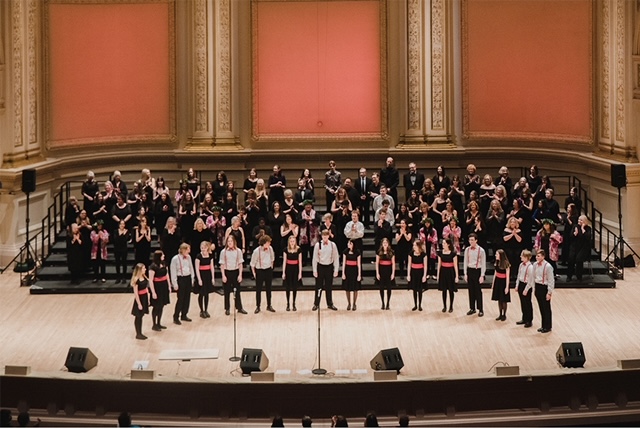
Total Vocal with Deke Sharon. Photo credit: Dan Wright

Mr. Sharon then related how material always gets cut in the making of movies (in this case, the first Pitch Perfect), and he gave the premiere of one of his mash-ups that was never heard before: Just the Way You Are (Bruno Mars) and Lights (Ellie Goulding).

Next a group took the stage that claims the distinction of being the first one eliminated on the first episode of the first season of a competition reality show The Sing-Off–  Face Vocal Band (aka “Face”). That was in December 2009, and since then (prior to the pandemic) they have performed over 1000 concerts worldwide. They are now in their twenty-first year, take that competition show! They are clearly esteemed by Mr. Sharon, who gave them three selections: Harder to Breathe (Maroon 5), Come Together (Beatles), and From Now On (from The Greatest Showman) where they were joined by the choir. It was a fantastic display.

Inserted (not on the program) was a featured performance by the one choir who flew across half the Pacific Ocean and the entire continental US to be here from Hawaii. In their discreet but telling traditional garb, they sang a Hawaiian folksong beautifully.

Total Vocal with Deke Sharon. Photo credit: Dan Wright

Now Chesney Snow was introduced, a regular on these Total Vocal programs. It is truly astonishing what a range of sounds one human mouth assisted by an amplified mike can achieve. He is a master beat-boxer, and he got to riff before launching into Rogers and Hammerstein’s Oh, What a Beautiful Mornin’ (Oklahoma), underlining the choir and Mr. Sharon’s vocal solo with his rhythm. By the way, need I make clear that there was not one instrument (other than human voices) used in this afternoon. Next, eight soloists came forward for Elton John’s Don’t Let the Sun Go Down on Me, which was backed by the choir and Chesney Snow. Luke Hawkins, a Broadway tap dancer, singer, and television actor, got his turn to shine (also as Deke Sharon’s newly-discovered relative) in Randy Newman’s I Love L.A., replete with audience participation. Then Face Vocal Band regained the stage for the finale: Bono and The Edge’s I Still Haven’t Found What I’m Looking For. What a triumph!

A traditional built-in encore is the audience-participation The Lion Sleeps Tonight, with all forces arrayed onstage, just before all the individual conductors who have given so much of themselves in preparation received their lusty bravos.

Mr. Sharon so strongly believes in the redemptive power of choral singing that he offers anyone who reaches out to him help in finding a group in their community- now that’s leadership!

Share

Distinguished Concerts International New York (DCINY) presents Constantinides New Music Ensemble in Review

Distinguished Concerts International New York (DCINY) presents Constantinides New Music Ensemble in Review

Louisiana State University College of Music & Dramatic Arts

Ensemble Members: Jenna Grissom, soprano; Chris Ludwig, flute/piccolo; Javier Elizondo, clarinet; MK Guthrie, violin; Hayoung Cho, violin; Catherine Chen, viola; Meghan Rhoades, piano; Luis Bernardo Castro, cello; Eduard Teregulov, cello; Rosalinda Ramirez, percussion; Jake Ellzey, percussion

Composers: Faculty: Stephen David Beck, Mara Gibson; Alumni: Niloufar Iravani, Thomas Kim, Mikeila McQueston, Thomas Wilson; Current Students: Rodrigo Camargo, Jeremi Edwards, Jake Ellzey, Austin Franklin, Aarón Gonzalez, Treya Nash, Cassidy O’Connell, Hannah Rice, Dan Schultz

Weill Recital Hall at Carnegie Hall, New York, NY

April 8, 2022 

This concert was originally scheduled for October 2020, but was derailed due to you-know-what. Since that time, the ensemble’s namesake and creator, Dinos Constantinides, died on July 20, 2021. (I have had the pleasure of reviewing several concerts of his own works in these pages: 2015, 2018, 2019.) Now, his legacy of more than fifty years of service through pedagogy and philosophical leadership lives on in the Constantinides New Music Ensemble, under the direction of Mara Gibson.

Fifteen composers, ranging in age from 22 to 75, displayed fifteen distinct compositional voices, with delightful variations on a palette using mainly flute, clarinet, piano trio, string quartet, and percussion figurations. All the student performers are at the top of their respective games vis-à-vis their instruments and their abilities not only to decipher but to breathe life into these challenging new works.

There must have been some time criterion for works on this generous program, for the pieces ranged from three to eight minutes. Two themes occurred more than once: 1) Pierrot (influence of the seminal Schoenberg work, and responses to it), and 2) Greek mythology (the Constantinides influence: Maze with its Phrygian mode, Minotaur, and Persephone).

I can only fleetingly mention some of the highlights. The duo work of the two wind players: Chris Ludwig on flute (doubling piccolo) and Javier Elizondo (clarinet) were delightful in their closely tuned ensemble playing, especially in three of Stephen David Beck’s Pierrot Etudes. Pianist Meghan Rhoades, playing from an iPad, was stunning in her ability to conjure myriad colors regardless of the demands of the score (even playing ‘inside’ the piano). She was in eight of the fifteen works, a mammoth job, well done. Violinist Hayoung Cho had an even larger share of the evening, in ten of the fifteen works.

Hayoung Cho, MK Guthrie, Cat Chen, Eduard Teregulov, Mara Gibson, CNME director and composer of Blackbird. Photo credit: Aaron Gonzalez

Nearly all the composers were present to acknowledge their richly deserved applause. It is one thing to get a piece performed the first time—it is quite another to have your work enter ‘the repertoire’ in any meaningful way. Only time will tell, but they are all off to a great start. Two things they all had in common were: the ability to create striking effects of togetherness (due in no small measure to the performers), and the ‘sense of an ending.’

Hannah Rice’s Prog for Pierrot taught me a new word: prog, as well as introducing me to sounds of ‘metal’ music fused with the traditional Pierrot ensemble. Three of Stephen David Beck’s five Pierrot Etudes were precisely and delightfully realized by the aforementioned flute/piccolo and clarinet duo. Rodrigo Camargo’s Sextet was a very successful fusion of rock, western classical, and Brazilian musical gestures. Jake Ellzey, heard elsewhere on the program as percussionist, composed Departure as a response to a surrealist painting. Its string quartet instrumentation utilized progressive techniques such as striking the wood of the instruments themselves (gently of course). This piece created a haunting tableau. Mikeila McQueston’s The Minotaur, inspired by poetry, posits a post-labyrinth life for the mythical beast. The work rose to shattering climaxes of near chaos before subsiding in most effective fashion, featuring a difficult soprano part, which Jenna Grissom projected as well as she could over the tumult. One issue with percussion being brought into the chamber music realm is that it can quickly overwhelm the instrumental balance.

(From left to right) Jenna Grissom, Eduard Teregulov, Meaghan Rhoades, MK Guthrie, Hayoung Cho, Cat Chen, Luis Castro, Javier Elizondo, Chris Ludwig, Jake Ellzey, Rosalinda Ramirez. Photo credit: Aaron Gonzalez

The following list is for the sake of completeness and in no way does any omission of detailed discussion imply a lack of value: Cassidy O’Connell’s The Abduction of Persephone; Treya Nash’s Nothing Motorized; Mara Gibson’s Blackbird I; Thomas Wilson’s Fighting the Mischievous Imp (based on video game music, with performance length determined by the ensemble); Jeremi Edward’s Beneath the Veil (art vs. machine); Austin Franklin’s  Lanterns II; Dan Schultz’s Pyramids; Niloufar Iravani’s The Maze; Thomas Kim’s Destin; and Aarón Gonzalez’s Pierrot Microbusero (loosely translated “Pierrot on the Microbus”).

Congratulations to everyone for making this the best possible, if inadvertent, memorial service for Maestro Constantinides.


Share

Da Capo Chamber Players 50th Anniversary: Bridging Cultures

Da Capo Chamber Players 50th Anniversary: Bridging Cultures

Da Capo Chamber Players: Patricia Spencer, flute/alto flute; Marianne Gythfeldt, clarinet/bass clarinet; Curtis Macomber, violin; Chris Gross, cello; Steven Beck, piano

Guest Artists: Lucy Shelton, soprano; Ariadne Greif, soprano; Yoshi Weinberg, flutes (alto, bass, piccolo) Jacqueline Leclair, oboe, English horn; Nanci Belmont, bassoon; Michael Lipsey, percussion

Merkin Hall at Kaufman Music Center, New York, NY

April 6, 2022

The Da Capo Chamber Players (Patricia Spencer, flute/alto flute; Marianne Gythfeldt, clarinet/bass clarinet; Curtis Macomber, violin; Chris Gross, cello; Steven Beck, piano) launched their 50th anniversary with the first of a series of concerts entitled “Da Capo Bridges,” covering bridges between cultures, styles, and eras. The first in this series was called “Bridging Culture.” The program included a world premiere written especially for this occasion, and several works written specifically for Da Capo. For those unable to attend, we are told that a live stream of the performance was provided.

The Da Capo Chamber Players have been at the cutting edge of exploring and presenting diverse new works long before it was fashionable to do so. I invite the reader to learn more about Da Capo by following this link: Da Capo Chamber Players.

It’s been a long road back – over two years (!) since this reviewer attended a concert at Merkin Hall. Cellist Chris Gross mentioned that it had been two years for Da Capo as well in his remarks from the stage. Life’s still not quite back to “normal,” but it was heartening to see such a good turnout. Those who came were to be rewarded with excellent performances by first-rate musicians. I also commend Da Capo for providing detailed program notes and lyrics, along with biographical materials about the composers.

The core players took the stage and opened with One Mo’ Time (2016) by Cuban-born Tania León (b. 1943), written for the Da Capo Chamber Players 45th anniversary (and in memoriam to Ursula Mamlok). It is a high-energy, jazz-infused work that explores a variety of genres. One gets flavors of Latin America intertwined with more traditional concert music and a topping of jazz. The complexities were dashed off with what might have seemed a casual off-handedness, as if “of course, we do this all the time,” which was very impressive to this listener. It was an auspicious start to the evening.

Next up was Tan-Tan (2020) by Hannah Kendall (b. 1984).  Soprano Lucy Shelton, flutist Yoshi Weinberg, and percussionist Michael Lipsy joined Ms. Gythfeldt and Mr. Macomber. Based on a Caribbean tale, Tan-Tan is a kind-hearted soul who failed to heed the warnings given her and is trapped by a devious character named Dry Bone in a place called Duppy Dead Tyown (one may draw their own inferences, but Satan and Hell are plausible equivalents). It is an ingenious piece, having an atmospheric, almost other-worldly effect that at times was spine-tingling (or perhaps giving one the heebie-jeebies would be more in the spirit). The ensemble was razor-sharp, and it was also notable how Ms. Gythfeldt and Mr. Weinberg seamlessly shifted between their various instruments. Michael Lipsy made his way through the battery of percussion instruments with a quiet intensity while never overshadowing the others. Special mention to the living legend, soprano Lucy Shelton, who mimed the sounds of the instruments (to the delight of the audience), dashed off various vocal gymnastic effects, and, of course, her radiant voice filled the hall.

Mirage (1990) by Shulamit Ran (b. 1949), written for the 20th anniversary of Da Capo, concluded the first half.  The composer describes the work as “an asymmetrical, loosely structured five-part arch.” The harmonic and melodic language is akin to modes that most would identify as sounding Middle Eastern.  Opening with alto flute, the intensity simmered within the ensemble, building to a release with a unison phrase about nine minutes into the work. Once again, the ensemble was outstanding, each player meshing with the others even as one might assume that their entire focus would be on dealing with the difficulties of their own part. That very short unison was like the clouds opening and sunlight shining through – who would have ever thought that a simple unison could be so beautiful? The piece was a great end to a great first half.

After intermission, Spirit Mountain (2010) by Eric Moe  (b. 1954) opened the second half. Based on a Nepalese offering song, this work enjoyed the playing of Jacqueline Leclair (oboe/English horn), Nanci Belmont (bassoon), and Mr. Lipsey, joining Ms. Spencer and Mr. Beck. Mr. Moe transcribed a recording of Nepalese court singer Tashi Tsering and used it as the basis for this work.  The opening attack was arresting – one sat up and took immediate notice. The use of percussion, modeled after Tsering’s hand drumming added a pulsing, driving energy. Without taking anything away from the other players, I wish to make special mention of Ms. Belmont, who was both an animated participant and a lyrical soloist – forget any of the less-than-flattering terms about the bassoon, this was beautiful playing in both tone and technique. Mr. Moe was in attendance and all too briefly stood when the players pointed him out. Don’t be shy, Mr. Moe, it was an excellent work that was played with energy and commitment.

 Music for 3 (1970/1991), a piano trio by African-American composer George Walker (1922-2018) followed. While this work is certainly acerbic – the strings “battle” the aggressive piano in an atonal manner, it was probably the most immediately accessible work presented this evening. It was played with power, precision, and passion. Which faction won the battle? Was it Mr. Beck, or Mr. Macomber with Mr. Gross? I vote for shared honors, with the audience being the ultimate winner.

The world premiere of The Conference of the Birds 2, a 50th anniversary commission for Da Capo, by  Shirish Korde (b. 1945) was the final piece of the program. A medieval Sufi poem by Farid Ud-Din Attar was the basis for the work. I will very briefly describe the five parts:  Part 1: The poet awakes to find himself transformed into a hoopoe bird and addresses a conference of all birds to tell them about Simorgh, the king of all birds who is all-knowing. Part 2: The birds make excuses for not wishing to undertake the difficult and dangerous journey. Part 3: The birds are convinced to go. Part 4: The birds have to cross seven valleys (Quest, Love, Understanding, Detachment, Unity, Amazement, Death).  Part 5: The mountain of Kaf, where Simorgh lives is reached. Final twist: Only thirty birds remain and realize that they are “Simorgh,” which is Persian for “thirty birds.”

Soprano Ariadne Greif and Mr. Lipsey joined the Da Capo players. A video created by Virginia Raguin was projected above the stage in tandem with the performance. The music itself seemed idiomatically suited to the story, with a definite mystical quality, many birdlike motifs and exotic sounds, and with percussion that most would associate with Eastern Mysticism. It was right up Da Capo’s ” street,” and the ensemble’s collective light shone through in a nuanced and sensitive performance; it must be said, however, that the visual added much to both the understanding and enjoyment. The pictures were beautifully chosen and arranged, and the addition of the lyrics on the screen enhanced their power. The synchronization of the visual to the musical was remarkable considering it appeared that all the person who was operating the video had done was to start it in motion. Kudos to Ms. Greif, who was an effective narrator (with a potential career in voice-overs) as well as a luminous vocalist. The experience of this multi-media work was the highlight of the evening for this listener.

The next concert in the series, “Bridging Styles,” will take place May 10, 2022. Congratulations to all!

Share

Ann Arbor High School Bands Showcase in Review

Ann Arbor High School Bands Showcase in Review

Ann Arbor Public Schools, Ann Arbor Band Associations

in association with Bob Rogers Travel presents Ann Arbor High School Bands Showcase

The Ann Arbor Community High School Jazz Bands; Jack Wagner, conductor

The Ann Arbor Skyline High School Bands; Jason Smith, conductor; Ty Santos, Associate Director of Bands

The Ann Arbor Huron High School Bands; Robert Ash, conductor; Evaristo Rodriguez, Associate Director of Bands

The Ann Arbor Pioneer High School Bands; David A. Leach, conductor; Erin Lilliefors, Associate Director of Bands

Carnegie Hall, Stern Auditorium, New York, NY

March 30, 2022

At first glance around the vast main auditorium of Carnegie Hall, I thought at least half of Ann Arbor had turned out to cheer on their intrepid students. The real figure was more like one percent, nevertheless… Ann Arbor, Michigan is lucky on many levels: they have a branch of the University of Michigan with its renowned music department; but more important: they have a community that actually funds, nourishes, and supports its public school arts programs.

I am happiest to report, from among a perhaps over-long program, that the jazz students, and those in symphonic bands who play jazz-inflected material, are super talented. After all, New York’s Juilliard School has had a jazz major for some time now, helmed by the legendary Wynton Marsalis.

The program began with one of these ensembles, the cleverly named Four Hornsmen of the Apocalypse (plus 1), from Community High. Now normally, I would run screaming for the exit if the real “four horsemen” were to announce their arrival, and for the past two years everything has felt somewhat apocalyptic. There was no cause for alarm here- only joy, energy, and pleasure. Their playing, in music by Fisher, Ellington, and Hargrove, had that indefinable element of combined training and spontaneity.

The concert/symphonic bands had more mixed results.  Naturally these groups are larger, with players from many more varied skill sets, and they are, of course, not professional musicians. However, I have a duty to report on what I heard and perceived. From the several tunings the bands made prior to playing, I could tell that, in fact, they weren’t in tune, and that led me to speculate about how finely their ears are being trained, as to pitch. I am happy to report, however, that every group had an acute ability to render the most complicated rhythmic materials, handing off detailed passages from one group of instruments to another, having no trouble at all with irregular meters or syncopation.

The Huron Concert Green band played the Chaconne from Gustav Holst’s First Suite and a transcribed movement from Erika Svanoe’s Steampunk Suite. They were convincing in the depiction of crazed energy that was feared as technology began its relentless march in the nineteenth century: Barnum and Tesla’s Tandem Bicycle.

The Pioneer Concert Purple band then played Samuel Hazo’s Arabesque, which began with an amazing flute solo that was gorgeously played. The composition, I suppose, could be labeled as politically incorrect these days, with its cliché depictions of “exoticism- perhaps it’s a guilty pleasure. They followed with Robert Sheldon’s Metroplex: Three Postcards from Manhattan, another cliché, and I hope they now know, after visiting, how much more intricate Manhattan is than this music.

Another Community High jazz group, the Ballistic Whistle (great name!) shined, especially in Coltrane’s Impressions and Herbie Hancock’s Swamp Rat. Kevin Payne on piano really anchored the group (he would later serve as drummer and vibraphone- what a talent!). The spirit of Coltrane really hovered over their performance, and I wish for these young players that their lives will be longer than his short one, and filled with the same sense of exploration and innovation.

The Skyline Symphony/Concert bands best moment was their performance of Percy Grainger’s Children’s March, an elaborate treatment of some fragments of nursery tunes, the most prominent of which we would recognize as “I’m a little teapot.”

After intermission, the third Community High jazz group, Fantasy in 3, dazzled in Poinciana by Nat Simon and Buddy Bernier, and Cedar Walton’s Ugetsu. Kevin Payne again displayed fearless virtuoso control of the vibraphone.

The Huron Symphony band played a (way too) long Symphony No. 4 by David Maslanka, for this listener it was far from the pretentious “speak to the fundamental human issues of transformation and re-birth in this chaotic time,” though the performance did seem a bit chaotic. Perhaps better repertoire choice would show off this dedicated band, which gave it their all.

Concluding, maestro David A. Leach, who has devoted a lifetime to band conducting, almost apologized for the length of the evening, before launching into Michael Daugherty’s Niagara Falls (no Marilyn Monroe and Joseph Cotton), and Omar Thomas’ Come Sunday, a new work replete with gospel inflection. Mr. Leach’s joy and freedom on the podium must be so inspiring for his students.

At every point in this long evening, one thing was clear, the enthusiasm of the parents and friends who made the journey from “A-squared” to support their own, and that’s the way it should be. Despite my critical remarks above, one must count this as a success on so many other levels, the most critical being the involvement of young people in the arts. Way to go, “Treetown.”

Share

Distinguished Concerts International New York (DCINY) presents Gabriel Fauré: Requiem in Review

Distinguished Concerts International New York (DCINY) presents Gabriel Fauré: Requiem in Review

Mater Dei High School Choir (CA)

Jodi Reed, conductor

Distinguished Concerts Singers International

Dr. Erin Freeman, conductor

Kristen Plumley, soprano; Colin Levin, baritone; James D. Wetzel, organ

Carnegie Hall, Stern Auditorium, New York, NY

March 27, 2022

A stunning bifurcated program was presented by the ever-reliable Distinguished Concerts International New York (DCINY) on Sunday afternoon (March 27, 2022) at Carnegie Hall. First, let me say what a pleasure it was to see two women conducting with such immense talent and joy. Sadly, it shouldn’t be an issue, but at this moment I still feel it deserves emphasis.

The afternoon began with an exciting, polished, beautifully sung, acted, and mimed performance by the prize-winning Mater Dei High School choir (CA), conducted by Jodi Reed. All of the music was selected from the very finest arrangements available. What was thrilling and memorable was the gorgeous blend of sound they achieved, at all dynamic levels, and their absolutely perfect ensemble.

The choir first took the stage with about a third of its members, the young men dressed in matching grey suits with red ties, the young women in red gowns. Later they were joined by the complement, elegant in black. All music was performed from memory, and the large amount of intricate “riser choreography” was coordinated to a fault. Some of the music was performed a cappella, some with piano, some men only, some women only.

The musical influences ranged from Basque to Georgia (the Eurasian republic), Poland, Ireland, Bach, and gospel, to name but a few. The choir members are eager actors, with many theatrical possibilities, yet even with those opportunities, nothing was tasteless or overdone. On many occasions, various intrepid soloists stepped out from the choir to sing with amazing poise and talent. I trust these young people will never ever forget having performed solo on the main stage of Carnegie Hall.

On a day when a film called CODA (Children of Deaf Adults) won two Oscars, the gospel tune Ain’t No Grave Can Hold My Body Down had extra power- it utilized five individual signers and then presented one stanza entirely silent, with the whole all-female choir signing. If you think about it, the difference between singing and signing is just the transposition of a letter.

I can only mention a few highlights from their copious menu, but in addition to the above, I’d say: the Alleluia from Bach’s motet Lobet den Herrn, alle Heiden, the Crucem tuam adoramus, Domine by Paweł Łukaszewski, the male chorus in Danny Boy, and an exciting version of Nearer My God To Thee (banish images of string quartet on the deck of a sinking Titanic).

After a brief pause, the stage was filled with  a modest-sized (for DCINY) composite choir of about 139, composed of individual adult choirs from California, Connecticut, New Jersey, Virginia, Washington, Maryland, and Canada. They were expertly and sensitively led by Erin R. Freeman in the sublime glories of Gabriel Fauré’s Requiem.

Having performed and studied the Requiem for over fifty years, and even with renewed intense score study leading up to Sunday’s performance, I was astonished at my own capacity for surprise and awe as each harmonic sidestep worked its ineffable magic. Yet there is an austerity of means, a discipline, a restraint that belongs uniquely to Fauré. This places the work at an incredibly high taste level when one thinks of the music that was being used for liturgy in Paris at the time: potpourris and improvisations on hit tunes from Rossini, for example.

Perhaps Dr. Freeman had a more difficult task than Ms. Reed, for the DCINY choirs have to prepare individually, arrive in New York, rehearse with their overall conductor, and achieve unanimity in a very short time. Trust me, they did on this occasion.

Although this Requiem is known as the “gentle” one, the “lullaby of death” so to speak, it does have its moments of brief outburst. The choir handled both the tender wizardry of the soft passages and the louder moments that set them off beautifully. Dr. Freeman brought a marvelous sense of elasticity and expansion to the choral sound.

The work was presented with organ, one viola/violin (the soloist, DCINY’s excellent Jorge Ávila), and one harp. This corresponds much more closely to Fauré’s original intent, and allows one to hear certain strands of his immaculate counterpoint much more clearly than when a plush full orchestra is playing.

Both soloists, baritone Colin Levin, and soprano Kristen Plumley, dispatched their arias very well, with Mr. Levin impressive in the Offertorium, but underwhelming in the Libera me. Ms. Plumley’s Pie Jesu was sensitive, and she didn’t try to sound like a boy soprano. Interestingly, the Libera me has some of the more agitated music (finally mentions the Dies irae); it was adopted wholesale from a much earlier composition (1877), dating from Fauré’s unhappy, ultimately unsuccessful engagement to the daughter of Pauline Viardot. This raises the question of whether (as Fauré put it “I simply wrote it for the pleasure of it”) its sensual harmonies perhaps speak of matters both profane and sacred.

My heart went out to the excellent organist James D. Wetzel, who had to contend with the electronic organ in Carnegie Hall, whose sound emanates from two pathetic speakers and was not imposing enough when it needed to be. The transparent scoring, saving the violin for the angelic spirit of God hovering over the Sanctus, was a wise decision. Jorge Ávila’s final trill in the Sanctus allowed me to perceive, suddenly and instinctually, how Maurice Ravel developed the closing trill of the slow movement of his Piano Concerto in G major. He was Fauré’s composition student, after all.

All told, a glorious afternoon of choral achievement, and a balm for these wounded times.

Share

Ian Hobson: Robert Schumann Cycle: “Carnaval Jests” in Review

Ian Hobson: Robert Schumann Cycle: “Carnaval Jests” in Review

Ian Hobson, piano

The Chapel at Saint Bartholomew’s Church, New York, NY

April 22, 2022

It has been more than two long years since virtuoso pianist Ian Hobson has graced New York. His Schumann series was cruelly interrupted—even the venue where he began presenting it (SubCulture) became a casualty of the pandemic. The original idea was to present the complete solo piano music and the piano-based chamber music in fifteen concerts over three seasons, and I sincerely hope he continues.

Undaunted by all this, Mr. Hobson changed the location to the inspiring Chapel at Saint Bartholomew’s Church on Park Avenue. Among Schumann’s many obsessions was the Kölner Dom (Cologne Cathedral) on the Rhine, so I imagine he might have approved of the liturgical setting, which provided an extra layer of irony to the “Carnival Jests” theme of Mr. Hobson’s program.

The carnival/papillons subjects were largely inspired by Schumann’s feverish discovery and reading of the works of Johann Paul Friedrich Richter, known as Jean-Paul. Contemporary Thomas Carlyle said that his writing groaned “with indescribable metaphors… flowing onward, not like a river, but an inundation, circling in complex eddies, chafing and gurgling now this way, now that, the proper current sinks out of view amid the boundless uproar.” This is similar to what many listeners thought upon hearing Schumann’s piano music.

Let us recall that even Schumann’s wife, Clara, one of the great piano virtuosi of the nineteenth century and one of her husband’s staunchest advocates, was constantly begging him to produce something more comprehensible and easier on the listener. The larger cycles of his music were almost never presented in their entirety, but as a group of a few extracts. Our modern concert culture frowns on such abbreviations.

Mr. Hobson, one of the great virtuosi of our century, gave us not one, but four of these “butterfly” or “masked ball” sequences on Tuesday night. The atmosphere of the masked balls, commonly held during Carnaval, the multi-month period of indulgence prior to Lent, invites disguise, intrigue, and romance. Jean-Paul (and by inference Schumann) saw people as potential butterflies who first had to emerge from their larval state, an apt analogy for a composer just starting out. Schumann’s works abound in ciphers, coded musical references to places (ASCH), himself (SCHA), and Clara (a descending scale motto found in many works). Asch was the birthplace of Schumann’s pre-Clara fiancée, Ernestine von Fricken. Even the word Faschingsschwank contains both the ASCH and the SCHA.

Mr. Hobson began with the rarely played Intermezzi, Op. 4, a set designed to be played without interruption, which Schumann referred to as “longer papillons,” and pièces phantastiques. He played with great impetuosity and brought an appropriately feverish anxiety to these works that “begin in the middle,” so to speak. Their discourse is often fragmentary, jumping from one thought to another. The second Intermezzo has words printed above its central section’s theme: Meine Ruh ist hin (My peace is gone), the famous song sung by the betrayed Gretchen in Goethe’s Faust. Mr. Hobson brought a lovely yearning to this section. The final Intermezzo contains an exact quote of the “ABEGG” theme (Schumann’s Op. 1), the name of a countess Schumann may have fancied.

Hobson then preceded to the Faschingsschwank aus Wien (Carnival Jest from Vienna), Op. 26, which Schumann regarded as a five-movement sonata, though only its Finale is in sonata form. The first movement is the one filled with jest: fleeting musical portraits of Schubert, Beethoven, and perhaps Strauss the elder; but its greatest laugh is the appearance of the Marseillaise, which was forbidden to be played in Vienna, so devastated were the Austrians by Napoleon’s ravages of thirty years prior. The three succeeding movements are a tender Romanze, a light-hearted Scherzino, and the turbulent Intermezzo in the exotic key of E-flat minor. At times, Mr. Hobson’s orchestral treatment of the piano would allow smaller note values to swamp the melodic lines, but his sense of the big picture was admirable. I began to be worried that either the acoustic of the chapel was too live, or the piano had been voiced too glassy. But suddenly he  would pull the dynamic back and the result was gorgeous.

Following the post-pandemic fashion of intermissionless concerts, Mr. Hobson proceeded directly to Schumann’s Papillons, Op. 2, another masked ball, this one based directly (though not programmatically) on Richter’s novel Flegeljahre (Adolescence), with its disguised twin brothers, Walt and Vult, both after the same girl, Wina. After the Grossvatertanz (Grandfather’s Dance) which signaled the end of every ball, the clock strikes six (a.m.) through misty memories of what went before, and it all vanishes. Here, Mr. Hobson played divinely, with the intended pedaling. Also of note, this ending features another one of Schumann’s stranger ideas: a chord is played through the release of each note, rather than it being played. At some places during the whole, I wished for greater delicacy and lingering or stretching of phrases. For me, the essence of Romanticism lies in the Faustian bargain, one says to the moment “Stay, for Thou art so fair,” of course, once one does, everything goes to the devil. However, I could also see how Mr. Hobson was de-cluttering the music of decades of sentimentality by amateur players.

The rousing conclusion was provided by the ultimate masked ball, Carnaval, Op. 9 (Cute scenes based on four notes, the ASCH and SCHA). This is no “roman à clef” since everyone is identified in the titles of the dizzying succession of movements: Pierrot, Arlequin, Eusebius (Schumann’s dreamy side), Florestan (Schumann’s fiery side), Charina (Clara), Chopin, Estrella, Pantalon et Colombine, Paganini to name only some. Here Mr. Hobson seems to have lived with the music longer, it somehow went deeper into his pianism and his poetry. Of particular delight were: Pierrot, Chiarina, Chopin (breathtaking pianissimo repeat), Reconnaisance, Valse allemande, Aveu, and Promenade. Here Mr.  Hobson enjoyed the softer colors and brought out the sense of longing. The work closes with the “carnival jest” of a march that is in three-four time, of the “League of David” (sensitive comprehending artists like Schumann and his friends) versus the Philistines (sounds kind of relevant doesn’t it?). The most admirable thing about Mr. Hobson’s overall take on these works is the headlong plunge he takes, seems very Schumann-esque to me, though Schumann was also a hyper-refined poetic sensibility.

Dear Mr. Hobson, please return soon and often, and show us these treasures in whatever venue is available.

Share