Wa Concert Series Presents Hidden Masterpieces in Review

Wa Concert Series Presents Hidden Masterpieces in Review

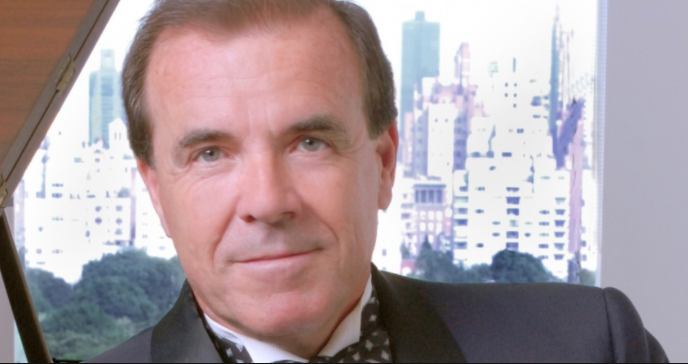
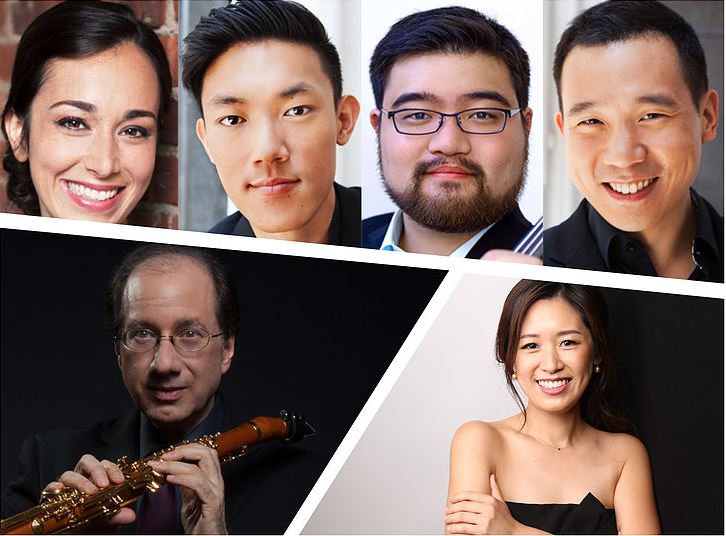
Charles Neidich, clarinet; Mariko Furukawa, piano;
The Parker Quartet, Daniel Chong, violin; Kristopher Tong, violin;
Jessica Bodner, viola; Kee-Hyun Kim, cello
The Tenri Cultural Institute of New York, New York, NY
March 11, 2018


A riveting program of clarinet music, artfully curated by Charles Neidich, was heard Sunday, March 11, at the Tenri Institute. It included works by Mieczysław Weinberg (1919-1996), Vassily Lobanov (b. 1947), and Alexander Lokshin (1920-1987), three musicians who composed with great power and originality through years of Soviet oppression. Aptly named “Hidden Masterpieces” this program’s treasures have gradually been pulled from an obscurity that came not from mere happenstance but from countless deliberate obstacles including condemnations, imprisonments, murders of family and friends, threats, and lies. Some of this music has only in the past few decades become familiar to musicians, let alone the wider public, so a concertgoer might have been satisfied with the novelty of readings by even a journeyman clarinetist; on the contrary, though, we heard none other than Charles Neidich himself, who could be described (and has been) as arguably the finest clarinetist in the world. What a concert!

In his dual role as performer and Artistic Director of the Wa series, Mr. Neidich spoke eloquently about each work and composer, and then played with near-superhuman skill and intensity. He clearly has studied this music and history deeply and personally, including having been the first Fulbright grant recipient to study in the then Soviet Union in 1975, attending the Moscow Conservatory for three years; he shares his scholarship and experience, though, with disarmingly natural ease. His spoken introductions were not dry, academic lectures, but rather crystalized insights that went to the heart of the music itself.

Introducing Mieczysław Weinberg’s Sonata Op. 28 for clarinet and piano, Mr. Neidich commented on the special tendency of Soviet composers to keep musical “diaries” of a sort, a comment that illuminated the stretches of what Mr. Neidich referred to as almost “banal” music, or the somewhat more prosaic writing that alternated with more dramatic musical moments. One could hear such narrative unfolding in the Weinberg Sonata, and Mr. Neidich’s interpretation had an inevitability that made it irresistible. Particularly stirring were the recurring suggestions of klezmer melody, inflected with utter soulfulness. In its entirety, the work had a deeply moving impact. Because its thoughtful construction emerged most fully in retrospect, it seems that future hearings should serve only to reinforce its important place in the clarinet repertoire.

The evening’s superb collaborator, Mariko Furukawa, went beyond pianistic precision to plumb the depths of this extremely demanding music right with Mr. Neidich. Together they held the capacity audience spellbound.

Haunting this listener long after the concert ended was the comment by Mr. Neidich, that during his Fulbright studies in Moscow in the 1970’s (even shortly after the death of Dmitri Shostakovich, a close friend of Weinberg’s) one simply did not hear of Weinberg. As Mr. Neidich said, “I knew nothing of his existence.” The Lokshin story was similarly heartbreaking. Lest this reader feel as despondent as this reviewer felt over it all, a renaissance for these composers seems well underway. For the sake of thoroughness, it will require a great deal of time, but one is extremely grateful to those such as Mr. Neidich who are infusing this music with new life.

Following Weinberg’s Clarinet Sonata came the Sonata for clarinet and piano by composer-pianist Vassily Lobanov (b. 1947). We were told that Mr. Lobanov had composed the Sonata in the 1980’s and given a copy to Mr. Neidich in 1990. The two musicians are good friends and happen to seem quite well matched musically. If the Weinberg Sonata had struck one as wide in range, the Lobanov work took things to even more intensely dramatic levels. Composed in a language not alien to the Soviet style of his day but also, as Mr. Neidich stated, with some influence from the Russian Orthodox tradition, the work is one of huge emotional scope. It drew upon Mr. Neidich’s incredible variety of timbres and dynamics, along with those of Ms. Furukawa. They held the audience rapt through the musical journey, from quietest whispers and long lines to frenzied repeated motives and cataclysmic explosions and back. By the end one felt exhausted but awakened. It should be a vehicle for virtuoso clarinetists to champion, if they can!

What could possibly follow these works? Even after an intermission with bountiful refreshments provided by Mr. Neidich’s wife, Ayako Oshima, also an internationally known clarinetist, the second half was a good point at which to expand the personnel, and Mr. Neidich, with an impresario’s instincts, enlisted the dynamic Grammy-winning Parker Quartet to join him in the American premiere of Alexander Lokshin’s Quintet for clarinet and strings. It was a high-voltage convergence of forces, five stellar musicians in service to a profoundly moving and original work. The ensemble was tightly knit, and the interpretation was potent and cohesive. This quintet begs for further performances, but it would be hard to top the pairing of the Parker and Mr. Neidich.

A word of explanation about Lokshin: he had been known early in his life as a leading expert on Mahler and Stravinsky and had been declared “a genius” by Shostakovich. He was not surprisingly denounced by the Soviet authorities as “decadent” and a “formalist” for the very reasons that his music may be treasured, as a natural outgrowth of the music of the preceding century. Once Stalin had died, Lokshin might have found a certain improved situation, and his 1955 clarinet quintet does reflect some flickers of optimism; tragically, though, he was also accused (falsely, as has only been settled in recent years) of being NKVD-KGB informer and was thus ostracized by even those who would have rallied to his side. In summary, for those wondering why an American premiere is occurring 31 years after the composer’s death and 63 years after the composition date, such tragic and criminal injustice is why – the morass of Soviet slander and obfuscation is slow to unravel. What is encouraging, though, is that there are always those interested in digging for the truth and for artistic treasure, no matter how many years later.

Profound appreciation and admiration go to Mr. Neidich – and to other artists who champion the music of the Soviet composers who endured so much – and huge congratulations are in order for a most meaningful and successful concert. One hopes that Mr. Neidich will share these interpretations more widely, both live and in recording – as the works deserve it – and one hopes that their renaissance will be in just proportion to the chilling decades of silence.

For upcoming concerts, not to be missed, one can visit www.waconcertseries.com


Share

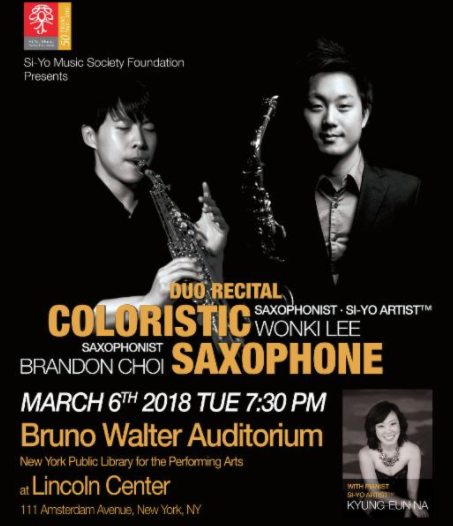
Si-Yo Music Society Foundation Presents Coloristic Saxophone in Review

Si-Yo Music Society Foundation Presents Coloristic Saxophone in Review

Wonki Lee and Brandon Choi, Saxophonists; Kyung-Eun Na, pianist
Bruno Walter Auditorium, New York Public Library for the Performing Arts
Lincoln Center, New York, NY
March 6, 2018


Two superb saxophonists and an excellent pianist collaborator came together in recital this week for what was a described by Soyeon Park (Si-Yo Music Society Foundation’s Artistic Director) as “the first classical saxophone duo recital performed by Korean musicians in New York City.” Just when one thinks that there is very little new under the sun, Wonki Lee and Brandon Choi emerge on the scene not only as pioneers but as brilliant ones.

For the record, not all of the works were for two saxophones with piano, but the highlights of the program were. For this instrumentation we heard Duo Concertant by Jean-Baptiste Singelée (1812-1875), Paganini Lost for two alto saxophones and piano by Jun Nagao (b. 1964), and for a finale Francis Poulenc’s Trio for piano oboe, and bassoon in an arrangement for two saxophones and piano by Junichi Sato, an intriguing selection of works, augmented by several solo compositions.

The opening of the program, the Singelée duo, was given a knockout performance, with Wonki Lee on soprano sax, Brandon Choi on alto sax, and Kyung-Eun Na at the piano. In what might have been saved as a virtuoso finale by a composer known for salon showpieces, the dazzling display in it announced from the start that this ensemble was not some mere ad hoc combination, but a tightly knit meeting of musical minds. What made it so special was the joyous interaction in the duo, sharing each note’s musical impulse rather than merely cleaving to the beat through the cascades of technical wizardry, as might be expected given the challenges to synchronize. The surging arpeggios and scales virtually bubbled up like laughter, and the saxophonists seemed to savor the ride of shared phrasing and musical repartee. Helping to knit the two parts was a balletic energy that was particularly pronounced in Mr. Choi, who appeared to possess within his physique a coiled spring ready to send him airborne.

Paganini Lost by Jun Nagao was a discovery for this listener, adding to the ever-growing body of work based on Paganini’s twenty-fourth Caprice (along with Brahms, Rachmaninoff, Witold Lutosławski, Robert Muczynski, and numerous others). A welcome addition in a jazzy idiom, it afforded exciting solo moments not only for each saxophonist but also for the excellent pianist Kyung-Eun Na, who managed fistfuls of notes with aplomb all evening (often handling her own perilous page-turning, though a page-turner was present).

The Poulenc arrangement by Junichi Sato was also interesting, a remarkably successful adaptation from the original trio, of which this reviewer happens to be a longtime devotee. The reworking was beautiful, certainly helped along by sensitive shading from each player, and it closed the evening with plenty of color, as promised in this program’s title.

Interspersed among these works pairing Mr. Lee and Mr. Choi were four solo saxophone works, three of them with piano. Notably, Mr. Lee performed his own saxophone-piano adaptation of Claude Debussy’s Rapsodie pour orchestra et saxophone. What one generally hears in concert (whether played with orchestra or piano reduction) is a combination of Debussy’s own manuscript and sketches and the work of Jean Roger-Ducasse, in whom Debussy placed enormous trust. While I’ve on occasion enjoyed that “original” piano reduction (perhaps relying partly on what one’s imagination or memory can supply of orchestral timbres), Mr. Lee’s version, as he states, incorporates the music from the complete orchestration more thoroughly, including transferring orchestral wind parts into the solo saxophone part itself. It represents a fascinating undertaking, certainly worthy of further hearings.

Mr. Choi then took the stage to give the world premiere of White Shadow of Passed Time II for solo saxophone (2018) by In Sun Jo (b. 1953). The only selection to allow Ms. Na a much-deserved break from the piano, it featured an encyclopedic range of newish extended techniques for solo sax, alternating with sounds of chimes and a triangle. The changing of stage lighting, from dim to bright and back, accompanied what was a somewhat theatrical piece, although one was not guided much by the program notes on the thinking behind this long work, so this listener was rather flummoxed. One wondered whether perhaps there might be a means to convey within a briefer timespan the same musical message, whatever that might be. Despite the recognizable strains of the chant “Dies Irae” and some semi-audible words spoken by Mr. Choi during the piece, there were what seemed to be several (false) “endings” before more of what one might call “sound effects” followed – a feature which strained even this very receptive listener’s patience at times. What might work beautifully as exotic film music requires a bit more cohesion for the concert hall, because, contrary to avant-garde visual arts, for which one can simply avert one’s gaze when not engaged, an audience member at a live concert remains in effect captive and subject to the composer’s focus or lack thereof. That point, in addition to decibel levels which necessitated plugging one’s ears, left one frustrated overall.

Following the Jo and Nagao pieces, came some lighter fare, namely Gershwin’s Cocktail by Toshio Mashima (1949-2016). Essentially a medley including The Man I Love, S’Wonderful, Somebody Loves Me, But Not for Me, Someone to Watch Over Me, and Fascinating Rhythm, it indeed resembled a “cocktail.” Mr. Lee played it with polish and panache, as did Ms. Na.

Milhaud’s Scaramouche for alto saxophone and piano continued in the same accessible vein. A classic perhaps best known in its two-piano version, it was, as the program notes remind us, originally commissioned by and written for saxophonist Sigurd Raschèr, so it was refreshing to hear as written. Mr. Choi brought it more of his infectious energy, though occasionally some sixteenths seemed to lose “traction” and run away a little. Is it possible that he was somehow trying to compensate for a longer than expected program? After all, what had been announced at the start as a program with no intermission, starting at 7:30pm, ran to around 9:20pm with no break. Whatever the case, one wanted to relax with this piece and savor it some more (especially breathing between phrases in the central Modéré movement).

All in all, despite the occasional reservation, there was much to admire about this concert, and especially about these young saxophonists. The duo of Choi and Lee are mesmerizing. Wherever life takes them, they simply must continue to play together.


Share

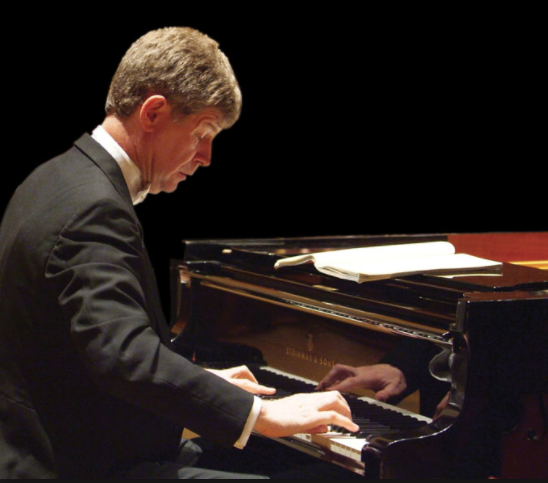
SubCulture presents Ian Hobson: Sound Impressions: The Piano Music of Claude Debussy & Maurice Ravel- 4th in series

SubCulture presents Ian Hobson: Sound Impressions: The Piano Music of Claude Debussy & Maurice Ravel- 4th in series

Ian Hobson, piano
SubCulture, New York, NY
February 28, 2018


Ian Hobson continued his six-concert epic presentation of the complete solo piano works of Debussy and Ravel with his fourth installment. By now (I’ve covered the first and third), I recognize repeat attenders in the audience, and plenty of fresh, young faces, due partly to the “edgy” downtown location, no doubt. I wish more people could hear this immense achievement, because while household names, Debussy and Ravel aren’t really programmed as often as one would hope.


Mr. Hobson’s opening work, Debussy’s resolute but sad little Berceuse héroïque, allowed me to ruminate on the terrible toll exacted by World War I. France lost at least 1,320,000 men in their prime, with a quarter of those lost in the first months of the war. Ravel, despite repeated unsuccessful attempts to enlist, finally joined the Thirteenth Artillery Regiment as a lorry driver in March 1915 at age forty (!), serving for two years—afterward he was never the same, either in physical or mental health. Debussy, already ravaged by the cancer that would take him in 1918, became intensely nationalistic, signing his works “Claude de France,” and contributing many short, bleak works to the many charity efforts that were pleading for funds. Thus, the Berceuse, destined for a Belgian war effort.


Mr. Hobson immediately relieved the gloom with a stylish peek into several of Debussy’s unjustly neglected early works: Valse romantique, Mazurka, and Nocturne. While each of them contains some tidbits of the progressive harmonies Debussy would become famous for, they lie squarely in the Romantic genre field, as one might expect from a student of a woman named Marie Mauté de Fleurville, who claimed to have studied with Chopin.


Mr. Hobson then gave us Ravel’s true first piano composition (though unpublished until 1975), the Sérénade ‘grotesque’ from 1893. The guitar-like pizzicati and other brief melodic figures would be put to much better use in the Alborada del gracioso (heard later on this program). Mr. Hobson was stylish in it, but did ignore the indication, so unusual for Ravel, très sentimental.


Then came one of Ravel’s masterpieces, the five-piece set Miroirs, in which Ravel sought to evoke not things themselves, but their reflections. Each piece is dedicated to a fellow-member of the avant-garde Apache artist group. Here, Mr. Hobson’s extraordinary fluency gave what was for me the most successful performance of the evening. He is able to “put things together,” the only downside being that many details get lost. Nevertheless, all the movements were great (including the astonishing, callous-building, double-third and double-fourth glissandi of Alborada), with the exception of La Vallée des cloches, which was way too fast! In Ravel’s conception, there was no valley, only the varied contributions of the many Paris church bells tolling at noon on a sultry day.


I hoped not to end this review on a down note, but Mr. Hobson’s concluding presentation of Debussy’s first book of Préludes was the most unsatisfying, despite a few jewel-like refined moments (La Danse de Puck was near perfect). His penchant for rushing disturbed the mysterious calm that underlies many of the works, and there was definitely a shortage of the pp and ppp dynamics, without which Debussy can seem like a terrible mistake. Particularly, he almost never observed when there was a crescendo immediately followed by a subito (sudden) pp. There was a great deal of rhythmic alteration too, in short note values. In this recital, Mr. Hobson used the scores for all his performances, I don’t object to that at all, but it seemed to lead to a kind of sight-read quality, but of course I know he wasn’t sight-reading. Putting together a marathon series like this is truly daunting. I did think that two preludes, La Fille aux cheveux de lin and La Cathédrale engloutie, were the best. I was surprised that they were these two. The others were rather manhandled, with rough patches intruding on one’s contemplation.


I’m sure the next two recitals will be well-attended and wonderful.

Share

Vocal Artists Management presents Kyunghee Kim in Review

Vocal Artists Management presents Kyunghee Kim in Review

Kyunghee Kim, soprano
David Holkeboer, piano; Paul Won Jin Cho, clarinet
Marc A. Scorca Hall, Opera America National Opera Center, New York, NY
February 27, 2018


Vocal Artists Management (www.vocalartistsmgmt.com) presented soprano Kyunghee Kim in recital with pianist David Holkeboer on February 27, 2018 at the Opera America National Opera Center America. She offered a variety of works, including arias from Le nozze di Figaro and Adriana Lecouvreur.

Ms. Kim’s biography lists an impressive number of appearances throughout the world, both as a soloist and in featured operatic roles. Mr. Holkeboer is both highly sought after as a vocal coach and collaborator.

The program provided translated text of the works (but not the original), which was welcome, but it would have been desirable to have some information about the lesser known composers.

For those unfamiliar with the venue, the recital hall has the intimate feel of a salon but with the acoustics one doesn’t find in a typical salon. While the number of audience members was not large, it still had the appearance of being relatively full.

Ms. Kim opened with three works, Pergolesi’s Se tu m’ami, se tu sospiri (If you love me) and Selve amiche (Friendly Woods) from Antonio Caldara, followed by Rossini’s La promessa (The promise). Ms. Kim’s vocal gifts were immediately apparent. Her vibrato was well-controlled and used sparingly, which for this listener was ideal, and her intonation was true. While she possesses a powerful voice, she was clearly aware of the lively acoustics of the small hall without any loss in vocal quality. This was the sign of a sensitive musician at work.

Franz Schubert’s Der Hirt auf dem Felsen, D. 965 (The Shepherd on the Rock), for soprano, clarinet, and piano, ended the first half. Clarinetist Paul Won Jin Cho joined Ms. Kim and Mr. Holkeboer. The interplay among the three musicians was exquisite, from the lovely opening “echoes,” to the darker tones of the middle sections, ending with the optimistic and hopeful last section. I would like to give Mr. Cho special mention for the deep, rich tone he projected, along with the agility of his technique, which blended perfectly with the voice. Ms. Kim captured the emotion with skill, in what the highlight of the evening for this listener.

After a very short intermission, Mr. Holkeboer played a solo version of the lovely Meditation from Jules Massenet’s Thais. He then launched into the introduction of Porgi amor, from Mozart’s Le nozze di Figaro. Ms. Kim then strode onto the stage, wearing a different dress from her opening half. There is no need to go into detail about this aria, as it is so well-known, with almost every soprano of note having had a turn with it. Ms. Kim suffered no complexes, as her interpretation would hold its own with any other. It was achingly poignant as Ms. Kim drew out all of its despair.

Ms. Kim had already established her artistry, so it was now time for a display of vocal gymnastics. Three songs from Spanish composer Fernando Obradors (1897-1945) fit the bill. Chiquitita la novia (given a literal translation as “Tiny the Girlfriend” where “A Tiny Bride” would be more idiomatic), Del cabello más sutil, and El vito are highly dramatic works which push the singer to the limits, both in range and technique. They also feature virtuosic piano accompaniments, keeping both performers on their toes. Any mishaps could render the effect almost cartoonish, but Ms. Kim pushed aside these dangers as trifles and made it all seem like child’s play. Her diction was also excellent. The audience showed its appreciation with enthusiastic calls of brava!

Io son l’umile ancella (I am but the humble servant) from Francesco Cilea’s Adriana Lecouvreur ended the recital. After the pyrotechnics of the Obradors works, it might have been an anti-climax, but this was far from the case. Skillfully done, it was a triumphant ending which the audience rewards Ms. Kim with a standing ovation.

As an encore, Ms. Kim offered the Korean folk song Arirang, often called the unofficial national anthem of Korea, which she sang with a special reverence.


Share

Key Pianists presents Misha Dichter in Review

Key Pianists presents Misha Dichter in Review

Misha Dichter, piano, joined by Cipa Dichter in duos
Weill Recital Hall at Carnegie Hall, New York, NY
February 21, 2018


Legendary pianist Misha Dichter is the next musician recognized by Terry Eder’s unique series Key Pianists, whose mission is to recognize musicians who aren’t necessarily before the public eye right now, or whose commitment to a certain repertoire might marginalize them in the cutthroat commercial concert world.

Mr. Dichter hasn’t played a major solo recital in New York since 1999, having suffered a disability of the worst kind that threatens the pianist’s primary tool: the hand. I won’t enumerate here, but he underwent successful surgery and rehab. Thank goodness for that. He has made enormous contributions in both live and recorded performance, and his commitment to duo-piano playing (at one and two keyboards) with his wife has always been in the forefront, unusual for most virtuosi.

I truly believe that one must exercise respect when speaking of legendary established artists, after all a reputation isn’t going to be made or unmade by my comments. The evening, while successful and often beautiful, was complex for me, something I will try to make clear in the ensuing comments. Two of Schubert’s massive late works bookended Copland and Scriabin, strange bedfellows but good contrast.

The entire first half of the recital was devoted to Mr. Dichter’s partnership with his wife of fifty years, Cipa Dichter (How is this possible?? Neither one of them even looks fifty!). They opened with the lyrical and ever-so-tragic Fantasy in F minor, D. 940. The normally excellent program notes by Paul Griffiths were a bit off-base on this occasion. He missed the point that the work is dedicated to one of Schubert’s piano students, and (as usual) an unrequited crush of his: Caroline von Esterházy, though anything between them would have been impossible due to the class difference. Mr. Griffiths also called the third section a “waltz” which it is most definitely not (just because it’s in 3/4 time doesn’t make it a waltz).

The clever G-flat which is introduced into the opening melody in measure twenty (enharmonically F-sharp) sets up the key relations of the two inner sections, so we have F minor-F-sharp minor-F sharp minor-sinking back down to F minor. Schubert has been so often patronized as a composer that most people don’t realize how much motivic continuity he loaded his mature works with, enabling him to create vast structures that hold together.

The Dichters gave a very well-coordinated, unsentimental reading of the Fantasy, with Cipa playing primo. She certainly could not have wanted for a more considerate partner in her husband, whose balances were preternaturally sensitive. I wished for more lingering over certain moments, especially fermatas, which were minimized. There was also a lack of “big” dynamic contrasts: the pp and ff in the central section of the third “movement” and elsewhere often sounded the same. This led to a reduction in the mystery and fatality of the piece, which for me is central. One should feel emotionally devastated after a rendition of this work.

They followed with an appropriately raucous, perhaps even reckless, joyously rhythmic performance of Bernstein’s transcription for two pianos of Aaron Copland’s El Salón México, named for a nightclub but based on assiduously collected material. The Dichters’ flair for dialogue between the two instruments was in full display, aided by the clever and faithful arrangement.

After intermission, Misha took the stage for his solo portion of the program, opening with two of Scriabin’s more lyrical etudes, one each from Op. 42 and Op.8. These were delivered with melting clarity and the sort of restraint that purged them of the sometimes overheated “purple” quality with which many artists often fill them. It was refreshing indeed.

Mr. Dichter’s major offering of the evening was the middle of the last three sonatas of Schubert, the A major, D. 959. There is nothing “enigmatic” about either the tonality or the half-step, which figures large in this work—revealed in every possible light, it gives Schubert maximum mobility to explore remote key areas, as Alfred Brendel said, “with the assurance of the sleepwalker.”

Mr. Dichter is a “big view” pianist, who I feel sometimes lets his virtuosity run away with him when more contemplation would be nice. On this occasion, just when I was starting to get antsy, he would then do something so angelic that it brought tears to my eyes. For example, the return of the lonely wanderer theme in the second movement, after the “breakdown” section (which, Mr. Griffiths, is not a cadenza!), was heart-stopping. He also handled the multiple remote-key visionary “farewells” in the Rondo finale beautifully. Elsewhere, tempi were pushed, which led to some inaccuracy, dynamic contrasts weren’t maximized (as in the Fantasy above), and a sense of discovery was lacking. The fact that all the movements were played attacca didn’t help, one scarcely had time to consider what had preceded. Don’t get me wrong, this is a valid interpretation, it might not be to everyone’s liking, but the audience went wild.

Mr. Dichter then offered two encores: the Berlioz/Liszt Rákóczi Marsch (from La Damnation de Faust, borrowed by Berlioz from a Gypsy fiddler). This was a white-hot romp through one of Mr. Dichter’s specialties, Liszt. He roared and glittered as I imagine the piano lions of old did, and people respond to speed and volume.

This was followed by Schumann’s Romanze Op. 28, No. 2, in F-sharp major, which again was very unsentimental, even hurried. I feel he missed the opportunity to vary the voicing in the repeat of the first section (it is a love duet, after all), unusual in a student of Rosina Lhevinne. No matter, Mr. Dichter proved that he still owns the keyboard, and I wish him many more years of fruitful artistry.

Share

Distinguished Concerts International New York (DCINY) presents Perpetual Light In Review

Distinguished Concerts International New York (DCINY) presents Perpetual Light In Review

Distinguished Concerts Orchestra; Distinguished Concerts Singers International
James M. Meaders, DCINY conductor; Jean-Sébastien Vallée, guest conductor
Maribeth Crawford, soprano; Cecelia Stearman, mezzo-soprano; Shawn Mlynek, tenor; Patton Rice, bass
Stern Auditorium at Carnegie Hall, New York, NY
February 19. 2018


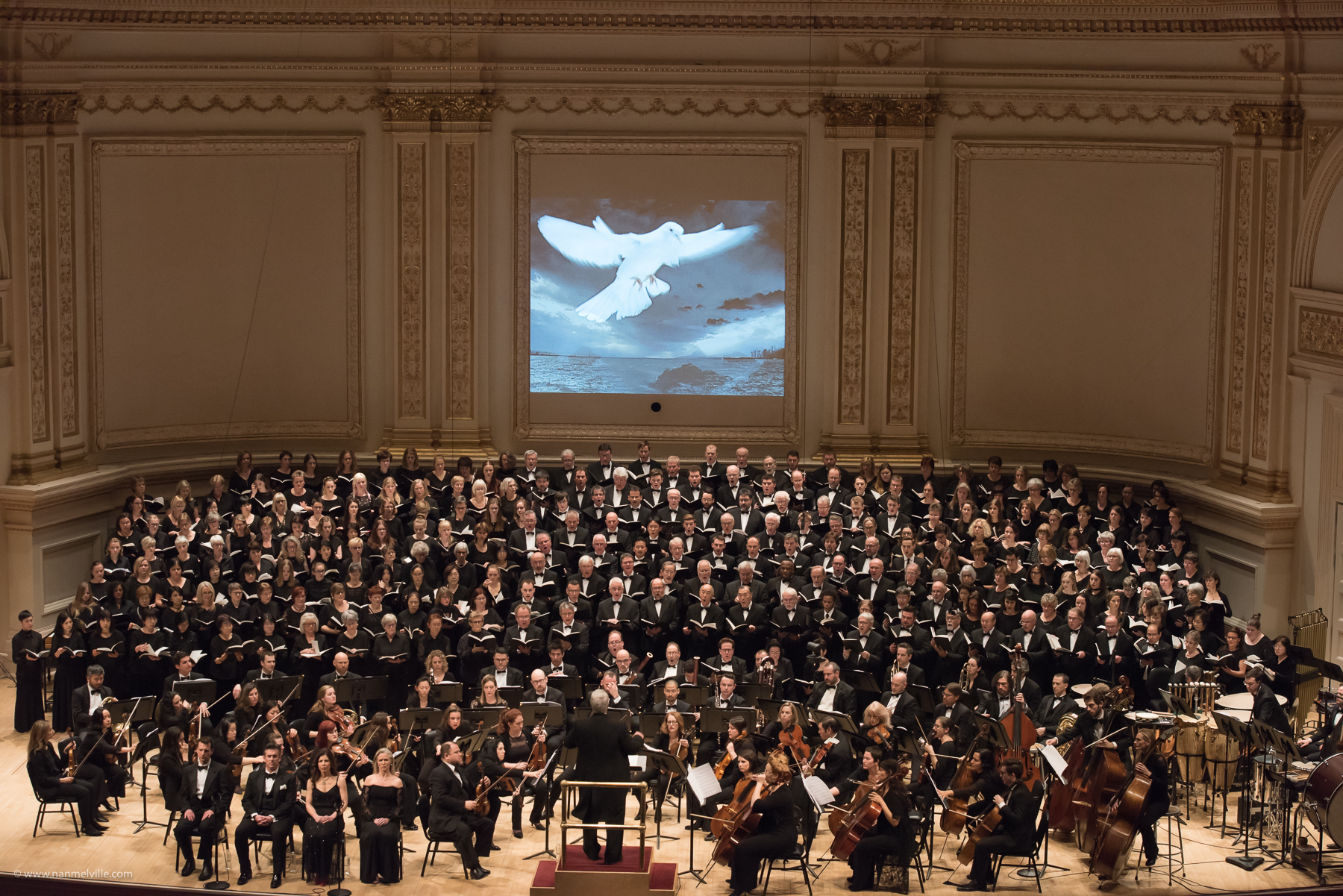
Distinguished Concerts International New York (DCINY), now in their 10th season, has made the “themed concert” a staple of their programming. A particular favorite of DCINY is a format featuring two requiems, either introducing a newer work with one of the classics, or both being well known and well-loved offerings. On this occasion, the latter combination was used. In a concert entitled Perpetual Light, the Requiems of Mozart and Duruflé were to be featured. The Distinguished Concerts Singers International personnel hailed from California, Louisiana, Mississippi, Oregon, Tennessee, Virginia, Wyoming, Canada, Germany, The Netherlands, and the United Kingdom, and also included individual singers from elsewhere around the globe.

Mozart’s Requiem in D minor, K. 626 has a storied history. Commissioned by Count Franz von Walsegg as a memorial to his late wife, it was unfinished by Mozart at the time of his death in 1791.  His student Franz Xaver Süssmayr completed the work, relying on various sketches as well as his own assumptions of familiarity with Mozart’s wishes for the composition.  How much of the work is Mozart versus how much is Süssmayr is still being debated to this day, but this a task best left to the musical forensics experts.

James M. Meaders took the podium to conduct. His approach was assured, but with what seemed to be a special emphasis on restraint. The “fire and brimstone” that abounds in this work never became overblown. It simmered under the surface, which made the listener feel as if a soul were in the balance and that Heavenly Judges were weighing the evidence with the utmost severity. Mr. Meaders proved to be a musician who understands that Mozart has provided all the drama necessary – it was all very compelling. One was left with the uneasy feeling at the end that judgment was still forthcoming. This listener found it all quite gripping.

Some words of praise for the soloists, both as individuals and as an ensemble, are in order here. Soprano Maribeth Crawford sang with a soaring brilliance. Mezzo-soprano Cecelia Stearman’s lovely voice delighted. Tenor Shawn Mlynek sang with striking projection, and bass Patton Rice’s strong voice was appropriately imposing. One must not forget the (unnamed) trombone soloist in the Tuba Mirum for her flawless playing.

After intermission, guest conductor Jean-Sébastien Vallée took to the podium to conduct the Requiem, Op. 9, of French organist, pedagogue, and composer, Maurice Duruflé (1902-1986). Modeled after Gabriel Fauré’s Requiem, this serene work is the polar opposite of the Mozart. It is devoid of some of the fearsome elements of the requiem mass and omits the Dies Irae. While I am continually awestruck by the genius of Mozart’s work, I feel that Duruflé’s conception is more in the spirit of a final mass that is asking for a peaceful eternal rest.

Mr. Vallée took an expansive approach, bringing out all the beauty that abounds in this wonderful work. He was a passionate leader, with sweeping gestures to the large chorus to exhort them to “sing to the heavens.” His approach was to pay off handsomely. This listener counts this work among his favorite Requiems and was enthralled with this performance. There is so much to praise that I will limit myself to a favorite – it is always a thrill to hear the bold Domine Jesu Christe burst forth with its majesty.

Mezzo-soprano Cecelia Stearman’s Pie Jesu was stunningly beautiful, and the power of bass Patton Rice’s voice filled the hall in the Libera Me.

As the final notes of the In Paradisum faded to silence, the judgment was rendered and the doors of Heaven opened. The silence in the hall held for a moment as if the audience felt this great relief before bursting into a standing ovation. Congratulations to all!


Share

SubCulture presents Ian Hobson: Sound Impressions: The Piano Music of Claude Debussy & Maurice Ravel in Review

SubCulture presents Ian Hobson: Sound Impressions: The Piano Music of Claude Debussy & Maurice Ravel in Review

Ian Hobson, piano
SubCulture, New York, NY
February 7, 2018


Ian Hobson continued with the third of his six-concert complete presentation of Debussy and Ravel works for solo piano, and on this occasion it struck me that his spirit was much more aligned with the material than it had been back in November. He created many ravishing moments, mainly due to his excellent fleet technique. My “wish list” for him would be that he explore the pianissimo (and lower) dynamics more—I didn’t feel like I really heard enough utterly soft sounds; and that he take more time, don’t push every tempo (this I had said previously). Where this need for speed succeeded brilliantly however, was in the final piece of the Images triptych: Mouvement (which is French for tempo, after all!). This was given a wonderful clear reading, and the whole-tone “disappearance” at the end was stunning.

The hall was full, so word is getting around what an achievement this cycle is, and the average age of the audience was substantially lower than one customarily sees at “classical concerts.”

The recital opened with two (of the six) pieces commissioned by the Revue musicale to be composed on the musical spelling of the name HAYDN: 1909 was the Haydn death centenary year. A fine rendition of Ravel’s poignant Menuet, with all its clever permutations of the name (upside down and backward), preceded Debussy’s Hommage, a wistful melancholy waltz followed by a scherzo-like dash, all using the name theme. Mr. Hobson followed this with Ravel’s groundbreaking Jeux d’eau, which when performed by the composer for his fellow-Apache artist group was described as “iridescent fire.” The title is often mistranslated as The Fountain, but really means Water Games, or The Play of Water. The manuscript bears an epigram by one of Ravel’s favorite authors, Henri de Régnier: “Dieu fluvial riant de l’eau qui le chatouille…” (River god laughing as the water tickles him), and Ravel was very strict with his few piano students about the piece sounding happy and playful, never sad. Mr. Hobson dispatched it very well in all its glory.

Then came one of the beloved “early” Debussy works, the famous Rêverie, which wasn’t quite dreamy enough for my taste.

A major work of Ravel was next: the Valses nobles et sentimentales, a suite of seven waltzes and an epilogue, inspired by certain sets of Schubert dances. It was premiered at a notorious “anonymous” concert in 1911, at which all the names of the composers were blacked out on the program, and the audience had to guess whose work was whose. Even Ravel’s previously ardent supporters had a hard time recognizing the author of the Valses, so obsessively was the work focused on strong dissonances. Ravel himself, when describing the piece, always analyzed it in straightforward harmonic terms with “passing notes.” The brash opening (which must have seemed really radical, with Sacre du printemps still two years off) was beautifully conveyed by Mr. Hobson. I wish the “sentimentales” had been more leisurely. The seventh waltz, described by Ravel as the “most characteristic,” lacked lift and lilt. There seemed to be quite a few errors or memory lapses- audiences really need to know what a high-wire act being a pianist is!

The evening closed with the two major Debussy groups: Images (first book) and Suite bergamasque. Reflets dans l’eau craved more pianissimi, but the fluidity was perfect. Hommage à Rameau was appropriately regal and somber, and as I mentioned above, Mouvement was perfection. Three of the four movements of the Verlaine-inspired Suite have been overshadowed by the once-ubiquitous Clair de lune, which is a shame, since they are excellent. The Prélude was a bit hectoring, lacking delicacy, but the Menuet was beautifully crisp, if too loud, in Mr. Hobson’s hands. He avoided the trap of over-sentimentalizing the Clair de lune, and his Passepied was very good.

This cornucopia of French variety passed by in a too-quick hour, and we look forward to his next installment on February 28, 2018.


Share

Wang & Tang Arts Promotion, LLC, presents Karwendel Artists Gala Concert in Review

Sven Stucke (Music Director) and Xi Wang (General Director), violins; Julia Yang, cello; Mika Sasaki, piano; Karwendel Music Festival Alumni: Jennifer Ahn, Maki Omori, Akbike Algi, and Linda Guo, violins, with Eric Malson, piano.
Well Recital Hall at Carnegie Hall, New York, NY
January 31, 2018


Karwendel is a festival only two years old, located in the impossibly picturesque Bavarian Alps in a village called Mittenwald. If you were intrepid and got just a bit lost on a hike, you could easily find yourself over the border in Austria. Few people know that Mittenwald was also a center of stringed instrument building, rivaling the better-known Cremona. Despite their rather vague, high-flown mission statement: “to extend the impact of classical music on society,” they put on an effective, often exciting concert last night.

The concert began with a violin duo arrangement of two Chinese folk tunes, played expertly by the music director, Sven Stucke, and the general director, Xi Wang, who was also the arranger. Ms. Wang displayed her spot on accuracy in the highest violin positions in the first piece, Bird Song. It’s a shame we didn’t get to hear any more from her on this occasion.

Four of the festival’s recent best alumnae were then presented, each in a showy work. Jennifer Ahn muscled her way through Wieniawski’s famous Polonaise with great technical poise and accuracy, but her account lacked charm and ease, the sort with which the greatest players seem to be merely sporting with the material. Maki Omori was more successful, with a fine rendition of Fritz Kreisler’s Recitativo and Scherzo for unaccompanied violin. Akbike Algi gave a sultry performance of the Frolov medley from Gershwin’s Porgy and Bess. Finally, Linda Guo wowed the hall with her Carmen Fantasy by Waxman. This showed not only technical mastery, but somehow managed to convey the emotions of the original opera through color changes and phrasing. The collaborative pianist for all four was Eric Malson, who was always supportive, but sometimes seemed to be struggling technically, and definitely needed a page turner.

After intermission came the Mount Everest of the piano trio literature, Tchaikovsky’s Piano Trio, an epic lament on the death of his close friend, Nikolai Rubinstein, Russian pianist, conductor, and composer. This work was almost “not” created, for Tchaikovsky famously detested the sound of piano and solo strings. He could only abide the piano in a concerto or as total background in accompanying. Shall we say he overcame the issue quite enduringly? For me, the stunning find of the evening was the cellist in this performance: Julia Yang. She invested every single tone of her part with heartbreak and emotional intensity, even seemingly innocuous accompanying patterns. This is to take nothing away from her two partners: Mr. Stucke on violin and Mika Sasaki on piano. Every phrase was carefully worked out, the pacing was satisfying. There is a lot of heroic loud playing, but the ear never tired. They took the standard large cut in the final variation/finale, which is certainly forgivable from an endurance standpoint, but does amputate the sonata-form, and when you can play the piece this well, why not do it? Mr. Stucke was excellent in the busy violin part, bringing poignancy and detail to every phrase. Ms. Sasaki was completely, astonishingly, on top of every insane technical demand in this killer piano part, and she often played with beautiful lyricism in the middle to softer dynamics. I wish someone would teach younger pianists that they can play loudly without a harsh tone, however. I was missing warmth and roundness of tone. Perhaps one can blame the house piano in Weill Hall, though it all depends on who is sitting in front of it—I’ve heard magic emanate from it too. It is truly admirable for such a young group to have this work under their belts now; if they stay together, I’m certain they will continue to add layers of meaning to this already fine performance.

All in all, something really good is happening in those Bavarian Alps, so keep it up Karwendel!


Share

CD Review: “Kid Stuff” – Soli for Piano with Percussion Orchestra

CD Review: “Kid Stuff” – Soli for Piano with Percussion Orchestra

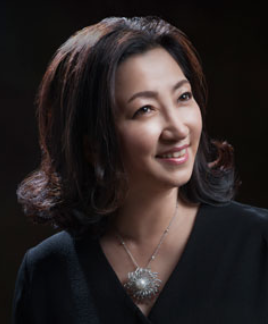
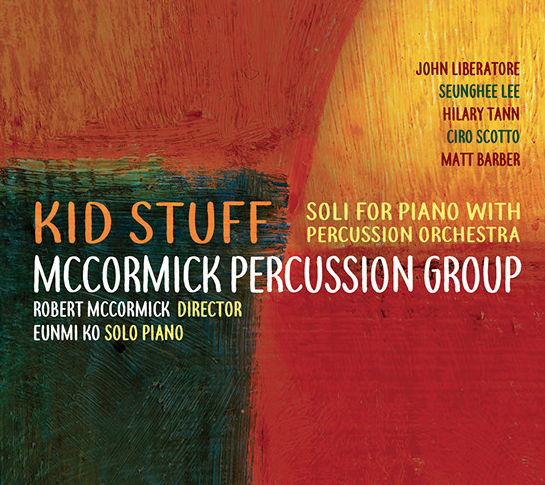
McCormick Percussion Group; Robert McCormick, Director; Eunmi Ko, piano;
Music of John Liberatore, Seunghee Lee, Hilary Tann, Ciro Scotto, and Matt Barber
Ravello Records, LLC, an imprint of Parma Recordings LLC, 2018
RR7997
Recorded at the Springs Theatre in Tampa, Florida
Recording Engineer, John Stephan; Executive Producer, Bob Lord


“Kid Stuff” is an intriguing new percussion ensemble CD just released on the Ravello Records label and featuring performances by the McCormick Percussion Group under Robert McCormick with pianist Eunmi Ko. The disc is named after the longest work on it, Kid Stuff (composed 2015-17, subtitled Five Figments for Piano and Percussion) by composer Matt Barber (b. 1980), but the CD also contains four substantial compositions by composers John Liberatore, Seunghee Lee, Hilary Tann, and Ciro Scotto.

Though the subtitle of this disc, Soli for Piano with Percussion Orchestra, may set the listener up for something along the lines of the most notable piano-percussion compositions, such as Bartók’s Concerto for Two Pianos and Percussion, this disc favors much more heavily the ensemble instruments, often treating the piano as simply part of the group or even submerging its sounds amid the percussive textures of the marimba, xylophone, and other instruments.

Such an aesthetic is understandable in this case, as the McCormick Percussion Group is, on its own, a virtuoso ensemble with superb synchronization and the ability to realize highly complex scores. That said, piano soloists spend much of their lives striving for long legato lines or at least the illusion of such, and – without engaging in that age-old debate about whether piano should be categorized as a percussion instrument – movements where such piano lines came to the fore emerged as high points for this reviewer.

This Light That Pours from the four movements, This Living Air (2015), by John Liberatore was one such high point. It is a movement inspired by the poem of the same name by Garrett Brown (as are the other three movements, For Scraps of Manna, Mandrake, and It is not the Mold), and through Liberatore’s sensitive writing, the poem’s subject comes to life. From the movement’s quiet opening, pianist Eunmi Ko establishes a contemplative mood and luminous tone, gaining color and resonance through the percussion ensemble’s delicate shadings. It is a hauntingly beautiful performance. The remaining three movements of the Liberatore set are engaging in their own way – brimming with infectious patterns and brilliantly rhythmic writing – though pride of place still goes to The Light That Pours.

Considering this reviewer’s piano predilections, it may not be surprising that another highlight of this disc is a movement that borrows heavily from the Berceuse in D-flat major, Op. 57 of Frédéric Chopin, the fourth piece of Matt Barber’s Kid Stuff, entitled Cuddleys. Inspired by the composer’s infant twin daughters and a quotation from James Joyce’s Finnegan’s Wake (“what chance cuddleys…”), it is an ingenious melding of some of Chopin’s lullaby (now in G major) with the “thousands of new stimuli” that confront a vulnerable infant, all represented in the artfully “random” percussion accompanying the rocking piano part. Here is another “keeper” for this reviewer. Surrounding this movement are the playful and fantasy-filled explorations of Chimera, Night Owl, Quench, and, perhaps the most playful of all, Goofball. Each one, in its own way, reflects a fertile compositional imagination, and each is dazzlingly performed by pianist and ensemble alike.

The balance of the CD is made up of three quite different works, Pung-Kyung (2016) by Seunghee Lee, Solstice (2013) by Hilary Tann, and Dark Paradise (2016) by Ciro Scotto. Each maximized the performers’ special qualities in different ways.

Pung-Kyung, a word which the composer tells us has two meanings – both scenery and wind chime – is an apt title for this exploration of percussive tone painting. As Ms. Lee states, she uses some “repetitive yet unpredictable patterns of Korean traditional music” in evoking the mysterious lushness of an imagined Korean countryside. Timbral “images” suggest intermittent rains, rivers, sudden movements, and other fluctuations one recognizes in all nature but with a particularly exotic atmosphere here. It was good to hear such an idiomatic piano part, surely reflective of the composer’s background as pianist. One can imagine this piece finding itself welcome on many programs.

Dark Paradise, one of the lengthier works on the CD (at 13:06), is perhaps best described by its composer, Ciro Scotto, who writes that it “evokes a trip to an alien world that is simultaneously enticing but fills one with anxiety, stable and unstable, familiar and unfamiliar, and perhaps darker than earth.” Running the gamut of percussive techniques and instruments, with the pianist Eunmi Ko playing claves and crotales as well as the piano, the piece creates quite a sonic journey!

Solstice, by Welsh-born Hilary Tann, is the one duo on the CD, a pairing of pianist Eunmi Ko with marimbist Michael Skillern. An involved and imaginative work based on the writing of Adirondack woodswoman, Anne LaBastille, it is divided into the sections White Pines, Lilypad Lake, and Kestrel, bookended by preludes to spring and winter. Piano and marimba are perfectly paired here in the evocation of icy and woodsy tones, full of timbral variety and yet remarkably unified by these two fine players.

 All in all, this CD makes a fascinating collection. For its important new contributions to the percussion repertoire and the sheer expertise in performance, it seems destined to become a staple in the libraries of percussion aficionados at the very least. A number of the works here may also reach a much wider audience as well.

Share

Distinguished Concerts International New York (DCINY) presents the Music of Sir Karl Jenkins in Review

Distinguished Concerts International New York (DCINY) presents the Music of Sir Karl Jenkins in Review

Distinguished Concerts Orchestra; Distinguished Concerts Singers International
Jonathan Griffith, DCINY Artistic Director and Principal Conductor
Sir Karl Jenkins, composer-in-residence
Diana McVey, soprano; Katherine Pracht, mezzo-soprano; Brian Cheney, tenor; Stephen Lancaster, baritone; Imam Chernor Saad Jalloh, Call to Prayer Soloist
Stern Auditorium, Carnegie Hall, New York, NY
January 15, 2018


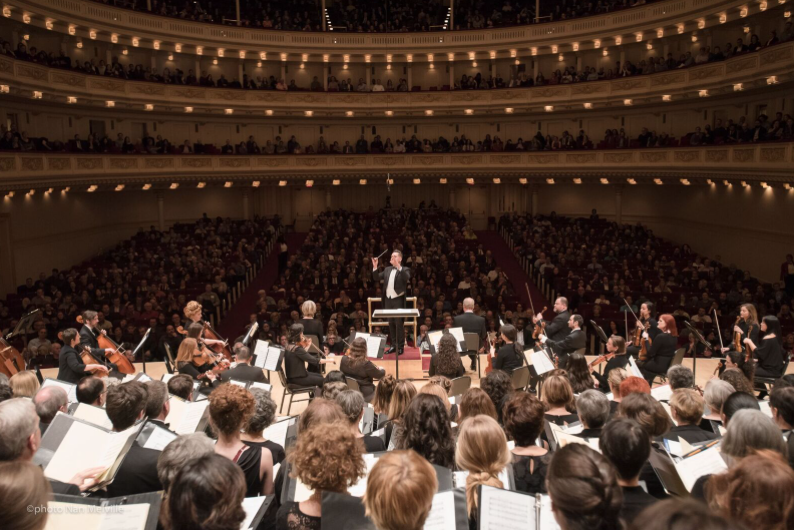
In what has become a tradition marking the commemoration of Martin Luther King, Jr. Day, Distinguished Concerts International New York (DCINY) presented a concert featuring the music of Sir Karl Jenkins on January 15, 2018. This year’s version included two works, The Armed Man: A Mass for Peace, and the World Premiere of Sing! The Music was Given, commissioned by DCINY in celebration of their tenth anniversary. To add to the excitement, the performance was broadcast live on DCINY’s Facebook page (the live feed of the concert can be seen here: DCINY Facebook page). With singers from Hawaii, North Carolina, Wyoming, Germany, Ireland, Isle of Man, Japan, The Netherlands, Norway Switzerland, United Kingdom, and individual singers from around the globe on hand to give it their all, the stage was set for an extravaganza. The evening was one of profound emotion and unbridled joy.

Maestro Jonathan Griffith took the podium for the first half’s only work, The Armed Man: A Mass for Peace, with the accompanying film of the same name. I have written extensively about this work and its history in past reviews, so those readers who wish to learn more can follow this link: The Sounds of War and Peace -2013. I know this work very well from many hearings, both live and recorded, so I was especially interested in how this performance would differentiate itself from others and whether my somewhat ingrained expectations would be met. It must be stated that Maestro Griffith has complete mastery of this work, including a razor-sharp synchronicity with the film that continues to impress me as if it were the first time.

This performance had some ragged moments, such as cracked notes in the brass throughout, a shaky start in the Save Me From Bloody Men movement, and a Charge! movement that was at times brilliant and at other times lacking cohesion and clear articulation, making it sound muddy. Despite these mishaps, I found this performance to be profoundly moving, no easy feat considering my familiarity with the work. Perhaps these same mishaps knocked me out of my comfort zone and forced me to listen with fresh ears and rediscover the emotional wallop this work delivers. Special mention goes to cellist Elizabeth Mikhael for her ethereal solo in the Benedictus, and to soprano Diana McVey, mezzo-soprano Katherine Pracht, tenor Brian Cheney, baritone Stephen Lancaster, and Imam Chernor Saad Jalloh for their roles.

After intermission, Sir Karl Jenkins and Jonathan Griffith took the stage for a Question and Answer session about Sing! The Music was Given hosted by WQXR Radio personality Jeff Spurgeon. It took the form of light-hearted banter, and Sir Karl’s modest demeanor and droll humor had the audience roaring in laughter. A few instances: Q – When did you get the idea to write this piece? A – When Jonathan asked me to write it! Q – Have you heard the entire work? A – Yes, Today. I think it’s pretty good, actually.

Maestro Griffith said he asked Sir Karl to write a piece that would become as popular as The Armed Man (which now has been performed over 2000 times – an average of two times a week). Time will tell if that hope is fulfilled.

Sing! The Music was Given is a six or eight-movement work (depending on version- we heard eight movements) for orchestra, chorus, and mezzo-soprano soloist. It takes its name from the poem Sing- sing- Music was given, by Thomas Moore (1779-1852), as the opening movement uses this poem for the text. The second movement, M-U-S-I-C, an acrostic poem, and the third, the Music Matters are set to text by the composer’s wife, Carol Barratt. The dual-meaning “Music Matters” refers not only to the importance of music, but to aspects of it, like counter-melodies and pulse. The fourth movement, Waterfall Music, is set to a haiku by Bashō Matsuo (1644-1694). The fifth (That Music Always Round Me) and sixth movements (Tehillim- Psalm 150) are borrowed from the composer’s Gloria, and are optional (although they were included in this performance). The seventh movement, I’ll Make Music uses texts from Deuteronomy 32:2, Psalm 144:9, and I Chronicles 13:8 as adapted by the composer. Finally, the eighth movement Ukukula Umcolo, take its title from the Zulu words for sing (ukukula) and music (umcolo). The texts and Sir Karl’s program notes can be read here: Program Notes.

One familiar with Jenkins’s works would recognize strong influences from earlier compositions throughout. While not identifying direct quotes, this listener was strongly reminded of parts of The Armed Man, The Peacemakers, Cantata Memoria, Stella Natalis, Adiemus, and the River Queen soundtrack. Of course, Gloria must be included as being directly quoted. In Sing! The Music was Given, Jenkins is the musical equivalent of a master chef using his favorite ingredients to prepare a magnificent feast.

I thoroughly enjoyed Sing! The Music was Given. It is a forty-minute sonic love letter to the listener about the power of music. Highlights were the whimsical Music Matters, with the secondary choir of ten attending to the matters of music, the enchanting Waterfall Music, and the ebullient Ukukula Umcolo.

Maestro Griffith once again proved his unparalleled skill with large forces as he led with a sure hand. Kudos to concertmaster Jorge Ávila for his solos and mezzo-soprano soloist Katherine Pracht. I’ll Make Music, which was simply beautiful, was the highlight of her solos. Congratulations to the chorus, both for being a part of this important occasion and for their fine work.

Sir Karl came to the stage to acknowledge the cheers of the audience. The cheers then erupted into a loud, extended ovation. One can imagine in the future a two-thousandth performance of Sing! The Music was Given and saying, “I was there for the very first.”


Share