The Dwight and Ursula Mamlok Prize for Interpreters of Contemporary Music Concert Featuring the 2021 winners in Review

The Dwight and Ursula Mamlok Prize for Interpreters of Contemporary Music Concert Featuring the 2021 winners in Review

InfraSound: Luke Paulino, countertenor; Stefanie Proulx, flutes; Yoshi Weinberg, flutes;

Bradley Frizzell, clarinet; Giancarlo Latta, violin; Dudley Raine IV, viola; Austin Philemon, piano; Hunter Somogie, electric guitar

TAK Ensemble: Laura Cocks, flutes; Madison Greenstone, clarinets; Marina Kifferstein, violin; Ellery Trafford, percussion; Charlotte Mundy, voice

Tenri Cultural Institute, New York, NY

November 13, 2021

I can safely assert that the state of contemporary music in New York is vibrant and enthusiastic, as represented by the winners of the Dwight and Ursula Mamlok Prize: InfraSound and the TAK Ensemble. Ursula Mamlok, a legendary pedagogue for decades, principally at The Manhattan School of Music, was also represented on the program by each ensemble. Perhaps ironically, her works, dating from 1961 and 1967, proved to be the strongest musically. As Mamlok often said, all the explanation in the world won’t help the listener coming to the work for the first time. They must be able to perceive the emotional content, as projected through rise, fall, climax, and proportion.

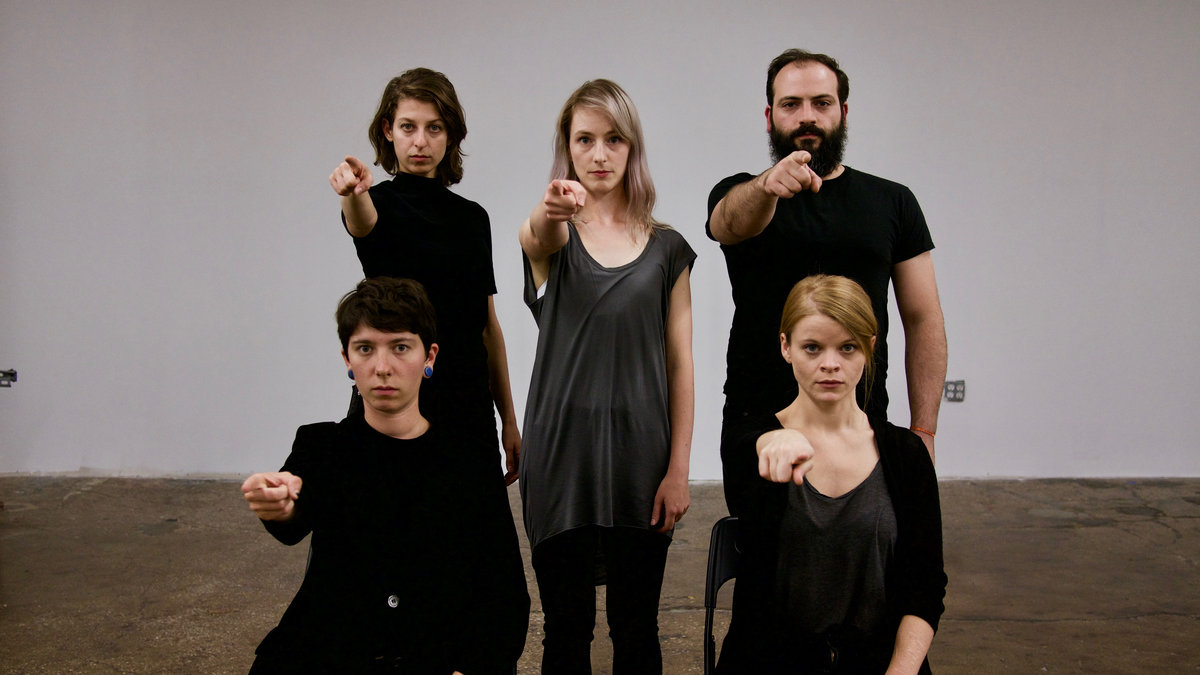
TAK Ensemble

While the music on the program may have been somewhat uneven, the performances were excellent throughout, with tight ensemble and excellent partner communication. This event was diverse from the standpoints of race, gender, and sexual identity. The first half was consecrated to InfraSound, the second half to the TAK Ensemble.

The concert began with Mamlok’s Variations for solo flute (1961), superbly played by transgender flutist Yoshi Weinberg, who was also represented later as composer. This was Mamlok’s first 12-tone composition, and you could hear her rigorous training, however she sported with the row (and its many permutations), never allowing it to become didactic. Her sense of proportion kept the length to just over seven minutes, long enough to enjoy without overstaying its welcome.

Next came Julius Eastman’s 1974 work, JoyBoy, for voice, 2 flutes, and violin. Eastman is undergoing something of a renaissance recently, thanks to the rediscovery of a large cache of compositions. He was a multi-talented composer, pianist, vocalist, and dancer, co-founder of the important S.E.M. Ensemble, among many accomplishments. He was also black and queer, which was difficult for him within his community. Sadly, he became dependent on drugs and then homeless (hence the loss of his manuscripts), dying at age 49. JoyBoy is a celebration of the possibilities of a single note, E, that expands into chords or contracts into itself. It was beautifully done.

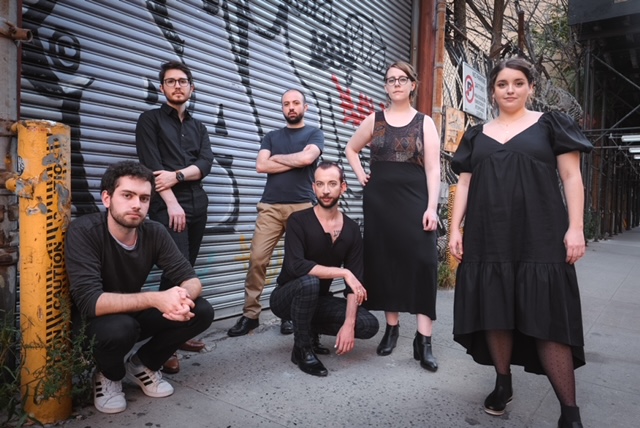
InfraSound

Though I can’t name every performer in InfraSound (“below” sound), I must single out the work of counter-tenor Luke Paulino, capable of myriad colors and unfazed by any score, no matter how difficult.

Yoshi Weinberg (they/them) was then featured as composer with their 2020 work Infravize, a largely improvised work, and the first time I have encountered an accordion in a chamber music concert. I imagine that after a year-and-a -half of Zoom rehearsing and performing, playing together in person must have seemed a relief. Their ensemble was perfect, even with the loose structure of improvisation.

Vasily Ratmansky was born in 1998. He is not a medieval Russian Grand Prince, despite his bio. He also gets the award for longest title: “I think maybe the shape of new music yet to come? I’m not 100% sure though, since I am a new music composer and I don’t really know what shape new music has” used to be the title of the piece, but now my mouth is open and speaking isn’t what I want to do right now. This work is hot off the manuscript and was a world premiere. Unfortunately, as with much contemporary music dependent on technology, said technology doesn’t always behave. Although Ratmansky seems like an ironic commentator, it was hard to tell where the computer woes ended and the piece began, so to speak. The commitment of all involved was vivid however.

After intermission, David Bird’s Series Imposture (2012) was given an excellent, haunting rendition. Charlotte Mundy’s vocalism was wonderful. This piece is a musical transposition of a bizarre psychological experiment in which test subjects faked auditory hallucinations in order to gain admission to psychiatric hospitals, where they were diagnosed, medicated, and not allowed to leave (even though they were fine).

More Mamlok followed, in the shape of her Haiku Variations (1967). The short poetry brought forth brief musical responses from the composer, icy waves, seagull, nightingale, sparrow, etc. Mundy and the ensemble were superb.

Two excerpts (Casida de las palomas oscuras & Arqueros) from the song cycle Love, Crystal, and Stone (2017) by Iranian composer Ashkan Bezahdi closed the evening. Bezahdi skillfully mingles fragments of indigenous Iranian music with other advanced compositional strategies and weaves a striking sound world.

After the enthusiastic ovation, the two ensembles were presented with their framed award citations. Well done!

Share

Pro Musicis presents Rachel Schutz in Review

Pro Musicis presents Rachel Schutz in Review

Rachel Schutz, soprano

Timothy Long, piano

Weill Recital Hall at Carnegie Hall, New York, NY

November 8, 2021

Weill Recital Hall was the venue for yet another fine offering from Pro Musicis this week, featuring prize-winning artist Rachel Schutz. Ms. Schutz has an impressive list of credentials, and her program of works which one would normally not expect to hear in a winner’s recital, including one world premiere, added a layer of interest for this listener.

Ms. Schutz writes about how she came to deciding her program in the context of the upheaval of this trying time, opting for works that, “… can take strength from hearing the stories of others as they overcame difficulties, cultivate resilience, and find solace and power in the arts.”  One could say that her choices were well-matched to her intention, however her inclusion of the Rachmaninoff Six Songs, Op. 38 as linked to the Russian Revolution of 1917 might be seen as a bit of a “shoehorn,” as these songs were composed in 1916, when Rachmaninoff could not have known how his country’s turbulence would impact his life and work. That being said, they are a welcome addition to any program!

Ms. Schutz opened with music by African-American composer Margaret Allison Bonds (1913-1972), entitled Songs of the Seasons and set to the poetry of Langston Hughes. The four songs, written in 1934, 1936, and 1955, remained unpublished until recently so made for a welcome offering of fresh repertoire. The first two songs, Poème d’automne and Winter Moon, show the undeniable talent of an emerging composer, while the later ones, Young Love in Spring and Summer Storm, are the works of an experienced composer who is confident in her voice and assured in her craft. Bonds studied with Florence Price while in high school, was awarded a scholarship to Northwestern University (where she earned her bachelor’s and master’s degrees by age 21), and later studied with Roy Harris at Juilliard.  Bonds was the first African-American to appear as a soloist with the Chicago Symphony Orchestra and was a prolific songwriter, with more than half of her songs set to the poems of Langston Hughes, a lifelong friend of hers.

About the performances, first, some general observations. Ms. Schutz’s voice projects well, without strain or stridency. Her diction is clear (so while the texts were available, there was no real need to have my head buried in them), and her stage manner is expressive without being overly “emotive.” These are all qualities that are appreciated by listeners who value substance over gimmicky style. She projected the easy blues feel of Poème d’automne quite stylishly and gave the evocative Summer Storm roiling turbulent growls. These were an auspicious start to the evening.

Excerpts from Vignettes: Ellis Island by Alan Louis Smith (b. 1955) followed. Mr. Smith stated that he selected excerpts from tape-recorded interviews of persons who passed through Ellis Island on their immigration to the United States. He chose quotes in which, as he describes, “the use of language, narrative description or emotional content” struck him as being “inherently musical in some way.” He then reordered the selected passages to progress from preparing to leave for America through settling in the United States. The Vignettes ranged from excited anticipation, to nostalgic lament, to portraying the bustle of Ellis Island, with even a little Titanic anecdote thrown in (which made for a good story, though pure fantasy!). Ms. Schutz captured the various moods with a practiced ease, seamlessly moving from story to story. When there was whimsy, she projected it without being hammy, and the laments were never overwrought or maudlin. Sincerity is the word that I believe best describes Ms. Schutz’s approach, and it was the perfect match for these vignettes. Favorites were “Anna” (Prologue) with the jaunty feel that reminded one of Milhaud, the hymn-like “Kaj” (Boarding the Boat), and the clever “Max” (On the Island).

After a five-minute pause, Ms. Schutz offered Meditation, a two-movement piece, by Chen Yi (b. 1953). Set to poems from the 7th and 8th centuries (Know You How Many Petals Falling?, and Ascending the Watch Tower at Youzhou, which Yi called Monologue), they pair some of the traditional elements of Chinese opera with some rather “modern” harmonic touches. These pieces gave Ms. Schutz the opportunity to demonstrate the considerable technical gifts that she obviously possesses but was keeping on the backburner ready to unleash. While these were not ostentatious displays of vocal gymnastics, her virtuosity was indisputable and made quite an impression on this listener.

The world premiere of No Road Back Home, by Thomas Osborne (b. 1978) followed. Dedicated to the poem’s author Abduqadir Jalalidin, a Uyghur writer who has been imprisoned in Xinjian since 2018, the poem was memorized and transmitted from inmate to inmate, until it finally made it to the outside world. It eventually made its way to Mr. Jalalidin’s former student, historian Joshua L. Freeman, who translated the verse into English. To say this work is emotionally charged is something of an understatement, as one is drawn into the desolation of isolation and the crushing weight of despair. Ms. Schutz wrung every last drop of these qualities in a performance that was absolutely shattering in its heartbreak. As it died away to a final lament, one could sense the collective holding of breath throughout the hall. This was the most memorable moment of the evening for this listener.

Let’s take a moment to offer kudos to the excellent pianist Timothy Long, who was an outstanding collaborator and a force in his own right.

Rachmaninoff’s Six Songs, Op. 38 ended the program. There is no reason to write about the background here; the stories are well known and easily found online by anyone who wishes to know more. This was far from this listener’s “first rodeo” with these songs, so I was eager to see how Ms. Schutz would do. The short answer is: very well indeed! One does not win contests without having technical skill, so there was not much doubt about Ms. Schutz’s ability to cope with those challenges, but there was a level of artistry that took this from the “contest ready” to the truly exceptional. While the entire set was of high quality, it was the fourth song, The Pied Piper, unconventionally playful for Rachmaninoff, that was the highlight of the evening for me.

The audience rewarded Ms. Schutz with a well-deserved standing ovation. She offered another Rachmaninoff song, Spring Waters, the eleventh of the Twelve Romances, Op. 14, as an encore, which she sang with exuberance.

Share

Pro Musicis presents Robert Fleitz in Review

Pro Musicis presents Robert Fleitz in Review

Robert Fleitz, pianist
Weill Recital Hall at Carnegie Hall, New York, NY
October 18, 2021

Pro Musicis presented pianist Robert Fleitz in a highly auspicious debut before a large masked audience this Monday at Weill Hall, continuing their established tradition of presenting outstanding musicians on prominent world stages as well as in charitable venues. A program that included three world premieres, plus works by some lesser-known composers (including five women) was immediately intriguing. The only two works by “mainstream” composers were the Bach Invention No. 1 (BWV 772 in C Major) and the magnificent Brahms Klavierstücke Op. 118, with the balance of the program being music by Unsuk Chin, Maria Martines, Timo Andres, Krists Auznieks, Julia Perry, Julie Zhu, Lūcija Garūta, and Jeffrey Mumford.

Robert Fleitz, a graduate of the Juilliard School (B.M. and M.M.), lists in his biography the usual awards and prizes, one of course being the Pro Musicis 2021 International Award which resulted in this performance; there seems very little, though, that is usual about this eclectic pianist.

It was an unusual choice to open with Bach’s little Invention in C Major, which is heard more at young students’ recitals than professionals’ programs, but one guessed that the Invention was programmed to illuminate the next work, entitled Etude No. 1 (In C), by Unsuk Chin (b. 1961) a pupil of György Ligeti. That guess was correct. In a surprise “non-ending” Mr. Fleitz let the penultimate dominant harmony of the Bach fade without resolution (part heresy, part genius), and omitted the final “C” harmony to proceed attacca to the Chin Etude. That expected tone C, desired but unheard, transformed the way one heard the subsequent Etude. As Dr. Richard Rodda points out in his excellent program notes, Ms. Chin’s Etude is not so much “In C” as much as “On C” with the pitch C repeated amid “increasingly dense constellations of flickering sound-points.” Those “constellations” can make this piece a challenge for the ears, but thanks to “C” being etched in one’s mind from the Bach, one felt its magnetic power throughout. It was a masterstroke of programming by an innovative musical thinker.

Apart from programming gifts, Mr. Fleitz proved to be an excellent pianist in diverse repertoire, including the next work, the Sonata in G Major by neglected Haydn pupil Maria Martines (1744- 1812). The playing was crisp and light with Scarlatti-esque brilliance that verged on breathlessness but stayed on course with hardly a smudge. The last movement was particularly exciting.

After this refreshing return to classicism, the program ventured again into the 21st century for the world premiere (Commissioned by Pro Musicis) of a beautiful work, Honest Labor by Timo Andres (b. 1985). As the composer writes, “Honest Labor attempts to uncover a kind of Transcendental satisfaction in routine tasks. A simple contrapuntal process gives rise to increasingly elaborate and expressive gestures, finally evaporating in an ambiguous haze.” I often find these days that the notes by composers are more evocative than their music itself, but I am happy to report that this music spoke as eloquently here, like a winding journey inviting closed eyes and reflection. Mr. Fleitz seems to have made it a part of himself, even in his printed comments which stated “I am grateful for the chance to share my honest labor with you, and look forward to hearing about where your path through this landscape led you” (the latter part referring to Jeffrey Mumford’s piece yet to come, “a landscape of interior resonances”).

Mr. Fleitz has the gift of being able to deeply internalize his music while projecting equally well his vibrant conceptions, so I was eager to hear his Brahms Klavierstücke, Op. 118. He did not disappoint. From the impassioned opening Intermezzo in A minor to the ponderous closing Intermezzo in E-flat minor with its Dies Irae thematic connection, he held his audience rapt through all six pieces. His pacing of the G-minor Ballade‘s central section was well-conceived, and his sensitive rendering of the Romanze, with its glimmers of Lydian, was magical. I didn’t always agree with his pedaling, which seemed overly generous at times (especially in the second Intermezzo, but also at times in others, leaving me wishing that his curiously active left foot would switch with his right), but this is a debatable and personal quibble. His youthful penchant for extremes also led to some arguably harsh high points in the final piece, but I would opt for passion with some excess any day over the weak tea of many other pianists.

After a five-minute pause (the new pandemic “intermission”), we heard another world premiere, Time Present by composer Krists Auznieks (b. 1992) who happens to be Mr. Fleitz’s husband. The background of this piece is a bit lengthy to summarize in a simple review, but suffice it to say that the piece married other-worldly harmonies (bringing some colors of Messiaen to mind) with flashes of Scriabinesque ecstasy, all a good match for Mr. Fleitz’s all-embracing pianism.

Prelude by Julia Perry (1924-1979) offered a bluesy detour and chance to hear a seldom heard composer, and it was followed by the world premiere of a piece entitled Other of Two by Julie Zhu (b. 1990), inspired (and accompanied by a lengthy description of) the Tunguska meteor event of Siberia in 1908. Mr. Fleitz conveyed well its eeriness, devastation, and desolation.

In a surreal change of mood, the program shifted over to 1920’s Latvia and Paris, via the lush late Romantic Prelude No 2 in E Major by Lūcija Garūta (1902-1977), a Latvian who studied with Cortot and Dukas and reflected still more Scriabin influence. Mr. Fleitz was a persuasive advocate for her work, as for all that he played, including the concert’s finale, the three-movement work, a landscape of interior resonances by Jeffrey Mumford (b. 1955). Mr. Mumford describes this work as “a celebration of the piano as a sonorous resonating chamber” and it certainly did put the pianist through his paces in fiendish feats of complex virtuosity (not to mention memorization).

A standing ovation prompted an encore, and Mr. Fleitz chose the third of the Improvisos Op. 18 by José Vianna da Motta, dedicating it to his mother on her birthday with special mention of her Portuguese parents. It was a beautiful return to folk-inspired music and a special way to bring “home” this musical journey. I would hear a Robert Fleitz concert again in a heartbeat and look forward to following his career.

Share

Notes for Growth Foundation presents Tremün: Celebrating Indigenous Roots Concert in Review

Notes for Growth Foundation presents Tremün: Celebrating Indigenous Roots Concert in Review

Gabriela Sandoval Requena, Executive Director
Patricio Molina, Ph.D., D.M.A, Artistic Director
Marina Catalan, Master of Ceremonies
Weill Hall at Carnegie Hall, New York, NY
October 15, 2021

The Notes for Growth Foundation, led by Gabriela Sandoval Requena and Patricio Molina, was the presenter of Tremün: Celebrating Indigenous Roots Concert, at Carnegie Hall on October 15, 2021. The foundation’s stated mission is as follows: “[we] strongly believe all children, no matter their present circumstances, should have the opportunity to benefit from music education.” The foundation operates in New York and New Jersey, as well as Chile. In the pre-concert introduction, it was stated that 34 pianos have been delivered to Chile and 6000 children who otherwise lacking access to music education have been reached. To learn more about this wonderful organization, follow this link: Notes for Growth.

Tremün means “growth” in Mapudungun, the language of the Mapuche people. The program featured music by and inspired by indigenous peoples around the world including Perú, México, Jamaica, and Chile. There were world premieres of works by five Chilean composers – Patricio Molina, Ramón Catalán, Aina Sandoval, Carlos Zamora, and Sebastián Vergara. Mr. Molina collaborated with Mapuche poets Roxana Miranda Rupailaf and María Lara Millapan setting two of their poems to music. Actress Marina Catalán was the Master of Ceremonies, introducing the performers and the works.

The printed program had QR codes about the program and artists – a very 21st century touch. The reader should click on the following links to learn more about both: Program notes , Artist bios. There is also a documentary available to view about the making of the program: Tremün documentary. As it is not within the scope of this review to speak of each work and each artist, I offer my apologies and wish to express my admiration for all.

Let’s get the negatives out of the way first. I do have to mention (again) about concerts presenting so much material as less than ideal for all involved (and that’s not just the audience, but the performers themselves). I do understand the constraints placed on the presenters by the venue- in this case, 90 minutes without intermission. To present fifteen works in this timeframe had the effect of not allowing the listener to let a work “sink in” before the next was almost immediately launched. Even with the introductions of each work, there was never more than a minute between, for which I commend the artists for their organization and efficiency, but it seemed like an assembly line. I understand the motivation to present as much as possible, but maybe deleting two or so pieces would have helped.

Some of the works had moments where the music verged on sounding derivative (several brought to mind Chopin, Liszt, Bach, Beethoven, and even Yanni and Suzanne Ciani). One in particular could have been played over the 2nd movement of Rachmaninoff’s 2nd Piano Concerto without much harmonic or stylistic clash for the greater part of the piece. Just put this quibble in perspective, however, the audience either did not notice or care about such drawbacks and reacted with enthusiastic applause.

Enough about reservations. Let’s get to the good (and there was an abundance of good!). A general observation first: These are excellent musicians without any doubt. Vibrant and engaging playing/singing, true intonation, and superior ensemble balance were all there. It’s not as common as one might believe, as there are many times when some of these elements are either lacking or missing all together.

All the works presented had their merits and all could be discussed in depth, but I do wish to make special mention of two that stood out to this listener: Otoño en Tierra del Fuego (Autumn in the Land of Fire) by Aina Sandoval, a promising emerging talent, for the taut energy and colorful writing, and Kürüf (Wind), a haunting, apparition-like work for viola and piano, by Sebastián Vergara.

Patricio Molina’s works made a huge impression on this listener. His voice is distinctive – indeed I could not perceive any obvious antecedents (or even subtle ones!) – and his style is confident and assured. Mr. Molina knows his craft. He is the “real deal” in a world where many composers rely on gimmicks or obfuscations. Not only this, but he is also an excellent pianist and has a winsome personality, a true triple-threat! The setting of the two poems, Te Gusta Mi Bosque (You Like My Forest), and Kecha Tregülfe were evocative, bringing the simple power of these poems to life with his emotionally charged writing. El Condor Pasa: Fantasia for Violin and Piano is a showstopper, weaving a popular Peruvian folk melody into a true tour-de-force for the violinist. Alejandro Mendoza (described by Mr. Molina as “Chile’s greatest violinist”) played with élan, in the spirit of Paganini. All that was missing were sparks flying off his bow!

Not to take anything away from the other performers, but the addition of Verónica Villarroel was what took an enjoyable evening and launched it into the stars. Discovered by Renata Scotto and often compared to Maria Callas, Ms. Villarroel is one of the most prominent sopranos of our time. I’ve heard countless excellent singers, but even as jaded as I might be, I was completely transfixed by Ms. Villarroel’s voice and musical spirit. I think everyone in the audience had the same experience.

At the end, the audience reacted with a loud and extended standing ovation. All the performers took the stage for a final bow. I wish the Notes for Growth Foundation much luck and success in all that they bring to the world. Theirs is a noble mission.

Share

Vocal Artists Management Services (VAMS) presents Twelfth Season Artist Showcase in Review

Vocal Artists Management Services (VAMS) presents Twelfth Season Artist Showcase in Review

Vocal Artists Management Services
James Greening-Valenzuela, Manager
Gretchen Greenfield, Artistic Consultant
OPERA America National Opera Center, Marc A. Scorca Hall, New York, NY
October 14, 2021

The specter of COVID-19 still rules our everyday lives. Passions burn white-hot about how to proceed, and uncertainty is the only thing of which one can be certain. The Arts are still feeling the effects as things are slowly reopening. This week’s showcase by Vocal Artists Management Services was the first concert this listener has attended in New York City in 19 months. The last concert was virtually days before life as we know came to a standstill, as the lockdown which was supposed to last a few weeks dragged on and on; though concert life has slowly restarted, it is still far from truly open, so this concert filled me with a sense of hope that life might return to some semblance of the way it was before the pandemic. I have grown weary of “virtual concerts” – it is a poor substitute for the live concert experience, and I fear that many have now come to expect “free content” as the new normal. Time will tell.

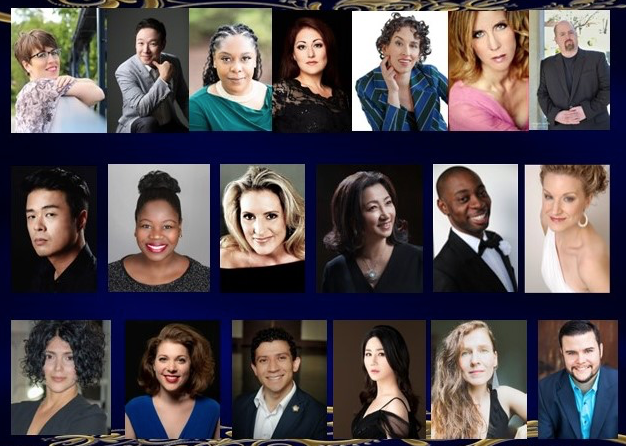
In the backdrop of all this, the Season Showcase by VAMS was their Twelfth, and nineteen (!) vocalists were to be featured, in either solo or duets. I suspect that this showcase was two years combined into one, so as to recapture the year we lost because of the pandemic. To add to the many details to take in, James Greening-Valenzuela, Manager of VAMS greeted the audience and announced alterations to the program.

As I have noted in previous reviews at this venue, the Marc A Scorca Hall at the OPERA America’s National Opera Center is very small with very live acoustics. The feel is intimate, like a salon, with the audience members very near the performers. The seats were all filled tonight, with some overflow (including those performers who has completed their selections and joined the audience to support their colleagues).

Now, on to the business at hand. A problem with a program with so many artists is two-fold. First, it places a heavy burden on the performers to be ready after a long wait, for what might about to be a very short time on stage. It is nearly impossible to be at one’s best in these circumstances, and it might have the consequence of giving the listener a misleading view of their true merits. Secondly, it is expecting a lot from the audience to focus on so many performers for an extended time. A fidgety, tired listener who just wants to get out is often the result. It was rather notable that the audience stayed engaged to the finish, which was a delight to see.

It is beyond the scope of this review to comment on each individual vocalist and each selection. I offer my sincere apologies to any artist whose performance is not mentioned. Rest assured that all are worthy of praise. I will give the complete list of the vocalists (in alphabetical order): Karen Albert, David Rivera Bozón, Lisa Bryce, Pedro Carreras, Jr., Sang Bum Cho, Alexandria Crichlow (who was unable to perform due to illness) Andrew Egbuchiem, Erin Hannon, Kate Kyunghee Kim, Laura Kimmel, Jin Uk Lee, Cynthia Leigh, Kelly Marel, Steven Andrew Murray, Roselin Osser, Eun-Ah Roh, Adriana Ruiz, Stacey Stofferahn, and Caroline Tye. Selections by Puccini, Verdi, Mozart, Wagner, Vivaldi, Handel, Offenbach, Mascagni, Carissimi, Sullivan were featured, with the addition of newer works by Rachel Portman and Jonatas Manzolli as well.

With this caveat in mind, I would like to highlight some selections that were noteworthy to me (in no particular order of merit), but before that I must give special mention to pianist Eric Malson, who was the unsung hero of the evening. It is heroic work to undertake the task of accompanying eighteen different singers, and he did so with what looked like practiced ease, as it was certainly not easy! Bravo!

For the soloists, the vocal gymnastics and projection of soprano Eun-Ah Roh, the innocent child-like beauty of the voice of countertenor Andrew Egbuchiem, the playful whimsy of soprano Roselin Osser’s The Fox’s Aria from Rachel Portman’s The Little Prince, and the ebullient tenor David Rivera Bozón, all made very strong impressions on this listener. Another special mention goes to soprano Laura Kimmel for her Letter Dropped from the Sky (a world premiere) with her own lyrics to the music of Jônatas Manzolli – it was hauntingly beautiful.

For the duets, the charming Barcarolle from Les contes d’ Hoffman from mezzo-soprano Caroline Tye and soprano Cynthia Leigh enchanted. The fiery passion of the Act I Love Duet from Tosca was on full display from soprano Stacey Stofferahn and tenor Pedro Carreras. Jr, and the monumental Dawn Duet from Götterdämmerung was given a passionate and powerful performance from soprano Lisa Bryce and tenor Steven Andrew Murray. Soprano Erin Hannon and baritone Jin Uk Lee ended the night in style with a showstopping duet from Act II of La Traviata. The power was electrifying – one could see the audience members held with rapt attention. Mr. Lee evidently had a fan base in attendance (a large group that greeted his arrival in the hall pre-concert with applause!) and he pulled out all the stops to delight them. Ms. Hannon most likely made many fans tonight with her fine work.

The audience reacted with a standing ovation. The performers all gathered on-stage for a group picture, Thank you VAMS and all participants for this evening. It was a joy to be back at a live concert again. Congratulations to all!

Share

Adrienne Haan presents “One World” An international show sung in eleven languages in Review

Adrienne Haan presents “One World” An international show sung in eleven languages in Review

Adrienne Haan, chanteuse
Richard Danley, piano; Bart Shatto, chanteur; Mike Campenni, drums
Triad Theater, New York, NY
October 13, 2021

If indeed there is to be any hope for our fractured world, it is to be found in the power of music, on this occasion the specific gifts of Adrienne Haan. I have reviewed Ms. Haan several times in these pages, always with pleasure, and “One World” was no exception.

Ms. Haan is high-energy, which is not to say manic. In the intimate confines of the Triad Theater, the sheer power of her voice at climaxes was gratifying, and she also found the intimate moments when appropriate. She has the thing which cannot be taught: charm.

The program was a tour-de-force of linguistic investigation. I wish classical singers had such curiosity. A total of eleven languages were employed: English, French, German, Yiddish, Hebrew, Spanish, Swedish, Turkish, Luxembourgish, Mandarin, and finally Italian. The only one I found to be somewhat less idiomatic than the rest was the English. (And the final ‘e’ neutral in French.) And Ms. Haan doesn’t stop exploring: Zulu is on the menu for her next show.

I can guarantee that this is the only theatrical/cabaret show, perhaps anywhere, but certainly in the United States, where you will hear the Luxembourg national anthem, sung in Luxembourgish.

The playlist I was given announced that she would open with Kander and Ebb’s iconic Willkommen, Bienvenu, performed memorably by Joel Grey in Cabaret. Instead she gave us Liza’s (Minnelli) equally iconic Life is a Cabaret. That leads me to my only tiny quibble- I wish Ms. Haan would branch into the slightly more sinister, cynical, world-weary, louche, dangerous colors of cabaret. A largely see-through outfit isn’t going to satisfy that. Evidently that’s not really Ms. Haan’s temperament, and I can truly understand why, in view of the pandemic and various political evolutions to the “right” (the only pointed commentary she made), that she chose to keep things positive and harmonious.

For me, the most successful numbers (no surprise) were the Yiddish Bokserboym and the Hebrew song for the Holocaust remembrance of 2020 Rikmah Enoshit Achat (One Human Tissue), both sung with exquisite poignancy and identification.

Insistence on a perky up-tempo spoiled Besame mucho. She has a way of ending all the up-tempo songs with a sort of ‘whoop’ cry—once is fine, but not every time. Ms. Haan’s own composition Contemplation, sung in English, was lovely. Only in New York (Thoroughly Modern Millie) and La Vie en rose and Milord were well done. Although Haan’s repertoire covers songs etched permanently in our cultural collective memory by the famous: Minnelli, Andrews, Piaf, Dietrich, Aznavour, etc., what I so admire about her is that she never goes for a cheap imitation, she finds her own originality with the material, which is no mean feat.

I could have lived without the German version of Superfragilisticexpialidicious; and although I understand I’m in the minority, I absolutely cringe whenever I hear anything associated with Andrea Bocelli, in this case, Il Preghiere/The Prayer (wonderfully partnered with her regular singing partner Bart Shatto) and Con te partirò. For me, they’re clichéd, just not good as music, when there’s so much high-quality rarely performed material available. At this point, let me mention the superior quality of her music director, pianist Richard Danley, assisted by Mike Campenni on percussion.

This very generous program which began late was welcomed with enthusiasm by her devoted fans in the nearly sold-out Triad. As an encore, Ms. Haan offered a whirlwind tour of some early Broadway musical theater songs from Showboat, Porgy and Bess and the like, unchallenging for the listeners. One part of it, a frantic Summertime had the wrong mood. I urge Ms. Haan to continue to branch out, while acknowledging what a treasure she is in an increasingly shrinking field, and what pleasure her positivity brings to the world.

Share

Emily-Jane Luo in Review

Emily-Jane Luo in Review

Emily-Jane Luo, piano

Merkin Concert Hall, Kaufman Center, New York, NY

September 19, 2021

For me, youth has always equated to bravery: bravery in selecting the most daunting repertoire, bravery in playing one of the first indoor solo recitals since the pandemic, bravery in billing it as one’s New York debut. As to the repertoire point, I’m quite on board with it, since if the pupil is apt, it is wise to familiarize neural connections with issues of speed, accuracy, and volume as early as possible.

Fifteen-year-old Emily-Jane Luo is no longer technically a child prodigy, though her early training and appearances qualify as such. She began piano studies at an early age, and has already been making the rounds of competitions, and had her orchestral concerto debut. Normally, I’m a bit leery of prodigies, only because I fear they may be over-developing one aspect of themselves at the expense of a holistic sense of self. I needn’t fear for Ms. Luo, for she also excels in science, writing, taekwondo, and French.

Her recital was exciting throughout, with fiery bravura technique, thoughtful phrasing, lots of temperament, and even an old-fashioned sense of the “big line,” which doesn’t get caught up in details but propels and keeps things together. She chose a program of fearsome difficulty that would make a colleague of four times her age sweat with anxiety.

Ms. Luo possesses that rare quality, an individualism, when the mass of other young pianists are striving to fit in and get “all the notes right.”

She will have time to develop more subtlety and control, but for now . . . wow! This was not careful, cookie-cutter playing. Tempi were sometimes pushed to the extreme (ah, youth!); however, a few seconds later, in a reflective passage, she had that rare ability to make time stop with her generous breathing. I, for one, am glad she wasn’t careful; had she played every single note correctly, I might have thought I was witnessing some supernatural evil contract with the devil.

As far as a debut recital is concerned, the program was short on the Classical period (Haydn, Mozart, Beethoven and the like) and some twentieth century music (or twenty-first!) more adventurous than Rachmaninoff. I suspect she might be a great Prokofiev or Bartók pianist. It was also just an hour long (perhaps logistics of the hall), but what an hour!

This was also my first (COVID-19 “re-opening”) live indoor concert, and every melting phrase meant so much to me. Those who read my reviews regularly know how I value a fine set of program notes, which was provided here, though their author was uncredited (Ms. Luo?). Even the words to the Schubert Lieder transcribed by Liszt, so important to Liszt that he had them put in the published score, were printed.

Ms. Luo’s handling of the three Schubert songs (Ständchen, Gretchen am Spinnrade, Erlkönig) was divine. I’m going to be heretical here and say, one didn’t really miss the singer, her rendering was so complete, with great voicing and a “linguistic” musical phrase. Ms. Luo’s Ständchen was so seductive it would have made any lover hop out the bedroom window to join the beloved in the garden. The mad dash of the galloping horse in Erlkönig was thrilling. I’m glad these transcriptions are coming back to the recital stage more often. Once seen as nothing but show-off vehicles, they are in fact so much more, but only in the right hands.

Ms. Luo’s Bach C minor Partita I took some exception to, on two points: it was a shame to have the piece amputated of its dance movements (she played only the opening Sinfonia), and either she hasn’t been taught, or has made a deliberate decision not, to change the sixteenth notes in the French overture first part to thirty-second notes, which they should be. The second and especially the third sections of the Sinfonia were played too quickly, robbing them of depth. But, as one is playing on a nine-foot Steinway, perhaps Richard Taruskin is right about the illusion of authenticity.

She followed this immediately with two of Rachmaninoff’s sublime Etudes-Tableaux, one from Op. 33, G minor, and one from Op. 39, the famous E-flat minor. Both were played with command, poignancy, and grandeur: every opportunity was taken. Ms. Luo speaks this language quite naturally.

Then came the “center of gravity”: both books of Brahms’s Variations on a Theme of Paganini, Op. 35. This fiendish torture-chamber of pianistic difficulties showed off Ms. Luo’s many strengths, again particularly in the slower, more thoughtful variations, though there was great excitement in the headlong rapid ones. She knows how to vary voicing and dynamics upon the repeat of a section, a talent that is so necessary and valuable.

She favored the audience with an encore: one of Rachmaninoff’s Moments Musicaux, E Minor, Op. 16, No. 4, marked Presto, and was it ever! Ms. Luo, at this point completely unfettered, simply plunged into the maelstrom, and it was worth it.

I wish her all success in whatever she chooses to do with her music, or her other interests. Thank you, Emily-Jane.

Share

Da Capo Chamber Players 50th Anniversary Celebration

Da Capo Chamber Players 50th Anniversary Celebration

Da Capo Chamber Players 50th Anniversary Celebration

A Conversation with Patricia Spencer

It is rare for any ensemble to reach fifty years with identity intact—a few string quartets, a piano trio have done so. The Da Capo Chamber Players have become known as a “Pierrot” ensemble—that is, their instrumentation (flute, clarinet, violin, cello, piano, with flute and clarinet doublings) is exactly that needed to perform Schoenberg’s seminal Pierrot lunaire with a vocal artist. And perform it indeed they have: “way back” with Bethany Beardslee, then Lucy Shelton numerous times (most recently in 2016, available on YouTube), and Elaine Bonazzi.

The legacy of Da Capo is a virtual encyclopedia of contemporary music in New York, America, and the world. They have commissioned a staggering 150 works over the years—think about it: that’s an average of three per year.

Earlier in 2021, despite the pandemic, the ensemble created a highly entertaining and educational web series Music for Human Rights ,with a wide range of different styles and cultures contained therein, not only in the music, but also in the informative discussions. (Still available on YouTube: Hearing the African-American Experience; Asian Echoes; and Paean to Merging Cultures)

I was able to sit down recently with the only founding member still active as performer, the legendary flutist Patricia Spencer, (she premiered the Elliott Carter Flute Concerto, and so many other works), for a wonderfully wide-ranging talk.

My first task was to peer into the origins of such a mixed ensemble in the year 1970. Ms. Spencer said that they gravitated around each other as a result of performing on a series that pianist/composer Joan Tower (another founding member) had organized at Greenwich House in New York. She also insisted strongly that they were always “people oriented,” there had to be the highest level of playing quality of course, but there had to be a simpatico too. If the originals had met an oboist instead of a clarinetist, the formation may have been different.

It didn’t take long for the group to achieve a prominent position in New York’s musical life. With a built-in composer, so to speak, they were able to commission and premiere works by Joan Tower, and Tower had the advantage of getting to hear those works under ideal conditions.

In 1973, a scant three years into its existence, Da Capo Chamber Players won the prestigious Walter W. Naumburg Award for chamber music, which came with a monetary grant for commissioning and a debut recital at Alice Tully Hall. That recital had two commissions, by Milton Babbitt and Harvey Sollberger, thus firmly cementing their reputation of working with the foremost living American composers, as well as advocating for American chamber music throughout the world.

And the awards would follow frequently: the Naumburg Foundation sponsored Da Capo’s tenth anniversary at Alice Tully Hall. The Andrew W. Mellon Foundation gave them a grant for creating guest composer residencies (1990-1993); Chamber Music America gave them the first prize award for Adventuresome Programming (1988), as well as three commissioning awards; National Endowment for the Arts Consortium Commissioning award, New York State Council on the Arts, and on it goes to the present day.

For their twentieth anniversary, Da Capo premiered eight pieces written for the occasion by Gunther Schuller, George Perle, Shulamit Ran, John Gibson, Stephen Albert, Bruce Adolphe, Richard Wilson, and Yehudi Wyner.

Skipping ahead, I asked Ms. Spencer, somewhat unfairly in light of fifty years, if she could pinpoint three absolute highlights of her Da Capo life. She reluctantly allowed as follows:

  • Their residency tours to Russia and Belarus in 2003—2007, during which she said she became aware of the hunger of the young composers in these countries for exposure to this repertoire.
  • The Chinary Ung series at the Smithsonian, and release of the all Chinary Ung CD in 2010, named by National Public Radio as one of the 5 Best Contemporary Classical CDs of the year.
  • The 2012 centenary of Pierrot Lunaire with Lucy Shelton in New York and its reprise in Florida in 2016.

I asked her if the state of contemporary music was more vibrant now or in 1970, and she said definitely now, mainly due to the fact that there are so many more ensembles taking the leap and forming, commissioning works, and spreading their individual niche missions. She emphasized that quality must always be the touchstone.

Working with so many composers, Ms. Spencer said that Da Capo always proceeded from the general to the specific, that is, the ensemble’s thematic concept and the genesis of a work from a specific composer was primary, more than any considerations of whether they would be able to play it (!).

In their early concerts, because of the challenging nature of the scores, each work was performed twice, hence the name Da Capo, “from the beginning” in music. A valuable luxury that they eventually had to sacrifice to keep concert length and variety feasible; but the name stuck. I also asked her about getting the second performance, meaning that premieres are easy, but does a work actually enter the repertoire? Da Capo has a strong record here, with many of its works displaying staying power.

Funding is always an issue, especially when commissioning so many works—Spencer is also the group’s grant writer, an occupation for which many non profits have a full-time person. They have been fortunate not only in grants, but private donations, and once their reputation was made by the Naumburg, many composers “gave” works to Da Capo, knowing they would receive the best possible premieres. Some of the private funders are: Aaron Copland Fund for Music; Alice M. Ditson Fund of Columbia University; Amphion Foundation; Hulbert Charitable Trust; The Fan Fox and Leslie R. Samuels Foundation; Trust for Mutual Understanding (Tours to Russia and Belarus); The Zethus Fund; and numerous individuals.

The ensemble has a democratic system as to choosing which works to perform, with no one person controlling, and everyone having a vote. From time to time (though rarely) if one or two of them don’t care for the work, the mutual respect they have for each other demands that they give it their all, and no one is the wiser for it—a process that all ensembles would be smart to employ.

One of Ms. Spencer’s real joys is the educational mission of the group, as experienced mainly though numerous residencies in colleges (notably Bard) and even high schools, where they get to humanize the face of contemporary or “art” music through interactive classes and workshops, thereby sharpening the skills of their own audiences. They also have always had a mission to bring the composers into contact with the listeners, removing the sense of the “isolated genius” working on a metaphoric remote mountaintop.

The coming New York season, the extended observance of the fiftieth anniversary, has not set exact dates and location, but is planned for spring 2022, with the theme “Bridges.” Three concerts: Bridging Eras, Bridging Cultures, and Bridging Styles are outlined, each with a major commission (Bruce Adolphe, Shirish Korde, and David Sanford). I humorously suggested that with all those bridges, perhaps funding could be secured from the Infrastructure bill.

The current members of Da Capo are: Patricia Spencer, flute; Marianne Glythfeldt, clarinet; Curtis Macomber, violin; Chris Gross, cello; Steven Beck, piano.

Rest assured that there is no “double bar” for this ensemble, they will keep circling back “to the beginning” with their music-making joy. I was reminded of the Four Quartets by T.S. Eliot: “We shall not cease from exploration/And the end of all our exploring/Will be to arrive where we started/And know the place for the first time.”

Share

United Arts Studies presents a multi-disciplinary web series

United Arts Studies presents a multi-disciplinary web series

Curated and performed by Elizaveta Ulakhovich, soprano; Perry Sook, baritone

Pianists: Sergey Iorov (episodes 1, 5, 6), Dmitry Myachin (episodes 2, 3, 4)

Directed by Nicholas Grisham

Edited by John Jackson

Voiceover by Victoria Rae Sook

An innovative and intriguing synthesis of two art forms, born in part from a sense of the anxiety and idleness caused by the pandemic, can be found in a forthcoming series of YouTube videos by two up-and-coming opera singers: Elizaveta Ulakhovich and Perry Sook. I sat down recently with the engaging (and married) couple to hear about their process.

Elizaveta has impressive credentials from the Saint Petersburg conservatory and has already sung at the Bolshoi Theater in standard and contemporary opera and numerous recitals, and Perry is a Texas-born, Oklahoma educated star of many musical theater productions, notably Shrek, who is transitioning to opera. He is also an entrepreneur of fashionable sportswear.

The web series is the accidental result of a planned recital that was to take place in an art gallery—before the pandemic and its restrictions. The couple invented a frame story while sitting on their couch talking, a setting that is shown in the first episode. The pretext is that they have enrolled in an online art course to enrich their suddenly experienced surplus of free time. While examining the works of art, they experience feelings which are then correlated to certain arias—one painter and one composer per episode.

Episode 1, “What You Choose,” featured biographical details about Frida Kahlo, signature images by her, and parallels to emotions found in two arias by Handel, from Cleopatra and Berenice. Liza, as she is familiarly known, hastened to tell me that the music always comes first when they are developing a program. Only after deliberating on the emotions expressed in the music are they led to seek a connection in the visual.

Their mission statement includes the phrase “familiarity and fun,” and the cozy domesticity captured in the episode certainly demystifies what may be for many the stuffiness of grand opera.

One fascinating aspect of the Kahlo/Handel episode is the original recitatives, composed or assembled by Ms. Ulakhovich herself. They are uncannily Baroque yet with the couple singing in conversational English to each other, the recitatives seem of this moment too.

In the future, they wish to delve even deeper into the painters’ lives, with biographical detail, anecdote, and image.

The series is constantly evolving, as their thoughts and feelings do. And here’s something for the online age: they actually invite disagreement, which may be expressed in the comment section of the YouTube videos. If a viewer feels the mirroring isn’t quite the “right one,” he/she is urged to suggest another. Seeing more art, education, and good fact checking are all part of the singers’ esthetic.

Their goal for a post-pandemic musical world would be to give immersive recitals, in non-traditional venues, perhaps with projections or actual paintings and sculpture. United Arts Studies is a nonprofit organization with a mission to educate and inspire.

There are six episodes planned (four completed), released on the fourth Thursday of each month: June 24, July 22 (Klimt), August 26 (Botticelli), September 23 (Dali), and so forth. A secret word has it that the audience will be seeing Mr. Sook as Don Carlo, filmed on the Nevsky Prospect in Saint Petersburg. Don’t miss it!

(Website: United Arts Studies on YouTube or their own website, www.unitedartsstudies.com)

Share

Daniel Lamas and Weiwei Zhai in Review

Daniel Lamas and Weiwei Zhai in Review

“Midnight in Paris”: Bloomingdale School of Music “Performathon” Scholarship benefit

Daniel Lamas, viola

Weiwei Zhai, piano

May 15, 2021


Mon Dieu, que j’adore… oops. I mean, my goodness, how I love French music. I have, as we all have, been so starved for the lively arts, especially classical music, during the pandemic, that when a video of this recent recital at Bloomingdale School of Music was sent to me, it was manna from heaven.

Two artists previously unknown to me, violist Daniel Lamas and pianist Weiwei Zhai, presented a thoughtful short recital of music, some lesser known and one fragment of a warhorse.

Chilean born Mr. Lamas, who has a wide range of experience in orchestras and chamber music, is currently a faculty member (viola, violin, chamber music) of this valuable institution on the upper west side of Manhattan, as well as owner of his own string studio. His training includes both the Manhattan School of Music and the Paris Conservatoire. His philosophy of teaching is “to instruct with care and nurturing,” exactly as he and his partner handled this program.

Ms. Zhai, born and raised in Chengdu, China, is on the piano faculty of the Bloomingdale School. She is currently finishing her doctorate degree at the Manhattan School of Music with legendary pedagogue Solomon Mikowsky. She has won numerous awards in competitions and performed in her native land and Weill Recital Hall at Carnegie Hall..

Their performance was absolutely gorgeous throughout (even with the limited fidelity of online video) as to sonority and especially style. Clarity, simplicity, and accuracy. Really, what more can one ask of French music interpretation?

Darius Milhaud was said to be able to set the phone book to music, so prolific and varied was his ability. A member of the Les Six artist group, he had a strong neoclassical aesthetic, often overshadowed by his penchant for polytonality and Latin rhythms, the result of his trip to Brazil as ambassador Paul Claudel’s secretary in 1917. The excerpt (II. Français) from his First Sonata for Viola and Piano, Op. 240, revels in this classicism; a contemporary layering atop themes from the eighteenth century. It was played with great style and verve by the duo.

The Trois pièces (composed 1914, published 1915, originally for cello and piano) by Nadia Boulanger display her mastery of compositional craft, the kind that was expected of everyone at the Paris Conservatoire, even if they didn’t go into it professionally. Of course, the world knows her better as an inspiring teacher, with her younger sister Lili, the first female winner of the Prix de Rome, remembered as the composer. These three mood-pictures are delicate, generally in the early twentieth century post-Impressionist manner, and they were given perfect performances.

The Finale of the Franck Sonata was played with enthusiasm and grace—and moreover, it never sounded “difficult” -no mean feat. Another astounding example of French craft, the strict canon between violin and piano never sounds “academic.” I certainly want to hear these two musicians live, and hear the three preceding movements leading up to this one.

So, this was a very satisfying “appetizer” and now I want a banquet from this duo, s’il vous plait!

Share