Walter W. Naumburg Foundation presents “Naumburg Looks Back” in Review

Walter W. Naumburg Foundation presents “Naumburg Looks Back” in Review

Anton Nel, piano (1987 Piano Award)
Weill Recital Hall at Carnegie Hall, New York, NY
December 3, 2018


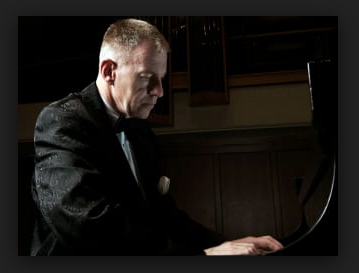
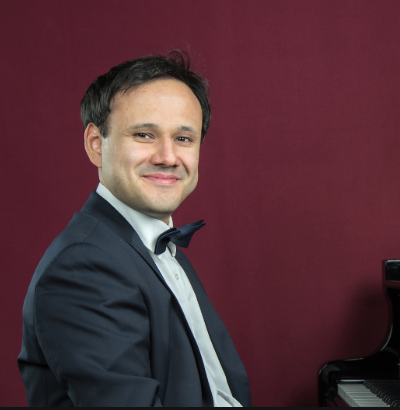
The ultra-prestigious Naumburg competition is held for piano every four years (and for other instruments and ensembles in the intervening years). The 1987 winner was South-African born Anton Nel, whose award recital I attended, with great pleasure. After Monday’s return performance, I certainly hope I won’t have to wait another thirty years to hear him again. This was a superb recital in every possible way. Everything one could ever have desired from each piece on the program was delivered sumptuously, with joyful ebullience, heartbreaking lyricism, attention to detail, and of course technique in spades. Mr. Nel is truly a “musician’s musician,” so deeply committed to every nuance in each piece, ones that often are in plain sight but ignored by the less-gifted; and he does all this while never losing the “long line.” He never sounds stilted or studied, instead one has the feeling that he is composing the music right on the spot, a real gift. He “becomes” each composer, yet never loses his own personality. I guess I could stop writing now, but I’m sure you’ll want to hear about the various composers represented.


The recital had four standards and one rarity, I’m sure each was chosen in a very personal way by Mr. Nel, whose involvement was as deep and true as one often says of actors: that they are completely identified with their role(s).


Mr. Nel began with five Debussy preludes, and let me state right away what a pleasure it was to hear these programmed exactly the way Debussy himself used to give them: not as marathons of all twelve of one book, let alone all twenty-four of both. Mr. Nel thoughtfully chose from both books, alternating extrovert selections with mysterious ones. He showed a delightfully rambunctious quality in the two having to do with (now politically incorrect) minstrel shows that were so popular in turn-of-the-century Paris. You could just hear Général Lavine-eccentrique, not a General of course, only an acrobat dressed up as one, walking on a slender balancing beam and suddenly doing a backflip, then resuming his pace as if nothing had happened; and the prelude Minstrels, with its sly cat-and-mouse, stop-and-start flirtation and music hall charm. Voiles (veils or sails) was a paragon of perfect voicing, what the French call les plans sonores (the sonorous levels). They were exquisitely maintained, and the existential mystery projected with refinement. After all, isn’t a sail a sort of veil tied to a mast for propulsion, anyway? La Sérénade interrompue was Debussy at his Spanish-like best. De Falla always said that Debussy understood Spain better than the Spanish, and was able to translate that into music. Ondine showed another kind of flirtation, so different from Ravel’s same-titled temptress. Debussy’s seems much less voluptuous, perhaps more malevolent, though the story is about luring a mortal to his watery demise in any case.


Mr. Nel then turned to what, for me, was the spiritual heart of the recital, a rapturous rendering of Schubert’s Drei Klavierstücke (Impromptus aus dem Nachlass, D. 946), another miraculous product of the final year of a too-short life. The second of them, a “Viennese barcarolle,” with its five-part form instead of the customary three, would seem to point to what he could have created had he lived longer (for example, a closing fourth impromptu). For me, one of the secrets to playing Schubert well is the possession of infinite amounts of two things: 1) affectionate and passionate lyricism combined with intimacy, and 2) patience. Mr. Nel has that and so much more. The color shifts, so often brought about by a breath-stopping half-step shift, were incredibly vivid, and he never played the same phrase exactly the same way, in music that has so many repeats. His hushed playing was gorgeous, never losing the singing core so vital to success. The final piece, a bumptious stylized Bohemian dance-scherzo, revealed, in its interior, an almost static meditation-variation in D-flat that proceeded, as Alfred Brendel always said of Schubert, “with the assurance of the sleepwalker.”

After intermission, Mr. Nel put his experience with early fortepianos and harpsichords to good use in a stunning performance of one of Mozart’s “bigger” piano sonatas, the D major, K. 311. Here, his fingers were curved, with the last joint nearly vertical, thus giving the sparkly “ping” that makes this music work. But it was in his affectionate treatment of the lyrical moments that he showed his deep understanding for and empathy with this hybrid of concerto, opera, and symphony. He played it with great humor and tenderness, sacrificing neither for the other.

Then came the one rarity: Kodály’s Méditation sur un motif de Claude Debussy, inspired by a trip to Paris where he heard the Debussy String Quartet. The main thematic material of the Kodály is indeed a greatly slowed down version of the Debussy Scherzo movement, although I’ve always found it drenched in the atmosphere of the grotto scene from Pelléas et Mélisande; it has a certain dark fatality. It does, as Mr. Nel said in his engaging oral program notes, sound more French than Hungarian to be sure. Mr. Nel played it with appropriate mystery, rising to its one rather large climax, subsiding once more into the shadows.

Mr. Nel then closed the recital with a showpiece, Chopin’s Grande Polonaise Brillante “preceded by an Andante spianato,” as Chopin’s publisher’s designation once had it. The Polonaise is a much earlier composition than the Andante. Spianato means “even, smooth” and this was spun out by Mr. Nel, who had the taste to dispatch the little flowerings of Bellini-inspired coloratura that are the bane of clumsy pianists perfectly. The Andante is interrupted by a very poignant, nostalgic mazurka fragment, if you will, then it returns. A brief fanfare for the orchestra (in this case, just the pianist) is thirteen measures of music that I know give pianists more terrors than all the difficulties in the rest of the piece, so awkward is the writing. Mr. Nel’s version could not have been more confident, accurate, or stylish. His Polonaise Brillante, too, had all the flash one could want, while maintaining elegance, even in the mad dash to the bravura close.

The nearly sold-out hall leapt to its feet as one, and was favored by two encores: Sibelius’ Romance in D-Flat major, Op. 24 No. 9 (gorgeous), and Chabrier’s French “country bumpkins” in his Scherzo-Valse (Pièces pittoresques, No. 10), full of good humor and good champagne.

Please come back often with more great programming and your unique ability to move audiences with your playing, Mr. Nel!


Share

Distinguished Concerts International New York (DCINY) presents A Winter Rose: The Holiday Music of Mark Hayes and Joseph Martin in Review

Distinguished Concerts International New York (DCINY) presents A Winter Rose: The Holiday Music of Mark Hayes and Joseph Martin in Review

Distinguished Concerts Orchestra; Distinguished Concerts Singers International
Mark Hayes, composer/conductor
Andrea Lynn Cianflone, soprano; Holly Sorensen, mezzo-soprano; Omar Najmi, tenor; Colin Levin, baritone; Karen Harvey, piano
Joseph M. Martin, composer/conductor
Sue Martin, soprano; Joshua Chai, piano
Stern Auditorium at Carnegie Hall, New York, NY
November 26, 2018

Distinguished Concerts International New York (DCINY) continued its series of holiday concerts on Monday, November 26, 2018 with a concert entitled A Winter Rose, featuring the music of two DCINY favorites, Mark Hayes (his sixth appearance) and Joseph M. Martin (his seventh appearance). For those who braved the cold, rainy night, with travel difficulties, the reward was a concert of music from two talented composers with a special gift for capturing the true spirit of the season.

Mr. Hayes and Mr. Martin also conducted their respective pieces. The Distinguished Concerts Singers International included choruses from Alabama, California, Colorado, Georgia, Illinois, Louisiana, Massachusetts, New York, North Carolina, Oklahoma, South Dakota, Texas, Tennessee, Utah, Virginia, Canada, and “individual singers from around the globe.” The featured soloists for the first half were soprano Andrea Lynn Cianflone, mezzo-soprano Holly Sorensen, tenor Omar Najmi, and baritone Colin Levin. Soprano Sue Martin (the wife of Joseph Martin) was the soloist for the second half.

Mark Hayes took the podium to conduct two of his works, Gloria, and the World Premiere of his Hodie Christus Natus Est, A Carol Fantasia. This listener was already an admirer of Mr. Hayes’s work from earlier reviews (his Requiem being a particular favorite), so one had hopes that these works would confirm that admiration – and they did!

Gloria opened the concert. The opening movement, Gloria in excelsis Deo, starts with a fanfare heralding Christ’s birth. Later, the music takes on a pastoral quality, with lyrical parts for soprano and tenor. The second movement, Domine Deum, Rex coelestis begins in Romantic style reminding one of Brahms, but later shifts to a more mysterious quality, with tone clusters in the chorus and a chant-like whispering in Latin. The final movement, Quoniam tu solus sanctus, pulls out all the stops, building enormous energy until a sudden pull-back recalling a motif from the second movement, which eventually settles on a low C major chord, which slowly dies away. The effect was striking. The texts throughout alternate between the Latin original and the English translation (an approach Mr. Hayes had also used with great impact in his Requiem).

It was a joyful twenty-minute journey. The four soloists, Ms. Cianflone, Ms. Sorensen, Mr. Najmi, and Mr. Levin were uniformly excellent. While giving them full credit for their fine work. it must be said that Mr. Hayes gave them all wonderful material to showcase their talents. Praise goes to the chorus as well, especially for the haunting effects of the middle movement. It’s no easy task to get two hundred plus voices to sound like a whisper, but they pulled it off.

 Hodie Christus Natus Est, A Carol Fantasia, followed. Like the Mark Hayes Gloria, it is in three parts. The opening section is another setting of Gloria in excelsis deo, with the skillful addition of Angels We Have Heard on High. The second section, I Heard the Bells on Christmas Day, is based on a Longfellow poem from 1863. It begins in despair, but ends in the regained hope that good shall prevail. The final section is an exuberant setting of Mendelssohn’s Hark! The Herald Angels Sing. Mr. Hayes led with a simple, precise manner that focused all the attention on the players and the music. The second section, with Ms. Cianflone’s soaring voice, was the listener’s favorite. The powerful setting of the text was truly compelling, and while Mr. Hayes is skilled in all aspects of composition, it is his undeniable gift for melodic writing that is his calling card. The audience gave him, the orchestra, chorus and soloists a standing ovation at the end. Bravo!

After intermission, Joseph M. Martin took the podium for the second half to conduct the New York premiere his work The Winter Rose. About the title, Mr. Martin writes in his notes, “Today, the rose remains a vital expression of love and peace both inside the church and the outside world. Her appearance in the garden is a harbinger of the coming spring’s abundance. As a gift, the rose’s delicate beauty is usually reserved for the most meaningful expressions of the heart…It is in this spirit that The Winter Rose was written.” The Winter Rose is a thirty-five minute, eleven-movement work that could be aptly called an oratorio. Mr. Martin set the texts to tunes from traditional carols and folk songs in seven movements; the remaining four are on original themes. For the sake of completeness, the six carols and folk tunes are Es Ist Ein Rose (used twice, for the Prelude and finale), The Sally Gardens (set previously by Benjamin Britten and John Corigliano, among others), Un Flambeau, Jeanette Isabella (known as Bring a Torch, Jeannette Isabella), Veni Emmanuel (the Advent carol known as O Come, O Come, Emmanuel), Early American Song by C.E Horn and G.P. Morris, and The Rose Tree (traditional Catalan carol). Sue Martin was the fine vocal soloist for several.

Mr. Martin, like Mr. Hayes, is highly skilled as a composer, but his particular gift, in my opinion, is his dramatic sense and his ability to express this sense harmonically. He puts his mark on his settings of traditional/folk music with great individuality; one doesn’t forget the original sources, but he injects them with freshness and originality. This is a quality that I admire greatly. He is also an energetic conductor, whose energy is reflected back powerfully by the orchestra and chorus. These were memorable performances.

It is not practical to discuss all eleven movements, so I will mention a few favorites. The third When Will He Come (set to Un Flambeau, Jeanette Isabella), filled with excited anticipation of the arrival of Christ, was packed with infectious energy. It was the seventh, Dance into the Light (words by Mr. Martin and Maddy Winter), that won this listener over. With its big, bold sound (with hints of We Three Kings and God Bless Ye Merry Gentlemen making appearances) and the sheer exhilaration of the lyrics, it was a real showstopper!

Ms. Martin has a pure, child-like singing tone that perfectly captures the essence of these songs. One could not help being enchanted by her voice. The audience gave Mr. Martin, Ms. Martin, the orchestra and chorus an extended and enthusiastic ovation. It was a welcome and much needed respite from the chaos of the day, but also another reminder of the true meaning of the holiday season. Congratulations to all.

Share

Distinguished Concerts International New York presents “Messiah…Refreshed!” in Review

Distinguished Concerts International New York presents “Messiah…Refreshed!” in Review

Distinguished Concerts Orchestra, Distinguished Concerts Singers International
Jonathan Griffith, Artistic Director/Conductor
Penelope Shumate, soprano; Claudia Chapa, mezzo-soprano; John McVeigh, tenor; Christopher Job, bass.
Stern Auditorium at Carnegie Hall, New York, NY
November 25, 2018


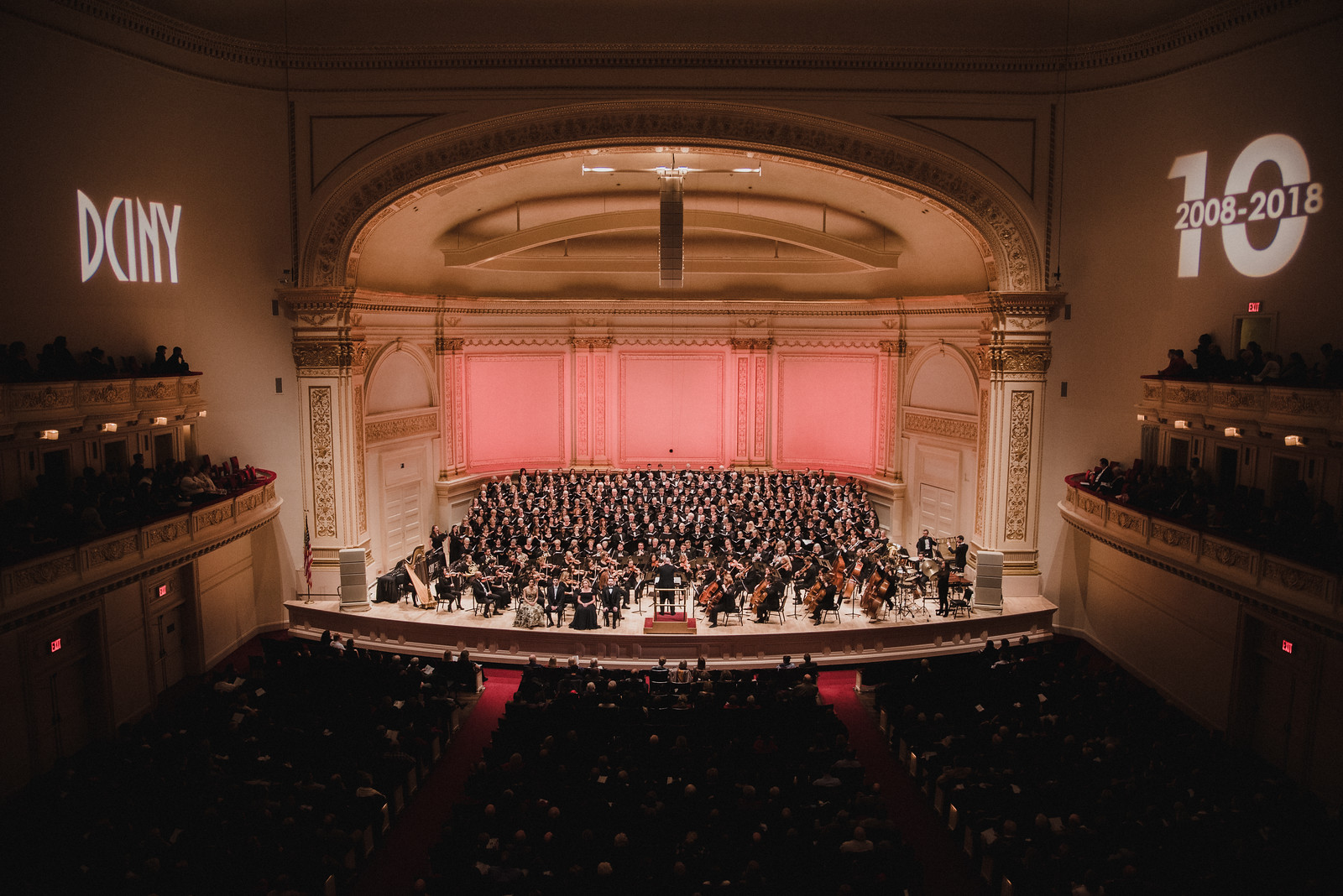
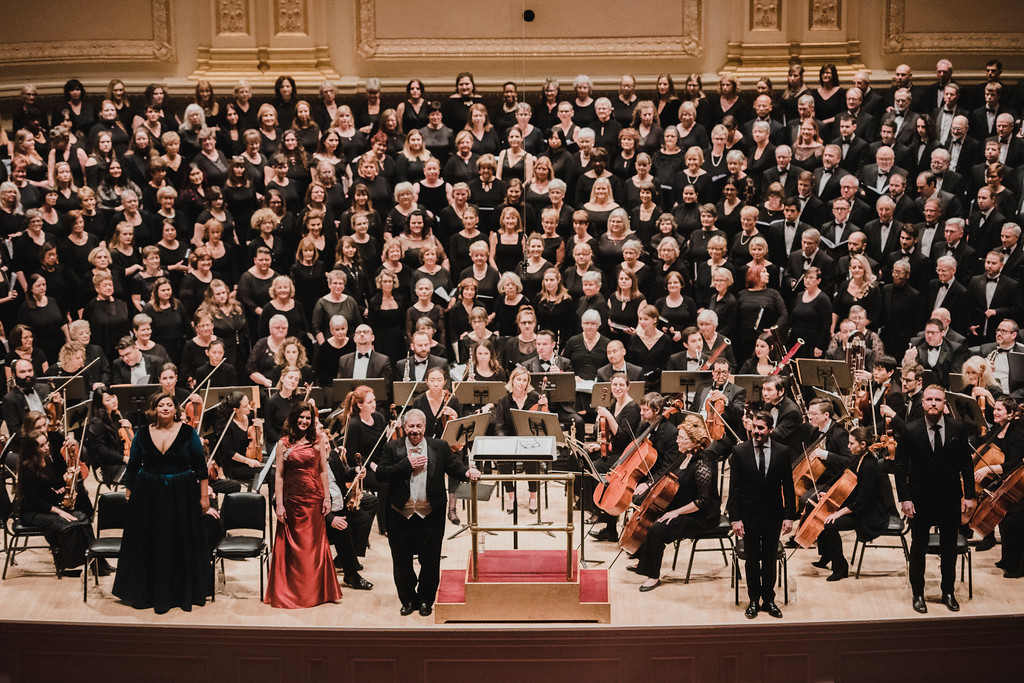
The holiday season is now in full swing, with the post-Thanksgiving crush of shoppers trying to scoop up ubiquitous “Black Friday” deals and other irresistible goodies. In the midst of all this hoopla, Distinguished Concerts International New York (DCINY) presented their signature event and most anticipated concert of the year, Messiah…Refreshed! – DCINY’s blockbuster performance of George Frideric Handel’s Messiah. This was DCINY’s 8th anniversary performance of this magnificent work. For full disclosure: This listener reviewed the second (2012) and fifth anniversaries (2015) of Messiah…Refreshed!. The soloists, back for the third year in a row, were the “A-team” – soprano Penelope Shumate (www.penelopeshumate.com), mezzo-soprano Claudia Chapa (www.claudiachapa.com), tenor John McVeigh (www.uzanartists.com/ john-mcveigh), and bass Christopher Job (www.christopherjob.com). Eighteen choruses from California, Colorado, Canada, Illinois, Indiana, Minnesota, Pennsylvania, South Carolina, Texas, Virginia, Wisconsin, Hong Kong, Qatar, South Africa, United Kingdom, and “individual singers from around the globe” filled the ranks of the Distinguished Concerts Singers International chorus (with the program listing 467 singers). The audience members that filled the sold-out hall were rewarded with an afternoon that not only was musically fulfilling, but spiritually uplifting.

Messiah is no stranger to reworking and revision. There is no “definitive” version (“sing-along” editions and even a rock version have been heard). Handel himself rearranged and rewrote sections to suit his needs, and selections could be added or deleted based on the talents available. Mozart produced a version in 1789 that is still often used. The version presented by DCINY is generally attributed to Sir Thomas Beecham and Eugene Goossens, although Beecham’s contribution was overstated for many years by his widow. Lady Beecham’s claims were refuted in the 1990s; the score was completely Goossens’s work.

Beecham recorded this version in 1959; it is still available on CD today, and while some consider it the “gold standard, ” it continues to be controversial. Traditionalists who believe that Handel’s conception should remain true to the original find the Goossens version to be vulgar, while its proponents aver that the expanded forces enhance the grandeur of the work. This reviewer is firmly in the later camp.

As I stated in 2012; “Make no mistake; this is not your great-grandfather’s Messiah. It is brash, extroverted, and at times bombastic. It is not Messiah – it is MESSIAH, with double the sound, new and improved, with cymbals and triangle! It is Messiah on steroids, the epitome of the saying ‘Go big or go home.’” Those words are just as true in 2018 as they were then. What this listener was wondering was how this year’s performance would compare to 2012 and 2015. The quick answer is that the 2018 version exceeded both.

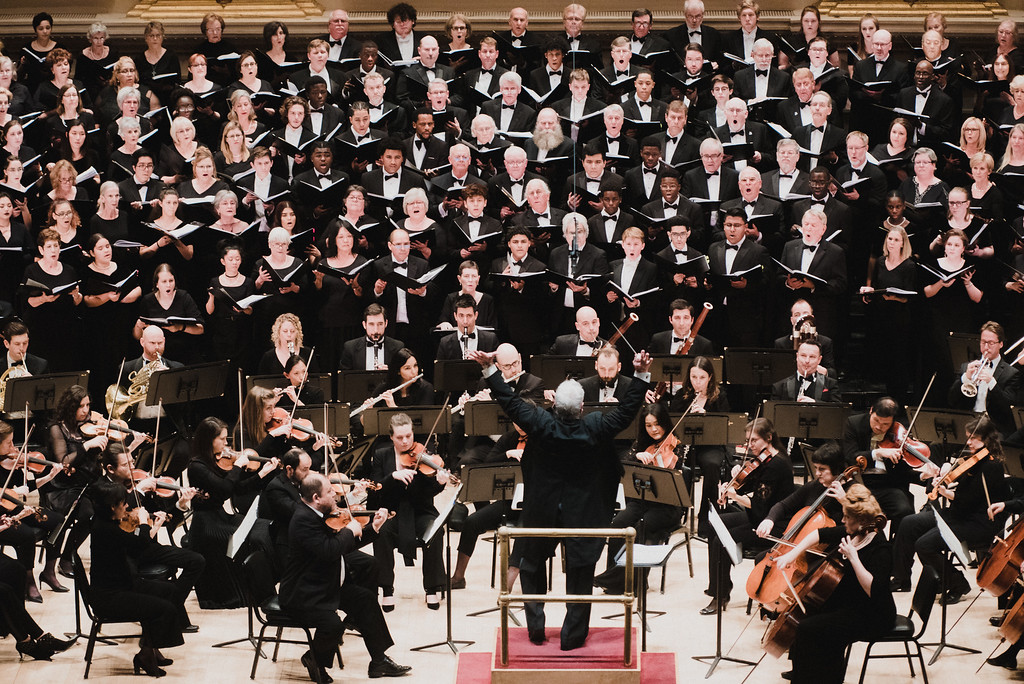
One can credit this success to conductor Jonathan Griffith. Dealing with such gargantuan forces can be like trying to herd cats. It would be so easy to lose control, but Griffith has proven time and time again that he has an uncanny ability to master these large forces. He is part coach, part drill sergeant, and part wizard all rolled up into one! His direction focused on delivering the big sound of Goossen’s version without overwhelming the singers and without losing focus on the music itself. The playing was excellent throughout, and while I admit I missed seeing and hearing the exuberance of the percussionists from prior years (especially 2012), the net effect was one of a more polished performance that reflects Maestro Griffith’s heightened refinement of the work. The choruses (the chorus for Part One gave way to a different chorus for Parts Two and Three) were prepared well by their respective leaders. Their balance was exceptional, the diction was precise, and the strong direction of Maestro Griffith helped inspire them to a level higher than they probably imagined was possible.

The four soloists, the “A-Team,” all brought their “A-game” today. To sing Handel’s demanding solo parts is challenging enough for even the most accomplished of singers, but to avoid being overwhelmed by the large forces behind them and to project a tone that is neither strident nor forced make up a tall order. That order was filled. Strength and confidence are a hallmark of these talents; the vocal gymnastics that abound were dispatched with apparent ease (and easy it was not!). There was never a moment when any singer was in peril of being drowned out. There is much to praise, but I will try to focus on highlights for each. Soprano Penelope Shumate’s bright voice soared, but she also enchanted in softer passages. Rejoice greatly, O daughter of Zion had remarkable flair. Mezzo-soprano Claudia Chapa continues to astonish with her robust voice (with the added reality of the orchestra often being in the same register), but her exquisite sensitivity in her shaping of phrases was truly striking. Her He was despised was, as before, this listener’s favorite. Tenor John McVeigh’s clarity of tone and complete involvement were always front and center; Ev’ry valley shall be exalted was the highlight of his performance to this listener. Bass Christopher Job is a powerhouse. His voice commanded attention as it filled the entire hall. Why do the nations so furiously rage together? was the high point of his outstanding singing.

One cannot speak about Messiah without mention of the Hallelujah chorus. This listener has been to many DCINY concerts, and Messiah in particular, so I knew the coming “surprise”. Both second and third tiers were filled with singers (the chorus from Part One), ready to rise on cue. I knew what was coming and when it was to occur, and I was braced for it – and yet once again, it blew me away! The sound of nearly five-hundred voices filling the hall as the audience stood (many of those in the audience singing along) was simply magnificent. Yes, it’s over the top, but it is still a thrill! The audience roared its approval at the end of the chorus. The applause continued for several minutes until Maestro Griffith beckoned the audience to sit down.

After this, Part Three is almost an anti-climax. The closing chorus, Worthy is the lamb that was slain, also had the participation of the singers in the tiers. The excitement built to a fever pitch, but there were no mishaps (as in prior years) after that final dramatic pause. The work was brought to a rousing close, and the audience responded with thunderous applause for the soloists, choruses, orchestra, and Maestro Griffith. It was a well-deserved ovation to a memorable concert. Congratulations to all!

Share

Distinguished Concerts International New York (DCINY) presents A Symphony of Carols in Review

Distinguished Concerts International New York (DCINY) presents A Symphony of Carols in Review

Distinguished Concerts Orchestra, Distinguished Concerts Singers International
Jonathan Griffith, Artistic Director/Principal Conductor
Pepper Choplin, composer/conductor
Randol Bass, DCINY composer-in-residence
Stern Auditorium at Carnegie Hall, New York, NY
November 18, 2018


The holiday season is upon us, in what seems to be coming earlier and earlier each year. The retailers are already clamoring for shoppers with promises of “doorbusters” and other deals galore – it can be overwhelming even to the hardiest souls! With a nod to the “early” idea, Distinguished Concerts International New York (DCINY) offered a pre-Thanksgiving Day concert on November 18th entitled A Symphony of Carols, featuring the music of Pepper Choplin and Randol Bass. The commercial aspect was nowhere to be found, as this was a concert focused on the original concept of Christmas, the celebration of the birth of Jesus Christ. Singers from Arizona, California, Colorado, Illinois, Georgia, New Jersey, New York, North Carolina, South Carolina, Canada, and “individual singers from around the globe” made up the choruses of the Distinguished Concerts Singers International.

Pepper Choplin took the podium to conduct the first half, which consisted of two of his works, Come, Emmanuel, and Christmas Presence (World Premiere). This is Mr. Choplin’s sixth appearance with DCINY. I have written about Mr. Choplin multiple times, but I will simply restate that he pairs an outsized personality with the strong spiritual faith that is a hallmark of his compositions.

Come, Emmanuel is a bright three-minute work for chorus and orchestra filled with joy at the anticipation of the birth of Christ. It is what the composer calls a “simple motet” – but with a “surprise ending.” It was an upbeat opener, with the surprise ending being (spoiler alert) an enormous shout of “Come!” by the chorus.

Christmas Presence is a thirty-minute, eight-movement work. About the title, the program notes state, “In this work the concept of being present weaves throughout the music and narration [and] presents a challenge to experience Christmas in God’s presence and the presence of those around us” (italicized words are in the text of the notes). This is a high ideal and one that I do believe Mr. Choplin did aspire to in his composition.

The diction of the chorus was remarkable. Each word was crystal clear, so that while the listener had the texts available, they were completely unnecessary. This is rare experience. All credit is due to both Mr. Choplin’s skill in vocal writing and the superb preparation of the chorus. Special mention goes to soloist Renee Calvo, whose lovely voice filled the hall in the sixth movement, Still They Are Here (at Christmastime).

As well as being a composer, Mr. Choplin is a dynamic conductor who energized both orchestra and chorus into giving it their utmost. Every movement had so much emotion that one could not help thinking that each one could easily be used as a stand-alone piece. That said, this listener must express some reservations. There was a need for more contrast from selection to selection, and there was what seemed to be a planned formula of climaxes. I am a huge fan of tonal music, but when it is unrelentingly consonant and sweet, it quickly becomes featureless, and when climaxes are so frequent, one risks sounding trite.

Whatever reservations this listener had were not shared by the large audience, who cheered loudly after each movement, and rewarded Mr. Choplin and the musicians with a standing ovation at the end. Mr. Choplin knows his audience well. If his goal is to please them, then one must admit that he was highly successful.

After intermission, Randol Bass joined Jonathan Griffith for an impromptu conservation about Ms. Bass’s works being played this evening. Like Mr. Choplin, Mr. Bass has a big personality, paired with a modest, self-effacing sense of humor enjoyed by all; on a serious note, however, Maestro Griffith told the audience that he wished to dedicate the second half of the concert to the memory of Mr. Bass’s mother, who recently passed away.

The half opened with Gloria, which is probably the most frequently performed of Mr. Bass’s works. When asked about it, he joked about it being short (seven minutes) and being used as program filler. He’s being far too modest – Gloria is a dynamic work, filled with rhythmic vitality, and also playable by a large variety of ensembles of wide-ranging abilities. It was a rousing start.

The World Premiere of Carols from a Victorian Fireside (movements two and three) followed. As Mr. Bass related in his talk, the melodies for this work come from the pen of Sir Arthur Sullivan (yes, that Sir Arthur Sullivan). Mr. Bass came upon these melodies while exploring a website dedicated to Sullivan – they were intended for a larger work that was never completed, sketches of which only exist in a facsimile of Sullivan’s handwriting. Mr. Bass took these sketches and orchestrated them with chorus. The first, Christmas Bells at Sea was a ballad that was probably more Bass than Sullivan, but the second, The Marquis de Mince- Pie/Care is all Fiddle-dee-dee, was as if the spirit of Sir Arthur channeled directly from the pen of Mr. Bass. It was a delightful romp that was the highlight of the evening for this listener, all the more remarkable as I do not care for Gilbert and Sullivan in the least! Bravo, Mr. Bass!

Yet one more World Premiere followed, Laus Nativitatis. This combined two well-known Latin Texts, Hodie Christus Natus Est (Christ is Born Today) and O Magnum Mysterium (O, Great Mystery). It is filled with that exuberance and rhythmic vitality that is a hallmark of Mr. Bass’s style, but it is also harmonically interesting, with highly chromatic writing. The chorus was at times covered by the orchestra, but the overall effect was excellent. This work has the same potential for popularity as Gloria.

Symphony of Carols, in the form of a four-movement choral symphony, closed the concert. Each movement took a traditional carol, sung first in the original language (French, Catalan, German, and Latin), and then repeated in English translation. Mr. Bass dedicated this work to John Williams, and it has a certain similarity to Williams’ style. The familiar sounds of Stille Nacht and Adeste Fidelis filled the hall with Christmas cheer, as Maestro Griffith led with his customary steady hand. It was a fine ending to a night of joy and celebration.


Share

Sound Ways Presents Ivan Gusev in Review

Sound Ways Presents Ivan Gusev in Review

Ivan Gusev, Piano
Weill Recital Hall at Carnegie Hall, New York, NY
November 17, 2018


The name Ivan Gusev is a name one keeps encountering lately in association with exciting musical events of all kinds. Last season, for starters, this reviewer had the pleasure of hearing him in a performance of Grieg’s Piano Concerto in A minor as winner of a concerto competition the Mannes School of Music at the New School (the reader may see that review by clicking here: 2017 Mannes Concerto Competition Winners in Review). This week Mr. Gusev played a highly demanding solo program at Weill Recital Hall at Carnegie Hall. In the interim, he has, among other pianistic activities, won a prize in the Chopin International Piano Competition, 2018 (USA) – to add to his already substantial list of awards and accolades – and has graduated with a Master of Music degree from Mannes, as a student of Jerome Rose.

If one had already formed a favorable opinion of Mr. Gusev’s playing last season, his musical gifts were even more clearly apparent in this recital. The program, for starters, contained a wide range of expressive musical styles and tremendous challenges. It included, for its major works, Mendelssohn’s Variations Serieuses, Op. 54 and Scriabin’s Sonata No. 2 in G-sharp minor (“Sonata Fantasy”), Op. 19, on the first half, and Mussorgsky’s Pictures at an Exhibition on the second half. In addition, there were two Debussy Préludes from Book I, two Rachmaninoff Études-Tableaux from Op. 39, and to open, Scarlatti’s Sonata in F minor, K. 466.

As often happens, some of the shorter works were the most memorable. Mr. Gusev’s Scarlatti immediately established him as the kind of pianist whose playing will not be crimped by dictates of historic performance practice purists. He played with the full range of sounds that a modern grand piano affords and sufficient pedal to give each note a glow that reminded one of Scarlatti in the hands of Vladimir Horowitz. Rhythmically, there was an elasticity which gave shape and momentum to his phrases (with very few “tolls” paid to the downbeats), while never undercutting the solidity of the overall conception or meter. He graced his cantabile melodies with the kind of independence that leaves the left-hand part at times seeming merely to intertwine casually with the right (including some instances of left preceding right by a hair, and the reverse).

Dynamically, he was liberal with small expressive surges, and though some call this tendency “romanticizing,” such expressiveness has undoubtedly breathed life into vocal music since the beginning of time, and the world of piano is not so far removed. In summary, it was Scarlatti that brought a welcome measure of spontaneity to a world of dutiful readings and reflected Mr. Gusev’s familiarity with the styles of history’s great pianists.

Following Scarlatti came Mendelssohn’s Variations Serieuses, Op. 54, one of the composer’s masterpieces dating from 1841-2. Mr. Gusev shaped the weighty opening theme with exceptional dynamic gradation. Overall, the rest of the piece was played admirably too, though for this listener the earlier variations took flight a bit too soon. As compelling as these were, one wanted to savor more their relationship to the original theme, which can require a bit of time and breathing. There is plenty of speed and brilliance later in the piece, as Mr. Gusev made evident – from the fiery arpeggios of Variation VII, to the whirling triplets of VIII and IX, the rapid repeated chords of XII, the staccato passagework in XIII, and of course the virtuosic final variations. All were played with ample firepower, with the main reservations being occasional loss of clarity from some haste and heavy pedaling. A highlight was the D Major Variation XIV – which one would call Brahmsian, if Brahms had not been a mere child of around eight at the time! Here one heard the reverence so richly deserved by a composer too often pigeonholed for his “light fare.”

After the brilliant Mendelssohn came the relatively quiet lull of Rachmaninoff’s Étude -Tableau in A minor, Op. 39, No. 2. This is a piece which, though emotionally powerful with its slow trance-like minor triplets, is extremely hard to sustain for many artists. What impressed one about Ivan Gusev’s performance was that it had the perfect spaciousness for its long introspective opening – and yet without ever dropping the thread of continuity that holds the listener. He demonstrated excellent pacing as he built momentum to the work’s stormy center and returned to its desolate close. This Étude can feel interminable when not played well – but it was just right. Bravo! Again, it is often the smaller works which are memorable. The program continued with more Rachmaninoff, the darkly brilliant E-flat minor Étude, Op. 39, No. 5 played with excellent command.

Mr. Gusev closed the first half with Scriabin’s breathtaking Sonata No. 2, treating the first movement with utmost care in its warmly projected melodies and shimmering accompaniments. This listener favors a slightly slower tempo, simply because one then beholds each facet of that shimmering in all its crystalline glory – but then, that may also reflect this listener’s reluctance for the movement to end. There is not much that can follow such a movement except for the agitation of Scriabin’s seascape in the second movement – and Mr. Gusev played that as well as it can be played.

After intermission came two Debussy Préludes from Book I, No. 2 (Voiles, or Sails) and No. 3 (Le Vent dans le Plain, or Wind in the Plain). Voiles was wonderfully delicate, and both Études showed superb control. The two also set the stage well for more tonal “painting” to come in Mussorgsky’s Pictures at an Exhibition, which occupied the rest of the program.

Pictures at an Exhibition is the sort of tour de force which demands enormous stamina – and to have it looming at the end of an already demanding program presents formidable challenges. For full disclosure, this reviewer confesses a slight bias against this piece, which often rewards the players of sheer brute force and little else, with some notable exceptions (including irresistible performances by Barry Douglas, particularly in Moscow nearly thirty years ago). A player of subtlety can be up against a juggernaut, though, and it does seem that there are many works of music better suited to Mr. Gusev’s gifts. That said, there was much to admire. Highlights included the Ballet of Unhatched Chicks, given biting precision and lightness, and Limoges, The Market (about which this reviewer noted simply, “quite brilliant”), and Bydlo, evoking the heavy plodding of oxen in its lumbering chords that receded into the distance.

Among reservations was that there was a tendency towards stridency rather than the sonorous grandeur one wanted in the Promenade and some other powerful sections. Some glitches in the fourth Promenade (in B-flat major again) were possibly due to some flagging energy, but there was also some messiness and what seemed excessive pedaling in Baba Yaga (“The Hut on Hen’s Legs”). Some of the latter could be said to enhance the nightmarish quality of that scene, which verges on madness anyway, but the finale, The Great Gate of Kiev, was also not the neatest; small mishaps are inevitable in the hands of the best pianists, however, and the program closed with great spirit.

Mr. Gusev played three encores, starting with Chopin’s posthumous Waltz in A minor. Here one heard more of Mr. Gusev’s imaginative interpreting, and more of those unfettered right-hand cantabile lines. Where the music moved to A major, his delicacy was captivating, with pedaling creating a reverberant effect resembling that of a music-box. He closed this magical waltz with a tossed-off quality that was a bit flippant, but not far from what one heard from some Golden Age pianists – as if to say, “c’est ça!”

A second encore followed, now Schumann’s Träumerei from Kinderszenen, played with a sensitivity and tonal glow worthy – again – of Horowitz. Following more warm applause, Mr. Gusev closed the evening with Chopin’s Waltz in D-flat, Op. 64, No. 1 (the “Minute” Waltz), played with elegance and flair. He is an artist with much to offer and one looks forward to hearing him again.

Share

The Italian Academy of Columbia University presents David Witten in Review

The Italian Academy of Columbia University presents David Witten in Review

David Witten, piano
Music of Mario Castenuovo-Tedesco
The Italian Academy of Columbia University, New York, NY
November 17, 2018


In the imposing theater of the Italian Academy of Columbia University, pianist David Witten presented a remarkable and rare evening of solo piano music of Mario Castelnuovo-Tedesco, the occasion being the fiftieth anniversary of Castelnuovo-Tedesco’s death. (Two preludes by Debussy crept into the program, appropriately, because Castelnuovo-Tedesco was influenced by Debussy.) His solo piano music is not well-known, and deserves wider examination, especially when presented with such authority, and with the gorgeous tonal palette that Mr. Witten possesses. I consider Castelnuovo-Tedesco an “honorary” impressionist anyway—most of his music is programmatic, with illustrative titles and the like. He knew many of the great virtuosi of his time, often writing directly for them. His guitar music (due to Andrés Segovia) is probably his best-known output. Escaping Italy during the rise of Fascism, he emigrated to Hollywood, becoming the (often uncredited) composer of over 200 film scores; and leaving a legacy as a teacher, notably of André Previn and many others. Mr. Witten has recorded this music, and performed (and spoken delightfully about) it many times.

Mr. Witten began with the suite Le Stagioni (The Seasons), Op. 33 (1924): banish any and all memories of Vivaldi’s ubiquitous chestnut. Castelnuovo-Tedesco’s work begins with winter, and cycles through the other three, to which is added an epilogue of great wistfulness. There is an undercurrent of great sadness in this time cycle, which made me wonder if there is any biographical reason in Castelnuovo-Tedesco’s life for it. Later in his career, he had plenty of disappointments and setbacks, but this work seems too early for that.

This was followed by the Sonatina Zoologica, from the other end of his career (1960), a time of disillusionment with humans because, despite winning an opera competition, the promised premiere at La Scala was denied him. Hence, he turned to animals, adding three pieces to one extant work from 1916 to create a whimsical “little” sonata. Each creature (Dragonfly, Snail, Lizard, Ant) is so well-defined, and Mr. Witten knows absolutely how to control the sound levels so crucial for the success of this unusual repertoire. From an audience perspective, Castenuovo-Tedesco’s music is so engaging and accessible that one may easily forget how fraught with pianistic difficulty it is.

After intermission, Mr. Witten introduced two Debussy preludes from Livre II: Feuilles mortes (Dead Leaves), and Feux d’artifice (Fireworks), both of which he played with the command of a dedicated Debussyist.

He then returned to Castenuovo-Tedesco, with three of the Greeting Cards, Op. 170 based on musical “spellings” of each person’s name: Walter Gieseking (an early proponent of Castelnuovo-Tedesco’s solo piano music), André Previn, and Nicolas Slonimsky. Castenuovo-Tedesco devised his own “spelling system” simply by having an ascending chromatic scale of 26 notes, one for each letter of the alphabet, and 26 descending. From this he derived the theme for each recipient of a “card.” His command of different styles was enjoyable, from misty, quasi-French for Gieseking (renowned interpreter of Debussy and Ravel), to an authentic tango for Previn, and a more rigorous “not-quite” twelve-tone sounding homage to Slonimsky.

The satisfying concert closed with the Piedigrotta 1924 (Neapolitan Rhapsody), named for a church in Naples, where Castelnuovo-Tedesco and his wife honeymooned, that has an ancient Roman tunnel beneath it. Castelnuovo-Tedesco weaves together the folksongs of the region and characteristic musical gestures and forms, with a tarantella, moonlight, evocation of an early instrument, a poignant graveyard scene, and a concluding triumphal festival parade (including a cyclic return to the tarantella). Here, Mr. Witten’s tonal control was masterful, sorting through the heavily ornamental textures to clarify everything for the listener. An all-Castelnuovo-Tedesco recital may not be everyone’s cup of tea, perhaps it should be mixed in with other Italian composers of his generation and the one before, and other composers who influenced him. Nevertheless, in Mr. Witten’s capable hands, everything sounded inevitable and wonderful.

He was greeted with a well-deserved ovation.

Share

Alexander & Buono International present Thomas Nickell: “Impromptus and Meditations” in Review

Alexander & Buono International present Thomas Nickell: “Impromptus and Meditations” in Review

Barry Alexander and Cosmo Buono, in association with Alexander & Buono International
Thomas Nickell, piano
SubCulture, New York, NY
November 15, 2018


Acclaimed twenty-year old pianist/composer Thomas Nickell programmed an intriguing recital at SubCulture on Thursday night. An ill-timed winter storm didn’t deter his ardent followers. I had high hopes for the theme “Impromptus and Meditations,” some of which were fulfilled quite nicely; elsewhere I shall try to explain my impressions.

Mr. Nickell began with early Scriabin (Five Preludes, Op. 16), the composer still in his “Chopin” phase, but already one displaying the increased fluidity, stretchiness, and longing for mystical union that will be taken to extremes in his later works. Mr. Nickell was perfectly aligned with the material, his delicacy was most welcome, and the subtle poetry of each miniature was allowed to speak for itself.

After this, the Four Impromptus of Schubert ,commonly known as “Op. 90,” actually (Deutsch) 899, were played. Although I expect some impetuousness from a twenty-year-old, I really felt that the combination of songfulness and spiritual gravitas encased in each one was somewhat lacking. I definitely heard Mr. Nickell’s intense commitment to the music, but a deeper degree of profundity makes for a truly memorable rendition. Another factor in my opinion was that they weren’t entirely reliable technically. Liberties were taken with phrasing, articulation, and ritards (e.g.: measure 85 in the second Impromptu is marked legato in the right hand, yet he chopped each note). I must part company with Mr. Nickell, who says you can hear how “improvisatory” they are, from the title on down. He has fallen for an old misconception: Ever since Schubert, if we examine the great Impromptu composers (Chopin, Fauré to name but two), we see easily that these are some of the most tightly controlled works, leaving nothing to chance. I sincerely hope Mr. Nickell will continue to explore these works, leading him into a “listening stillness” so that his performance of these touchstones will grow.

Turning now to Messiaen, a piano transcription by Mr. Nickell of one of his works, Oraison (Prayer), for the electronic instrument known as the Ondes Martenot, was, for me, another surprising success of this evening. I worried that the sustaining powers of the original instrument would not happen at the piano (Messiaen later reworked this piece a few years later as the cello/piano Louange à l’éternité de Jésus in his Quatuor pour la fin du temps). Mr. Nickell used his composer’s perspective to delve deeply into the material and really do it justice. Well done!

He then treated us to two of his own Impromptus, which showed off his many strengths with a lot of flash, some bluster, but intricate textures and definitely worthwhile. I’ll bet they would be hell for any other pianist to learn.

The concert closed with Liszt’s Vallée d’Obermann, extracted from Années de pèlerinage, I: Suisse. The hero of Sénancourt’s archetypal Romantic novel is disillusioned with life and questions himself: “Que veux-je? Que suis-je?” (What do I want? Who am I?) The three syllables of each phrase are turned by Liszt into the unifying motive of the piece, three descending tones, a minor third that is later transfigured into a major third. Everyone traveling through the Alps in the early nineteenth century had such responses of ineffable wonder, each in his/her own way. Recall how difficult such travel must have been, with balky horses, coaches with rough wheels, rutted paths or none at all, and severe weather that could spring out of nowhere. In Liszt’s more extrovert sections you really can “hear the weather.” But as with all good program music, as Liszt himself said, he sought to portray interior states of mind, rather than depict actual scenes. Here, Mr. Nickell’s penchant for exaggeration did get the best of him, causing this listener to lose the metaphysical aspect of the piece amid the rambunctious sections. The work needs to progress from spiritual dejection to triumph without sounding hectic. Again, his technique needs to be honed, though I am forgiving when I hear momentary lapses in the pursuit of something greater. Mr. Nickell obviously identifies with the material greatly, and portions of it were quite thoughtful; it just needs some time to mature, to integrate all the aspects of this epic into one organic whole.

Don’t get me wrong: this is a big, big talent. I so admire his intellectual curiosity and his innovative programming.

Share

Pro Musicis Presents the NOVA Guitar Duo in Review

Pro Musicis Presents the NOVA Guitar Duo in Review

The NOVA Guitar Duo: Nelly von Alven, guitar, and Luiz Mantovani, 8-string guitar
Weill Recital Hall at Carnegie Hall, New York, NY
November 15, 2018


For the third evening in their series entitled “Le Partage de la Musique” (“The Sharing of Music”) Pro Musicis presented another superb concert, this time featuring the NOVA Guitar duo. The duo combines the considerable talents of German guitarist Nelly von Alven (on 6-string guitar) and Brazilian guitarist Luiz Mantovani (on 8-string or “Brahms” guitar). The whole may not always turn out to be greater than the sum of its parts, but with this pairing – in addition to their individual gifts – there is a oneness of musical thought which makes them a rare find.

The program itself was fresh and interesting, all twentieth-century repertoire including works by Ferdinand Rebay (1880-1953), Federico Mompou (1893-1987), Leo Brouwer (b. 1939), Heitor Villa-Lobos (1887-1959) and Manuel de Falla (1876-1946). One work was completely unfamiliar, the Grosses Duo for Two Guitars by Viennese composer Ferdinand Rebay (given its New York premiere), but the more familiar works felt fresh as well, thanks partly to the relatively new and versatile pairing of six and eight-string guitars.

Rebay’s Grosses Duo opened the concert with a movement showing the duo’s wide range – the first theme being intensely dramatic and the second being lilting and lyrical. The duo captured both moods vividly and with striking mutuality of conception. Though the work itself does not venture stylistically far from traditional Viennese romanticism (or even classicism), it contains much beautiful and dramatic material, artfully woven together into three substantial movements totaling about twenty-five minutes. Originally a piano sonata composed the composer’s student days in 1902. Rebay reworked it for guitar and Quintbass guitar (with a lower range) in 1942, but the work lends itself perfectly to being played on the instruments of the NOVA duo. It should be noted that Mr. Mantovani’s 8-string guitar is capable of an additional lower range as well as an additional upper range – so the possibilities for the NOVA Duo are nearly endless. One anticipates many years of this duo mining musical treasures. For now, though, one could hardly imagine Rebay’s Grosses Duo being played better. Especially lovely was the central movement, Variations on Schubert’s Morgengrüss (from Die schöne Müllerin), followed by a vigorous finale.

The compositions of Mompou are favorites of this reviewer, so three selections from his Canciónes y Danzas (Songs and Dances) were met with great eagerness. The NOVA Duo played No. 6, No. 2 (Dotze Cavallers – Galop de Cortesia), and No. 5, in that order, and they were exquisite. The slow songful phrases were lovingly shaped, and the Danzas were timed to perfection. This listener has loved these works as piano pieces so was prepared to battle a bit of a bias there, but with both performers so clearly capable of singing lines and with the “Brahms guitar” particularly reverberant, one could not help embracing these transcriptions.

Continuing this beautifully paced program, the first half ended with two selections from Beatlerianas by Leo Brouwer, both composed in 2010. The first one, The Fool on the Hill, set the Beatles’ tune of the same name poignantly amidst a streaming accompaniment, to stirring effect. Penny Lane capped the first half off perfectly with contagious rhythms and some delightful bending of pitches, especially by Ms. Van Alven.

After intermission came music of Heitor Villa-Lobos, selections from his Cirandinhas, originally for piano. It feels like an act of treason for this pianist-reviewer to suggest that the set may possibly work better on two guitars, but – alas! – it seemed so on this occasion. These childlike miniatures take on just a bit more life with its lines being represented by multiple instruments, adding contrasting texture and color. From the playful Zangou-se o Cravo com a Rosa (“The Carnation was Angry with the Rose”) to the sad Adeus, Bela Morena (“Goodbye, Beautiful Morena”), and the rambunctious Vamos Manhina (“Let’s Go, Little Sister”), the Nova Duo captured the array of scenes to a tee. Cae, Cae, Balão (“Come Down, Come Down, Balloon”) had a reeling quality, and Todo O Mundo Passa (“Everybody Passes By”) resumed steadiness with an evocative march-like movement. Carneirinho, Carneirão (“Little Sheep, Big Sheep”) was a delightful study in contrasts, well projected by the duo, and Nesta Rua Tem um Bosque with its soulful melody over a chromatic bass, captured an exotic street garden. The set concluded with Lindos Olhos Que Ela Tem (“What Beautiful Eyes She Has”), a hypnotic serenade played to perfection.

To cap off the evening, we heard selections from El Amor Brujo of de Falla. Though one is quite accustomed to selections of this work being played on the piano, particularly the Danza ritual del fuego (or Ritual Fire Dance), they all worked quite well for guitars in the skillful hands of the NOVA Duo. We heard Introdución y Pantomima, Danza del Terror, and Romance del Pescador – all played with tremendous color – including breathtaking pianissimo shadings at times. The ensemble had something greater than split-second timing – it was simultaneity. A media noche: Los Sortilegios with its repeated midnight tolling led to a finale worthy of its name, Ritual Fire Dance, played with fierce intensity. Bravo!

An enthusiastic audience, sizable for such a snowy evening, brought the duo back onstage for several curtain calls. The pair offered a gently lyrical Brazilian encore, of which the name was not quite discernible.

It strikes this reviewer now that there has hardly been a critical word in this review. Well, why tamper with something so good? This pair is clearly meant to play, and they do so exceptionally well. If one had to make any suggestion, it would be simply to continue with this versatile instrumentation, enjoying -with discrimination, of course – being “kids in the candy store” of music literature. Encore!


Share

Wa Concerts Series presents Virtuosity and Beyond in Review

Wa Concerts Series presents Virtuosity and Beyond in Review

Charles Neidich, Ayako Oshima, clarinet
Mariko Furukawa, piano
Tenri Cultural Institute, New York, NY
November 10, 2018


For a truly civilized evening in New York, you just can’t beat the Wa concert series, held in the intimate gallery space of the Tenri Cultural Institute in Greenwich Village, with Leschetizky’s Steinway, no less. For this outing, “Virtuosity and Beyond,” our host, the superlative clarinetist Charles Neidich, decried what he calls “empty virtuosity.” What he possesses is certainly not “empty”! He was joined for this concert by his wife, Ayako Oshima ,who also caters the thoughtful hors d’oeuvres, wine, and dinner that are served at each event, and the superb (and busy) collaborative pianist Mariko Furukawa.

It is a rare event when every single piece has not been heard “live” by a reviewer. I previously had known only the John Ireland Fantasy Sonata from a recording.

The concert opened with an early Penderecki work, the 3 Miniatures for clarinet and piano. If you are used to post-apocalyptic Penderecki, with foreboding and giant tragedy, these brief (but well-crafted) utterances will surprise you. They were perfectly captured by Mr. Neidich and Ms. Furukawa.

Mr. Neidich then turned his attention to a solo work by Shulamit Ran: Spirit, composed last year, in its New York premiere. His breath control is prodigious, so much so, that one forgets “body” and thinks only “spirit.”

Then came the Ireland, a gorgeous late-Romantic extended work in which songfulness (Ireland has five large volumes of art songs) predominates. Ms. Furukawa clarified the often thick textures beautifully, and Mr. Neidich provided what we now take for granted with him: perfection.

After intermission, Ms. Oshima played a work that was written for her, Le Maschere (another New York premiere) based on stock characters from the Italian commedia dell’arte, by Larry Alan Smith (who was present, explaining that he is Italian too, on his mother’s side). One heard the Zanni, Vecchi, Innamorati, and Capitani in brief vignettes full of character. Ms. Oshima’s breath control and her ability to taper even the highest notes to nothingness were awe-inspiring.

Then Mr. Neidich showed another facet of himself- that of composer, in presenting two of his own solo works in premieres: Firefly, and Icarus reborn (a world premiere), which depicts the over-confident rise and ultimate fall of the Greek legendary son.

The evening closed with Arthur Benjamin’s Le Tombeau de Ravel. This reminded me of the Parisian critic who, after the premiere of Ravel’s Le Tombeau de Couperin stated acidly: “Yes, the Tombeau de Couperin by Ravel is beautiful, but how much more beautiful would be a Tombeau de Ravel by Couperin!” The Benjamin work, composed a dozen years after Ravel’s death, is a gentle pastiche of many gestures typically seen in Ravel, notably waltz rhythms. It was a delicious close to a wonderful, thoughtful program.

Mr. Neidich offered two encores: Ravel’s Pièce en forme de habanera (which began life as a vocalise), and a wild, fast rondo that I did not know, that left him and the audience breathless, which he announced by saying that the concert indeed needed some “empty virtuosity.”

Share

Distinguished Concerts International New York (DCINY) presents The Great War: Commemorating 100 Years in Review

Distinguished Concerts International New York (DCINY) presents The Great War: Commemorating 100 Years in Review

Distinguished Concerts Orchestra; Distinguished Concerts Singers International
Patrick Hawes, composer/conductor
Paul Mealor, composer/conductor
Diana McVey, soprano; Scott Joiner, tenor
Stern Auditorium at Carnegie Hall, New York, NY
November 11, 2018

On the 11th hour of the 11th day of the 11th month in 1918, the guns that had raged for four years fell silent. The Great War (what we later called World War One) was over. One hundred years later commemorations of those millions of lives lost take place in ceremonies throughout the world. At Carnegie Hall in New York City, Distinguished Concerts International New York (DCINY) presented a concert entitled The Great War: Commemorating 100 Years, featuring two United States premieres, Patrick Hawes’ The Great War Symphony and Paul Mealor’s Requiem: The Souls of the Righteous. It was a meaningful way to pay tribute to the memories of the fallen during this centennial anniversary.

The Distinguished Concerts Singers International had choruses hailing from Connecticut, Kansas, New Mexico, New York, Texas, Wisconsin, Australia, Canada, Germany, Hong Kong, United Kingdom, and “individual singers from around the globe.” Soloists Diana McVey (www.dianamcvey.com) and Scott Joiner (www.scottjoinertenor.com), both DCINY favorites, were present to lend their considerable talents.

Patrick Hawes (www.patrickhawes.com) took the podium to conduct the United States Premiere (Joint) of The Great War Symphony. Each movement covers one year of the war: I. Praeludium (1914-1915), II. March (1915-1916), III. Elegy (1916-1917), and IV. Finale (1917-1918). The conception is highly programmatic. The calm before the storm and steadfastness of duty of the first movement gives way to the horrors of battle in the second and to the disillusionment and despair of the third movement. The fourth and last movement expresses the final year of fighting, the silencing of the guns, and the heartache of paying tribute to those countless lives lost – with resolution never to forget the sacrifices. The Great War Symphony has a decidedly British (and Commonwealth) focus. One can hear the influences of the great British Composers (most notably Elgar, Holst, and Vaughan Williams) throughout. This is not at all surprising considering the origin of the commission in the United Kingdom and the fact that the losses were closer to home and more extensive in Britain than in the United States (where the history of World War One is often taught something like this: Archduke Franz Ferdinand is assassinated, Europe goes to war, things bog down into trench warfare where neither side makes any progress, then the United States gets involved after the Lusitania is sunk -after waiting two years! – and suddenly it’s all over).

The texts were chosen with care, and Mr. Hawes provided good program notes that I hope will be available at the DCINY website, as they have usually posted programs in past concerts. Check this link : DCINY The Great War: Commemorating 100 Years.

At the beginning of the third movement, concertmaster Jorge Ávila played a violin that belonged to Herbert Simmons, who was killed in action at the Somme in 1916. “Uncle Bertie,” as he was called by his family, was an amateur violinist who dreamed of becoming a professional musician. His brother Lawrence kept the violin to remember him, and each generation that followed learned to play on it. The family allowed the violin to be brought to New York to be used in this performance.

Tenor Scott Joiner has a strong voice that can fill any hall. While his lyric gifts were abundantly displayed, it was his bitingly ironic tone in “The Song of the Mud” from the third movement that this listener enjoyed the most. Soprano Diana McVey sang with a poignant beauty as she gave voice to the heartache of mothers. daughters, wives and fiancées, not to mention the women who witnesses events first-hand.

The Great War Symphony is a work by a composer of craft and skill. It does not descend into sentimental tripe nor does it explode into cheap “war” bombast. This listener was engaged for the hour-long duration and thought, given the programmatic aspect, that adding a visual component (such as a projection of pictures from the war) would heighten the experience for many listeners, especially those with no real knowledge of World War One.

The chorus was well-prepared, with good balance and clear diction throughout, and the orchestra played with intense focus and energy. The audience gave Mr. Hawes a standing ovation for his fine work.

After intermission, Paul Mealor (www.paulmealor.com) took the stage to conduct the United States premiere of his Requiem: The Souls of the Righteous. This forty-minute, ten-movement work uses sections of the traditional Requiem mass with scripture from the King James Bible, and poems from Grahame Davis.


My colleague Frank Daykin wrote in an earlier review of Mr. Mealor that “if there ‘is’ a heaven, I want it to sound like the music of Paul Mealor.” One tends to understand why when listening to his Requiem – Mr. Mealor’s God is unfailingly compassionate, His judgment of souls is heavily tilted towards mercy, and all souls are worthy of Heaven. This work is filled with serene beauty from start to finish – even Fauré’s Requiem sounds fearsome in comparison!


There were numerous soloists (uncredited) from the chorus, all who did well in their featured roles, but special mention goes to one tenor, a very tall young man, who really filled the hall with his strong voice. The chorus was lovely, but one has to acknowledge that while they did excellent work, the “heavy lifting” was already done by the composer. The string orchestra was perfection in balance and ensemble.


The use of tuned wine glasses in the final movement (Lux aeterna: And let there be a Heaven) provided an ethereal effect that was enchanting. When the very last vibrations of the wine glasses slowly died away, one could feel the entire audience holding their breath as one. Then a loud and extended standing ovation followed, richly deserved.

Share