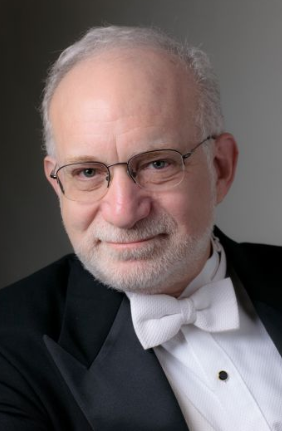
The Italian Academy of Columbia University presents David Witten in Review

The Italian Academy of Columbia University presents David Witten in Review

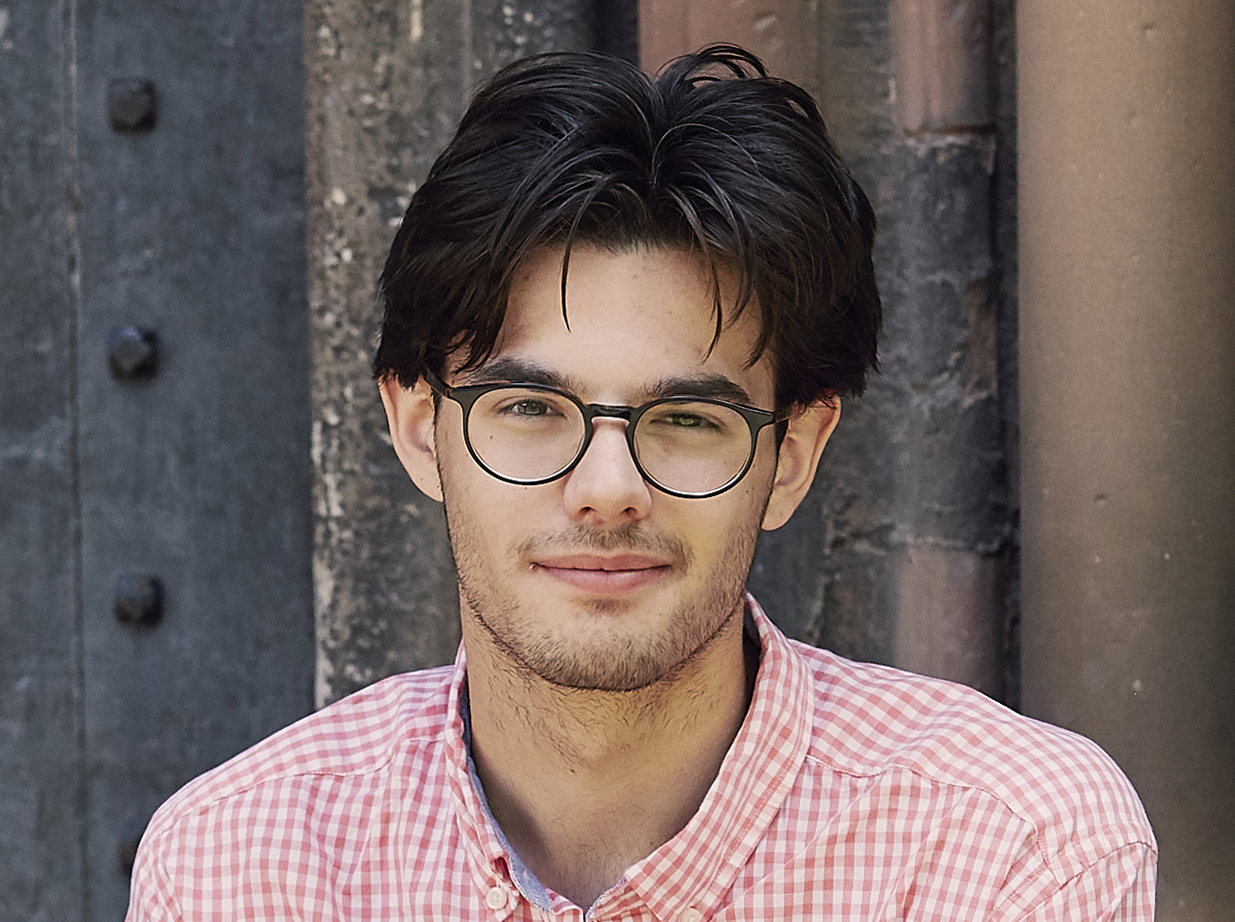
David Witten, piano
Music of Mario Castenuovo-Tedesco
The Italian Academy of Columbia University, New York, NY
November 17, 2018


In the imposing theater of the Italian Academy of Columbia University, pianist David Witten presented a remarkable and rare evening of solo piano music of Mario Castelnuovo-Tedesco, the occasion being the fiftieth anniversary of Castelnuovo-Tedesco’s death. (Two preludes by Debussy crept into the program, appropriately, because Castelnuovo-Tedesco was influenced by Debussy.) His solo piano music is not well-known, and deserves wider examination, especially when presented with such authority, and with the gorgeous tonal palette that Mr. Witten possesses. I consider Castelnuovo-Tedesco an “honorary” impressionist anyway—most of his music is programmatic, with illustrative titles and the like. He knew many of the great virtuosi of his time, often writing directly for them. His guitar music (due to Andrés Segovia) is probably his best-known output. Escaping Italy during the rise of Fascism, he emigrated to Hollywood, becoming the (often uncredited) composer of over 200 film scores; and leaving a legacy as a teacher, notably of André Previn and many others. Mr. Witten has recorded this music, and performed (and spoken delightfully about) it many times.

Mr. Witten began with the suite Le Stagioni (The Seasons), Op. 33 (1924): banish any and all memories of Vivaldi’s ubiquitous chestnut. Castelnuovo-Tedesco’s work begins with winter, and cycles through the other three, to which is added an epilogue of great wistfulness. There is an undercurrent of great sadness in this time cycle, which made me wonder if there is any biographical reason in Castelnuovo-Tedesco’s life for it. Later in his career, he had plenty of disappointments and setbacks, but this work seems too early for that.

This was followed by the Sonatina Zoologica, from the other end of his career (1960), a time of disillusionment with humans because, despite winning an opera competition, the promised premiere at La Scala was denied him. Hence, he turned to animals, adding three pieces to one extant work from 1916 to create a whimsical “little” sonata. Each creature (Dragonfly, Snail, Lizard, Ant) is so well-defined, and Mr. Witten knows absolutely how to control the sound levels so crucial for the success of this unusual repertoire. From an audience perspective, Castenuovo-Tedesco’s music is so engaging and accessible that one may easily forget how fraught with pianistic difficulty it is.

After intermission, Mr. Witten introduced two Debussy preludes from Livre II: Feuilles mortes (Dead Leaves), and Feux d’artifice (Fireworks), both of which he played with the command of a dedicated Debussyist.

He then returned to Castenuovo-Tedesco, with three of the Greeting Cards, Op. 170 based on musical “spellings” of each person’s name: Walter Gieseking (an early proponent of Castelnuovo-Tedesco’s solo piano music), André Previn, and Nicolas Slonimsky. Castenuovo-Tedesco devised his own “spelling system” simply by having an ascending chromatic scale of 26 notes, one for each letter of the alphabet, and 26 descending. From this he derived the theme for each recipient of a “card.” His command of different styles was enjoyable, from misty, quasi-French for Gieseking (renowned interpreter of Debussy and Ravel), to an authentic tango for Previn, and a more rigorous “not-quite” twelve-tone sounding homage to Slonimsky.

The satisfying concert closed with the Piedigrotta 1924 (Neapolitan Rhapsody), named for a church in Naples, where Castelnuovo-Tedesco and his wife honeymooned, that has an ancient Roman tunnel beneath it. Castelnuovo-Tedesco weaves together the folksongs of the region and characteristic musical gestures and forms, with a tarantella, moonlight, evocation of an early instrument, a poignant graveyard scene, and a concluding triumphal festival parade (including a cyclic return to the tarantella). Here, Mr. Witten’s tonal control was masterful, sorting through the heavily ornamental textures to clarify everything for the listener. An all-Castelnuovo-Tedesco recital may not be everyone’s cup of tea, perhaps it should be mixed in with other Italian composers of his generation and the one before, and other composers who influenced him. Nevertheless, in Mr. Witten’s capable hands, everything sounded inevitable and wonderful.

He was greeted with a well-deserved ovation.

Share

Alexander & Buono International present Thomas Nickell: “Impromptus and Meditations” in Review

Alexander & Buono International present Thomas Nickell: “Impromptus and Meditations” in Review

Barry Alexander and Cosmo Buono, in association with Alexander & Buono International
Thomas Nickell, piano
SubCulture, New York, NY
November 15, 2018


Acclaimed twenty-year old pianist/composer Thomas Nickell programmed an intriguing recital at SubCulture on Thursday night. An ill-timed winter storm didn’t deter his ardent followers. I had high hopes for the theme “Impromptus and Meditations,” some of which were fulfilled quite nicely; elsewhere I shall try to explain my impressions.

Mr. Nickell began with early Scriabin (Five Preludes, Op. 16), the composer still in his “Chopin” phase, but already one displaying the increased fluidity, stretchiness, and longing for mystical union that will be taken to extremes in his later works. Mr. Nickell was perfectly aligned with the material, his delicacy was most welcome, and the subtle poetry of each miniature was allowed to speak for itself.

After this, the Four Impromptus of Schubert ,commonly known as “Op. 90,” actually (Deutsch) 899, were played. Although I expect some impetuousness from a twenty-year-old, I really felt that the combination of songfulness and spiritual gravitas encased in each one was somewhat lacking. I definitely heard Mr. Nickell’s intense commitment to the music, but a deeper degree of profundity makes for a truly memorable rendition. Another factor in my opinion was that they weren’t entirely reliable technically. Liberties were taken with phrasing, articulation, and ritards (e.g.: measure 85 in the second Impromptu is marked legato in the right hand, yet he chopped each note). I must part company with Mr. Nickell, who says you can hear how “improvisatory” they are, from the title on down. He has fallen for an old misconception: Ever since Schubert, if we examine the great Impromptu composers (Chopin, Fauré to name but two), we see easily that these are some of the most tightly controlled works, leaving nothing to chance. I sincerely hope Mr. Nickell will continue to explore these works, leading him into a “listening stillness” so that his performance of these touchstones will grow.

Turning now to Messiaen, a piano transcription by Mr. Nickell of one of his works, Oraison (Prayer), for the electronic instrument known as the Ondes Martenot, was, for me, another surprising success of this evening. I worried that the sustaining powers of the original instrument would not happen at the piano (Messiaen later reworked this piece a few years later as the cello/piano Louange à l’éternité de Jésus in his Quatuor pour la fin du temps). Mr. Nickell used his composer’s perspective to delve deeply into the material and really do it justice. Well done!

He then treated us to two of his own Impromptus, which showed off his many strengths with a lot of flash, some bluster, but intricate textures and definitely worthwhile. I’ll bet they would be hell for any other pianist to learn.

The concert closed with Liszt’s Vallée d’Obermann, extracted from Années de pèlerinage, I: Suisse. The hero of Sénancourt’s archetypal Romantic novel is disillusioned with life and questions himself: “Que veux-je? Que suis-je?” (What do I want? Who am I?) The three syllables of each phrase are turned by Liszt into the unifying motive of the piece, three descending tones, a minor third that is later transfigured into a major third. Everyone traveling through the Alps in the early nineteenth century had such responses of ineffable wonder, each in his/her own way. Recall how difficult such travel must have been, with balky horses, coaches with rough wheels, rutted paths or none at all, and severe weather that could spring out of nowhere. In Liszt’s more extrovert sections you really can “hear the weather.” But as with all good program music, as Liszt himself said, he sought to portray interior states of mind, rather than depict actual scenes. Here, Mr. Nickell’s penchant for exaggeration did get the best of him, causing this listener to lose the metaphysical aspect of the piece amid the rambunctious sections. The work needs to progress from spiritual dejection to triumph without sounding hectic. Again, his technique needs to be honed, though I am forgiving when I hear momentary lapses in the pursuit of something greater. Mr. Nickell obviously identifies with the material greatly, and portions of it were quite thoughtful; it just needs some time to mature, to integrate all the aspects of this epic into one organic whole.

Don’t get me wrong: this is a big, big talent. I so admire his intellectual curiosity and his innovative programming.

Share

Pro Musicis Presents the NOVA Guitar Duo in Review

Pro Musicis Presents the NOVA Guitar Duo in Review

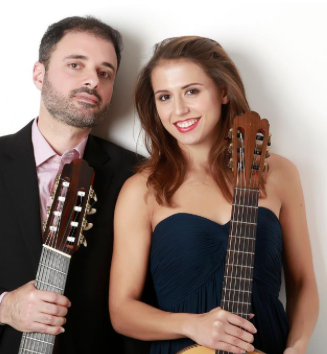
The NOVA Guitar Duo: Nelly von Alven, guitar, and Luiz Mantovani, 8-string guitar
Weill Recital Hall at Carnegie Hall, New York, NY
November 15, 2018


For the third evening in their series entitled “Le Partage de la Musique” (“The Sharing of Music”) Pro Musicis presented another superb concert, this time featuring the NOVA Guitar duo. The duo combines the considerable talents of German guitarist Nelly von Alven (on 6-string guitar) and Brazilian guitarist Luiz Mantovani (on 8-string or “Brahms” guitar). The whole may not always turn out to be greater than the sum of its parts, but with this pairing – in addition to their individual gifts – there is a oneness of musical thought which makes them a rare find.

The program itself was fresh and interesting, all twentieth-century repertoire including works by Ferdinand Rebay (1880-1953), Federico Mompou (1893-1987), Leo Brouwer (b. 1939), Heitor Villa-Lobos (1887-1959) and Manuel de Falla (1876-1946). One work was completely unfamiliar, the Grosses Duo for Two Guitars by Viennese composer Ferdinand Rebay (given its New York premiere), but the more familiar works felt fresh as well, thanks partly to the relatively new and versatile pairing of six and eight-string guitars.

Rebay’s Grosses Duo opened the concert with a movement showing the duo’s wide range – the first theme being intensely dramatic and the second being lilting and lyrical. The duo captured both moods vividly and with striking mutuality of conception. Though the work itself does not venture stylistically far from traditional Viennese romanticism (or even classicism), it contains much beautiful and dramatic material, artfully woven together into three substantial movements totaling about twenty-five minutes. Originally a piano sonata composed the composer’s student days in 1902. Rebay reworked it for guitar and Quintbass guitar (with a lower range) in 1942, but the work lends itself perfectly to being played on the instruments of the NOVA duo. It should be noted that Mr. Mantovani’s 8-string guitar is capable of an additional lower range as well as an additional upper range – so the possibilities for the NOVA Duo are nearly endless. One anticipates many years of this duo mining musical treasures. For now, though, one could hardly imagine Rebay’s Grosses Duo being played better. Especially lovely was the central movement, Variations on Schubert’s Morgengrüss (from Die schöne Müllerin), followed by a vigorous finale.

The compositions of Mompou are favorites of this reviewer, so three selections from his Canciónes y Danzas (Songs and Dances) were met with great eagerness. The NOVA Duo played No. 6, No. 2 (Dotze Cavallers – Galop de Cortesia), and No. 5, in that order, and they were exquisite. The slow songful phrases were lovingly shaped, and the Danzas were timed to perfection. This listener has loved these works as piano pieces so was prepared to battle a bit of a bias there, but with both performers so clearly capable of singing lines and with the “Brahms guitar” particularly reverberant, one could not help embracing these transcriptions.

Continuing this beautifully paced program, the first half ended with two selections from Beatlerianas by Leo Brouwer, both composed in 2010. The first one, The Fool on the Hill, set the Beatles’ tune of the same name poignantly amidst a streaming accompaniment, to stirring effect. Penny Lane capped the first half off perfectly with contagious rhythms and some delightful bending of pitches, especially by Ms. Van Alven.

After intermission came music of Heitor Villa-Lobos, selections from his Cirandinhas, originally for piano. It feels like an act of treason for this pianist-reviewer to suggest that the set may possibly work better on two guitars, but – alas! – it seemed so on this occasion. These childlike miniatures take on just a bit more life with its lines being represented by multiple instruments, adding contrasting texture and color. From the playful Zangou-se o Cravo com a Rosa (“The Carnation was Angry with the Rose”) to the sad Adeus, Bela Morena (“Goodbye, Beautiful Morena”), and the rambunctious Vamos Manhina (“Let’s Go, Little Sister”), the Nova Duo captured the array of scenes to a tee. Cae, Cae, Balão (“Come Down, Come Down, Balloon”) had a reeling quality, and Todo O Mundo Passa (“Everybody Passes By”) resumed steadiness with an evocative march-like movement. Carneirinho, Carneirão (“Little Sheep, Big Sheep”) was a delightful study in contrasts, well projected by the duo, and Nesta Rua Tem um Bosque with its soulful melody over a chromatic bass, captured an exotic street garden. The set concluded with Lindos Olhos Que Ela Tem (“What Beautiful Eyes She Has”), a hypnotic serenade played to perfection.

To cap off the evening, we heard selections from El Amor Brujo of de Falla. Though one is quite accustomed to selections of this work being played on the piano, particularly the Danza ritual del fuego (or Ritual Fire Dance), they all worked quite well for guitars in the skillful hands of the NOVA Duo. We heard Introdución y Pantomima, Danza del Terror, and Romance del Pescador – all played with tremendous color – including breathtaking pianissimo shadings at times. The ensemble had something greater than split-second timing – it was simultaneity. A media noche: Los Sortilegios with its repeated midnight tolling led to a finale worthy of its name, Ritual Fire Dance, played with fierce intensity. Bravo!

An enthusiastic audience, sizable for such a snowy evening, brought the duo back onstage for several curtain calls. The pair offered a gently lyrical Brazilian encore, of which the name was not quite discernible.

It strikes this reviewer now that there has hardly been a critical word in this review. Well, why tamper with something so good? This pair is clearly meant to play, and they do so exceptionally well. If one had to make any suggestion, it would be simply to continue with this versatile instrumentation, enjoying -with discrimination, of course – being “kids in the candy store” of music literature. Encore!


Share

Wa Concerts Series presents Virtuosity and Beyond in Review

Wa Concerts Series presents Virtuosity and Beyond in Review

Charles Neidich, Ayako Oshima, clarinet
Mariko Furukawa, piano
Tenri Cultural Institute, New York, NY
November 10, 2018


For a truly civilized evening in New York, you just can’t beat the Wa concert series, held in the intimate gallery space of the Tenri Cultural Institute in Greenwich Village, with Leschetizky’s Steinway, no less. For this outing, “Virtuosity and Beyond,” our host, the superlative clarinetist Charles Neidich, decried what he calls “empty virtuosity.” What he possesses is certainly not “empty”! He was joined for this concert by his wife, Ayako Oshima ,who also caters the thoughtful hors d’oeuvres, wine, and dinner that are served at each event, and the superb (and busy) collaborative pianist Mariko Furukawa.

It is a rare event when every single piece has not been heard “live” by a reviewer. I previously had known only the John Ireland Fantasy Sonata from a recording.

The concert opened with an early Penderecki work, the 3 Miniatures for clarinet and piano. If you are used to post-apocalyptic Penderecki, with foreboding and giant tragedy, these brief (but well-crafted) utterances will surprise you. They were perfectly captured by Mr. Neidich and Ms. Furukawa.

Mr. Neidich then turned his attention to a solo work by Shulamit Ran: Spirit, composed last year, in its New York premiere. His breath control is prodigious, so much so, that one forgets “body” and thinks only “spirit.”

Then came the Ireland, a gorgeous late-Romantic extended work in which songfulness (Ireland has five large volumes of art songs) predominates. Ms. Furukawa clarified the often thick textures beautifully, and Mr. Neidich provided what we now take for granted with him: perfection.

After intermission, Ms. Oshima played a work that was written for her, Le Maschere (another New York premiere) based on stock characters from the Italian commedia dell’arte, by Larry Alan Smith (who was present, explaining that he is Italian too, on his mother’s side). One heard the Zanni, Vecchi, Innamorati, and Capitani in brief vignettes full of character. Ms. Oshima’s breath control and her ability to taper even the highest notes to nothingness were awe-inspiring.

Then Mr. Neidich showed another facet of himself- that of composer, in presenting two of his own solo works in premieres: Firefly, and Icarus reborn (a world premiere), which depicts the over-confident rise and ultimate fall of the Greek legendary son.

The evening closed with Arthur Benjamin’s Le Tombeau de Ravel. This reminded me of the Parisian critic who, after the premiere of Ravel’s Le Tombeau de Couperin stated acidly: “Yes, the Tombeau de Couperin by Ravel is beautiful, but how much more beautiful would be a Tombeau de Ravel by Couperin!” The Benjamin work, composed a dozen years after Ravel’s death, is a gentle pastiche of many gestures typically seen in Ravel, notably waltz rhythms. It was a delicious close to a wonderful, thoughtful program.

Mr. Neidich offered two encores: Ravel’s Pièce en forme de habanera (which began life as a vocalise), and a wild, fast rondo that I did not know, that left him and the audience breathless, which he announced by saying that the concert indeed needed some “empty virtuosity.”

Share

Distinguished Concerts International New York (DCINY) presents The Great War: Commemorating 100 Years in Review

Distinguished Concerts International New York (DCINY) presents The Great War: Commemorating 100 Years in Review

Distinguished Concerts Orchestra; Distinguished Concerts Singers International
Patrick Hawes, composer/conductor
Paul Mealor, composer/conductor
Diana McVey, soprano; Scott Joiner, tenor
Stern Auditorium at Carnegie Hall, New York, NY
November 11, 2018

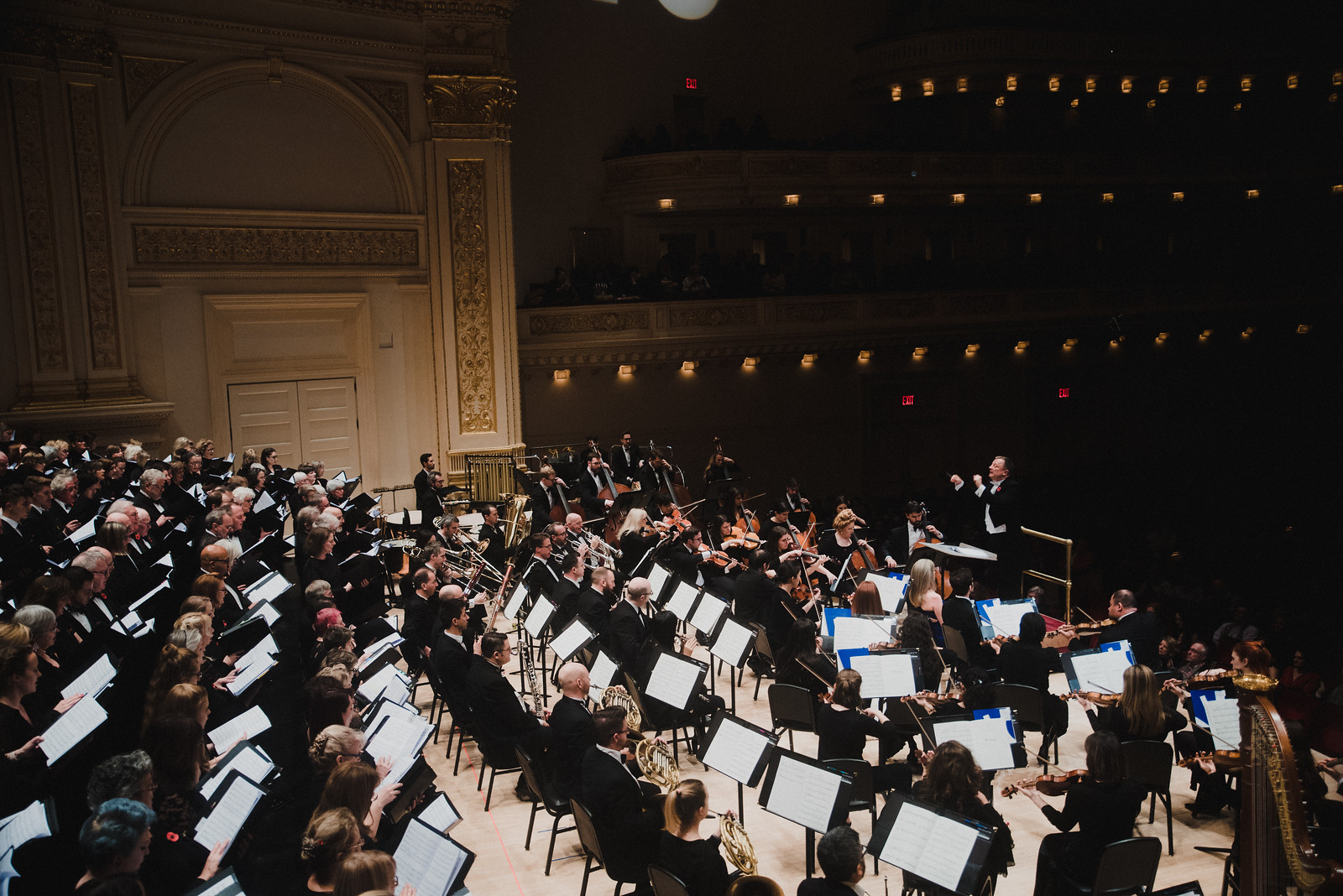
On the 11th hour of the 11th day of the 11th month in 1918, the guns that had raged for four years fell silent. The Great War (what we later called World War One) was over. One hundred years later commemorations of those millions of lives lost take place in ceremonies throughout the world. At Carnegie Hall in New York City, Distinguished Concerts International New York (DCINY) presented a concert entitled The Great War: Commemorating 100 Years, featuring two United States premieres, Patrick Hawes’ The Great War Symphony and Paul Mealor’s Requiem: The Souls of the Righteous. It was a meaningful way to pay tribute to the memories of the fallen during this centennial anniversary.

The Distinguished Concerts Singers International had choruses hailing from Connecticut, Kansas, New Mexico, New York, Texas, Wisconsin, Australia, Canada, Germany, Hong Kong, United Kingdom, and “individual singers from around the globe.” Soloists Diana McVey (www.dianamcvey.com) and Scott Joiner (www.scottjoinertenor.com), both DCINY favorites, were present to lend their considerable talents.

Patrick Hawes (www.patrickhawes.com) took the podium to conduct the United States Premiere (Joint) of The Great War Symphony. Each movement covers one year of the war: I. Praeludium (1914-1915), II. March (1915-1916), III. Elegy (1916-1917), and IV. Finale (1917-1918). The conception is highly programmatic. The calm before the storm and steadfastness of duty of the first movement gives way to the horrors of battle in the second and to the disillusionment and despair of the third movement. The fourth and last movement expresses the final year of fighting, the silencing of the guns, and the heartache of paying tribute to those countless lives lost – with resolution never to forget the sacrifices. The Great War Symphony has a decidedly British (and Commonwealth) focus. One can hear the influences of the great British Composers (most notably Elgar, Holst, and Vaughan Williams) throughout. This is not at all surprising considering the origin of the commission in the United Kingdom and the fact that the losses were closer to home and more extensive in Britain than in the United States (where the history of World War One is often taught something like this: Archduke Franz Ferdinand is assassinated, Europe goes to war, things bog down into trench warfare where neither side makes any progress, then the United States gets involved after the Lusitania is sunk -after waiting two years! – and suddenly it’s all over).

The texts were chosen with care, and Mr. Hawes provided good program notes that I hope will be available at the DCINY website, as they have usually posted programs in past concerts. Check this link : DCINY The Great War: Commemorating 100 Years.

At the beginning of the third movement, concertmaster Jorge Ávila played a violin that belonged to Herbert Simmons, who was killed in action at the Somme in 1916. “Uncle Bertie,” as he was called by his family, was an amateur violinist who dreamed of becoming a professional musician. His brother Lawrence kept the violin to remember him, and each generation that followed learned to play on it. The family allowed the violin to be brought to New York to be used in this performance.

Tenor Scott Joiner has a strong voice that can fill any hall. While his lyric gifts were abundantly displayed, it was his bitingly ironic tone in “The Song of the Mud” from the third movement that this listener enjoyed the most. Soprano Diana McVey sang with a poignant beauty as she gave voice to the heartache of mothers. daughters, wives and fiancées, not to mention the women who witnesses events first-hand.

The Great War Symphony is a work by a composer of craft and skill. It does not descend into sentimental tripe nor does it explode into cheap “war” bombast. This listener was engaged for the hour-long duration and thought, given the programmatic aspect, that adding a visual component (such as a projection of pictures from the war) would heighten the experience for many listeners, especially those with no real knowledge of World War One.

The chorus was well-prepared, with good balance and clear diction throughout, and the orchestra played with intense focus and energy. The audience gave Mr. Hawes a standing ovation for his fine work.

After intermission, Paul Mealor (www.paulmealor.com) took the stage to conduct the United States premiere of his Requiem: The Souls of the Righteous. This forty-minute, ten-movement work uses sections of the traditional Requiem mass with scripture from the King James Bible, and poems from Grahame Davis.


My colleague Frank Daykin wrote in an earlier review of Mr. Mealor that “if there ‘is’ a heaven, I want it to sound like the music of Paul Mealor.” One tends to understand why when listening to his Requiem – Mr. Mealor’s God is unfailingly compassionate, His judgment of souls is heavily tilted towards mercy, and all souls are worthy of Heaven. This work is filled with serene beauty from start to finish – even Fauré’s Requiem sounds fearsome in comparison!


There were numerous soloists (uncredited) from the chorus, all who did well in their featured roles, but special mention goes to one tenor, a very tall young man, who really filled the hall with his strong voice. The chorus was lovely, but one has to acknowledge that while they did excellent work, the “heavy lifting” was already done by the composer. The string orchestra was perfection in balance and ensemble.


The use of tuned wine glasses in the final movement (Lux aeterna: And let there be a Heaven) provided an ethereal effect that was enchanting. When the very last vibrations of the wine glasses slowly died away, one could feel the entire audience holding their breath as one. Then a loud and extended standing ovation followed, richly deserved.

Share

Golden Classical Music Awards presents Winners Concert in Review

Golden Classical Music Awards presents Winners Concert in Review

Hyejin Lee, violin
Weill Recital Hall at Carnegie Hall, New York
November 2, 2018


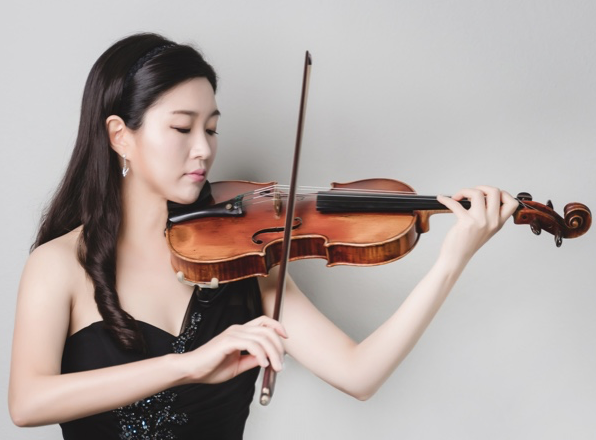
Violinist Hyejin Lee appeared on a marathon concert of competition winners. Ms. Lee was born in South Korea where she began her musical studies at age 10. She received her bachelor’s degree from Chungang University , her master’s degree at the University of Cincinnati, and her doctoral degree in violin performance at the University of North Texas. She chose the first movement of Prokofiev’s little-known Sonata for solo violin in D major, Op. 115. Few know that it was originally intended for an entire class of violinists, as many as twenty, playing in unison (traditional in Russian pedagogy of the time), and what a ruckus that would have made.

It would be rash as well as impossible to assess someone’s talent on the basis of only four minutes of playing. However, I can report that Ms. Lee gave a confident reading of the work, strong in rhythm, though lacking sufficient dynamic contrast. The sharpness of accentuation that gives Prokofiev’s music its sardonic bite was also downplayed. The movement has two contrasting theme areas: the first, a sort of rough village dance, the second, a lyrical song. These two could have been delineated with greater character, nevertheless her poise was admirable, after waiting nearly two hours backstage.

Share

Creative Classical Concert Management presents Eun Jung Vicky Lee in Review

Creative Classical Concert Management presents Eun Jung Vicky Lee in Review

Eun Jung Vicky Lee, piano

Weill Recital Hall at Carnegie Hall, New York, NY

November 6, 2018


Eun Jung Vicky Lee did a commendable job in her piano recital Tuesday at Carnegie’s Weill Hall – and though it was not billed as a debut anywhere on the program (or Carnegie Hall’s website), it offered a fine first hearing for this reviewer of a highly promising young pianist. A graduate of Eastman (B.M.) and New England Conservatory (M.M.), Ms. Lee has accumulated a good assortment of prizes and distinctions, especially from Canada and South Korea, and she currently teaches in Seoul while continuing to perform.

Ms. Lee offered a well-balanced program of repertoire from Bach through Rachmaninoff, with the only noticeably absent style period being our own current era – though this reviewer doesn’t believe that every “box” needs to be checked for all the style periods, as one should play what one loves and plays best! Ms. Lee showed a clear affinity for her chosen works and played with a high level of polish. The program included a Bach chorale prelude, Beethoven’s powerful Op. 110 Sonata, Debussy’s L’Isle Joyeuse, two Rachmaninoff Preludes, and the Liszt Réminiscences de Norma (Bellini) to close.

With grace and a lovely stage presence, she walked onstage to open with an arrangement of J.S Bach’s chorale Jesu, Joy of Man’s Desiring. While this Bach chorale melody makes for a beautiful opening, the arrangement itself left something to be desired – and oddly the arranger’s name was not listed. It seemed not to be the Myra Hess version one knows well, nor the Harold Bauer version, unless they were considerably altered. It had traits of both, as if a generic composite, but with some unsettling voice leading, some unusually thick basses, and a few distracting hand-crossings to emphasize a descending third treble motif (rather gratuitously, one felt). It speaks to the resilience of Bach’s music – and to Ms. Lee’s serene delivery – that this listener still felt overall a sense of Bach’s hallowed feeling regardless of arrangement issues.

Following Bach came Beethoven’s Sonata No. 31 in A-flat major, Op. 110, a monumental work from Beethoven’s late period. Ms. Lee was thoroughly prepared for its substantial technical challenges and showed overall a fine fidelity to details of the score and thoroughness in its complex fugal sections. She played with polish, professionalism and commitment, and in terms of accuracy, there were only the minutest of slips and a tiny bit of rushing here and there. With time to live with the work, Ms. Lee will undoubtedly project a conception of deeper and deeper insight. Meanwhile, this listener’s reservations could be categorized as stylistic and musical differences of opinion. For example, there seemed a tendency to breeze through structural junctures and to underplay moments of harmonic intensity, just where one wanted some grit and resistance, while arpeggiations and such were featured with a high gloss. The result was a slightly prettified quality which would probably only disturb a musician raised on Artur Schnabel et al. – or one steeped in the work for decades.

One felt the opposite in Debussy’s L’Isle Joyeuse, which with sparing pedal at some exposed transitions, had less of the dreamlike sparkling wash than one has usually heard. Even the trills at the very opening bore more resemblance to ornamentation from the prior century than to evocations of a mythical isle. Though just shy of the exotic abandon of this listener’s favorite performances, the performance gained in spirit and sweep as it progressed. The piece itself gains in spirit, but Ms. Lee’s level of comfort seemed also to increase. She finished it with winning conviction, joy, and brilliance, sending the large audience happily off to intermission.

The second half of the program opened with two selections from Rachmaninoff’s Preludes Op. 32. We heard No. 10 in B minor and No. 12 in G-sharp minor, both beautifully played and highlights of the evening. Ms. Lee gave the B minor Prelude the perfect feeling of solemnity, and one relished each moment of the glorious build. Moving on to the G-sharp minor Prelude, she played with crystalline clarity in the right-hand patterns, and a penetrating tone in the left-hand melody. Here one heard the command and artistic liberty which can take an audience on a truly memorable journey. These pieces fit the pianist like a glove.

Ms. Lee closed her program with Liszt’s Réminiscences de Norma (Bellini) by Franz Liszt, a virtuoso tour de force. She negotiated this pianistic climb extremely well – with no injuries! – but it may take just a bit more playing to transform it into the Romantic reveling that it can be. One imagines that the lush opera melodies will take ever increasing priority over the accompaniments’ extravagant arpeggiations and leaping octaves, and excess caution will become unnecessary. In the B major section, where the melody is set as repeated chords, the overall melodic grandeur will reign supreme, and the repetitions will become more and more like a passionate vibrato. In the E-flat minor con furia section, one will lose all politesse and relish the unbridled frenzy, leading an ending of great improvisatory sweep. Ms. Lee came so close to conveying these qualities that one can only hope that she will continue to play the piece for years to come. It will surely become a signature triumph. Meanwhile, it was certainly a high voltage ending to what was an excellent introduction to this New York audience.


Share

New York Public Library for the Performing Arts presents Joanne Chang in Review

New York Public Library for the Performing Arts presents Joanne Chang in Review

When East Meets West in New York City: 20th Century Western and 21st Century American Eastern Music
Joanne Chang, piano
Bruno Walter Auditorium, New York, NY
Thursday, November 1, 2018, 6 PM


You know you’re at an original recital when a Schubert/Liszt transcription and Debussy’s Suite bergamasque are the outliers. Joanne Chang had the inspired idea of presenting works from a variety of contemporary and/or less-often heard sources, with two of them composed specially for her. The range of nationalities in the unusual repertoire was vast: Syrian/American, Chinese/American, Taiwanese/American, Cuban/Spanish, Afro/Cuban, and African/American. It was in the contemporary works that Ms. Chang was most successful.

The center and heart of her program was a beautiful performance of three of Kareem Roustom’s five Aleppo Songs (How Beautiful the Light of the Rising Sun, Antiochian Hymn, Oh People, Leave me to my Sorrows ), a memorial to a once-vibrant city now nearly completely destroyed by civil war (It was not, as announced, a New York premiere, which was on Nov. 8, 2017). Ms. Chang’s sonorities were crystalline and perfectly gauged, and her expressive involvement with the music was obvious and deep. The first song, How Beautiful the Light of the Rising Sun was stunning.

This was followed by two works written for Ms. Chang, in their NY premieres. Man Fang’s Drunk in the shade of blossoms, inspired by a twelfth century Chinese female poet, set as a piano solo by a female composer. We need more representations like this to equalize the rather dominant male sector in classical music. This work had a beautiful central contrapuntal section that started with one voice, adding imitative voices to reach a quasi-fugal texture that was as austerely expressive as any by Bach. Ms. Chang was in her element, with the widest possible range of piano sonorities.

Ms. Chang then turned to Hsin-Jung Tsai’s Sutra of Emptiness, based on the composer’s (again female) practice of Buddhism. The work requires many types of technique, including “nontraditional” inside-the-piano playing, working with resonances of silently held notes, and “traditional” in the form of repeated notes, which Ms. Chang dispatched with complete confidence, never losing expression in the process. The work is cyclic, that is, material heard at the beginning recurs at the end, a formal procedure that greatly assists any listener who may feel “lost” in contemporary music. This work stood out from the rest in my mind.

The recital had opened with the Schubert/Liszt Gretchen am Spinnrade transcription, which seemed a strange choice to me, but was well-played. Debussy’s Suite bergamasque abounded in all manner of un-French rubato and draggy tempos that robbed the music of its eloquence (yes, even in early Debussy restraint is preferable). The pianissimi were not soft enough, and I wondered why Ms. Chang was not using the una corda pedal more. If there was any quibble about Ms. Chang’s playing, it was that she misjudged her forte dynamics in the extremely small hall that is Bruno Walter on a nine-foot concert grand. However, she played gorgeously soft passages in the contemporary works.

The recital closed with two groups. First, three of Ernesto Lecuona’s Spanish or Afro-Cuban inspired dances: Malagueña, Y la negra bailaba!, and Danza Lucumi. Once relegated to the salon, Lecuona’s music is taken much more seriously these days, with pioneering sets of his piano music on record. Ms. Chang played Y la negra bailaba! with nice lilt, but the other two pieces were stentorian. Malagueña, though it has many fff indications, also has many piano dynamics, and slurs, which Ms. Chang ignored for the most part. I didn’t detect much of the Lucumi (an Afro-Cuban ethnicity descended from the Yoruba who practice the Santeria religion) in the dance named for them.

Ms. Chang then finished the satisfying evening with a true rarity, two rags, The Thriller and Dusty, by a female ragtime composer, May Aufderheide. They were performed with enthusiasm, but too fast, ignoring Scott Joplin’s advice “Never play ragtime too fast.” Aufderheide herself made piano rolls of her own works, which are elegant.

I salute Ms. Chang for her adventurous programming, and hope that she continues in this way.


Share

Regina Shenderovich, pianist, in Review

Regina Shenderovich, pianist, in Review

Regina Shenderovich, piano
Weill Recital Hall at Carnegie Hall, New York, NY
October 30, 2018


It is a rare pianist who undertakes to play the entire Art of the Fugue (Die Kunst der Fugue, BWV 1080) of J. S. Bach, especially in live concert. The work is an approximately eighty-minute masterpiece of fourteen fugues (Contrapuncti) plus four canons, all based on a single somber theme in D minor which is given an encyclopedic range of treatments – inversions, augmentations, diminutions, elaborations, stretti, double, triple, and mirror fugues, and just about every imaginable compositional manipulation. It has long been studied by musicians as a model of counterpoint, but it has been considered by many to be too cerebrally taxing for concert audiences.

Ensemble performances, including performances by the Juilliard String Quartet and the Stuttgart Chamber Orchestra, to name two, have met with success, due in part to the clarity provided by differing instruments assigned to different lines. As the work was composed without specified instrumentation and in open score (just soprano, alto, tenor, and bass staves), it has remained uncertain how the work was intended to be played, though again some persist in theorizing that it was meant not to be played at all and is of purely theoretical value. A pianist performing it is thus faced not only with the colossal challenge of “merely” playing it, but also some persistent criticism of the very act of performing it.

Despite such a challenge (or because of it), some renowned keyboard artists have been drawn to perform and/or record the work, notable among them pianists Glenn Gould, Tatiana Nikolayeva, and Pierre-Laurent Aimard, not including harpsichordists and organists. More recent contributions have included those by Evgeni Koroliov and Angela Hewitt, but the numbers are still relatively few. We can now add another name to this list of intrepid musicians: Regina Shenderovich. For the reader wanting only to hear about her exceptional recital at Weill Hall and not about the work, one can skip the next paragraph – but meanwhile, there is one more challenge to discuss.

The earliest autograph of Die Kunst der Fuge (or KDF as it is abbreviated) stems from the 1740’s, but when Bach resumed work on it in the years prior to his death in 1750, he was suffering from a debilitating eye disease. J. S. Bach’s son, C.P.E. Bach, supervised its posthumous publication in 1751, but the final fugue, Contrapunctus XIV, had been left unfinished due to Bach’s death. (There were other questions linked with the publication as well, some attributed to C.P.E Bach and some to the engravers.) Performers have tackled the incompleteness variously. Some (including Glenn Gould and the Academy of St. Martin in the Fields) recorded it unfinished – one of music’s stranger experiences to hear this amazing music cut off mid-measure! Others have used completions composed by scholars, including one by Donald Francis Tovey in the early twentieth century and more recently the beautiful completion by Kevin Korsyn (as heard on pianist Craig Sheppard’s CD released just this past September). How would tonight’s pianist approach these challenges – and of course, how would she play it?

Enter Regina Shenderovich, walking onstage with modest, unassuming demeanor. She opened, amazingly, with yet another fugue, Mendelssohn’s Prelude and Fugue in E minor, Op. 35, No. 1, giving it an admirable performance (if perhaps adding unnecessarily to the program’s ample scope – the Bach was really enough for one evening)! After a brief break Ms. Shenderovich returned for the Bach, and what followed was simply spellbinding. Navigating this great work with undemonstrative lucidity and indisputable mastery, Ms. Shenderovich guided her listener expertly through this mind-boggling Bach journey. She is a musician of prodigious gifts, including a formidable intellect.

Not only was Ms. Shenderovich able to project each fugue subject with clarity, whether direct, inverted, in augmentation, or in whatever form, but she followed each line faithfully through to its conclusion as other layers intertwined. What is behind some of Ms. Shenderovich’s success is – aside from her exceptional mind – her highly developed finger technique, capable of projecting a theme dynamically and taming whatever contrapuntal brambles surround it. Of course, dynamic control was far from her only resource, as she delivered each entrance with sufficient variety of articulation to render the subsequent entrances vividly recognizable without the excessive dynamic emphasis that can quickly grow so tiresome.

Overall, Ms. Shenderovich achieved a transparency of texture, such that that one found oneself admiring the beautiful variety of countersubjects, episodes, and surrounding counterpoint rather than feeling prodded to check off “important” entrances as if one were birdwatching and labeling each sighting. One could always hear a fugue subject, but more aptly put, its presence was felt – and one was never bludgeoned with it.

There are undoubtedly pianists out there whose severity of approach convinces critics that the set should not be performed; it is a different story, however, when there is sincere dedication to the “Art” in The Art of the Fugue. Ms. Shenderovich’s performance, although far from the overt emotion of, let’s say, Glenn Gould, reflected a genuine and deep commitment to the music, and she made a compelling case for its performance on the modern piano.

It would be good to see Ms. Shenderovich continue to perform this work and possibly to record it at some point. Once an interpretation has reached such a high level, that is where the “magic” really begins, as the musician takes time to step back from it and return to it with even more life. There is already individuality in her interpretation – the freewheeling dancelike character of her Contrapunctus IX, the expressive lingering before some entrances (memorably in Contrapunctus X), and much more; one could, however, imagine even more color and “play” in the imitative lines towards the end of Contrapuctus XIII Inversus and other spots. The very open score nature of the music in fact encourages freedom of imagination, including vocal phrasing and nuance.

One hesitates, though, to suggest anything in the face of what was already such an enormous achievement.

Now, what about the work’s ending? Well, on this occasion Ms. Shenderovich chose to play the final Contrapunctus XIV in its incomplete version, but she softened that blow after a momentary pause by playing the chorale prelude Wenn wir höchsten Nöten sein (When we are in utmost need) also known as Vor deinen Thron tret ich hiermit (Before Thy Throne I now appear) BWV 668a. C.P.E. Bach had included this chorale prelude in the posthumous publication of The Art of the Fugue and faced some later criticism for a seemingly arbitrary decision – yet J. S. Bach was reported to be revising it in his last days, and that association led it to be known as the Deathbed Chorale. It seemed a justifiable choice to close the pensive evening, and Ms. Shenderovch played it beautifully. The entire concert was dedicated to the memory of Ms. Shenderovich’s mother, Polina Shenderovich, and the mood was fittingly meditative.

Incidentally, for those who wish to know, Ms. Shenderovich chose to play The Art of the Fugue with the score, though one doubts that she needed it. Surely no harm came from having the score there, except for the occasional nanosecond distraction of page-turning. Such details have many solutions, including computer page-turning from digitized score, but one half expects that Ms. Shenderovich will play the work again at some point without the score, as it is all surely a part of her.

This listener gave the performer a well-deserved standing ovation and only regretted that there were not more people present to enjoy and appreciate the concert. Granted, it was not a program for the uninitiated – certainly not one for junior’s first concert! – but it seemed criminal that there were any empty seats. Perhaps a performer who is inclined to devote the necessary attention to Die Kunst der Fuge is not typically one with the time or skills for marketing (get that pianist a manager!), but more could have been done to promote the evening. There was also nothing by way of written promotion of Ms. Shenderovich as a pianist on the program, and so one still knows little about her. Certainly nothing in a brief internet search prepared one for her tremendous abilities, just as nothing about her “just another day” stage presence did. It was all about Bach – and a beautiful experience because of it. Brava and encore!

Share

Distinguished Concerts International New York (DCINY) presents Transform. Innovate. Inspire in Review

Distinguished Concerts International New York (DCINY) presents Transform. Innovate. Inspire in Review

The Rensselaer Orchestra
Nicholas DeMaison, conductor
Shirley Ann Jackson, Ph.D, President of Rensselaer Polytechnic Institute
Stern Auditorium at Carnegie Hall, New York, NY
October 24, 2018


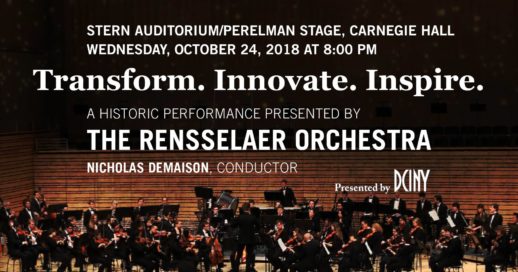
To celebrate the addition of the Bachelor of Science in Music degree at Rensselaer Polytechnic Institute (founded in 1824), Distinguished Concerts International New York (DCINY) presented the newly formed Rensselaer Orchestra in a program called Transform. Innovate. Inspire. – all ideals that Rensselaer emphasizes.

The degree is designed for what the institute calls “21st century careers in music, in fields such as sound design for virtual reality, composition for interactive games, and algorithms for music networks.” While a student may opt for a single major, the idea of pairing with a STEM (Science, Technology, Engineering, Mathematics) discipline is the intent, in a program called Art_X. This pairing of art with another field (“X”) will appeal to a wider demographic of students who have talents in both fields.

Shirley Ann Jackson, the President of Rensselaer Polytechnic Institute spoke before the concert to outline these goals and to thank the many sponsors (individual and corporate) who made this evening a reality.

Bearing in mind that this is an orchestra just formed, and that their numbers were greatly enhanced by the addition of “professional musicians” (the printed program’s designation), it would not be productive to be overly critical. However, there are always some ideals that must be met (intonation, balance, ensemble, etc), and there are no free passes issued. The fact that the program was what most would consider to be a half of a full concert speaks of the challenge of preparing works for concert performance. This is not meant to be a criticism, as it is always better to play a short program well than to struggle with a longer one.

Nicholas DeMaison took the podium to conduct Missy Mazzoli’s River Rogue Transfiguration in its New York City Premiere. Commissioned by the Detroit Symphony Orchestra, River Rogue Transfiguration was inspired by a 1927 photo by Charles Sheeler of the Ford Motor Company’s River Rogue Plant, which was the largest integrated factory in the world. There is a definite “working” sound (think of Raymond Scott’s “Powerhouse” without the cartoonish-ness), which is highly evocative – a ten-minute musical tour of a factory with all the chaos amid highly organized production.

It seems to this listener that the work never quite reached critical mass, that it simmered but never smoldered. A bit more boldness would have made a world of difference, but aside from this reservation, it was a solid performance of a imaginative work.

Sibelius’s Symphony No. 5 in E-flat major, Op. 82 was the final work on the program. Written in 1915 and revised several times (the 1919 final revision was played), it is Sibelius looking both into the past and the future simultaneously with his consummate mastery.

The opening was excellent, which had my expectations heightened for what was to come. The results were variable. While there were moments of sublime playing, there were issues of balance (winds overpowering the strings), some problematic intonation within sections, and a certain timidity in the string section. To be fair, these are all issues that affect much more established orchestras as well. The basics are there, but there is a need for polishing the finer details.

The second movement suffered from heaviness of sound under the lovely “chirping” theme of the woodwinds, an issue easily solved by reining in the exuberance of the brass section. Even with this issue, it was still enchanting.

The strings came into their own in the third movement finale, with incisive, crisp playing and a boldness I had been hoping for earlier. The horn motif (which Donald Tovey likened to “Thor swinging his hammer”) was arresting. The final six staggered chords, all separated by silences, were tossed off like thunderbolts, which was thrilling to hear.

Maestro DeMaison is an ideal conductor for this orchestra. One can see his continual coaching and encouragement to his musicians, his clear and decisive direction, and his unflagging energy. Given time, he should have these players at a higher level that will not require any supplementing from outside musicians.

The supportive members of the Rensselaer community gave their stars a prolonged standing ovation, of which they can feel very proud. Congratulations, and may the program realize the promise of what was launched on this night.

Share