Fryderyk Chopin Society of Texas presents Konrad Binienda in Review

Fryderyk Chopin Society of Texas presents Konrad Binienda in Review

Winners of the 25th (2017) International Chopin Piano Competition
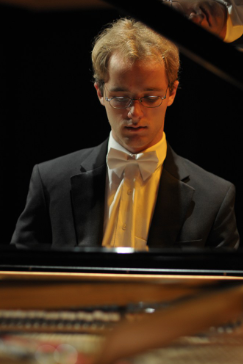
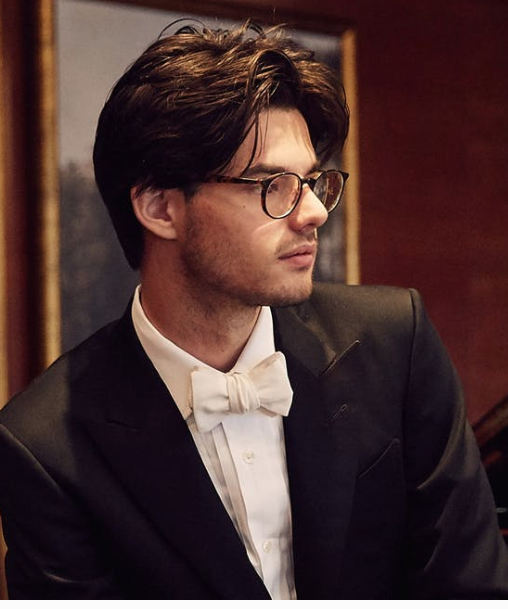
Konrad Binienda, piano
Weill Recital Hall at Carnegie Hall. New York, NY
September 17, 2018


The Fryderyk Chopin Society of Texas, based in Corpus Christi, serves as a valuable reminder that not all the piano action in that state is at the Cliburn competition in Fort Worth. The September 17th jumbo double-recital was so generous that two reviewers from this publication were assigned, one to each principal pianist. I will write about Konrad Binienda -my colleague Rorianne Schrade will write about Dzmitry Ulasiuk. Plus, there was an “appetizer” of sorts, the young Jan Godek, who, at the outset, played two mazurkas by contemporary Polish composer Wojciech Klar.

Mr. Binienda has the qualities I value in a pianist: a beautiful sound, a thoughtful approach (meaning every note, phrase, and movement are thought through) which also has plenty of room for feeling, original interpretive ideas, good rhythm, a personal, poetic lyrical sense, and what I like to call emotion “in the tone” itself. He is willing to take risks when the emotional heat rises, sometimes resulting in a performance which is (thank goodness!) not note-perfect, but always convincing, and very moving. His rubato, that “secret” of the early romantics, is perfection itself.

Mr. Binienda began with two preludes by the Akron (OH) pianist/composer, Pat Pace (1931-2006). He went to Juilliard on a full scholarship, but gravitated to the world of jazz and big band. His personal life was full of drama and misfortune, but he recovered and lived a long productive life. The two preludes (Improvisations and Samba) were rendered with beautiful tone and sensitivity to the idiom.

Mr. Binienda then followed with Beethoven’s Sonata No. 17 in D Minor, Op. 31, No. 2, nicknamed “Tempest.” This was a romanticist’s Beethoven, not a classicist’s, but full of feeling. It led to my only negative observation about Mr. Binienda’s entire evening: the third movement, Allegretto, was too fast for my taste, leading to a panicked affect. When reined in just a bit, it gains an obsessive quality that can be equally convincing.

Mr. Binienda then played one of his specialties, Chopin’s rarely performed “concerto without orchestra,” the Allegro de Concert, Op. 46, a genre in vogue in the nineteenth century—Schumann and Alkan also contributed mighty examples. After all, logistically for the performer, it is a lot easier to secure just one instrument, the piano, than an entire orchestra. The main challenge is to differentiate between the massed sounds of the parts imitating an orchestra, and the glittery, more conventional solo-piano passages, and then to be able to combine the two. Mr. Binienda rose to these challenges. When necessary, Mr. Binienda gave the illusion of a full orchestra, yet his filigree work in the difficult piano solo sections was full of charm and the requisite fleet virtuosity, always transparent, with great natural breathing. Mr. Binienda has, I believe, written a thesis on orchestrating the work, though I think that would be a shame (it has been attempted by a few others). It’s supposed to be the piano all by itself, although a comment by Schumann and a letter from Chopin to his publisher in 1841 (the year of the Allegro) have led many to think that it might have been the first movement of a projected third piano concerto.

Mr. Binienda followed that with Chopin’s Sonata No. 3 in B Minor, Op. 58, the first movement of which held together very well. It is often tempting to succumb to “local charms” and make it too fussy, but he did not. In fact, I dare say Konrad Binienda speaks the language of Chopin’s music without any foreign accent—what a pleasure to hear. The middle section of the gossamer scherzo was breathtaking in its poignancy. Mr. Binienda has a way with the little “farewell” moments near the end of movements (not even codas really), and the third movement showed that gorgeously. The finale was properly played presto non tanto, as indicated, and gained in majesty and power from it. Cortot used to say contemptuously that that movement was “the parade ground of the virtuoso,” but how proud he would have been of Mr. Binienda, whose combination of technical ability and poetic sensitivity is ideal.

He favored the enthusiastic (actually sold-out) crowd with an “orchestral” reading of Chopin’s famous A-flat Polonaise, Op. 53, which in his hands regained its heroic national feeling (and also had killer octaves!).

Share

(le) Poisson Rouge presents Taka Kigawa

(le) Poisson Rouge presents Taka Kigawa

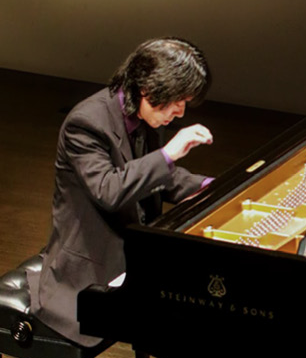
Taka Kigawa, piano
(le) Poisson Rouge, New York, NY
August 27, 2018


On August 27, 2018, pianist Taka Kigawa (www.takakigawa.com) presented a program called “Music of Aucoin, Furrer, Yamane, Berio” at (le) Poisson Rouge. It was to prove to be a fascinating experience of encountering music of up-and-coming talents (Aucoin and Yamane), an established leading composer of today (Furrer), and an undisputed master for the ages (Berio).

Poisson Rouge has established itself as one of the leading non-traditional venues for classical music concerts. It is a club, complete with food and drink service, in a setting that one might call “edgy.” The audience members included students, middle-aged folks, and assorted hipsters – a mix one doesn’t always see at “traditional” halls. The idea is to “shake things up,” breaking all the so-called rules of classical concerts. It’s not for everyone, and some might argue that the idea itself misses the point of a concert experience, but I’ll leave that debate for others.

There were brief program notes for each work, as written by their respective composers. This was helpful for the listener to gain insights into the works. To learn more about the composers, one can follow these links: Matthew Aucoin , Beat Furrer, Akiko Yamane.

Mr. Kigawa spoke briefly to express his love for the music he was to play and to inform the audience that all of the works on his program were composed in the 21st century. He might have even billed his concert as music of the 21st century, which would be not only an interesting hook but a way to discourage annoying labels of “modern” and “contemporary.”

Opening with Akiko Yamane’s clever piece, Illuminated Baby, a musical depiction of a baby’s march (imagine a toddler somewhat wobbly but planting each step firmly), Mr. Kigawa showed straight away that he is a dynamic performer. It was a delightful beginning to the evening.

Beat Furrer’s Phasma ended the first half. It’s a twenty-five-minute epic journey (described by the composer as looking out the window on a high-speed train) that taxes the performer to the utmost, particularly in terms of stamina. It included playing inside the instrument and other special effects. Make no mistake, this work is challenging for the listener as well, and those with limited attention spans are forewarned. Mr. Kigawa kept the large audience engaged throughout (even as servers negotiated the tables with food and drink), which in and of itself was indicative of a first-rate talent. He was rewarded with loud cheers at the end, which were well deserved.

Matthew Aucoin’s Three Etudes (rondo which devours itself, currents, and a sounding) opened the second half. These short works were offered with virtuosic flair and probing depth. Of the three, a sounding was my favorite, but all three are effective and engaging pieces.

Luciano Berio’s Sonata ended the concert. This work seems to be anchored around the note B-flat, which is repeated continuously through much of the work (it reminded me a bit of Le Gibet from Gaspard de la nuit). It was yet another twenty-five-minute work that made heavy demands on the player. Conceptually it was more accessible than the Furrer piece, so it was an easier task for the listener, but not for the player! Mr. Kigawa was more than up to the demands and made it all seem easy. Perhaps the audience had been spoiled by his earlier dazzle and did not give him the credit he so richly deserved, much to my chagrin. As an encore, Mr. Kigawa offered the 4th (Erdenklavier) of Berio’s Six Encores.

Taka Kigawa is a pianist who not only has technique to burn but possesses an uncommon intelligence. Special note to all 21st century composers: Taka Kigawa is the pianist you have been looking for.


Share

Distinguished Concerts International New York (DCINY) presents Song/Play in Review

Distinguished Concerts International New York (DCINY) presents Song/Play in Review

Florida Symphony Youth Orchestras; Hanrich Claassen, Symphonic Conductor and Florida Symphony Youth Orchestras Music Director
Distinguished Concerts Orchestra and Distinguished Concerts Singers International
Cristian Grases and Francisco J. Núñez, Composers/Conductors
Stern Auditorium at Carnegie Hall, New York, NY
June 24, 2018


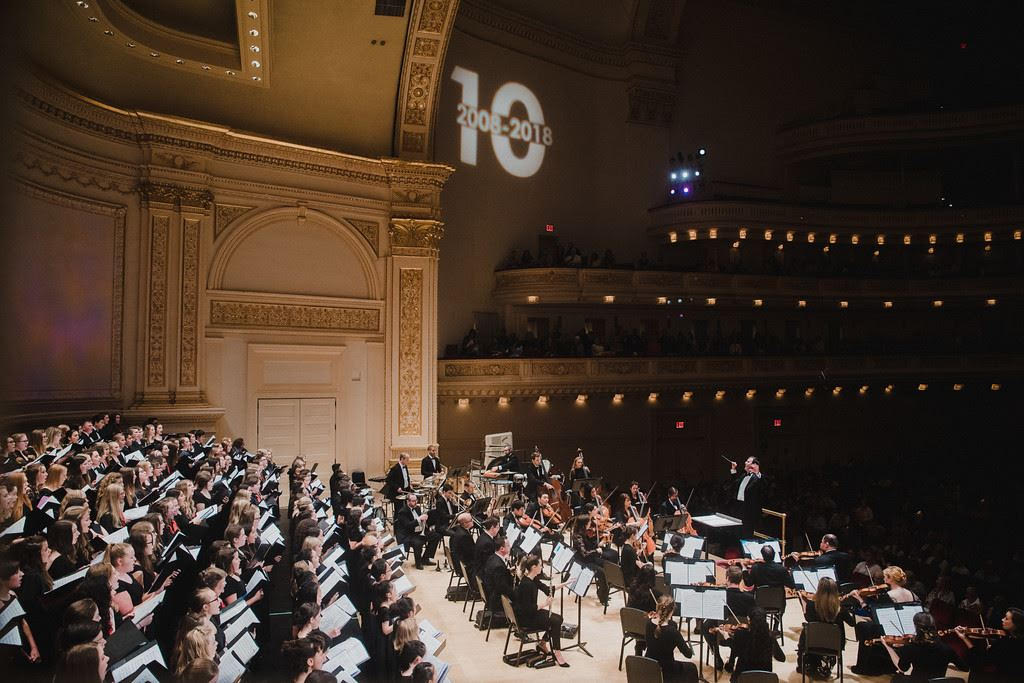
Distinguished Concerts International New York (DCINY) continued to celebrate its tenth anniversary with the final concert before autumn: “Song/Play,” a treasure trove of music made by youths of all ages and stages of musical development and education. Their Premiere Project also produced notable two world premieres on this occasion. The presence of over 350 singers in the massed choirs, mostly domestic, but some from as far away as China, Finland, and Ireland, and their families in the audience guaranteed an exciting, supportive atmosphere.

The afternoon began with a ravishing display by the Florida Symphony Youth Orchestras and their uncommonly musical, lyrically sensitive conductor, Hanrich Claassen. All the principal players (in fact, all the players) were first-rate, with burnished, plush strings and confidently played winds. The first work was Reflections on the Hudson by a San Francisco-based composer, Nancy Bloomer Deussen, whose work was previously unknown to me. As with most good program music, it portrays the composer’s inner feelings while contemplating the great river, without slavishly illustrating it in music. Its gauzy meditative quality was beautifully rendered by the group, and the middle “busy” section had some nice imitative counterpoint.

The Symphonic Dances, Op. 64, by Edvard Grieg, based on Norwegian folk melodies, followed. These well-known works had dozens of mature details all fantastically worked out by  Mr. Claassen and his team. They gave a truly “hot” reading of music from a “cold” climate. No. 2, Allegretto grazioso was my personal favorite, but all four were excellent. These students are so lucky to have such guidance at this stage in their lives. The look of ecstatic listening and participation on the face of the first cellist, Maxwell Remmer, was priceless. The rapture that younger players have immediate access to has not been bred out of them by routine. May it never be!

After intermission, two composer/conductors, both of whom I have reviewed previously in these pages: Cristian Grases and Francisco Núñez, each with a world premiere. Mr. Grases was given a really young choir to work with. His work, La Cigarra y La Hormiga, set a fable about a carefree partying cicada and an industrious ant (like Aesop’s ant and grasshopper) in a sort of cantata form, with all movements flowing right into each other. Mr. Grases wisely mixed rhythmic speech with well-crafted homophonic vocals to get the large amount of text covered expeditiously. The work, based on pan-Latin dance influences, could have used more variety at times, and it seemed too long. The clever instrumentation was a little too heavy, sometimes covering the large children’s choir. The message is a good one: the ant is generous with her food when the cicada comes over in the cold of winter. Each learns something from the other: that a satisfying life is neither “all work” nor “all play.” Then it was Mr. Núñez’s turn with a mostly older (high school age) group: a selection of his choral music, also including his premiere: Liminality, a complex four-movement work about an abstract idea, standing on the “threshold” of a new state of being but not quite “in” it yet. The third section, My Shadow, My Soul was gorgeous, with a wonderful soprano soloist from inside the choir. Naturaleza was a hymn to the beauty of the earth. Forever Is My Song imitated an indigenous Philippine musical gong, the kulintang. The day closed with the rousing Es Tu Tiempo, an exhortation to remember to dream and dare, sung by slightly “older” young people to those coming after them. Mr. Núñez’s use of percussion and the orchestra is inventive and satisfying, though he also over-orchestrated just a bit, leading to some balance and understandability issues. The DCINY orchestra was its usual fine self.

“Take a chance to dream.” Good advice indeed.


Share

Jason Sia in Review

Jason Sia in Review

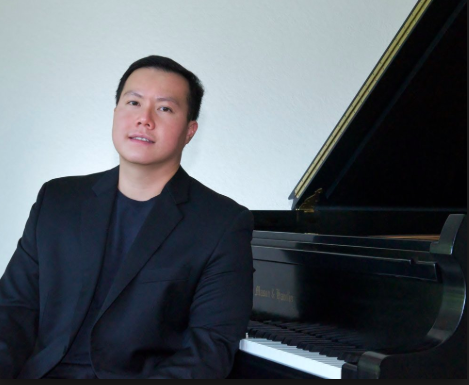
Jason Sia, piano
Weill Recital Hall at Carnegie Hall, New York, NY
Thursday, June 21, 2018


In the movie business, summertime is blockbuster time, so why should it be any different in the recital business? California-based pianist Jason Sia evidently thinks so, as he programmed a string of famous warhorses, with a few oddly sophisticated fellows thrown in. A small turnout listened intently. The results were decidedly mixed for this reviewer.

Let me begin with Mr. Sia’s strengths: he has a beautiful piano tone (not so easy to achieve), and a generally lyrical sense of line that is very fluid. On the flip side: he didn’t breathe, everything was rushed, he lacked a true technical command of these fiendishly difficult musical icons, he overpedaled, he had memory problems (it’s okay to use the score!), he had a curiously uncomfortable stage presence, he lacked charisma, he seemed curiously uninvolved most of the time, and he was reluctant to resolve dissonance into consonance, one of the important hallmarks of musicality. Perhaps nerves got the better of him.

Lest I seem too cranky, let me single out the pleasing moments from the program, and there were some! The Rachmaninoff/Schultz transcription of the 18th variation from Rhapsody on a Theme by Paganini, Debussy’s Rêverie (despite a thumping pedal foot), and the Gershwin/Wild song-etudes (The Man I Love, Embraceable You, Summertime) were all played with sensitivity and style, and Clair de lune had good atmosphere, if lacking a bit in accuracy. The Schubert/Liszt Ave Maria had excellent voicing amid the millions of notes, the Wagner/Liszt Liebestod was played orchestrally rather than vocally, which one could make a case for, and  Debussy’s L’Isle joyeuse had moments of great sensitivity and color, though again, technical control was shaky.

Elsewhere, there were senseless amputations of Beethoven’s Sonata Op. 27, No. 2 (sloppy, dynamically incorrect, and the second movement  omitted),  the Chopin Heroic Polonaise (just shorten the difficult left-hand octave section- maybe no one will notice), and the iconic Gershwin Rhapsody in Blue (begun in the middle at the lyrical theme, and played sloppily to its conclusion). This shows a strange lapse in taste, which was contradicted by Mr. Sia’s elegant playing from time to time. Ravel’s Ondine from Gaspard de la nuit, a frightening encyclopedia of nasty technical things, was mostly improvised, though I sensed that Mr. Sia’s spirit was in the right place. Liszt’s famous Hungarian Rhapsody No. 2 was spirited but slapdash.

Mr. Sia’s biography states a commitment to avant-garde music. He even won three awards for it, so I wondered why there wasn’t any on his program. I don’t wish to discourage Mr. Sia, I’m sure he brings great enjoyment to his followers, but when programming the “greatest hits” of the instrument, it is wise to be truly relaxed, carefree, and able to execute them accurately, as well as with individuality.

Share

The Alexander and Buono Foundation Presents Thomas Nickell and the Oistrakh Symphony of Chicago in Review

The Alexander and Buono Foundation Presents Thomas Nickell and the Oistrakh Symphony of Chicago in Review

Thomas Nickell, piano; The Oistrakh Symphony of Chicago, Mina Zikri, Conductor
Jeff Glor, Anchor, CBS Evening News, Honorary Chair and Host
Zankel Hall at Carnegie Hall, New York, NY
June 3, 2018


This past Sunday at Carnegie Hall brought some concert “firsts” for this reviewer (not counting the challenges of parades, protests, and resultant chaos throughout Manhattan, unfortunately not firsts).

It was this listener’s first time hearing a touring orchestra from Chicago that was not the Chicago Symphony Orchestra but rather the Oistrakh Symphony of Chicago, named, one assumes, after the great violinist David Oistrakh, an auspicious homage indeed. Under the leadership of excellent conductor Mina Zikri, this orchestra (founded in 2005 of largely young professionals) proved itself to be a commendable ensemble – undoubtedly a welcome addition to the “Windy City” and beyond.

It was also this listener’s first time hearing promising young pianist and composer, Thomas Nickell, age nineteen, in a program that included, among other works, Beethoven’s Piano Concerto No. 2, Op. 19, and Totentanz of Franz Liszt, both works that often get overlooked in favor of their more popular relatives (Beethoven’s Concertos 1,3, 4, and 5, and Liszt’s Concertos 1 and 2). It was a pleasure to see the two being programmed, and it was a pleasure to discover a young musician who is set apart in many ways from his peers.

The concert opened, rather unusually, with just the first movement, the Allegro con brio, of Beethoven’s Symphony No. 3 (the “Eroica”). It was odd to hear this portion of a masterpiece almost relegated to the role of an overture, but in terms of playing, aside from the need for more power in the lower strings, what one heard was excellent, played with regal spirit. Beethoven devotees may be disappointed by such excerpting, this listener included, but there seemed to be other priorities for the concert, particularly the featuring of Mr. Nickell, who followed with Beethoven’s Piano Concerto No. 2.

Mr. Nickell, who has concertized actively for several years, is currently studying at the Mannes College of Music where he is a double major in piano and composition. He has many admirable qualities as a performer, including an engaging and professional stage presence, overall technical mastery, the ability to respond with individuality to a musical score, and the ability to express that response with conviction. These are no small advantages.

Mr. Nickell also possesses a quality one finds endemic to composer-pianists, namely a pronounced tendency to favor the “big picture” over local detail – an asset and a potential liability all at once. He clearly grasps the overall architecture of what he plays, with none of the myopia of the mere technician, thankfully, but with such an aerial view that some finer elements are occasionally obscured. In his Beethoven, there were harmonies warranting extra intensity that were glossed over, thus losing expressiveness, as well as melodic phrases that needed more time for details to be articulated and to project the music’s full spirit and character. Perhaps the excitement of the occasion led to these issues, or perhaps they were viewed as pesky “details” – though one uses quotation marks, because the “details” in great music can be so important. In any case a slightly slower tempo in the first movement might have benefited the interpretation while probably enhancing the clarity in some of the left-hand passagework as well.

The above is not to say that Mr. Nickell lacks technical facility – he does not, and at times he displayed the light and fleet finger-work that reminded one of some of Glenn Gould’s recordings – but it struck this listener that Mr. Nickel, as a composer, may be so immersed in his own musical sound world that it may be hard to commit himself fully to the world of another composer, including historical milieu, philosophy, style, and notation (including the dynamics, which tended to need more attention in this performance). This speculation seemed supported by Mr. Nickell’s cadenza, which did not emerge as enhancing Beethoven’s concerto in this listener’s opinion. Though a cadenza’s traditional role does involve spotlighting the soloist, it should also serve the body of the work and not dissipate or dilute the momentum and tension of the movement, as it seemed to here.

Elsewhere, where Mr. Nickell took time, he was well rewarded. A highlight of his Beethoven, and perhaps the entire concert, was the hallowed Adagio movement. Mr. Nickell is unafraid of extremes of softness and slowness, and he savors the heart-stopping lulls more than many players. Thus, where Beethoven marked con gran espressione, Mr. Nickell maximized the moment, creating such a spell of quietude that one found oneself glowering at a neighboring audience member for breathing too loudly. The Rondo movement closed with plenty of sparkle, so much so that one wondered whether there had simply been a need to warm up during the first movement.

After intermission, the program became a virtual mini-recital for the pianist alone, without orchestra. Orchestra members (alas – having traveled a significant distance to play!) simply waited offstage, while Mr. Nickell played an eclectic variety of works. Again, the raison d’être for the program seems to have been to showcase Mr. Nickel. We heard him in works by Henry Cowell, Frédéric Chopin, and also by Thomas Nickell himself (with Philip Glass Etude No. 2 on the printed program but canceled). All of that came before the orchestra rejoined him for Totentanz, making for quite a demanding afternoon.

Two of Cowell’s best-known works opened the second half, The Tides of Manaunaun, with its growling bass forearm clusters, and Aeolian Harp, with its ethereal harmonies and glissandi on the strings inside the piano. It will be interesting to see whether Mr. Nickell will choose a niche (not that one must necessarily choose), but this listener’s guess is that he will fare the best with repertoire of the twentieth and twenty-first centuries. He played the Cowell pair sensitively and with dedication, without pause. He then launched into Chopin’s Polonaise in F-sharp minor, Op. 44, arguably one of Chopin’s more difficult works interpretively. Again, one heard artistry with a broad brushstroke and some ensuing messiness, but the most that one really wants to suggest to such a maverick is slowing down to smell some of the roses (and not just in the slow movements as many extremists do).

Mr. Nickell’s own composition, Innisfree, followed. A piano transcription of a song he composed, it revealed the influence of Cowell and possibly Crumb in its extended techniques, all while expressing a mood of meditation and mystery that seems to reflect the beginnings of his own individual style. One eagerly awaits hearing his future compositions.

Totentanz concluded the concert with an ease that belied its difficulty. Effective emphasis of rests and pauses maximized the ponderous qualities, but there was room for more biting pianistic brilliance. One wants to be spellbound by this piece, but the drama wasn’t quite full force. What was missing was a sense of the terror of the Dies Irae (or “Day of Wrath” in Latin – oddly misspelled in the program notes as “Das Irie”).

Will there be time for this pianist to practice sufficiently to make such Romantic virtuoso works truly scorching, while also inhabiting Beethoven’s world, devouring Cowell and Glass, and creating his own music? Time will tell, but in this year of remembering Leonard Bernstein, the quintessential multitasker, one should rule out nothing.

There are also many years ahead to fine-tune Mr. Nickell’s considerable gifts. Though there is no mention in his biography of his teachers at Mannes (an unusual thing, given his age), it is possible, in this current burst of career activity, that Mr. Nickell’s presenters consider that he has transcended such student matters. Hopefully such is not the case, as there is a lifetime of learning involved in maturing as a musician. Just as a single musical work can benefit from a slow burn, so can a musician’s evolution.

Among many elements in his favor, Mr. Nickell has a remarkably strong support base, and it includes prominently Barry Alexander (of the presenting Alexander and Buono Foundation), who gave the elegant spoken introductions. Mr. Nickell also had many fans in his audience, and they applauded him heartily, bringing him back to the stage for repeated bows. One looks forward to following the further development of this young artist.


Share

Distinguished Concerts International New York (DCINY) presents The Sacred and Profane: Carmina Burana in Review

Distinguished Concerts International New York (DCINY) presents The Sacred and Profane: Carmina Burana in Review

William C. Powell, Guest Conductor
Rosephanye Powell, DCINY Composer-in-Residence, Narrator, and Soloist
Distinguished Concerts Orchestra; Distinguished Concerts Singers International
Jonathan Griffith, DCINY Artistic Director and Principal Conductor
Distinguished Concerts Orchestra; Distinguished Concerts Singers International
Penelope Shumate, soprano; Dillon McCartney, tenor; Keith Harris, baritone
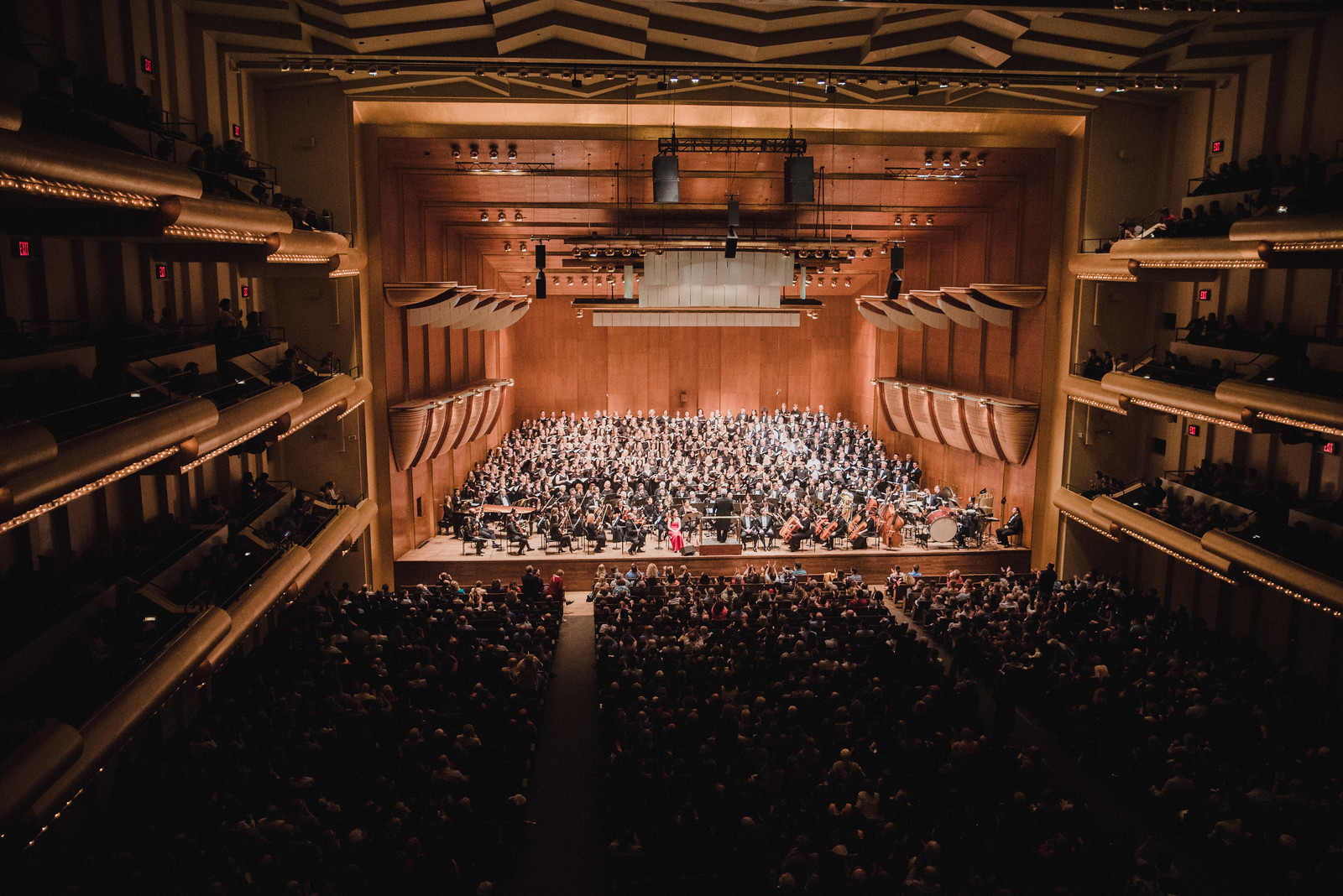
David Geffen Hall at Lincoln Center, New York, NY
May 28, 2018


I originally expected to have one experience on Monday at this DCINY concert, but wound up having quite another—this is good. It is hard to upstage the eternal crowd-pleaser that is Orff’s Carmina Burana, whose first chorus is used to sell everything from cars to post-apocalyptic scenarios, but Rosephanye Powell’s Gospel Trinity came very close. The Orff was also given a thrilling read.

Rosephanye Powell turned David Geffen Hall into a gospel church service with the New York premiere of her Gospel Trinity, less an explanation of than a physical celebration of the “three incarnated in the Godhead,” the traditional doctrine not only of Catholic theology but some Protestant ones as well.

Perhaps from a compositional standpoint, the musical content of the Gospel Trinity is somewhat simplistic. It is very approachable, borrowing from extant hymns and standard gospel gestures, but in the hands of Ms. Powell, who also served as narrator and stunning soloist, the Holy Spirit inhabited the hall, and the music led to an experience beyond itself.

Ms. Powell’s voice ranged from baritone low notes to stratospheric high notes and every color in between, all of which were produced with beauty and fervent energy. The massed choirs were conducted with swinging enthusiasm by her husband William C. Powell. The choral body swayed freely, and clapping and other responses were perfect. The entire score was presented from memory, and it contains a great deal of improvisatory spirit. The two Powells exhorted the audience to clap and testify, and the spiritual frenzy mounted—a great manifestation of faith.

In his excellent program note for the Orff, Joseph Kahn states: “If there were a contest for the composer with the most despicable character, Carl Orff would definitely make the finals.” Orff’s own daughter said: “He did not really love people; if anything, he despised people unless they could be useful to him.” Hitler’s minions lionized him, and he did nothing to assist friends who were being rounded up. Eventually, he was “de-Nazified,” officially classified as “gray acceptable” (an upgrade), and he did devise a system of musical instruments in use to this day for the development of early-childhood musical potential. Ultimately, one separates the man from his artistic production.

Under Artistic Director and Principal Conductor Jonathan Griffith, the enormous assembled forces navigated this score with complete assurance, even ease, making all its rhythmic shifts and faux-primitivism seem utterly natural. The three soloists were all top-of-the-line. Baritone Keith Harris had the most to do, and he colored his sections with just the right amount of acting, especially in the bibulous tavern scene. The baritone part is often cruelly high, but he was completely in control. Penelope Shumate, who I’ve reviewed previously in these pages, was radiant in her high-flying Dulcissime, a high D sounded nowhere near the top of her capability. She also gave a charming “look,” full of implicit pleasure, to concertmaster Jorge Ávila as he performed the metric shifts of the Tanz. Her In trutina had a lovely hushed eroticism, virtually banishing memories of Streisand, who recorded it in the 1970s on Classical Barbra in a kind of tranquilized perfection. The tenor, Dillon McCartney, has only one solo, but what a doozy it is! The Roast Swan (Olim lacus colueram) scene, in which the poor bird recounts its own cooking, lies at the outer-space regions of high notes, and once again, Mr. McCartney sounded born to sing it.

The chorus work was world-class, from whispered threats to full-glory exultation, with clear diction in all the ancient languages represented. All the wind and percussion playing in the huge pick-up orchestra was excellent. I have mentioned previously that I think it’s a shame for these players not to be credited. I only mention concertmaster Ávila because I happen to know his name.

Some of the content of these scabrous medieval doodlings is quite “adult,” and I wondered how (or if) the children and other younger singers were educated about what was going on. I guess I’m giving away my age, for today’s young people see and experience so much more than we did when I was young, including the thrill of a major New York concert.

Share

Huizi Zhang Presents Hreizleriana in Review

Huizi Zhang Presents Hreizleriana in Review

Huizi Zhang, piano and toy piano
Marc A. Scorca Hall, The National Opera Center,
New York, NY
May 26, 2018


The National Opera Center was the setting this weekend for a fascinating program by excellent young pianist, Huizi Zhang (www.huizizhang.com). Five recently composed works by four young composers with whom I’m not familiar – including three premieres – preceded a performance of the deservedly familiar Kreisleriana, Op. 16, one of Robert Schumann’s great masterpieces. It was a thoroughly stimulating evening, pairing discovery with rediscovery.

The program’s title Hreizleriana, and its subtitle, “…a journey into madness and music,” made reference to two works of art, the E. T. A Hoffmann novel, Kreisleriana, about a mad genius conductor named Kreisler, and Kreisleriana, Schumann’s magnificent piano work which the Kreisler character inspired, heard as this program’s finale. Ms. Zhang’s program subtitle was fitting for a concert that would have touches of madness throughout (beyond those of the Schumann’s own mercurial qualities). As for Ms. Zhang’s spelling of Kreisleriana as Hreizleriana, one can only guess that it was a way of including her own initials – a playful touch which Schumann, cryptogram devotee, might have appreciated.

Beyond the interesting program concept, the execution is naturally always paramount, and Ms. Zhang’s playing was nearly uncriticizable. She conveyed a firm belief in each piece, honoring the composers with her thoroughness and interpreting their music with vibrancy and sensitivity. Her Schumann was exemplary, capturing all the fluctuations of Schumann’s widely contrasting moods and with rarely a glitch. With such a pillar of the standard repertoire beautifully in hand, Ms. Zhang could build many similar musical journeys “into madness” using this Schumann as the foundation and finale. Though her emotional projection was never “over the top” into the realm of madness, itself, she demonstrated expert control as the vehicle for the madness of others.

Four Movements for Solo Piano (2016) by Jacob Wilkinson (www.jwiki222.wixsite.com/jacobwilkinson) opened the program. Born in 1997, Mr. Wilkinson was the youngest of the composers presented. His four movements, entitled Prelude, Incantation, Lullaby, and Circle Dance, offered expressive and intelligently crafted writing, idiomatically written for the piano. Some of it sounded like a Scriabin-inspired improvisation (with hints of Messiaen), though the last movement, with its short, repeated dance motives, brought to mind the brilliance of Ginastera (also Villa-Lobos, a thought possibly triggered by its name, Circle Dance). Invoking names of famous composers, by the way, is not an implication that this music is derivative, but rather a shortcut in characterizing what can take too long to describe; that said, if one were to be derivative, one could do much worse than to have such composers as models! As for the Scriabin similarity, there are similarly craggy and urgent impulses felt in the middle and late work of the Russian master, sometimes attributed to encroaching madness – again fitting right in with Ms. Zhang’s theme. In sum, Mr. Wilkinson is a promising young artist, and he is fortunate to have attracted the advocacy of such a fine pianist as Ms. Zhang.

Following came Six Preludes for Piano (2013) by Colombian-born Fabian Beltran (www.fabianbeltranmusic.com). These were direct, communicative pieces showing a strong ability to capture varied emotions in fluent and vivid pianistic writing. The nocturne-like movement Grave e dolente was particularly captivating in its lyricism, and the set was rounded out with brilliant, though occasionally strident, performances of the two final movements, Vivace and Con brio. Brash major triads concluded the set rather incongruously after some of the tonal complexity which had preceded, and one could only guess that they were meant to be summarily facetious. As the comments from the pianist onstage were not quite decipherable, one missed that extra bit of guidance that might have informed the experience – one could make out from the introduction that these pieces were composed each in a single night during a period of emotional instability, but not much more. Luckily, the work stood on its own merits. It had wide dramatic range, and on a madness-and-music-themed program, it was another well-placed work. One eagerly awaits hearing more from this talented composer.

What followed was Passage 2 (2018, premiere), by Singaporean composer, Gu Wei (www.guweimusic.com). The first of two works by Mr. Wei (the second coming after intermission), it employed gentle repeated figures to create a mesmerizing quasi-minimalist effect which initially brought to mind some music that is carelessly dubbed “New Age”; it did so, however, in a manner that this listener (not a New Age fan) found quite appealing. Especially intriguing was the way isolated tones emerged from the texture of repeated figures according to shifting metric placement, forming additional layers and textures. One could visualize a warp and weft subtly forming within the music, creating additional patterns between them. As with the other pieces (except, of course, the Schumann, played from memory), Ms. Zhang handled it all capably reading from the score.

In marked contrast to Passage 2 came Mr. Wei’s other featured work, Madman’s Diary for toy piano (2018, premiere). This toy piano work is a musical setting of seven selections from an allegory entitled Madman’s Diary (1918) by Chinese writer Lu Xun. Full of nightmarish references to cannibalism, the text provided the quintessential springboard for musical madness, with the eerie childlike sounds of a toy piano evoking alternately the sneakiness, obsessiveness, indecision, stealth, and panic of Lu Xun’s world in which one must eat or be eaten. Especially effective was the use of nursery rhyme-like symmetry of phrase, which, when interrupted towards the end, expressed perfectly the text’s last line, “save the children.” Ms. Zhang delivered this frightening work superbly and is to be commended for making the tiny toy piano so expressive, especially right before taking command of the house Yamaha grand for Schumann’s Kreisleriana – a striking juxtaposition indeed!

Before all this, though, to close the first half, one heard music by Ramteen Sazegari (www.ramteensazegari.com), in particular a piece entitled 20, 30 pg. for prepared piano and electronics. Some of the prefatory remarks were a bit muffled, but, in any case, one is uncertain how the title 20,30 pg. relates to what one heard. We were told something about a reference to purgatory (the possible origin of the “pg” part?), but we were largely in the dark. This issue will be addressed later.

Meanwhile, any misgivings about hearing electronic music evoking purgatory were quickly dispelled by what turned out to be an engaging piece. There was a fascinating blend of live piano sonorities with recorded ones, and one’s imagination was taken on an interesting ride. One audience member afterwards did express an aversion to some overwhelmingly loud bass tones in the electronic part, but this reviewer would have to argue that the suggested subject matter probably called for it. It was, again, a welcome addition to the program’s overarching theme of madness. In a way one couldn’t help musing what a great catchall this theme of madness could be for works defying specific interpretation, but certainly there were more specifics at play in Ms. Zhang’s conception.

This reviewer’s chief quibble for the evening was that, especially with new music, there needs to be better extra-musical communication to an audience, both from the composer and from the performer. Puzzles and hidden meanings can be a delight with some hints, but there is something off-putting about titles and prefaces that are unhelpful or worse. Having sat for decades through literally thousands of performances of compositions given such titles as Obfuscations 87.4 and the like, this reviewer can safely say that such cryptic cleverness (if it is that) gets old fast, becoming annoying rather than fascinating. Do musicians want to bring audiences closer to their musical hearts and minds or drive them away? And would the same musicians return to a restaurant serving food that had to be located via scavenger hunt, or on tables five feet above reach? Such presentation would be considered contemptuous.

Meanwhile, Ms. Zhang, quite soft-spoken, chose to read her introductions in haste from a small paper which drew her voice downwards. If projection is an issue, then one needs to use a microphone, to speak from the heart, to slow down, or to distribute printed program notes. Granted, it may take a listener some effort and repeated hearings to delve deeply into a masterpiece, but should it take extraordinary mental leaps to grasp even the basics of compositional intent during a first hearing? This musician says no. Note to composers: create some program notes that communicate – they will not have a “spoiler” effect! You do not need to present a theoretical analysis or a treatise on the philosophy behind it – just a bit of guidance for the ear and mind. Remember also that there may be lay people present.

If the above seems to be a bit of a rant, this reviewer has simply seen too much of this problem. Musicians, perhaps because they work long hours in solitude or in academia, are too often simply oblivious to the world that will hear them, as if they don’t even care whether an audience comes. On that note, despite the originality and appeal of Ms. Zhang’s program, Saturday’s audience amounted to fewer than twenty people, including the composers themselves and this reviewer and a guest. Surely there could have been more of an effort to reach out to prospective listeners who probably could have enjoyed it.

One learned after this recital that Ms. Zhang will be performing September 29, 2018 in Weill Hall at Carnegie Hall (Carnegie Hall calendar 9/29/2018). No program is listed yet at the Carnegie website, but one hopes it will be largely the same, by then just a bit riper. It should be a rewarding evening if just two pieces of advice are followed. To Ms. Zhang and company: do more reaching out, both before the concert and during! To music-lovers, art-lovers, and thinkers everywhere: go hear Huizi Zhang in September – she is an outstanding pianist with a gift for interesting programming.

Share

Distinguished Concerts International New York (DCINY) presents Vocal Colors in Review

Distinguished Concerts International New York (DCINY) presents Vocal Colors in Review

Distinguished Concerts Singers International
J. Reese Norris, Eric Barnum, Conductors
Jennifer Rushton, Kristen Kemp, Pianists
Richmond Choral Society and The Arcadian Chorale
Marina Alexander, Director, Ahram Lee, Pianist
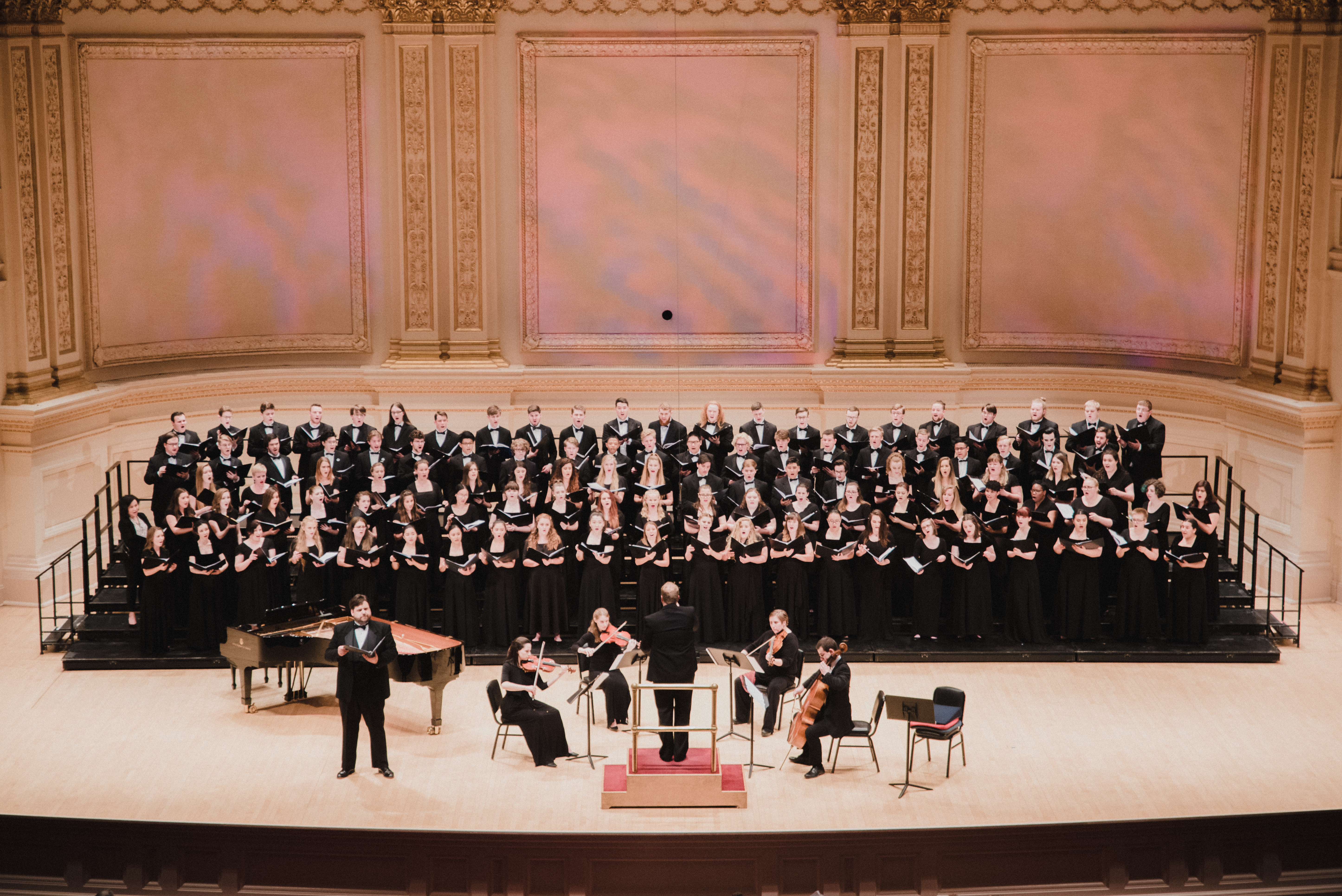
Stern Auditorium at Carnegie Hall, New York, NY
May 25, 2018


While thousands of New Yorkers were busy fleeing the city for the Memorial Day weekend, hundreds of dedicated choristers, their conductors, families, and friends were flocking toward Carnegie Hall, for the fourth annual Vocal Colors presentation by DCINY (I have reviewed them previously in these pages- Vocal Colors 2017 & Vocal Colors 2016). As Lisa Young’s thulele mama ya says: “Don’t worry, Mama.” Well, mamas will probably always worry, but reviewers needn’t worry about the quality of these events. Once again, the dedication, cooperation, communal spirit, and positive message of choral music showed all its energy.


The program was divided into three sections, one before intermission and two after. The first section had an all-female choir, conducted by the esteemed J. Reese Norris, of whose compositions a generous helping was presented. All the selections were performed from memory, an outstanding accomplishment in itself. If there was a sort of sameness to the sound due to the tessitura of young women’s voices, it was relieved by strategically placed (uncredited) instrumental obbligati: light percussion, guitar, cello, with the piano as base. The linking of hands near the end of Jacob Narverud’s Sisi ni moja (We are one) provided a powerful counterpoint to its message, especially in an age becoming inured to mass shootings. Norris’ own Paper Crane (Heiwa), inspired by Hiroshima, had his signature powerful “zoom” ending. His wedding present for his own wife, We Sing of Love, using parts of the Song of Solomon, was lovely. All the works were beautifully prepared and executed.


After intermission, another leader in American choral music, Eric Barnum, conducted his group in his own contemplative compositions: Afternoon on a Hill (Millay), and A Thousand Red Birds (poems by Oakes, Bode, and Porter), where soloist Nathan Krueger’s contribution to In the Silence was perfect, as the observer of snowfall. Mr. Barnum concluded with two works he feels belong together as aspects of the same thing: Evensong and Den blomsterid nu kommer (The time of blossom now comes), keen observations of the natural world, captured in music.


Then came conductor Marina Alexander with her own groups: The Arcadian Chorale (NJ) and Richmond Choral Society (Staten Island). After a brief, energetic Norwegian Alleluia by Kim André Arnesen, a real neglected masterpiece was given, by a Swedish composer whose work was previously unknown to me (shame on me!): Otto Olsson, who died in 1964. His Te Deum was composed in 1906. What a glorious, powerful setting of this hymn of praise! It certainly deserves to be heard every bit as much as the Berlioz, Verdi, and Bruckner settings. Transcendent beauty, indeed.


Well done, colorful vocalists!

Share

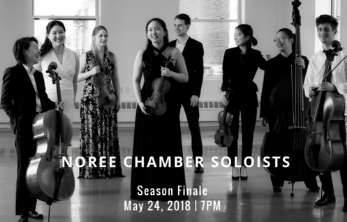
Noree Chamber Soloists NYC Concert Series Season Finale in Review

Noree Chamber Soloists NYC Concert Series Season Finale in Review

Yoon Lee, Yi Qun Xu, artistic directors
Stella Chen, Francesca dePasquale, Bela Horvath, violins; Caeli Smith, viola; Yi Qun Xu, cello; Yoon Lee, piano
Guest Artists: Catherine Cho, violin; Roger Tapping, viola; James Kim, cello
Church of the Blessed Sacrament, New York, NY
May 24, 2018


The Noree Chamber Soloists (www.noree.org), with special guest artists Catherine Cho, Roger Tapping, and James Kim lending their talents, concluded their NYC Concert Series season on May 24, 2018 with a program of Beethoven, Fauré, and Mendelssohn at the Church of the Blessed Sacrament. This program was originally scheduled for September of last year but had had to be re-scheduled. The unforeseen bonus of this delay was that the Church of the Blessed Sacrament meanwhile received a beautiful new Steinway grand piano (less than a month ago).

The well-written and informative program notes written by Jung-Min Mina Lee, Noree Chamber Soloists’ resident musicologist, made an immediately favorable impression on this reviewer. It should also be mentioned that in a previous review in this journal (The Viola Sings- Noree Chamber Soloists), the lack of printed notes had been noted, so the willingness to address this issue, which some might consider a reviewer’s fussiness, was also appreciated. Biographies of all the artists were included as well.

I will admit to having some trepidation about the acoustics of this venue, but the wise placement of the players in the middle of the hall, with the audience seated close to them, proved to be effective in keeping the sound “local”.

Pianist Yoon Lee and violinist Catherine Cho opened the concert with Beethoven’s Violin Sonata No. 3 in E-flat major, Op.12, No. 3. This early work reflects Beethoven’s most optimistic self. It is brimming with ebullience in the outer movements and lyrical beauty in the central slow movement. Even though this is a violin sonata, with a more or less equal partnership between the players, Beethoven gives the pianist the lion’s share of the difficulties – this is not at all to suggest that the violinist has a “walk in the park” (nothing could be further from the truth) – just to say that the pianist for this work deserves special recognition. Ms. Lee was equal to Beethoven’s virtuosic demands while never overpowering Ms. Cho, even though the piano was on the full stick. Ms. Cho projected a rich, vibrant tone, while tackling the technical challenges with an assured ease. It was a pleasure to witness Ms. Cho’s and Ms. Lee’s rapport. The audience was thrilled by their performance, with many shouts of Bravo! It is always heartening to this listener to witness such an enthusiastic response to a fine performance.

Fauré’s Piano Quartet No. 2 in G minor, Op. 45 followed the Beethoven. Violinist Francesca dePasquale, violist Roger Tapping, and cellist Yi Qun Xu, joined Ms. Lee. While I was impressed with the passionate playing of the opening movement, the frenetic energy of the perpetuum mobile second movement, and the “all-in” approach to the driving relentlessness of the finale, it was the third movement Adagio that set this performance apart. Of this movement, Fauré himself said he was inspired by the memory of evening bells from his childhood in the village of Cadirac. The audience listened with rapt attention as the ensemble played this “eerie reverie” (Fauré ‘s words) with exquisite sensitivity.

After Intermission, violinists Catherine Cho, Stella Chen, Francesca dePasquale, Bela Horvath, violists Caeli Smith and Roger Tapping, and cellists James Kim and Yi Qun Xu joined forces for Mendelssohn’s Octet in E-flat major, Op. 20. Written when Mendelssohn was sixteen as a birthday gift for his violin teacher Eduard Ritz (pity the other gift givers who had to follow that!), the Octet is, as stated in the program notes, “a dazzling display of individuality and imagination not commonly matched with a sixteen-year-old.” One could easily add “or one of any age!” It is no mean feat even for ensembles who have played together extensively to successfully navigate not only the technical challenges, but the ensemble ones as well, so I was adopting a “wait-and-see” outlook. Happily, these players meshed together wonderfully. Balance and intonation were excellent, and passagework was crisp and clearly articulated. The third movement, the well-loved Scherzo, which takes inspiration from Goethe’s Faust, had a light, puckish playfulness that sparkled with elfin magic. It was the highlight of not only the Octet, but the entire performance for this listener. After the thrills of the Presto finale, the audience rewarded the players with a richly deserved standing ovation. A wine reception awaited the audience after the concert.

Noree Chamber Soloists is a group with great promise. These young players already possess technical mastery and, given more time playing together, they should mature into a first-rate ensemble.


Share

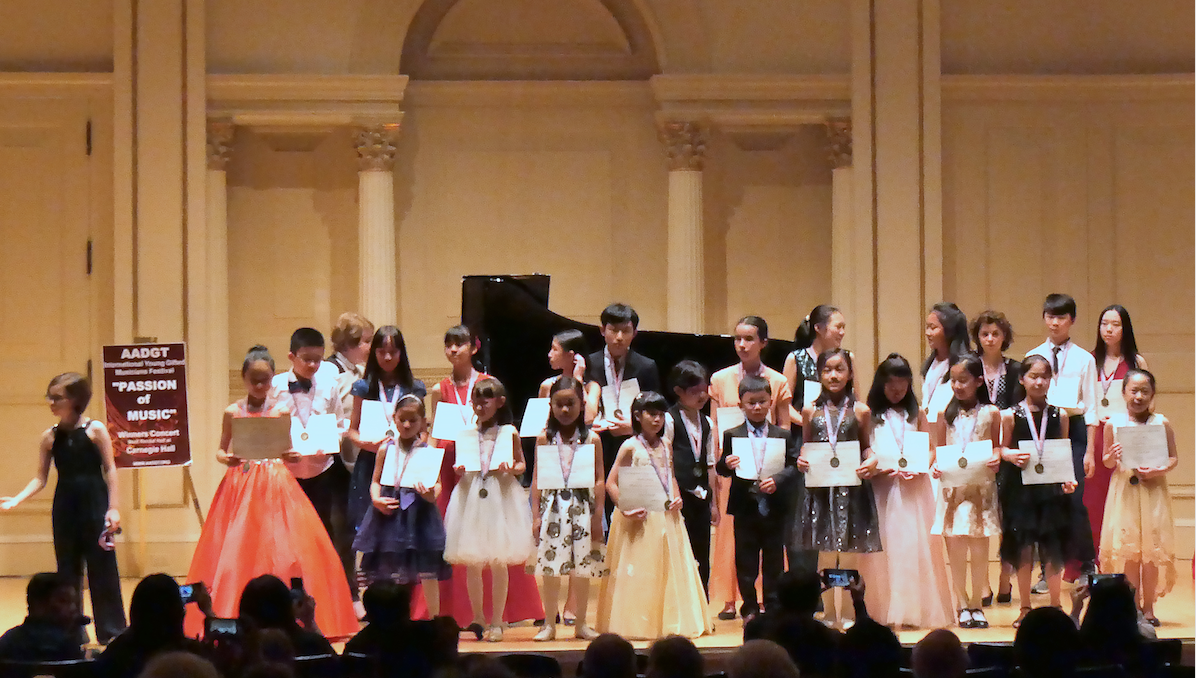
AADGT Presents The Passion of Music Winners in Review

AADGT Presents The Passion of Music Winners in Review

Weill Recital Hall at Carnegie Hall, New York, NY
May 13, 2018


Celebrating their 25th anniversary this year, the American Association for the Development of the Gifted and Talented (AADGT) under the direction of founder Elena Rossman has provided vital support to the early careers of some outstanding young musicians. Their most recent concert, fittingly held on Mother’s Day, suggests that their musical nurturing is still going strong.

This reviewer first wrote about AADGT in October, 2006 (when New York Concert Review was still a print periodical). One of their young winners, Aimi Kobayashi had been a mere eleven years old, and I admired her “performances that were stunning for a pianist so young.” She has since won accolades, performed, and recorded (EMI) worldwide, with a new CD/DVD release coming out just this year. Similar stories can be reported about other AADGT winners, counting recognition from competitions and organizations such as the National YoungArts Foundation in 2018 (Max Bobby, Ray Ushikubo), and the Lang Lang Foundation (Anna Larsen, Charlie Liu, Derek Wong, Jasper Heymann), leading conservatories and festivals (Juilliard, Aspen, Curtis) and feature programs such as “The World’s Most Talented Kids” (The Oprah Winfrey Show, 2009), and Arabs Got Talent (2015). Other winners of AADGT’s prize have included Yoav Levanon, Nadia Azzi, Annie Zhou, and Solene Le Van. The AADGT website (www.aadgt.org) also mentions two much more well-known names, Ilya Itin winner of Leeds 1996, and Nobuyuki Tsujii, winner of Van Cliburn, 2009 (though few details are given as to their prizes from AADGT); high praises from Lang Lang, Martha Argerich, and Evgeny Kissin, are among the testimonials.

This year’s concert, not surprisingly, differed greatly from the one I heard in 2006. First of all, this year’s program was in Weill Recital Hall, as opposed to the larger Stern Auditorium – seemingly a wise move for soloists so young. Also, in 2006 there were 6 winners presented, each in substantial sections of the program, while this year there were 32 performers (ages 5-26), some in rather short works. While it was interesting to behold such a large array of young performers (thirty pianists, two violinists), it did make for a program of nearly three hours.

In these days of “safe spaces” for the young, it was good to see the fruits of unrelenting commitment and diligence – and how brave the very young musicians were to perform at such a venue, with Carnegie Hall’s stages being not what one would call “safe” for trial and error performance! The performers were overall quite well-prepared, technically accomplished, and clearly mindful of high artistic standards. This review is not the medium for delving into the playing of every single player – which would be unfair, given the vast disparity of ages and repertoire levels, and the fact that some performers had to wait over two hours to play; that said, some highlights are in order.

The program opened with Evelyn Liu (Age 5-6 Group) playing Tchaikovsky’s Song of the Lark from Children’s Album, Op.39, No. 22, and showing remarkably crisp articulations and digital facility for one so young. She radiated delight upon finishing, and it set lovely tone for the day.

Isabel Liu (age 7-8 Group) followed with excellent renditions of two pieces by William Gillock, Sarabande and Mission Bells. The Sarabande showed an admirable sense of nuance, with lovely pianissimo shading. Mission Bells was sonorous and well-balanced against a gentler accompaniment in the right hand. Dynamics were somewhat exaggerated (approaching fortissimo where marked mezzoforte), but that is generally preferable to a lack of projection, and the playing was always communicative.

In the same age group one heard Vivian Zhang in more Gillock, now the steady rocking of Silver Bells, and Phatsacha Leowattana (Thailand) in Clementi’s Sonatina Op.36 No.1. The Sonatina was well played in all three movements, showing complete focus and maturity. Occasionally one wanted more sound in the right-hand balancing the left, but the slow movement was especially lovely with sensitivity and clarity in the melodic line.

In the age 9-10 category, we heard some surprisingly difficult repertoire, including Chopin’s Impromptu No. 1 in A-flat Op. 29, played very well by Emma Liu and the same composer’s Valse, Op.64 No.2 in the able hands of Phatthicha Leowattana (Thailand). Both players showed a high level of polish and a sense of style which will undoubtedly feel even more natural as they mature. If the two performers with the surname Leowattana are related (one can only guess, but should not assume), they have a built-in two-piano team in the offing!

We also heard in the age 9-10 category Chopin’s Nocturne in E-flat, Op. 9, No. 2, the same Nocturne that we heard in the age 7-8 category. Rather than delve into the comparative merits of the performances (though it is a challenging piece for both age groups, and both fared well), I must express my disagreement with the practice of presenting different performers playing the same piece on the same program – it is trying for audience and performers alike and really should not be necessary if there has been a wide enough selection submitted. The same duplication occurred with two pianists playing Rachmaninoff’s Polichinelle, and though both pianists were impressive for their age groups, this should be a concert and not a competition, so one will refrain from further comment.

Among other minor objections of the day was the omission by one youngster of the A-major octaves in Mozart’s Rondo alla Turca (from Mozart’s Sonata in A major K. 331) probably due to hand size. For such a distinguished venue, I felt that such a piece ought not to be subjected to such shortcuts, as there are many other pieces that could be chosen to be played exactly as written.

Among other programming complaints was the change, from one performer, to Mendelssohn’s Rondo Capriccio instead of the originally programmed work. One’s guess is that there was a Plan A vs. Plan B situation, but such things are a risky proposition. There were various technical challenges unmet, and it simply needed more time, as did several other performers’ works.

In a pleasant break from the typical fare, Gina Park played the third movement Aram Khatchaturian’s Sonatina. It is a demanding movement, with rapid and chromatic fingerwork, and Ms. Park handled its challenges with aplomb.

In the age 11-12 category, Adriel Aguilar played Haydn’s Arietta with Variations with some stylish staccatos, good repeated notes, and a fine sense of Haydn’s humor. Also in this category was Erika Suyama (Japan), playing Chopin’s Bolero, Op. 19. She projected its many moods with sensitivity and played with excellent precision through its rapid passagework, from opening to the brisk polonaise and through to the heroic ending.

Moving to the age 13-14 category, there were several highlights. Stephanie Liao was exceptional in Lowell Liebermann’s Nocturne No. 4, Op. 38, not only for sustaining the hypnotic mood of the opening, but for sustaining the momentum and power building to its thunderous climax. Exceptional as well was Jasper Heymann, playing the third movement of Mendelssohn’s Fantasia, Op. 28. He kept the piece’s character and clarity throughout the fleetest finger-work.

Joanna Wang showed impressive maturity and sensitivity in Chopin’s Nocturne in B-flat minor, Op. 9, No. 1, and Yali Levy Schwartz, showed much technical confidence in the bravura variations of the Paganini-Liszt Etude No. 6 (with just a bit more attention needed for precision in the theme itself).

Elizabeth Tsitron, one of only two violinist winners, added a different timbre in Wieniawski’s Legende and played with a good sense of its Romantic spirit and some deft technique.

 Closest to being at a high professional level (in the age 16-18 category) was Kyrie McIntosh whose Prokofiev Sonata No. 3 in A minor had all the ingredients it needs for a powerhouse performance – biting chordal playing, firm grasp of its structure, tonal and emotional variety, and polish. Also excellent was the Brahms Capriccio in G minor (No. 3 from the Fantasien, Op. 116) as played by Chutikan Chaikittiwatana (in the age 18+ category) . Playing after so much demonstrative pianism, her straightforward but genuine musicality was much appreciated in this noble work.

There was so much that was good in the program that it may be best to lump the less good aspects into some brief generalizations. Overall, the awkward context of a group recital does invite the spirit of competition, so there was a tendency among many to exaggerate contrasts, to indulge in unnecessary hand gestures, and to resort to other extra-musical mannerisms – as if to say, “please notice me!” It is unfortunate to subject musicians, or the music, to this need. With just a bit more time between works (and necessarily fewer works) the performers and audience could feel the psychic space to appreciate each work on its own terms, as pieces of music, absolute and incomparable.

A benefit of the above approach might also be less of the all-too-common “on/off” switch mentality about dynamics, in which extreme louds and softs obliterate the middle ground, with crescendos not sustained and climaxes coming prematurely without depth. In any case, one ought not to think of passages as “loud” or “soft” but as the character, emotion, or concept that gave rise to those dynamics – all then starts to make more sense. Even memorization improves! Nerves are inevitable, but greater focus on the messages or meanings behind each work might have helped keep a few performances on course.

All in all, though, Sunday’s concert offered an impressive array of young musicians, including some stars of tomorrow. Congratulations are in order not just to the performers but to their mentors and families. Congratulations are of course in order to AADGT: Cheers to 25 years!


Share