Mason Gross School of the Arts and The Douglas and Inyoung Boyd Foundation present Americans in Rome in Review

Mason Gross School of the Arts and The Douglas and Inyoung Boyd Foundation present Americans in Rome in Review

Americans in Rome in Review
Featuring Faculty, Students, and Alumni of Rutgers University
Min Kwon, Artistic Director and Curator
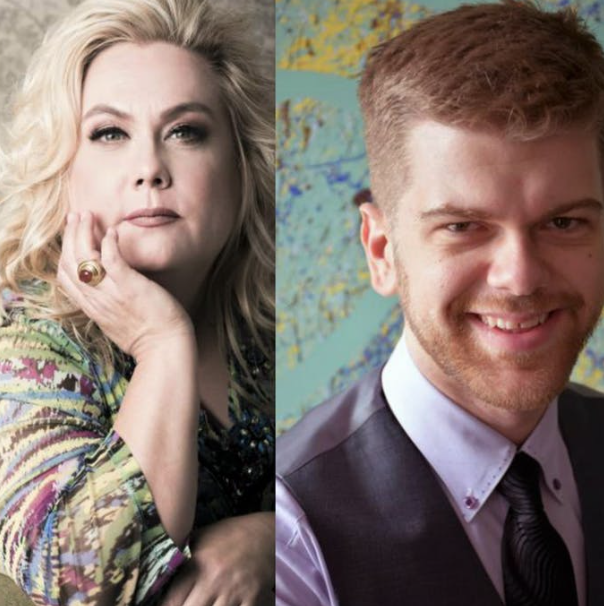

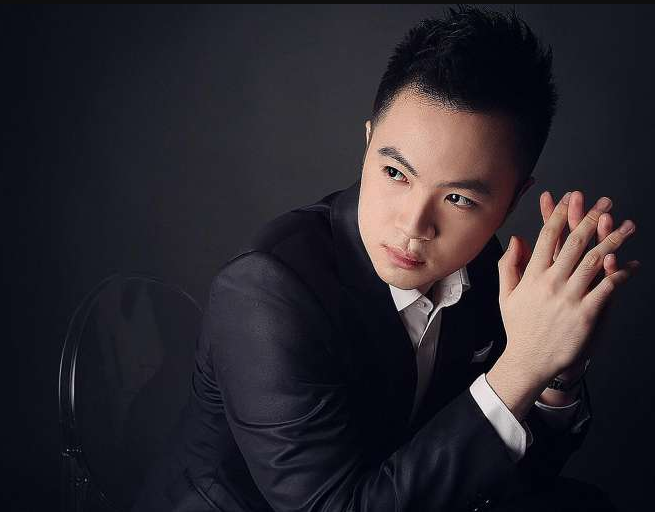
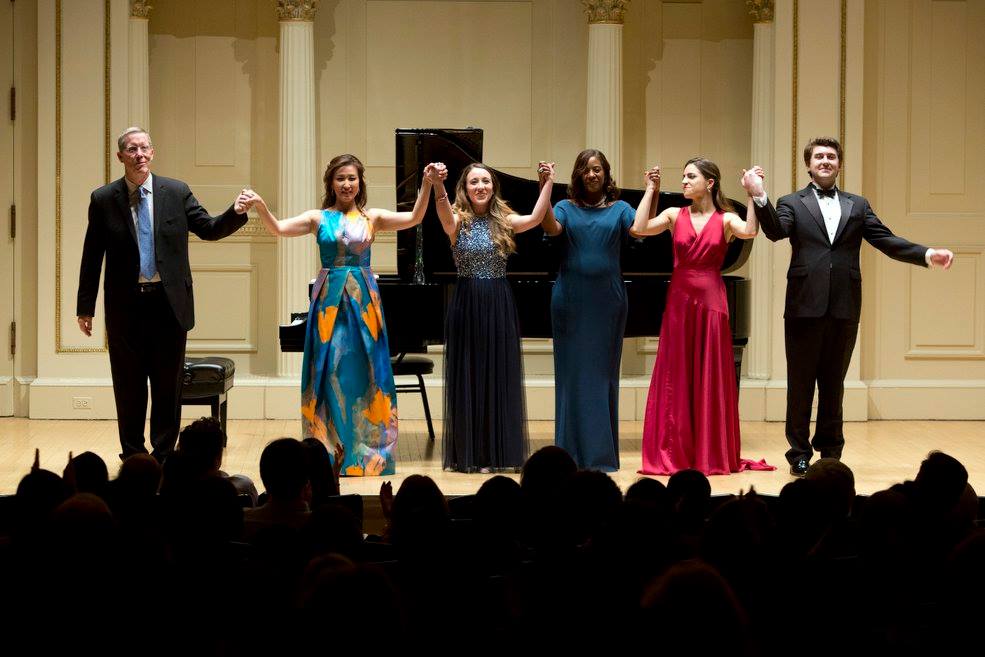
Min Kwon, Warren Jones, Enriqueta Somarriba, pianos; Kaitlyn Davis, Sonya Headlam, sopranos; Andrew Moore, bass-baritone
Weill Recital Hall at Carnegie Hall, New York, NY
May 7, 2018


For some years now, the Mason Gross School of the Arts at Rutgers has sent its best faculty, students, and alumni to New York each spring for a celebration of their talent at Weill Recital Hall at Carnegie Hall. Their programs are always thoughtfully conceived around a theme: this year’s was “Americans in Rome,” composers who benefited from a fellowship of some sort at the American Academy in Rome. Three iconic Americans, one lesser-known American, and one young Italian composer were all represented.

Perched atop its hill on the Vatican/Trastevere side of the Tiber River, the American Academy is a haven for creativity of all sorts, not just music: visual art, architecture, literature. (The French winners of the Prix de Rome (since the first recipient, Berlioz) are housed at the Villa Medici at the top of the Spanish Steps on the other side of the river.)

The program focused on Leonard Bernstein (this year is the centennial of his birth), Samuel Barber, and Aaron Copland, along with two world premieres composed specifically for pianist Min Kwon. She met the respective composers in Rome last year. What a cornucopia of entertainment they presented.

Ms. Kwon and her student Enriqueta Somarriba opened with a brash, perfectly coordinated rendition of Bernstein’s Music for Two Pianos, written just for pleasure while he was a student at Harvard at age nineteen in 1937. In it, we already hear his preoccupation with jazzy content, and a foreshadowing of the fourth of Copland’s Four Piano Blues (1948). In her excellent oral program notes, charmingly delivered before each section of the recital, Ms. Kwon stated that Bernstein considered Copland (eighteen years his senior) his “only composition teacher.” Apparently, influence goes both ways.

Then Andrew Moore, a warmly expressive bass-baritone about to earn his Masters of Music degree from Rutgers this spring, sang Lonely Town from Bernstein’s On the Town, and two of Copland’s Old American Songs: Simple Gifts and At the River. His tone was beautifully produced, and his diction fantastically clear. He radiates unpretentious sincerity, and his large fan club showed him the love.

On this recital, I did feel that Copland got shortchanged, with just the two songs above representing him. I would have loved to hear Ms. Kwon and Ms. Somarriba (or Warren Jones) play the Danzon Cubano, or a section or two from Rodeo.

Then came the two world premieres. Italian composer Vittorio Montalti was in attendance for his haunting Solo (the title refers not only to a musical work, but the Italian word for alone), given a fiercely concentrated performance, which did not neglect beautiful sound, by Min Kwon. The work, which deals with solitude (“singing in the desert”) begins with a very high keyboard cluster played so softly that one can only hear the “wood” of the key hitting the key-bed, this ostinato grows in intensity and volume, like a cosmic clock ticking, and repeats this growth in two cycles. Meanwhile, the left hand plays a fragmentary melody that “goes nowhere” in octaves. A few deep bass notes accompanied by filigree that would not be out of place in Messiaen are added. (I’m pretty sure Montalti did not mean to write a “distended” piece, as his program note states.) Solo shows a composer with a real ear for the possibilities of keyboard color.

Ms. Kwon followed this with her second world premiere, Jonathan Berger’s Il Beccafico (a Roman warbler). In this charming programmatic piece, a bird annoyingly torments the concentration of the would-be composer, who is trying to recall bits of nineteenth-century piano repertoire at the piano in his studio, while the bird keeps intruding. Rather than use descriptive “real-life” imitations of the warbler, Berger cleverly turns its cries into psychological birdcalls within the frustrated head of the composer. Apparently, this happened not only in Rome, but also when Berger returned to New York. Ms. Kwon again proved herself to be a superb advocate for contemporary piano music.

The first half closed with the well-known Symphonic Dances from Bernstein’s West Side Story, arranged for two pianos by John Musto, and played gorgeously by Ms. Kwon and Ms. Somarriba.

After intermission, Ms. Kwon was joined by legendary collaborative pianist Warren Jones for two pieces from Barber’s Souvenirs for piano duet, Op. 28 (1952). Barber himself said that they were meant to evoke the aura of the afternoon teas at the Palm Court of the Plaza Hotel. The two movements played were the Waltz, with its swooning melody and flirtatious ending, and the Hesitation Tango, with its attraction/repulsion, and the ecstasy of the major-mode “love theme” and its “hesitation.” I have heard smoother, suaver renditions of the waltz, but I enjoyed it because of their enjoyment. Ms. Kwon and Mr. Jones visually displayed not only their affectionate collegiality, but the salon charms of the work. I would have loved to hear the entire set!

Sonya Headlam took the stage with Min Kwon for the four songs of Barber’s Op. 13. They are so different, as Ms. Headlam explained, but they are unified by an implicit presence of “woman” at varying stages of life and experience. Ms. Headlam has a light lyric voice with a fast vibrato. She communicated her complete involvement with each text and character very well, but Barber requires a bit more power and width in the middle-to-low passages, and clearer diction. The Secrets of the Old was a bit too fast to allow the humor to be understood. Ms. Kwon’s playing of the double-canon in Sure on this shining night (what the voice sings in the first half is the piano melody of the second part and vice versa) was ravishing. With Barber, rigorous structural details like this are so deftly tucked into a beautiful melodic/harmonic texture that they can go unperceived until pointed out.

The program concluded with a “mini” version of Bernstein’s Candide, with three selections played at two pianos by Ms. Kwon and Mr. Jones: the Overture, I Am Easily Assimilated, and Bon Voyage. I did miss the words on “Assimilated,” the poignant humor is so crucial. Then Kaitlyn Davis sang the showpiece Glitter and Be Gay (with Mr. Jones) in an appropriately hammy, humorous, and sleazy way, all the while removing an array of jewelry baubles from her décolleté and putting them on her fingers, wrists, neck, while singing!

As an encore, the three singers joined Mr. Jones for a fervent rendition of his own arrangement of Somewhere from West Side Story. Bravi to all.

Share

The Oratorio Society of New York Presents Premieres of Behzad Ranjbaran and Paul Moravec

The Oratorio Society of New York Presents Premieres of Behzad Ranjbaran and Paul Moravec

The Oratorio Society of New York, Chorus and Orchestra; Kent Tritle, Music Director
Laquita Mitchell, soprano; Raehann Bryce-Davis, mezzo-soprano
Joshua Blue, tenor; Malcolm J. Merriweather, baritone;
Dashon Burton, bass-baritone
Carnegie Hall, New York, NY
May 7, 2018


Two knockout world premieres were offered at Carnegie Hall this week by the Oratorio Society of New York, under the masterful direction of Kent Tritle. Brand new large-scale works by Behzad Ranjbaran and Paul Moravec were introduced to the public with enormously appreciative reception, and it is a safe bet that they will become ensconced in the repertoires of whatever choruses (with orchestra) can take them on. It didn’t hurt to have five superb soloists, but the chorus and orchestra were also in fine form, handling music that was not only new but challenging in matters of ensemble and multiple languages.


Universal themes of freedom, peace, mutual understanding, and human dignity marked the evening, and the 50th anniversary year of the assassination of Martin Luther King was honored in several ways, from the fifth and final text of Mr. Ranjbaran’s work, We Are One (the words of We Shall Overcome) to the central focus of Mr. Moravec’s work, Sanctuary Road: An Oratorio Based on the Writings of William Still, a Conductor for the Underground Railroad.


For those not steeped in contemporary music, the pairing of two such prominent composers as Mr. Ranjbaran and Mr. Moravec makes for quite an exciting concert – many presenters would be quite proud to premiere a work from just one of these composers, but this was a high-voltage evening, and the excitement in the hall was palpable.


As a bit of background, Mr. Ranjbaran (b. 1955) is a Tehran native who came to the US in 1974 and studied at Juilliard, where he obtained his doctorate in composition and is now on the faculty. He has served as composer in residence for the Philadelphia Orchestra, the Fort Worth Symphony, and other prominent orchestras, and has heard his music performed by soloists such as Joshua Bell, Renee Fleming, Yo-Yo Ma, and other outstanding performers worldwide. His music draws frequent inspiration (as his biography states) “from his cultural roots and Persian heritage.”


Mr. Moravec (b. 1957), recipient of the 2004 Pulitzer Prize in Music, as well as Rome Prize Fellowship, Guggenheim Fellowship, and numerous other distinctions, attended Harvard College and Columbia University and has taught at Columbia, Dartmouth, Hunter, and Adelphi, where he is currently University Professor. He has received frequent commissions from major musical institutions and has written over a hundred compositions, with two other major works of his having been performed by the Oratorio Society (in 2008 and 2013).


The first “half” (just over thirty minutes) was devoted to Mr. Ranjbaran’s music, We Are One. Set to texts in five different languages in its five continuous movements (Spanish, Persian, Hebrew, Arabic, and English), it was described in the notes as “an expression of our shared desire for respect, justice, freedom, and peace” drawing messages “from different cultures, religions, and time periods.” It also reiterates the word “peace” in twenty different languages, thus representing more than one hundred countries.


The work opened with a movement, Paz (Peace), set to a quotation of Benito Juárez about peace being respect for the rights of others. It was clear from its bold, defiant start that this music would speak more about the determination to reach peace than about peace itself. The music brought to mind the strong declarative phrases and sonorities of the opening of O Fortuna from Orff’s Carmina Burana, and there was a similar spirit of dark urgency running through the entire work.


Brief interludes of harp and flute led to the movement entitled Bani Âdam, on a text from Sa’di (c1210-1291) about human beings being all of one family. It started more gently but grew in anguish, closing with the admonition that, “to not feel sympathy for human suffering is to be less than human.” The closest to a mood of peace and calm came with the third movement, Shalom, sung in Hebrew. An Arabic text followed, Sal m (by Ibn Arabi, 1165-1240), centered on religious tolerance and love, and leading to the percussive blows announcing the finale, entitled We Shall Overcome (and bearing no musical resemblance to the anthem many know, except in the words). It was a powerful close to a very moving composition, and this listener, certainly among others, would like to hear it again. Mr. Ranjbaran took several well-earned bows from the stage amid a spirit of triumph.


After intermission came Paul Moravec’s Sanctuary Road, an oratorio set to a text based on the writings of Underground Railroad conductor, William Still. Chronicling the life events of some of the slaves whom Still helped rescue, these texts were adapted with extreme skill by Mark Campbell. Starting heartbreakingly with the list of slaves’ names and moving to the highly personal and varied individual stories of fear, frustration, sorrow, love, and ultimately freedom, Mr. Campbell and Mr. Moravec had crafted an extremely moving musical drama.


A colleague commented that it all felt a bit long, at just over an hour, but this reviewer cannot agree. There was the perfect combination of momentum – building to a frenzy in the heart-pounding episodes entitled “Run” – alternating with more introspective narratives, bitter recollections, and daydreams of love and freedom. The choral writing was perfectly handled to help narrate the drama as well as intensify its emotions. There was no dull moment.


The soloists were exceptional, all five. They navigated tricky recitative-like passages through wide ranges and difficult intervals, always with a sure sense of expressivity. With unfamiliar music there is always the question of whether some moments were meant to be quite as dissonant as they emerged, but there was no such question when they were anchored harmonically to the chorus and orchestra, and in the tutti sections especially, the effect was mesmerizing. Maestro Tritle was nothing short of heroic in bringing it all together.


Among stirring solo moments, Raehann Bryce-Davis, mezzo-soprano, sent chills down to one’s toes with her performance of The Same Train – Ellen Craft. She conveyed perfectly her protagonist’s dream of Philadelphia, as she coped with the fear of her master’s brother being on The Same Train. Laquita Mitchell, soprano, was especially moving in her final stratospheric utterance “I’ll dance,” as she dreamt of dancing in the rain as a free woman – another breathtaking performance.


Joshua Blue was stellar throughout with his powerful golden tone, as well as his superlative diction which penetrated even through the full choral and orchestral sections. Malcolm J. Merriweather, baritone, was also excellent, especially in his solo as Henry “Box” Brown, who escaped in a crate marked “this side up” but spent twenty-six hours upside down and tossed about. In one of the rare moments of sardonic humor, he sung with eloquence his final line “if only these fools could read.” Together this quartet created many memorable moments, with and without the chorus and orchestra; weaving it all together, though, was Dashon Burton, bass-baritone, as William Still, with a voice as steady, true, and profound as one imagines the voice of a deity to be. He was possibly the “MVP” winner of the evening.


The final movement of Sanctuary Road closed the evening with one of the most uplifting choral experiences in memory, leaving the word “free” resounding in the air for just a second before thunderous applause burst forth. It was one of those very powerful concert experiences which no one present will be apt to forget. Mr. Moravec and Mr. Campbell took well-earned bows, along with all the other valiant musicians who made it all possible.


Bravi tutti!

Share

Wa Concert Series presents Celebrating Winds in Review

Wa Concert Series presents Celebrating Winds in Review

Charles Neidich, Artistic Director
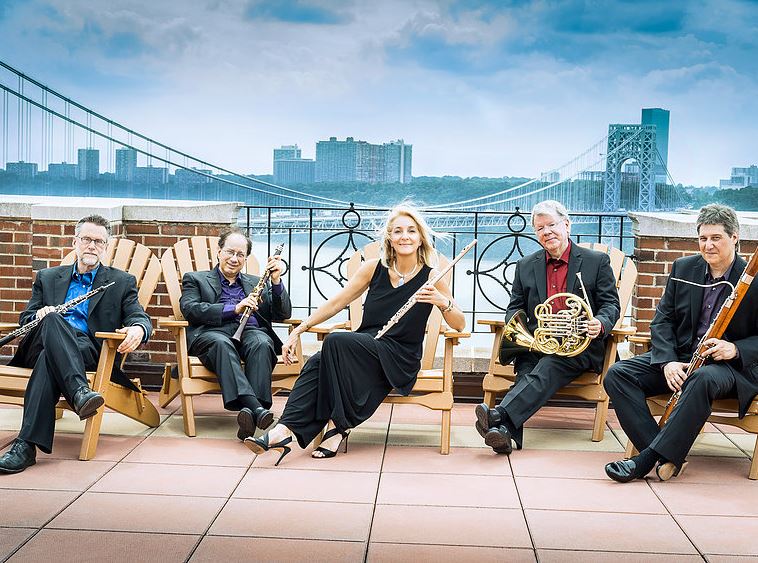
New York Woodwind Quintet:Carol Wincenc, flute/piccolo; Stephen Taylor, oboe, English horn; Charles Neidich, B-flat clarinet, E-flat clarinet; Marc Goldberg, bassoon, contrabassoon; William Purvis, horn
Tenri Cultural Center, New York, NY
May 4, 2018, 7:30 PM


One of the great delights of the New York concert season has been my discovery of the Wa series, now concluding its first year. This is truly the “caviar” of chamber music series, with its carefully curated repertoire, emphasizing unusual or neglected composers and pieces, not to mention the lavish hand-crafted menus served before, during, and after the performances, created by artistic director Charles Neidich’s wife, Ayako Oshima.

There was so much wind-superstar power in one room that it took my breath away! Better mine than theirs, however, for they would need every ounce of it to play this difficult program. In the case of musicians on this level, there was never even a hint of strain or difficulty.

The evening began with a selection of Elizabethan lutenist John Dowland’s secular dances, transcribed by hornist William Purvis, who is passionate about this period of music. He deftly and simply explained the concept of “broken consort” to the audience. The music emerged in all its eloquence, with Lachrimae Antiquae a particular highlight.

Richard Wernick’s name and music were new to me on this occasion. He was in attendance, and explained that at “his age” (Mr. Wernick is 84) he decided to compose only what he wished (not to deadlines) and only for friends, preferring to envision “faces instead of clefs” at the beginning of each stave. Thus, his friends the New York Woodwind Quintet gave the world premiere of his Quintet No. 2, a work that makes use of the color palette of the winds to differentiate the strands of counterpoint. They played the work brilliantly, clarifying every texture. Mr. Wernick’s use of klangfarbenmelodie (sound-colors melody), in which the same pitch is repeated by (or traded to) another instrument was remarkable for the way in which the transfers were subtle: one could hardly tell where one instrument began and the other left off.

Then came Elliott Carter’s second wind quintet, Nine by Five, a work completed on his 101st birthday (!). The title refers to the nine instruments played by the five members, each one doubling on another instrument (except the horn). The scenario is one of conversation/argument/ignoring/togetherness, as of actors on a stage, and again these players dramatized every moment of this raucous mini-play.

After intermission came a curio, about which I was initially anxious. How can a string quartet, essentially an intimate form for four players, be transferred to a more “public” type of ensemble, and expanded to five players, without betraying some of its substance? My fears were unfounded, as somehow I expected they would be. Once again, Mr. Purvis displayed his perfect taste-level in his rendering of the Mendelssohn String Quartet No. 2 in A minor, Op. 13. This work, begun in July 1827, has a motto that quotes from a June 1827 song Frage (Question), the question being “Ist es wahr?” (Is it true: that a secret admirer asks the moon and stars about him?) This is due to the eighteen-year-old Mendelssohn’s crush on Betty Pistor, a member of the Singakademie for whom Mendelssohn was the accompanist. Mr. Purvis explained how Mendelssohn fuses the motto technique inspired by Beethoven’s last quartet with the contrapuntal wizardry inspired by Bach. There are numerous references to various late works by Beethoven in each of the cyclic movements, which Mendelssohn wrote about: “the relation of all 4 or 3 or 2 or 1 movements of a sonata to each other and their respective parts, so that one already knows the mystery that must be in music.”

The performance was transcendent, with transparency preserved and the lightning fast “elfin” Mendelssohn interchanges among the instruments every bit as light as when heard on strings. Naturally, the work gained a bit of heft, particularly in the lower lines, but it became its own work of art, as Mr. Purvis said “because it’s so darn fun to play.” Carol Wincenc inhabits another universe of flute playing, inaccessible to mere mortals, but she was not alone in this regard. Mr. Purvis’ muted horn pronunciation of the fugue subject in the second movement was a paragon of subtlety, with the sighing affect ever so poignantly shown. As always, Mr. Neidich was in that alternative universe of perfection too, as were Stephen Taylor and Marc Goldberg.

As an encore, they offered another Purvis transcription, of a Gesualdo madrigal, another of Mr. Purvis’ passions: Moro, lasso, al mio duolo (I die, alas, in my suffering), the chromaticism of which would not be encountered again until Wagner in the nineteenth century.

Mr. Neidich stated that the concert series for next year will be made known very soon. A word to the wise music lover: Run, don’t walk, to this series.

Share

Carnegie Hall presents Laureates of the Sphinx Competition in Review

Carnegie Hall presents Laureates of the Sphinx Competition in Review

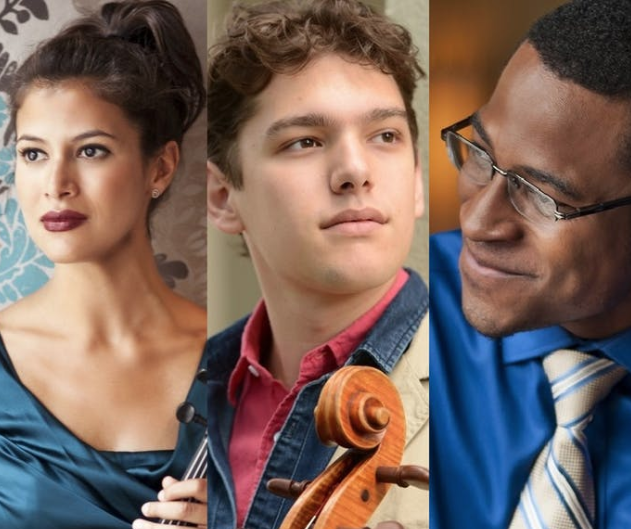
Elena Urioste, violin; Gabriel Cabezas, cello; Xavier Foley, bass; Tom Poster, piano
Zankel Hall at Carnegie Hall, New York, NY
May 3, 2018


Zankel Hall was the venue for a special concert entitled Laureates of the Sphinx Competition on May 3, 2018. Founded by Aaron P. Dworkin to address the underrepresentation of people of color in classical music, the Sphinx Organization is dedicated to transforming lives through the power of diversity in the arts. Their programs focus on four main principles: education and access, artist development, performing artists, and arts leadership. One can learn more about this outstanding organization by visiting www.sphinxmusic.org. The artists presented, in addition to being fine musicians, have dedicated themselves to furthering the mission of music by spearheading their own groups.

Before anything else, I would like to take the time to mention the excellent program notes, which not only gave both “at a glance” and detailed explanations of the works, but biographical information about the composers and the performance histories of the works. There any many performers who feel that program notes are unnecessary and even chide the reviewer for making it an issue! This is missing the point that audiences are not all experts (and not all so-called “experts” know everything either!), and that to leave the listeners without explanations risks leaving them feeling lost or frustrated. The opportunity to educate is lost, and those left behind will perceive classical music as elitist. One cannot bemoan dwindling attendance levels while failing to do the utmost to make listeners want to return.

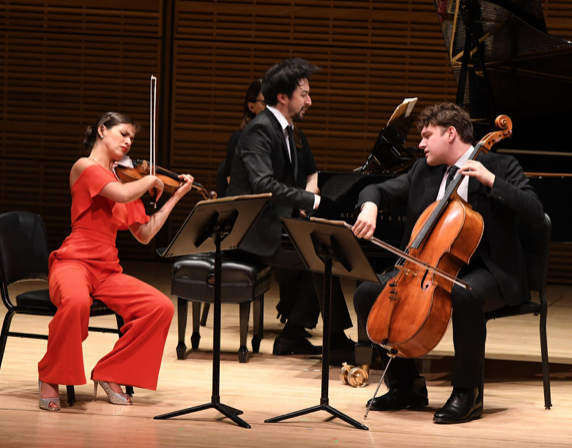
Laureates of the Sphinx; Tom Poster, Elena Urioste & Gabriel Cabezas; Photo Credit: Pete Checchia

Cellist Gabriel Cabezas led off with Robert Schumann’s Fünf Stücke im Volkston (Five Pieces in Folk Style), Op. 102, with pianist Tom Poster. Schumann was a master of small forms, and this work is no exception. One sees both his Florestan (1,4, and 5) and Eusebius (2 and 3) personalities in this work. While I found Mr. Cabezas to be technically assured with a warm, rich tone, it was the slower works (2.3) that this listener found to be the most compelling, showing Mr. Cabezas to be a sensitive artist who digs deep into the emotional depths of Schumann without making it overly-sentimental or mawkish.

Violinist Elena Urioste and Mr. Poster followed with two works: Olivier Messiaen’s Theme and Variations (1932) and Amy Beach’s Romance, Op. 23. The Messiaen was mesmerizing; Ms. Urioste’s extreme upper register was crystalline, and, combined with Mr. Poster’s attentiveness to balance, the performance was everything one would hope for. The building in intensity of each successive variation was thrilling. The Beach Romance was lush as one might expect, but also a virtuosic showpiece that showed that Ms. Urioste “has the goods” and can wow an audience. Again Mr. Poster is to be lauded for his superb work, in what was consistently excellent throughout the concert.

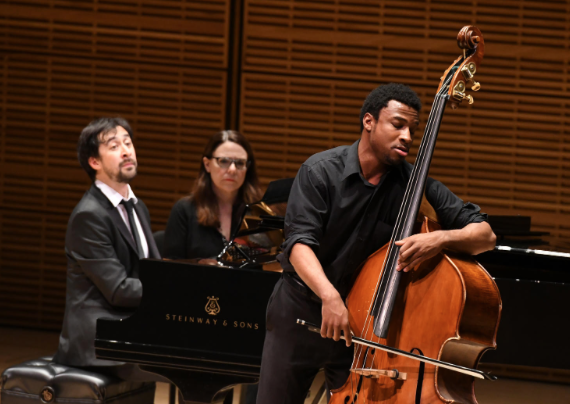
Laureates of the Sphinx Competition; Tom Poster & Xavier Foley; Photo Credit: Pete Checchia

I’m going to flip the order of the pieces performed by bassist Xavier Foley to discuss his own composition first. His 2016 Cranberry Juice (a New York premiere) was inspired by the music from StarCraft, a real-time strategy game. Mr. Foley writes that his work features 90’s alt-rock sounds with the slightest dash of R&B. A quote from The Simpsons theme song from the earlier solo version was removed due to possible legal issues. D’oh! Cranberry Juice is a fun trip, with frenzied moments delivered by Mr. Foley in a playful way. He is an extroverted performer and a real crowd-pleaser; it is almost as enjoyable to watch him play as to hear him. Two works by Reinhold Glière, Intermezzo, Op 9, No.1, and Tarantella, Op.9, No. 2 showed Mr. Foley’s technical prowess. It’s no mean feat to navigate the rapid passagework on the bass without blurred, muddy sounds and to maintain a singing tone in the higher range, but Mr. Foley made it all look like child’s play.

Ms. Urioste, Mr. Cabezas, and Mr. Poster took the stage for the World Premiere of Divertimento (2018), commissioned by the Sphinx Organization from composer Gabriella Smith (b. 1991). Ms. Smith writes she was inspired by the “quirkiness” of Haydn and the Scherzo from Beethoven’s Eroica Symphony. Complete with extended techniques, pitch bends, and other noises, it featured “special guest appearances” of themes from Papa Haydn and Beethoven, which peeked in as if the players were naughty children, only to have them return to creating mischief when they turned away. It was the product of a highly imaginative and talented up-and-coming composer. Ms. Smith was in attendance and rose to greet the players and the audience to accept the well-earned applause.

Ms. Urioste spoke briefly to thank Sphinx and Carnegie Hall, but also to explain some of the thoughts behind the concert. Diversity not just of skin color, but of gender, country of origin, and musical style, was considered, as well as the presentation of living composers. Ms. Urioste then said that, “we don’t need to talk about it, but just do it” – to some laughter. The message was clear; talk is nice, but action is better.

Maurice Ravel’s 1914 Piano Trio in A minor, completed at the end of August, the first month of World War One, was the final work on the program. It is not surprising that the events of the day had an influence on Ravel (“[I am] working with the assurance and clarity of a madman,” he wrote to a friend), and the end result is a work filled with strife, but also mournful majesty. I was wondering if these young players would fully grasp the pathos of Ravel’s conception and also be able to navigate the considerable difficulties that Ravel placed upon all three players. I should have not feared a thing, as this was one of the best performances of this work I have heard. It was the highlight for this listener, and the audience seemed to second that notion, judging by the extended standing ovation awarded to the players.

Mr. Cabezas humorously vamped as his partners tracked down Mr. Foley for an encore. A charming arrangement by Mr. Poster of Manuel Ponce’s Estrellita (as transcribed by Heifetz) was a lovely ending to a great evening of music. Keep up the good work, Sphinx – I look forward to hearing more from your fine organization!


Share

Lynn Spurgat in Review

Lynn Spurgat in Review

Lynn Spurgat, soprano
Jason Wirth, piano
Zankel Hall at Carnegie Hall, New York, NY
May 2, 2018


Soprano Lynn Spurgat and pianist Jason Wirth joined together at Zankel Hall at Carnegie Hall for a recital dedicated to songs of love; love lost, love unfulfilled, and the passion and despair were all themes. With works from Beethoven, Wagner, Liszt, and Granados, it was to prove to be a compelling concept realized with excellence.

Lynn Spurgat (www. lynnspurgat.com) is a performer with not only the requisite credentials as a singer, but with a breadth as an artist and communicator. She wrote fine program notes, which helped the listener gain further insights into the presented works. Ms. Spurgat has a commanding stage presence, complete with a big personality and an intense focus as she “locks into” her roles. Jason Wirth (www.jasonwirth.com) is an impressive musician in his own right, and as Ms. Spurgat was to relate to the audience, her “rock from day one.”

When Ms. Spurgat took the stage, the large audience gave her one of the most enthusiastic welcomes that this reviewer can recall witnessing in some time. It was a wonderful thing to see such support for an artist, and I am sure that support lent wings to her performance.

Ms. Spurgat opened with Beethoven’s Ah! Perfido, Op. 65. Ah! Perfido is sung by a woman who has been deserted by her lover, torn between wanting the gods to punish her lover or wanting them to show him mercy for his sins – or sacrificing herself. Ms. Spurgat cycled through the song’s emotions in a frenzied manner, revealing the near madness of the protagonist. It is quite a challenge for the singer to portray these quicksilver mood swings in a believable fashion, and it could be so easy to descend into cartoonish melodrama, making a mockery of it all. Thankfully, Ms. Spurgat avoided these traps. The pleading, the angry outbursts and vengeful spite, the longing and remorse, and the final despairing resignation were all stylishly captured by Ms. Spurgat. The audience loved it.

Wesendonck Lieder, WWV 91, is the common name of a set of five songs for female voice and piano by Richard Wagner, Fünf Gedichte für eine Frauenstimme (Five Poems for a Female Voice). He set five poems by Mathilde Wesendonck while he was working on his opera Tristan und Isolde. The poems are, as Ms. Spurgat (charitably) states, are not on the level of Petrarch. All issues of poetic quality aside, this work, other than the Siegfried Idyll, is the most frequently performed non-operatic work of Wagner’s. Highlights were Der Engel (The Angel), in which Ms. Spurgat’s voice was ethereally light, with nice dynamic restraint while still projecting well into the hall, the lament of Im Treibhaus (In the Greenhouse), and Träume (Dreaming) which Ms. Spurgat transported the listener to another world. Her German diction was outstanding. The audience responded with raucous approval, including many shouts of Bravo! It was a fine end to a fine first half.

After intermission, Ms. Spurgat offered Liszt’s Tre sonetti di Petrarca (Three Petrarchan Sonnets). The story of Petrarch and Laura is so well-known that it is unnecessary to discuss here. This set was the highlight of the evening for this listener. Liszt not only offers brilliant settings of these magnificent texts for the singer, but some virtuosic writing for the pianist, in what is a partnership between the two, as opposed to the secondary role the pianist plays in the Wesendonck Lieder. Ms. Spurgat was superb in projecting these emotionally charged texts with sensitivity and passion. Her voice soared in the upper register without loss of quality or intonation. Mr. Wirth was more than equal to Liszt’s challenges and deserves high praise. The entire set was exceptional, but I’ vidi in terra angelici costume (I saw angelic virtue on earth) was a cut above.

Two works by Granados, selections from the Tonadillas en estilo antiguo, and La Maja y el Ruiseñor (The Maiden and the Nightingale) from his opera Goyescas (as adapted from his 1914 piano suite of the same name) ended the recital. The Tonadillas are song portraits of the working-class neighborhoods of 19th century Madrid. The words majo and maja refer to men and women of the poorer areas, such as Lavapiés. They are mostly light-hearted and whimsical, qualities which Ms. Spurgat played up to the hilt in a delightful way. When she shook her head and waved a finger in a “no-no” gesture in El majo discreto (The Discreet Man) the audience roared in laughter. We already knew that Ms. Spurgat has the technical goods, so it was enjoyable to see her having some unbridled fun. That said, she reminded us that while she can let her hair down, in the end she is still a force, and La Maja y el Ruiseñor was that reminder. It was a powerful close that had the audience leap to their feet in a standing ovation. After two encores, it was time for her to take her leave, with the audience still clamoring for more.


Share

Daniel Le in Review

Daniel Le in Review

Daniel Le, Pianist: Anzac Day Celebration Recital
Bruno Walter Auditorium, Lincoln Center, New York, NY
April 24, 2018


Brilliant young Australian pianist Daniel Le performed a richly satisfying recital this Tuesday at Bruno Walter Auditorium. Along with music by Schubert and Rachmaninoff, Mr. Le included music of his compatriots Carl Vine, Percy Grainger, and Andrew Howes, in commemoration of Anzac Day.

Mr. Le needs no special occasion as a premise to share his many gifts or those of his countrymen, but it was certainly fitting for an Australian pianist to offer such a program on the eve of Anzac Day, a day of great significance to Australians and New Zealanders. Initiated on April 25, 1916 to commemorate the 1915 landing in Gallipoli by the ANZACS (Australian and New Zealand forces in WW1), Anzac Day has since come to pay tribute more broadly to all Australians and New Zealanders who served in all wars, conflicts, and peacekeeping operations.

Mr. Le’s Australian program choices made for a meaningful tribute, though perhaps a brief New Zealand piece or two could have been added, as there are many fine ones (after all, without NZ it would be merely “Aac Day”)! That is not a criticism so much as a suggestion for future commemorations, because, given Mr. Le’s gifts for presentation, programming and performing, such a concert could certainly become an annual event. The program was enhanced by two poetry recitations by actor Jack D. Martin, first Wilfred Owen’s Spring Offensive and in the second half, Everyone Sang, by Siegfried Sassoon, both read with simple, sincere delivery to allow the moving words their own power and resonance.

As for the music, Mr. Le opened with Schubert’s Sonata in A major, D. 664 (often called “the little A major” to distinguish it from the later larger A major Sonata). He gave it a fittingly unaffected rendition, and though there were a few balance and voicing issues, which might have related to his initial adjustment to the piano (more on that later), it was a lovely opening. To try to draw specific connections from Schubert’s Sonata to themes of Anzac Day may be tenuous (and there were no program notes), but it certainly established the tone of bucolic lyricism from the composer’s less troubled times, while also establishing a poignantly peaceful backdrop to the Wilfred Owen recitation that followed.

The fireworks of the first half came with Carl Vine’s wonderful Sonata No. 1 (1990). This reviewer has long been a fan of this piece, which does not need to be categorized as a major Australian work from the twentieth century, but simply as a major twentieth-century work, period. Mr. Le handled its pianistic challenges and wide-ranging drama with mastery, from the brooding atmospheric chordal opening to the motoric driving sections which build to almost a frenzied jubilance at the climax. Mr. Le was more than a match for all of the virtuosic demands of the exciting first movement, and the toccata-like second movement was equally impressive. The voicing in this piece is layered in such a way that jazzy cross-rhythms emerge from the accentuation of melodic tops, and this pianist brought them all out brilliantly.

The second half opened (after the reading of Sassoon’s poem, Everyone Sang) with the world premiere of a work entitled Bird Songs (2018) by young Australian composer Andrew Howes (b. 1992). It was a powerful juxtaposition, with the line “As prisoned birds must find in freedom” still ringing in one’s ears at the start of the piano work. The movements, entitled Morning Song, Fisher Song, Empty Sky, High-branches Song, and Sky Song were beautifully idiomatic for the piano, billowing with fluid passagework which sounded like inspired improvisations. The music contained very little that one would liken to the language of birds in the way that, say, Ravel did in Oiseaux Tristes or Messiaen in his various Oiseaux, but they suggested more abstractly the soaring, the bleakness, and the grandeur of branches, the sky, and the aerial world, conceivably as related to human experience. This reviewer is completely new to the work of Mr. Howes, but he appears to be a musician well worth following. Mr. Le realized his music imaginatively and with a naturalness that was remarkable in what was announced to be his “iPad debut” using one of the relatively new page-turning technologies.

Veering back to familiar (and non-Australian) territory, the program continued with Sergei Rachmaninoff’s Sonata No.2 in B-flat minor Op.36 (1931 revised). Mr. Le’s excellent technique served him well in this powerhouse piece, and it finished the program proper with ample fire, drawing cheers from his audience. This reviewer was quite fond of Mr. Le’s elasticity of phrase and tempo in the piece and had only rather minor reservations. There was for this listener a perhaps too generous use of the left-before-right quasi-rolled approach, which, aside from the actual marked rolled chords, can approach schmaltz if overdone. There was also the occasional quibble about voicing, including some excessive favoring of the treble in the slow movement, at the expense of the full texture, and what seemed to be an occasional miscalculation of voices in the first movement (in which as a result the opening treble chords almost sounded like an ascending rather than descending third in the top voice).

On the subject of voicing, there was the opposite favoritism in the Schubert, where the long treble lines occasionally paled against a slightly dominating bass. Without enough tone in the longer melodic notes, subsequent shorter notes occasionally seemed blurted out, resulting in some choppy lines. One wondered at first whether the piano was suffering from imbalanced registers, but when the Vine was then given such superb voicing and balance, that theory seemed implausible. Clearly this young pianist can do just about anything he wishes to do, but the demands of Schubert are never to be underestimated!

Following the Rachmaninoff, Mr. Le’s program listed “Percy Grainger Song Arrangements” – almost as built-in encores. To everyone’s delight he offered Gershwin’s The Man I Love and the popular favorite Country Gardens. It is a special pianist who can play Country Gardens perfectly, and Daniel Le is one who can and did. Deceptively tricky, the piece requires a large stretch and some rather unwieldy chord jumps – but the target practice must be done with the blithe ease of a small child picking daisies. It was all there, a delicious close to a fine evening, perhaps best likened to the classic “down under” dessert of Pavlova.

Mr. Le generously thanked a large number of people, including his teacher at the Manhattan School of Music, André-Michel Schub, who was present and, one imagines, justifiably proud.


Share

The Center for Musical Excellence presents Heegan Lee in Review

The Center for Musical Excellence presents Heegan Lee in Review

Heegan Lee, piano
Weill Recital Hall at Carnegie Hall, New York, NY
April 24, 2018


Normally, when I see the words “prodigious musical savant” I get a queasy feeling in the pit of my stomach. So often, things do not turn out well for prodigies. This unease was largely put to rest by Heegan Lee after the first few notes of the Andante from the Cello Sonata in G minor, Op. 19 (transcribed by Arcadi Volodos), the first Rachmaninoff transcription on his recital: liquid phrasing, sensitive rubato, a beautiful piano sound at all times, and technique to burn. Mr. Lee was a different kind of prodigy: At age fourteen, he (purportedly) “learned the Tchaikovsky Piano Concerto [I assume the first] by ear after hearing it but once on a DVD.” He then continued to learn other works by the Romantics in much the same way. He went on to earn Bachelor’s and Master’s degrees from Manhattan School of Music.

For an official debut recital, there was not enough variety for this reviewer to fairly assess the quality and range of this artist, though he obviously has many virtues in place already. Min Kwon, who introduced Mr. Lee, said we’d hear his love for the piano, and we did. He took the stage with a surprisingly sober demeanor for such a display-oriented player.

I must begin with the second half of the recital, which was a handful of “New Age” (Mr. Lee’s words, not mine) piano music, as arranged by Mr. Lee, by Yiruma (the stage name of Korean composer and pianist Lee Ru-ma), Kevin Kern, and Mr. Lee himself. In his oral remark before playing, Mr. Lee said he chose them to avoid what he called the “monotony” of the typical recital. I’m sorry he feels that way, since there are tens of thousands of varied piano works, very few of which he seemed compelled to perform on his debut. Something tells me he didn’t learn Bach’s Well-Tempered Clavier by ear after one hearing. Every one of his arrangements sounds exactly the same, with the same arpeggiation, climax, and left hand cross-over high note. Yiruma’s River Flows In You, and Kiss the Rain are so much prettier and more eloquent in his (Yiruma’s) own solo piano version “without cosmetics,” so to speak. I’m sorry to be so rough, but maybe one piece would have sufficed to show Mr. Lee’s talent in this direction.

The first half of the recital contained his best playing, despite its lopsided structure. He played two Rachmaninoff transcriptions (one by Volodos, already mentioned, and the other, Vocalise, by Earl Wild) and two short original works. All were given the red-carpet treatment, and his affection for beautiful piano sound was in abundant evidence. I have heard cleaner performances of Rachmaninoff’s Moment musical (Op. 16, No. 4) and Prelude (Op. 32, No. 10), but his emotional involvement and technical fearlessness drew the listener in. The Prelude was mannered, but the Moment was exciting in an impetuous way. The best performance of the evening was his Vocalise, in which he “out-Wilded” Wild.

The Chopin group did not stray far from unabashed warhorses: the Fantaisie-Impromptu, the Revolutionary Etude, and finally a deep work that demands maturity, the F minor Ballade. All contained successful fluidity of fingerwork, but strangely, they began to sound like transcriptions too. I found myself wondering why this bothered me so much. After all, isn’t everything we perform a transcription? We take in the “dots” the composer gives us and process them through our hearts and intellects, our physical gifts, and our nervous systems, and then deliver our “transcription” of the piece. Mr. Lee’s pianistic point-of-view doesn’t seem to change much with the change of piece.

The Fantaisie-Impromptu’s outer sections were daringly too fast for clarity, but they worked. Only in the famous I’m Always Chasing Rainbows melody of the middle section did Mr. Lee seem reluctant to truly vary the color of the many repeats, which I thought he’d be doing lavishly, based on the Rachmaninoff. The Etude was, again, too fast for rhythmic clarity, but impressive if such things impress one. He also changed the concluding run to a vulgar interlocking octave showpiece that, strangely, is easier than Chopin’s original unison run for both hands. In the F minor Ballade, there was a rather slapdash approach side-by-side with great emotional involvement, some exciting rubati, even some intimacy. He displayed very individual ideas (this is good, no “cookie-cutter”) and a big temperament, but the piece could have used more elegance.

None of this fazed the large, enthusiastic crowd, and he gave as an encore an elegantly done Tchaikovsky/Volodos Lullaby, Op. 16. No baby is going to be lulled to sleep during that lullaby!

A debut recital ought to present a calling-card to the musical community, one that shows as many facets of the artist as possible. I know there is “more” within Mr. Lee, and I hope he persists, finds it, and then shares it with us.

Share

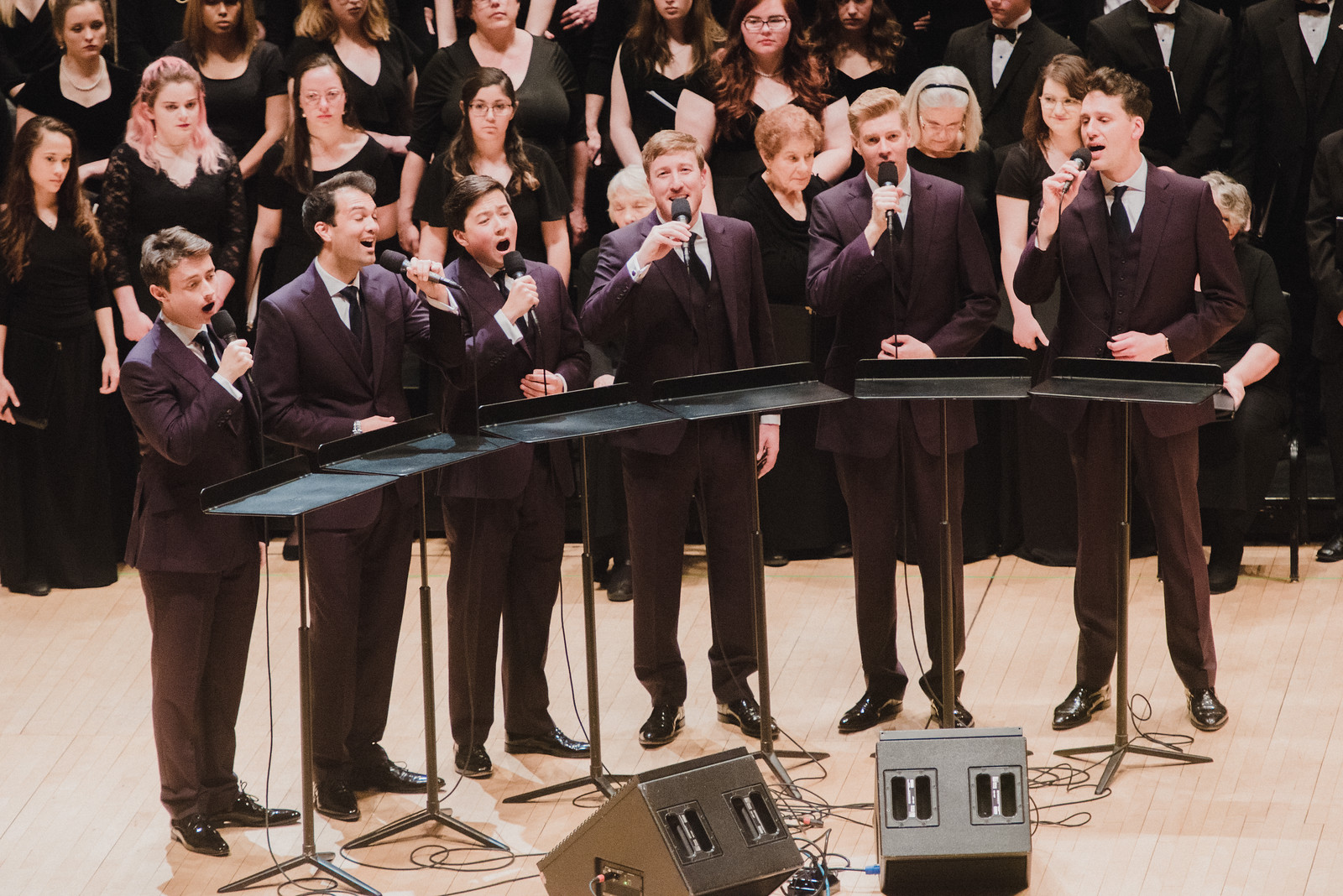
Distinguished Concerts International New York (DCINY) Presents the King’s Singers 50th Anniversary in Review

Distinguished Concerts International New York (DCINY) Presents the King’s Singers 50th Anniversary in Review

Bob Chilcott, Guest Conductor; Simon Carrington, Guest Conductor
Special Guests- The King’s Singers: Patrick Dunachie, countertenor; Timothy Wayne-Wright, countertenor; Julian Gregory, tenor; Christopher Bruerton, baritone; Christopher Gabbitas, baritone; Jonathan Howard, bass
Distinguished Concerts Singers International
Stern Auditorium at Carnegie Hall, New York, NY
April 22, 2018


The Golden Anniversary (50th!) of the a cappella group, the King’s Singers, was marked by a concert at Carnegie Hall this weekend, and it would have been momentous if it had simply marked that milestone; it was, however much more than a milestone, and it re-affirmed this ensemble’s continued stature among the preeminent ensembles of the world.

Established in 1968 at King’s College in Cambridge, the King’s Singers have since performed on all the world’s great stages, garnering distinctions too numerous to name but which have included two Grammy Awards, an Emmy Award, a place in Gramophone magazine’s inaugural Hall of Fame, and premieres of works by the leading composers of today.

As a cappella singing has experienced a resurgence in recent years, with groups such as Pentatonix and Voces8 gaining enormous popularity, the King’s Singers have simply remained unwaveringly true to their origins by presenting diverse music (from the Renaissance to folk and popular styles) at an extremely high level. Despite inevitable change of personnel from time to time, there has been remarkable consistency in sound, particularly in their distinctive balance of voices, including always two countertenors (currently Patrick Dunachie and Timothy Wayne-Wright), one tenor (Julian Gregory), two baritones (Christopher Bruerton and Christopher Gabbitas), and one bass (Jonathan Howard). Though some of the current group’s singers have joined as recently as a few years ago, the standards hold fast, and Sunday’s concert was fortunate as well to have two long-term members join as distinguished guest conductors, both Simon Carrington (who was a co-founder and 25-year member) and Bob Chilcott (a member for twelve years). Mr. Chilcott (b. 1955) was also featured on this program as composer and arranger of several works, including the opening one.

We Are, composed by Mr. Chilcott especially for the King’s Singers’ 50th anniversary, was a perfect opener. Set to a poem from The Human Family, by Maya Angelou, Mr. Chilcott found much inspiration in this text, with a focus on the recurring line, “we are more alike, my friends, than we are unalike.” The multiplicity of voices intertwining – from both the King’s Singers and the Distinguished Concerts Singers International – created a musical depiction of diversity itself, and their ultimate convergence was dramatic. It was a brilliant conception, performed expertly under the composer’s fine conducting.

To continue thriving after 50 years, a musical group does well to intertwine the old and the new, and the King’s Singers did just that with the premiere of We Are, as well as a new work by Nico Muhly (b. 1981), To stand in this House. Mr. Muhly’s work, also commissioned to honor the King’s Singers’ 50th anniversary, employs four texts, two prayerful ones from the 15th and 17th centuries (including oneby Henry VI, founder of King’s College, Cambridge, and one by Bishop Thomas Ken) and ending with two more troubled ones from Salman Rushdie (b. 1947) and Zadie Smith (b. 1975), the latter two being notable alumni of King’s College. Mr. Muhly tapped a wide range of musical language to communicate the changing views of time, from the stately polyphony of the first two to the more plaintive third and angst-ridden fourth. The musicians gave devout and passionate readings under the skillful conducting of Simon Carrington.

On a side note, the two newly commissioned works were in some ways opposites. The Chilcott work seemed to bring many widely disparate musical voices into one, while the Muhly piece went the other direction, with the final Zadie Smith text underscoring that even “Individual citizens are internally plural.” Both texts seemed destined to be set to music – essentially a compliment to both composers – though they had strongly different approaches and emotions, and the inclusion of both was quite thought-provoking.

Other newer works on the program included two works commissioned for the King’s Singers 40th anniversary in 2008, including The Stolen Child (text by W.B. Yeats) by Eric Whitacre, a rather eerie tale of magic, and what might think of as a musical prequel, the same composer’s setting of Alone (text of Edgar Allen Poe). Simon Carrington was the superb conductor for these.

Also from among the 40th anniversary commissions was Bob Chilcott’s High Flight, based on two texts, one by Henry Vaughan, 1621-95, and one by pilot John Gillespie Magree, 1922-41. It was another remarkable musical journey through time, composed with a profound understanding of a choir’s potential. One hears in the piece the composer’s years of familiarity with Tavener, Whitacre, and other famed choral composers, but his music naturally carries his own unique voice and gifts. High Flight felt altogether appropriate for this landmark occasion (as it must have for the singers’ 40th), and the close with the famous words “[I’ve] … put out my hand and touched the face of God” was incredibly stirring. The composer conducted the choir and King’s Singers with a spirit of exultation.

More traditional fare included a set entitled “Renaissance Pioneers” including Das G’läut zu Speyer by Ludwig Senfl, with wonderful use of imitation and full of bell sounds, and the heartbreaking Lágrimas de mi Consuelo by Juan Vásquez. Some levity came in the form of Dessus le marché d’Arras by Orlandus Lassus. A rather suggestive text about the purchase of “wares” at a market elicited some fun comments in the singers’ introduction to the effect that “we think we know what she’s selling, but because we’re British we’d rather not say.” The audience loved it. A similarly comical and suggestive Lamorna (traditional arr. Goff Richards) came later as part of a folk song group that included Danny Boy (traditional, arr. Peter Knight) and Bobby Shaftoe (traditional, arr. Gordon Langford).

Other memorable inclusions on the program were Thou, my love, art fair, another inspired beauty by Bob Chilcott (and conducted by the composer), My Soul There is a Country, by famous British composer Hubert Parry, and Moonlight Music, by Eric Barnum (set to texts from Shakespeare’s The Tempest). The glories of England were never far in this program.

Though there were many substantial musical offerings, the audience would undoubtedly have been disappointed without some of the King’s Singers’ more “crowd-grabbing” fare, which included That Lonesome Road of James Taylor, It’s a New World, by Harold Arlen and Ira Gershwin (in an arrangement by Richard Rodney Bennett), and an uproarious version of the Overture from William Tell (Rossini), with some lingual wizardry by the incredible six. The adoring crowd applauded until an encore was granted, And So It Goes, of Billy Joel in a meltingly beautiful arrangement by Mr. Chilcott. There was probably not a dry eye in the house, but this reviewer couldn’t quite see clearly herself to check.

In summary, it was a great evening and a perfect way to honor not only the King’s Singers’ anniversary but also the 10th anniversary of Distinguished Concerts International New York (DCINY), for which the festivities have been ongoing all season. Singers had included groups from Arizona, California, Florida, Idaho, Iowa, Massachusetts, Maine, Missouri, Rhode Island, Texas, Virginia, Australia, Canada, Germany, South Africa, United Kingdom, and (as DCINY words it) “individual singers from around the globe.” One can only guess that it was an experience well worth the trips for them – it surely was for the audience!

Share

Wa Concert Series presents Schubert Masterworks in Review

Wa Concert Series presents Schubert Masterworks in Review

Charles Neidich, clarinet
Smithsonian Chamber Players- Vera Beths, Cynthia Roberts, violins; Steven Dann, viola; Kenneth Slowik, cello; Anthony Manzo, double bass; Andrew Schwartz, bassoon; William Purvis, horn
Tenri Cultural Center, New York, NY
April 21, 2018


Clarinetist Charles Neidich impeccably curates a gem of a concert series called Wa (circle, harmony, completeness) at New York’s Tenri Cultural center. Not all of the important musical events in a city as rich in them as New York take place in the “big” venues. Each Wa concert also comes with hand-crafted snacks before the concert and dinner with wine after, made by Mr. Neidich’s wife Ayako Oshima ,herself an accomplished clarinetist. On this occasion, Mr. Neidich enlisted the services of one of the nation’s eminent chamber groups: the Smithsonian Chamber Players, to perform a single masterwork: Schubert’s epic-sized Octet in F major, D. 803.


Commissioned by clarinetist Ferdinand Troyer, the Octet was composed in March 1824. The work was premiered at Archduke Rudolf’s home by many of the same musicians who played Beethoven’s Septet. Schubert goes Beethoven one better by adding an additional violin to the instrument group. The Octet’s length was noticed even in 1824; it runs at least one hour depending on repeats, and led Stravinsky (as related in the very complete oral program note by cellist Kenneth Slowik) to say that he “didn’t mind if he occasionally fell asleep during a work by Schubert, since I know I am waking up in Paradise.” After all, isn’t listening to an hour of Schubert better than updating your Instagram feed?


These players gave a triumphant reading of the piece, full of sensitive detail and shaping, with full emotional commitment and harmonic direction. In the case of the Octet, as with most of Schubert, remote keys are visited with such rapidity and fluidity that it can all pass by too easily unless the performers make real events from them.


I’m tempted to say: “There are only two kinds of clarinetists: Charles Neidich, and everyone else.” Perhaps this is unfair to the many great players out there, but every time I’ve heard Mr. Neidich this season, I come away with the same stunned revelation of superb lyricism coupled with supernatural breath control. He possesses that nearly untranslatable German quality of Innigkeit (inwardness, combined with emotional intensity). He also has a great deal of wa.


Mr. Neidich’s assembled team plays period instruments (or faithful modern copies), and this immediately solves any vexing problems of balance, leaving the way open for the players to focus on inspiration, which they possess in abundance. Particularly enjoyable were the contributions of Anthony Manzo, double bass, whose visual involvement with the group was a delight, and bassoonist Andrew Schwartz, whose tone was so mellow I often had to glance around the group to make sure it was coming from him. All played with the highest possible level of musicianship. For an “occasional” work, this score abounds in tricky material, and no player is spared from great technical challenges, all of which have to sound effortless. Vera Beths and Cynthia Roberts handled the violin parts beautifully, and violist Steven Dann had the most delightful pizzicati. Cellist Slowik played with immense lyricism and William Purvis handled the peril-prone valveless horn with his customary aplomb. Ultimately it was the magic created by Mr. Neidich that ruled and was especially heartbreaking in the second movement, appropriate since the work was commissioned by a clarinetist.


At the beginning of the last movement, we hear what Alfred Brendel calls “the trembling of the syphilitic” dramatized by the ensemble, a window into Schubert’s lifelong “Todesahnung” (presentiment of death), especially poignant since he was just re-entering musical and social life after a spurious mercury treatment for his syphilis. The melodic fragment heard over the tremolo strongly resembles one of Schubert’s Schiller settings: Die Götter Griechenlands (The Greek Gods, 1819), which opens with the line “Schöne Welt, wo bist Du?” (Beautiful world, where art Thou?), the entire Romantic period summed up in one line. The entire “trembling” episode then serves merely as the introduction to a foot-stomping folk-like song/dance that had numerous audience members vainly resisting to tap their feet.

Share

SubCulture presents Ian Hobson: Sound Impressions: The Piano Music of Claude Debussy & Maurice Ravel- 6th in series

SubCulture presents Ian Hobson: Sound Impressions: The Piano Music of Claude Debussy & Maurice Ravel- 6th in series

Ian Hobson, piano
SubCulture, New York, NY
April 18, 2018


Ian Hobson concluded his six-recital series of the complete solo piano music of Debussy and Ravel with his finest playing of the season. His customary technique did not fail him, but he added elements of dynamic control and total emotional involvement that rendered many moments simply breathtaking. I have reviewed the first, third, and fourth recitals previously in these pages, and I have been quite firm with Mr. Hobson because I believe “French is in the details,” but on this occasion, I had no reservations. The program consisted almost entirely of valedictory pieces, the last works of each composer, with one relatively early work by Debussy. The common threads: the only toccata by each composer, music inspired by wartime, and neo-Baroquism.


Mr. Hobson began with Debussy’s “updated Baroque” homage, the suite Pour le piano (1900/01), giving it one of the finest renditions I have ever heard live. The energy of the opening Prélude was fierce, and he respected the very long pedals requested by Debussy, which I have heard other pianists try to “neaten up,” thereby falsifying an important part of the color. Then came the Sarabande, a slight revision of an earlier work, redolent with the influence of Satie. Here Mr. Hobson became revelatory, with a mournful, dignified tempo and gorgeous chord balancing. Of course, his reliable nimble fingers gave us the perfect Toccata.


He followed this with two little-known Debussy gems from very late in his career: the haunted Élégie, a charity piece for a series on “Women and War,” and the Pièce pour l’oeuvre du “Vêtement du Blessé, written for the WWI relief organization, “Le Vêtement du Blessé” (The Dressing of the Wounded). Debussy, who was mortally ill with the cancer that would kill him and sick at heart with the violence of war, often wrote of the impossibility of composing music in such a time, yet he persisted. Both works were played with total sensitivity.


Mr. Hobson then presented Ravel’s final solo piano work, Le Tombeau de Couperin, a tombeau being a Baroque musical honoring of a departed colleague: here the pretext is not only Couperin, but the entire French eighteenth century, one of Ravel’s favorite idealized pasts. Ravel heightens the elegiac content with dedications to friends killed in World War I: one friend per movement, except the Rigaudon, which is dedicated to childhood friends of Ravel, Pierre and Pascal Gaudin, from Saint-Jean-de-Luz, killed by the same shell on November 12, 1914. It was their first day at the front. Their mother’s name syllabified, Ma-“rie Gau-din,” inspired the punning dedication of the Ri-gau-don. The Prélude spun its imitation harpsichord web with perfect delicacy and beautiful voicing. Hobson’s Fugue was a marvel of contrapuntal clarity (the only fugue in Ravel’s published oeuvre, its keyboard layout is confounding and awkward) and the ending vanished into heartbreaking silence. The Forlane and Rigaudon had great energy, with the middle section of the latter bringing the sense of loss firmly into our awareness. The Menuet was perfection, particularly in its final coda-like page that dissolves into a dissonant trill. Only in the Toccata (another awkward series of nightmare problems for the pianist to solve) was I aware of any slight technical struggle, yet Mr. Hobson’s unflagging momentum and his total emotional commitment made it the shattering yet triumphant ending it should always be. Ravel himself served in the war (enlisting at age 41), witnessing the horrors while driving a dilapidated truck; truly his fallen colleagues are transformed in this remarkable work. Their lives were not sacrificed in vain.


Mr. Hobson then played Debussy’s truly “last” work for solo piano, a barely-there two pages discovered in 2001, titled Les Soirs illumines par l’ardeur du charbon (Evenings lit by the glowing coal), ironically found among the possessions of a Parisian coal merchant who made sure that Debussy’s home stayed warm—there were such critical shortages of coal during World War I. The title is a line from Baudelaire’s Harmonie du soir, which Debussy had set as a song for voice and piano in 1887/89. The music browses freely from snippets of his earlier works of all periods and ends almost before it begins, which does not lessen its heavy air of nostalgia.


Mr. Hobson finished with what many consider the greatest set of Etudes since those of Chopin, Debussy’s two books of six each, containing fiendish technical challenges, all of which must stand in the service of the most sophisticated musical ideas. Each one was given the perfect treatment, just a few highlights: the fourths and sixths were magic, and the first five of book two were mesmerizing in their variety, all perfectly done. Debussy turned to the abstract as an escape from the hideous realities with which he had to deal, yet for those who listen intently, one can hear distant horn calls and barely suppressed violence even in these elegant works.


This was an immense achievement (I mean not only this recital but all six), and it brought the proper attention to a repertoire that, while “popular,” is not programmed often enough. Bravo, Ian, and come back soon.


Share