Distinguished Concerts International New York (DCINY) presents Eternal Light in Review

Distinguished Concerts International New York (DCINY) presents Eternal Light in Review

Distinguished Concerts International New York (DCINY) presents Eternal Light
Distinguished Concerts Orchestra; Distinguished Singers International
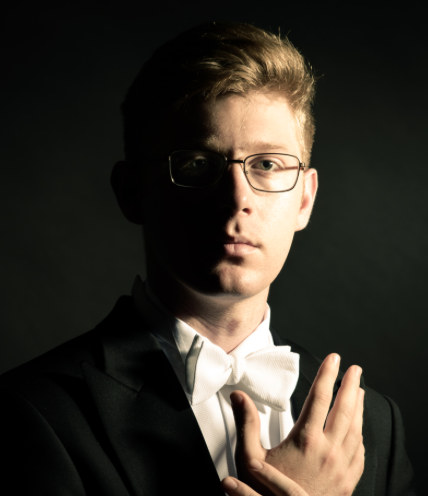
Bradley Ellingboe, guest conductor
Jonathan Griffith, DCINY Artistic Director and Principal Conductor
Howard Goodall, DCINY Composer-in-Residence
Sarah Joy Miller, soprano; Scott Joiner, tenor; Steven Eddy, baritone
Stern Auditorium at Carnegie Hall, New York, NY
November 20, 2016


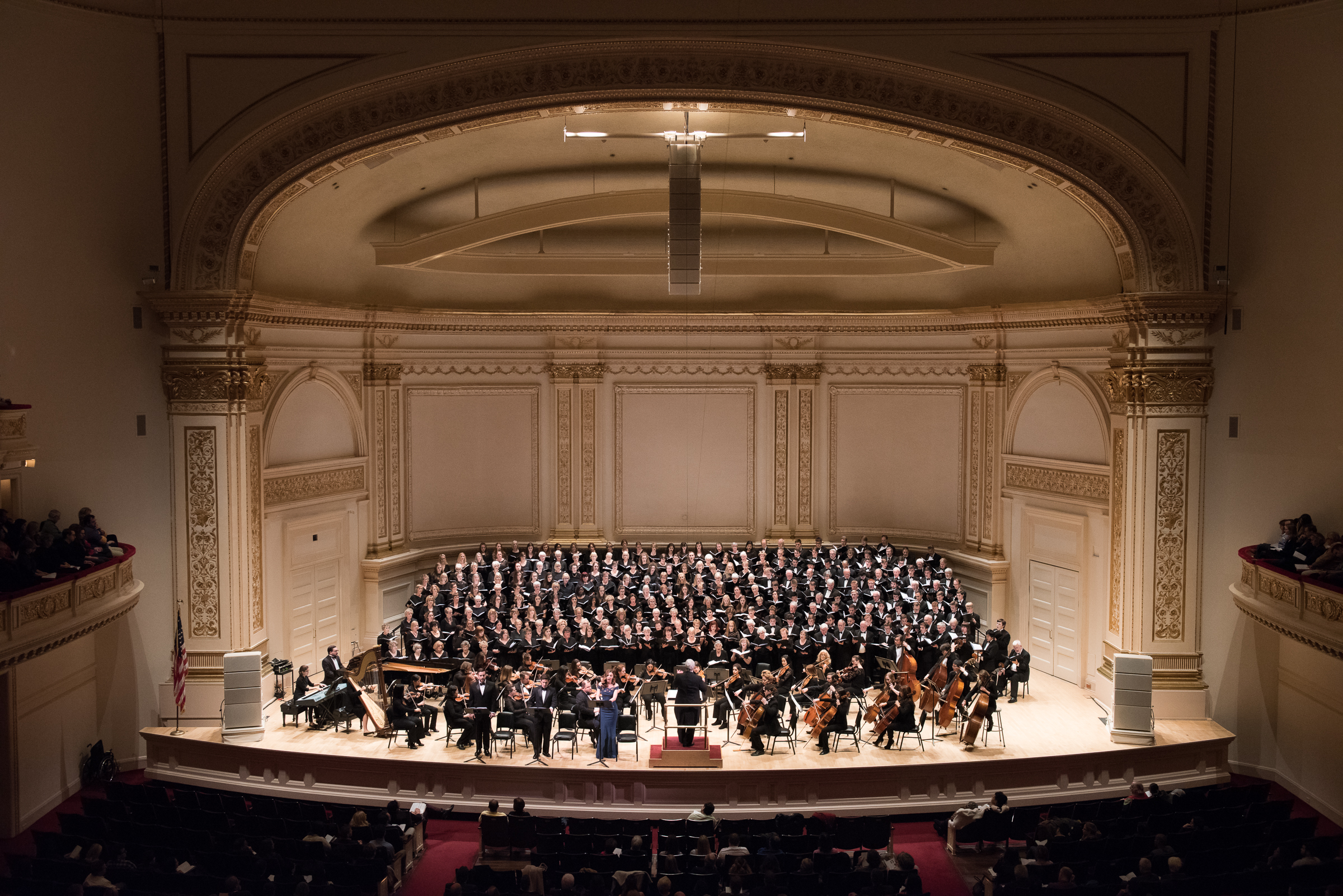
Distinguished Concerts International New York (DCINY) presented a concert entitled Eternal Light on the evening of November 20, 2016 at Stern Auditorium at Carnegie Hall. It featured two works, Morten Lauridsen’s Lux Aeterna and the New York City premiere of Howard Goodall’s Eternal Light: A Requiem. With singers from Louisiana, New Mexico, Texas, Minnesota, California, Oregon, Pennsylvania, Northern Ireland, and the United Kingdom, the theme could have been called The Show Must Go On, in what was a night of unexpected events.

Guest Conductor Bradley Ellingboe took the podium to conduct Lauidsen’s Lux Aeterna. In an earlier review (from a concert June 12, 2016 also entitled Eternal Light) I wrote, “Composed in 1997, Lux Aeterna is a five-movement work, taking the opening and closing of the Requiem Mass and three sections of the Te Deum for the texts. If “heaven” is really as many imagine, I would not be shocked if this music is being heard and played there.  This is simply some of the most beautiful music I have ever heard, and at the risk of being accused of intellectual laziness I will respond that its transcendence simply eludes words.” I have no occasion to change my opinion, and if anything, it has been further deepened. Mr. Ellingboe led a performance worthy of this fine piece, with the chorus and orchestra closely following his expert direction.

Near the end of the Agnus Dei-Lux Aeterna movement, there was a loud noise, of which one could not readily determine the cause. After the work ended, it appeared that one of the chorus members in the front row had possibly fainted and fallen from the riser. The singers and orchestra members filed off the stage, and the stage crew set about setting the stage for the second half, while the singer was being attended to by several people. Finally, an emergency medical team arrived, placed her on a stretcher and wheeled her from the stage. She appeared to be okay, and I am sure that I speak for all in attendance in wishing her a speedy recovery. The next group of singers and orchestra took the stage for the second half. The Show Must Go On.

Before the start of the second half proper, conductor Jonathan Griffith and composer Howard Goodall took the stage in an impromptu talk. Mr. Goodall spoke about Eternal Light, some of his recent completed projects, and described his compositional system, which considers all elements (shape, arc, landscape, etc.) to be equally important. He is a modest man, and somewhat reticent to boast about his many accomplishments, so Maestro Griffith informed the audience that Eternal Light was nearing its 500th performance, which averages about one performance a week since the premiere in 2008! Mr. Goodall informed the audience that he is currently working on three (!) new musicals simultaneously. Jonathan Griffith then took the podium to conduct the New York City premiere of Eternal Light: A Requiem.

Eternal Light: A Requiem is a ten-movement work using both the traditional Requiem mass and texts of the composer’s choosing. I recommend the reader to take the time to read Mr. Goodall’s excellent program notes (which also include the complete texts) by following this link: Eternal Light Program Notes . Clocking in at forty minutes, it is a journey of beauty, heartache, and in the end, hope.

I’m not going to comment on each movement, but rather mention a few points of interest. The fourth movement, Hymn: lead, kindly light, began in a state of hesitation, so much so that after about ten seconds Maestro Griffith stopped the work, paused for a moment, and recommenced the movement. This second time was strong and decisive, and while it is never a good thing to have to stop and re-start, it was a good decision from a seasoned and intelligent musician like Maestro Griffith. Too many times this listener has heard things go from bad to completely off the rails from either a reluctance to re-start, or from the hope that somehow things will right themselves (they usually don’t).

The sixth movement, the Dies Irae: In Flanders Fields, was the favorite of this listener. Mr. Goodall’s setting of the famous World War One poem of Canadian military doctor John McCrae was equal to the haunting text. Too many settings (and I have heard many) come across as saccharine and lightweight, which (in my opinion) destroys the meaning of McCrae’s words. Thank you, Mr. Goodall, for “getting it right”- it was one of the more moving things I have heard in some time.

The three soloists were top-notch, and each delivered strong, passionate performances. Soprano Sarah Joy Miller has a voice that abounds with heavenly beauty, tenor Scott Joiner wrung out the emotion in the heartbreaking third movement Litany: Belief, and baritone Steven Eddy projected with strength and confidence. The chorus (except for that one vexing moment) did good work, handling some of the rapid-fire settings of Latin with good diction and balance. This was one of those occasions when the sum of the parts exceeded the whole; it happens sometimes. The Show Must Go On.

At the end of the In Paradisum: Lux Aeterna, the audience responded with a standing ovation. Mr. Goodall came to the stage where he bashfully attempted to hide behind the vocal soloists, and had to be coaxed to the front, ending the night on a high note.

 

Share

The Hilton Head Symphony Orchestra and The Hilton Head International Piano Competition present Chang-Yong Shin in Review

The Hilton Head Symphony Orchestra and The Hilton Head International Piano Competition present Chang-Yong Shin in Review

The Hilton Head Symphony Orchestra and The Hilton Head International Piano Competition present Chang-Yong Shin
Chang-Yong Shin, piano
2016 Hilton Head International Competition Winner
Weill Recital Hall at Carnegie Hall, New York, NY
November 19, 2016

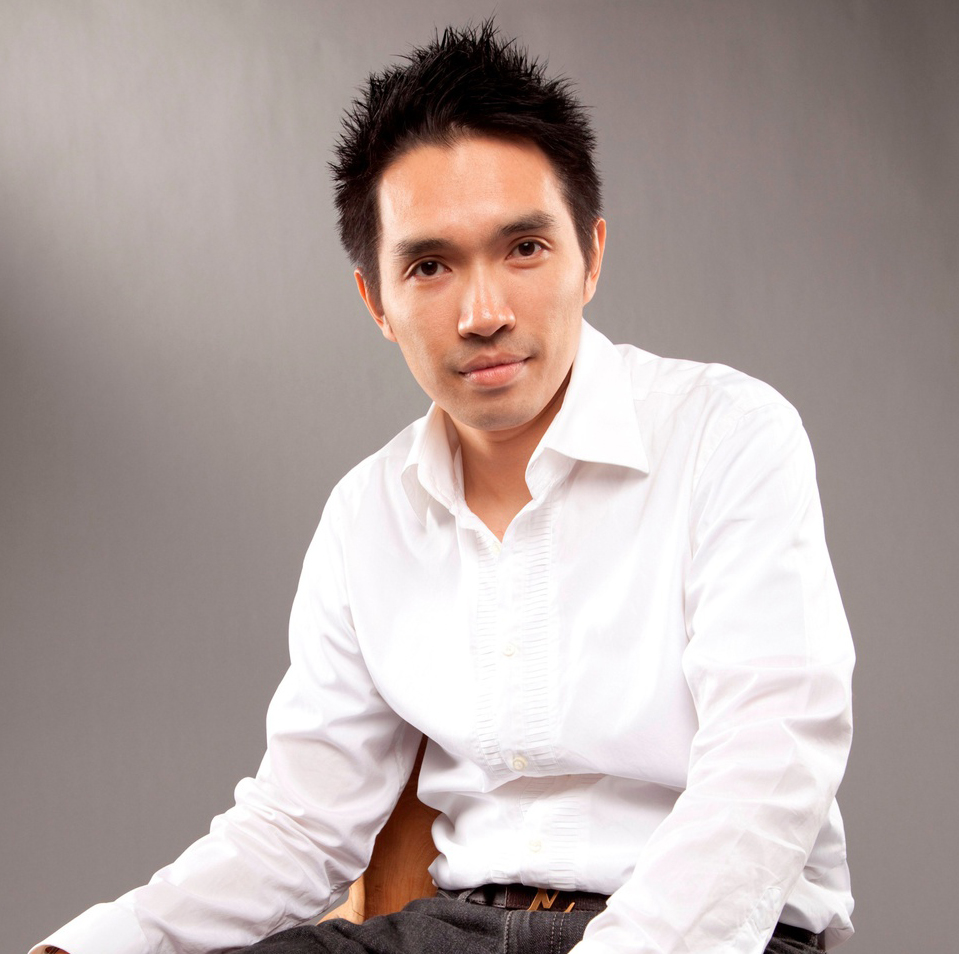
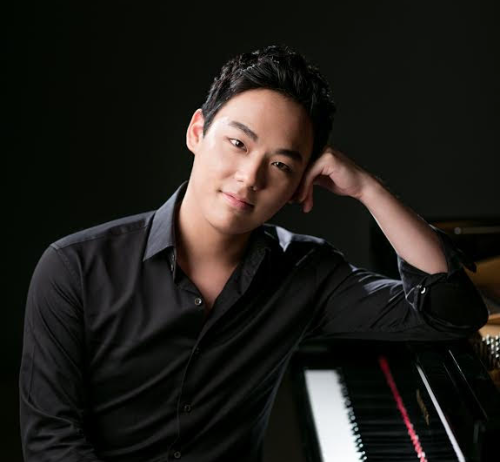
The Hilton Head piano competition presented its latest first prize winner, Chang-Yong Shin, in a well-attended recital at New York’s Weill Recital Hall at Carnegie Hall on Saturday afternoon, and what a stimulating afternoon it was. Mr. Shin has that rare ability to generate visceral excitement just by playing his instrument. He alternates between extreme fire and melting sensitivity, each of which gains by contrast to the other. Naturally, he has technique to burn. I found some of his forte dynamics strident in the small confines of Weill, but then I thought if he had tempered them, some other element of his presentation may have suffered. He has what Adele Marcus used to call “the big line”: a clear idea of every piece, every movement, and every phrase within the movement. Once a section begins, it travels on its own stream of energy that never flags; he does not “tear apart” phrases in search of detail, everything is integrated.

He began with Bach’s Toccata in D major, BWV 912. Anyone who has read my work knows that I love Bach on the modern piano. Mr. Shin seized every opportunity to use the “toccata” for its intended message—a) to show off the player’s dexterity and touch variety, and b) display a learned contrapuntal sensibility. These very early keyboard works of Bach are not programmed nearly as often as they deserve, but then one needs a Mr. Shin to bring them to bold, crisp, exciting life.

There followed Busoni’s fiendishly difficult Sonatina No. 6, subtitled Kammer-Fantasie über Bizets ‘Carmen’ (also commonly called Fantasia da Camera super Carmen) . I’m not sure what the “chamber” dimension is in this piece, which is resolutely a piano solo. Mr. Shin revealed (with Busoni’s help of course) the entire tragic unfolding of the opera in just nine minutes. His lyrical playing was absolutely superior, and the mysterious death-haunted ending was perfect. He also brought a genuine sense of playfulness, as though enjoying his own ability negotiate the score.

The first half concluded with Beethoven’s Sonata in A major, Op. 101, a test of any pianist’s maturity and depth. Again, Mr. Shin rose to every challenge, but he was particularly affecting in the Langsam und sehnsuchtsvoll (Slowly and full of longing) third “movement,” which proceeds directly into the exultant final sonata-fugue, where his energy was exuberant. His phrasing in the strictly canonic central section of the second movement was scrupulous, one doesn’t often hear it; however, I found the outer sections too rambunctious (though convincing).

After intermission, Shin gave the first movement, Los Requiebros (Flirtatious Remarks), from Granados’ piano suite Goyescas. Granados died when the channel ferry ship Sussex was torpedoed in the English Channel by the German submarine UB-29 on March 24, 1916. He had returned to England successfully from conducting his opera (also called Goyescas) at the Metropolitan Opera, but was on the Sussex as it was heading to France. Here Mr. Shin handled the ornate piano writing, never missing where the main melodies were, and clarifying every bit of this daunting piano writing. At the teneramente e calmato section, Mr. Shin managed to create an oceanic oasis of calm at the center of what had been very “busy” writing—it was breathtaking.

He closed with Prokofiev’s Seventh Sonata, in B-flat major, Op. 83, the middle sonata of the three “war” sonatas (World War II). This is music of almost unbearable anxiety, fear, and violence. Again, the inner fire of Mr. Shin was appropriate to the message of the piece. However, I found his most successful movement to be the central, lyrical one, Andante caloroso (warmly proceeding), that resembles a nostalgic romance one might sing after too many vodkas, and then becomes elevated and ultra-tragic, with alarm bells ringing obsessively, before the “inebriated” song returns, with a final disquieting bell. The outer movements really were exciting, despite the brutality of the sound—I never heard Gilels or Richter make a harsh sound in this work, but they were completely authentic in terms of musical message. (Yes Mr. Shin, you’re being spoken of in the same breath as Gilels and Richter.)

(Aside to all young artists: At the risk of sounding like a broken record, PLEASE provide program notes. If you aren’t comfortable creating them yourselves, hire someone who is. Also, this program didn’t even have sections or movements of works indicated.)

Mr. Shin favored the enthusiastic audience with two well-deserved encores: the Schumann/Liszt Widmung song transcription, played with maturity and lyricism; and the Liszt Transcendental Etude in F minor, which was wild, but again created a visceral thrill such as we don’t often get from typical “competition winners.” Keep studying with the best, Chang-Yong, and nurture that beautiful talent you have.

Share

Distinguished Concerts International New York (DCINY) presents Warren Lee in Review

Distinguished Concerts International New York (DCINY) presents Warren Lee in Review

Distinguished Concerts International New York (DCINY) presents Warren Lee
Warren Lee, piano
Weill Recital Hall at Carnegie Hall, New York, NY
November 17, 2016


Distinguished Concerts International New York (DCINY), as a part of its Artist Series, presented pianist Warren Lee at Weill Hall on November 17, 2016. In a program with works by Bach (in arrangements by Busoni), Beethoven, Chopin, Tan Dun, and Mr. Lee himself, it was to prove a rewarding evening.

Mr. Lee ( www.warren-lee.com ) has an impressive resume as a contest winner, performer, composer, and teacher, and through his engagement in charitable outreach . He has been a Steinway Artist since 2009.

Opening with two Bach-Busoni works, the Choral Prelude, Wachet auf, ruft uns die Stimme, BWV 645, and the Chaconne from Violin Partita No. 2 in D minor, BWV 1004, Mr. Lee established his authority immediately. This was principled playing, with careful attention to voicing and articulation. Some might find his approach to be too rigid, but this listener would disagree. Mr. Lee presents what might be an excellent example to students on what constitutes an intelligent interpretive approach to this music. There were some moments of the left hand sounding heavy, something that I am wont to attribute to the Weill Hall house piano, as I have numerous other examples of this being the case from previous recitals with the same instrument. In any case, these small moments hardly detracted from what were superior performances of which Mr. Lee can feel proud.

Eight Memories in Watercolor by Tan Dun (b. 1957) followed the two Bach works. These early works, a sort of “East meets West” (with Debussyan influence throughout), were written when the composer was twenty-one. Mr. Lee played these charming miniatures with the same reverence as he did the Bach, which probably served the works better than they served him. It was a pleasant ending to the first half.

Opening the second half, Mr. Lee offered one of his own works, entitled Three Novelettes. Written in 2015, the three pieces (Reflection, Levity, and Blossom), are dedicated to Robert L. Blocker, Dean of Music at Yale University. Mr. Lee writes in his program notes that Reflection pays tribute to the many ways Mr. Blocker inspires those around him; Levity, his fun-loving and humorous side, and Blossom his infectious warmth. These pieces were an interesting bookend to the Tan Dun, as the style was quite similar (though I did detect some kinship with York Bowen’s Preludes as well in Levity!).

Beethoven’s monumental Sonata in E major, Op. 109 followed. This work presents many challenges, not the least of which is a distinguished performance history by some of the legends of the piano. Mr. Lee suffered no complexes, as he delivered a performance of intelligence and sensitivity that reminded one of Alfred Brendel. It was the highlight of the evening for this listener.

Closing with Chopin’s Barcarolle in F-sharp major, Op. 60, often called the “Fifth Ballade,” Mr. Lee played with a bright tone and a freshness of sound that sparkled without a hint of labored effort.

Mr. Lee is obviously very much at home with the works on this program. He has thought through his approach to the finest of details and executed those details with exact precision and no elements of display. One must not take this as saying that Mr. Lee is lacking in technical prowess, as he has more than enough digital facility to negotiate any challenge, but that he does not make his technique “front and center.” If anything, he gives the appearance that it is all so very easy, and to the viewing public more used to seeing demonstrative motions (often to the point of histrionics), he might not get his proper respect.

Mr. Lee opted for a most unusual choice as his encore, a truncated arrangement of the opening movement of the Grieg Piano Concerto in A minor. This was not exactly what most would consider “encore” material, but the audience found it to be thrilling and gave Mr. Lee a standing ovation.


Share

The Peggy Rockefeller Concerts presents Weiss-Kaplan-Stumpf Trio in Review

The Peggy Rockefeller Concerts presents Weiss-Kaplan-Stumpf Trio in Review

The Peggy Rockefeller Concerts presents Weiss-Kaplan-Stumpf Trio
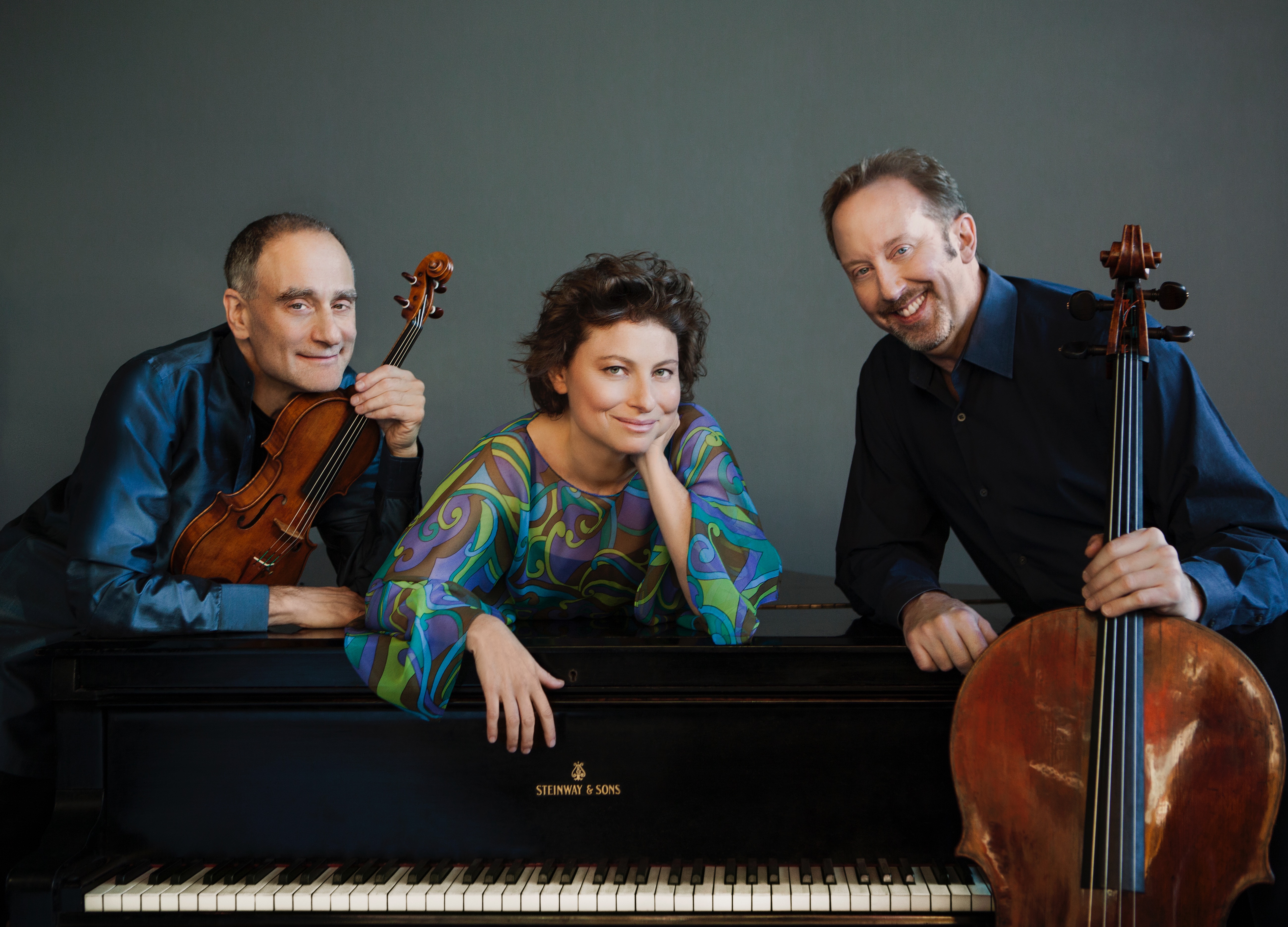
Yael Weiss, piano; Mark Kaplan, violin; Peter Stumpf, cello
Caspary Auditorium at The Rockefeller University, New York, NY
November 3, 2016


One feels either elevated or hopelessly inadequate, intellectually, when stepping into the semi-private enclave that is Rockefeller University on New York’s East Side. Nobel Prize laureates (and future ones) lurk around every corner. The motto of the university is “Science for the benefit of humanity” and the Peggy Rockefeller concert series continues with the “arts for humanity” as well. The audience for this concert was quite elderly, which does not bode well for these types of events in general, and the concerts take place in a strangely shaped, steeply raked lecture hall not designed for music, although on this occasion the sound was beautiful.

Thursday’s November 3rd concert featured the Weiss-Kaplan-Stumpf Trio, and was a wonderfully refined presentation of three of Beethoven’s output for piano trio, one from each style period: early, middle, and late. These three players (Yael Weiss, piano; Mark Kaplan, violin; Peter Stumpf, cello) play with uncanny unity, blend, and never the sense of any one member being “in front.”

First on the program was the all-too-rarely programmed Variations in E-flat major, Op. 44. This work begins with a gauntlet flung at the players by the impish Beethoven: fifteen measures of absolute octave/unison playing (eighth note followed by eighth rest) for all three players, with no smaller note values to indicate the tempo. The three musicians were totally in sync, as they were throughout the evening. Elsewhere in the work, bits of figuration or harmony that recall Op. 79’s finale, the clarinet trio Op. 11, the Eroica theme, and even the “Emperor” piano concerto are found in their infancy, so to speak. The trio brought great sparkle and polish to a neglected work.

There followed the second of Beethoven’s Op. 1 piano trios, the one in G major. The balance was gorgeous, but it led me to think about Beethoven’s notorious “rough edges” as a pianist, and that he would probably not have subordinated himself as much as Ms. Weiss did. Nor would he have rounded every single phrase off with such taper. The piano sounded, in fact, somewhat distant, something I attributed to the Hamburg Steinway D, incapable of making a harsh sound, especially when played with such elegance as Ms. Weiss possesses. The Presto Finale was ebullient, taken at a great clip, with humor abounding.

After intermission, the great Piano Trio in B-flat major, Op. 97, nicknamed “Archduke,” formed the entire half. Here everything was completely in its place, as had been everything in the concert previously. I did feel that the group lacked a certain spontaneity in the act of creating (I apologize for being so churlish), perhaps they were being careful because the concert was being recorded. Dynamics seemed unexaggerated to me, and everything was very “planned,” which gave a CD quality performance, that was somehow too polished. If the pianist is going to use an iPad, as I am increasingly seeing in concerts great and small, then she should also invest in AirTurn, so that her fingers don’t need to leave the keys to “turn” the electronic page, which is the point anyway. The transition from the rapt slow movement’s theme and variations into the concluding romp of a peasant dance was beautifully rendered.

After three curtain calls (no curtain), they retook the stage to give an encore, and sheepishly realized they didn’t have the music for it. “Next time,” was violinist’s Mark Kaplan’s wry answer.

Share

Pro Musicis presents Francisco Fullana in Review

Pro Musicis presents Francisco Fullana in Review

Pro Musicis presents Francisco Fullana
Francisco Fullana, violin
David Fung, piano; guest artist JP Jofre, bandoneón
Weill Recital Hall at Carnegie Hall, New York, NY
November 1, 2016


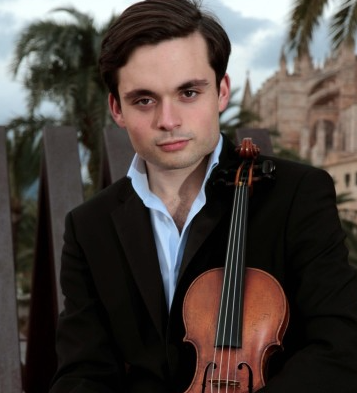
Pro Musicis continued its mission statement “Awaken the human spirit” in fine form last night with the recital of its 2015 award winner, Spanish violinist Francisco Fullana. The program was beautifully conceived, stunningly well-played, and thoughtful connections were drawn between the pieces on each half.

Mr. Fullana has a cherubic face, and he doesn’t scowl or contort it the way so many violinists do. In fact, the predominant emotion he conveyed (though not the only one) was the joy and playfulness in collaboration. He was actively listening to everything around him in his two musical partners. His pianist, David Fung, was superb. Mr. Fullana provided a real novelty in the presence of his frequent collaborator, young Argentine composer JP Jofre, who played the Argentine equivalent of the accordion, the bandoneón.

The program opened with a radiant interpretation of Bach’s Sonata for Violin and Keyboard in E major, BWV 1016. Mr. Fullana’s tone was appropriately scaled down (but never sterile), and he and Mr. Fung did not allow one single opportunity for dialog between the parts to go unexplored or unshaped. The technique and style were impeccable. In the final movement (which is preceded by a sorrowful cantilena), the sense of playfulness and joy of both players was vivid.

The contrast provided by the next piece could not have been more stark. Königliches Thema (1976) for unaccompanied violin, by the Korean composer Isang Yun (also spelled Yun I-sang), was the matter at hand. Yun (1917-1995) had an unimaginably tragic life, which included imprisonments, kidnapping, and torture at the hands of the Japanese and his fellow Koreans. Somehow, amid all this, he managed to study music in western Europe, and to keep his spirit from being broken through his composing. His music was even banned in South Korea until 1994, the year before his death.

The work is based on the famous origin melody for Bach’s next-to-last work, Das Musikalische Opfer. We now know with 99 percent certainty that it was in fact not Frederick the Great who provided the theme, but C.P.E. Bach, Bach’s son (and Frederick’s employee), who understood better than anyone his father’s ability to mine the potential lurking in any theme. Here Mr. Fullana’s tone suddenly became rich and darkened with tragedy, as each variation became more unhinged than the one before it. The technical demands of the work are severe, yet one never worried about his ability to surmount them. The piece ended on three fateful “knocks,” pizzicati perfectly graded so that they disappeared.

Then Mr. Fullana was joined on stage by Mr. Jofre, who partnered him in two of his own works for violin and bandoneón: Como el Agua (“Like water,” based on a Zen-like quote by Bruce Lee), and Tangódromo. It was wonderful to witness these two instruments and their players blending so totally into each other that at times one could not tell which one was playing which notes. Also notable was the extreme subtlety of which the bandoneón is capable, especially in the hands of Mr. Jofre (unlike the typical rush-hour serenading disrupters one encounters in the subways!). The water piece was mournful, and the tango-inspired one had great energy and wit.

After intermission, Mr. Fullana and Mr. Fung resumed their collaboration with one of Mozart’s most experimental sonatas in what was still a relatively new genre: the piano and violin sonata, with his Sonata, K. 303 (293c) in C major. Mozart stealthily gives the impression of two movements for the price of one, with the opening Adagio followed by an Allegro molto, until one realizes that those tempi changes are but the different parts of one sonata-form movement. There follows the true second movement, a Tempo di Menuetto, courtly dances often being considered the only polite way to end a “scholarly” piece like a sonata. In this work, both players recapped the almost supernatural unity they had found in the Bach, with perfect matching of articulation and phrase shape. It was perfection, and I don’t use that word lightly. Too often players either minimize or trivialize these gems.

Then came the sprawling Sonata for Violin and Piano by Richard Strauss (E-flat major, Op. 18), a composer not always thought of for his chamber music. The magic of collaboration continued with superb sensitivity to every harmonic shift (they occur about every two seconds in this work), and great virtuosity from both players. Mr. Fullana’s Stradivarius really got its “lungs expanded” in the big dimensions required by the piece, and Fung never overbalanced, amid the monster piano part. The aggressive moments were handled well, but in the soaring songlike melodies the transfiguration was even better.

After a large ovation, Mr. Fullana and Mr. Fung played two of De Falla’s violin arrangements (from songs): Nana (a lullaby) and El Paño moruno (the Moorish cloth, a metaphor for virginity!) with yearning authenticity.

Bravo to Pro Musicis for its track record, and to these three artists for elevating a room full of listeners seeking beauty.


Share

Pianist Jasper Heymann in Review

Pianist Jasper Heymann in Review

Jasper Heymann, piano
Steinway Hall, New York, NY
October 29, 2016

Underground at the new Steinway emporium on Sixth Avenue and 43rd Street in New York City. is a small performance space, seating only a few more than sixty. Sure, it lacks the charm of the old rotunda on 57th Street, but time marches on. The seats are comfortable but the temperature is very warm. A water cooler located outside the hall looked promising, but no cups were provided.

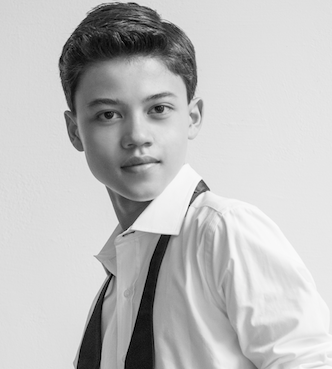
It was there that an extraordinary full recital was presented by fourteen-year-old Jasper Heymann. I’m going to try my best not to make his age an issue. His pianism would be the envy of anyone two, three, even four times his age. My comments therefore will be just as they would be for any seasoned professional. He needs no apologia.

Mr. Heymann possesses the single most important ingredient (assuming talent, of course) in the musician’s arsenal: a deep, emotional bond with the music and the ability to convey that at the instrument. It can’t be taught. All the technicalities can be taught, and I’m not saying that he’s a “perfect” pianist—that would be hyperbole, but he did melt the sometimes severe heart of this reviewer as the afternoon progressed.

The first half of his program was “structural” and classic: Bach and Beethoven. (Though Beethoven’s Op. 31 No. 2, nicknamed “The Tempest” is quite “dangerously” romantic.) These weren’t his absolute strengths, although he displayed a beautiful ear for big color in the Bach Sinfonia from the second Partita. Hooray for the modern piano in Bach! And the second movement of the Beethoven displayed quite a bit of maturity that perhaps I didn’t think would be there. The outer movements were appropriately “stormy” and the sonata overall was convincing. He should be learning to do repeats in sonata-form movements. Perhaps he was conserving energy for the virtuosic second half. I really don’t wish to pick out details. What one heard was the sense of intense involvement.

After intermission, he favored us with several Schumann works: the delicious Op. 1 “ABEGG” variations, written in “code” fashion on the last name of one of Schumann’s pre-Clara girlfriends. This glittering showpiece was dispatched with clarity and grace, especially in the initial presentation of the theme: charm! (I was puzzled as to why he didn’t do the “funny” presentation of the theme near the end that occurs when the notes are released one by one, rather than sounded.) Then Heymann played the first two of the Op. 12 Fantasiestücke: Des Abends (Evening) and Aufschwung (Soaring). Des Abends possessed a beautiful hush, though it moved at quite a clip. Aufschwung had all the energy of youth. (I did miss the canonic imitation in the major-key contrasting middle theme. See, I can get picky.)

Then Mr. Heymann turned his attention and gifts to two Liszt works: the third concert etude “Un Sospiro” and the Soirée de Vienne No. 6 (based on Schubert waltzes). His Un Sospiro verged on the mystical. It was simply magnificent. I’m so proud of him for playing the short internal cadenza (one of three provided by Liszt) and the whole-tone ending. The colors and phrase expansion were masterful. The virtuoso waltz piece was also a marvel of clarity and charm (hard to do both) amid the welter of fast notes. He had flair to burn.

He played two well-deserved encores: Rachmaninoff’s gorgeous Elegy in E-flat minor, Op. 3 No. 1, inspired by the death of fellow-composer Arensky. This was, no hyperbole, perfection, astounding in its lyricism and sorrow. He finished with Fazil Say’s perky jazz romp on the famous Paganini Caprice that has inspired so many classical composers. Mr. Heymann was obviously enjoying himself, and so were we. I do hope he’ll be able to “forget” this trifle when the time comes to learn the Brahms Op. 35 Paganini variations and/or the Rachmaninoff Rhapsody on a Theme of Paganini.

Fazil Say was a Young Concert Artists winner. If Mr. Heymann continues on his course, he could well be too, soon.


Share

The Edward J. Emerson Arts Foundation presents Daniel Adam Maltz in Review

The Edward J. Emerson Arts Foundation presents Daniel Adam Maltz in Review

Daniel Adam Maltz, piano
Weill Recital Hall at Carnegie Hall: New York, NY
October 23, 2016


Those acquainted with my reviewing style know how earnestly I try to nurture artists—that there are always positive things to be observed. That being said, a few dozen people, mainly family and friends, turned out for Mr. Maltz’ recital, which is probably a good thing, for it was not quite “ready for prime time.” I suspect there’s a great deal of poetry and musical creativity lurking in this young man, but his pianism isn’t fully formed enough or consistent enough to allow him to express it unblemished by memory lapses, wrong notes, notes that don’t sound, thin tone, and a lack of deep-in-the-keys finger legato. He did retain his composure, however, and that in itself is admirable.

His stage presence is stiff, though I did appreciate that he wore white-tie-and-tails, which isn’t seen so much anymore.

His opening group, Schumann’s lovely Kinderszenen, had the above-mentioned flaws from beginning to end. I couldn’t tell if it was opening jitters, but things didn’t really improve. This is not music “for” children, but rather about childhood viewed through the poetic prism of the adult. The composer was only six years older than Mr. Maltz when he wrote it.

Chopin’s Second Impromptu, Op. 36 in F-sharp major followed, and pleasingly, there was light and brilliant jeu perlé fingerwork in the thirty-second note section just before the end (so difficult to do!), though this impressive bit was undercut by wayward phrasing. Elsewhere, the piece suffered from eccentric rhythmic disruption and lack of legato. Mr. Maltz followed this with Chopin’s Third Ballade, Op. 47 in A-flat major. Again, the numerous slips and eccentricities marred what I’m sure could have been a probing account of this once-ubiquitous work.

After intermission came the D minor Fantasy of Mozart, K. 397, a work that comes as close as any to what listening to Mozart improvise may have been like. The D major concluding portion was tacked on at a later date, and I’ve never felt like it really “belongs” there. Mr. Maltz had much delicacy, and caught the questing, improvisatory spirit well, although again, with a deeper legato and better phrasing, he could have said more with these deceptively few notes.

In conclusion, he offered the Beethoven Bagatelles, Op. 126, Beethoven’s final works for piano solo. These “trifles” are anything but—in them Beethoven seemingly engages in dialog with the cosmos and the creation of new ideas of aural “space.” Here, Mr. Maltz was at his very best, he seemed unified with the music, the composer, himself, and the instrument. He sank deeply into the keys for the most satisfying tone of the evening. Here, his personality really emerged, and I could see what he might become in a few years. (He is only twenty-two, after all.)

His biography says he is a champion of the music of his father, Richard Maltz, a composer. It would have been stimulating to have included some of that, rather than one of the more standard works. I do hope he won’t let himself be discouraged by my response to this one performance. What is important is to keep going, and to keep learning.


Share

JPMorgan Chase & Co. and the Sander and Norma K. Buchman Fund present The Sphinx Virtuosi in Review

JPMorgan Chase & Co. and the Sander and Norma K. Buchman Fund present The Sphinx Virtuosi in Review

 JPMorgan Chase & Co. and the Sander and Norma K. Buchman Fund present
The Sphinx Virtuosi
Isaac Stern Auditorium/Ronald O. Perelman Stage at Carnegie Hall
October 20, 2016


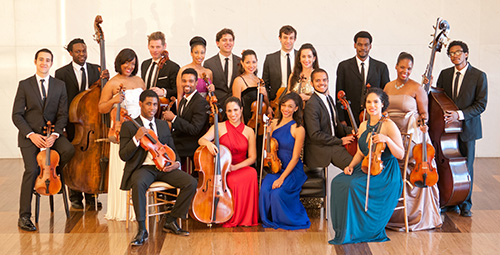
The Sphinx Virtuosi delivered another of their brilliant, fierce, dedicated, and inspiring programs on Thursday night, celebrating the eve of their twentieth year of standing as a sort of rebuke to the hidebound institutions of classical music—insisting on representation, participation, education, and development of Black and Latino musicians. For those who don’t know, the Virtuosi are composed of eighteen string players, all laureates of the Sphinx Competition, yet another part of the organization’s total outreach. The Virtuosi play as a conductorless chamber string orchestra. The sum total of all Sphinx Organization activities is much more important than any one concert given: may their efforts not only thrive but increase.

The program had a very single-minded focus on this occasion: Viajes Latinos (Latin Voyages). It sought also to redress an imbalance of programming that usually favors only standards, by presenting music of various South American composers (and one Spanish, one Mexican), though some of those are pretty much household names by now. In fact, my only wish would be that they had strayed farther afield into even more obscure music, even by the well-known names.

To attend a program of all-Latin music, one had best have made one’s peace with ostinati, since the lion’s share of the works possess this motoric drive. I could have wished for more meditative works, but I realize that generating excitement has a mission too.

The program began with Astor Piazzolla’s well-loved Libertango, played with rhythmic snap and great sound, although this arrangement robbed the tango of some of the bite that is usually present when bandoneon or piano are employed. Attraction and repulsion are the essence of the tango.

They followed this with the Mexican composer Javier Alvarez’ Metro Chabacana, named for and commissioned by (!) a subway station in Mexico City. (How about it MTA: Bryant Park Blues?) This was beautifully played, and one could hear the pulse of urban life both above and below ground.

The Last Round, for the unusual instrumentation of two “competing” string quartets and one “moderating” double bass, by Osvaldo Golijov followed. It was inspired partly by the death of Piazzolla, and the antagonism of the tango found its metaphor in the two quartets, who traded sultry moves between them, while the bass contributed rhythmic punctuation. Its concluding section, the mournful part, was absolutely haunting.

A phenomenal young violinist and recent prize winner, Hannah White, then took the stage to blaze her way through the only true novelty of the evening: César Espejo’s Prélude Ibérique, for unaccompanied violin. Espejo, from Spain, lived most of his life in France. His work carries figurations from Bach, with important mixtures of flamenco and even tzigane (gypsy) thrown in. White commanded every bit of the work, with perfect intonation, technique, flair, swing: in short, everything one could ask for from a violinist, of any age.

Heitor Villa-Lobos is also a name that really needs no introduction. In this section of the program, the “heart” of the Sphinx group, a quartet named Catalyst, performed the famous Aria from his Bachianas Brasileras No. 5. Despite perfect playing, I felt the piece was robbed of a bit of its humanity with the lack of the human voice soaring over its long lines. This led me to wonder about the inclusion of winds and voices to the Sphinx agenda. Is it possible, or have they already beat me to it?

The Catalyst group then segued directly into another Piazzolla “hit”: La Muerte del Angel, originally part of a movie score. Here the quartet was in stunning form, with elegiac sound, and great flexibility due to listening intently to each other (a property possessed by the entire Sphinx group: if I were to make a bad pun, I’d call them “Black Orpheus,” but that would short-change the Latinos.).

After a concise but moving video of the program’s influence and mission, some remarks were made, and an award was presented to a major patron, Robert F. Smith, the first African-American chairman of the board of Carnegie Hall.

The concert then concluded with a fiery account of Alberto Ginastera’s Finale furioso from his Concerto per corde, Op. 33 (an arrangement of a previous string quartet). The energy was almost unbearable, in a good way! The audience, refreshingly composed of many younger faces of color, leapt to its collective feet.

Share

Distinguished Concerts International New York (DCINY) Artist Series presents Melissa Wimbish in Review

Distinguished Concerts International New York (DCINY) Artist Series presents Melissa Wimbish in Review

Distinguished Concerts International New York (DCINY) Artist Series presents Melissa Wimbish
Melissa Wimbish, soprano
Ta-Wei Tsai, piano
Jessica Meyer, viola
Weill Recital Hall at Carnegie Hall, New York, NY
October 10, 2016


It has become politically correct to bash Columbus and his day; he didn’t even “discover America” anyway. Nevertheless, it seemed an appropriate choice for an all-American art song recital, all the music of which was by contemporary living composers. This marks the New York solo recital debut of Melissa Wimbish, the NATS 2014 competition winner. It was an ambitious program, and one that clearly showed her virtues, as well as a few minor flaws. Who doesn’t have flaws?

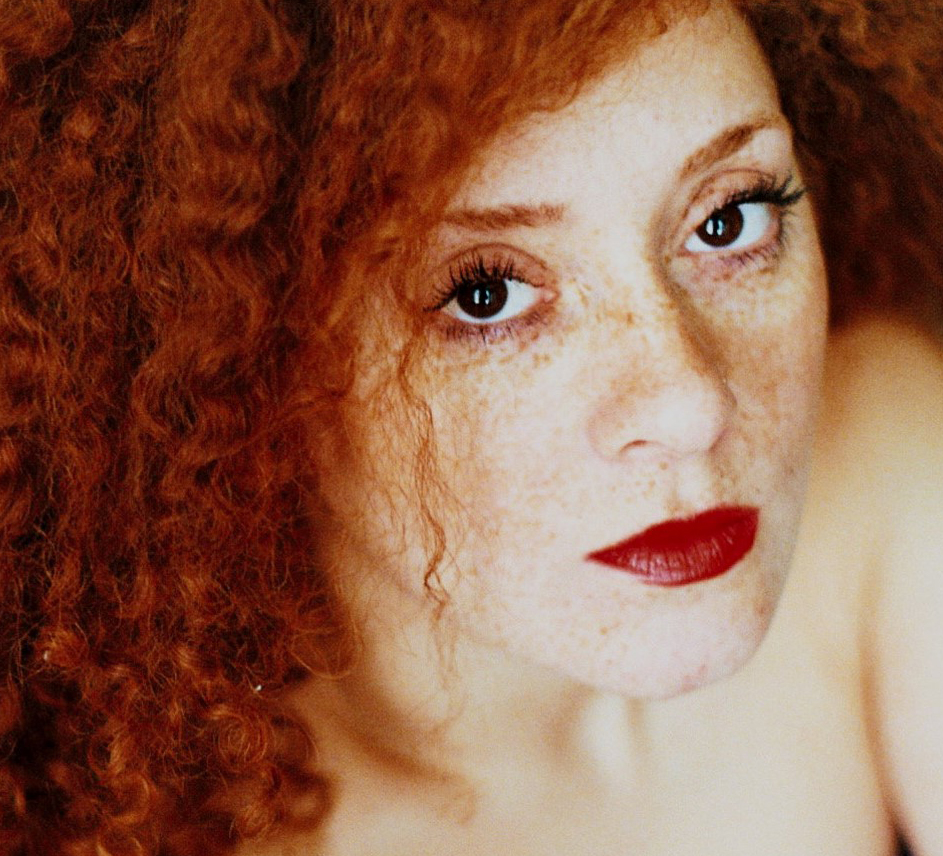
When she took the stage, I thought she bore a striking resemblance to Bernadette Peters. Then when she began singing, I thought: well, here is the “love-child” of Peters and Dawn Upshaw. Ms. Wimbish is a very stylish woman, svelte, with masses of curly red hair; she changed outfits three times, as befit the different repertoires. Her program also contained generous program notes (most of them by her) and the complete printed texts of everything performed. This is necessary, despite her exemplary diction, in a program where you have to sing words such as: transactional, chromosomes, flagella, and embezzled. She also gave concise spoken introductions from the stage prior to each group, just enough to enhance our appreciation of her feelings about the songs.

Ms. Wimbish is clearly very thoughtful about this repertoire, and she is a charming actor. The aforementioned diction was truly excellent—however, as the evening progressed, the diction flagged a little, revealing more vocal sumptuousness, which was welcome. In fact, my only slight reservation about the recital was the smallness of her softer singing, which often was covered by her otherwise expert collaborative pianist, Mr. Tsai, even though the piano lid was on the short-stick. He needs to support the voice he’s with, not the “theoretical” one we all carry around in our heads. I also disagree with his bowing from behind the piano bench, which he did every time until the final bows. When you’re as good as Mr. Tsai is, and you’ve worked that hard, equality is the way to go.

You know your voice is small when a single viola can drown you out. Ms. Wimbish projected the best she could, but her real “glamour” range was attained only when she went to high notes and above a mezzo-forte dynamic. Within her voice type, she displayed myriads of colors beautifully. Composers love voices like these that are pure and accurate, with flawless intonation, attached to inquisitive minds and hearts.

She began with the “feminist version” of Eve, in excerpts from Jake Heggie’s Eve-Song (poetry by Philip Littell). Mr. Heggie has attained major prominence as a vocal composer because he writes “for” rather than “against” the voice, in unabashedly neo-Romantic style, spiced with complex modern chords. Ms. Wimbish revealed the sassy update of this character perfectly; she is the master of the discreet “uh” following a consonant that prevents it from disappearing. I was immediately captured by her pronunciation of “Eeev[uh]” which gave so much emphasis and clarity. She bit into an actual apple during the performance, and it can not have been easy to sing around that lump of fruit while maintaining her diction, her sound, and gradually swallowing it!

This was followed by the Three Dickinson Songs by André Previn, more lushly tonal music, composed for Renée Fleming. It would be unfair to compare Ms. Wimbish directly to her role model, but one did long for more sensuous weight, particularly in the lower-middle ranges of the voice, which then would have informed the exposed final high notes with which the composer challenges his interpreters.

A world-premiere ensued; how many times do you encounter that at an art song recital? The composer Jessica Meyer was also the violist in her own work: Space, In Chains, a group of three songs to anguished poetry by Laura Kasischke, for viola and voice only (no piano). Ms. Meyer uses both extended and traditional techniques in her music, drawing on her years of experience as a professional violist. The most haunting of these, for me, was her gentle drumming on her instrument in the “Rain” song.

After intermission, six songs by the genial Tom Cipullo (another lyrical neo-Romantic composer) were rendered with sensitivity. There was less of the whimsy and humor I associate with his work (though some peeked through in “Fugitive”); these were more meditative and passionate. The poet of the sixth song, Something About Autumn, Robert Cole, was present along with Mr. Cipullo to acknowledge the applause. This was also the most effective song of the set, with a final held high note sung stunningly by Ms. Wimbish.

Ms. Wimbish closed the recital with a performance of the long scene for soprano and piano called At the Statue of Venus, by Jake Heggie. In it, a woman of unspecified age (though she does say “I’m too old for this”) is waiting in an art museum for a blind date with a man her friends have set up for her. During this wait, she agonizes over her choice of outfit (the word “slacks” received more inflections than I could have imagined); feels insecure about the whole idea; compares herself unfavorably to other female artists’ muses; then comforts herself with memories of how loved and protected she felt as a child. Finally, the man arrives (her obliging pianist supplied the final word: Rose, her name). The scene is not opera, but it certainly is operatic. Is it overwrought? Not for me to say—people adore Mr. Heggie’s music. It is grateful to sing, and after all, his operas: Dead Man Walking, and Moby Dick, notably, are performed worldwide. In the scene, Ms. Wimbish really opened her voice, producing the best singing of the night. The words became unclear but the sonority was worth waiting for. The audience leapt to its feet.

I salute this enterprising and versatile young artist, and hope she will return often with even more intriguing program ideas. If she hasn’t already, may I suggest she do an omnibus survey of Sondheim? She seems ideally suited for it.

Share

Key Pianists presents Ann Schein in Review

Key Pianists presents Ann Schein in Review

Key Pianists presents Ann Schein, piano
Weill Recital Hall at Carnegie Hall, New York, NY
October 5, 2016


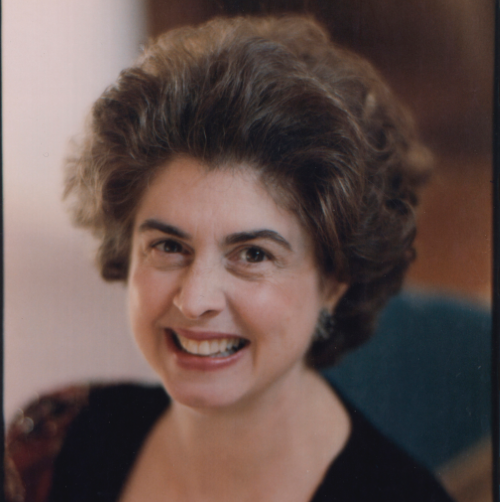
I attended the most marvelous poetry reading last night. I’m sure you are thinking “Is he out of his mind?” Perhaps, from time to time, but in this case no: the poet was legendary pianist Ann Schein, and she read from the poetry of Beethoven, Schumann, and Chopin.

The hall was full and enthusiastically expectant, and they were not disappointed. From the outset, even in taking the stage, Ms. Schein radiates good-will, warmth, humility, and a sort of maternal embrace—these qualities were returned to her tenfold by the audience.

She began with an account of Beethoven’s programmatic sonata, Opus 81a, in E-flat major, nicknamed Les Adieux (The Farewells), that has three movements motivated by the subjects of Farewell, Absence, and Return, all of them linked by a descending posthorn motto. Immediately, in the Adagio introduction to the first movement, Schein made us aware of an interior stillness leading to sadness (and ultimately to a joyous reunion). This quality is not often audible in routine performances. The piano tone was sumptuous at all times. Beethoven’s sometimes awkward writing for the hands never sounded thus. The bleak, almost neurotic, “absence” movement was perfectly rendered, leading to the puppy-like dancing about the wheels of the carriage bearing the returning Archduke. Never have I seen or heard the extravagant leaps in the right hand dispatched with such appropriate happiness.

This brings me to an attempt to summarize the many virtues of Ms. Schein’s pianism: 1) she is able to “project intimacy”; 2) she understands and feels phrase grouping, harmonic motion, and the sense of arrival, such moments are generously breathed and punctuated; 3) her beautiful motions become e-motions; 4) she possesses uncanny sincerity; 5) meaning and feeling are at all times joined; and 6) simplicity and generosity are also at all times united.

The second work was, for me, the absolute pinnacle of an outstanding program: Schumann’s great Davidsbündlertänze, Op. 6 (Dances of the League of David). This is a work with multiple sources and meanings—Schumann’s imaginary league of great creators vanquishing the Philistines of culture; the three sides of his own fervid personality: Florestan, the fiery impetuous one, Eusebius, the dreaming poet, and Master Raro, the mediator between the two; and Schumann’s often fraught relationship/courtship of the young girl who would eventually in fact become his wife, Clara Wieck. This piece gives pause to many seasoned professional pianists, who may not trust their ability to be poetic enough.

The work is a series of eighteen character pieces in the guise of dances, tightly linked with mottos (notably the descending “Clara” scale). In the first edition, each piece (save for three) is marked with initials “E” or “F” for its authorship by one of the aforementioned aspects of Schumann. Personally, I am drawn to the Eusebian sections, but I always have to realize that they wouldn’t emerge as beautifully without the contrasts around them. Full disclosure: many of Eusebius’ tears (mentioned in the program to the piece) stole silently down my own cheeks as this unforgettable rendition was happening. I had to hold my breath many times, so intense and revelatory was this performance. Each section was miraculous, with punctuations that I had never considered before. Particularly effective was Schein’s handling of the many coda or codetta sections, which put a metaphorical halo over what had come before. The final wistful waltz, with its mash-up of tonic and dominant at the beginning, was heartbreaking. One wanted this work (and possibly the entire recital) to be twice as long.

After intermission Ms. Schein gave us Chopin’s third and final piano sonata, Op. 58 in B minor. This is a massive work, with enlarged scope and heroism, and it led me to think what might have been if Chopin had not died at the untimely age of thirty-nine, but had lived to hear and see the Wagner operas. All of Ms. Schein’s tremendous virtues were present in this reading, including a feather-light Scherzo and the noble Bellini-like song of the third movement. As the finale arrived, Ms. Schein really seemed to let go and just tap into something primal, no caution, just abandon (but with all the fine shaping that we had come to expect.) Its triumphant ending inspired an instant standing ovation.

She favored us with two encores, of which the first was spellbinding, a new “definitive” performance in my opinion of a work that is often just “passed over”: Chopin’s second of the Trois Nouvelles Etudes, in A Flat. After that, Schein again just let loose and reveled in her ability with Rachmaninoff’s second Prelude from Op. 23, in B-flat major. I doubt this pianist has ever played an unmusical note in her life. Her mentor Mieczyslaw Munz predicted for her “a long life in music,” and he was so right. Thank you, Ann, for sharing this beauty with a world so in need of it.

Share