A Joseph Barry Production under patronage of the German UN Ambassador Harald Braun: Adrienne Haan sings Kurt Weill in Review

A Joseph Barry Production under patronage of the German UN Ambassador Harald Braun: Adrienne Haan sings Kurt Weill in Review

Adrienne Haan sings Kurt Weill
Adrienne Haan, chanteuse
Barry Kleinbort, director
Richard Danley, music director/piano
Novembergruppe Quintet: Dan Levinson, band leader/clarinet/alto saxophone; Jonathan David Russell, violin; Vinny Raniolo, guitar, banjo; Jared Engel, bass, tuba; Mike Campenni, drums
The Metropolitan Room, New York, NY
September 28, 2016


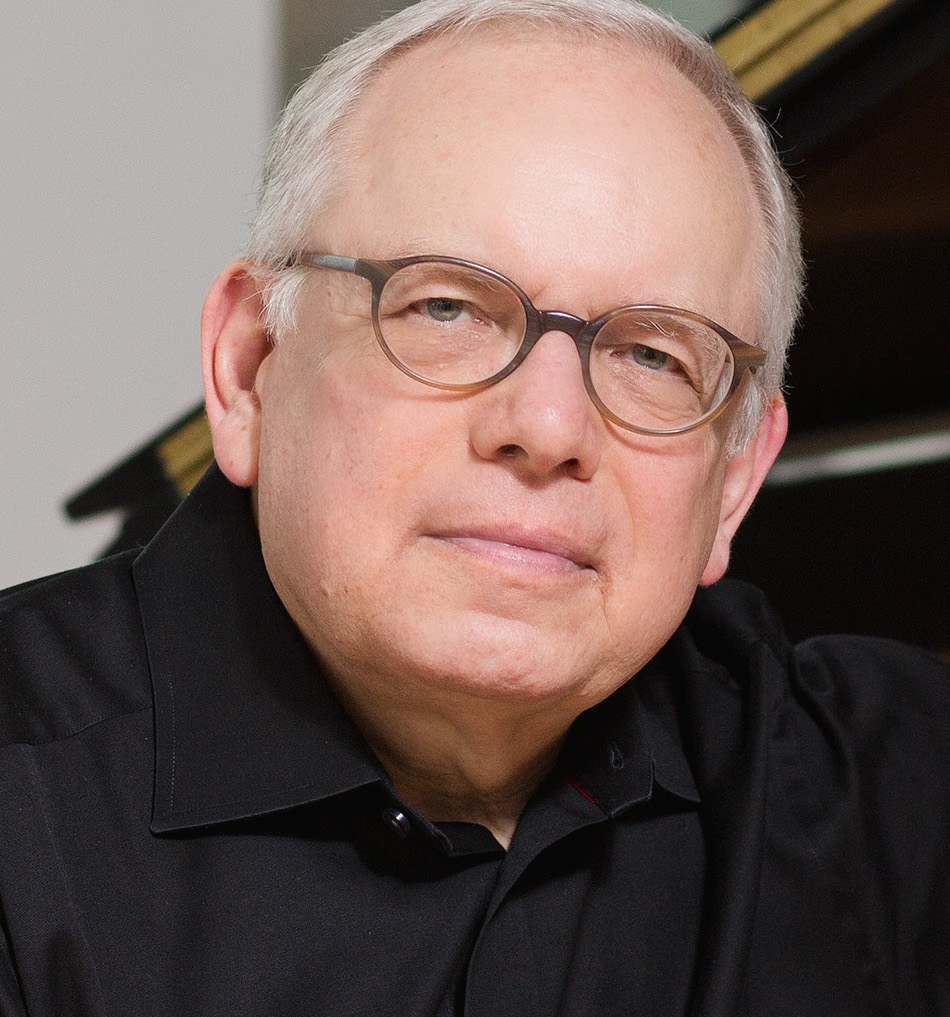
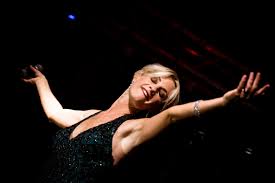
Late September, when “the days grow short” is indeed the best time for a survey of the songs of Kurt Weill—and Adrienne Haan has proved herself to be one of the finest living exponents of his varied repertoire. In the intimate, elegant Metropolitan Room in Chelsea (New York City), she commanded a musical sextet of excellent players, and illuminated Weill’s chameleonic nature as a composer, with anecdotes from both his life and her own.

Let me say right at the outset that this evening had only highlights. This is rare. All classically-trained singers of art song should be required to attend several cabaret performances a year to see how it is possible to emote fully and sing with a large voice and still make every word understandable, as Ms. Haan always does.

She plunges with apparent abandon right into the heart of every song, with a unique affinity for 1920s and 30s Weimar-era music that includes decadence and disillusionment—but she never descends into sour cynicism, as other well-known Weill interpreters sometimes do. Ms. Haan retains a sort of positive radiance. In fact, if I were to counsel her at all, it would be to develop yet another dimension, whether it is a kind of world-weariness, all-passion-spent, or a frankly angry persona. Perhaps she will as the years roll by, as she is still young.

She explained in concise patter how Weill shifted his style to match the various countries he resided in and the lyricists he was working with: Gershwin, Brecht, Fernay, Nash, Magré, Kaiser, and Botrel. Ms. Haan performed with authority in the three languages English, German, and French.

My Ship (from Lady in the Dark) opened with suitably convincing longing for the boat to be bringing her “own true love” to her. (Though Ms. Haan’s supportive husband was in the audience, and was introduced.) She then plunged into Die Seeräuber Jenny, the showstopper from Die Dreigroschenoper in which the scrubbing maid hectors her disbelieving listeners into a tale of capture and murder of which she is in charge. Then Ms. Haan turned to French Weill in the form of the Youkali tango/habanera (from Marie Galante) in which the land of infinite pleasure is first described and then negated as not existing anywhere.

Speak Low (from One Touch of Venus) was beautifully sung: “The curtain descends, everything ends too soon”- an apt description for this program. This was followed by Weill’s most famous number, the one everyone has heard even if they didn’t know it was by Weill: Die Moritat von Mackie Messer (from Die Dreigroschenoper) and its not-so-covert protest against the German regime which caused it to be banned. Ms. Haan deftly pointed out some possible relevance to current politics (without being heavy-handed about it.) The song’s sudden ending took the audience by surprise. She continued in intense-mode with Surabaya Johnny (from Happy End). This and the next lost-romance number (Je ne t’aime pas) I felt were the only tiny missteps in an otherwise perfect program. They came off as duly overwrought and desperate, but I felt they needed more anger and perhaps less “victimization.” Forgive me, Adrienne.

After a brief humorous explanation of how Brecht obtained his exotic geographical names (by sticking pins into atlases, in places he thought had funny sounding names), Ms. Haan delivered a stunning rendition of Alabama Song (from Aufstieg und Fall der Stadt Mahagonny) where her search for a “whiskey barrrrrrrr” was accompanied by the hurling of actual $100 bills into the audience, who were exhorted to join in the boozy chorus. Now that’s decadence! Cäsars Tod (from Der Silbersee) provided another censured bit of history, with its parallel of the ancient Roman dictator with the one rising in Germany at the time.

Nannas Lied states that “the love market becomes easier as you embrace them by the score,” with Brecht’s clever borrowing of the line from medieval French poet François Villon, “where are the snows of yesteryear.” Then Le Grand Lustucru (from Marie Galante) took the stage, a bogeyman from Provençal lullabies that devours little children who refuse to go to sleep. Bilbao Song (from Happy End), another whimsically chosen atlas-name, hymned the virtues of Bill’s Be-All Bar, where drink was unlimited, bar fights superseded any action on the dance floor, and the narrator can’t quite remember the lyrics to his song request, or whether the joy or pain was greater.

Regretfully, the evening had to end, and did so with The Saga of Jenny (from Lady in the Dark), quite a different gal from Die Seeräuber Jenny (or is she?), whose chief problem is that she sows tragedy quite effortlessly throughout her life simply by “always making up her mind.” Ms. Haan’s built-in (and well-deserved) encore was I’m a Stranger Here Myself (from One Touch of Venus), with perhaps more than a touch of nostalgia for her own experience as a transplant to the United States. Well, call me corny, but at an evening of Weill held on September 28, I would have liked to hear September Song. Maybe next time, and there will surely be many next times for this artist. (In fact, this concert was sold out, causing the Metropolitan Room to add another date for her in October.)

Share

Legato Arts presents Music of Dana Dimitri Richardson in Review

Legato Arts presents Music of Dana Dimitri Richardson in Review

Legato Arts presents Music of Dana Dimitri Richardson
Simon Mulligan and Craig Ketter, piano; Jacqueline Milena Thompson, soprano; Frank Picarazzi, vibraphone; Karen Lindquist, harp; Sunghae A. Lim, violin; Luih-Wen Ting, viola; Greg Hesselink, cello
Weill Recital Hall at Carnegie Hall; New York, NY
Sunday, September 25, 2016


A nearly-full hall greeted the Legato Arts presentation of the music of Dana Richardson, on a sun-filled, cool, early autumn afternoon. These enthusiastic souls were treated to an afternoon of his music, what he called a “summation” of his life’s work. He has created for many sonorous combinations: piano solo, violin and piano, vibraphone and other instruments, voice, and more traditional chamber groupings, always with a very fine ear for sonority. He has even created a syntonal rock-music album.

The ear for sonority serves him well, for his main preoccupation, since his early college years, has been as advocate for, defender of, and user of, a compositional system he calls syntonality (or biscalarity, they are not-quite synonymous). In syntonality, two different scale systems, separated by a tritone or a half-step, are fused together to create one seamless melodic/harmonic super-canvas. It is not the same as bitonality (think Milhaud). “The registral fusion of the two constituent key-streams creates a new and beautiful surface on which neither key is perceptible.” All this can be read in a lengthy thesis posted on the Web (http://dana-richardson.org/syntonality8.pdf )but really, none of this would matter if the music was either not high-quality, or didn’t communicate emotion successfully to its audience. Luckily, I can report that Mr. Richardson’s does satisfy on the latter two points.

In fact, I attended this concert, after my preparation, which involved reading the theory behind syntonality and listening to an example on YouTube, with one impression of what to expect, but I found to my grateful delight, that the actual sounds made were much nicer than all the theorizing would lead one to believe. Added to this, Mr. Richardson found a handful of excellent chamber players to perform his works, each one of them playing in the finest, most committed and persuasive style.

The afternoon began with Mr. Richardson’s Invocations for solo piano, played brilliantly by Simon Mulligan. They were prompted by the death of Mr. Richardson’s mother four years ago, and are based on four of Franz Liszt’s Harmonies poétiques et religieuses, adding syntonality to Liszt’s characteristic textures. Three of the four I thought were splendid re-imaginings, only the Bénédiction dans la solitude for me missed the mark a little, sounding more like pastiche than something transfigured. (And why did he leave “Dieu” out of the title?)

Next was the Theme and Variations for violin and piano, given a beautiful reading by Sunghae A. Lim and Craig Ketter. Mr. Ketter highlighted some wonderful counterpoint with his characteristic warmth and clarity.

Prior to intermission the Mysterium for the unusual combination of vibraphone, cello, and harp was performed, again with complete mastery of sonority and gesture. The vibraphone definitely imparts an otherworldly touch to the ensemble, but the piece itself raised a doubt that began to nag at me for the rest of the afternoon: Is syntonality in some way “limited”? Variety was lacking in many of the themes and gestures. I can imagine that it makes the composer have a much harder time finding a “sense of ending” or “inevitability” without ramping up the sensitivity to texture, speed, and volume, to compensate for the harmonic “blur” that often results.

For all Mr. Richardson’s intent to revitalize the language of classical music, and despite the extremely warm reception he was given, I have to say that much of the music sounded like early Alban Berg, or other late-Romantics, with a sort of “film” over it. Why doesn’t Mr. Richardson just call himself what I gathered he is from this concert—a good, sincere neo-Romantic?

Three Preludes for Sophia opened the second half, with Mr. Ketter again performing beautifully. Mr. Richardson’s program notes state that the outer two use textures from Chopin Preludes (again, like the Liszt), with syntonality added to them. These truly were pastiche, down to the octave leap that opens Chopin’s Op. 28, No. 4. The third piece was based on the middle section of Op. 28, No. 15 (the obsessive repeated G-sharp), with whiffs of the Second Scherzo and even the Etude Op. 10, No. 11. With all due respect, I felt he had “painted moustaches on the Mona Lisa” here. There wasn’t enough originality, and Chopin said it so much better, and briefer. Mr. Ketter’s pedal foot was extremely noisy during the rapid middle piece.

An ambitious group of songs followed, based on excerpts from William Blake’s Songs of Experience. Soprano Jacqueline Milena Thompson has a lovely sound, but ninety percent of her diction was lost, and I was only in the seventh row. The ten percent that was clear was when the music turned somewhat parlando, then it was perfectly clear, but when she started to “be a Singer” again, it was mushy. (Texts were provided, however.) Also, uncharacteristically, Mr. Ketter wildly overbalanced her in the climactic The Tyger, where her voice simply didn’t have enough fury or power to match his. (And his pedal foot again was annoyingly loud in the penultimate song.)

The program ended with Mr. Richardson’s Piano Quartet No. 2, conceived beautifully for the combination of instruments and played with great unanimity, though the cellist was apparently a substitution (perhaps not “last-minute”). The best movement of the three was the middle one: Theme and Variations, where the variety of textures was pleasing and the music sounded most transparent and original. Otherwise, the limitations that I alluded to earlier caused a feeling of meandering, and there were sextuplets traded among the instruments that sounded like demented Hanon exercises. Other sections sounded like good old-fashioned bitonality. The piece is cyclic, material from the beginning returns at the end, a time-honored practice used by many (think Franck). Richardson’s music is most successful when he is conjuring rapt moods of mystic contemplation or elegiac meditation—when he tries to get rambunctious, the textures often grow confused, hectic, and turgid.

Mr. Richardson’s many allusions to the past anchor him firmly in music history, despite (or alongside) his desire to innovate. I do hope that this “summation” will not be the last that is heard from him, for his emotional and musical sincerity is a rare quality in our age, or any age.


Share

New York Classical Guitar Society presents Meng Su in Review

New York Classical Guitar Society presents Meng Su in Review

New York Classical Guitar Society presents Meng Su
Meng Su, Guitar
Symphony Space, New York, NY
September 23, 2016


The 2015 Parkening International Guitar Competition Gold Medalist, Chinese-born Meng Su, played a successful debut recital this past Friday to a large audience with a fair number of guitarists in it. As her biography states, she is the first guitarist to have won both the youth and the main Parkening Competitions, and she is also the first female guitarist to win the Gold Medal (or even to make it to the final round) in the main competition. Such victories are certainly significant, but they are not the sole highlights of Ms. Su’s busy professional life.

As Ms. Su commented with easy elegance from the stage of Symphony Space, she has played in New York a number of times before, though usually sharing the stage, for example as part of the Beijing Guitar Duo with Yameng Wang at Weill Hall in 2010. She has also toured extensively in Europe and the US in a trio with her mentor the well-known Manuel Barrueco, under whose tutelage she received her Master of Music degree from the Peabody Conservatory. Ms. Su also has recorded several CD’s, which can be obtained from Tonar Music via Ms. Su’s website: http://www.mengsuguitar.com. In fact, those who missed her solo recital debut in New York will find much of the same repertoire on her latest CD, Meng – missing only the Aquarelle, by Sergio Assad (b. 1952), but instead offering “Avner’s Theme” by John Williams (1932) and Tarrega’s Rosita.

Ms. Su’s recital program featured a carefully selected cross-section of the classical guitar repertoire, from Bach’s famous Lute Suite No. 4 in E major (after the magnificent Violin Partita BWV 1006), moving chronologically to the Sonata Omaggio a Boccherini, Op. 77, of Mario Castelnuevo-Tedesco (1895-1968), to Five Bagatelles by William Walton (1902-1983), and Rounds by John Williams (b. 1932, the film composer for Star Wars and E.T., etc., not the noted guitarist of the same name). The recital closed with Assad’s 3-movement Aquarelle. It was substantial fare, thoughtfully presented and played.

As one might expect from a competition veteran, there is no question about Meng Su’s technical skill, as her performances throughout the evening were seemingly effortless and stunningly polished. She is also an artist who interprets with sensitivity and respect for the score. Add to that a beautiful – and fashionable! – stage presence, and she is poised to be in high demand.

Solo guitar recitals can easily verge on the monochromatic, but Ms. Su avoided that pitfall with skillful pacing. She renders her dynamics with fine control, as was soon evident in her Bach, drawing the listener into a tonal world that happily dwells quite far from the decibel levels of Broadway just outside, though still reflecting contrast and variety. One appreciated especially her nuances between lower dynamic levels – Bach, himself, was said to favor the clavichord for its exceptional potential for gradations in the piano and pianissimo range. While this listener will tend always to associate this great Partita with the bolder violin tones for which it was originally written, Ms. Su is a convincing advocate for it as lute music (not that guitarists have ever needed any endorsement for playing it!). Not only did Ms. Su achieve clarity and distinction between dance movements of her Bach Suite, but within each movement there were subtle color changes that kept the music vibrant and engaging.

The Sonata Omaggio a Boccherini, Op. 77 of Mario Castelnuevo-Tedesco followed perfectly, giving a nod to neo-classicism – with all due respect to its composer who wrote, “I have never believed in modernism, or in neo-classicism, or in any other ism.” A classical spirit does permeate this elegant work, and Ms. Su captured it well in each of the four movements. Slower sections struck me for the first time as sharing a kinship with the gentle grace of Rodrigo’s Fantasia para un gentilhombre, another guitar gem that was composed around twenty years later.

After intermission, Ms. Su re-emerged in a red ensemble (contrasting with the black and white of the first half), remarking after she played the Walton that “apparently, the second half is more contemporary … and colorful.” Colorful it was, with the Walton Bagatelles taking us far from what might be expected based on his other music (Viola Concerto, other symphonic works, etc.). Moments of it have a lush exotic quality, especially apparent in the central “Alla cubana” movement, which seemed to inspire Ms. Su in reaching new levels of lyrical expressiveness and freedom.

Rounds, by John Williams, was written for the Parkening Competition in tribute to Christopher Parkening’s great work in the service of music. Only around six minutes in duration, it showed considerable brilliance from composer and performer alike.

The closing work by Sergio Assad, Aquarelle (“Watercolor”) was, as one would expect in the composition of an expert guitarist, very idiomatic and effective, with jazzy Latin elements lending it a different flavor from the other works on the program. Ms. Su played it with zest, but as elsewhere favoring restraint over showiness and drama.

With such facility as Ms. Su possesses, there should be no limit on what she can achieve as she continues to explore her own individual gifts. The appreciative audience earned an encore of Tarrega’s Gran Vals, a piece with the dubious distinction of having a small fragment that today is a famous ringtone. It was a humorous touch that sent the audience out smiling.


Share

Jonathan Levin, Pianist in Review

Jonathan Levin, Pianist in Review

Jonathan Levin, piano
Weill Hall at Carnegie Hall, New York, NY
September 20, 2016

It was a treat on every level to hear young pianist Jonathan Levin in his New York solo recital debut this week. To start with, the program itself, entitled “American Portraits,” was an educational and thematically interesting sampling of some great (and in some cases neglected) music. Despite the “American” theme – or perhaps because of it – there was a great diversity of musical voice. There were large works by some of the great forces in American music history, George Gershwin (1898-1937), William Grant Still (1895-1978, “The Dean of African-American Music” as he is often called), and George Walker (b. 1922, thankfully still with us today). There were smaller works by J. Mark Stambaugh (a teacher of Mr. Levin’s at the Manhattan School of Music), Caroline Shaw (b. 1982, winner of the Pulitzer Prize for Music in 2013), and Vladimir Drozdoff (1882-1960), as well as arrangements and improvisations by Jonathan Levin himself. One had the sense that each work had been chosen by Mr. Levin (or arranged, as the case may be) with loving care, with nothing crammed in just to fit a theme. Each work was played with a strong sense of commitment and feeling, and Mr. Levin emerged as much more than a pianist, but a musician with a fine mind and enormously promising creative energy.

To open, Mr. Levin played his own showy arrangement of Jerome Kern’s “Can’t Help Lovin’ Dat Man” from Showboat. It was a warm and friendly beginning, with a very espressivo treatment of the “Fish gotta swim” line preceded by much Lisztian froth (with maybe a pinch of Earl Wild in inspiration). I love hearing such arrangements played by their arrangers, as they show so much about the artist’s own love of the music. Mr. Levin’s settings were quite good. There may be opportunities for publication here, as many pianists are not as versatile as Mr. Levin but wish to add show-tune elements to their programs (just look at the increasing appearance of Earl Wild’s Gershwin transcriptions on classical programs).

Another Levin arrangement based on Richard Rodgers’ “Falling in Love with Love” (from The Boys from Syracuse) opened the second half and was similarly exuberant and effective. The penultimate piece of the evening (before Gershwin’s Rhapsody in Blue) was Mr. Levin’s “Scriabin-type” (in his own words) arrangement of Cole Porter’s “So In Love” from Kiss Me Kate. I was just jotting down the word “overblown” in my notes about this particular elaboration when the audience burst forth with ecstatic applause, including my rapt concert companion. Oscar Wilde’s bon mot “Nothing succeeds like excess” popped to mind – I was clearly outvoted by the rest of the audience, who seemed to adore it.


In addition to these arrangements, Mr. Levin played his own “Improvisations on a Southern Folk Melody” – a fascinating work of intelligence, sensitivity, and bravura. In one of the informal comments to the audience, the pianist pointed out modestly that he doesn’t really consider himself a composer, but here I must take exception. What he has improvised is every bit as worthy as what is unabashedly exhibited as composition these days by those with no greater ability; I don’t wish to jinx things, however, so since he has done so well so far by “not really composing” may he simply continue to “not really compose” until he amasses a large collection of non-compositions that we can all enjoy!


Among the notable large works on the program, I was particularly grateful for the inclusion of George Walker’s Sonata No. 1, a wonderful but underplayed work by one of the greats of American music and a fine pianist himself as well. With the treatment of folk themes in it, it has all the Americana feel of so much music by Aaron Copland but with a distinctly individual intelligence behind it all and a brilliant idiomatic pianism about it. The slow movement, a set of variations based on “O Bury Me Beneath the Willow” is a gem of devastating beauty. Hats off to Mr. Levin for choosing this Sonata and for tackling all its thorny challenges – and by memory.


The next work necessitated a score, that of Caroline Shaw’s composition Gustave de Gray, an evocation of the photography of de Gray with considerable help from a Chopin Mazurka (Op. 17, No. 4), couched poetically in improvisatory musical frames by Ms. Shaw. It was surprising just how much of the Mazurka was used in Shaw’s piece – not so much a quotation as nearly the entire piece – but, framed with a twenty-first century musical introduction and conclusion, it gave the overall effect of entering a time warp or stepping in and out of a daguerreotype.

William Grant Still’s Three Visions on the second half were a worthy addition, particularly the very dreamy centerpiece, “Summerland,” played with gentle lyricism. Mr. Levin lavished it with care, and it was transcendent. Levin is a good advocate for a composer who is still (no pun intended) underappreciated. The opening “Dark Horsemen” was driving and dark, and the third (closing) movement “Radiant Pinnacle” was lovely, if not quite as “radiant” as the gem of a central movement.

J. Mark Stambaugh’s miniature A Waltz Conspiracy was a cryptic bit of fun – clearly some Waltz elements and some darkly encroaching musical “conspiracy” – followed by Vladimir Drozdoff’s more involved piece, Reflections at Chopin’s Urn. The latter took the listener on a twentieth century tour through Chopin’s Sonata No. 3, through a more episodic technique than in Ms. Shaw’s work, but still with recognizable sections of music – all thought-provoking, and handled well by Mr. Levin.

The recital closed with a rousing rendition of Rhapsody in Blue. Mr. Levin definitely had fun with the piece, adding some bravura touches here and there. Showmanship, intelligence, more than ample pianism, and sensitive musicality are all wrapped up in one package in this young artist, so he should do quite well in his career. The cheering audience earned an encore of “I’ve got Rhythm.” It was an upbeat finish to a highly successful debut recital.


Share

SKP Management Presents Sang Ae Kim in Review

SKP Management Presents Sang Ae Kim in Review

SKP Management Presents Sang Ae Kim
Sang Ae Kim, flute; Jaeyoun Yoo, piano; Jaehyeon Ha, cello
Weill Hall at Carnegie Hall, New York, NY
September 15, 2016


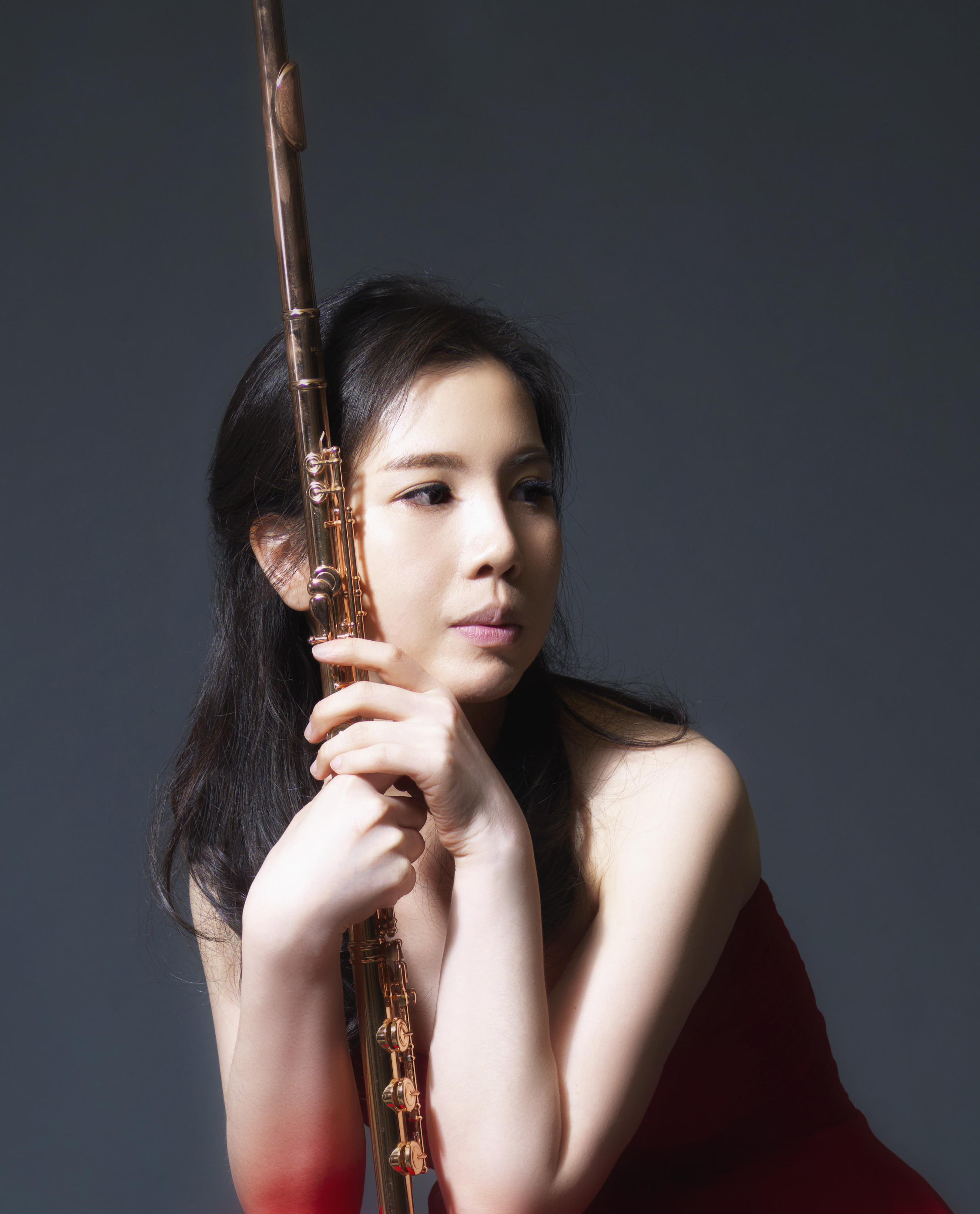

An extremely impressive recital took place this week, that of flutist Sang Ae Kim, already solidly established in teaching and orchestral positions in South Korea, but appearing this week in her New York debut at Weill Hall primarily as soloist. In works of Vinci, Beaser, Holliger, Gaubert, and Martin, she was unfailingly polished and assured in some tremendously difficult repertoire. In some of the more recently composed, adventurous repertoire, this listener was reminded of hearing the flutist Marina Piccinini decades ago and being left with the impression that there must be nothing beyond such a player’s grasp; interestingly (perhaps not coincidentally) Ms. Kim has studied with Ms. Piccinini at the Peabody Conservatory of Music, where she received her Master of Music degree and Graduate Performance Diploma. She has also studied at the Korea National University of Arts under Zvelev Valentin, privately with Hye Kyung Lee, Soo-Kyung Park, and Keith Underwood, and as a DMA candidate at Boston University in the studio of Elizabeth Ostling.


Starting off the program was the Flute Sonata in D Major by Leonardo Vinci (1690-1730) – not to be confused with the Renaissance artist Leonardo Da Vinci, born over two-hundred years earlier (1452-1519)! This eighteenth-century Vinci, well-known for his operas, wrote some delightful instrumental works as well, of which perhaps the most famous is this one. It made for a gracious opening, with the basso continuo accompaniment tastefully realized by pianist JaeYoun Yoo, superb collaborator for the evening. A pristine Adagio opened and a buoyant Allegro followed, bubbling with clear and precise flute arpeggios. The central Largo movement was appropriately meditative, and the closing Pastorella and Presto were scintillating with delicate and varied articulations. Throughout the concert Ms. Kim played with a focused and beautiful tone, but here it was slightly mellower than the subsequent pieces – perhaps due to what appeared to be a change of the flute’s head joint, something one sees increasingly in earlier repertoire.

Sang Ae Kim

Sang Ae Kim

Fast-forwarding to some high-powered twentieth-century virtuosity, the program continued with the Variations for Flute and Piano (1982) by Robert Beaser (b.1954), noted American composer and Chairman of the Composition Department at Juilliard for over twenty years. The Variations are, as the program notes describe (quoting noted flutist and piccoloist Walfrid Kujala), “the flutist’s Mount Everest.” Starting off in folk like simplicity, and progressing through quasi-impressionistic and rhapsodic elaborations, it is a captivating work that tests the limits of flute-playing, but always with a sense of musical integrity. Ingeniously arranged as three movements, but each containing variations on the first movement’s theme, it has a feeling of inevitability and unity throughout. The atmospheric second movement, entitled Nocturne contains a cadenza that “pulls out all the stops” technically and dramatically. Ms. Kim was in top form here, approximating a musical dialogue with herself from register to register, retaining continuity all the while. It was stunning. The last movement (Variations 11-15, the last a coda) consummated the work with brilliance, flawless and unflagging. If Ms. Kim hadn’t taken the tiniest visible breath following the last note, one might never have suspected that she had climbed a musical mountain. Special kudos go as well to the pianist Ms. Yoo, who had to be master of her own challenging part as well as sensitive support to Ms. Kim at every step of the climb.

After intermission we heard Ms. Kim unaccompanied in a work entitled (é)cri(t) for Solo Flute (2006) by Heinz Holliger (b. 1939). Mr. Holliger has been renowned for decades as an oboist, but is also quite active as a composer. His piece (é)cri(t) is a play on the French word for “cry” (cri), embedded in the word “ecrit” (“written”). As the excellent program notes by Elizabeth Stern state, “Holliger explores the transformation of primordial sound into music.” With the multiphonics, harmonics, and whistle tones that range from a scream and wail down to a whisper, it was clear again that nothing was beyond Ms. Kim’s range.


On a somewhat lighter note the program progressed with a lush set of pieces by Philippe Gaubert (1897-1941) entitled Trois Aquarelles (Three Watercolors) for Flute, Cello and Piano (1915) with the ensemble of Ms. Kim and Ms. Yoo augmented by the talents of cellist Jaehyeon Ha. Ms. Ha’s cello lines intertwined with the flute’s in lovely balance. The Aquarelles are a fragrantly French set, not far from the styles of Fauré or Roussel, and the trio brought out some beautiful musical colors while blending with good balance. Par un clair matin (On a Clear Morning) took the listener to such a dreamy tonal world that one asked how it could have been composed in the midst of World War I – but the second piece, Soir d’Automne (Autumn Evening) answered with bittersweet nostalgia. The third piece, Sérénade, returned the listener from dreams back to the external world in dancelike rhythms.


To close the program Ms. Kim and Ms Yoo played the Ballade for Flute and Piano by Frank Martin (1890-1974). Composed in 1939, the work is rather brooding and intense at the start but growing in energy to a fiery, brilliant close. The duo played it with burning commitment and received several curtain calls in hearty approval, eliciting an unannounced gently lyrical encore.

To say that Ms. Kim performs with a focused demeanor would be an understatement. She is so single-minded in her mission that she seems psychically cordoned off from her audience. In fact, the first three rows of the audience were cordoned off with tape, perhaps a good idea in these days of rude distractions, but an infrequent occurrence. At any rate, the resulting air of solemnity – along with justifiable expectations of great playing – seemed to inspire unusually attentive listening, and the audience was impressively silent through even the quietest of tones (excluding one intrusive marimba ringtone).

Bursts of cheering were heard at the evening’s conclusion, and it was gratifying to see the faint flicker of a smile cross Ms. Kim’s face.


Share

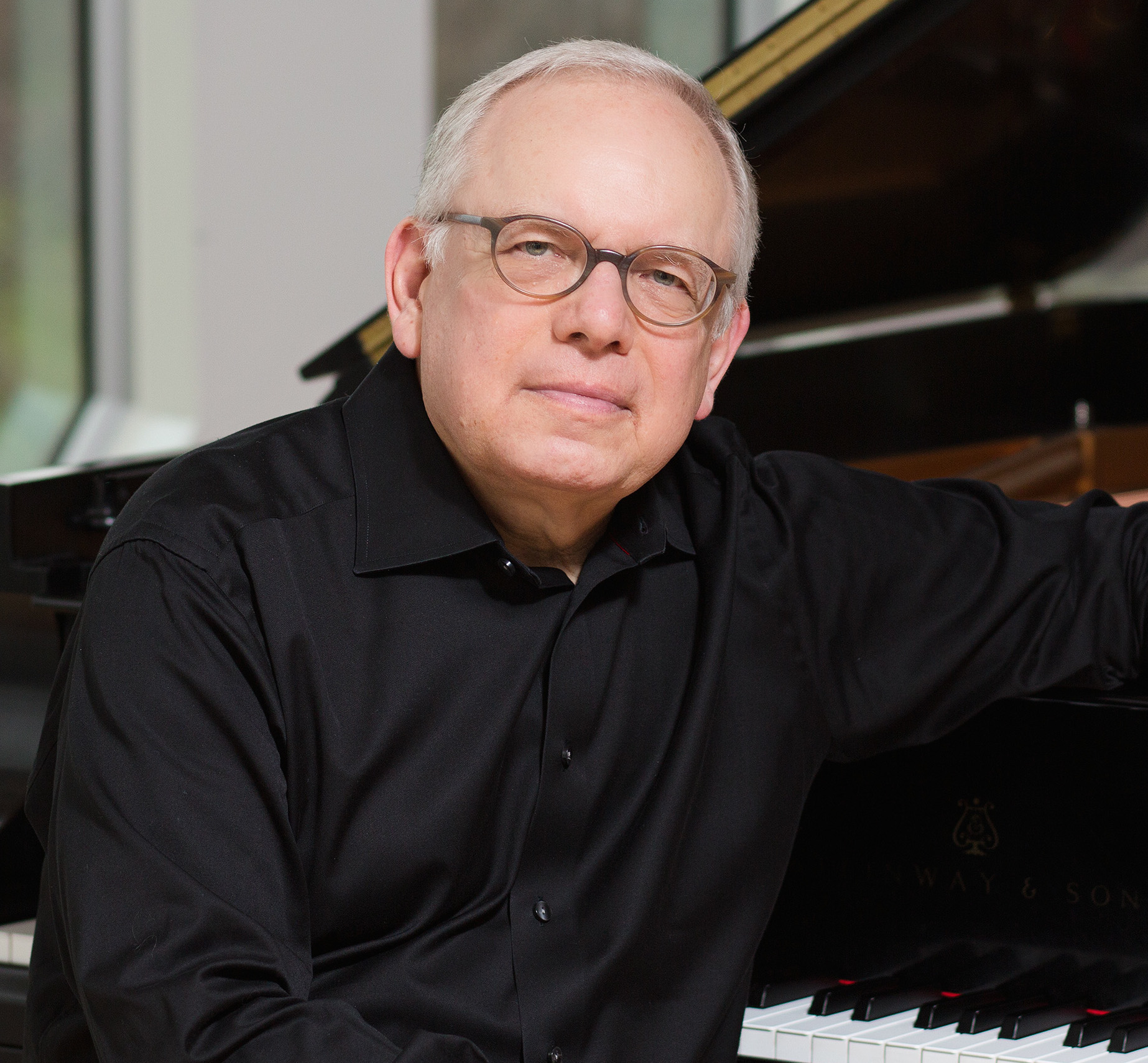
A Window, Not a Wall: A conversation with pianist Peter Takács

A Window, Not a Wall: A conversation with pianist Peter Takács


I wouldn’t dare program or perform Beethoven’s monumental final piano sonata, Opus 111 in C minor, and I have two “good” hands. Master-pianist Peter Takács recently did so (January 14, 2016; Weill Recital Hall at Carnegie Hall) preceded by other “late-Beethoven” pieces, and he did it with a broken right hand.

Let’s let that sink in for a moment, shall we? At the time, he was in pain, but the exact nature of it was still undiagnosed. He had fallen while in New York City, the day after his previous “middle-Beethoven” recital in November 2015. The day of the fall was the same day as the massive terror attack in Paris—obviously a bad energy was at work that day.

Nevertheless, no trace of bad energy accompanied the two of us when we sat down for a French bistro lunch in midtown New York on Bach’s birthday, March 21, 2016. Call it a meeting of minds, if you will. I had been so transfixed by the intensely personal style of his playing in the three-concert Beethoven series that I just had to get to know more about the man and the musician.

PeterTakacs2014-088

Turns out we have a lot of points in common, even if separated by time and circumstance. I had almost attended Oberlin Conservatory, thinking to begin college one year early, but decided against it. My sophomore year would have been his first teaching year (of forty) there. Also, much earlier in his development, he attended the Paris Conservatoire, as did I years later. As the lunch progressed, we found many musical ideals and a lot of childhood peregrination in common, including emigration. His family (of Transylvanian Jewish descent) was persecuted in Romania for wishing to leave, eventually making their way to Vienna, Paris, then Milwaukee of all places.

Mr. Takács possessed obvious and prodigious gifts. As a four-year-old, he would observe the lessons and practice of his year-and-a-half older sister and learn everything she played, by ear, gleefully pointing out her mistakes all the while. His recital debut, in Bucharest, was at age seven, and some years of fruitful instruction (Russian tradition) were able to form him prior to the emigration. After his parents came out in the open about their desire to leave Romania, however, public performances by the young Peter were forbidden, and he was also kicked out of his school, having to take lessons clandestinely and attend a “secret” school for outsiders. What artists go through for their work! Post-graduate studies with legendary pianist Leon Fleisher probably were the most influential on Mr. Takács’ musical development—he speaks of his former mentor with reverence.

We spoke at length about the “heart” of the canonic Western tradition of piano (and chamber/orchestral) music, centering on the former Austro-Hungarian empire, and radiating outward to include some of eastern and north-central Europe. This is a broad over-simplification, of course, but upon examination, it seems to hold true with the exception of French repertoire—even there, after all, Louis XV married a daughter of the king of Poland, and Louis XVI the famous Marie Antoinette, an archduchess of Austria. Perhaps we would have had an “Archduchess” Trio if things had turned out differently.

Mr. Takács achieves two things (at least) simultaneously whenever he plays: 1) what I call “fidelity to the markings on the page,” and 2) a striking degree of personal feeling that makes it sound as if he himself were the creator, not just the re-creator. We agreed that he probably falls more in the C.P.E. Bach line (J.S. Bach’s best-known son), who said: “A musician cannot move others unless he too is moved. He must of necessity feel all of the effects that he hopes to arouse in his audience.”

Mr. Takács tells his students however, that they must be “generals, not soldiers,” taking the larger view of the area (music) instead of getting lost down in the details, which must all have been incorporated before, of course. His other analogy was to building a house. If you were merely laying bricks with no blueprint, things might get a bit messy or out of proportion. He suggests a zoom in/zoom out approach. And he added, there must be some level of technical control that won’t fall apart when one is giving way to the rapture of the moment.

We agreed that there really is no such thing as an urtext, that one must collect all the best editions and advice one can find and then make decisions based on taste, instinct, conviction, and knowledge. His (Mr. Takács) wonderful saying: “The score is a window, not a wall,” speaks precisely to the need to decipher what all those marks really mean, since notation is inherently a limitation on whatever the composer originally heard with his inner ear.

We both also agreed on sometimes teaching with programmatic imagery, especially for “absolute” music, pieces with abstract titles like “sonata,” etc. He often encounters some bewilderment among his younger students when he asks them: What is the affect of this piece? This led to a brief lamentation about the internet and its seductions toward superficiality: lots of information, but not so much knowledge, and even less wisdom.

Mr. Takács always tries to stimulate the students’ ears to pre-hear the sound they want to make, which must be different for every composer and period. His voice took on a very intense tone when saying that “Beethoven must never be played like Chopin.” That Beethoven’s sonority needs to be noble, singing, and serious at all times, never “perfumed.” Genre also must be considered: is the movement a dance form, song, chorale, imitation of orchestral texture? The inner conception of the tone must precede everything. One approach does not fit all at the piano.

Mr. Takács performed all the Beethoven sonatas over two seasons (1998/99 and 99/2000) at Oberlin. A small label specializing in historic piano reissues, contemporary pianists, and other good things (Cambria Music), heard about him, and offered to record the entire set. The box has done very well, and the sound is sumptuous, Mr. Takács having used the Boesendorfer Imperial concert grand, “the” modern Viennese piano par excellence. It also includes early works from the Bonn period (without opus) and Beethoven’s sole sonata for piano four-hands

When I asked him what was the most important thing that he had learned from his students, he opined that it was probably how to be more creative in approaches to each individual, finding the proper “key” to diagnose their issues and move them forward supportively, while accessing their creative sides and developing that.

We spoke of “desert island” composers, pieces, and movements. Of course, I told him I’d have to have a very well-equipped desert island: Hamburg Steinway concert grand and technician on hand and humidity control (so, I guess not so deserted!). His would be the second (final) movement “Arietta” of Beethoven’s Sonata No. 32 in C minor. If we were trapped there together, we agreed we could play the Schubert F Minor Fantasy (D. 940) forever.

Mr. Takács was presented in the three concert overview of Beethoven in 2015/16 by a novel series titled “Key Pianists” produced by Terry Eder, a pianist herself. He was the first virtuoso of what I hope will become a thriving annual series. The aim is to present wonderfully gifted pianists who might otherwise be overlooked by the “star system” that seems to decree who gets heard. The coming season heralds (so far) New York recitals by Ann Schein, Terry Eder herself, and Sara Davis Buechner.

An afternoon with a great humanist such as Mr. Takács is an irreproducible moment, as well as unforgettable. We agreed that the next lunch should be over some hearty mamaliga in one of the Romanian cafes in my neighborhood in Queens. I can’t wait.

Share

Simply Music – Andre Hajj: CD in Review

Simply Music – Andre Hajj: CD in Review

Simply Music – André Hajj, Oud & Composition;
with Paul Abou Gharib, Naji Azar, Antoine Khalife, violins; Samir Siblini, Nay; Gilbert Yammine, Quanun; Rony Barrak, Rhythm, Ali Khatib, Riq
Recorded at Studio PAG (Paul Abu Gharib), Tracks: 2,4,5,7, & 9
Recorded at Joseph Kallab, Tracks: 1,3,6,8,10, & 11
https://andrehajj.wordpress.com/


A CD called “Simply Music” was recently assigned to me to review, music of Andre Hajj, a Lebanese oud player, conductor, lecturer, composer, and arranger. Now available at various sites including CDBaby ( Simply Music CD: AndreHajj ), the recording, as we are told on a side note, is expected to be of particular interest to those who like music of Farid al-Atrash (1910-1974, Syrian Druze composer, singer-actor, and oud player), Riad al-Sunbati (1906-1981, Egyptian composer and oud player), and Zakariyya Ahmad (1896-1961, Egyptian musician). Though all of these musicians left the world 35-55 years ago, their music did not, and they are idolized in much of the Arab world. Mr. Hajj, who is also immensely popular in Arab regions, possesses the musical gifts to be included in their ranks, but beyond that he possesses the youthful energy and appeal to bring his native music to the next generation.  If one is interested in the music of Lebanon, Syria, and the Middle Eastern region (and current world events encourage this), this CD should be of considerable interest.

For those not familiar with the oud, it is essentially a Middle Eastern lute, in this case an especially lovely looking instrument crafted by respected luthier Fady Matta. It possesses many qualities of a modern guitar, though with its own unique timbres. Other instruments in the recorded ensembles include the qanun (a zither-like instrument), violins, percussion (including the riq, from the tambourine family), and the nay (or ney), which resembles the pan-flute in sound.

As a disclaimer, this reviewer has generally been a devotee of the traditional Western tuning system known as equal-temperament and not so much an aficionado of Arabic music, so the pitch variations of the traditional Arabic “maqams” (employing quarter tones and commas between the traditional Western semitones) are not second nature; it is good, however, to go out of one’s comfort zone, and the CD’s title itself – “Simply Music” – urges the listener to look beyond labels to the universality of music as a language.

The first and title track is “Mouci’a bass” translated as “Simply Music.” The composer states that because so many Arabic pieces are played with lyrics, and this one is not, he wanted to call it “Simply Music.” It is an accessible introduction to Mr. Hajj’s style. Starting with the kind of dramatic opening that one finds throughout the CD, Mr. Hajj’s oud resembles the more familiar balalaika here in its doleful tremolando solo, before all gets rolling with violins and a danceable folk-like rhythmic background (credited to Rony Barrak throughout the CD).

For each of the eleven tracks on this CD, there is minimal information in the liner, but I received some supplementary notes supplied by an agent of the composer. It is my suggestion that this additional information (and hopefully more) be supplied in the liner notes if there is a reissuing, as there could be broader appeal with more understanding of each piece.

The second track is somewhat mysteriously entitled “Dolce” – not quite the word brought to mind by its driving rhythmic undercurrent and repeating bass line (and largely minor mode), but interesting nonetheless. It opens with chiefly unison string lines – a stark effect resembling a midi synthesizer sound – before percussion instruments enter. The composer, Mr. Hajj, and his ensemble perform it with rhythmic elan. From the composer’s agent we learn that “this piece consists of A minor to C minor to Rast [an Arabic maqam] to A minor. This transition of these scales and Maqams in the Arabic music is very challenging. Andre Hajj makes all these transitions smoothly without making any dissonances.” We all listen for different things, and this listener has recently done much reading on and study of the maqams, but ultimately it is the melodic shape, rhythmic energy, and intensity of spirit that carry the day with this music. A Western musician can enjoy these aspects with little knowledge of the maqam, though he may subconsciously be adjusting the quarter tones and converting some of it mentally to modernized Greek modes.

The third track, listed as “Heard 1” on the disc, is also in the supplementary notes called “Music Heard.”  We are told that “listening to this piece makes you think that you have heard these tunes yet in reality the tunes are fresh and that’s why it’s called Music Heard.” After hearing it even once, one does find it cycling around in one’s mind, so it could be called “Heard 100!” Melodies center on the first, fifth, and sixth scale degrees – think of an accelerated “Twinkle Twinkle” à la libanaise, with quarter tone inflections. The quarter tones here challenge equal-temperament ears even more than previous tracks do, but one starts to hear it as simply Mixolydian after a while, especially with the rustic timbres of Samir Sablini’s ney (flute) mediating, plus quite skillful playing by Gilbert Yammine on the quanun, Antoine Khalife on violin, and more percussion from Rony Barrak.

“Music Heard 2” – fast forwarding to track 6 – shares the title idea of the third track. As the composer’s notes state, it is “a piece of music that resembles Maqam Bayati and Bashraf. Again, one thinks that these tunes were heard, but in reality they are freshly composed.” To this listener, the piece is quite different from “Music Heard 1” and one’s attention is captured here again by some beautiful, atmospheric playing of the ney by Samir Sablini. It is a highlight of the collection, and one of the longer ones at just under six minutes. Pitches that might be alien to the equal-temperament crowd are softened by the wide vibrato and sensual timbres of the ney. The tones are breathy in the beautiful ethereal way that a pan flute can be.

Many of the selections on this CD seem a combination of classical and popular or folk idioms.  The fourth track, “At night,” opens with a string-based introduction from Paul Abou Gharib that almost prepares one for a Vivaldi ensemble piece before taking us back to the Middle East with the characteristic modal flavor and sounds of the riq, played by Ali Khatib. The play between the dominant and flat sixth in the bass remind one of the flamenco sounds that owe so much to Arabic and Moorish influence. The supplementary comments state that this piece is a “blend of traditional and modern Arabic music in Hijaz and sama’i rhythmic mode that ends in 10/8, 16/8, 4/4, 2/4, 10/8, 2/4;” the effect, however, is disarmingly simple. It ends in a vigorous dance style that many will find infectious.

The fifth track of the CD is entitled, “Between La and Do”.  The composer’s notes state that, “Between the Notes A and C, this piece is composed in A minor and C Major. This composition broke the rules of composing Arabic music using these two scales.” After the characteristic extended introduction, including some soloistic violin lines from Naji Azar, a rhythmic dance takes over. The latter part again features the tonic, fifth and sixth scale intervals (so in a way this piece could be called “Music Heard” as well). Thus there is an organic quality connecting many of the pieces on this CD, but there is still plenty of variety.

The seventh track, entitled “Flamenco” – again with a dramatic (dominant chord) introduction and some virtuosic solo playing – breaks out into a typical music for that dance style– flashy, percussive and dizzying with some exceptional virtuosity from all players. This will probably be a popular favorite of many.

Perhaps the overall favorite of this listener is the eighth track, Khawater (“Reflections”), introducing more magic from the ney of Samir Siblini, plus oud and violin. It is a captivating musical journey, so evocative of spacious Mid-Eastern landscapes that one imagines it could be used to very good effect for a film score.

The CD continues with “Ud Fantasy”(track nine),  and Andre Hajj is front and center. It is as simplistic harmonically but with energetic rhythms and plenty of charisma and virtuosity from Mr. Hajj.

The penultimate track ten is a piece entitled “6 am” and adds a note of humor. The supplementary notes on the composer state that it is “dedicated to his son who used to wake up every day at 6:00 AM when he was a baby.” From the solemn, stately opening octaves one would not guess that the piece relates to the ritual of a baby’s daily awakening, but the image adds a note of humor to the set. Pizzicato strings and mischievous rests and pauses add a playful element.

The CD closes with an introspective work entitled “Last One.” It is fittingly nostalgic, opening with a sort of oud tremolo soliloquy but never bursting into the lively dance as in so many others – instead closing quietly.

Mr. Hajj is quite a versatile musician, as is reflected in the varied selections he composed, arranged and played for this CD, with some pieces being introspective and atmospheric, and some highly rhythmic and resembling more commercial popular dance music.  It will be interesting to follow his career as his reputation continues to spread.

Born in 1967, Mr. Hajj was among the first conductors born and educated in Beirut. He studied at the University of Holy Spirit, Kaslik, and his biography lists that was the first conductor to give repeated television lectures on Oriental Music, starting in 2011. As a composer he has written orchestral music, chamber music, film music, and choral works, with many of his works performed by Lebanese Oriental Orchestra (which he has conducted since 2011) and the Lebanese Philharmonic Orchestra. He has regularly led performances at major concert venues in Beirut, Dubai, Bahrain, Abu Dhabi, London, Italy, Qatar, Morocco and has appeared on radio and international television. His biography states that he has demonstrated a deep commitment to elementary and secondary school music education, developing new talent and providing solo performance experience to young artists.

It should not be surprising, therefore, that Mr. Hajj’s CD shows an overall musical conception that goes beyond merely playing the oud, though he does that brilliantly. One awaits with interest his next step.


Share

American Protégé presents Summer Gala Concert in Review

American Protégé presents Summer Gala Concert in Review

American Protégé presents Summer Gala Concert
Stern Auditorium at Carnegie Hall, New York, NY
June 30, 2016


Pianist Blandine Waldmann was presented amid the large gathering of artists that took part in this celebration of AP’s nine years as a competition. She was the thirty-third of thirty-four performers, and perhaps waiting all that time backstage had an influence on her rendition of Rachmaninoff’s Etude-Tableau in C minor, Op. 39, No. 1. The work, composed on October 5, 1916, is turbulent, and Waldmann’s tempo was correct—she caught the agitato perfectly. However, she failed to clarify the singing lines and structure amid the welter of figural notes, and the dynamics weren’t varied enough, therefore the piece sounded a bit jumbled. Some people like their Rachmaninoff that way—mostly adrenaline. She appears to be in her mid-twenties, and her bio states that she is the laureate of many international competitions, but it doesn’t mention any truly major ones. At any rate, Ms. Waldmann can now claim to have made her “main stage” debut in Carnegie Hall, although a full recital would tell us much more about her as an artist.


Share

Book Review: Ignacio Cervantes and the XIX-Century Cuban Danza

Book Review: Ignacio Cervantes and the XIX-Century Cuban Danza

Book Review: Ignacio Cervantes and the XIX-Century Cuban Danza
By Salomón Gadles Mikowsky
Ignacio Cervantes and the XIX-Century Cuban Danza
By Salomón Gadles Mikowsky
LAP, Lambert Academic Publishing
273 pp (including Appendices and Bibliography)
New York, NY 2016
ISBN: 978-3-659-82531-6


It is not every day that one encounters a flexible and inspiring teacher of classical performance who is also an uncompromising and meticulous scholar, but apparently we have both in Salomón (or Solomon) Gadles Mikowsky, as is evident in his newly published book, Ignacio Cervantes and the XIX-Century Cuban Danza. We also have here a “must read” book for those interested in the music of our neighbor to the south – and especially given recent developments in diplomatic relations, that ought to be quite a few. More specifically, we have an excellent study of Cuba’s most important nineteenth-century composer, Ignacio Cervantes (1847-1905), and a diachronic exploration of his favored pianistic form, the Danza, not only central to most Cuban music of his day, but influential to all that followed. In other words, if one is interested in a deep and thorough understanding of Cuban music, one will want to read this book.

Regular readers of New York Concert Review may have read my January review of Kookhee Hong’s book The Piano Teaching Legacy of Solomon Mikowsky, but to summarize, Ms. Hong’s book reflects Solomon Mikowsky’s role in the world as a pianist, pedagogue, and person. A reader may click here to read that review: Book review-The Piano Teaching Legacy of Solomon Mikowsky. Ms. Hong’s book, (also published by LAP) proved to be a somewhat fast and conversational read, so having been assigned to review this one, I was not quite prepared for the dense scholarship. The latter is an updated version of Dr. Mikowsky’s doctoral dissertation from 1973, Teachers College, Columbia University, so of course a breezy read it is not; it is, however, an extremely reasonable introductory course in Cuban music, and considering the voluminous materials that had to be predigested or evaluated for even each footnote, it is relatively short at 273 pages!

Naturally as an updated dissertation, this book on Cervantes is a highly specialized study. As such, it is appropriate for the serious student or professional, with references to chords and terms that presume at least an intermediate-level musical education; that said, much of it could be appreciated on a broader cultural level, as Dr. Mikowsky’s writing touches on many aspects of Cuban life beyond musical ones. Salomón Mikowsky (appropriately using his Cuban name as author) shows passionate dedication to his heritage. That dedication is absolutely essential in this area of music history, previously hindered by inadequate scholarship, domestic upheaval in Cuba, confusing and daunting nomenclature, and perhaps even a too-casual attitude towards the Danza, due to its social origins and the prevailing Euro-centricity of Cervantes’ day. Though there are now some respected reference books on Cuban music and Cervantes (cited by the author himself), it is clear that Dr. Mikowsky was a pioneer to be pursuing this study in the early 1970’s. As Radamés Giró, Cuba’s leading musicologist states in the Preface, “it was the first biography-study ever written about a Cuban composer from the 19th century.”

Ignacio Cervantes is neatly divided into two parts. Part I includes the introduction and background of the Danza, related forms, and the musical predecessors of Cervantes (prominently Manuel Saumell), and Part II is devoted to Cervantes, the man and his music, including generous musical examples and analyses. The Appendices that follow include some 44 pages of Cervantes Danzas that are a reason in and of themselves to buy this book (not to mention additional examples by other composers). Ensuing discussions of various editions and a helpful bibliography listing several hundred titles make this a valuable resource for pianists as well as a springboard for further study.

As stated before, the book is scholarly, packed densely with information, evaluation of sources, explanation of bibliographic and ethnographic considerations, discussion of the origins and even choreography of related dances: the longway, quadrille, cotillion, contredanses, contradanzas, the danza, and the danzón, among others. One may grow faint of heart from what seems a confusing array of fine distinctions in the dances’ overlapping evolutions and transitions from European forms to Latin American, but Dr. Mikowsky does sort it all out tirelessly, with clarity, and with a sense of mission in defining the forces behind a national musical identity. He strikes an expert balance between detail and overview. The origins of the Danza’s precursors from France, Spain, and England are convincingly disentangled based on every conceivable source, and the effects of African and Haitian-French influences are discussed and also disentangled.

Areas of controversy or ambiguity are labeled as such with honesty and integrity, including as an example a point of disagreement with Nicolas Slonimsky on whether Cervantes actually studied with Louis Moreau Gottschalk as often reported (the reader will have to read that for himself – no spoilers here!), but all is illuminated by Dr. Mikowsky’s solid foundation of knowledge. We see the many layers of scholarship behind each statement but are not forced to wade through that scholarship ourselves – mercifully!

Moments in the biographical section are particularly fascinating, including mention of Cervantes auditioning in Paris in front of Charles Gounod (playing the Herz Concerto No. 5 which he had had left only two weeks to learn), embarking on a career in France and Spain, and beginning friendly relations with Franz Liszt. Cervantes became friends with Gioacchino Rossini (and an accompanist for him), as well as with Adelina Patti and Princess Marcelline Czartoryska, a pupil of Chopin who gave Cervantes some of Chopin’s works annotated in his own hand. One imagines that if there were tabloids in heaven, they would contain similar intermingling of legends. Cervantes did indeed win many hearts in Europe, but for reasons on which one can only theorize, he arrived back in his native Cuba in 1870, where he stayed (with the exception of trips to the US and Mexico) and composed what became a source of pride for Cuban musicians. It was not the Europeanized music of his teacher Nicolás Ruiz Espadero or of those Europeans who visited on tour and adopted a Cuban flavor for a miniature or two, but it was the beginnings of a national music.

To express a minor reservation, I would suggest that for the next edition there could be further editing of the prefatory material by Dr Mikowsky’s colleagues, as they contain a few obvious careless errors and some longwinded language (perhaps from awkward translating or language issues). A preface should whet one’s appetite to read a book, not slow one down! I am glad such a matter did not deter me, as the book is one of considerable importance.

Share

Distinguished Concerts International New York (DCINY) presents Songs of Inspiration and Hope in Review

Distinguished Concerts International New York (DCINY) presents Songs of Inspiration and Hope in Review

Distinguished Concerts International New York (DCINY) presents Songs of Inspiration and Hope
Spivey Hall Children’s Choir; Martha Shaw, director
Stuyvesant High School Chorus; Holly Hall, director
Distinguished Concerts Singers International; Lori Loftus, DCINY debut conductor
Stern Auditorium at Carnegie Hall, New York, NY
June 26, 2016


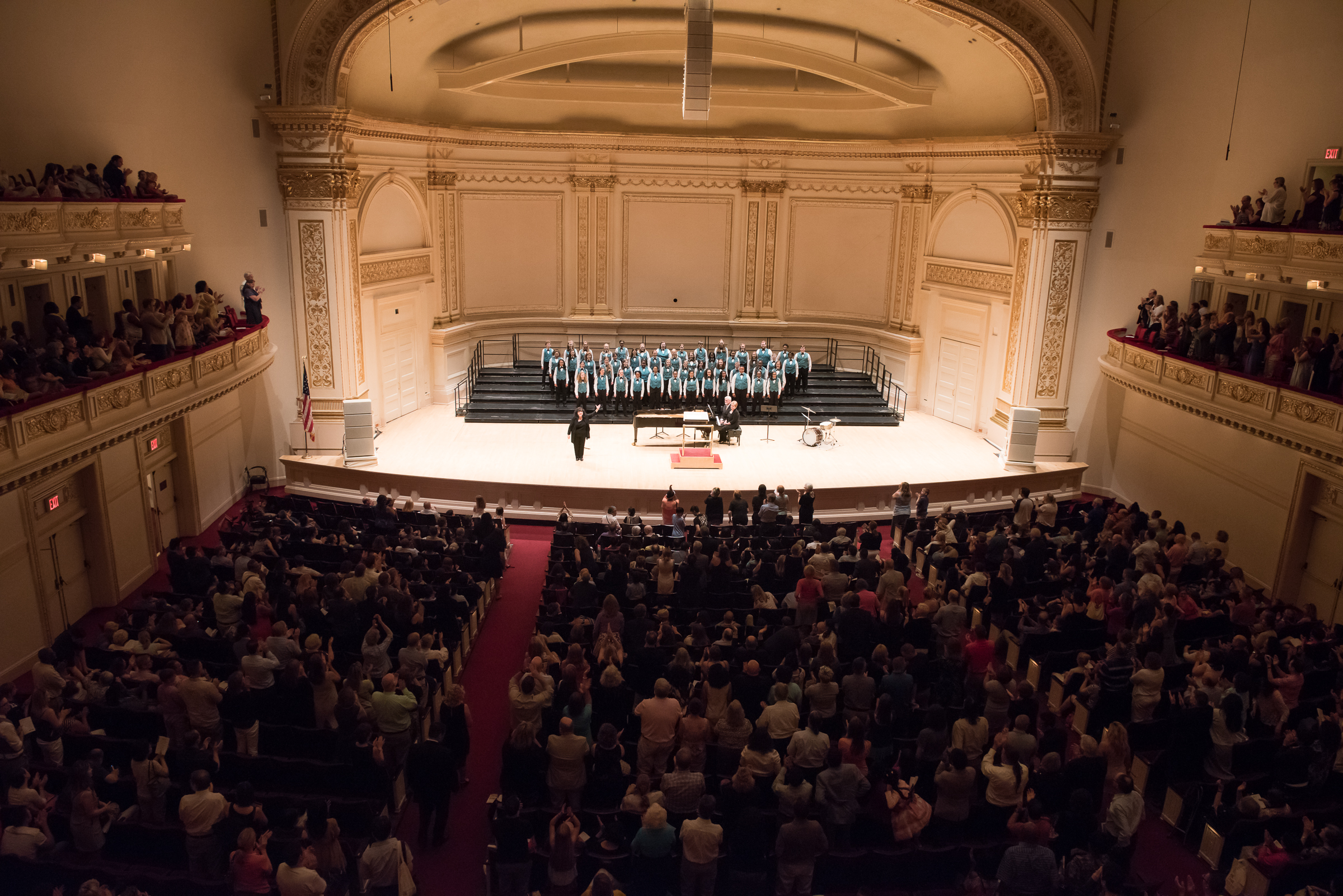
On June 26, 2016 Distinguished Concerts International New York (DCINY) presented a concert entitled Songs of Inspiration and Hope. Featuring the Spivey Hall Children’s Choir from Georgia, the Stuyvesant High School Chorus from New York, and the Distinguished Concerts Singers International (singers from North Carolina, Ohio, Georgia, Pennsylvania, California, and Maryland), it was an afternoon filled with the heartfelt joy of youthful singers from elementary school age through high school.

A concert featuring exclusively children (or young people, if you prefer) presents a difficult set of choices to the reviewer. It would be inappropriate, or even downright hostile, to judge using the standards applied to professional or adult ensembles. It would also be inappropriate to grant a wholesale “free pass” based solely on the ages of the performers and to ignore issues of balance and intonation. This reviewer decided that he would give the just consideration that developing voices deserve, assess whether the selections chosen were appropriate for them, and evaluate the ensemble, intonation, and to a lesser extent the diction.

The hall was filled with family and friends of the performers ready to cheer on their young stars. The sacrifices of time and money made to give these talented youngsters the opportunities to travel and perform are often overlooked. They might not be the ones on stage, but they help to make it possible, and that deserves recognition.

Due to the quantity of selections offered (twenty), I am not going to comment on each work as I usually do in a review, but will offer some general observations and highlights. For detailed information about the program, program notes, and biographies of Ms. Shaw, Ms. Hall, and Ms. Loftus, click the following link: Concert Program and Notes.

What was at once apparent to this reviewer was the nurturing and completely involved approach the three directors, Martha Shaw, Holly Hall, and Lori Loftus, all took with their young singers. One could see the encouraging gestures, the coaching during and between selections, and the complete joy from these three masterful directors. This is the right approach, and it paid off in what were very good performances for these very young and developing singers.

Opening the afternoon was the Spivey Hall Children’s Choir, led by Martha Shaw. They offered eight selections. Their ensemble was good, and intonation was steady, but there needed to be more projection of sound. The vastness of the hall demands a more robust approach; otherwise, the sound is lost before it reaches the middle of the hall. This is especially true of high treble voices. To be fair, much more experienced groups have had similar issues. Special recognition goes to oboe soloist Natalie Beckenbaugh, saxophonist Randall Reese, bassist Daniel Stein, and drummer Chris Gella, for their roles. The highlight of their selections for this listener was the Hoagy Carmichael classic Georgia On My Mind, with the clever J’entends le Moulin by Donald Patriquin as a close second.

After intermission, the Stuyvesant High School Chorus, led by Holly Hall, took the stage. They offered five selections. They sang with the confidence that comes from being extensively prepared. Accordingly, their offerings were all highly polished. The highlight for this listener was Beethoven’s festive Chor del Engel, from his oratorio Christus am Oelberge (The Mount of Olives), Op. 85. The ensemble, diction, and balance were outstanding, in what would have been exceptional even for an older, more experienced group. They continued their good work throughout, in selections that showed their depth and maturity beyond their years. Excellent work!

Ending the afternoon was the Distinguished Concerts Singers International, led by Lori Loftus, in her DCINY debut as conductor. They offered seven selections. Good balance, mostly steady intonation, and diction were present throughout. The contrapuntal singing in Heinrich Schutz’s Cantate Domino was quite impressive for such young singers.

For The Storm is Passing Over, three (unnamed) soloists (two young ladies and one gentleman) came to the front of the stage, and each had an opportunity to “let loose” with some very impassioned singing. This was the highlight of their set, and the audience loved every second of it! Ending with America The Beautiful, complete with each member of the ensemble waving an American flag, brought another standing ovation from the audience. It was a fitting end to an afternoon that showed the promise of the future of music is alive and well in these young hands and hearts.


Share