Rutgers Pianists in Review

Rutgers Pianists in Review
Weill Recital Hall at Carnegie Hall
November 13, 2011


Twelve piano students from the Mason Gross School of the Arts at Rutgers University performed an all-Liszt program, one of so many tributes honoring the composer’s 200th birthday. The pianists hailed from many nations and represented several degree programs at the university. While the repertoire offered selections from Liszt’s more well-known works, the program exhibited his multi-faceted genius as a virtuoso pianist, an unparalleled transcriber, and a visionary composer.  The general level of playing was of an extremely high caliber; the students played with confidence, technical security and musical sensibility proving that the music department at Rutgers is on a par with the world’s most prestigious conservatories.

Most musicians cut their teeth in group recitals, whether in their suburban teacher’s living room or community music school recitals. This is an awkward and nerve-wracking experience; one waits in the wings unsure of when he will have to step onstage and face the specter of inevitable comparison. To relax and find one’s stride in just one or two pieces is extremely difficult and the performer must go through the same physical preparations (dressing for performance, arriving on time, trying the instrument, etc.) as he would for a full-length recital.  Often the most sensitive artists can be sabotaged by the endeavor, whereas the more arrogant temperaments barrel through their nerves. The brutal arena of competitions is even more grueling.  Paradoxically, the audience frequently comes away with a totally different impression; the listener appreciates the diversity of the performances and how an instrument can transform under each pair of hands. While one might have personal favorites, he is not consumed by the ego of a single soloist. 

The award-winning author, lecturer and pianist David Dubal acted as master of ceremonies for the evening, interspersing the musical selections with commentary which both enlightened the audience and inspired the performers.  His inimitable, spontaneous yet reverent manner infused a festive aura into this event. 

The program opened with Paul Conrad’s sensitive and lyrical rendition of “Au lac de Wallenstadt” from the “Annees de Pelerinage”.  Eva Shu-Yu Huang followed with “Gondeliera” from “Venezia e Napoli”, which after a slightly stiff beginning settled into an evocative barcarolle.  A full range of sonorities were present in Jahye Kim’s account of “St. Francis of Paola Walking on the Waves”.  Three etudes followed; “La Leggierezza”, one of Liszt’s most Chopinesque works, was played with feverish ardor by Mina Nourbakhsh, Zin Bang delivered a powerful, headlong Transcendental Etude No. 10 in F Minor, and Alexander Beridze demonstrated an easy, fluid technique and piquant rhythm in “La Campanella”.

The second half of the program began with Liszt’s song transcriptions.  Miao Hou presented “Gretchen am Spinnrade” and the ferociously difficult “Erlkonig”, demonstrating exceptional technical mastery and a strong connection with Schubert’s original songs and texts.  Schumann-Liszt’s “Widmung” was played with tenderness by Junko Ichikawa, conveying more of an inward dedication than an open declaration of love. Two transcriptions of Liszt’s own songs followed; “O pourquoi donc” was rendered with delicacy by Huizhon Shen, and “Am Rhein, im schonen Strome” was performed with haunting mystery by Chia-Shan Cheng.  These are lesser-known works which deserve more hearings.

Erickson Rojas, who arrived late as a result of untold travails in traveling, played a hypnotic, insightful “St. Francis of Assisi Preaches to the Birds”. He demonstrated superb tonal control over the filigree and trills in the upper register, and was able to create a truly declamatory, legato vocal line in single notes. The listener was drawn into the inner dialogue between saint and avian creatures. Mr. Rojas unfolded the narrative brilliantly in this work, which can seem amorphous in less capable hands.  The closing work on the program was the “Mephisto Waltz No. 1”, which seemed almost too easy for Yevgeny Morozov.  His performance was more of a romp than a dance, and one would have wanted a more ravishing, seductive middle section. But Mr. Morozov certainly has no shortage of mechanical facility and energy.

Min Kwon, director of the piano department and teacher for the majority of the evening’s performers, offered gracious acknowledgements at the conclusion of the concert. A notable pianist in her own right, she proved to be a skillful and enthusiastic organizer as well.  Anniversary tributes have become a tradition among the Rutgers pianists, and Ms. Kwon anticipates a recital next year celebrating the 150th birthday of Claude Debussy.

Alexandra Eames for New York Concert Review; New York, NY

Share

Adam Gyorgy Pianist in Review

 Adam Gyorgy  pianist in Review
Stern Auditorium at  Carnegie Hall, New York, NY
November 13, 2011
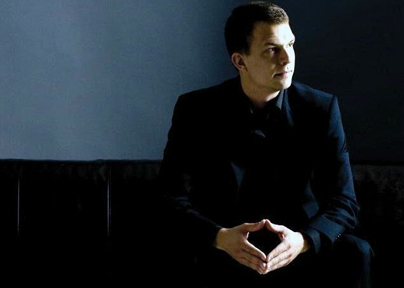
 
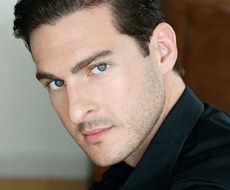
Adam Gyorgy

Adam Gyorgy

 It is a testament to the gifts of Franz Liszt that, well into this year of countless 200th anniversary commemorative concerts, Liszt’s music still emerges as the inexhaustible treasure that it is. Having given several all-Liszt recitals just a few weeks ago, I had some hesitation about this assignment to review a Liszt program, but my faith in the diverse repertoire and acceptance of a wide variety of interpretive styles won out. As it has always seemed to me more meaningful to be reviewed by musicians with genuine experience in the repertoire being performed, that belief also helped offset any reservations. After all, a pianist is often the best judge of what sets (or doesn’t set) another pianist apart.

Adam Gyorgy is a young Hungarian pianist whose publicity sets him apart long before one enters the concert hall. Eye-catching photographs of the athletic Mr. Gyorgy in various exuberant action poses are matched by a biography that, in addition to the expected litany of credentials, traces his performing life to his early childhood tendency of drawing houses upside down, in consideration of the perceptions of others across a table. One imagines it was the same extroverted spirit that spurred the 2009 founding of his Adam Gyorgy Castle Academy in his native Hungary, also an effort to “give back” after all the help he received in his youth. Judging from Sunday’s performance, Mr. Gyorgy has much to give – it is only a question of how best to do it.

Starting from the high points, Gyorgy closed the evening by bringing brilliance and élan to a work that has been beset with kitschy associations for almost a century, Liszt’s Hungarian Rhapsody No. 2. While there are other works that offer a much nobler example of Liszt’s output, Gyorgy’s fresh and engaging performance dispelled preconceptions. Moving backwards from this last programmed work (in upside-down-house fashion), one enjoyed an excellent performance of Liszt’s La Campanella from the Paganini Etudes. Sure-fingered and seemingly effortless, this performance also had the greatest tonal and dynamic range of the evening. It seems Mr. Gyorgy has lived with both this Etude and the Rhapsody, and they could easily become “signature” pieces.

Preceding these last two pieces, Liszt’s Rigoletto paraphrase was delivered with polish and confidence, but it was not set apart from the standard that one has come to expect, technically and interpretively, from any number of today’s young conservatory graduates. A similar impression was left by the pianist’s straitlaced performance of Chopin’s Ballade in G minor, which also seemed somewhat anomalous on this Liszt tribute program, despite the fact that Liszt and Chopin were contemporaries.

What was more puzzling, though, was that Mr. Gyorgy chose to play the Chopin (or anything for that matter) directly after Liszt’s epic B Minor Sonata (the recital having no intermission), making the latter masterpiece somehow a mere prelude to increased brilliance. It seemed a disservice to both Chopin and Liszt to juxtapose them this way.  Some pianists (perhaps those who are trying to see and hear things from a lay audience perspective – the upside-down house) find the Liszt’s quiet ending problematic and awkward, hastening to follow it with more instantly gratifying works; even an untutored audience, however, can be trusted to grasp the depth of its final utterances and savor the silence. Perhaps this is a case for building the metaphorical house from the ground up and letting the audience come inside – there is integrity in that. An intermission would have helped.

What matched the Sonata’s minimized role on the program was the understated performance itself, subdued to the point where my companion asked whether there was a problem with the piano. The work seemed never to catch fire, with climaxes in the score (some marked triple forte) emerging muffled and monochromatic. The inherent wrestling and storming in this highly dramatic work were absent, while phrases needing to be ponderous or prescient became moderate and Mendelssohnian. Having encountered literally hundreds of renditions of this work, live and recorded, I found it difficult to embrace this one. The notes were mostly there, with admirably few smudges (not exactly unusual these days), but I needed more.

The recital’s opening “Improvisation” by Mr. Gyorgy did not help set up the Liszt either. Full of repeated primary harmonies in a sedate, New Age-type style, it seemed to dull the acute type of listening that the ensuing motivically complex Sonata requires. While quite pretty and delicately shaded, it bathed one’s ears in a wash of somewhat facile diatonic “heaven” that rendered almost meaningless the hard-won apotheosis of Liszt’s thirty minutes of high Romantic grappling. All in all, I will be eager to hear Mr. Gyorgy’s very promising playing again, but hopefully with more effective programming and more personally compatible repertoire choices.

An encore of the Liszt-Mendelssohn Wedding March (not the popular Horowitz version, but an extended transcription seeming to borrow from it) concluded the concert with spirit and humor.

Share

The Stone River Chamber Players in Review

The Stone River Chamber Players in Review
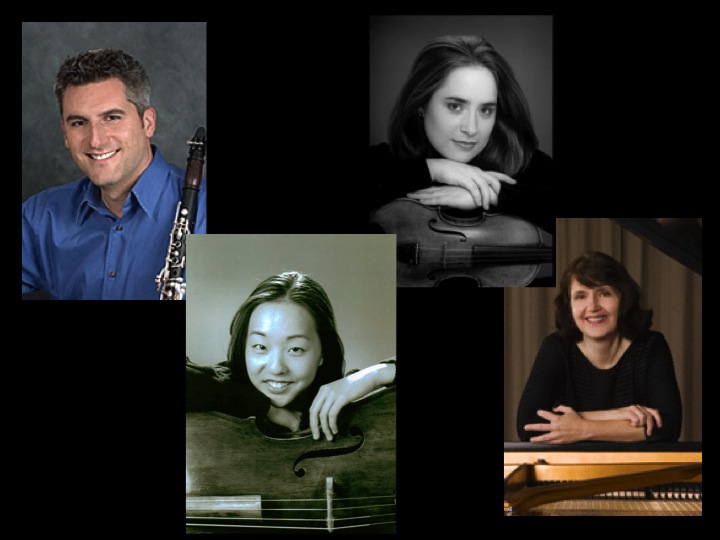
Lynn Rice-See, piano
Andrea Dawson, violin
Christine Kim, cello
Todd Waldecker, clarinet
Steinway Hall, New York, NY
November 3, 2011


The Stone River Chamber Players is an ensemble-in-residence in the School of Music at Middle Tennessee State University (MTSU) in Murphreesboro, Tennessee. Four of the eighteen members of the ensemble performed on tonight’s concert, which was called “An Evening in New York.” It was the ensemble’s New York debut and was attended by many MTSU alumni, who were celebrating the University’s 100th anniversary.

The concert began with the first of the evening’s three piano trios, Beethoven’s Trio in B flat Major for Clarinet, Violoncello and Piano, Opus 11. The performers, clarinetist Todd Waldecker, cellist Christine Kim and pianist Lynn Rice-See all exhibited a fine sense of ensemble, a trait we heard throughout the evening. Mr. Waldecker and Ms. Kim also played with fine intonation. I was quite surprised when the first movement’s exposition was not repeated. These repeats are not ad libitum, but are an essential part of the musical structure; eliminating them throws the balance of the movement out of kilter.  So often, repeats are omitted because of doubts as to the audience’s attention span. But a performer’s primary responsibility is to the composer, and doubts about an audience cannot justify ignoring the composer’s explicit instruction. The opening theme of the second movement was beautifully played by each of the performers. The third movement is a set of variations on the aria “Pria ch’io l’impegno” (“Before I go to work”) from an opera then popular in Vienna by Joseph Weigl. I found the variations quite funny, with sweet, angry, mock serious and heroic treatments of the tune. But the performers didn’t bring out the humor I think Beethoven intended, and gave a technically proficient but bland performance. By the way, a translation of the entire first line of the aria is “Before I go to work, I must have something to eat.”

Aram Khachaturian’s Trio for Clarinet, Violin and Piano (1932), a pleasant work full of orientalisms, followed. During this work violinist Andrea Dawson played with fine intonation and exhibited the same strong sense of ensemble as did her colleagues during their playing of the Beethoven.

After a short pause came the evening’s longest work, Schubert’s monumental Trio in B flat Major for Violin, Violoncello and Piano, D.898. The performers played the opening theme with great passion. But again, the exposition was not repeated.  In the second movement, a study in the use of the appoggiatura, in most phrases the string players gave more weight to the final consonant note than to the dissonant note which preceded it. This is backwards – one leans upon (Italian: appoggiare) the dissonant note and relaxes on the final consonance. Not doing this weakens the arch of the phrase. And in the third and fourth movements, the music just didn’t dance enough.

The audience loved the performances by these obviously excellent instrumentalists.  But I would have hoped for more inequality to the weight of the downbeats, more shape (forward thrust followed by relaxation) to the phrases.  It should be noted, however, that the vast majority of most audiences are not consciously aware of the things I felt warranted what I hope will be taken as constructive criticisms. This is an example of the disparity which often exists between what the musically trained reviewer writes about and what the audience experiences. It also should be noted that while one can praise in a few words, criticisms rarely take less than a few sentences to express.

Share

Michael Kelly, Baritone in Review

Michael Kelly, Baritone in Review
Jonathan Ware, pianist
Merkin Concert Hall, New York, NY
October 24, 2011
Michael Kelly

Michael Kelly

After the first of the five Schubert songs which began this recital, it was easy to see why Michael Kelly was Joy in Singing’s 2011 Award winner. In “Hoffnung” he exhibited all of the qualities one looks for during an evening of song – a strong and communicative stage presence, beauty of tone in all registers, clear diction and, most important for this reviewer, careful attention to expressing the meaning of the words. This latter skill was especially evident during the strophic songs, that is, songs in which Schubert sets each verse of a poem to the same music (“Drang in die Ferne,” “Frühlingsglaube,” and the aforementioned “Hoffnung.) Mr. Kelly’s subtle changes of tone color, volume and articulation made the meaning of each verse clear.  During the fourth song, “Versunken,” pianist Jonathan Ware shone with his crystal-clear rapid scales. His subtle accompaniments were equally impressive during the other songs. It was during this fast fourth song that Mr. Kelly exhibited a slight flaw that I find present in many a baritone Lieder singer – it was often hard to tell the pitch of many of the loud fast notes, as they sounded more “barked” than sung. This sound is acceptable when it is used sparingly to express a word or a thought.  But it happened too often for that to be the reason. This was, however, a tiny flaw in what was a beautifully sung program.

I always arrive at concerts early so that I can have time to decompress after the subway journey and then read the program notes before the concert begins.  Upon reading the notes written by Mr. Kelly it became clear that his sexual orientation, his “journey to self-acceptance,” his coming out, his feelings of solidarity with others who have experienced what he has – all of these influenced his choice of the music for this concert. Whether it is appropriate to express such personal matters in the program notes of Joy in Singing’s 2011 Award Concert is not going to be part of my review. But I’m afraid I must comment about a statement Mr. Kelly made about Schubert – “I combed through nearly all of his over 600 songs to find poems that could express my journey to self-acceptance and eventually the ability to love in the way my heart was demanding.” All well and good, but it should be noted that the subjects of the poems set by Schubert are universal – love, loss and loneliness, for instance. Mr. Kelly continues – “In collecting these songs I often wondered if Schubert himself chose these poems for the reason I did.” To this reviewer, such speculation about the sexual orientation of a dead composer is prurient and irrelevant.

“Love Remained,” a setting by Ben Moore (b.1960) of three speeches by men active in the gay rights movement and a poem by Mr. Kelly followed. It was given an impassioned performance.

 After the intermission we first heard six songs by American composers. Two of them, “Fur” and “George,” were from William Bolcom’s “Cabaret Songs.” As the name of the collection infers, they were in a very accessible pop-style, as was Kurt Weill’s “Schickelgruber.” By the way, I think any song about Hitler (he changed his name from Schickelgruber) is in very bad taste. Isn’t that the premise of Mel Brook’s “The Producers?” And Mr. Kelly’s program note (“I chose this song as a reminder that power is wielded over others based on how they are perceived more than how apt they are to use it.”) did not change my mind. All three of the light songs were sung with the same high level of musicianship and fine sense of style as were the evening’s more serious songs. Mr. Ware was again an equal partner in the performances. The evening’s one overtly homoerotic song was Ned Rorem’s setting of a selection from Walt Whitman’s “Leaves of Grass.” The most moving performances in this set were of two slow songs, Ben Moore’s “The Lake Isle of Innisfree” and Erich Korngold’s “Tomorrow.”

 The concert concluded with Francis Poulenc’s “Tel Jour Telle Nuit,” settings of nine poems by the symbolist poet, Paul Eluard. After very long and fervent applause we heard two beautifully sung and beautifully played encores, both slow and expressive – Rachmaninoff’s “In the Silence of the Secret Land” and Samuel Barber’s “Oh Boundless, Boundless Night.”

Share

The Park Avenue Chamber Symphony in Review

The Park Avenue Chamber Symphony in Review
“Sublime Journeys”: Britten, Richard Strauss and Beethoven
David Bernard, conductor
David Chan, violin
Tamra Paselk, soprano
All Saints Church, New York, NY
October 23, 2011
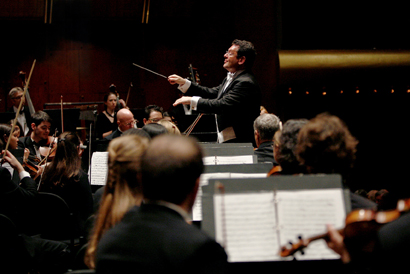
"David Bernard conducting the Park Avenue Chamber Symphony"  Photo: Jennifer Taylor

"David Bernard conducting the Park Avenue Chamber Symphony" Photo: Jennifer Taylor


In a program entitled “Sublime Journeys,” David Bernard and The Park Avenue Chamber Symphony presented varied, challenging repertory with excellent soloists on display, and they succeeded with flying colors. Strauss’s “Death and Transfiguration,” a meaningful choice for this beautiful space, was a real triumph. This masterpiece demands virtuosity and creates challenges for top-tier ensembles, and the orchestra rose to the occasion with superb playing all around. Bernard, who conducted from memory, brought raw, dramatic intensity to the urgent sections, while conducting the noble transfiguration theme with utmost tenderness and lovely, sustained pacing. Balances were unusually clear, considering the church’s resonant acoustics; Bernard found ways to bring out woodwind details, and the brass shined with solid, blended playing. Concertmaster David Edelson’s solo-playing was rendered with conviction here, the violas were excellent, and the solo oboe playing was scintillatingly beautiful. The only disappointing moments were the bassoon’s and clarinets’ subpar intonation in the introduction and a rhythmically rough transition to the development section; yet, the notoriously treacherous triplet passage in the violins was executed very well indeed.

The program opened with soprano Tamra Paselk singing a consistently evocative, engrossing account of Britten’s “Les Illuminations”, Op. 18. In every single movement, she revealed nuances of character and color with her dramatic acting and gorgeous voice. The orchestra got off to a good start, with very solid, precise violas. The high, exposed writing in the first violins and solo violin part sounded approximate at times, but the balance between soprano and orchestra was perfect, as Paselk could be heard at every turn.

David Chan played with poised brilliance and profound integrity in Beethoven’s Violin Concerto, which concluded the program. And the orchestra was supportive and precise throughout. Although one could call Chan’s performance amazing for its virtuosity, the most memorable aspect of his performance was his heartfelt rendering of the slow movement and all the movements’ lyrical phrases at the top of the register. Chan always put the meaning of the notes first and their accuracy a close second; his priorities are in order, like a great artist’s should be, and we ended up witnessing an interpretation that was both technically polished and sublime.

Share

The Mirror Visions Ensemble in Review

The Mirror Visions Ensemble in Review
Merkin Concert Hall, New York, NY
October 23, 2011
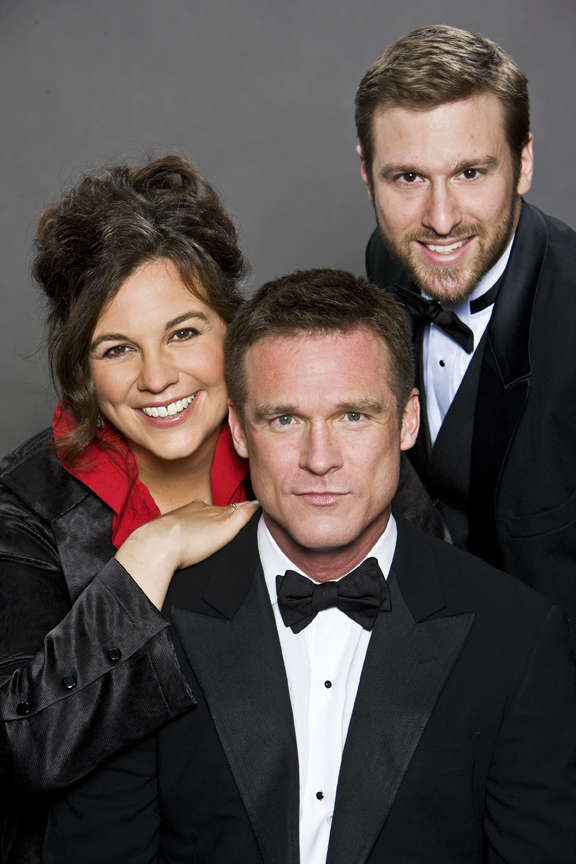
Mirror Visions Ensemble

Mirror Visions Ensemble

The name “mirror vision” refers to the ensemble’s initial interest in performing multiple settings of a single text. One such “mirror vision” was performed on this concert. We also heard two commissioned works, something which has become an important part of the ensemble’s mission. Many of The Mirror Visions Ensemble’s concerts have a unifying theme; tonight’s program was called “Aphrodite and Athena: A Portrait in Music of Isabella Stewart Gardner.” It was introduced by the ensemble’s artistic director, Tobé Malawitsa. As is most often the case with pre-performance speeches, it was too long, and was delivered in a somewhat disorganized fashion which did not compare favorably with the well-prepared musical performances which followed. In addition, some of the comments were just a rehash of the program notes. But I am happy to report that the comments and readings which Ms. Malawitsa offered between the concert’s sets were interesting, cogent, and skillfully delivered. On the other hand, I am not happy to report that throughout the concert the house lights were so low as to make it almost impossible to read the texts and translations in the printed program. It is strange that, after going to the trouble of printing the texts and translations, a little time during the dress rehearsal wasn’t set aside to make sure that there would be enough light in the house so that the  audience could comfortably read  them. It is also strange that, after attempting to break down the “wall between audience and performers” with a chatty pre-concert speech, the “wall” was reconstructed by performing on a brightly lit stage to a darkened audience.

 The four members of The Mirror Visions Ensemble (soprano Vira Slywotsky, tenor Scott Murphree, baritone Jesse Blumberg and pianist Alan Darling) are all wonderful performers, as we heard during the recital’s solo songs. Not only do all the singers have fine voices and clear diction, they use these attributes skillfully in communicating the meaning of the words. However the lack of light, which made reading the translations impossible, effectively foiled their valiant efforts. I loved the way they worked as an ensemble during the concert’s three commissioned works (two by Christopher Berg and one by Scott Wheeler) and in Mr. Wheeler’s “The Stairway of Jade.” Most impressive was how, during consonant chordal passages, they eliminated the warm vibrato which served them well as soloists so as to enable us to hear with clarity what chords they were singing. And Alan Darling is an extraordinary accompanist – both supportive and, where called for, virtuosic. His playing during Henri Duparc’s “Le gallop” and Joaqin Nin’s “Malagueña” was especially memorable.

The concert began and ended with commissioned works by Christopher Berg. We first heard “Incominciam,” a setting of part of Canto II of Dante’s “Inferno.” It is skillfully written in an accessible, mildly dissonant language which is leavened by consonant chords. I especially enjoyed the concert’s closing work, Mr. Berg’s “En Paz,” a setting of a poem by Amando Nervo. Built on an ostinato bass, which the composer told me “wanders,” its rhythmic and harmonic language delightfully reflects the poet’s Mexican heritage.

The other commissioned work was Scott Wheeler’s “Letters to Isabella,” settings for solo singer and piano of letters to Ms. Gardner. The first, from Henry James, was recitative-like while the second and third were rather cute settings of whimsical letters from the poet Paul Bourget and Ms. Gardner’s spiritual mentor, Kakuzo Okakura. This was followed another work by Mr. Wheeler, ”The Stairway of Jade,” a setting of a poem by Mr. Okakura. Both Mr. Berg and Mr. Wheeler are very kind to singers as they write idiomatically for the voice.

Care must be taken when putting together a program with a theme, because one is often tempted to choose pieces just because they fit the theme rather than for their musical merit. Of the eighteen works we heard tonight, only four are, in my opinion, of lasting musical interest. (I exclude the works of Mr. Berg and Mr. Wheeler because, as Zhou Enlai said when asked about the impact of the 1968 students’ riots in Paris: “It’s too soon to say.”) The others are ok, but four out of fifteen is not the ratio I look when attending a concert.

And as to the four works of lasting musical merit, the evening’s finest solos were Jesse Blumberg’s masterful performances of “Die Mainacht” by Brahms and “Im Abendrot” by Schubert, and Vira Slywotsky’s rendition with thrilling high notes of Debussy’s “Musique.” The concert’s highpoint was Monteverdi’s “Zefiro torna,” performed with verve and technical precision by Scott Murphree and Jesse Blumberg. No mind that it was too fast (the syncopations in the bass ostinato were not clear at the chosen tempo) and that Mr. Darling’s virtuosic continuo realization (in the transposed key of G flat!) was not quite baroque. This was memorable music making.

Share

Cheng 2 Duo in Review

Cheng 2 Duo in Review
Bryan Cheng, cello
Silvie Cheng, piano
Weill Recital Hall, New York, NY
October 16, 2011
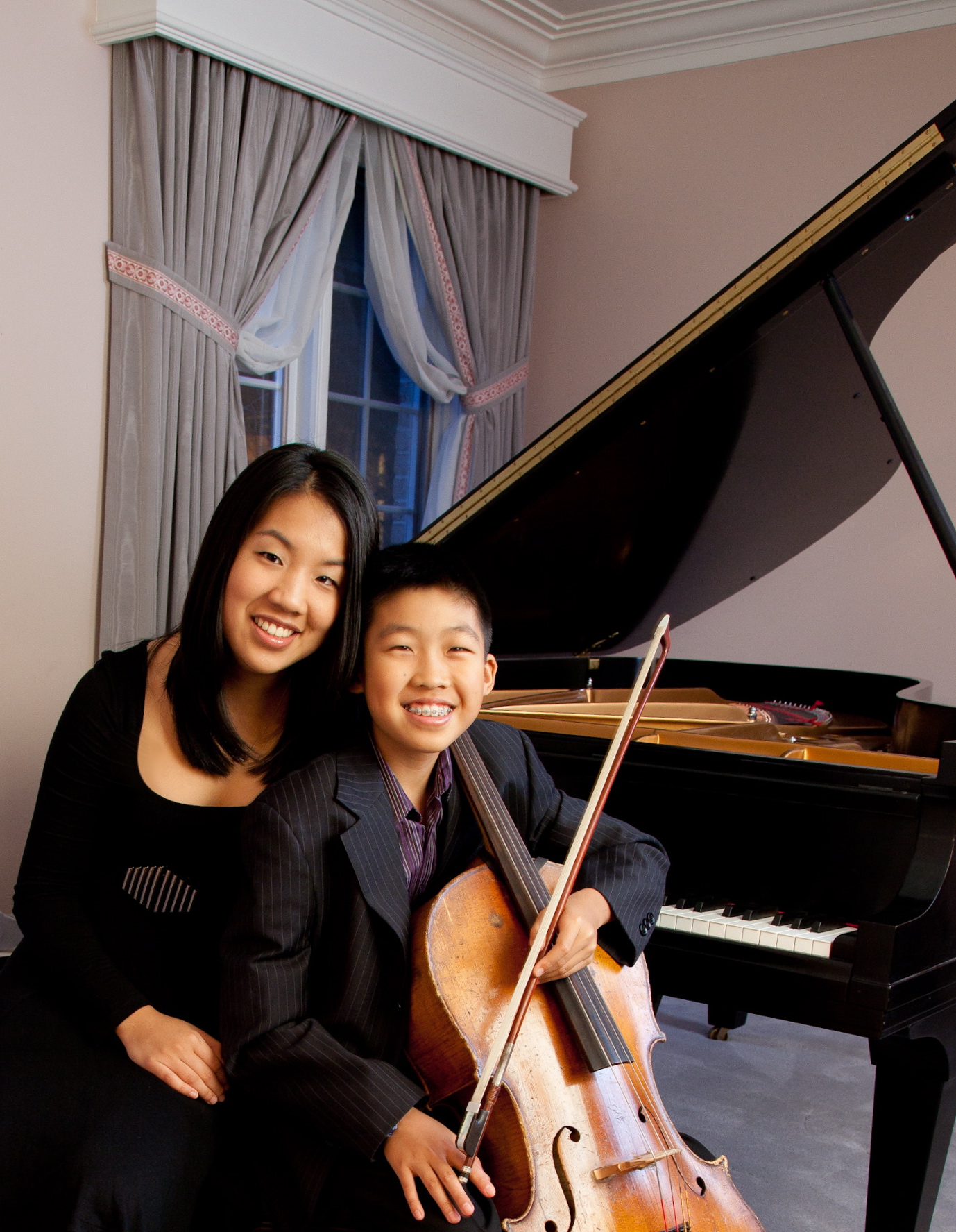
Cheng 2 Duo

Cheng 2 Duo


The New York debut recital of Bryan and Silvie Cheng was infused with a spirit of thoughtfulness and generosity. The obvious affection between the two siblings extends beyond the familial sphere into the audience, and most importantly, into the music itself.  The differences between brother and sister, both as players and as individuals, were apparent within minutes of the first piece.  The thirteen year old cellist, Bryan Cheng, is gifted with abundant facility, innate musicality, and a sense of joy.  Although his talent needs shaping, he benefits from an experienced and exquisite partner in his sister Silvie.

The program alternated between showcases of virtuosity for the cellist, and solid, refined renditions of two sonatas from the solo piano repertory.  Their first offering, the Schubert Arpeggione Sonata, was delivered with aplomb, and a nice sense of phrasing and structure.  Here, as in later works on the program, Mr. Cheng’s left hand work was admirable, but not completely secure.  I hesitate to dwell on this because he is already playing on such a high level.  However, in a sonata such as this, passagework is so exposed, and the challenge is to make it sound pristine and effortless.  He will get there soon, but he is not quite there yet.

Throughout both the Haydn Sonata in E flat major and the Schumann Second Sonata, Ms. Cheng gave thoroughly idiomatic and polished performances.  To appreciate Haydn, one must enter into a private, eccentric world of musical expression.  The pianist brought us there with her subtle use of rubato and finely varied gradations of touch and dynamic.  In the Schumann, her playing of the jewel like second movement was especially poetic, and her pedaling at the close of the fourth movement was purely magical.  I have never heard the piano in this hall sound as round and ample.

It was a treat to hear the Paganini Variations on a Theme of Rossini, a work originally written for the violin, but adapted for cello, and played entirely on the A string.  With fleet fingers, Mr. Cheng successfully negotiated most, if not all of the Alpine passages of this very difficult work. The afternoon’s only contemporary composition was the single movement, “Bringing the Tiger Down from the Mountain II” by the Chinese-Canadian composer Alexina Louie.  In a series of highly contrasting musical gestures, Ms.  Louie explores the opposing forces of yin and yang.  After the penultimate measures dwindle into barely audible rustlings in both cello and piano, there is a terrific surprise ending, which I will not divulge here.  Let’s just say the tiger has the last word.

The Cheng 2 Duo’s grand finale was the Tchaikovsky Rococo Variations, a brave undertaking for any cellist.  I enjoyed hearing Mr. Cheng tackle the fierce technical challenges.  He has no fear, and when he hits the mark, it can be stunning.  This young musician has all the makings of a fine concert artist.  If he pays very close attention to how his sister makes music, he could be a great one.

Share

Rosa Antonelli, Pianist in Review

Rosa Antonelli, Pianist in Review
Stern Auditorium at Carnegie Hall; New York, NY
October 15, 2011
Rosa Antonelli

Rosa Antonelli

Rosa Antonelli, an excellent Argentinean pianist, presented a recital of mostly Argentine and Spanish composers at Carnegie Hall (Stern Auditorium), a concert benefiting Action Against Hunger.  Ms. Antonelli, according to the bio in the printed program, “is enjoying an active and varied career.” She has made extensive tours of Europe, Africa, Asia, Latin and North America. Hailed as a leading exponent of Latin American composers, performing works by such masters as Piazzolla, Ugarte, Gineo, Guestavino–among others–to audiences all over the world.

The concert opened with Floro Ugarte (1884-1975): his Two Preludes from “Suite de Mi Terra” (Suite of My Land). Ugarte, born in Buenos Aires, studied in Paris with Albert Lavignac and later became one of the principal organizers and conductors of the Colon Theater at the National Society of Music and the Superior School of Fine Arts at the University of La Plata. His Suite, composed in 1923, was inspired by the poems of the Argentine writer Estanislao del Campo and was originally written for orchestra. This suite consists of three parts: the first, in Animato tempo, captures the motion of weeping willow trees and their shadows, depicting a scene of melancholy contentment. The second part, in Lento Tempo, describes with dramatic intensity the approaching darkness as night begins to fall. (In 1934, Ugarte wrote a second series of “de Mi Terra” for orchestra.

Next came Four Tangos by Astor Piazzolla (1921-1992): Rio Sena; Sentido nico; Milonga del Angel; Chao, Paris. Piazzolla’s music has become increasingly ubiquitous and popular–almost a case of familiarity breeding contempt. He studied in New York City with Bela Wilde, and then–upon his return to Argentina in 1940–with Alberto Ginastera and Nadia Boulanger in Paris. (After intermission, two more Piazzolla Tangos, written in 1963, were heard. Ms. Antonelli’s performance at this concert was the World Premiere of the original piano version.)

Another Argentinean, Carlos Guastavino (1912-2000), followed the first four Piazzolla Tangos with Two Preludes: “El Patio” and “El Sauce from La Siesta.” “La Siesta” is a compilation of three Preludes, each depicting a different scene. The description in “El Patio” evokes the memory of J. Aguirre and depicts the traditional Argentinean weeping trees with soft flowing leaves whispering in the wind. The first half of the program ended with two works by Enrique Granados (1867-1916): his Epilogo from “Escenas Romanticas” and Allegro de Concierto.

After intermission, we heard two early compositions by Isaac Albeniz (1860-1907): Grenada from his “Suite Espanola”, Op. 47; and “L’Automne Waltz”, Op. 170. Ms. Antonelli played all these compositions ‘con amore’. She is a dyed-in-the-wool Romantic Lyricist. Her always aurally beautiful and caressing pianism uses a lot of color via the sustaining pedal; she molds phrases with enormous flexibility, and there was never a hint of harsh, ugly or astringent glint to her lush singing tone. My only quibble was that her deeply poetic interpretations were sometimes a mite too soft-grained and unassertive when I might have preferred to hear more brilliance and extroverted rhythmic thrust. The Granados “Allegro di Concierto” is often played with more virtuoso thrust, and the popular Tres Danzas Argentinas of Alberto Ginastera (1916-1983)– the third Danza del Gaucho Matrero, especially–could have been rendered with more stampeding clarity (as it usually is). On the other hand, Ms. Antonelli’s inward poetry forced me to rehear, and revalue, Piazzolla’s Tangos, which she infused with an eloquence and inner communication that, in truth, has sometimes eluded me.

Postludes to a memorably well-played evening, Ms. Antonelli’s flowing, songful rendition of the early Chopin Nocturne in C-sharp Minor, Op. Posth. was an ideally fitting encore.

Share

Hilda Huang, Pianist in Review

Hilda Huang, Pianist in Review
Presented by The Rosalyn Tureck International Bach Competition
Faust Harrison Piano Salon, New York, NY
October 15, 2011
Hilda Huang

Hilda Huang

When the young Rosalyn Tureck submitted “The Well-Tempered Clavier” (in place of the single prelude-and-fugue Bach requirement, as her sister Marge used to tell) for her Juilliard entrance examination, she was prematurely aware of her life’s calling and her indefatigable dedication to Bach performance. A career path forged with determination and more than an ounce of friction helped to provide a smooth ride for many of the world’s future single-genre repertoire specialists, men as well as women.

The young Tureck withstood recalcitrant managers and presenters, staid record producers, inattentive sound engineers, prudish musicologists and opportunists alike, with a sense of ownership and oracular prophecy for the perpetuation of her ideal. Tureck’s message, conveyed on a piano and occasionally on other keyboard instruments through meticulous finger articulation and dynamic control, an unwavering sense of rhythm (coupled with an avant-garde Baroque rubato), stylized ornamentation, and faultless memory, was nevertheless Old World: at its heart, her motivation for the mastery of Bach pianism stemmed from a fear of comparison with her harpsichordist archetype, Wanda Landowska. As her detractors called for more spontaneity or parodied her reported séances with the composer, Tureck (who lived until 2003) wrote and edited pedagogical texts and branched out into Busoni and contemporary music, while remaining “the high priestess of Bach,” with a lifetime decoration from the German government (a decoration which she once left behind in my room after a stay, despite her faultless memory). Her legacy took hold in the adulation of audiences, record collectors, university scholars, and, from her point of view, imitators who similarly devised their own mystical personae and interpretative fetishes. Having captured the mantle of Landowska, Tureck was increasingly wary of the eclipsing notoriety of Glenn Gould, which threatened to usurp her unregistered patent on articulation and eccentricity.

With the younger generation (as well as the afterlife) in mind, Tureck laid the groundwork for an international Bach competition which has succeeded in gathering an ardent following of the highest caliber. The Grand Prize Winner of the 2010 session (the competition’s second cycle) is Hilda Huang, now 15, who gave an all-Bach recital at the Faust Harrison Piano Salon on Saturday evening. Performing to a filled room on a pair of beautifully restored pianos at close range, Huang sailed with supreme comfort and assurance through some of the most intricate and eclectic of Bach’s keyboard works, building to a consummate rendition of the Sixth English Suite, BWV 811. (The latter was a last-minute substitution for the originally programmed No. 5, on the advice of her San Francisco mentor, John McCarthy.) Huang already holds title to a Bach prize from Wurzburg, Germany, and would be any jury’s first choice; her flair for counterpoint and understanding of harmony are displayed with ebullience and such crisply designed fingerwork that, for stretches of the concert, I thought I was hearing Her in reincarnation.

There are subtle differences, of course. Unincorporated into Huang’s style are the pointed agogic accents that Tureck used so frequently to dramatize facets of the score; absent are the elegantly meditative lilts of allemande and courante, the poignant whispers of the sarabande, the quarter-pedals with sliding fingers. Rolled chords anticipate their beats neatly, rather than announcing the thumb in a sardonic moment of Tureckian glee. Huang is so upbeat and refreshing—lest one forget her age—that we strain to hear bittersweetness in passages of free rhythm or chromaticism. A fugue subject is a fugue subject—albeit one with a descending tenor foreshadowing the inexorable—but that will certainly come later, perhaps when Huang is sixteen. Her extroversion is alluring for its boldness of sonority and arching crescendi, which Tureck shunned, but which create such a satisfying concept of formal structure in Huang’s playing. This young artist will be thrilling to watch as her perfection extends to embrace the audience, as she experiments with triumphant endings and risky sound effects. For now, she is a phenomenon.

The Bach scene has undergone revisions since Tureck broke new ground. The path is familiar, and modern Bach players may virtually dial-an-approach according to their respective tastes. Indeed, the irregularity of the Baroque “oddly shaped pearl” is out of place in a competition setting and difficult to reconcile with our need for quantifiable elements in a society obsessed with order. But Rosalyn cautioned against too much order: too much perfection is Bach’s hereafter—Mozart.

Share

Louise Dubin, Cellist in Review

Louise Dubin, Cellist in Review
Forgotten Treasures by Franchomme and Chopin
John Street Church; New York, NY
September 29, 2011

Louise Dubin

Louise Dubin, a fine cellist who studied with Ardith Alton, Aldo Parisot, Timothy Eddy and Janos Starker, based her thesis on Auguste Franchomme (1808-1884). She has just completed her dissertation on the French cellist and romantic composer to fulfill her Doctoral requirements at Indiana University’s School of Music in Bloomington, and she is the school’s first music performance student to receive two grants for doctoral  research from the university, which funded the research trip to France where she met descendants of Franchomme and discovered much of the music heard at the concert under review. Franchomme, the most distinguished cellist of the era, is not exactly forgotten, but is best remembered as being the dedicatee of Chopin’s Cello Sonata, Op. 65 and, ergo, the great composer’s dearest friend. Franchomme, of course, left no recorded legacy of his performances, but Ms. Dubin’s research has retrieved Franchomme’s own music, and she has just made a commercial recording for the Eroica Classical label of Franchomme’s music, most of which has never been recorded or published. Moreover, Ms. Dubin’s intense and perceptive work has unearthed clues of Franchomme’s probable performance style by way of his fingerings and bowings, having an impact on sound production and an emotional impact on performance.

The September 29th recital began with two of Franchomme’s own pieces: one of his Caprices, Op. 7 No. 9, a fine specimen undoubtedly inspired by Paganini’s famous 24 Caprices, Op. 1 for solo violin, composed circa 1804 and published in1820. Franchomme obviously owes much to Paganini’s models. But its highly contrapuntal style also harks back to J.S. Bach’s unaccompanied Cello Suites. The Caprice was followed by a vivacious set of Variations on an Irish Air, Op. 25 for Cello and Piano, which commenced with a brief introduction and evolved into the theme itself– dancelike and energetic–and a lively numerous set of variants. Ms. Dubin’s excellent performances–likewise, the aforementioned Caprice–was a joy to savor, and Hiroko Sasaki’s cooperation at the piano worked beautifully as a Duo. (Her little asides and comments added immensely to the performance’s effectiveness.) Likewise, Franchomme’s “Fantaisie on Mozart’s Enchanted Flute,” Op. 49 at the end of the printed program (“The Zauberflote” or “Magic Flute”; Franchomme spent much of his career playing in the pit of the Paris Opera Orchestra at the Theatre Italien and in the court of King Louis Philippe). The Fantaisie interpolates parts of the overture and some of the arias heard in the opera itself. Again, Ms. Dubin and Ms. Sasaki worked beautifully together (and I was surprised to learn that the two protagonists had not previously played together before this concert.)

The rest of the concert, mostly Franchomme’s arrangements of Chopin’s treasures (the Nocturne, Op. 55 No. 1, the Funeral March from the Sonata Op. 35, the Mazurka, Op. 33 No.3, and the Prelude, Op. 28 No. 20), were hardly flattered by Franchomme’s tepid and servile recasting for cello and piano (Op. 55 No.1). Moreover, his recasting for Cello Quartet (of the Op. 35 and Op. 28 No. 20) sorely missed some of the ‘di rigeur’ percussiveness of the original piano, and the Second Ballade, Op. 38 was almost laughable (it turned out to be just the piece’s swaying opening theme.) The Cello Quartet, Ms. Dubin; Katherine Cherbas; Saeunn Thorsteindottir and Sarah Hewitt-Roth, also played Franchomme’s adaptations of Schumann’s “Soldier’s March” (from his Album for the Young) and the Can Can from Offenbach’s “Orpheus in the Underworld.”

On the one hand, Liszt’s audacious genius–like it or not–often imparted a vibrant life to the music of other composers that Franchomme’s more modest gifts simply could not do. But the great violinist Nathan Milstein did fashion a more compelling and interesting arrangement of an early Chopin Nocturne in C-sharp Minor, Op. Posthumous. (Franchomme’s dutiful “arrangements” did nothing at all.) Mendelssohn’s own “Song without Words” for cello and piano was far more palatable for this listener. Ms. Dubin and Ms. Sasaki played it beautifully.

All told, this concert faute de mieux was worthwhile, mostly for the three original Franchomme pieces. And I am eagerly looking forward to Ms. Dubin’s imminent recording.

Share