The Park Avenue Chamber Symphony in Review

The Park Avenue Chamber Symphony in Review
“Baroque Celebration”: Vivaldi’s “Four Seasons” and Gloria
David Bernard, Music Director and Conductor
David Chan, Violin
Florilegium Chamber Choir; Nicholas DeMaison, Director
All Saints Church, New York, NY
December 12, 2010
 

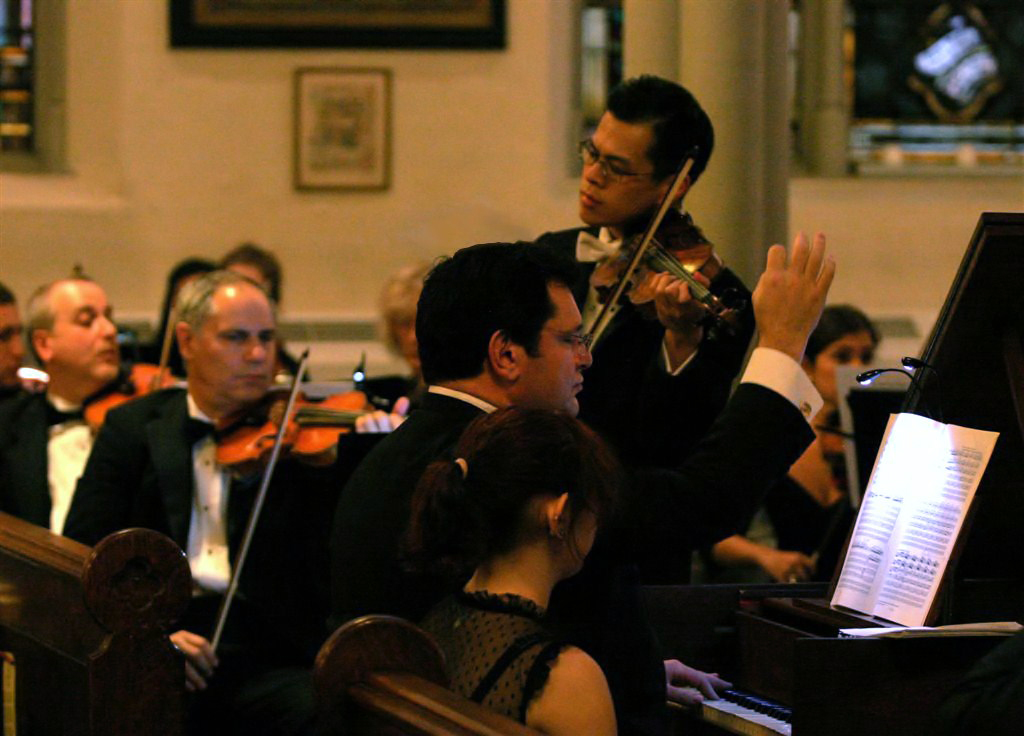
David Bernard leading the Park Avenue Chamber Symphony from the harpsichord continuo in Vivaldi’s Four Seasons with soloist David Chan, Concertmaster of the Metropolitan Opera Orchestra. Photo Credit: Claire Stefani

In an all-Vivaldi concert, the Park Avenue Chamber Symphony got in the holiday spirit with the composer’s Gloria in D, RV 589 and his eternally famous “Four Seasons”. The orchestra’s violin soloist was Metropolitan Opera Concertmaster David Chan, who inspired a riveting and stellar performance on all fronts. Music Director David Bernard, who led the performance while playing the harpsichord, did an excellent job of maintaining solid ensemble-playing and consistently driven tempos in what was a crisply articulate, high-energy account.  To top it off, there was a brief poetry reading prior to each season, read with poise and clarity by All Saints Church Music Director Cynthia Weinrich; this was a great idea. Chan played at the highest level possible—with both sweet-toned polish and gutsy intensity—bringing a romantic air of expression to the piece, as one should when there is such detailed, innovative tone-painting (musical descriptions) in the music.

Because “The Seasons” was given such a memorable performance, it could easily have been on the second half of the program. And all four seasons (four concertos with several movements each) are in fact longer and more epic in stature than this Gloria. Naturally, one can understand why Bernard chose the Gloria to conclude the concert; choral works with numerous performers—a visual as well as an aural delight—usually do provide for an emotionally or spiritually satisfying conclusion. But since the superior Vivaldi opus and performance was “The Seasons”—I would have preferred the save-the-best-for-last approach and conclude with that work instead.

Bernard conducted the Gloria from memory and with an astute ear for phrasing and color. My peeves were the sometimes less-than-polished solo singing—although soprano Nina Riley sang beautifully—some out of tune trumpet playing, and the fact that The Florilegium Chamber Choir was sometimes tentative and difficult to hear (especially in lower registers). When I could hear them, however, diction was clear and the phrasing was elegant. Principal cellist John Yakubik’s solo playing was also appealing.

Another reason I can see why the Gloria was indeed placed on the second half was because it led nicely to a Holiday Sing Along, in which Bernard placed the chorus antiphonally on both sides of the church. Here, the voices came through loud and clear—although it didn’t hurt that the large audience at hand lent their voices to what was a robust reading of several Christmas Carols. It is a credit to David Bernard that he has such enthusiastic followers in his audience. Usually you can hear it in applause, but this time it was through the music itself.

Share

Maximilan Anikushin and Friends in Review

Maximilan Anikushin and Friends in Review
Samuel Barber Centenary Recital
Bruno Walter Auditorium
Lincoln Center; New York City, NY
November 18, 2010

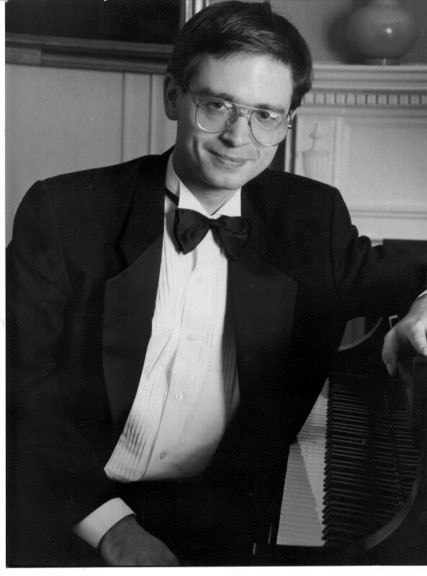
Maxim Anikushin

The splendid pianist Maximilan Anikushin, with his friends, mounted a welcome and comprehensive retrospective to honor the centenary of the American composer Samuel Barber in the midst of bicentennial tributes to Haydn (d. 1809), Mendelssohn (b. 1809), Chopin and Schumann (both born in 1810.)  (Orage warning: the Liszt bicentennial will be coming down the pike—prepare for another onslaught imminently!) Barber’s beautifully crafted music richly deserves celebration and it is, without question, more audience-friendly than Elliot Carter, who is still with us (Barber died in 1981.)  

The first half of the program was devoted to Barber’s solo piano works, commencing with his most famous and impressive piece, the sonata, commissioned by Vladimir Horowitz, who premiered it in 1949 and subsequently recorded it for RCA Victor. Mr. Anikushin’s beautifully written program annotations interestingly relate that the composer had initially wanted the work to be a three movement sonata, but Horowitz convinced him that the piece needed a “very flashy last movement.” This last movement caused Barber much frustration. After months with no progress, Horowitz telephoned Barber and, hoping to inspire him, called him a ‘constipated composer.’ Barber became angry and wrote the entire last movement (the Fuga) the next day! This was in June 1949, nearly two years after the work was commissioned.  

The Sonata was appropriately followed by the four Excursions–vintage 1945–also in its day quite popular; Nadia Reisenberg performed them at her 1947 Carnegie Hall recital (published by Bridge Records, 9304A/B) and gave them to countless pupils. Next came a fine nocturne written in 1959 to honor John Field (not Chopin as one might have thought). The Three Sketches were the juvenilia of a talented teenager: A Love Song “To My Mother”, Tempo di Valse (1924); To My Steinway Number 2201 (Adagio, 1923); and “A Minuet to Sara”, (1923). Barber confesses that he “borrowed” its theme from Beethoven’s notoriously popular Minuet in G Major.  

Anikushin’s elegant performances were models of style, humor and– when called for–brilliantly clean, incisive technique; architecturally crystal clear and also amply subjective without hypertension. Anikushin told me that he loves Barber, and his adoration and enthusiasm were brilliantly self-evident.  

Anikushin, whose May 9, 1999 debut at Carnegie’s Weill Recital Hall earned high praise from this reviewer in New York Concert Review: “…undoubtedly destined to enter the annals of his generation’s important young pianists”, has studied with Y.I.Batuyev, Milton Salkind, Oxana Yablonskaya and Solomon Mikowsky, and holds Bachelor’s, Master’s and Doctoral degrees from the Juilliard School and the Manhattan School of Music.  

After intermission, Dr. Anikushin gave a vibrant and memorable account of the 1932 Sonata for Cello and Piano, partnered by Adrian Daurov, who is currently at Juilliard. The Canzone for Flute and Piano, Op. 38a of 1961, was played by flutist Mayumi Yokomizo with a big, luscious tone (it may have been her gold instrument that partly influenced me!) Finally, there was a group of Five Songs: “Promiscuity”, Op.29, No.7 (1953), “The Secrets of the Old”, Op.13 No. 3 (1938), “Sure on this Shining Night”(1938), “A Nun Takes the Veil”, Op. 13 No.1 (1937) and “The Desire for Hermitage”, Op. 29, No. 10 (1953), communicatively sung by Megan Moore, an alumna of Hope College and the Manhattan School of Music.

Share

Victoria Mushkatkol in Review

Victoria Mushkatkol, piano
Weill Recital Hall at Carnegie Hall
December 2, 2010
Presented by the Vladimir Nielsen Foundation.

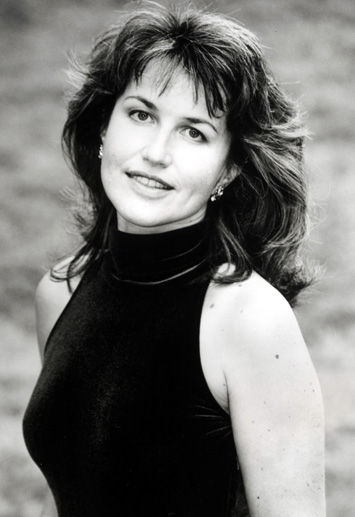
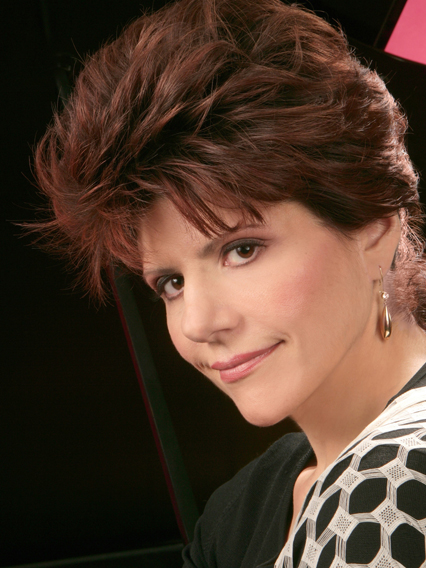
Victoria Mushkaktol

Born and trained in Russia,  pianist Victoria Mushkatkol graduated with highest honors from St. Petersburg Conservatory, where she was a protégé of the eminent teacher Vladimir Nielsen; now living in New York, she honored him by founding a piano festival in his name at Sag Harbor in 2007. She is enjoying an international career as soloist, chamber musician and teacher, and is currently on the faculty of the Juilliard School’s Pre-College Division.

Victoria Mushkatkol is a splendid pianist. Her command of the keyboard is complete; her technique is so relaxed and effortless that it is a pleasure to watch her in action. Perhaps the most immediately striking aspect of her playing is her tone: rich, warm and singing, with a perfectly smooth legato, it has a large palette of colors and nuances and a wide range of dynamics. Indeed, it seemed amazing that a person of her delicate stature could produce such a powerful, sonorous sound. Her stage presence is natural and unaffected; she projects total concentration and emotional identification with the music.

In this season commemorating several composers’ anniversaries, she celebrated Chopin before intermission (returning to him for her encore), and Liszt afterwards. Her strong affinity for romantic music was immediately clear. Her Chopin was free and flexible, but the tempo changes were balanced, the transitions poised. The A-flat major Ballade Op. 47 was full of dreamy poetry and passionate ardor; the Barcarolle Op. 60 rocked and lilted. In the B minor Sonata Op. 58, she brought out the character of each movement, carefully building up the dynamic and dramatic climaxes.

The second half of the program began with Schubert’s B-flat major Impromptu, Op. 142, No. 3, a set of variations on the “Rosamunde” theme that he loved to recycle. It is a study in tonal, textural and expressive contrasts whose mood and character changes Ms. Mushkatkol captured very effectively; her rhythmic liberties, though, seemed to hark back to Chopin’s style.

Schubert’s practice of writing variations on his own songs may have inspired Liszt to use them as launching-pads for the brilliant paraphrases favored by the piano virtuosos of his day. Ms. Mushkatkol selected four of these: “Aufenthalt,” “Gretchen am Spinnrade,” “Du bist die Ruh’,” and “Erlköng.”  Based on some of Schubert’s most popular songs, they demonstrate Liszt’s skill in weaving the vocal line into the accompaniment. Naturally, this demands great technical and tonal control on the part of the pianist; for example, in “Gretchen am Spinnrade,” the sound of the spinning-wheel’s repetitious whirring must be maintained through all the verses; in “Erlkönig,” where even Schubert’s original piano part with its repeated octaves and chords is a test of endurance, Liszt created a tour-de-force that seems to require more than two hands and ten fingers.

Liszt’s “Rhapsodie Espagnole” with its brilliant writing and idiomatic Spanish rhythms made a rousing finish and elicited an ovation.

The audience included many children of various ages and nationalities, whose rapt attention marked them as budding pianists; from their floral tributes and warm hugs it was natural to surmise that they were paying homage to a beloved teacher.

Share

Seunghee Lee in Review

Seunghee Lee, piano
Weill Recital Hall at Carnegie Hall, New York, N.Y.
December 1, 2010

Many pianists enjoy describing their programs and repertoires as “eclectic” lately, and, though the word is a bit overused, a recent recital program by pianist Seunghee Lee deserves that description. In a highly interesting mix of Heitor Villa-Lobos, Robert Muczynski, Francis Poulenc, Frédéric Chopin, Edvard Grieg, and Enrique Granados, Ms. Lee’s recital had something for almost everyone (though perhaps not for those hoping for a heaping helping of the “three B’s” – Bach, Beethoven, and Brahms). What I found particularly interesting was that this pianist seemed to have an equal affinity for each composer in this unusual assemblage. Ms. Lee, who has studied and performed widely and is currently a doctoral candidate at the University of Kentucky, has widely ranging interests and the ability to share them — a valuable combination.

Starting off with Bachianas Brasileiras No. 4 (“Preludio”) by Villa-Lobos, Ms. Lee established a thoughtful tone.  Though, as mentioned before, this recital offered none of the “three B’s,” the presence of the first “B” – Bach – was definitely felt here. Ms. Lee demonstrated beautiful tonal control from its rather stately opening. Occasionally high registers sounded a bit strident, perhaps from want of bass support via more pedal (as Ms. Lee was quite sparing in her use of pedal through much of the evening), but all in all it was a successful opening.

In a change of style, time, and continent, the program then moved to a work by U.S. composer Robert Muczynski (1929-2010) entitled “Desperate Measures” (Paganini Variations) Op. 48.  Based on the famous 24th Caprice of Paganini (the one which inspired Liszt, Brahms, Rachmaninoff, and others), this roughly eight-minute set (written in 1995) shows at times a striking kinship with the Paganini Variations of Witold Lutoslawski (for two pianos, written in 1941), though Muczynski’s work breaks out in far more jazzy directions. Ms. Lee brought out its brilliance, rhythmic energy, and at times, lyricism, though emphasizing the acerbic dissonant qualities more than I’ve heard or would like.

Chopin’s Ballade No. 3 in A-flat Major, Op. 47, followed with a refreshingly gentle opening, though it was overall the least successful work on the program. Little raggedy edges are conspicuous in such an unforgiving piece as this, and there were passages that seemed glossed over, where loud peaks were reached from thin beginnings with no tonal middle ground in between. Also, some inner voices that most Chopin fans know and love were boldly announced at their beginnings, but not followed through to their natural conclusions.

In Poulenc’s Trois Pièces, Ms. Lee seemed much more in her element, reveling in the dreamy, brooding Pastorale, the bold Hymne, and the light and precise Toccata. Her palette of colors was just right for these works. I couldn’t help thinking it would be interesting to hear her play Ravel’s Toccata (or perhaps Scarbo), and a number of works of Debussy.

Shifting after intermission to Grieg, Ms. Lee played the “Rotnams-Knut, Halling”  (No. 7 from Peasant Dances, Op. 72), the Scherzo-Impromptu No. 2 from Stimmungen, Op. 73, and the Ballade, Op. 24. These works enjoyed a loving advocacy in this pianist’s hands. The Ballade (despite accuracy issues towards the craggy end) had many fine moments, prospering by Ms. Lee’s patient lyricism through its doleful and funereal sections.

The Allegro de Concierto, Op. 46, by Granados ended the evening on a positive note, concluding what was a rewarding evening of music. An appreciative audience received an encore that sounded somewhat like a new age improvisation on a hymn, though (as sometimes happens) it was impossible to hear the announcement.

Share

Opus Two in Review

Opus Two in Review
Leonard Bernstein: From Concert Hall to Broadway
William Terwilliger, violin
Andrew Cooperstock, piano
Le Poisson Rouge; New York, NY
November 23, 2010
 

Opus Two


Leonard Bernstein, who passed away 20 years ago, would have been pleased with this program, as it exhibits some of his less familiar, serious music alongside his more well-known. Three quarters of the program were arrangements, with his 1939 violin sonata serving as the only original composition. That violin sonata—oddly enough—came across as the least successful of the four works on this program; not that you can blame Bernstein for being somewhat artistically immature at 21—his age when he completed it. The music isn’t always idiomatic for the violin; William Terwilliger had some difficulties with intonation at the top of the violin’s register in awkwardly-written passages.

Terwilliger’s arrangement of Bernstein’s clarinet sonata is ironically more idiomatic for the violin than Bernstein’s own violin sonata. Because the violin sonata isn’t one of Bernstein’s best works in the violin repertory (his 1954 Serenade for Violin and Orchestra remains one of his most acclaimed pieces), it is valuable to have this clarinet sonata in a transcription for violin; the tunes are buoyant, inspired and fun. Although the 1940s big-band sound and style comes through more clearly on the clarinet (think Benny Goodman), violinists deserve to have this excellent arrangement at their disposal.

Two ‘House’ Songs, Bernstein vocal selections cleverly assorted by Eric Stern, were sung by Stern’s daughter Madeline, and they were a lovely addition to the program. “My House”, from Bernstein’s obscure “Peter Pan” (1950), is a charming little gem, and “Take Care of this House” from “1600 Pennsylvania Avenue” is a delightful extraction from an otherwise forgettable show. The two songs were performed beautifully by the young Madeline Stern, who only recently began her conservatory training; a fruitful musical future awaits her, no doubt.

Four Moments from Bernstein’s “Candide” (1956) were arranged by Eric Stern to include some of the musical’s most memorable and contrasting selections: “I Am Easily Assimilated”, “You were Dead, You Know”, “Glitter and Be Gay”, and “Make Our Garden Grow”. They were arranged in a way that preserves the enchantment of the original, but also shows off the violin and piano admirably. Terwilliger and Cooperstock form a terrific duo with Opus 2; their program was equally engaging.

Share

Lukáš Vondráček in Review

Lukáš Vondráček, piano
Weill Hall at Carnegie Hall, New York, N.Y.
November 22, 2010
 

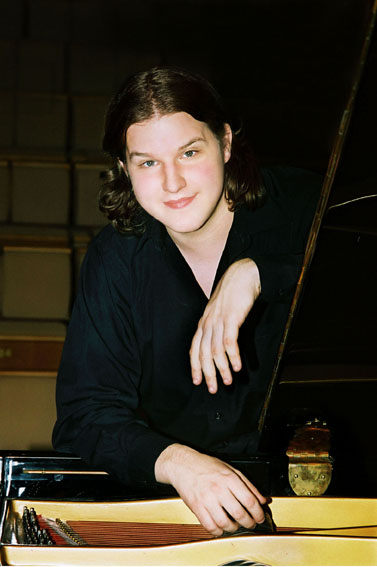
LUKÁŠ VONDRÁČEK

2010 Winner of the Hilton Head International Piano Competition, Czech pianist Lukáš Vondráček gave an exciting recital that bodes well for a bright future in music. He is hardly a newcomer, for though in his mid-twenties, he has (according to  his biography) visited over 25 countries and given more than 900 concerts (having given his first concert at age 4). He has clearly honed his craft through so much playing; what was perhaps more impressive, though, was how completely committed he was to every single phrase, with not a hint of anything “automatic.”

Opening the recital was Haydn’s Sonata in C Major, No. 60 (Hob. XVI: 50), in lieu of the printed program’s Bach Italian Concerto. While I think the Bach might have led even more beautifully to the Mendelssohn Variations Serieuses (Op. 54), the Haydn was full of delightful surprises. With the imaginative orchestral treatment Mr. Vondráček gave it, it seemed to be just as much an opera overture as a sonata, showing sensitivity to the distinct character of each phrase and an enormous variety of articulations. Occasionally the staccato releases of his hands seemed mannered, to the point where one felt it distracting to watch, so I decided just to listen, and what I heard never failed to hold me.

Mendelssohn’s Variations Serieuses also seized one’s attention and never let go. I can’t recall hearing a performance of this piece quite as dramatic and all-encompassing. It should be required listening for those (and sadly there are some) who relegate Mendelssohn to innocuous, prettified music. From Vondráček’s thoughtful interpretation of the opening theme, to the riveting machine technique in the twelfth variation and the driving final Presto, it was a ride of Romantic extremes. I especially loved the moments where time felt suspended, the ethereal eleventh variation and the melting Adagio of the fourteenth, as this pianist is just as bold in his slow tempi as in fast.

One concern in the Mendelssohn (and even the Haydn) was how the Rachmaninoff and Prokofiev to come could intensify the already full-blown tonal world without straining; one is used to striving for a different sound for each era in piano music, and that did not seem a big priority here. The priority was a genuineness of expression, with not a trace of the condescension that sometimes affects more history-minded performances. All the music felt new in a way that should draw more audiences to classical music. Sure enough though, the louder passages in four of Rachmaninoff’s Op. 33 Etudes-Tableaux saw some subtle harmonic changes eclipsed by sheer decibels, as near the climax of No. 3 in C Minor and the angular, angry No. 9. The Op. 33, No. 1 in F minor and No. 8 in G minor rounded out the set, offering much to admire in dramatic projection and lyricism.

The boisterous pianism of Smetana’s Czech Dances (Hulán and Skocná) opened the second half with energy and humor. It will be good to hear Mr. Vondráček bring attention to more music from his homeland. In an interesting and effective segue, four Lyric Pieces by Grieg followed, Op.57, No.6 (“Homesickness”) Op. 62, No. 2 (“Gratitude”- a nice touch on Thanksgiving week), Op. 62, No. 4 (“Brooklet”) and Op. 68, No. 3 (“At Your Feet”). All showed vivid imagination, but the stunning evocations of the brook took the prize.

Prokofiev’s Sonata, No. 7 (Op. 83) closed with all the firepower one wanted, bringing the audience to its feet. Mr. Vondráček is a powerful pianist, and he should be much in demand for large Romantic concerti, such as Rachmaninoff’s Third Concerto, which he is engaged to play soon. It seemed he would be capable of playing tirelessly for several more hours, and his choice of a highly percussive, energetic encore seemed to agree (something sounding like Martinu, though one could not hear his announcement). One might have wanted something more serene right after Prokofiev’s 7th Sonata, but this pianist left on a strong and confident note. He should be confident, as he really “has it all.” Bravo!

Share

The Mirror Visions Ensemble in Review

The Mirror Visions Ensemble in Review
‘Concert a la Carte’
Merkin Concert Hall, New York, NY
November 9, 2010

The Mirror Visions Ensemble

In a most delectable concert, the Mirror Visions Ensemble presented an evening of music as it relates to cuisine. The program opened with soprano Vira Slywotzky, tenor Scott Murphree and baritone Jesse Blumberg appearing from behind the audience and walking down the aisles—a lovely touch—sentimentally and endearingly singing Cole Porter’s “Come to the Supermarket in Old Peking.”  The vocal trio sang beautifully in tune and with great unity of humor.

After the Porter, the trio rotated in a series of solo numbers. The composer Christopher Berg was present for his “Carrot Jingle”—lyrics by Joan Van Poznak—and he could not have received a better performance by Scott Murphree. The trio reconvened for a performance of “Bread” from “The Baker’s Wife” by Stephen Schwartz. They were stellar once again, as the exaggerated diction at the ends of words like ‘bread’ brought great character and clarity to the song, and the heavenly falsetto chord at the finish was perfectly on pitch.

Other highlights included a sassy reading of “Riesling d’Alsace at the Brasserie” by Yehudi Wyner and Bernstein’s “Rabbit at Top Speed”, sang with polish and commitment by Murphree and Blumberg. Slywotsky’s interpretation of “Daliah’s Soup”—with charming music by Martin Hennessy and lyrics by a New York City School student—combined to make a memorable performance.  

It was smart to exclude an intermission, as there would be limitations to a full program about food. The length was just right. Richard Pearson Thomas’ “Tuna Supreme” was fun—if somewhat repetitious with regards to text, and his larger work “Know thy Farmer,” which received its world premiere, was a great success. Here, to add some needed variety to the evening, Thomas added a trio of instrumentalists to the trio of vocalists: violinist Harumi Rhodes and cellist Alberto Parrini (along with Thomas himself on piano). The music was well-played and well-balanced, as the piano trio stayed sotto voce and emerged only when they needed to. There were Brahmsian/ Neo-Romantic touches in the “Passacaglia and Chorale: Pasture”, and complex and exciting fugal passages in the finale: Clean Plates Don’t Lie”—and other moments of sincere expression or excitement that didn’t always go with the partly mundane, simple text—but therein lies some of this work’s humor; some selections were from menu listings, after all.   

 The audience came out in droves for this terrific concert by The Mirror Visions Ensemble, and everyone seemed to leave the hall happy… and hungry.

Share

Amael Piano Trio, in Review

Amael Piano Trio, in Review
Tatjana Ognjanovic, piano
Volodja Balzalorsky, violin
 Damir Hamidullin, cello
Weill Recital Hall at Carnegie Hall, New York, NY
November 13, 2010

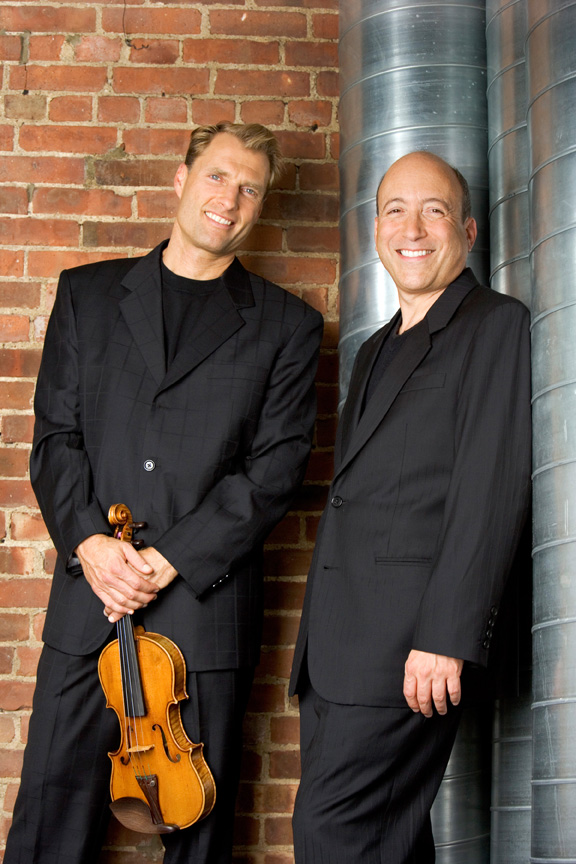
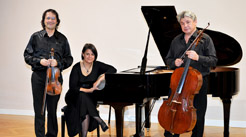
Amael Trio

A top-notch ensemble, the Amael Piano Trio, was presented this weekend under the auspices of the Spectrum Chamber Music Society, with the support of the Ministry of Culture of the Republic of Slovenia. In a program of 20th-century Slovenian music (first half) and Beethoven’s Piano Trio in B-flat, Op. 97, the “Archduke” (second half), they brought unity and vigor to both old and new.

The Amael Trio, based in Ljubljana, states in its biography (in addition to mentioning traditional repertoire) that it is “dedicated to performing contemporary works, and to the promotion, internationally, of Slovenian composers of piano trio literature.” They did an excellent job of just that in their Saturday evening program, and though only the pianist and violinist are natives of Slovenia (the cellist hailing from Russia), they represented Slovenia with honor. They might add to their biography that they also promote some non-trio works, as there was a violin solo included on their program; considering that each of the three players is of such strong individual ability, they might want to incorporate some solos or duos by the pianist and cellist as well. It would be a welcome addition.

The concert opened in an intensely dark vein with “Maestoso Lugubre” by Lucijan Marija Skerjanc (1900-1973).  Composed in 1935, the work is actually the last movement of this composer’s Piano Trio, though Skerjanc himself suggested that it be performed as a single work. From the very first solo cello notes by Damir Hamidullin, a somber lyricism pervaded, deepened by each player’s entry. The synchronization was marvelous, particularly in the string doublings (which can so easily sound “off” but were never so). All three blended in a way that was rich and warm, but also translucent, like the sonic equivalent of amber. The pianist, Tatjana Ognjanovic, managed to be the perfect foundation and “glue” for the trio without any suggestion of dominance even with the Steinway lid up.

Violinist Volodja Balzalorsky came onstage next as soloist in “Something Wild” by Nenad First  (b. 1964).  Mr. First, though born in Zagreb, lives and works in Slovenia. “Something Wild” is pretty much what its title suggests, a rhapsodic, virtuoso violin showpiece with a rough, rustic streak (plenty of fifths) and dizzying speed (think Bartok meets Paganini). Seemingly fiendishly difficult in parts, it was the compulsory violin work in the 2005 International Johannes Brahms Competition. While I cannot profess to love the piece, it was an intriguing break from the trios and certainly an opportunity for Mr. Balzalorsky to shine.

The first half concluded with the trio performing “Five Short Pieces” by Milko Lazar (b. 1965). Dedicated to the trio in 2001, it is a work of great variety within concise, classically restrained movements, each contrasting with the last  (arranged as fast, slow, fast, slow, fast). The performance was one of extreme precision, and it would be hard to imagine it being played more convincingly than it was by this tightly knit ensemble.

Beethoven’s “Archduke” Trio, a masterpiece that is reason enough to go to any concert, was given a fine, mostly polished performance for the evening’s close. Performers are unfortunately subject to the accumulated preferences of a listener when performing such an established masterpiece, and I felt it was slightly unsettled in parts. Occasionally it was a matter of simply needing more agogic placement of downbeats (as in the first movement’s initial move to G major, where a more settled metric feeling can enhance ensuing rhythmic surprises), but other times (as in the magnificent third movement) it seemed that the pursuit of momentum was undermining the overarching grandeur of the work. All in all, though, it was a fulfilling musical evening, and this is a superb ensemble, which I hope to hear again.

Share

Daniel Seigel, baritone in Review

Daniel Seigel, baritone in Review
Lester Seigel, piano
Weill Recital Hall, New York, NY
November 6, 2010


Daniel Seigel

Daniel Seigel is the 2009 winner of the National Federation of Music Clubs Young Artist Competition.   His debut concert on November 6 at Weill Recital Hall was made possible by the Charles and Francis Christmann Estate.  (One assumes a connection between the Competition and the Estate.) His rather idiosyncratic program showcased his many gifts and skills and built to a wonderful climax.

Let it be stated at the start: Mr. Seigel is an excellent singer.  Apart from an occasional slight instability, especially on soft notes at the ends of phrases, and a somewhat stiff physical presentation at the beginning of the program, (both due to nerves, no doubt) he displayed mastery of his craft.  The voice is warm and rich with a nice spin, which allows him to glide effortlessly between registers. His diction is excellent in English, French,  German and Italian, and he sings with strong  emotional commitment.  Mr. Seigel was expertly accompanied by his father, Lester Seigel.

The program began with “L’Ultimo ricordo,” by Rossini. Unfortunately no translation of the Italian was provided.  At the end of the program notes, however, we are told that the song is “about a dying man who returns a pressed flower to his wife that he had kept since their wedding when she carried it.” This brings me to a paragraph which should perhaps skipped by those who are interested only in Mr. Seigel.

It never ceases to amaze me that presenting groups spend thousands of dollars and a great deal of time and energy to showcase a performer, and yet make up a printed program which appears amateurish, does not provide the necessary information, and, as in this case, presents information that actually misleads the audience. I must state that which should be obvious: except in rare instances (i.e. a Lieder recital with many individual songs by one or just a few composers), the work to be performed goes on the left, the composer (and his dates) on the right.  A set of songs should be indicated as such with the individual songs listed underneath.  None of this was done.  As a result, the audience didn’t know when to applaud or indeed, at times, what they were hearing. The program notes provided many clues, but the audience should not have to read program notes during the performance.  A performer of Mr. Seigel’s calibre deserves the audience’s full attention. The only other thing to which the audience should give attention to is the sheet of song texts and their translations, which guide one through the song. It is my personal preference that not only the texts of songs in foreign languages, but also those of the songs in English should be provided.  No matter how fine a singer’s diction is, it can be hard to understand even one’s native language when it is sung.  In the case of this program (the musical aspect of which I promise I will return to), none of the twelve English texts was printed, neither of the two Italian texts was printed, all five French texts and their translations were printed, as was the case with the one German song. The worst problem of all was that twice the individual songs of a set were not listed, so one thought that the title of the set was an individual song. The attentive and well-mannered audience members were understandably confused, and some began to applaud at the wrong place, thus no doubt causing themselves a good deal of embarrassment.  With all the shuffling and confusion I, for one, missed out on a good deal of Mr. Seigel’s no doubt fine and carefully considered performance. I would caution performers to proofread their programs, even if making up the printed program is not their “job.”

After warming up on the Rossini, Mr. Seigel presented one Lied: Mahler’s “Des Antonius von Padua Fischpredigt,” a humorous song poking fun at preachers.  It seemed a little odd to me that this was the lone offering of German Lieder, a genre which most cognoscenti believe to be the greatest body of repertoire for voice and piano. Mr. Seigel and his excellent accompanist, however, gave an ingratiating performance.  I would have loved to have heard a little more Mahler, but we now skipped to the twentieth century with Samuel Barber’s cycle “Despite and Still.” Daniel Seigel clearly feels a strong affinity for the repertoire of the middle of the twentieth century and he performed these songs with assurance and intensity.  An abrupt and welcome change of mood came with Mercutio’s scintillating aria “Mab, la reine des mensonges” from Gounod’s “Romeo et Juliette.”  Mr. Seigel wowed the audience with his rapid fire, crystal clear French. A stirring rendition of Ives’s masterpiece “General William Booth Enters into Heaven” completed the first half.

The second half began with “Hai gia vinta la causa,” the Count’s famous recitative and aria from the third act of “Le Nozze di Figaro”.  From the comfort he displayed in the role and the conviction he brought to it, one suspects that he has performed it in its entirety.  If he hasn’t already, no doubt he will soon. With his tall stature and elegant good looks he would make a fine Count. Works by two composers from the first half of the twentieth century, Gerald Finzi and Francis Poulenc, followed.  Then we returned to opera, with an impassioned performance of “L’orage s’est calmé” from Bizet’s “Les Pêcheurs des perles”.  The concert ended brilliantly with the “Soliloquy” from “Carousel”.  This piece represents a revolutionary moment in the American Musical Theater. It is far longer than the any show tune up until that time and contains elements of recitative and aria interspersed. It is worthy of inclusion in a recital of “serious” music, indeed when performed as well as it was on November  6 it is almost miraculous.  The ecstatic crowd leapt to their feet in a well-deserved ovation.  The rather topical encore was “Brother, can you spare a dime?”

Share

Aglaia Koras, Pianist in Review

Aglaia Koras, Pianist in Review
Weill Recital Hall at Carnegie Hall, New York, NY
October 25,2010


Aglaia Koras

During the 2009-2010 season, pianist Aglaia Koras continued her Beethoven and Chopin Plus Series at Carnegie Hall’s Weill Recital Hall for the fifth consecutive season, sponsored by MidAmerica Productions. She performed her first all-Chopin 200th Birthday Tribute, also produced by MidAmerica Productions, in May 2010. And continuing her celebration of Chopin, she performed an All-Chopin program at Carnegie Hall on October 25, 2010. The program included the Nocturne in C-Sharp minor, Op. Posth.; the Mazurka in A minor , Op. 7, No. 2; the Nocturne in C-sharp minor, Op. 27, No.1; the Fantasy in F minor, Op. 49; the Barcarolle in F-sharp major, Op. 60; the Nocturne in B-flat minor, Op. 9, No. 1; the Scherzo in B minor, Op. 20; the Etude in C minor (“Revolutionary”), Op.10, No.12; the Nocturne in D-flat major, Op. 27 No. 2; the Polonaise in A-flat major, Op. 53; the Waltz in C-sharp minor, Op. 64, No. 2; and the Sonata in B-flat minor, Op. 35 (“Marche Funebre”). Koras played considerably well throughout, but was at her best in the Nocturnes, Mazurka and slow movements, where her imagination, expansive expression and respect for tradition led the way. Pedaling was tasteful, and the phrasing was lovely. These moments were also filled with attractive dynamic contrasts and shading.

MidAmerica Productions was founded by Peter Tiboris in 1984. Now in its 27th season, MidAmerica is an independent producer of classical concerts, presenting soloists like Ms. Koras, choral concerts, and instrumental ensembles from around the world in New York’s Carnegie Hall, Weill Recital Hall, and at Lincoln Center. To date, MidAmerica Productions has produced more than 1050 concerts, including 320 in Weill Recital Hall. An interesting addition to Koras’ Weill recital program biography points out that Ms. Koras’ musical lineage can be traced to Chopin, as her teacher Horszowski’s mother (who taught Horszowski in his early years) studied with Mikuli, who was a student of Chopin. This all-Chopin program was a welcome survey of his works, a lovely addition to the year-long commemoration of Chopin’s birth. One can only hope that the people of Poland and France (where he is buried) are doing such prolonged, complete tributes.

Share